
2027 Can You Get Into a Social Work Degree Master's Program with a Low GPA? Admission Chances & Workarounds

Co-Founder and Chief Data Scientist
Applying to a Master of Social Work program with a low undergraduate GPA is not automatically disqualifying, but it does change how you should approach admissions. Social work programs need evidence that you can handle graduate coursework, complete field education responsibly, and work ethically with clients and communities. If your transcript does not clearly show that readiness, the rest of your application must do more work.
This guide explains how MSW admissions committees typically view a low GPA, what minimum GPA policies usually mean, and which application strengths can help offset weaker grades. You will also learn when work experience, certifications, additional coursework, conditional admission, online programs, GRE scores, and post-baccalaureate options may improve your chances.
Key Things to Know About Getting Into a Social Work Master's Program with a Low GPA
- Admissions committees often evaluate applicants holistically, considering work experience, volunteer hours, and personal statements alongside a low GPA to gauge commitment and potential.
- Strengthening your application with relevant internships, certifications, or continuing education courses can demonstrate preparedness and compensate for academic shortcomings.
- Some programs offer conditional or probationary admission paths, allowing candidates with low GPAs to prove their capability through early coursework success.
What Is the Minimum GPA for Social Work Master's Programs?
Many social work master's programs list a minimum undergraduate GPA of around 3.0 on a 4.0 scale. That is the most common baseline, but it is not universal. Depending on the institution, program format, and admissions policy, minimum GPA requirements may range from about 2.5 to 3.0.
The key point is that a minimum GPA is usually an eligibility standard, not an acceptance target. A program may review applicants below its preferred GPA if they show strong professional preparation, recent academic improvement, or a compelling fit for social work. At the same time, more selective programs may admit many students whose GPAs are well above the stated minimum.
Applicants who want to be more competitive often present GPAs closer to 3.3 or above, especially at programs with larger applicant pools. If your GPA is below the posted threshold, contact admissions before applying. Ask whether the program considers applicants by petition, conditional admission, recent coursework, or professional experience.
- If your GPA is 3.0 or higher: You generally meet the most common minimum, but you still need a strong personal statement, recommendations, and relevant experience.
- If your GPA is about 2.5 to 3.0: Look for programs that explicitly use holistic review or allow conditional admission.
- If your GPA is below the minimum: Consider additional coursework, a post-baccalaureate option, or applying after gaining stronger human services experience.
Be careful not to compare MSW admissions standards with unrelated degree pathways. Researching options such as online AI degree programs may be useful for other career goals, but social work admissions will focus on academic readiness, service experience, ethics, and field fit.
How Do Graduate Schools Evaluate a Low Undergraduate GPA?
Graduate schools rarely evaluate a low GPA in isolation. Social work programs commonly use holistic review because the profession requires judgment, communication, cultural awareness, ethical maturity, and resilience—not just classroom performance. Still, GPA matters because it helps admissions committees estimate whether you can succeed in graduate-level reading, writing, research, and field education.
When reviewing a low GPA, admissions teams usually look for context and evidence of improvement. They may ask: Did your grades rise over time? Were low grades concentrated in one difficult semester? Did personal, financial, medical, or family responsibilities affect your performance? Have you since shown stronger academic or professional discipline?
- Academic performance trends: An upward grade trend can help more than a single explanation. Stronger grades in the final years of college, especially in writing-heavy or social science courses, suggest improved readiness.
- Relevant professional or volunteer experience: Work in case management, community organizations, crisis support, child welfare, behavioral health, advocacy, or human services can show that you understand the realities of the field.
- Letters of recommendation: Strong letters should speak directly to your reliability, writing ability, empathy, professionalism, and capacity for graduate study. Generic letters rarely offset a weak transcript.
- Standardized test scores: If a program accepts or requires the GRE, a strong score may provide additional evidence of academic ability. It will not erase a low GPA, but it can reduce concern.
- Personal statement quality: A focused statement should explain your readiness without making excuses. It should connect your experience, goals, and understanding of social work ethics.
Applicants should also confirm whether a school is a legitimate financial aid option before enrolling. Lists of FAFSA-approved online colleges can help students understand financial aid basics, but MSW applicants should evaluate each program’s accreditation, field placement support, admissions policy, and licensure alignment.
Can Work Experience Compensate for a Low GPA in Social Work Graduate Programs?
Yes, meaningful work experience can help compensate for a low GPA, especially in social work programs that use holistic admissions. It does not make GPA irrelevant, but it can show that you have the maturity, service orientation, communication skills, and ethical awareness needed for the profession. Studies indicate nearly 30% of candidates with below-average GPAs gain acceptance based on substantial work experience.
The strongest experience is not simply “any job.” Admissions committees look for work or volunteer roles that connect clearly to social work values and practice settings. Experience with vulnerable populations, community programs, advocacy, crisis response, schools, healthcare, behavioral health, housing, aging services, or nonprofit case support can strengthen your application.
- Practical skill development: Direct service roles show that you can work with people, document needs, collaborate with teams, and apply judgment in real situations.
- Professional maturity: Consistent employment or volunteer service can demonstrate reliability, accountability, boundaries, and ethical awareness.
- Strong references: Supervisors can provide detailed examples of how you handle conflict, feedback, client needs, and stressful environments.
- Exposure to diverse populations: Relevant experience can show cultural humility and a realistic understanding of social inequality, trauma, and systems barriers.
- Clear motivation: A sustained record of service helps prove that your interest in social work is informed rather than abstract.
Use your application to translate experience into evidence. Instead of saying you are “passionate about helping people,” describe what you did, whom you served, what you learned, and how the experience prepared you for graduate training. If your GPA was low because of earlier challenges, your work history should help show who you are now.
- Social work master's graduate: "I was initially worried my grades would hold me back. But I made sure to highlight how years spent assisting vulnerable populations shaped my skills and perspective. Writing about specific cases and the ethical dilemmas I faced helped admissions staff see my potential beyond transcripts."
Do Certifications Improve Admission Chances for Low GPA Applicants?
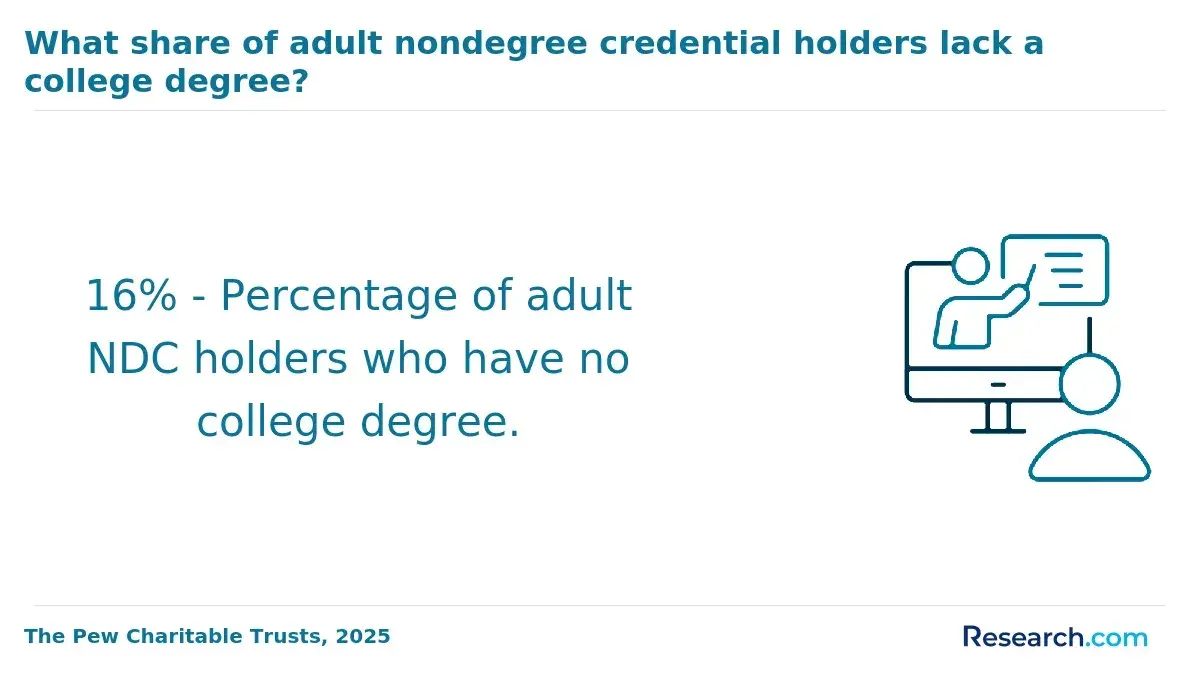
Certifications can strengthen an MSW application, but they are best viewed as supporting evidence—not a substitute for academic readiness. Studies indicate that about 40% of graduate admissions officers view relevant certifications as a positive factor that can help offset weaker academic records.
A useful certification shows that you have taken concrete steps to build skills related to social work practice. Examples may include training connected to mental health, case management, crisis response, trauma-informed care, substance use, advocacy, or community services. The certification matters most when it is current, relevant, and tied to your professional goals.
| Certification value | How it helps a low-GPA applicant | Common mistake to avoid |
| Shows commitment | Signals that you are actively preparing for the field beyond completing a degree application. | Listing unrelated credentials without explaining their relevance. |
| Builds practical knowledge | Gives admissions committees more evidence of field readiness and professional maturity. | Assuming a short course can replace stronger academic evidence. |
| Supports your personal statement | Provides concrete examples of your interests, skills, and service focus. | Using certifications as filler instead of connecting them to your MSW goals. |
If your academic record is the main weakness, combine certifications with stronger letters, recent coursework, and relevant experience. Applicants who are still completing undergraduate requirements may also consider whether an accelerated bachelor's degree online fits their broader academic plan before pursuing graduate admission.
Can Taking Additional Undergraduate Courses Raise Your Admission Chances?
Yes. Additional undergraduate coursework can improve your chances if it shows recent, relevant, and stronger academic performance. Research indicates that about 60% of students who take extra undergraduate courses successfully raise their GPA, which can be a decisive factor in admissions.
This strategy is most useful when your low GPA is old, inconsistent with your current abilities, or concentrated in courses unrelated to social work. Admissions committees often pay attention to recent academic performance because it helps predict whether you can manage graduate-level assignments now.
- Grade replacement impact: Some programs allow higher grades from recent courses to replace older, lower grades in GPA calculations, while others average all grades. Ask each school how it evaluates repeated or post-baccalaureate coursework.
- Upper-level coursework: Advanced courses may carry more weight than repeating introductory classes because they better demonstrate graduate-school readiness.
- Subject relevance: Courses in psychology, sociology, statistics, human development, social policy, research methods, or human services can be especially useful for MSW preparation.
- Recent academic performance: Strong grades earned recently can show maturity, discipline, and improved study habits.
Choose courses strategically. Do not take random classes just to add credits. If possible, ask admissions offices which courses would best strengthen your file. A student considering a bachelor of psychology online may gain useful preparation for social work, but MSW applicants should still verify prerequisite expectations and transfer policies with each target program.
What Is Conditional Admission for Social Work Master's Programs?
Conditional admission is provisional acceptance for applicants who show promise but do not fully meet a program’s standard admissions profile, often because of a low GPA. Around 20-30% of graduate programs in various fields provide this option as a way to balance access with academic standards.
For MSW applicants, conditional admission can be a practical route if the program believes you may succeed with close monitoring during the first part of graduate study. It is not a lower-quality admission path. It is a probationary period with clear requirements.
- Academic performance requirements: Students must usually earn and maintain a specified minimum GPA during an initial term or trial period.
- Course completion conditions: The program may require foundational, prerequisite, or early graduate courses to be completed with satisfactory grades.
- Time limits: Conditional status is usually reviewed after a defined period, frequently one academic term.
- Progress evaluation: Faculty may assess grades, writing, participation, professionalism, and overall readiness before granting full standing.
Before accepting conditional admission, ask what happens if you do not meet the conditions. Clarify whether financial aid is available during the conditional period, whether credits will count toward the degree, and what GPA you must earn to continue. A conditional offer can be valuable, but only if the expectations are realistic and clearly documented.
Are Online Social Work Master's Programs Easier to Get Into with a Low GPA?
Online MSW programs are not automatically easier to enter with a low GPA. Some may have broader access goals or larger cohorts, but reputable programs still evaluate academic readiness, field preparedness, recommendations, and fit. Generally, acceptance rates for online graduate programs fall between 50% and 70%, which is somewhat higher than on-campus programs that typically range from 30% to 50%.
The better question is whether an online program’s admissions model fits your profile. Applicants with lower GPAs may benefit from programs that offer holistic review, conditional admission, part-time pacing, or strong advising. However, program quality, field placement support, and accreditation should matter more than convenience alone.
- Admission standards: Accredited online programs often use criteria similar to campus-based programs, including GPA, recommendations, statements, and relevant experience.
- Program selectivity: Competitive programs remain competitive regardless of format.
- Applicant pool size: Online options can attract many applicants, which may increase competition even when acceptance percentages are higher.
- Experience requirements: Work or volunteer experience in human services can help offset a weaker GPA in both online and campus admissions.
If affordability and flexibility are priorities, compare accredited online social work masters programs carefully. Look beyond tuition and ask how field placements are arranged, whether online students receive the same advising support, and how the curriculum prepares students for their intended social work roles.
- Online MSW student: "I focused my application on what I could bring to the program beyond grades. While my GPA wasn't ideal, persistence and showcasing my strengths opened doors I thought were closed."
Can a High GRE Score Offset a Low GPA for Social Work Master's Programs?
A high GRE score can help, but it usually cannot fully offset a low GPA by itself. If a social work master's program accepts or requires the GRE, strong scores can provide another measure of academic readiness, especially for applicants whose undergraduate records do not reflect their current abilities.
Research shows that admitted students typically have an average GRE Verbal score around 155, and those with lower GPAs but GRE scores above this average tend to have better chances. Still, programs vary widely in how much weight they give standardized tests. Some may treat the GRE as optional or secondary to experience, writing, recommendations, and academic history.
- Quantitative scores: Strong quantitative reasoning can support readiness for research, evaluation, policy analysis, and data-informed practice.
- Verbal scores: Strong verbal reasoning can reinforce communication ability, which is central to graduate writing and social work practice.
- Analytical writing: A solid writing score can help reassure admissions committees that you can organize arguments and explain complex issues clearly.
- Overall test performance: Balanced scores may reduce concern about academic preparation, but they should be paired with recent evidence of discipline and field readiness.
If the GRE is optional, ask whether submitting a strong score would help a low-GPA applicant. If your score is not strong, it may be better to focus on coursework, recommendations, and experience rather than submitting another weak data point.
What Is a Post-Baccalaureate Program for Low-GPA Students?
A post-baccalaureate program is an academic option for students who already have a bachelor's degree but need to strengthen their record before applying to graduate school. For low-GPA MSW applicants, this can be a structured way to show recent academic improvement and complete relevant prerequisite or preparatory coursework.
Post-baccalaureate study is not always necessary. It may be most useful if your GPA is below program minimums, your transcript lacks relevant social science coursework, or you need a sustained record of stronger grades before applying. It may be less useful if your GPA is only slightly below target and you already have strong work experience, recommendations, and recent academic evidence.
- Academic enhancement: Students retake courses or complete new classes to show stronger mastery and better academic habits.
- Prerequisite completion: Some students use post-baccalaureate coursework to fill gaps in social science, research, statistics, or human behavior preparation.
- Research opportunities: Research-related experience can strengthen writing, analysis, and graduate readiness.
- Graduate preparation: Some programs provide support with personal statements, interviews, and application strategy.
Before enrolling, compare cost, credit transferability, course relevance, and whether your target MSW programs will consider the new grades. Do not assume any post-baccalaureate coursework will automatically change how schools calculate GPA.
Students exploring career changes sometimes review options outside social work, including online cybersecurity degree programs. That comparison can be useful for broad career planning, but applicants committed to an MSW should prioritize coursework and experience directly tied to social work admissions.
Does GPA Impact Starting Salary After a Social Work Master's Degree?
Undergraduate GPA may have some influence early in a job search, but it is generally not the main driver of salary after earning a social work master's degree. Research shows that graduates with higher undergraduate GPAs earn starting salaries about 5% higher than those with lower GPAs, but this difference tends to diminish after gaining professional experience.
In social work, employers usually care more about your MSW, field placement experience, licensure path, specialization, interviewing ability, and readiness for the role. A low undergraduate GPA may matter less once you can show strong graduate performance and supervised practice experience.
- Employer emphasis: Many agencies focus more on the graduate degree, relevant fieldwork, and licensure status than on undergraduate grades.
- Field of study: Specializations such as clinical practice or community engagement can affect job options and salary more than GPA alone.
- Professional experience: Internships, field placements, and prior human services work often carry more weight than undergraduate transcripts.
- Graduate degree credentials: An MSW and relevant licenses typically matter more for long-term advancement than undergraduate academic performance.
The practical takeaway is simple: a low GPA may affect admissions more than earnings. Once admitted, focus on strong graduate grades, excellent field evaluations, licensure preparation, and professional references.
What Graduates Say About Getting Into a Social Work Degree Master's With a Low GPA
- Arden: "Getting into a social work master's program with my low GPA felt impossible at first, but I was pleasantly surprised by how affordable the cost of the degree turned out to be. The financial support options made it manageable, which relieved so much stress. Now, with my degree, I'm confident that I'll make a meaningful impact in my community and grow as a committed professional."
- Santos: "Reflecting on my journey, I realized that having a low GPA didn't completely shut doors for me when applying to social work programs. Admissions teams really looked beyond my numbers to my passion and volunteer experience. Earning my degree has since transformed my career trajectory, proving that determination and relevant skills matter just as much as grades."
- Leonardo: "From a professional standpoint, completing a social work master's degree despite my academic struggles was a game changer. Although my GPA was a hurdle, the curriculum's focus on real-world applications prepared me for challenges in the field. The investment in my education paid off by opening doors to advanced roles and better salary prospects within social services."
Other Things You Should Know About Social Work Degrees
Volunteer experience can significantly influence admission chances for a Master's in Social Work by demonstrating commitment to the field, which can help offset a low GPA. Admissions committees in 2027 seek applicants with practical experience that reflects a strong understanding of social work practice and values.
Strong recommendation letters can significantly improve admission chances for applicants with low GPAs. Letters from supervisors or professors who can attest to an applicant's dedication, skills, and potential in social work can help offset academic weaknesses. Admissions committees often look for evidence of personal qualities like empathy, resilience, and professionalism conveyed through these endorsements.
In 2027, a compelling personal statement is vital for applicants with low GPAs to highlight their passion, experiences, and commitment to social work. It offers an opportunity to showcase strengths and explain any academic challenges, significantly improving admission chances by painting a comprehensive picture of the candidate's potential.
References
- Social Work Master's Degree Prerequisites https://www.psychology.org/social-work/masters/
- How To Get Accepted To Your MSW Even If You Have a Low GPA https://www.mswhelper.com/blog/how-to-get-accepted-to-your-msw-even-if-you-have-a-low-gpa
- MSW Tuition: What to Expect | University of Nevada, Reno https://onlinedegrees.unr.edu/online-master-of-social-work/resources/msw-tuition
- Future - MSW Application FAQ's https://socialwork.ucalgary.ca/msw-application-faqs
- Master's in social work (MSW) programs | edX https://www.edx.org/masters/online-msw-programs
- 25 Most Affordable MSW Programs 2025 | Complete Cost Guide https://www.socialworkdegrees.org/most-affordable-msw-programs
- Online MSW Programs with No GRE Required https://socialworklicensemap.com/social-work-degrees/online-msw-programs/social-work-programs-no-gre/
- Most Affordable MSW Programs in California - CaliforniaSocialWorkEDU https://www.californiasocialworkedu.org/most-affordable-msw-programs-in-california/
- Master of Social Work Admissions Requirements https://socialwelfare.stonybrookmedicine.edu/admissions/masters
- Frequently Asked Questions https://campus.kennesaw.edu/colleges-departments/wellstar/degrees-programs/graduate/master-social-work/frequently-asked-questions.php


