2026 Career Paths with a Forensic Nursing Master's Degree Explained

Co-Founder and Chief Data Scientist
The professional landscape for those holding a forensic nursing master's degree is shifting toward roles demanding advanced expertise in evidentiary protocols, ethical decision-making, and complex case analysis. Employers increasingly prioritize candidates who demonstrate leadership in multidisciplinary teams and proficiency with forensic technologies, such as digital evidence management and trauma documentation software. Programs at the graduate level equip nurses for strategic tasks, from managing clinical operations to influencing policy compliance under evolving regulatory frameworks like the Violence Against Women Act.
According to the National Center for Education Statistics, over 40% of graduate enrollees in health-related fields in 2024 are adult learners balancing work and study, reflecting growing demands for flexible and specialized career advancement in forensic nursing. This article explores diverse career trajectories tied to a forensic nursing master's degree, enabling readers to assess alignment with their professional aspirations and industry realities.
Key Things to Know About Career Paths With a Forensic Nursing Master's Degree
- Advanced forensic nursing skills specialize candidates for roles in sexual assault response and legal consultation, but this niche focus may limit broader clinical opportunities compared to general nursing leadership tracks.
- Demand for forensic nurses is rising due to increased recognition in criminal justice, prompting employers to prioritize candidates with this master's degree for interdisciplinary investigative teams.
- Growing online forensic nursing programs enhance accessibility for adult learners balancing work, yet prolonged part-time study can delay salary growth and career advancement in competitive healthcare settings.
What Can You Do With a Forensic Nursing Master's Degree?
Career decisions following a forensic nursing master's degree significantly influence professional roles, earning potential, and workplace impact. Unlike more generalized nursing pathways, forensic nursing graduates must navigate settings where healthcare delivery intersects with legal scrutiny, making role selection paramount for acquiring specialized skills or advancing to leadership. For instance, opting to become a sexual assault nurse examiner may limit broader managerial opportunities but offers a distinct clinical specialization with tangible frontline engagement in trauma care and evidence collection.
- Sexual Assault Nurse Examiner (SANE): This role demands detailed expertise in trauma-informed clinical care combined with forensic evidence handling in acute care environments. Many employers prioritize candidates with master's credentials for SANE positions due to the elevated accountability involving both patient care and legal testimony, though the emotional toll can limit long-term retention.
- Forensic Nurse Coordinator: Serving as a liaison between healthcare providers, law enforcement, and legal teams, coordinators shape protocols for evidence management and victim advocacy. Their position often entails administrative oversight and policy development, aligning with candidates seeking mid- to upper-level responsibilities without direct patient care.
- Consultant in Legal and Medical Settings: Forensic nursing consultants interpret clinical findings to support criminal investigations and legal proceedings. This pathway suits professionals aiming to leverage advanced medical knowledge in court but requires strong communication skills and experience translating complex data for non-medical audiences.
- Academic and Research Roles: Graduates entering academia contribute to evolving forensic nursing curricula and best practices, addressing workforce needs for qualified instructors and evidence-based care methodologies. These positions offer long-term career mobility and intellectual contribution but may require additional research skills or doctoral qualifications.
- Leadership in Public Health and Criminal Justice: Master's holders can lead multidisciplinary teams overseeing victim services and health policy enforcement. These roles reflect a shift from direct clinical work to systemic influence, demanding strategic thinking and cross-sector collaboration expertise.
- High-Paying Roles and Advancement: Specialized forensic nursing positions in urban or forensic coalition settings tend to command higher salaries, reflecting both geographic and employer demand dynamics. However, maintaining these roles often requires ongoing legal and medical education and resilience against occupational stressors common in this niche.
Prospective students evaluating forensic nursing master's degree career options should weigh the tangible tradeoffs between clinical specialization and broader leadership pathways. Understanding these intersections is crucial for matching long-term professional goals with realistic workforce demands and compensation trends. For insights into cost-conscious educational options that align with career ambitions, consider reviewing cheapest online DNP programs as part of a wider decision-making framework.
What Are the Highest-Paying Careers With a Forensic Nursing Master's Degree?
Compensation in forensic nursing careers is closely tied to specialization depth, leadership duties, and the ability to navigate complex legal-healthcare environments. Graduates face tradeoffs where higher salaries often coincide with increased responsibility for managing sensitive evidence, regulatory compliance, and cross-sector collaboration. Choosing roles that emphasize supervisory or consultative functions can significantly impact long-term earning potential but may also demand extensive certifications and field experience.
- Sexual Assault Nurse Examiner (SANE) Supervisor or Coordinator: These roles top the forensic nursing pay scale due to their oversight of specialized teams responsible for forensic examinations and evidence collection in legal cases, combining advanced clinical skills with leadership. Median salaries frequently surpass $130,000 annually, reflecting both the critical nature of their work and geographic or institutional factors.
- Advanced Practice Forensic Nurse in Trauma Centers or Correctional Facilities: Nurses in these settings command higher pay by managing complex patient cases involving violence or abuse, requiring clinical expertise integrated with forensic protocols and legal testimony preparation, which employers highly value.
- Forensic Nursing Educator or Consultant: Positions focusing on educating new forensic nurses or advising healthcare organizations leverage specialized knowledge that is scarce and in demand, often commanding compensation above traditional clinical nursing roles, especially in urban or legally active regions.
In these high-paying paths, the need for additional certifications and ability to handle emotionally and ethically challenging situations are prerequisites. Furthermore, candidates must weigh the demands of legal collaboration and healthcare delivery complexity against salary advantages. Current workforce data from 2024 indicates that employers increasingly seek forensic nurses who can blend clinical acumen with investigative and instructional capabilities, underscoring the importance of program outcomes that incorporate practical, real-world skill development.

Which Industries Hire Graduates With a Forensic Nursing Master's Degree?
Graduates with a forensic nursing master's degree often find that their specialized skills are integrated differently depending on the employing industry's core functions and regulatory environment. Healthcare institutions, particularly hospitals with sexual assault nurse examiner (SANE) programs, prioritize hands-on clinical expertise in trauma assessment, evidence collection, and patient advocacy, often within strict procedural protocols. Conversely, law enforcement agencies and forensic laboratories demand a nuanced blend of medical knowledge and legal acumen, where nurses act as vital intermediaries in evidence interpretation and criminal investigations, frequently necessitating additional certifications. Legal organizations value forensic nurses for their capacity to translate complex medical data into clear, credible testimony, which influences case outcomes but may offer less operational continuity compared to clinical roles. These sector-specific demands create tradeoffs: clinical roles generally provide more stable, structured work environments and direct patient interaction, while law enforcement and legal positions involve variable hours, heightened legal scrutiny, and sometimes more limited advancement or compensation unless combined with further law enforcement qualifications or legal training.
Victim advocacy groups and social service agencies also employ forensic nurses, leveraging their trauma-informed care skills alongside interdisciplinary coordination to support victims through extended legal and psychological processes. Military and correctional settings represent more specialized niches where forensic nurses manage unique populations with distinct health risks and institutional constraints, often requiring adaptability to resource limitations and security protocols. Selection of an industry pathway thus carries implications for professional growth, workplace culture, and salary potential, with healthcare settings typically offering clearer progression ladders and legal or law enforcement roles emphasizing strategic expertise and forensic leadership. Candidates must weigh these differences carefully, considering how experience, certifications, and personal career goals align with each environment's expectations and demands.
One graduate shared that after completing her master's, she hesitated between joining a hospital-based SANE program or moving into a prosecutor's office as a forensic consultant. She noted hospitals offered more predictable routines, but found the legal field's complexity and direct impact on case outcomes compelling despite initial uncertainty over courtroom demands. Her transition required sharpening communication skills and acquiring specific legal knowledge, illustrating how industry choice reshapes the trajectory and daily realities of a forensic nursing career.
What Is the Job Outlook for Careers Requiring a Forensic Nursing Master's Degree?
The job outlook for careers requiring a forensic nursing master's degree involves a nuanced balance between growing demand and sector-specific constraints. While broader advanced practice nursing roles are expected to expand faster than average-with U.S. Bureau of Labor Statistics projections indicating approximately 15% growth over the next decade-employment opportunities in forensic nursing tend to cluster in specialized settings such as hospitals, law enforcement agencies, and public health programs. Geographic and institutional funding disparities create variability in local job availability, meaning graduates must often weigh regional market saturation against long-term career stability. This specialized role demands not only clinical expertise but also proficiency in legal procedures and evidence management, which often translates into a competitive hiring environment where advanced credentials and multidisciplinary collaboration skills are decisive.
Career growth trends for forensic nursing master's degree holders reveal increasing emphasis on trauma-informed care and forensic evidence collection in sexual assault and domestic violence contexts, aligning with expanded legal and healthcare mandates. However, these evolving expectations also mean that practitioners must continuously update their knowledge and navigate complex organizational ecosystems, sometimes limiting lateral movement compared to broader nursing fields. While salary potential aligns with other advanced practice nursing positions, it is crucial for prospective students to evaluate the tradeoffs between focused forensic roles and more flexible, high-demand specialties. Additionally, comparing the financial and time investment in advanced forensic education against other pathways-such as RN to BSN programs whose cost of RN to BSN programs might offer quicker returns-can influence professional trajectory decisions significantly.
What Entry-Level and Advanced Jobs Can You Get With a Forensic Nursing Master's Degree?
A master's degree in forensic nursing primarily facilitates entry into specialized clinical roles that demand both healthcare proficiency and forensic acumen. Graduates often begin as sexual assault nurse examiners, forensic nurse investigators, or clinical forensic nurses-positions focused on direct victim care, evidence collection, and collaboration with criminal justice entities. However, immediate placement into advanced roles is uncommon without substantial prior experience or certifications like the Sexual Assault Nurse Examiner credential. The reality is that many employers prioritize hands-on forensic nursing experience alongside academic credentials before considering candidates for supervisory or programmatic roles, underscoring a layered career progression rather than a straightforward leap to leadership.
With accrued expertise, forensic nursing master's holders can move into positions involving program coordination, education, policy contribution, or expert testimony, each demanding heightened decision-making authority and broader interdisciplinary collaboration. These advanced roles often yield salaries surpassing typical registered nurse levels, reflecting the complexity and responsibility involved. Nevertheless, specialization paths and sector-specific demands-ranging from healthcare institutions to law enforcement agencies-impact qualification thresholds and career mobility significantly. For prospective students, this means carefully evaluating how degree programs align with desired specialization and industry standards, as the degree alone does not guarantee immediate advancement but can strategically position professionals for competitive, flexible, and leadership-oriented roles over time.

Can a Forensic Nursing Master's Degree Help You Change Careers?
A forensic nursing master's degree can significantly aid professionals seeking to reposition themselves within healthcare or criminal justice, but its effectiveness as a career-change tool depends heavily on prior experience and chosen specialization. For nurses transitioning into forensic roles, the degree formalizes critical skills like legal process knowledge and victim advocacy, often supported by practicum requirements that many employers expect to demonstrate competency. However, career changers coming from unrelated sectors, such as law enforcement or social work, encounter additional barriers including the need for nursing licensure and clinical hours, which lengthen time to full workforce integration and may require accepting entry-level roles despite previous expertise. Employers in highly credentialed segments often value extensive hands-on experience just as much as academic credentials, meaning networking and applied learning are crucial components for breaking into forensic nursing positions effectively.
Those pursuing leadership or administrative tracks within forensic nursing programs benefit from advanced coursework but typically must couple their degrees with substantial field experience to meet employer demands for management roles. The reality of career transitions using a forensic nursing master's degree involves tradeoffs like possible salary resets and navigating competitive credential landscapes. Data on tuition for programs with rolling admissions reveals costs ranging broadly from $27,000 to over $60,000, underscoring the financial investment required relative to expected career mobility. Furthermore, the degree's value in opening new opportunities varies significantly with labor market demand and individual credentialing requirements. Career changers should consider these factors alongside practical strategies such as targeted internships, clinical rotations, and leveraging transferable skills from related professions to improve their prospects for successful job transitions in forensic nursing. For professionals comparing pathways, related advanced credentials like an online nutrition degree may offer different advantages, but forensic nursing remains a specialized route requiring clear planning around employment realities and long-term career implications, particularly for those seeking to exploit forensic nursing master's degree job transition opportunities.
What Leadership and Management Roles Can You Pursue With a Forensic Nursing Master's Degree?
Leadership roles accessible with a forensic nursing master's degree demand a synthesis of clinical proficiency and management expertise that varies sharply by industry and organizational context. Early-stage supervisory positions typically combine direct oversight of forensic nursing teams with operational tasks such as compliance management, scheduling, and interdepartmental liaison, particularly in hospital or sexual assault response settings. Progression into senior management often shifts focus toward strategic planning, resource distribution, and regulatory adherence within healthcare systems, law enforcement, or forensic labs. These roles require not only clinical credibility but also competence in data-driven decision-making and policy advocacy, with a noted tradeoff that higher-level leadership may reduce hands-on clinical engagement in favor of administrative responsibilities. Workforce implications include augmented expectations for certifications and multidisciplinary coordination skills, as leadership continuity depends on navigating legal, healthcare, and social service intersections efficiently.
Leadership paths in forensic nursing diverge considerably across specializations; for instance, correctional healthcare leaders prioritize inmate health policy and stakeholder negotiation, while roles in public health or advocacy center on program oversight and community impact evaluation. Positions involving implementation of forensic protocols or technology integration demand advanced project management abilities alongside team leadership across diverse professional groups. Because organizational hierarchy and role scopes vary widely between employers, promotion and compensation trajectories are uneven, reflecting differences in supervisory scale, budget control, and external accountability. Employers increasingly reward candidates demonstrating combined technical mastery and cross-sector negotiation experience, underscoring the importance of strategic and operational agility in roles that influence both frontline services and institutional policy frameworks.
A forensic nursing graduate recalled delaying application submission due to uncertainty about prerequisites and balancing full-time work responsibilities amid rolling admissions. They described the tension of waiting for updated program details while weighing the risk of missing deadlines against preparation quality. Ultimately, the decision to submit after securing relevant certifications came with relief but also a recognition that strategic timing in the admissions process significantly shaped early access to leadership training and networking opportunities critical for career advancement.
What Skills Do Employers Expect From Graduates With a Forensic Nursing Master's Degree?
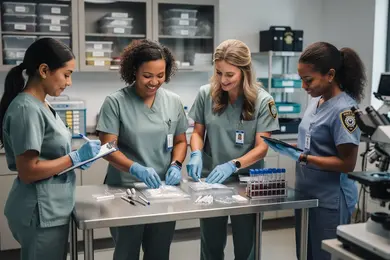
Employers hiring graduates with a forensic nursing master's degree prioritize a highly specialized skill set that merges clinical expertise with investigative rigor. Technical competencies such as precise evidence collection, biological sample preservation, and injury documentation are essential to minimize contamination risks and uphold legal standards, directly impacting admissibility in court. Analytical skills-sharpened through coursework in pathology and forensic science-enable graduates to differentiate accidental from inflicted trauma under pressure, a critical capability for accurate case management. Leadership aptitude often determines hiring outcomes as well, with many employers seeking candidates capable of managing interdisciplinary teams and developing protocols that comply with both healthcare and legal regulations. In hospital settings, for example, operational efficiency and strict regulatory adherence are weighted more heavily, while criminal justice institutions emphasize courtroom readiness and investigative knowledge.
Communication skills tailored to trauma-informed care and effective collaboration with law enforcement and legal professionals influence career trajectory significantly, especially in roles requiring client trust and interdisciplinary coordination. Graduates who lack these relational capacities may find their professional mobility limited despite solid technical acumen. Salary data suggest that specialists demonstrating these integrated skills can expect compensation reflecting their broader responsibilities, with median salaries for forensic nursing roles rising toward or above $90,000 annually in management-track positions (BLS, 2024). Conversely, graduates without training in emerging forensic technologies or certifications often face stagnant earnings and fewer leadership prospects. Thus, investing in programs that balance technical mastery with leadership and communication development is crucial for navigating diverse employer expectations and securing sustained advancement across healthcare and criminal justice environments.
Are Remote and Flexible Careers Available With a Forensic Nursing Master's Degree?
Remote and flexible job opportunities for forensic nursing graduates are inherently constrained by the clinical and investigative nature of the work. Roles requiring direct patient interaction and evidence collection, such as hospital-based forensic nursing, demand physical presence, limiting the feasibility of fully remote positions. However, flexible or hybrid models are increasingly found in supervisory, consultative, and research roles where case management, expert reporting, and policy compliance dominate. These positions leverage digital collaboration tools and secure health record platforms, enabling part-time remote work but often requiring periodic on-site visits to meet legal and evidentiary standards. Forensic nursing professionals must weigh tradeoffs between remote work flexibility and the increased responsibility and visibility that comes with in-person clinical duties, which can affect career advancement trajectories and compensation variability across geographic regions.
Industry sector and employer expectations strongly shape the availability of flexible careers with a forensic nursing master's degree. Academic, public health, and government roles tend to offer more stable remote schedules focused on data analysis and grant management, contrasting with the immediate response demands within clinical settings. Early-career specialists typically encounter fewer remote options because of required hands-on training, while mid-career nurses and independent consultants may negotiate more autonomy but face licensing and compliance barriers. Notably, enrollment trends reflect growing interest in flexible nursing education coinciding with workforce demands for adaptable scheduling, a pattern observed alongside increased searches for cheapest online school psychology programs. Understanding these operational limits helps professionals realistically evaluate flexible career pathways and their implications for long-term work-life integration and professional development.
What Certifications or Licenses Complement a Forensic Nursing Master's Degree?
Licenses and certifications play a pivotal role in translating a forensic nursing master's degree into a viable professional path, but they differ significantly in function and impact. Holding an RN or APRN license is legally mandatory to perform clinical duties or gather forensic evidence, forming the baseline credential across all settings. Beyond this legal requirement, certifications such as those awarded by the International Association of Forensic Nurses (IAFN)-notably the Sexual Assault Nurse Examiner (SANE) credential-serve as highly regarded credentials that align with specific operational demands. For example, hospitals and law enforcement agencies often require SANE certification for forensic nurses involved in direct patient examination and legal testimony, as it assures specialized clinical competence and adherence to investigative protocols. Many employers use these certifications as filters for recruitment and promotion, reflecting their value in regulatory compliance and institutional risk management, which can result in noticeable salary differences and leadership opportunities. This differentiation underscores the practical reality that not all forensic nursing roles value the same licenses or credentials equally, with some sectors prioritizing legal qualification while others emphasize forensic specialization.
Forensic nursing professionals benefit from understanding how these supplemental certifications impact career trajectories at various stages. Early-career practitioners typically prioritize obtaining foundational RN/APRN licensure alongside SANE certification to meet entry-level requirements. In contrast, mid- or late-career nurses may pursue advanced credentials such as the Advanced Forensic Nurse (AFN) or forensic clinical nurse specialist certifications to qualify for leadership, academic roles, or interdisciplinary consulting, leveraging these designations as evidence of expertise beyond the master's degree alone. Employers in forensic hospital units or medico-legal offices often mandate specific certifications to meet compliance standards and competitive hiring practices, with some states tying credential possession directly to eligibility for grants or law enforcement contracts. For those considering interdisciplinary pathways, for example integrating substance abuse counseling, exploring the best online substance abuse counseling degree programs may complement forensic nursing certifications and expand professional scope. However, maintaining certifications involves ongoing education and administrative workload, requiring professionals to weigh these commitments against career benefits. Licensed forensic nurses without key certifications risk limited job eligibility and capped earning potential, highlighting the strategic importance of aligning credentials with the demands of intended work environments and long-term career planning.
What Graduates Say About Career Opportunities With a Forensic Nursing Master's Degree
- Kian: "Balancing full-time work and a master's in forensic nursing was a constant challenge, especially with limited time to dedicate to internships. I chose a program that emphasized flexibility and offered remote coursework, which made it manageable. Although I didn't complete a traditional internship, the portfolio I developed through simulated case studies helped me secure a clinic-based position, even if advancement feels slower without a clinical licensure."
- Leonard: "The financial strain of returning to school was a big hurdle, so I prioritized programs with strong employer connections over sheer length or reputation. Choosing a forensic nursing master's that integrated certification prep directly into the curriculum allowed me to earn credentials quickly and land a specialized hospital role. I've noticed, though, that despite the certification, some roles still require significant experience, making ongoing networking essential."
- David: "After switching careers later in life, I needed a forensic nursing program that offered a balance between academic rigor and practical skills without excessive workload. I opted for a program focused on hands-on forensic techniques and networking with local law enforcement agencies. This led to a valuable internship providing real-world experience, which directly resulted in a part-time forensic examiner position-though I'm aware I'll need further clinical hours to move into full-time roles."
Other Things You Should Know About Forensic Nursing Degrees
Programs emphasize different skill sets depending on their clinical or investigative orientation. Those with stronger clinical components prepare students to manage patient care, trauma assessment, and evidence collection within healthcare settings, which aligns well with hospital or sexual assault nurse examiner roles. Conversely, programs stressing investigative skills may better equip graduates for collaboration with law enforcement or legal professionals but may require additional clinical experience to qualify for direct patient care roles. Prospective students should prioritize programs that match their intended work environment to avoid gaps between training and employer expectations.
Forensic nurses often face heavier and less predictable workloads than traditional nursing roles due to the dual demands of clinical care and legal documentation. This can mean extended hours, emotionally taxing case involvement, and rigorous adherence to chain-of-custody standards. Understanding this reality before committing to the degree is critical, as it impacts work-life balance and stress management. Candidates should assess their tolerance for high-pressure environments and seek programs or employers that provide adequate support systems and realistic workload expectations.
Previous nursing experience is often a key factor for both admission and career progression in forensic nursing. Candidates with substantial bedside or emergency nursing backgrounds typically transition smoother into forensic roles and advance faster due to familiarity with patient assessment and clinical documentation. While the master's degree provides specialized knowledge, employers frequently prioritize hands-on nursing competence. For this reason, investing time in acquiring robust clinical experience before or alongside forensic education is often advisable to maximize postgraduation opportunities.
Yes, programs that actively integrate interdisciplinary training with law enforcement, social work, and legal professionals tend to yield better career outcomes. This is because forensic nursing inherently requires seamless cooperation across sectors to ensure case integrity and effective patient advocacy. Graduates from programs lacking this aspect may find themselves underprepared for the communication and teamwork demanded on the job. Prioritizing such programs, even if they may be more time-intensive or selective, usually provides a more comprehensive skill set that aligns with employer expectations.
References
No references available.