
2027 Choosing an Online MS in Psychology - Forensic Psychology Around A Four-On Four-Off Work Rotation
Audited and Verified:
Our Editorial and Data Verification Process
Research.com uses government datasets, official education statistics and primary institutional information to support its career and degree guides. Our review process checks factual accuracy, occupational definitions, source dates and the requirements associated with the credentials discussed.
How This Article Was Fact-Checked
Our editorial team verifies salary estimates, employment projections, education requirements and program information against original data providers and official organizations. Salary figures are checked against the relevant occupational definitions and reporting periods. Information about licensure, accreditation and required in-person training is reviewed separately.
Fact-checked and verified on:

Co-Founder and Chief Data Scientist
A four-on, four-off rotation gives you recurring study days, but it does not guarantee you can attend live seminars, meet fixed deadlines, or complete a placement. If you work in corrections, emergency services, law enforcement, or another round-the-clock setting, the right online MS in forensic psychology must fit both your schedule and your career goal.
This guide shows you how to test that fit, compare programs and costs, and distinguish nonclinical justice-system work from licensed forensic practice before you enroll.
Key Things You Should Know
- A four-on, four-off rotation repeats every eight days, so fixed weekly class meetings can eventually fall on workdays. Check the entire course calendar, not just whether a program is advertised as online.
- Prioritize institutionally accredited programs that disclose live-session, examination, group-work, and placement requirements; online delivery alone does not make these flexible.
- A forensic psychology MS can support nonclinical justice-system work, but it does not by itself qualify you to practice as a licensed forensic psychologist or provide independent psychological evaluations.
What Is an Online MS in Forensic Psychology?
An online Master of Science in forensic psychology studies psychological science in legal and justice-system contexts. Depending on the program, it may emphasize research, behavior in correctional settings, victim services, or the evaluation of justice-related programs. An MS is a graduate degree, not a license or a grant of investigative authority.
Start with the work you want to do. A corrections or public-safety employee seeking stronger research and program-evaluation skills may benefit from a nonclinical MS. Someone whose immediate goal is an entry-level justice role may get more value from relevant experience or a bachelor's degree first. If you have not completed a bachelor's degree, faster online forensic psychology degree completion addresses that earlier step; it is not a substitute for checking graduate admission requirements.
Can You Become a Forensic Psychologist With a Master's Degree?
Generally, an online forensic psychology MS alone does not qualify you for independent practice as a licensed psychologist. That pathway typically involves an appropriate doctoral degree, supervised experience, examinations, and approval by the state licensing board. Forensic evaluation or expert-witness work also requires competence appropriate to the assignment; a course title does not establish it.
Separate the goal from the degree name. If you want to study justice-related behavior or improve services in your agency, a nonclinical MS may fit. If you want to provide psychotherapy, examine a qualifying clinical pathway instead. Even intensive graduate study in clinical mental health counseling must be evaluated against the relevant state's counselor-licensure requirements; counseling licensure and psychologist licensure are different pathways.
How Do You Choose an Accredited Online Forensic Psychology Program?
First, verify the institution's accreditation through the accreditor and confirm that it applies to the school awarding the degree. Then verify the exact degree, online format, and requirements for your intended entry term. Do not mistake institutional accreditation for proof of clinical-licensure eligibility: APA accreditation does not generally apply to nonclinical forensic psychology master's programs.
Ask for the current course schedule and handbook, not just a description of "flexibility." The most consequential details for a rotating-shift worker are mandatory live attendance, exam windows, group meetings, campus visits, and any field experience. If a placement is required, establish who finds the site, what supervision is required, and whether your existing job could qualify before treating it as an option.
Compare written policies and outcomes alongside advertised tuition. This overview of online forensic psychology tuition admissions and outcomes can help you organize candidates, but obtain final answers from each school and, for a regulated career, the relevant licensing board.
Your rotation repeats every eight days, while most classes operate on a seven-day week. A seminar that initially lands on an off day will not reliably stay there. The comparison below shows why the type of obligation matters more than the word "online."
| Course obligation | Fit with a rotating schedule | Key limitation |
| Recorded lessons with predictable deadlines | Usually easier to plan across work and off days | Deadlines may still fall immediately after shifts |
| Required weekly live meetings | Potential conflicts as the rotation moves through weekdays | Recordings may not replace required attendance |
| Group projects or supervised placement | Depends on other people's availability | Agency or supervisor hours may not match off days |
Before committing, map a full course term against your duty roster, including overtime and the recovery time you need after shifts. Ask whether live sessions have alternatives, exams have multi-day windows, and placements can be completed at approved times. Get answers in writing from the program - not just an enrollment representative.
If your schedule is stable but your available study time is limited, a lighter course load may be safer than a compressed term. Compare twelve-month forensic psychology graduate study pathways only after confirming their actual weekly demands.
Curricula vary, but relevant offerings may include psychology and the law, research methods, statistics, ethical issues, psychopathology as an academic subject, and courses on victimization or correctional settings. Look beyond topic names: a methods course with a supervised research project may serve an agency analyst better than several survey courses. A thesis or capstone can also be valuable if its supervision and deadlines fit your rotation.
Ask what an applied assignment actually permits. Studying assessment does not authorize you to administer restricted tests, and an agency-based project needs appropriate site permission and safeguards for confidential information. If your goal is specifically recovery-service work rather than forensic research, compare that curriculum with more direct options, including budget-friendly substance abuse counseling bachelor's study; check your state's credential rules before choosing either route.
Programs typically require a completed bachelor's degree and an application with transcripts; individual schools set their own GPA, prerequisite, recommendation, and writing requirements. A psychology major is not universally required. Experience in corrections, public safety, victim services, or another justice setting can help explain your goals, but it does not automatically replace a required statistics or research-methods course.
Request a prerequisite review before paying an application fee. If you lack psychology or quantitative preparation, ask whether a course taken elsewhere will satisfy the specific requirement and whether it must be completed before enrollment. For applicants still finishing undergraduate study, online psychology education on a budget may help frame cost comparisons, but only the prospective MS program can approve prerequisite equivalencies.
Completion time depends on required credits, course availability, enrollment pace, and whether a thesis or placement has a fixed sequence. A program's advertised fastest finish may assume continuous, full-time enrollment - an important distinction when overtime or fatigue could interrupt study. Use faster online forensic psychology master's completion as a starting point for questions, not as a promise that its pace will work with your roster.
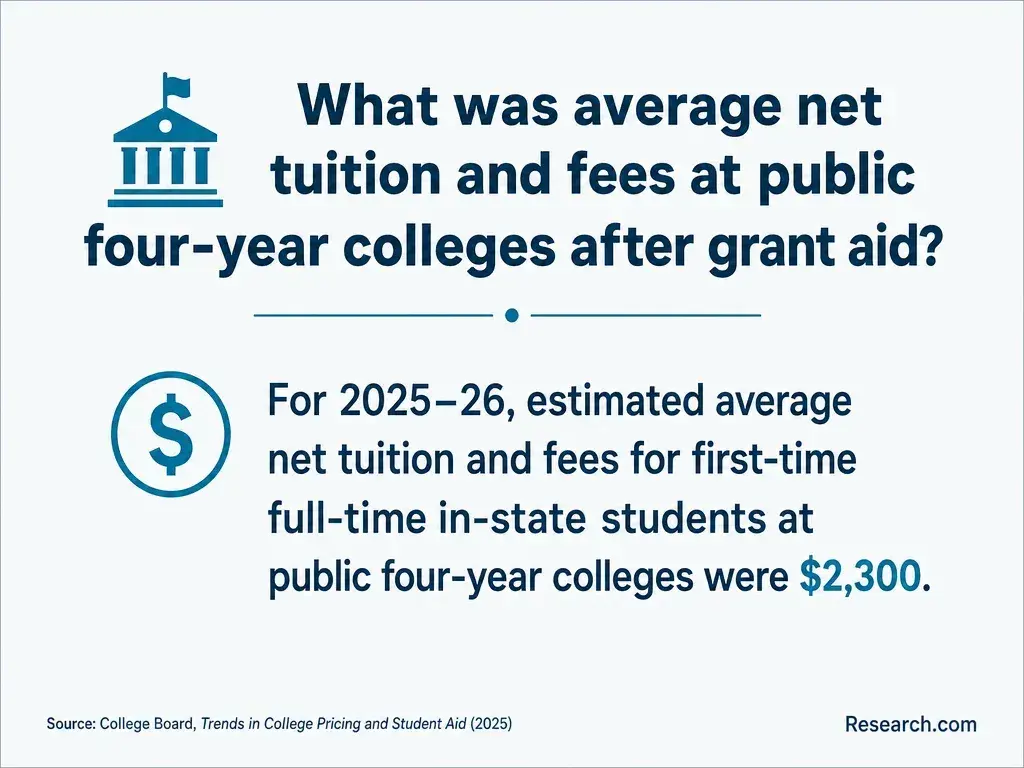
For a usable cost estimate, request the current per-credit tuition and mandatory fees, then add books, software, required travel, and any placement-related expenses. Ask whether a slower pace changes fees or financial-aid eligibility. If your employer offers education assistance, confirm covered courses, approval deadlines, grade requirements, and repayment conditions before counting it as a saving.
Potential nonclinical directions include victim-services coordination, corrections program support, justice-related research assistance, policy analysis, and program evaluation. Hiring depends on the position's duties, your prior experience, agency rules, and any required civil-service or other qualifications. For someone already employed in a justice agency, an internal project or advancement opportunity may be more realistic than expecting the degree alone to open a new profession.
Match job postings to evidence you can develop: research design and data interpretation for analyst roles; careful documentation and referral skills for service coordination; or evaluation experience for program work. If your preferred setting is substance-use recovery, explore career choices across recovery service settings and check whether the target position instead requires a specific state-recognized credential.
There is no single reliable salary or employment-growth figure for "forensic psychology MS graduates": graduates enter different occupations, and forensic psychologist is not interchangeable with an unlicensed support or analyst role. Bureau of Labor Statistics psychologist wage and outlook figures describe that occupation broadly, not the expected earnings of someone with this master's degree.
For a useful estimate, compare current job postings and the latest Bureau of Labor Statistics data for the specific occupation you could qualify for. Public-sector applicants should also inspect the agency's pay grade, location, experience rules, and whether the degree changes eligibility for promotion. Lists of higher-paying career paths after forensic psychology graduate study are best treated as leads to verify against actual job requirements, not as graduate salary forecasts.
What Licenses and Certifications Are Needed for Forensic Psychology Careers?
Requirements follow the work, not the forensic label. Independent psychological assessment and practice under the protected title of psychologist require the applicable state psychologist license. Nonclinical research, coordination, or program-support positions may have no psychology license requirement, although employers can impose training, background-check, or other conditions. Specialized credentials do not replace a required professional license.
If your intended work is therapy rather than forensic research, check the state board's educational, supervised-experience, and examination rules before selecting a degree. A guide to short counseling master's formats and career planning can clarify that alternative, but a short format is useful only if the particular program meets the requirements where you intend to practice.
Other Things You Should Know About Psychology
Not without the necessary employer authorization and course approval. Client and agency confidentiality rules still apply to student work; removing names alone may not make a case safe to share.
Follow the program's academic-integrity rules and never enter confidential workplace information into an unapproved tool. Check claims and citations yourself.
Ask the school which library databases, librarian consultations, and remote-access services are available to students in the specific program.
Contact the instructor promptly and follow the published extension policy. A rotating shift or overtime requirement does not automatically excuse a deadline, so establish a contingency plan early.
- Cost of Attendance (Budget) | 2026-2027 Federal Student Aid Handbook https://fsapartners.ed.gov/knowledge-center/fsa-handbook/2026-2027/vol3/ch2-cost-attendance-budget
- GAC - Chapter 510-2 LICENSURE BY EXAMINATION https://rules.sos.ga.gov/gac/510-2
- Frequently Asked Questions - California Board of Psychology https://www.psychology.ca.gov/licensees/faq.shtml
- Datapoint: Admission criteria for graduate psychology programs are changing | apa.org https://www.apa.org/monitor/2024/06/admission-criteria-graduate-psychology-programs
- How to become a forensic psychologist: steps and skills | Capella University https://www.capella.edu/blog/psychology/how-to-become-a-forensic-psychologist-steps-and-skills/
- Employment-Based Practicum Placements | charlotte.edu https://socialwork.charlotte.edu/practicum-education/employment-based-practicum-placements/
- Placement Process FAQ | Syracuse University Online Master's Programs https://onlinegrad.syracuse.edu/social-work/admitted/field-faq/
- Career Options for Forensic Psychology Students | LSU Online https://online.lsu.edu/newsroom/articles/what-can-you-do-forensic-psychology-degree/
- How to be a Successful Online Student | Scottsdale Community College https://www.scottsdalecc.edu/students/elearning/how-be-successful-online-student
- Practicum Education Manual - VI. Practicum Education Placement Policies, Procedures, and Processes https://socialwork.wayne.edu/practicum/manual/policies


