2027 Choosing an Online MS in Psychology - Forensic Psychology Around Studying Primarily on a Tablet
Audited and Verified:
Our Editorial and Data Verification Process
Research.com uses government datasets, official education statistics and primary institutional information to support its career and degree guides. Our review process checks factual accuracy, occupational definitions, source dates and the requirements associated with the credentials discussed.
How This Article Was Fact-Checked
Our editorial team verifies salary estimates, employment projections, education requirements and program information against original data providers and official organizations. Salary figures are checked against the relevant occupational definitions and reporting periods. Information about licensure, accreditation and required in-person training is reviewed separately.
Fact-checked and verified on:

Co-Founder and Chief Data Scientist
A tablet can handle much of an online forensic psychology master's program, but the wrong program - or the wrong device assumptions, can make research papers, statistics, exams, and fieldwork difficult. This guide is for prospective students who expect a tablet to be their main study device.
It explains which tasks are tablet-friendly, when computer access is essential, and how to compare programs without overlooking accreditation, professional boundaries, or total cost. The goal is a workable enrollment decision, not simply a program advertised as "online."
Key Things You Should Know
- A tablet-first approach is possible, not guaranteed, confirm requirements for statistical software, document formatting, exam proctoring, and any placement before enrolling.
- Plan for computer access, even a program with mobile-friendly classes may require a desktop-class browser or software for particular assignments.
- Check the career pathway separately, a forensic psychology MS can support nonclinical justice-related work but does not, by itself, qualify someone as a licensed forensic psychologist.
What Is an Online Master's in Forensic Psychology?
An online master's in forensic psychology studies psychological science in legal and justice-system contexts. Depending on the school, it may emphasize research, behavioral analysis, victim services, corrections, or the relationship between mental health and the law. "Online" describes how coursework is delivered; it does not establish that every activity is asynchronous, remote, or usable on a tablet.
Start by checking whether the award is an MS in forensic psychology, a general psychology master's with a formal concentration, or a different degree with forensic electives. That distinction affects the required courses and the credential shown on a transcript. If you are still deciding on the degree level, reviewing online psychology education pathways can help you separate undergraduate preparation from graduate specialization.
Is an Online Forensic Psychology Master's Accredited?
Accreditation depends on the institution and the specific credential - not on whether classes meet online. Verify the school's current institutional accreditation through the accreditor and the U.S. Department of Education's recognition information, then confirm that the degree is offered by that accredited institution. Ask whether any advertised program-level recognition applies to this master's program.
Do not assume an MS in forensic psychology needs or holds American Psychological Association accreditation. APA accreditation applies to specified professional psychology doctoral programs and training settings, not generally to nonclinical forensic psychology master's degrees. If your actual goal is counselor licensure, evaluate a qualifying counseling program and its state-specific requirements instead; accelerated accredited clinical mental health counseling programs address a different credential pathway.
Can You Become a Forensic Psychologist With a Master's Degree?
Generally, not through the MS alone. In the United States, using the title psychologist and independently performing forensic psychological evaluations ordinarily requires psychologist licensure, typically involving doctoral professional training, supervised experience, and examinations under state rules. Expert-witness work also depends on relevant qualifications and the court's standards; a forensic course does not confer authority to testify as an expert.
A master's may instead prepare you for research, program support, victim-service coordination, or justice-agency roles within the limits of the job. If you want to provide psychotherapy, compare the specific licensure requirements for counseling or social work rather than assuming forensic coursework will count toward them. Choosing a shorter clinical mental health counseling master's is only useful if that program meets the educational rules where you intend to practice.
Curricula differ, but relevant work may cover research methods, statistics, psychology and law, violence or victimization, correctional settings, and ethical interpretation of evidence. Some programs use a thesis or applied capstone; others emphasize coursework. For a tablet-first student, the crucial distinction is whether a course asks you merely to read about research or to analyze data, manage citations, and produce a substantial report.
Review actual course descriptions and assignment examples. A class on psychological assessment can teach the limits of tests in legal settings without qualifying students to administer restricted instruments or make clinical findings. If your intended work is substance-use treatment rather than forensic research or support services, substance use counseling program pathways are a more direct comparison; credential rules still vary by state.
Yes, if "primarily" does not mean "exclusively." A tablet can work well for readings, discussion posts, video meetings, and draft notes. The greatest compatibility risks are statistical analysis, long papers with precise formatting, library databases, and remotely proctored exams. An external keyboard improves writing comfort but does not make tablet software equivalent to desktop software.
This task comparison shows why a program's general claim of mobile access is not enough to establish tablet compatibility.
| Graduate task | Tablet fit | Potential limitation |
| Readings and recorded lectures | Usually strong | Some ebooks or embedded media have access restrictions |
| Discussion posts and live meetings | Often workable | File sharing or multitasking may be limited |
| Research papers and citations | Possible with testing | Formatting, reference tools, and tracked changes may differ |
| Statistics and proctored exams | Program-dependent | Required software or monitoring may need a computer |
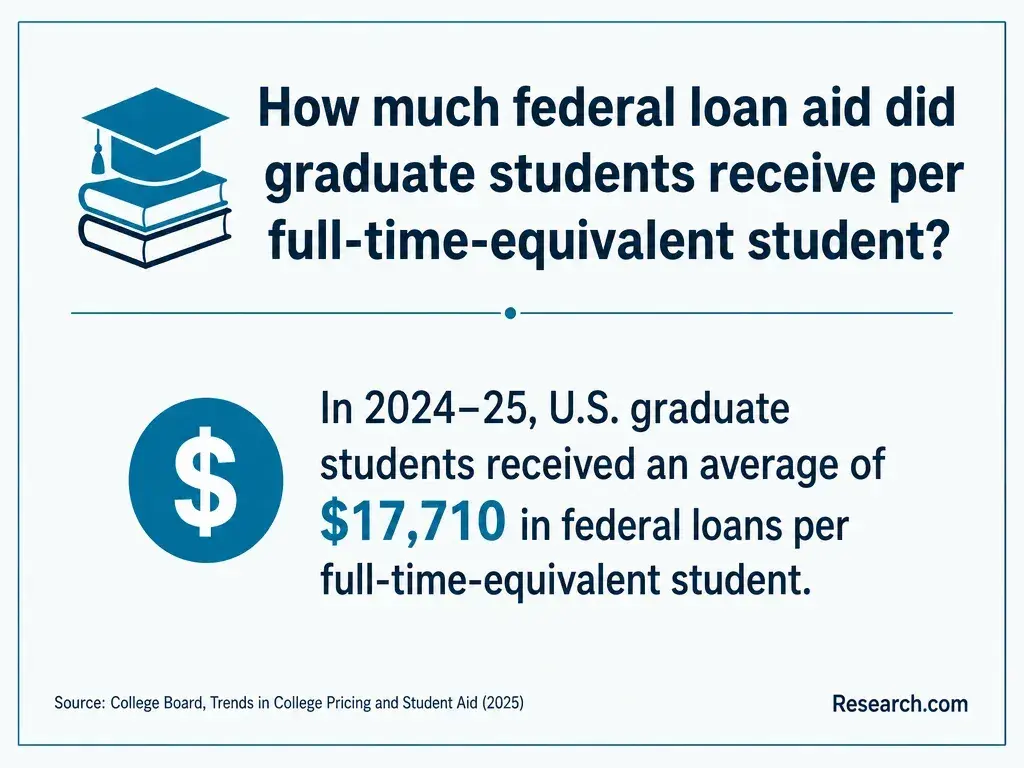
Before paying a deposit, ask for the learning-platform device requirements and the software list for every required course, not just an introductory class. Test a sample library search, file upload, and document submission on your tablet's operating system. Request the exam vendor's supported-device specifications and ask whether the school offers computer-lab access or loans. Include any needed computer, keyboard, software, and connectivity in your cost comparison; economical routes to graduate psychology study are not economical if required technology creates an unplanned expense.
The meaningful difference is access to required learning activities, not whether one format is inherently more rigorous. An online program may remove a commute yet require scheduled seminars, group meetings, on-site experiences, or travel. A campus program may provide easier access to computers, research teams, and in-person faculty support, but its timetable may be less practical for a working student.
Compare the formats against your actual weekly schedule and equipment access. Ask each program when required courses run, which sessions are live, how thesis or capstone supervision works, and whether any placement can be completed near home. Price travel and unpaid time alongside tuition. For a returning adult, psychology degree affordability for returning adults is useful context, but the relevant comparison here is the total cost of the master's formats you can realistically complete.
Schools commonly ask for a bachelor's degree, transcripts, and evidence that an applicant can handle graduate writing and research. A psychology major is not universally required. Programs may also specify a GPA, psychology or statistics prerequisites, recommendations, a statement of purpose, or relevant experience; only the program's current admissions policy can establish what is mandatory.
Compare your transcript with the published prerequisites before assuming that professional experience substitutes for a course. Ask admissions whether a missing requirement can be completed before enrollment or under a conditional offer, and obtain the answer in writing. If you have not finished a bachelor's degree, evaluating transfer options before psychology enrollment may help you plan that earlier step; the receiving institution decides which credits satisfy its degree requirements.
Completion time depends on required credits, course availability, enrollment intensity, and whether a thesis, capstone, or approved experience must be completed. An advertised fast route may depend on taking courses every available term and meeting fixed deadlines. Tablet limitations can also slow progress if a required assignment becomes difficult to complete without computer access.
Ask for a term-by-term plan based on your intended course load, including when required courses and project supervision are available. Check leave and course-repeat policies if work or caregiving could interrupt study. Fast-track graduate psychology programs offer a comparison point, but a shorter calendar is valuable only if its workload, technology requirements, and curriculum fit your goal.
Potential nonclinical directions include victim-services coordination, justice-program support, corrections-related administration, and research or program-evaluation assistance. Hiring depends on the employer's required degree, experience, security or background rules, and demonstrated skills. An MS does not automatically qualify its holder for a job titled forensic psychologist, clinical assessment work, or criminal-investigation authority.
There is no reliable single "forensic psychology master's salary": those jobs belong to different occupations with different pay structures. When evaluating a program's earnings claims, ask which job titles its graduates actually hold, how many graduates responded, and whether the figure refers to all workers in an occupation rather than program alumni. Compare the tuition, technology costs, and likely entry role with a less specialized alternative. If counseling is your goal, planning the time and cost of a counseling master's is more relevant than using psychologist wages to estimate a forensic MS return.
What Is the Job Outlook for Forensic Psychology Careers?
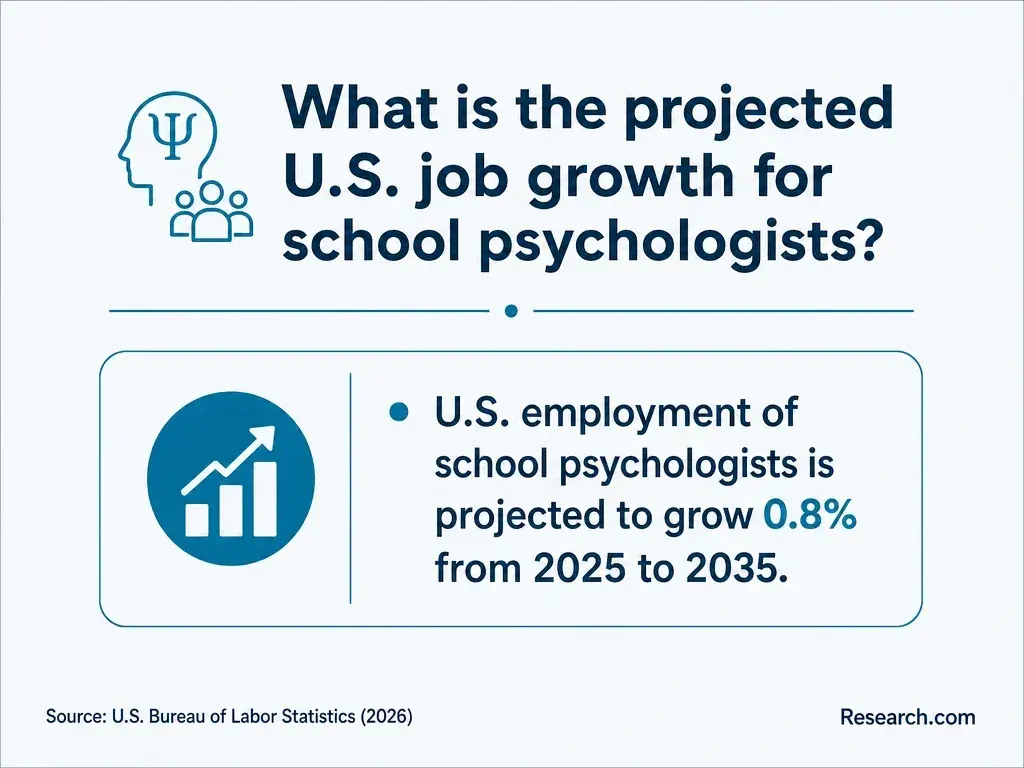
"Forensic psychologist" is not a stand-alone federal employment projection covering everyone with this master's. U.S. Bureau of Labor Statistics projections for psychologists describe a broader, typically doctoral-level occupation; they should not be read as a forecast of jobs for forensic MS graduates. For nonclinical work, use the projection for the specific occupation and location you intend to pursue, then inspect local job postings for degree and experience requirements.
This matters if your goal is simply to enter a growing service field: a specialized forensic MS may be less direct than a role-specific undergraduate credential, supervised experience, or a qualifying professional degree. For someone still at the undergraduate stage and considering substance-use services, FAFSA for online substance use counseling undergraduates addresses financing that separate pathway, not funding for a forensic master's. Choose the forensic MS when its coursework and achievable experience match identifiable jobs, rather than a broad occupational growth claim.
Other Things You Should Know About Psychology
It can make drafting easier, but test your required citation style, document formatting, comments, and file exports before relying on a tablet for final submissions.
Sometimes. Download permissions vary by learning platform, ebook license, and instructor. Confirm access before assuming a commute or unreliable connection can be used for coursework.
Contact the school's accessibility office before enrollment. Ask how required apps, exams, readings, and any proposed accommodations work with your particular tablet and assistive tools.
Check your employer's device policy and the school's software requirements. Managed devices may block installations or file transfers, and sensitive workplace records should not be used for coursework without authorization.
- Certification Procedures for Title IV of the HEA | ed.gov http://www.ed.gov/laws-and-policy/higher-education-laws-and-policy/higher-education-policy/ope-guidance-documents/frequently-asked-questions-certification-procedures-title-iv-of-hea
- Cost of Attendance (Budget) | 2025-2026 Federal Student Aid Handbook https://fsapartners.ed.gov/knowledge-center/fsa-handbook/2025-2026/vol3/ch2-cost-attendance-budget
- A Career in Forensic and Public Service Psychology | apa.org https://www.apa.org/education-career/guide/subfields/forensic/education-training
- Test/Exam Guidelines | Bryan College of Health Sciences https://catalog.bryanhealthcollege.edu/testexam-guidelines
- Professional Licensure and Certification Information | University of South Carolina https://sc.edu/about/offices_and_divisions/provost/our-offices/academicprograms/state-authorization/professional-licensure-info.php
- MS in Forensic Psychology | Neumann University https://www.neumann.edu/academics/grad/masters-degree-in-forensic-psychology
- Approved Fieldwork Site Application Process | The University of New Mexico https://coehs.unm.edu/departments-programs/ifce/counselor-education/fieldwork.html
- Detailed Tablet Requirements " - Speed School of Engineering https://engineering.louisville.edu/academics/computerrequirement/detailedtabletrequirements/