2027 Choosing an Online MS in Psychology - Forensic Psychology for a Future PhD in Cognitive Psychology: Prerequisites to Compare
Audited and Verified:
Our Editorial and Data Verification Process
Research.com uses government datasets, official education statistics and primary institutional information to support its career and degree guides. Our review process checks factual accuracy, occupational definitions, source dates and the requirements associated with the credentials discussed.
How This Article Was Fact-Checked
Our editorial team verifies salary estimates, employment projections, education requirements and program information against original data providers and official organizations. Salary figures are checked against the relevant occupational definitions and reporting periods. Information about licensure, accreditation and required in-person training is reviewed separately.
Fact-checked and verified on:

Co-Founder and Chief Data Scientist
An online MS in forensic psychology may fit your interests, but its name does not tell a cognitive psychology PhD committee whether you can design experiments, analyze data, or contribute to a research lab. If doctoral study is your goal, the consequential choice is whether this particular master's program will close your preparation gaps better than targeted courses or research experience. This guide shows prospective students how to compare prerequisites, research access, online formats, cost, and career value before committing to a degree that may not be necessary for PhD admission.
Key Things You Should Know
- A forensic psychology MS can support a cognitive psychology PhD application, but a master's degree is not universally required; research experience and faculty fit may matter more than the concentration name.
- Prioritize statistics, experimental methods, cognition coursework, and supervised research over a short completion time or a forensic-only capstone.
- Compare the full tuition and fee estimate with the cost of filling specific gaps through courses and research experience; an online, nonclinical MS does not itself confer psychologist licensure.
What Is an Online MS in Forensic Psychology?
An online MS in forensic psychology is graduate study of psychological science and its applications to legal and justice settings. Depending on the program, students may examine eyewitness memory, decision-making, victimization, correctional systems, or research methods. Delivery may be asynchronous, live online, or a combination; "online" does not establish that research meetings or other obligations are flexible.
For a future cognitive psychology researcher, eyewitness memory and legal decision-making offer a plausible intellectual bridge. The degree is less useful when its required courses emphasize justice-system practice but provide little experimental design, quantitative analysis, or opportunity to work with a research mentor. If your principal goal is a different applied occupation, compare that occupation's qualifications rather than treating forensic psychology as an all-purpose credential. For example, substance abuse counseling bachelor's tuition and earning potential concern a distinct career and credential pathway, not preparation for cognitive research.
Can a Forensic Psychology Master's Prepare You for a Cognitive Psychology PhD?
Yes, if it produces evidence of cognitive research readiness. Doctoral admissions committees can evaluate a well-designed thesis on memory or attention, substantial lab work, quantitative skills, and informed alignment with potential faculty. A forensic label alone supplies none of those. Many research-oriented psychology PhD programs admit qualified applicants from bachelor's programs; the MS is most defensible when it remedies a demonstrable gap or provides research access you cannot otherwise obtain.
The comparison below separates features that help a cognitive PhD application from features that may have value for other goals. It is a framework for reading actual program requirements, not a ranking of degrees.
| Program feature | Value for cognitive PhD preparation | Key limitation to check |
| Faculty-supervised empirical thesis | Shows research design, analysis, and scholarly writing | Check whether a cognitive topic and suitable supervision are available |
| Applied forensic capstone | Can demonstrate careful literature review or evaluation | May not provide original research experience |
| Justice-focused electives | Can establish a legal-context research question | May displace cognition and advanced methods courses |
| Research assistantship | Builds collaboration and a potential research recommendation | Online students may have limited or competitive access |
An accelerated degree is not automatically a faster route to doctoral competitiveness: a compressed calendar can leave little time to develop and revise a study. Weigh forensic psychology one-year program value considerations against the time needed for meaningful mentorship. If you already have strong methods training, a research assistant position or targeted cognitive courses may be the more direct choice.
What Prerequisites Do Cognitive Psychology PhD Programs Require?
Requirements vary by department and potential advisor. Some programs specify prior psychology, statistics, or research-methods coursework; others admit students from related disciplines when they can demonstrate equivalent preparation. Admission eligibility is not the same as competitiveness: meeting a course minimum does not show that you can formulate a research question or interpret experimental results.
Compare the published requirements of several PhD programs you would realistically apply to. This sequence keeps you from buying a full master's degree to solve a narrower problem:
- Record each program's required degree, courses, tests, and application materials, distinguishing requirements from recommendations.
- Match those expectations to your transcript, research work, and quantitative skills; ask admissions staff how they evaluate uncertain course equivalencies.
- Identify potential cognitive faculty and read their recent work before deciding whether a forensic research topic fits.
- Fill remaining gaps through an appropriate course, supervised project, or master's program with documented research access.
If you need extensive foundational psychology study, psychology degree planning for prospective online students offers a different starting point. First determine whether doctoral departments require another degree or will consider focused prerequisite coursework.
Check the institution's current accreditation status directly with its recognized institutional accreditor and confirm that the status applies to the school awarding the degree. Then verify the exact program name and degree level in the university catalog. Institutional accreditation is important for academic legitimacy, but it does not verify thesis availability, cognitive faculty access, transfer of graduate credit, or eligibility for a professional license.
Do not reject a nonclinical forensic MS because it lacks American Psychological Association program accreditation: APA accreditation concerns specified professional psychology programs and training, not general accreditation of every psychology master's. Conversely, do not treat an institution's accreditation as evidence that its forensic MS qualifies graduates for clinical practice. If a bachelor's route is being considered to repair foundational gaps, evaluate lower-tuition undergraduate psychology options under the same institution-level check, then confirm whether their courses satisfy your target PhD programs.
Look beyond a course titled "cognitive psychology." Strong preparation connects theories of attention, memory, perception, language, or decision-making to experimental design, statistical inference, and measurement. Programming or reproducible data-analysis experience can strengthen that foundation, but no single software package is universally required.
A useful sequence is introductory statistics and research methods before advanced experimental work, followed by a faculty-supervised project in a cognitive question. Compare course descriptions and prerequisites, not just elective names. Accelerated psychology curriculum planning can help you think through timing, but speed should not crowd out the methods course or research experience you need.
Forensic topics can support this sequence when they are studied as research questions - for example, how memory conditions affect eyewitness recall - rather than treated as training to conduct forensic assessments. Before collecting participant data, establish faculty supervision and check institutional review, consent, privacy, and data-access requirements.
Expect to document a completed bachelor's degree and submit transcripts; programs may also request a statement, recommendations, a résumé, prerequisite courses, or evidence of research preparation. GPA thresholds, entrance-test policies, and whether a non-psychology major is acceptable vary. An applicant from criminal justice, education, computing, or another field should ask separately about formal admission requirements and the background needed to succeed in graduate methods courses.
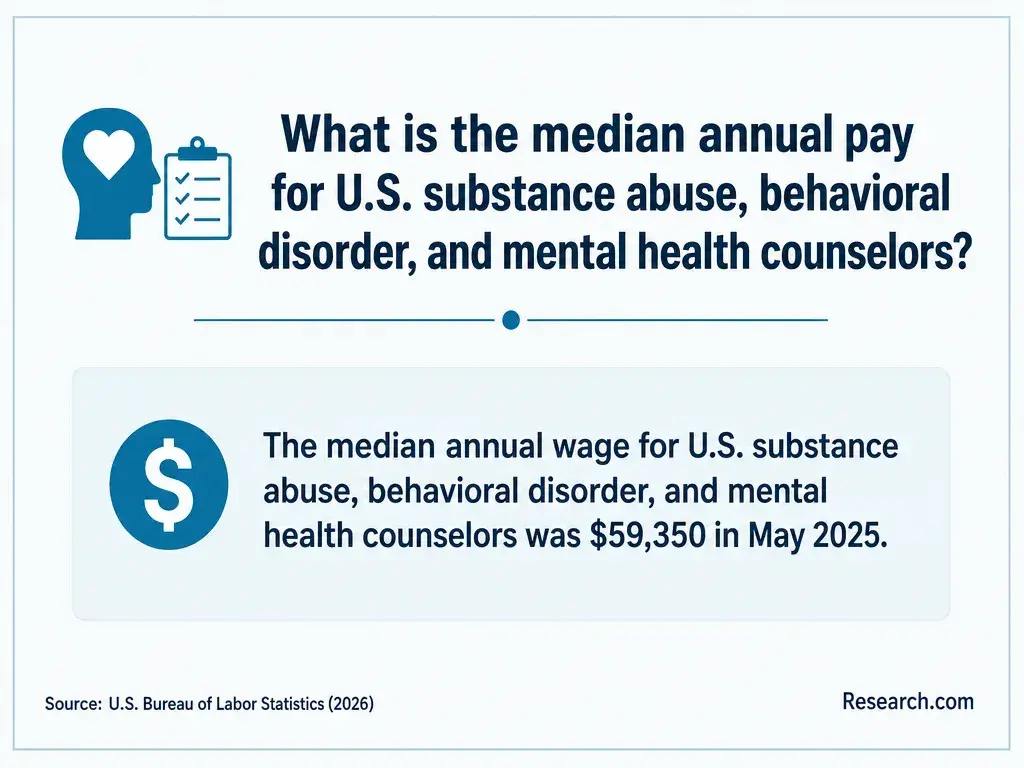
Before applying, request the current catalog requirements and ask whether missing statistics or psychology coursework can be completed before enrollment or alongside the degree. Seek confirmation in writing if an advisor proposes an exception. If your intended work is substance-use counseling rather than doctoral research, compare that pathway's admission and aid eligibility for online substance use counseling study separately; it is not an interchangeable substitute for a cognitive-research plan.
Online study may let you keep a job or remain near an existing research site. Campus study may make regular lab participation and informal faculty contact easier. Neither format guarantees a thesis, an assistantship, or a strong recommendation. The decisive difference for this goal is whether you can participate consistently in supervised cognitive research.
Ask how often research teams meet, whether remote students can join them, who approves a thesis topic, and whether campus visits are required. Check live-session times and group-project schedules against work or caregiving commitments. Clinical training follows different placement and supervision rules; shortening the path through a clinical counseling master's is relevant only if your goal changes from cognitive research to counseling qualification.
Completion time depends on required credits, course rotation, enrollment pace, and whether a thesis needs additional research terms. A short advertised timeline may assume uninterrupted full-time enrollment or a capstone rather than an empirical thesis. Obtain a term-by-term plan for the courses and research work you intend to complete.
For a usable cost comparison, request the program's current per-credit tuition, required credit total, mandatory fees, and any research, technology, or continuation charges. Add likely travel and the earnings you would forgo if you reduced work hours. Then compare that total with targeted coursework and research experience, not merely another school's tuition headline. Affordable distance learning in graduate psychology is a starting point for identifying alternatives; confirm each current price and whether the curriculum advances your PhD goal.
Depending on prior experience and employer requirements, graduates may pursue nonclinical research support, program evaluation, victim-services coordination, or justice-agency support roles. Responsibilities can include managing study procedures, organizing service information, analyzing program data, or coordinating referrals - not independently diagnosing people or conducting forensic evaluations. Employers may value demonstrated data skills or relevant agency experience more than the concentration title.
There is no defensible single "forensic psychology MS salary": those jobs fall into different occupations and pay structures. When assessing exploring better-paid roles related to forensic psychology, compare the duties and hiring criteria with your experience. An occupation-wide Bureau of Labor Statistics wage is not a prediction of what a new MS graduate will earn, particularly in public agencies with defined pay grades.
Do You Need Licensure or Certification After a Forensic Psychology Master's?
Not for every nonclinical research or support job. Licensure or certification depends on the work you intend to perform and the jurisdiction, not simply on earning a forensic psychology MS. Independent psychological assessment, diagnosis, psychotherapy, and use of protected psychologist titles require the applicable professional qualifications; a nonclinical forensic MS does not itself provide them. Some support or counseling-adjacent jobs have separate employer, state, or certification requirements.
Check the specific job description and relevant state board before selecting a degree for practice eligibility. For instance, career options in recovery services can involve support, coordination, or credentialed counseling, with materially different qualifications. If your goal remains a cognitive psychology PhD, evaluate this MS chiefly as research preparation - not as a shortcut to a clinical or forensic-practitioner license.
Other Things You Should Know About Psychology
Possibly, but doctoral programs set their own credit-transfer and residency policies. Get a written evaluation; do not assume transferred credits will shorten research milestones.
Choose instructors or research supervisors who can describe specific analytical work, collaboration, and scholarly growth. Ask early whether remote research involvement would let a faculty member evaluate you in depth.
Only share material you are authorized to disclose. Obtain required organizational permissions and remove protected information; a public source or deidentification alone does not resolve every ethical or legal obligation.
Yes, if your preparation fits that lab's questions and methods. Check whether you need additional biological psychology, neuroscience, imaging, or quantitative experience rather than relying on the forensic concentration alone.
- DAPIP | Homepage - Office of Postsecondary Education (OPE) https://ope.ed.gov/dapip/
- Applying to Grad School | Department of Psychology https://psychology.columbia.edu/content/applying-grad-school
- FAQ for Applicants | Psychology Graduate Program https://grad.psychology.fas.harvard.edu/faq-applicants
- Admission Policy Procedures | College of Liberal Arts and Social Sciences | Texas A&M University-Victoria https://www.tamuv.edu/liberal-arts-social-sciences/graduate-degrees/forensic-psychology/admission-policy-procedures/
- Program: Master of Science in Forensic Psychology, MS | ncu.edu https://catalog.ncu.edu/preview_program.php
- Online MS in Forensic Psychology | Walden University https://www.waldenu.edu/online-masters-programs/ms-in-forensic-psychology
- A Career in Forensic and Public Service Psychology | apa.org https://www.apa.org/education-career/guide/subfields/forensic/education-training
- About APA Accreditation https://accreditation.apa.org/about
- Admission Requirements | Cognitive Psychology Graduate Program https://cogpsych.unc.edu/admission-requirements/
- Program Requirements | John Jay College of Criminal Justice https://www.jjay.cuny.edu/academics/graduate-programs/ma-forensic-psychology/program-requirements