2027 Computer Science Degree Programs You Can Start Without Meeting All Requirements

Co-Founder and Chief Data Scientist
You may still have a realistic path into a computer science degree program even if your GPA is below the published cutoff, your math or programming prerequisites are incomplete, or your transcript reflects an earlier academic setback. Many colleges use conditional admission, provisional enrollment, bridge coursework, placement testing, portfolio review, and transfer pathways to evaluate whether a student can succeed with added structure.
These options matter because computer science remains a high-return field: the median annual salary for computer science graduates in the U. S. exceeds $100,000. The key is choosing a legitimate pathway that gives you access without putting you at unnecessary academic or financial risk. This guide explains how minimum GPA rules are applied, which types of programs may admit students with deficiencies, how conditional status works, and what to ask before enrolling.
Key Things to Know About Computer Science Degree Programs You Can Start Without Meeting All Requirements
- Conditional admission policies allow students to enroll while completing prerequisite courses-70% of programs reported increased flexibility in 2023 to accommodate diverse applicant backgrounds.
- Bridge and foundational courses provide targeted skill development-these options mitigate gaps in knowledge for transfer and adult learners, expediting readiness within a semester or two.
- Alternative credential reviews consider professional experience and certifications-some institutions grant transfer credit or early acceptance based on non-traditional qualifications, supporting career changers with incomplete transcripts.
What is the minimum GPA requirement for a computer science degree program?
The minimum GPA requirement for a computer science degree program depends on the school’s selectivity, the degree level, and whether the applicant is entering as a first-year student, transfer student, or graduate student. Selective, research-intensive universities often expect GPAs between 3.2 and 3.5, especially when the program is housed in an engineering or computing college with limited seats. Moderately competitive institutions commonly set minimums around 2.5 to 3.0. Open-admission or access-focused schools may admit students with GPAs as low as 2.0.
Applicants should not read a GPA cutoff as the only factor in the decision. Computer science admissions teams often look closely at the pattern behind the number. A student with a lower cumulative GPA but strong recent grades in algebra, calculus, statistics, programming, or lab sciences may be viewed more favorably than a student whose overall GPA is higher but whose STEM record is weak.
How schools evaluate a low GPA
- Recent academic improvement: Stronger grades in the most recent terms can show readiness after an earlier setback.
- Course rigor: Admissions reviewers may give more weight to grades in math, science, and computing courses than to unrelated electives.
- Retaken courses: Some institutions allow grade replacement or repeated coursework to reduce the impact of earlier failures.
- Transfer performance: Community college or postsecondary coursework completed after high school can help rebuild an academic record.
- Professional evidence: Work experience, certifications, or a technical portfolio may strengthen a holistic review.
If your GPA falls below the published threshold, contact the admissions office before assuming you are ineligible. Ask whether the program offers conditional admission, a probationary first term, prerequisite remediation, or a committee review. Also ask what GPA you must earn after enrollment to remain in the program, because conditional admission usually comes with clear academic obligations and deadlines.
Students comparing long-term education costs should also consider how undergraduate decisions may affect later study; Research.com’s guide to most affordable online doctoral programs can help readers understand flexible options beyond the first degree.
Which computer science programs accept applicants on academic probation or with academic deficiencies?
Some computer science programs accept applicants with academic deficiencies through conditional, provisional, or probationary admission. These policies are designed for students who show potential but have not yet met the standard GPA, prerequisite, or transcript requirements. The student is usually allowed to begin with restrictions, such as a lighter course load, required advising, mandatory foundational classes, or a minimum first-term GPA.
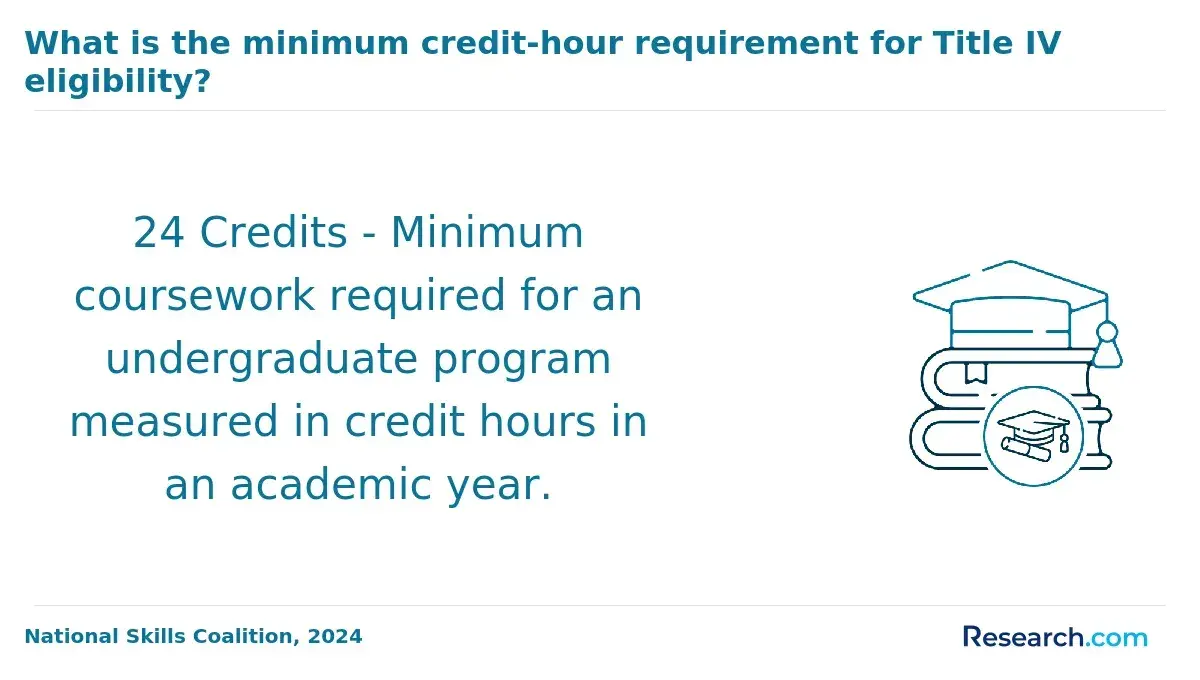
In many cases, probationary students must earn a minimum GPA between 2.0 and 2.5 during the first academic term. Credit limits during probationary enrollment usually range from 12 to 15 so students can focus on academic recovery instead of overloading their schedules.
Examples of programs with conditional or provisional pathways
- State University of New York at Binghamton: This regionally accredited university offers conditional admission for applicants with low GPAs, requiring a 2.5 term GPA to continue enrollment.
- Students must meet regularly with academic advisors to monitor progress and create an academic support plan.
- California State University, East Bay: The computer science program admits provisional students with previous academic deficiencies and may require foundational coursework alongside regular classes.
- Mandatory advising sessions each semester help students stay aligned with program requirements.
- University of North Texas: This university provides a provisional path mainly for transfer students with incomplete prerequisites or probationary status, requiring a minimum 2.0 GPA for the first 12 credit hours.
- Advisors work with students to complete core curriculum requirements on schedule.
- Howard University: This HBCU offers conditional acceptance through a structured bridge program emphasizing math and programming fundamentals.
- Faculty advisor check-ins help monitor progress and course pacing.
- Portland State University: Students with academic deficiencies may receive probationary admission contingent on achieving at least a 2.25 semester GPA and following restricted coursework.
- Participants attend mandatory advising workshops and tutoring sessions.
Because these policies can change and may differ by major, campus, and degree level, applicants should verify current requirements directly with the admissions office and the computer science department. Ask whether probationary students are admitted into the major immediately or into a pre-major status. That distinction affects course access, financial aid planning, and the timeline to graduation.
A weak transcript does not automatically end your chances, but it does change the application strategy. A focused personal statement, credible recommendations, evidence of recent academic improvement, and a realistic course plan can make a conditional application stronger. Students exploring adjacent human-services fields can also review Research.com’s guide to an online mental health counseling degree to compare how flexible admission pathways appear in other disciplines.
How do conditional admission and provisional enrollment work for computer science degree seekers?
Conditional admission and provisional enrollment both allow a student to begin before every requirement is fully resolved, but they are not the same. Conditional admission usually means the school has accepted the student on the condition that specific academic requirements are met after enrollment. Provisional enrollment is often a temporary status used while the institution verifies documents, transfer credits, test scores, or final transcripts.
| Policy | What it usually means | Common student obligation | Possible outcome |
| Conditional admission | The student is admitted but must satisfy academic conditions. | Maintain a minimum GPA, often around 2.0, and complete foundational classes such as introductory programming or calculus within a semester or two. | Move into full degree-seeking status after meeting the conditions. |
| Provisional enrollment | The student begins while the school finishes reviewing documentation or eligibility. | Submit final transcripts, transfer credit records, test scores, or credential confirmations by the stated deadline. | Continue, be reclassified, receive an extension, or be removed from the program depending on policy. |
Students should request the conditions in writing before enrolling. The written notice should explain the required courses, GPA benchmark, document deadlines, review date, credit limits, and appeal process. Without that information, a student may misunderstand the pathway and risk losing enrollment or aid eligibility.
Timeline and review: Institutions normally evaluate progress after the first term or after a defined number of credit hours. Students who meet the stated benchmarks move toward full admission. Students who do not may be dismissed, placed on continued probation, or given an extension, depending on the institution’s rules.
Student guidance: Ask who makes the final decision: the admissions office, registrar, academic dean, graduate school, or computer science department. Also ask whether the conditional period limits access to major courses, internships, financial aid, or scholarships.
Example of a successful path: A student who starts without all transcripts on file might enroll provisionally, submit the missing records before the deadline, earn the required grades in early programming and math courses, and then be moved into full status. The pathway is demanding, but the benchmarks can make expectations clearer than a standard open-ended admission review.
One computer science graduate described the experience this way: “Starting without all my transcripts made me anxious, but provisional enrollment let me begin while sorting paperwork. Meeting those initial course hurdles felt tough, but having clear benchmarks kept me focused. When I finally cleared conditions and moved to full status, it was a real confidence boost-I knew I belonged here and could build my career.”
What alternative admission pathways are available for computer science programs when prerequisites are not met?
Students who have not completed all computer science prerequisites may still qualify through alternative admission pathways. These options are most useful for applicants who can prove readiness through projects, work experience, prior learning, or placement testing instead of traditional coursework.
Common alternatives to completed prerequisites
- Portfolio review: This route is useful for applicants to project-based bachelor’s or master’s programs. A strong portfolio may include coding projects, software contributions, GitHub repositories, apps, research papers, case studies, or documented technical work. Faculty committees or admissions panels review whether the work shows authentic programming ability, problem-solving, and readiness for degree-level coursework.
- Demonstrated professional experience: Career changers and adult learners may be evaluated on relevant work in software development, IT, programming, data analysis, systems administration, or related technical roles. Applicants typically submit a detailed resume, employer verification letters, and evidence of the technologies they have used. Some programs also conduct interviews to confirm that the experience aligns with academic expectations.
- Prior learning assessment credit: Some institutions award credit for coding boot camps, certifications, military training, or nontraditional technical education. Applicants may need official credentials, syllabi, course outlines, work samples, or challenge exam results. Credit evaluation offices determine whether the learning is equivalent to college-level coursework.
- Placement testing instead of prerequisites: Students without formal math or programming coursework may be able to test into higher-level classes. Placement exams can help prove readiness for calculus, discrete math, introductory programming, or data structures. Passing a placement exam may reduce or eliminate the need to complete a prerequisite course.
The strongest approach is to speak directly with the computer science department, not only the central admissions office. Department chairs, program directors, and faculty advisors often know which exceptions are possible and which are not. Ask whether alternative evidence can replace a prerequisite, support conditional admission, or only help with course placement after admission.
Applicants should also consider the trade-off. Skipping prerequisites can save time, but entering a data structures, algorithms, or systems course without enough preparation can lead to poor grades early in the program. When in doubt, a bridge course may be safer than a waiver.
Adult learners and transfer students comparing graduate options can also review Research.com’s guide to affordable masters degrees to see how flexible admission criteria are handled across degree types.
Which computer science programs allow students to begin while completing the remaining prerequisites concurrently?
Some computer science programs allow students to begin selected degree courses while completing remaining prerequisites at the same time. This is often called co-requisite or concurrent enrollment. It differs from conditional admission because the student is not simply waiting to satisfy conditions; the curriculum is intentionally structured so foundational and degree-level work happen together.
Typical pairings may include introductory statistics or research methods alongside first-semester computer science courses such as programming fundamentals or data structures. The goal is to keep students moving forward while closing gaps in math, programming, or analytical preparation.
When concurrent enrollment can work well
- You are missing one or two prerequisites, not an entire foundation. The model is more manageable when the gap is limited.
- You have recent experience with technical material. Work experience, self-study, or prior coursework can make the workload more realistic.
- The program has built-in advising. Concurrent enrollment requires careful sequencing so one course does not depend on knowledge you have not yet learned.
- You can protect study time. Labs, coding assignments, math problem sets, and exams can overlap quickly.
Questions to ask before choosing this route
- Review course catalogs: Look for explicit co-requisite language, not just general prerequisite rules.
- Consult academic advisors: Ask which courses can be taken together and which must be completed first.
- Request a degree audit: A personalized audit can show whether concurrent enrollment will shorten the timeline or simply make the first term heavier.
- Clarify grade requirements: Some programs require minimum grades in the co-requisite courses before allowing progression.
Students balancing employment or family responsibilities should be cautious about taking too many technical courses at once. A lighter first term may feel slower, but it can protect your GPA and financial aid eligibility.
A graduate who used this pathway described the challenge clearly: “It felt like juggling two full-time commitments at once, especially with project deadlines and labs. Regular check-ins with advisors and forming study groups made a huge difference. Looking back, the challenge shaped my discipline and prepared me well for the workforce.”
How do community college partnerships help students enter computer science programs without full qualifications?
Community college partnerships can give students a second, more structured route into computer science when they do not meet direct admission requirements at a four-year institution. Instead of applying immediately to a competitive bachelor’s program, students complete foundational coursework, rebuild their GPA, and transfer under an established pathway.
Types of community college pathways
- Articulation agreements: These formal partnerships identify which community college courses transfer directly into a university computer science program. They reduce the risk of taking credits that do not apply to the degree.
- Dual enrollment: High school students and some adult learners can take community college courses while enrolled elsewhere, gaining early exposure to programming, math, and computing concepts.
- Pathway programs: These structured plans often combine advising, prerequisite completion, GPA improvement, and conditional transfer admission once benchmarks are met.
Four-year admissions committees often value community college coursework because it provides recent evidence of academic readiness. Strong grades in programming basics, calculus, discrete math, statistics, and logic courses can offset earlier academic weaknesses more effectively than a personal explanation alone.
What to verify before enrolling
- Transferability: Confirm whether each course transfers as a direct equivalent, elective credit, or no credit.
- Minimum grade rules: Some universities require specific grades in prerequisite courses for transfer admission.
- Major admission status: Ask whether transfer admission guarantees entry into the computer science major or only into the university.
- Course sequencing: Make sure the community college offers prerequisites often enough to avoid delaying transfer.
Community college can also lower the upfront cost of a computer science degree, especially for students who need time to strengthen their academic record before entering a four-year program.
Community college credits are often evaluated differently from freshman admission records, which can help non-traditional students demonstrate growth. Notably, in 2023, over 45% of computer science bachelor's graduates began at two-year colleges, underscoring the importance of transfer pathways in expanding access to the field.
What role do personal statements and letters of recommendation play in gaining computer science program access without meeting all requirements?
Personal statements and letters of recommendation matter most when an applicant’s numbers do not tell the full story. If your GPA, test scores, or prerequisite record falls short, these materials can help an admissions committee understand whether the issue reflects past circumstances or current lack of readiness.
What a strong personal statement should do
- Acknowledge the gap directly: Explain academic setbacks without making excuses or blaming others.
- Show evidence of improvement: Point to recent coursework, certifications, projects, employment, or self-study that demonstrates readiness.
- Connect experience to computer science: Describe specific skills such as programming, debugging, mathematical reasoning, systems thinking, or data analysis.
- Explain program fit: Name the academic features, format, support services, or curriculum structure that make the program a realistic match.
- Present a plan: Show how you will manage conditional requirements, course load, work obligations, and study time.
The best letters of recommendation come from people who can speak to your technical ability, learning discipline, and likelihood of success in rigorous coursework. A supervisor who has seen you solve technical problems is usually more useful than a general character reference. A math instructor, programming teacher, project lead, or engineering manager may be especially credible.
Applicants should give recommenders context. Share the program name, admission concern, resume, portfolio, and any conditional pathway you are pursuing. A useful letter should not simply say that you are hardworking; it should provide examples of analytical ability, persistence, communication, and performance under demanding expectations.
Which computer science programs offer bridge or foundational courses that replace unmet admission requirements?
Many computer science programs use bridge or foundational coursework to help students replace unmet admission requirements. These options are common for career changers, transfer students, adult learners, and applicants whose previous degrees did not include enough programming, math, or computing theory.
| Bridge option | Best for | How it usually appears academically | Main caution |
| Non-credit boot camps | Students needing fast exposure to programming basics, algorithms, or math skills | Usually not recorded as credit-bearing coursework on transcripts | May not satisfy degree requirements without follow-up credit courses |
| Post-baccalaureate preparatory sequences | Students who already hold a bachelor’s degree but lack computer science prerequisites | Formal credit coursework recorded on the academic transcript | Tuition is often comparable to regular credit courses |
| Certificate-level prerequisite bundles | Students who want a structured credential before degree enrollment | May appear on transcripts and may count toward later degree requirements | Transfer or degree applicability varies by institution |
| Self-paced online remediation modules | Students who need flexible preparation in math or programming fundamentals | May result in a pass/fail record or certificate in the academic file | Requires strong self-discipline and may not carry academic credit |
Non-credit boot camps: Community colleges and university continuing education departments may offer short intensive boot camps in programming basics, algorithms, and math skills. They can help a student prepare for conditional admission, but they often do not count as credit-bearing prerequisites.
Post-baccalaureate preparatory sequences: These are formal credit sequences for students who already have a bachelor’s degree but need the academic foundation for a computer science program. Completion is recorded on the transcript and can support full enrollment in a bachelor’s or master’s program. The timeline ranges from one semester to a year.
Certificate-level prerequisite bundles: Some colleges and online providers combine several required courses into a certificate. These can document competency and may count as credit toward a degree, depending on the institution’s policy.
Self-paced online remediation modules: These modules let students complete math or programming refreshers on a flexible schedule. They may cost less than regular courses, but students should confirm whether completion leads to admission, course placement, or only informal preparation.
Bridge options are not always advertised clearly on general admissions pages. Ask the department whether bridge coursework can replace prerequisites, whether credits apply to the degree, and what grade is required to progress. Students comparing accelerated alternatives in other disciplines can review Research.com’s guide to an accelerated business program for perspective on how nontraditional pathways are structured.
How does work experience or professional background substitute for academic requirements in computer science programs?
Work experience can sometimes substitute for academic requirements in computer science admissions, especially in programs that use holistic review. This is most common when the applicant’s professional background clearly overlaps with the missing prerequisite, such as programming, systems administration, data analysis, network management, cybersecurity, or software project work.
Professional experience is not an automatic waiver. Schools need evidence that the work is comparable to college-level preparation. A job title alone is usually not enough; admissions reviewers look for specific responsibilities, tools, outcomes, and technical depth.
Professional evidence that can strengthen an application
- Industry certifications: Certifications from organizations like CompTIA, Cisco, or AWS can verify technical skills and may support a prerequisite waiver or conditional admission review.
- Field-specific employment: Several years of continuous employment in relevant technical roles can demonstrate readiness for applied computer science coursework.
- Leadership and management: Managing technical teams or projects can show planning, systems thinking, and problem-solving beyond entry-level tasks.
- Published or presented work: Contributions to conferences, journals, or open-source projects can provide evidence of expertise and engagement with the computing community.
- Volunteer or community service: Technology education, nonprofit IT work, or community coding initiatives can demonstrate hands-on experience and commitment.
Applicants should prepare documentation for an academic audience. A strong submission may include a targeted resume, supervisor letters, certification records, portfolio links, code samples, project descriptions, and a short explanation of how each item maps to a missing requirement. References should come from people qualified to evaluate technical competence, not merely from colleagues who know the applicant personally.
Before investing time in a work-experience petition, confirm that the program formally considers professional background. Some schools allow experience to support admission but not to replace credit. Others may require a placement test or faculty interview before approving a waiver. Students comparing flexible institutions can review Research.com’s guide to non profit online colleges to understand how accredited online universities may evaluate nontraditional applicants.
What financial aid and scholarship options are available to conditionally admitted computer science students?
Conditionally admitted computer science students may qualify for financial aid, but eligibility depends on enrollment status, course load, degree-seeking classification, and satisfactory academic progress. Because conditional and provisional statuses vary by institution, students should confirm aid eligibility before registering for classes.
Federal aid generally requires students to complete the Free Application for Federal Student Aid annually, enroll at least half-time, and maintain satisfactory academic progress. Satisfactory academic progress typically includes GPA and credit completion standards set by the institution. If a student fails to meet the required academic benchmarks during conditional enrollment, aid may be suspended or reduced.
Funding options to ask about
- Federal grants and loans: These may be available if the student is eligible, enrolled at least half-time, and classified in a qualifying program.
- Institutional scholarships: Some colleges offer awards for transfer students, bridge-program participants, adult learners, or students overcoming academic gaps.
- Departmental scholarships: Computer science departments may have awards tied to academic improvement, persistence, or participation in preparatory coursework.
- Foundation and community scholarships: Adult learners, career changers, and returning students may find scholarships through local organizations and private foundations.
- Employer tuition assistance: Working students in technical roles should ask whether their employer supports degree completion or prerequisite coursework.
Before enrolling conditionally, speak with both the financial aid office and a computer science academic advisor. Ask whether your admission status affects aid, whether non-credit bridge courses are covered, and how many credits you must take to remain eligible. Also ask what happens if you do not meet the first-term GPA requirement. A clear funding plan is essential because conditional students often have less room for academic or financial missteps.
How do online computer science programs compare to campus-based programs in admission flexibility?
Online computer science programs often provide more admission flexibility than campus-based programs, but flexibility should not be confused with lower standards. Many online programs use conditional admission, bridge courses, prior learning review, or professional experience evaluation to widen access. Campus programs may offer similar pathways, but they are often more constrained by seat limits, lab capacity, and departmental progression rules.
| Factor | Online computer science programs | Campus-based computer science programs |
| Admission flexibility | May be more likely to waive or defer some requirements, especially in large public systems and some for-profit schools. | Often more likely to enforce completed prerequisites before full major admission. |
| Conditional enrollment | Frequently uses foundational or bridge courses early in the program. | May offer conditional options, but they are often more selective or limited. |
| Prerequisite waivers | May consider certifications, prior learning assessment, or relevant work experience. | May require faculty approval and stricter documentation. |
| Student support | Can be strong, but quality depends on advising, tutoring, technology access, and responsiveness. | Often has in-person advising, labs, tutoring centers, and counseling services. |
| Risk for conditional students | Requires self-direction and strong time management, especially in asynchronous courses. | Requires schedule availability and may offer more immediate in-person support. |
Admission flexibility: Online programs may be more open to applicants with incomplete prerequisites or lower GPAs, particularly when the program is designed for working adults. Campus programs often maintain stricter sequencing because demand for computer science seats can exceed capacity.
Conditional enrollment: Many online programs allow students to begin with foundational coursework that verifies readiness for more advanced topics. Campus programs may do this too, but the pathway may be less visible or more competitive.
Prerequisite waivers: Online institutions may accept alternative qualifications such as certifications, prior learning assessments, or relevant work experience. Campus programs may also allow waivers, but they often require departmental review.
Support systems: Conditional students should compare advising access, tutoring, disability accommodations, mental health resources, faculty availability, and early-alert systems. Online support can be effective, but students should verify how quickly help is available when they struggle in programming or math courses.
Accreditation and quality: Flexible admission does not automatically mean weak academics. Prospective students should verify accreditation, understand progression rules, and review graduation and job placement information before choosing a program mainly because it is easier to enter.
What Graduates Say About Computer Science Degree Programs You Can Start Without Meeting All Requirements
-
: "Starting the online computer science degree without having completed every prerequisite was a game changer for me-it allowed me to enter the program while finishing the remaining requirements alongside my first courses. The expectations were clear from the beginning, including the GPA I needed to maintain each term. The flexibility helped me balance work and study, but I learned quickly that the benchmarks were not just about passing. I had to understand the material well enough to move forward with confidence.
— Apollo"
-
: "My conditional start in a computer science degree was demanding, but the structure made it manageable. The program laid out the grade thresholds, advising requirements, and timeline in advance, so I knew what I had to do. Having those expectations pushed me to prioritize coursework early instead of waiting until I was behind. It became a fair test of whether I was ready for the full program.
— Aldo"
-
: "I was skeptical about conditional admission at first, but it turned out to be a practical way to prove myself. The program gave me specific academic standards from the start, and meeting them required consistent effort. Maintaining the required GPA and completing the right courses on time prepared me for the rigor that came later. The process was structured, but it also gave me room to build momentum.
— Micah"
Other Things You Should Know About Computer Science Degrees
Regional accrediting agencies such as the Higher Learning Commission and Middle States Commission oversee the overall quality and standards of computer science programs. Additionally, organizations like ABET provide specialized accreditation that influences curriculum rigor and admission criteria. While flexibility differs by institution, accredited programs typically maintain clear guidelines for conditional admission, ensuring students meet foundational knowledge and competency benchmarks.
Students should demonstrate relevant skills through alternative credentials-such as coding bootcamps, online coursework, or professional certifications-that show preparedness for core computer science subjects. Providing strong letters of recommendation and a detailed personal statement explaining motivation and capacity to handle coursework also strengthens their application. Early academic advising sessions help outline required bridge classes and set realistic timelines for meeting program standards.
Many programs provide tutoring centers, mentoring from faculty or peer advisors, and foundational coursework designed to address gaps in knowledge. Some schools offer conditional enrollment with progress monitoring to ensure students complete prerequisite subjects alongside degree coursework. Academic workshops focused on time management and study skills also help students adapt to program demands while maintaining good standing.
References
- The Community College Method Guide for Students https://www.edvisorly.com/student-guides/community-college-method
- 9 Scholarships for Computer Science Majors | Financial Aid https://www.petersons.com/blog/9-scholarships-for-computer-science-majors/
- Online Degree vs. Traditional: Choosing the Right Path https://beal.edu/online-degree-vs-traditional/
- Computer Science Degree Admission Requirements: What You Need https://hakia.com/degrees/computer-science/admission-requirements/
- ONLINE DEGREE VS. ON CAMPUS: IS THERE A DIFFERENCE? https://www.generations.edu/online-degree-vs-on-campus-is-there-a-difference/
- Learn Computing https://learncomputing.org/articles/personalstatementdosanddonts
- Education vs Experience: Why Professional Experience Is Harder to Measure https://www.scholaro.com/db/News/education-vs-experience-339
- Share On Social https://www.northampton.edu/news/online-vs-on-campus-degree-whats-the-best-option-for-me.html
- How to finance your computer science degree as an international student https://www.mpowerfinancing.com/blog/finance-computer-science-degree
- CS Scholarships and Funding for Students | Code.org https://code.org/en-US/students/scholarships