
2027 Data Science Degree Levels Explained: Bachelor's vs Master's vs Doctorate

Co-Founder and Chief Data Scientist
The right data science degree depends on the work you want to do, how much time and money you can invest, and whether your goal is entry-level analytics, advanced applied modeling, or original research. The stakes are real: 65% of data science roles now require at least a master's degree, while bachelor's graduates often compete for analyst and junior technical roles and doctorate holders usually move toward research, academic, or highly specialized leadership paths.
This guide compares bachelor's, master's, and doctorate degrees in data science so you can match the credential to your career target. It explains how each degree is structured, what students learn, which specializations are available, how admissions and costs differ, what financial aid may help, and how career options and salaries compare by degree level.
Key Things to Know About Data Science Degree Levels
- Bachelor's degrees provide foundational data science knowledge; master's focus on specialization and advanced techniques; doctorates emphasize research and original contributions to the field.
- Bachelor's graduates often enter analyst roles, masters qualify for senior positions, and doctorate holders pursue leadership or academic careers in data science.
- Bachelor's programs typically last four years, master's one to two years, and doctorates three to six years, with costs increasing accordingly due to depth and duration.
How Are Data Science Degree Levels Structured Academically?
Data science degrees build on each other. A bachelor's degree develops broad technical foundations, a master's degree deepens applied expertise, and a doctorate trains students to produce original research or lead highly specialized work. The best choice depends less on prestige and more on the level of responsibility you want after graduation.
- Bachelor's degree: This level usually combines mathematics, statistics, programming, databases, data visualization, and introductory machine learning. Students receive more structure and faculty guidance, with assignments designed to build fluency in core tools and analytical thinking.
- Master's degree: Graduate programs move faster and assume stronger preparation in programming, statistics, or quantitative reasoning. Students often focus on advanced machine learning, big data systems, artificial intelligence, business analytics, or data engineering. Coursework is more applied and independent.
- Doctorate degree: Doctoral study shifts from learning established methods to creating new knowledge. After required coursework and examinations, students spend most of their time on research, dissertation development, publication, and advanced methodological work.
The academic workload also changes by degree level. Bachelor's programs emphasize breadth, master's programs emphasize advanced problem-solving, and doctoral programs emphasize original inquiry. A capstone may be enough for an undergraduate or master's student, but doctoral candidates must usually defend a substantial research contribution.
Students comparing education options should also consider adjacent professional degrees when their goals are broader than data science. For example, some working professionals explore the cheapest online MBA options when they want analytics skills tied closely to management, operations, or business strategy.
What Do You Learn in a Bachelor's Degree in Data Science?
A bachelor's degree in data science teaches the technical and analytical fundamentals needed for entry-level analytics work or graduate study. It is usually the best starting point for students who do not yet have a college degree and want structured preparation across programming, statistics, and data interpretation.
- Programming and computing foundations: Students commonly learn Python, R, data structures, algorithms, database management, and basic software practices. These skills help graduates collect, clean, organize, and analyze data in repeatable ways.
- Mathematics and statistics: Coursework typically covers probability, statistical inference, linear algebra, calculus, and modeling concepts. This foundation matters because data science is not only about using tools; it requires understanding what results mean and when a model is reliable.
- Introductory machine learning: Students are introduced to supervised and unsupervised learning, model evaluation, prediction, classification, and basic algorithmic thinking. The goal is competence with common techniques, not deep research specialization.
- Data visualization and communication: Bachelor's programs often emphasize dashboards, charts, reports, and presentations. Graduates must be able to explain findings to nontechnical audiences, especially in analyst roles.
- General education and ethics: Courses in writing, communication, social science, and ethics help students understand privacy, bias, responsible data use, and the human impact of automated decisions.
- Projects, internships, and capstones: Practical assignments help students turn classroom knowledge into portfolio-ready work. A strong capstone or internship can be especially valuable for students seeking their first analytics job.
Graduates may qualify for roles such as data analyst, business intelligence analyst, reporting analyst, or junior data scientist, depending on the employer and the student's portfolio. Students who prefer hardware, systems, or computational design may also compare this path with an online engineering degree before committing.
What Specializations Are Available in a Data Science Master's Degree?
A master's degree in data science is often where students move from general preparation to a clearer professional identity. Specializations help students target specific roles, build deeper technical portfolios, and signal expertise to employers.
- Machine Learning: This specialization focuses on predictive modeling, statistical learning, model training, evaluation, and algorithm selection. It fits students who want roles such as machine learning engineer, applied data scientist, or modeling specialist.
- Big Data Analytics: Students learn to manage and analyze large, complex datasets using scalable systems and distributed computing concepts. This path is useful for careers involving high-volume data, streaming data, or enterprise analytics platforms.
- Artificial Intelligence: AI-focused programs often include neural networks, natural language processing, intelligent systems, and automated decision-making. This track is appropriate for students interested in AI development, applied research, or advanced automation projects.
- Business Analytics: This specialization connects analytics with business strategy, forecasting, optimization, customer behavior, operations, and decision support. It is a strong fit for students who want to translate data into business recommendations rather than focus only on technical modeling.
- Data Engineering: Data engineering emphasizes pipelines, databases, cloud systems, architecture, and infrastructure. It is best for students who want to build the systems that make analytics and machine learning possible.
When choosing a specialization, compare it with the job descriptions you want after graduation. A business analytics track may not be enough for a machine learning engineering role, while a machine learning-heavy curriculum may be more technical than necessary for some management analytics positions.
What Types of Doctoral Degrees Exist in Data Science?
Doctoral study in data science is highly specialized. Fewer than 5,000 students enroll each year in U.S. doctoral programs centered on data-driven and computational fields, which reflects the selective and research-intensive nature of this pathway.
The main doctoral options differ in purpose, structure, and career outcome:
- Professional Doctorates: These programs emphasize advanced practice, technical leadership, and applied problem-solving in industry. Instead of a traditional dissertation, some programs use an applied capstone, portfolio, or practice-based research project. This option may suit experienced professionals who want senior leadership or consulting roles without pursuing an academic research career.
- Research Doctorates: Usually awarded as a PhD, these programs focus on original research. Students study advanced theory and methods, pass examinations, and complete a dissertation that contributes new knowledge. This route is most appropriate for people aiming for academic positions, research labs, or innovation-focused roles.
- Interdisciplinary Tracks: Some doctoral pathways combine data science with computer science, statistics, business analytics, health informatics, public policy, or another field. These programs can be valuable when a student's research question sits between disciplines, such as computational social science, biomedical analytics, or AI governance.
Prospective doctoral students should look closely at faculty research areas before applying. At this level, advisor fit, funding, publication opportunities, and access to relevant datasets can matter as much as the program title.
What Are the Admission Requirements for Each Data Science Degree Level?
Admission requirements become more selective as the degree level rises. Bachelor's applicants are evaluated mainly on college readiness, master's applicants on technical preparation and academic performance, and doctoral applicants on research potential.
Bachelor's
- Academic credentials: Applicants generally need a high school diploma or equivalent qualification. A competitive GPA can strengthen the application, especially for selective programs.
- Standardized tests: Some schools consider SAT or ACT scores, while others may waive test requirements depending on institutional policy or applicant background.
- Prerequisite preparation: High school coursework in mathematics, science, and computing can help students succeed, even when it is not formally required.
- Application materials: Programs may request essays, transcripts, recommendation letters, or evidence of interest in quantitative and technical subjects.
Master's
- Previous degree: Applicants usually need a bachelor's degree. A background in data science, computer science, statistics, mathematics, engineering, economics, or another quantitative field is often helpful.
- Academic performance: A strong undergraduate GPA is important, particularly in technical and quantitative courses.
- Prerequisite coursework: Some programs require prior study in statistics, programming, calculus, linear algebra, or databases. Applicants without this background may need bridge courses.
- Additional materials: Programs often request letters of recommendation, a statement of purpose, a resume, and sometimes GRE scores or evidence of relevant professional experience.
Doctorate
- Advanced academic preparation: Many doctoral programs expect a master's degree or equivalent preparation, although some may admit strong bachelor's graduates into longer doctoral pathways.
- Research fit: Applicants usually need to show clear research interests that align with faculty expertise. A generic interest in data science is rarely enough at this level.
- Recommendations and proposal materials: Strong letters, prior research experience, writing samples, publications, or a research proposal can help demonstrate readiness for doctoral work.
- Testing and experience: Some programs may request standardized test results, professional experience, or evidence of advanced technical capability.
How Long Does Each Data Science Degree Level Take to Complete?
Time to completion varies by degree level, enrollment format, transfer credit, and research requirements. Bachelor's programs typically take around four years, master's degrees range from one to three years depending on format, and doctoral studies often extend between four and six years beyond the master's level. In STEM fields, the average doctoral degree length is about 5.8 years.
- Bachelor's degree: The standard full-time timeline is around four years. Students may finish sooner with transfer credits, dual enrollment credits, or accelerated terms, while part-time study extends the timeline.
- Master's degree: Many master's programs are designed for one to three years. Full-time students may move quickly, while working professionals often choose part-time or online formats to balance school with employment.
- Doctorate degree: Doctoral timelines are less predictable because research progress depends on advisor approval, dissertation scope, data access, publication expectations, and funding conditions.
Several factors can shorten or lengthen the path:
- Enrollment status: Full-time students usually finish faster, while part-time students often need more terms to complete the same requirements.
- Credit transfer: Previously earned credits can reduce the number of required courses, especially at the bachelor's level.
- Prior experience: Students with strong programming, statistics, or analytics backgrounds may qualify for waivers or move through technical material more efficiently.
- Program format: Online, hybrid, and in-person programs may follow different calendars, course loads, and pacing models.
- Research and advising: At the doctoral level, mentorship quality and dissertation progress can strongly affect completion time.
How Much Does Each Data Science Degree Level Cost?
The cost of a data science degree depends on tuition, fees, program length, enrollment status, residency rules, and whether the student receives funding. Comparing only the advertised tuition rate can be misleading; students should estimate the full cost to graduation.
- Tuition costs: Bachelor's degrees usually require between 120 to 130 credits, so the total tuition bill can be substantial even if the per-credit rate is lower. Master's degrees typically need 30 to 60 credits, which can reduce total credits but may involve higher graduate tuition rates. Doctoral programs may have high per-credit tuition but can include funding opportunities.
- Mandatory fees: Technology fees, lab fees, student service fees, graduation fees, and online course fees can add meaningful costs over several terms.
- Course materials and software: Data science students may need textbooks, cloud computing access, statistical software, specialized hardware, or paid platforms, depending on the curriculum.
- Enrollment status: Full-time study can require more money upfront but may reduce the time spent paying fees and living costs. Part-time study spreads payments over time but can increase the total duration of enrollment.
- Funding availability: Doctoral students may have access to assistantships or fellowships. Bachelor's and master's students often rely more heavily on grants, scholarships, loans, employer support, or personal funds.
Students should ask each program for a total cost estimate that includes tuition, required fees, books, software, and any residency or in-person requirements. Those comparing graduate affordability across fields may find it useful to review how an online masters degree psychology program presents tuition and fees, because similar cost categories often apply.
The cost comparison of data science degree programs is most useful when measured against career goals, not just price. A lower-cost program that lacks the specialization, projects, or employer recognition you need may not be the best value.
What Financial Aid Options Are Available for Data Science Degrees?
Financial aid can make a data science degree more manageable, but the best options vary by degree level. Nearly 84% of full-time undergraduate students received some form of financial aid during the 2018-2019 academic year, with an average award of about $14,940.
- Grants and scholarships: These awards do not require repayment and may be based on financial need, academic merit, field of study, identity-based eligibility, or institutional priorities. Data science students should search both general STEM awards and program-specific scholarships.
- Federal student loans: Federal loans are available across degree levels and generally offer borrower protections and repayment options that private loans may not provide.
- Private loans: Private loans can fill funding gaps, but they often have less flexible terms. Students should compare interest rates, repayment rules, cosigner requirements, and total repayment cost before borrowing.
- Work-study programs: Eligible students may earn money through part-time work while enrolled. When possible, data-related campus jobs can also build relevant experience.
- Employer tuition assistance: Working professionals in master's or doctoral programs may receive tuition reimbursement or sponsorship. Students should review service commitments, grade requirements, annual caps, and repayment rules if they leave the employer.
- Assistantships and fellowships: These are especially important for doctoral students. Teaching or research assistantships may offset tuition and provide stipends, but they also require work commitments.
- Military education benefits: Service members and veterans may qualify for education benefits that can apply to approved data science programs.
Before enrolling, students should complete required aid forms, compare net price rather than sticker price, and ask whether aid is renewable. Those weighing long-term return on investment may also review degrees that make the most money to understand how education level and field can affect career outcomes.
What Careers Are Available at Each Data Science Degree Level?
Career options generally broaden with each degree level. A bachelor's degree can lead to analyst and junior technical roles, a master's degree can support more advanced modeling and engineering positions, and a doctorate is most relevant for research, academic, or highly specialized leadership work.
Bachelor's
- Data Analyst: Collects, cleans, analyzes, and summarizes data to support business decisions. This role often uses spreadsheets, SQL, visualization tools, statistics, and basic programming.
- Business Intelligence Analyst: Builds reports, dashboards, and performance metrics that help organizations monitor trends and operations.
- Junior Data Scientist: Supports modeling, experimentation, and analytics projects under more senior supervision. A strong portfolio can be important for candidates entering this role with only a bachelor's degree.
Master's
- Data Scientist: Designs analytical approaches, builds predictive models, evaluates results, and communicates findings to technical and nontechnical stakeholders.
- Machine Learning Engineer: Develops and deploys machine learning systems, often working with software engineers, data engineers, and product teams.
- Data Engineer: Builds and maintains data pipelines, databases, data warehouses, and infrastructure that support analytics and machine learning workflows.
Doctorate
- Research Scientist: Develops new methods, tests hypotheses, publishes findings, and advances technical knowledge in data science or a related field.
- Professor: Teaches, mentors students, publishes research, and leads scholarly projects within a university or research institution.
- Advanced Data Consultant: Advises organizations on complex analytics strategy, modeling design, technical risk, and specialized data science applications.
Students who need flexible study options should also compare accredited online colleges that accept FAFSA, especially if affordability and federal aid eligibility are major parts of the decision.
How Do Salaries Compare Among Bachelor's vs Master's vs Doctorate Data Science Graduates?
Salary potential tends to rise with advanced education, but degree level is only one factor. Employer, location, industry, technical portfolio, work experience, specialization, and negotiation all influence pay. The figures below describe typical ranges by degree level, not guarantees.
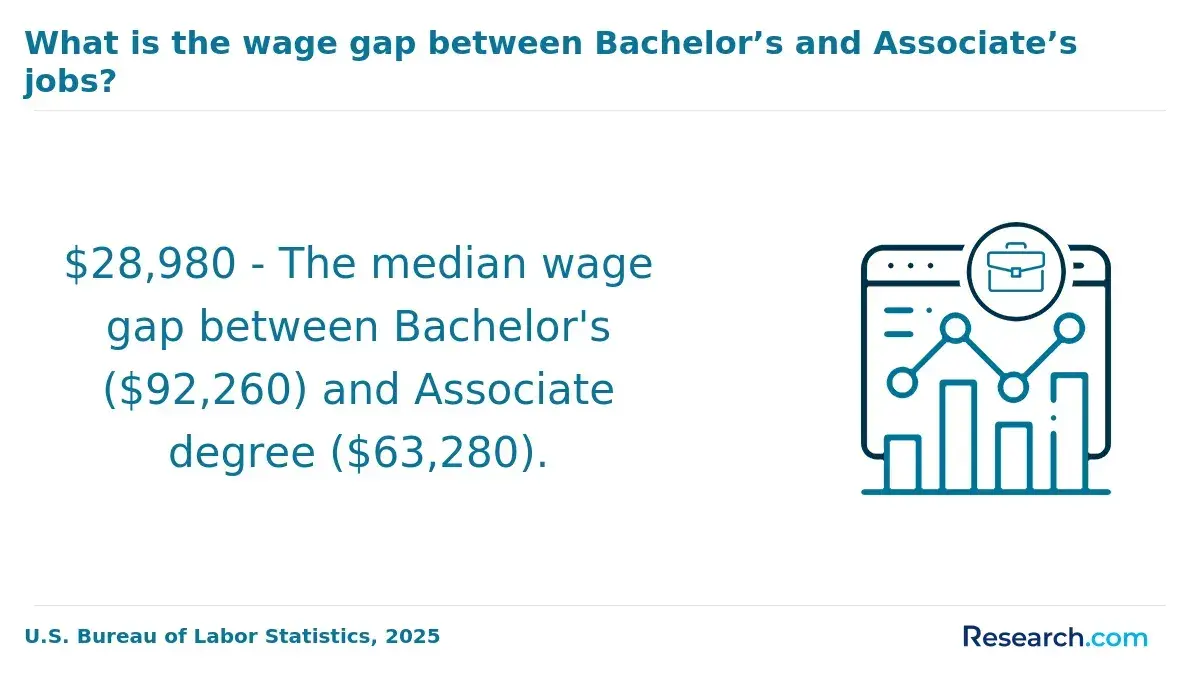
- Bachelor's Degree: Graduates often start in roles such as junior data analyst or associate data scientist, earning between $65,000 and $90,000 annually. Early-career growth depends heavily on practical skills, portfolio quality, and experience with real datasets.
- Master's Degree: A master's degree can lead to more advanced roles, with salaries ranging from $95,000 to $130,000. Common positions include senior data scientist, machine learning engineer, and advanced analytics specialist.
- Doctorate Degree: PhD holders often move into specialized research, technical leadership, or academic roles, with salaries frequently exceeding $130,000. These outcomes usually reflect advanced expertise, research depth, and the ability to solve complex or novel problems.
For many students, the salary question should be paired with the cost and time question. A master's degree may offer a faster return for applied industry roles, while a doctorate may be the better fit for people whose goals require research authority or academic credentials.
What Graduates Say About Their Data Science Degree Level
Graduate experiences vary by program cost, career stage, and professional goals. The comments below show how different students viewed the trade-off between investment and career impact.
- Laken: "Pursuing a bachelor's degree in data science was a game-changer for me, especially considering the average tuition hovered around $30,000 per year. While the cost was significant, I viewed it as an investment in my future, and it paid off-the skills I gained opened doors to exciting roles in analytics that I never imagined. The decision was tough financially but absolutely worth it."
- Kessler: "Reflecting on my master's degree in data science, I recall weighing the $20,000 to $40,000 program cost against the value of advanced skills in this rapidly evolving field. Looking back, the expense was a sensible choice; the program refined my expertise and significantly boosted my career trajectory, making me a more confident and effective professional. The knowledge I acquired has been indispensable."
- Hadley: "After earning my doctorate in Data Science, I appreciate how the considerable investment-both financial and personal-was crucial for achieving the depth of expertise needed in my research and professional development. Although program costs are substantial, the career impact has been profound, allowing me to lead innovative projects and contribute to cutting-edge advancements in the industry. The commitment required was intense but truly rewarding."
Other Things You Should Know About Data Science Degrees
In 2027, master's programs in data science typically focus on practical skills and applied projects, while doctorate programs emphasize original research and theoretical contributions. Doctorate programs require a dissertation, involving significant, independent research that contributes new knowledge to the field.
Yes, research expectations differ significantly between master's and doctorate levels. Master's programs often include a research project or thesis that demonstrates applied skills and understanding. Doctorate programs require original, independent research making an academic contribution to data science, culminating in a dissertation that advances knowledge in the field.
References
- Data Science Salary and Career Outlook https://teach.com/online-ed/short-courses/online-data-science-courses/career-and-salary/
- Master’s in Data Science Salary (Updated for 2025) https://www.interviewquery.com/p/masters-in-data-science-salary
- What do you learn in a bachelor's in data science? | edX https://www.edx.org/resources/what-do-you-learn-in-a-bachelors-in-data-science
- Financing Your Education https://www.usfca.edu/arts-sciences/programs/graduate/data-science-artificial-intelligence/financial-aid
- What Does a Data Science Career Path Look Like in 2025 and Beyond? https://datascienceprograms.com/careers/data-science-career-path/
- These are the best schools for you to get a master’s in data science on campus—but won’t break the bank | Fortune Education https://fortune.com/education/information-technology/most-affordable-masters-in-data-science/
- Master in Big Data Science https://www.kozminski.edu.pl/en/programs/graduate-programs-master/master-big-data-science
- The Best Data Science Degrees in 2025 – 365 Data Science https://365datascience.com/career-advice/career-guides/best-degrees-data-scientist/
- Average Cost of a Master's Degree: 2025 Analysis https://educationdata.org/average-cost-of-a-masters-degree
- Average fees for a bachelor's, master's and PhD degree today https://studyinternational.com/news/degree-fees-bachelor-master-phd/


