2027 Does a Pediatric Nurse Practitioner Program Require In-Person Clinical Training?

Co-Founder and Chief Data Scientist
Faced with relocating for a pediatric nurse practitioner program, a student must verify if in-person clinical training is mandatory-since accrediting bodies require between 500 and 1,000 clock hours to qualify for certification. Geographic barriers and clinical site availability challenge placement logistics, impacting timely completion. These clinical requirements directly influence eligibility for post-graduation licensure, a critical step in professional practice. Considering that pediatric nurse practitioners earn a median annual salary of approximately $120,000, understanding these demands is essential for effective program selection and career planning.
This article clarifies in-person clinical training requirements-covering accreditation rules, hour mandates, placement challenges, and licensing effects-to guide prospective and current students through this complex process.
Key Things to Know About the Pediatric Nurse Practitioner Programs That Require In-Person Clinical Training
- Accreditation mandates require pediatric nurse practitioner programs to include a minimum of 500 in-person clinical clock hours to ensure hands-on competency and meet certifying bodies' standards.
- Placement logistics can be challenging-students must secure clinical sites often through program affiliations, which may limit options based on student background checks and site capacity.
- Geographic constraints impact access-rural or remote students may face limited local clinical opportunities, potentially necessitating travel or relocation to fulfill required in-person hours.
What Is In-Person Clinical Training in the Context of a Pediatric Nurse Practitioner Program, and Why Does It Matter for Prospective Students?
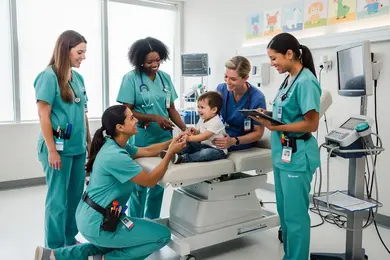
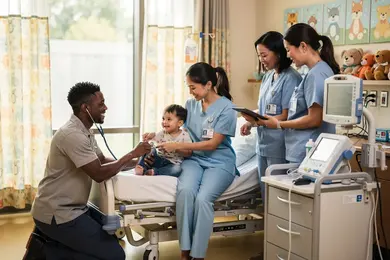
In pediatric nurse practitioner programs, in-person clinical training refers to supervised, hands-on practice hours completed in approved real-world clinical, community, or institutional settings. This training involves direct patient care under professional supervision and is distinct from classroom instruction, simulation labs, or virtual practicums. This distinction matters-prospective students often confuse field-based clinical requirements with theory-based coursework, which can lead to misunderstandings about program obligations.
Accreditation bodies, including the Accreditation Commission for Education in Nursing (ACEN) and the Commission on Collegiate Nursing Education (CCNE), along with professional associations such as the National Association of Pediatric Nurse Practitioners (NAPNAP), define strict standards that qualify what counts as in-person clinical training. These standards emphasize real patient interactions at approved sites and supervised by qualified preceptors. Meeting these requirements is not optional but a professionally and legally mandated component for program completion and board eligibility in most states.
The in-person clinical training requirement significantly impacts prospective students-it limits scheduling flexibility, demands geographic proximity to approved clinical sites, generally cannot be waived or replaced with virtual options, and is essential for eligibility in certification and state licensure. These factors make the clinical training component as critical to evaluate as tuition, faculty, or curriculum before enrolling.
- Scheduling Constraints: Clinical hours must be fulfilled on-site, creating challenges for students balancing work or family commitments.
- Geographic Proximity: Access to approved clinical locations is necessary, posing difficulties for those in rural or underserved areas.
- Non-Substitutability: Virtual or simulated hours usually do not satisfy the in-person clinical training requirement.
- Licensing Impact: Completing these hours is mandatory for certification and state licensure eligibility, directly influencing the ability to practice.
This article explores key questions throughout the clinical training lifecycle-from pre-enrollment assessment of clinical infrastructure to the consequences of incomplete clinical hours post-graduation. Topics include required clock hours, virtual alternatives, placement arrangements, accreditation influence, and implications for students with work, geographic, or personal challenges.
For those interested in allied health pathways, exploring options like a medical assistant degree online 6 weeks may offer flexible alternatives while considering clinical training demands.
Ensuring clarity on in-person clinical training requirements helps pediatric nurse practitioner students meet the hands-on experience needed to bridge theory and practice-an essential step on the path to certification and licensure.
Is In-Person Clinical Training Legally or Professionally Required to Earn a Pediatric Nurse Practitioner Degree?
The Commission on Collegiate Nursing Education (CCNE) and the Accreditation Commission for Education in Nursing (ACEN) set essential standards requiring substantial in-person clinical training for pediatric nurse practitioner programs. These accreditation mandates ensure programs provide hands-on experience vital for real-world pediatric care, making in-person clinical hours a core component of program approval. Programs not meeting these standards face loss of accreditation, directly affecting graduates' ability to obtain licensure.
- Licensing Board Mandates: State nursing licensing boards legally require pediatric nurse practitioner candidates to complete a defined number of supervised in-person clinical hours. Virtual-only clinical experiences generally do not satisfy these legal prerequisites, rendering in-person clinical training effectively obligatory for licensure in most states.
- Program-Level Requirements: Individual programs may enforce stricter clinical hour requirements or offer specific placement settings-some propose hybrid or reduced in-person hours but these can jeopardize graduate eligibility if they fail to meet state licensing boards' strict criteria for in-person clinical training.
- Compliance Consequences: Failure to fulfill these in-person clinical training standards risks program accreditation and graduate licensure, making the requirement non-negotiable regardless of personal or professional circumstances.
From a student's perspective, even if a program advertises virtual or reduced clinical options, those pursuing pediatric nurse practitioner certification or state licensure must confirm their clinical hours conform to their specific state board and accrediting body standards. Overlooking discrepancies between accreditation and licensure requirements can result in denied certification.
- Consulting Key Documents: Students should reference three critical sources: the accrediting body's published clinical training standards, their state's pediatric nurse practitioner licensing board regulations, and the program's student handbook to fully understand in-person clinical training mandates.
- Practical Preparation: Successful clinical completion involves site selection, background check compliance, and meticulous documentation of clinical hours to meet all regulatory and professional requirements.
- Financial Planning: Considering clinical placement logistics and related expenses is essential-prospective students might benefit from evaluating the healthcare administration degree cost data to weigh affordability alongside program quality.
The reality of professional in-person clinical training mandates for pediatric nurse practitioner licensure in US programs emphasizes that students must proactively verify clinical training structures before enrollment and throughout their education to avoid licensure barriers post-graduation.

How Many Hours of In-Person Clinical Training Does a Typical Pediatric Nurse Practitioner Program Require?
Accredited pediatric nurse practitioner programs require a range of in-person clinical training hours, guided by standards from bodies like the Commission on Collegiate Nursing Education (CCNE) or the Accreditation Commission for Education in Nursing (ACEN). The minimum clinical hour requirement typically starts at 500, ensuring a foundational level of hands-on experience. Many programs nationally set their clinical hour expectations between 600 and 700, balancing depth of exposure with reasonable program length. More intensive tracks-such as residencies or accelerated paths-may demand up to 1,000 hours or beyond, fostering greater clinical proficiency and stronger licensure exam preparation.
- Training Phase Breakdown: Clinical hours often divide into two stages: the practicum phase emphasizes supervised observation and limited direct patient care, usually composing 200 to 300 hours; while the internship or residency phase involves higher patient volume and more autonomy, typically accounting for 300 to 700 hours.
- Weekly Time Commitment: For a 600-hour clinical requirement spread over two semesters, students can expect to spend 15-20 hours weekly onsite. These hours come alongside coursework, documentation, and supervision responsibilities, impacting work-life balance and scheduling.
- Program Selection Considerations: Programs offering only the minimum required hours might appeal to students with external obligations due to lower time demands but may provide less clinical depth. Conversely, programs with higher clinical hour requirements tend to enhance clinical skills and licensure outcomes, demanding more significant personal time investment.
Reflecting on his clinical training experience, a professional who successfully completed his pediatric nurse practitioner degree described the challenge of juggling clinical hours with family and work commitments. "The practicum phase felt manageable because it was mostly observation, but as I moved into my residency phase, the volume and independence required were intense," he recalled. "Logging hours took discipline-I had to coordinate with preceptors and manage background checks early on. It was demanding but ultimately worth it, as I felt confident walking into my licensure exam knowing I had ample hands-on exposure."
Can Any Part of the Pediatric Nurse Practitioner Clinical Training Requirement Be Completed Online or Virtually?
Policies from accreditation bodies emphasize that most pediatric nurse practitioner clinical training hours must involve direct supervision with real patients-simulation or virtual labs generally serve only as limited supplements. Telehealth experiences can occasionally count toward clinical training but are mostly restricted to activities like case discussions, documentation, or supervised consultations rather than hands-on patient care. After temporary expansions during the COVID-19 pandemic, many of these virtual allowances were rolled back by 2022, returning to primarily in-person clinical hour requirements.
- Accreditation Body Policies: Core clinical hours require authentic patient encounters; simulation labs may sometimes count but do not replace in-person hours needed for licensure.
- Licensing Board Requirements: State boards mandate that critical tasks-such as physical exams, crisis management, and direct interventions-must be completed face-to-face, though telehealth for follow-ups under supervision is accepted in a few states.
- COVID-Era Adaptations: Emergency flexibilities allowing virtual and simulated training helped students progress during the pandemic but were largely temporary and have mostly ended.
- Simulation vs. Authentic Experience: Simulation labs are controlled, campus-based settings that do not equate to genuine clinical placements with real patients in healthcare environments.
- Practical Advice: Prospective students should verify program specifics on virtual clinical hour allowances and the licensing board rules for their state, as policies remain subject to ongoing revisions.
Those exploring pediatric nurse practitioner clinical training online options must navigate these nuanced standards carefully to ensure their clinical hours will fulfill licensing criteria. For students seeking to balance clinical education with life demands, researching accelerated degrees can offer insights into programs optimized for flexible learning while meeting strict clinical requirements.
Who Is Responsible for Arranging Clinical Placements in a Pediatric Nurse Practitioner Program - the Student or the School?
Clinical placements in pediatric nurse practitioner programs typically follow one of two models, each affecting student experience differently. In a school-arranged approach, the program secures formal agreements with approved clinical sites and assigns students accordingly. This system alleviates much of the administrative workload for students and offers more stable and predictable placement scheduling. By contrast, student-arranged placements require students to independently identify, assess, and obtain approval for their clinical sites. This demands starting the search several months ahead, verifying that supervisors meet credentialing standards, and securing program consent before beginning clinical hours-steps that can be time-consuming, stressful, and heavily reliant on the student's existing connections or local healthcare landscape.
- Preparation Time: Student-arranged placements necessitate early and thorough planning, whereas school-arranged placements streamline this process.
- Geographic Flexibility: Schools with extensive clinical networks may accommodate diverse locations, but students on their own face challenges, especially in rural or underserved areas.
- Placement Risk: Securing a site without formal support carries a higher risk of delays or failures, potentially impacting program completion and licensure timelines.
- Inquiry Points for Applicants: Prospective students should ask if programs have formal affiliations nearby, success rates in local placements, assistance for students struggling to find sites, and coverage of rural or remote regions within their clinical network.
A pediatric nurse practitioner graduate shared that securing a clinical placement without the school's direct coordination was daunting. She recalled spending "countless hours calling clinics, verifying supervisors' qualifications, and completing paperwork" with frequent setbacks due to site availability and approval lags. Despite the uncertainty and stress, this process sharpened her organizational skills and professional confidence. Reflecting on her journey, she emphasized the importance of starting early and building relationships well before clinical rotations to ensure a smoother experience-even though the independence required felt overwhelming at times, it ultimately prepared her for real-world practice realities.
How Do Accreditation Standards Shape the In-Person Clinical Training Requirements of Pediatric Nurse Practitioner Programs?
Accreditation standards rigorously specify the requirements for in-person clinical training within pediatric nurse practitioner programs-defining the mandatory quantity, quality, and structure of students' hands-on experience. These standards typically demand between 500 and 720 supervised clinical hours focused on pediatric care.
- Supervisor Credentials: Clinical mentors overseeing students must be licensed practitioners with pediatric expertise, often certified nurse practitioners or physicians, ensuring experienced oversight.
- Supervision Ratios: Programs enforce low supervisor-to-student ratios-commonly no greater than 1:10-to guarantee personalized mentorship and thorough evaluation.
- Settings and Populations: Clinical hours must be completed across diverse pediatric environments such as hospitals, outpatient clinics, and community health centers, exposing students to varied patient groups and care contexts.
The integrity of these standards is enforced through accreditation itself: programs falling short risk losing their accreditation status. Since national certification exams and state licensure boards require graduation from accredited programs, this enforcement directly impacts graduates' eligibility to practice professionally. It is crucial to differentiate regional accreditation, which applies institution-wide, from programmatic accreditation that specifically attests to the pediatric nurse practitioner program's adherence to clinical training mandates.
Prospective and current students should verify program accreditation by consulting specialized accrediting bodies' public directories and requesting the most recent accreditation self-study or site visit summary from programs. Additionally, confirming with state nursing boards that the program's accreditation is recognized for licensure eligibility helps prevent future licensure obstacles.
This multilayered verification process ensures that clinical training is not simply a curricular box checked, but a rigorously supervised, compliant component essential to student readiness and professional licensure.
What Types of Clinical Settings Are Accepted for Pediatric Nurse Practitioner Clinical Training Hours?
Clinical training hours for pediatric nurse practitioner programs must be fulfilled in clinical settings approved by accreditation bodies such as the Accreditation Commission for Education in Nursing (ACEN) and professional organizations like the National Association of Pediatric Nurse Practitioners (NAPNAP). These settings span a broad spectrum to ensure well-rounded pediatric care experience.
- Healthcare Systems: Hospitals, children's hospitals, outpatient clinics, and specialty centers expose students to acute, subacute, and ambulatory pediatric care.
- Community Mental Health Centers: Focused on pediatric behavioral and mental health, these sites broaden skills in psychological and developmental care.
- School-Based Health Centers: Provide routine screenings, chronic disease management, and preventive care within education environments.
- Private Practices: Pediatric offices, family practices with pediatric care, and multispecialty clinics offer opportunities for long-term patient care.
- Government Agencies: Public health departments and military healthcare systems are acceptable if they offer pediatric patient care with proper supervision.
- Nonprofit Organizations: Clinics or outreach programs serving underserved populations meet criteria when supervised by credentialed pediatric providers.
Approved sites must ensure students receive supervised, direct patient care from licensed professionals-often board-certified pediatric nurse practitioners or pediatricians-whose credentials meet program and accreditation standards. This supervision requirement varies by setting and heavily influences site approval and the ability to fulfill mandated clinical hours.
Programs allowing diverse clinical environments provide students with greater flexibility to secure placements locally, a critical advantage for those in rural or underserved areas. In contrast, programs restricting sites to hospitals or specific institutions may limit placement opportunities, especially in smaller markets.
Students should develop a prioritized list of clinical setting types that align with their specialization goals and geographic accessibility. Consulting program-approved site lists, reviewing recent graduate placement trends, and communicating with clinical coordinators help clarify the typical placement landscape in their region.
Confirming the availability and credentials of onsite supervisors before accepting placements is essential to avoid compliance issues related to supervision hours and accreditation requirements.
How Does In-Person Clinical Training in a Pediatric Nurse Practitioner Program Affect Students Who Work Full-Time?
Full-time employment creates significant hurdles for students enrolled in pediatric nurse practitioner programs who must complete in-person clinical training. Based on NACE First-Destination Survey data and research on adult learner program completion rates, many students underestimate these scheduling challenges until clinical placement coordination begins. Most approved clinical sites operate during standard weekday business hours and rarely offer evening or weekend hours. This creates conflicts for students balancing work and in-person clinical hours in pediatric nurse practitioner programs-many cannot access suitable clinical placements outside their job hours.
- Scheduling Conflicts: Clinical sites generally function only on weekdays, limiting availability for students working full-time who need evenings or weekends for placements.
- Employer Leave Limitations: The sustained weekly clinical hours required often demand leave that many employers do not grant easily, intensifying the challenge of balancing work and clinical obligations.
- Program Accommodations: Programs designed for working adults may offer extended timelines to spread clinical hours over additional semesters, partnerships with sites providing evening or weekend shifts, on-site clinical placement arrangements with employers, and formal leave-of-absence policies to pause coursework during demanding clinical phases.
- Key Enrollment Questions: Prospective students should inquire about what percentage of peers work full-time during clinical training, what scheduling accommodations exist, whether evening/weekend placement options are available locally, and if extended timelines can be granted to manage clinical and work commitments.
These factors deeply influence whether students can feasibly manage clinical training without jeopardizing employment and financial stability. Navigating work and in-person clinical hours in pediatric nurse practitioner programs requires early, detailed inquiry into program clinical infrastructure and policies. For students considering advanced degrees in health administration, exploring the best MHA programs can offer additional perspectives on balancing employment and advanced clinical education requirements.
Do Hybrid or Online Pediatric Nurse Practitioner Programs Still Require In-Person Clinical Training?
Hybrid and online pediatric nurse practitioner programs do not eliminate the in-person clinical training requirement. Accreditation bodies such as the Commission on Collegiate Nursing Education (CCNE) and state nursing licensing boards mandate supervised clinical practice to ensure students develop essential hands-on competencies. These competencies cannot be acquired through virtual simulations or online coursework alone-meaning that online delivery is solely a modality for didactic content, while clinical training remains fully in-person and locally coordinated. This regulatory logic supports consistent standards for licensure and certification regardless of program format, ensuring readiness for independent practice.
Most online pediatric nurse practitioner programs require students to complete clinical hours at approved healthcare sites near their residence, even while coursework is completed remotely. Program clinical placement offices assist with identifying and approving local sites and supervisors, but students must take initiative to secure these hours in their geographic area. This model offers geographic flexibility but carries risks of uneven preceptor quality and site variability.
- State Licensing Requirements: Nurse practitioner licensure boards require documented clinical hours completed under licensed preceptors to meet regulatory competencies.
- Accreditation Standards: Programs must verify clinical training adheres to minimum supervised practice hours and competencies as outlined by bodies like CCNE or the American Association of Nurse Practitioners.
- Local Site Coordination: Clinical experiences are arranged with credentialed professionals at local sites, facilitated by the program's clinical office for quality assurance.
- Geographic Flexibility and Challenges:
- Advantage: Students can complete clinical training near home, reducing relocation costs.
- Risk: Variability in clinical site and supervisor quality may affect learning outcomes.
- Program Evaluation Criteria: Prospective students should verify formal clinical partnerships in their area, vetting processes of sites and supervisors, remote learner clinical support, and proven placement success beyond the institution's metro region.
Students navigating clinical placements for the first time must also attend to background check compliance and precise hour documentation to fulfill graduation and licensure prerequisites. The in-person clinical training requirement shapes not only educational logistics but also eligibility for professional certification after program completion. For students balancing work, family, and geographic constraints, understanding these demands-and how programs manage the clinical component-is critical.
For those considering advancement in healthcare management alongside clinical expertise, exploring an affordable healthcare MBA may provide complementary career opportunities.
How Far in Advance Do Pediatric Nurse Practitioner Students Typically Need to Secure Their Clinical Placement Sites?
Securing clinical placement sites for pediatric nurse practitioner programs demands starting the process several months before clinical training begins. Students must allocate substantial lead time to complete multiple overlapping steps-delays often result in postponed clinical semesters or extended program durations with extra costs.
- Site Identification: Begin selecting eligible clinical sites at least six months ahead, considering location, capacity, and specialty fit.
- Applications and Interviews: Submitting applications and attending interviews usually require one to two months, with some sites having competitive selection criteria.
- Supervisor Agreements: Negotiating and formalizing agreements with clinical supervisors involves administrative coordination and can take several weeks concurrently with other tasks.
- Background Checks and Health Screenings: These clearance procedures vary by institution but often need multiple weeks to complete.
- Professional Liability Insurance: Confirmation of insurance coverage is mandatory before starting clinical hours, sometimes causing additional processing delays.
- Program Approval: Final approval from the nursing program follows all previous steps-any revisions or delays here can push back clinical placement starts significantly.
Procrastinating these steps frequently leads to limited site options, longer background check times, or incomplete documentation-each factor jeopardizing on-time clinical semester enrollment. A practical approach involves working backward from the intended clinical start date to set realistic deadlines for site selection, applications, clearance procedures, and program endorsements. This timeline management strategy helps students juggle concurrent requirements efficiently, mitigating risks related to geography, program policy intricacies, and professional readiness.
What Background Check, Health, and Liability Requirements Must Pediatric Nurse Practitioner Students Meet Before Starting Clinical Training?
Background Checks: Students must complete extensive criminal background screenings covering national, state, and child abuse registries-these protect vulnerable pediatric populations and typically require two to eight weeks to process, so starting early is essential.
Health Clearances and Immunizations: Maintaining compliance with healthcare facility infection control involves up-to-date immunizations and health screenings. Required vaccines usually include MMR, varicella, hepatitis B, TB testing, and seasonal flu shots. Some clinical sites add demands such as N95 respirator fit testing.
Professional Liability Insurance: Students must obtain malpractice insurance tailored for healthcare trainees, safeguarding both themselves and clinical sites from liability linked to clinical errors.
HIPAA Training: Mandatory training ensures students understand legal responsibilities to protect patient health information before access to medical records.
Site-Specific Requirements: Clinical placements often enforce additional prerequisites beyond program standards, such as drug testing at hospital sites or state-mandated child abuse clearances and fingerprinting for school settings. Direct contact with each clinical site is necessary to verify precise expectations.
These pre-clinical obligations have significant time and financial implications-verifying immunizations may mean retrieving medical histories and obtaining catch-up shots, while some sites require extra orientation or credentialing steps. Addressing all prerequisites promptly prevents delays in clinical start dates and ensures alignment with academic and licensing regulations.
What Graduates Say About the Pediatric Nurse Practitioner Programs That Require In-Person Clinical Training
- Levi: "Completing the pediatric nurse practitioner program truly opened my eyes to the rigorous accreditation mandates that shape clinical training requirements-I wasn't prepared for how strictly these guidelines govern every aspect of the experience. Navigating placement logistics was a challenge at times, but it ultimately taught me how to advocate for myself in securing valuable learning opportunities. Each in-person clinical hour felt crucial because I understood that meeting the required clock hours was essential to sit for licensure, making every moment on-site incredibly meaningful."
- Jennifer: "Reflecting on my journey through the pediatric nurse practitioner degree, the geographic constraints of clinical placements were initially frustrating-especially living in a remote area, it limited my options substantially. However, this limitation pushed me to become resourceful and flexible in scheduling my hours. The impact of these in-person clinical experiences on my post-graduation certification eligibility cannot be overstated; they provided the practical foundation that gave me confidence when applying for my license."
- Desiree: "From a professional standpoint, I found that understanding the delicate balance between fulfilling required clock hours and meeting accreditation mandates was crucial in completing my pediatric nurse practitioner program successfully. The logistical coordination for placement was at times complex-but mastering this process has prepared me well for the real-world demands of healthcare settings. Most importantly, the clinical training was the key factor in unlocking my eligibility for licensure and certification-without it, my career advancement would have been stalled indefinitely."
Other Things You Should Know About Pediatric Nurse Practitioner Degrees
To evaluate a program's clinical training infrastructure, students should examine the range and reputation of affiliated clinical sites, faculty-to-student ratios in clinical settings, and feedback from current students. Additionally, prospective students should verify that the program meets the practical hour requirements set by certifying bodies to ensure eligibility for licensure post-graduation.
Most accreditation bodies and certification organizations require the completion of a specified number of in-person clinical hours, making these hours non-negotiable for graduation and licensure. However, some programs may offer limited alternatives during extraordinary circumstances, such as temporary telehealth observations or simulation labs, but these do not generally replace all required hours. Waivers are rarely granted, and students unable to complete in-person clinicals typically must delay progression until compliance is achieved.
Completion of in-person clinical training is a mandatory prerequisite for eligibility to sit for national certification exams in pediatric nurse practitioner specialties. Licensing boards also require verifiable documentation of clinical hours to grant advanced practice licenses. Failure to meet these clinical requirements can delay or prevent licensure and certification, thus hindering the ability to practice professionally. It is essential that clinical hours are logged and verified according to accrediting agencies' standards.
Prospective students should assess a program's clinical training infrastructure by reviewing site partnerships, availability of diverse pediatric settings, and support for placement logistics. It's important to inquire about the program's process for background checks, liability insurance, and clinical hour tracking to avoid surprises. Additionally, confirming accreditation status and speaking with current or former students about their clinical experiences can provide insight into the robustness of the program's clinical component.
References
- Choosing a PNP program https://www.pncb.org/choosing-pnp-program
- NP Clinical Placement Timeline | Clinical Match Me https://www.clinicalmatchme.com/np-clinical-placement-timeline-guide/
- What patient-care experience do nurse practitioners have on day one? https://www.ama-assn.org/practice-management/scope-practice/what-patient-care-experience-do-nurse-practitioners-have-day-one
- Top Online Pediatric NP Programs (2026 PNP Rankings) https://www.npschools.com/rankings/all-online-pnp-programs
- How Long Does It Take to Become a Pediatric Nurse Practitioner? https://npdegrees.org/resources/how-long-does-it-take-to-become-pediatric-nurse-practitioner/
- Pediatric Primary Care Guide | NPHub https://www.nphub.com/blog/np-pediatric-care-guide
- Nurse Practitioner Clinical Placement: How to Secure Your Site in 2025 - PRECEPTOR TREE - Find NP Preceptors. FNP Preceptors. NP Preceptor Finder. https://preceptortree.com/nurse-practitioner-clinical-placement-how-to-secure-your-site-in-2025/
- Can You Work While In NP School? - RNtoNP.com http://rntonp.com/pulse/can-you-work-while-in-np-school
- School of Nursing https://www.ohsu.edu/school-of-nursing/pediatric-primary-acute-nurse-practitioner-pnp
- iprospectcheck.com: Verifying that you are not a robot... https://iprospectcheck.com/healthcare-background-checks/