2027 Healthcare Management Degree Completion Programs for Working Adults

Co-Founder and Chief Data Scientist
Balancing work and education often leaves adults seeking degree completion programs that cater to their unique schedules and prior experience, particularly in healthcare management, where accreditation and credit transfer policies greatly impact completion time and career advancement.
High-quality programs offer flexible formats, recognize ACE-accredited military training, and maintain robust industry connections. According to the Bureau of Labor Statistics, healthcare managers earn a median annual wage of $101,340, emphasizing the career value of a recognized credential.
This article explores structural features, financial factors, and outcome metrics, guiding readers to choose programs aligned with their professional goals, financial situations, and life commitments.
Key Things to Know About Healthcare Management Degree Completion Programs for Working Adults
- Maximize transfer credits by thoroughly documenting prior learning, military training and ACE evaluations commonly grant up to 30 credit hours, reducing time and tuition costs.
- Choose programs accredited by CAHME or regionally recognized agencies to ensure employer and licensure acceptance, which enhances job market credibility for graduates.
- Working adults qualify for various financial aid options, including employer tuition reimbursement and federal grants, nearly 45% of healthcare management students utilized aid in 2023.
What Are Healthcare Management Degree Completion Programs, and Who Are They Designed For?
Healthcare management degree completion programs provide a streamlined path for adults to finish an undergraduate degree after earning some college credits, distinct from traditional four-year programs or graduate degrees.
Designed for working adults, these programs emphasize accelerated pacing, allowing students to graduate faster through shorter terms or heavier course loads.
A key feature is credit for prior learning-transfer credits from previous studies, military training recognized by the American Council on Education (ACE), or relevant professional experience can significantly reduce the time and cost of completion.
Primarily targeting adults with some college but no degree, military veterans with ACE-credited training, mid-career professionals seeking credential-gated promotions, and career changers entering the Healthcare Management field, these programs offer flexible scheduling options, including online, evening, and weekend classes to fit busy lives.
Research from the National Student Clearinghouse, the American Association of State Colleges and Universities (AASCU), and the Lumina Foundation confirms the growing legitimacy and effectiveness of these degree completion pathways.
Important considerations for prospective students include accreditation status, smooth credit transfer policies, schedules aligned with work and life, affordability and financial aid access, and recognition by employers and licensure boards.
This last point ensures the credential advances career goals and maintains professional credibility. Financial aid and program costs can vary, so students should weigh these carefully alongside program quality.
For those also interested in healthcare-related credentials, exploring a medical billing and coding certification can complement or provide additional career options within the healthcare sector.
How Do Healthcare Management Degree Completion Programs Differ From Traditional On-Campus Degree Programs?
Healthcare management degree completion programs for working adults offer a flexible alternative to traditional on-campus degrees-designed specifically to accommodate employment, family, and other life responsibilities.
These programs emphasize adaptable scheduling and pacing, letting students balance their education alongside career and personal demands rather than adhering to rigid semester schedules.
- Scheduling Formats: Completion programs typically include options such as fully online courses, hybrid models, evening, and weekend classes-contrasting sharply with traditional programs that usually require on-campus attendance during daytime hours.
- Pacing Options: Many students benefit from self-paced enrollment, allowing progress at a personalized speed, while accelerated cohorts offer faster graduation paths. Traditional degrees generally follow a uniform, semester-based timetable.
- Residency Requirements: These tracks often reduce or eliminate on-campus residency mandates, enabling much of the coursework to be completed asynchronously and remotely-unlike traditional programs where significant in-person attendance is expected for labs, group work, or residency.
- Credit Transfer and Advising: Flexible policies accept prior college credits, military training, and professional certifications, supported by dedicated advising services that streamline degree mapping. In contrast, traditional degrees typically enforce stricter transfer rules with less individualized support.
- Enrollment Trends: Data from the National Center for Education Statistics and IPEDS highlights steady growth in degree completion program enrollment over the past decade, reflecting increased demand from adult learners. By comparison, traditional undergraduate enrollment remains relatively static or declines among working-age adults.
Although the final credential is typically a Bachelor of Science or Bachelor of Arts in healthcare management, the learning pathway differs profoundly, prioritizing minimal disruption to work and family through rolling or multiple start dates, flexible credit policies, and robust financial aid tailored to adult learners.
This approach aligns closely with the needs of adults returning to education, veterans with ACE-credited training, mid-career professionals seeking credential-gated promotions, and career changers entering the Healthcare Management field.
Prospective students can make more informed decisions by comparing programs on criteria such as employer- and licensure recognition, credit for prior learning, and cost-effectiveness. Exploring options like masters in healthcare management further illustrates how program structure influences career outcomes and accessibility.
What Prior Credits and Experiences Count Toward a Healthcare Management Degree Completion Program?
Prospective students should obtain all official transcripts, including military education documents, and request a comprehensive pre-enrollment credit evaluation before committing to a program. Doing so minimizes surprises regarding credit acceptance, transfer limits, or extra expenses.
Be cautious of schools that impose arbitrary caps on military or transfer credits without transparent academic justification. The American Association of Collegiate Registrars and Admissions Officers (AACRAO) guidelines provide a reliable standard for fair credit transfer evaluations.
Transfer Credits: Degree completion programs often accept credits from regionally accredited colleges based on course relevance and transferability rather than rank or reputation of the original institution. Policies, however, differ widely across schools.
Military Training Credits: Many veteran-friendly programs recognize credits recommended by the American Council on Education (ACE) registry, though some institutions may still restrict or limit these transfers without clear cause.
Professional Certifications: Credentials in healthcare administration or management can sometimes be converted into academic credit, especially when Prior Learning Assessment (PLA) is part of the program's evaluation approach.
Prior Learning Assessment (PLA): PLA allows students to submit portfolios evidencing skills and knowledge gained through work experience for academic credit. Research from the Council for Adult and Experiential Learning (CAEL) shows this method can reduce degree completion by about seven months and cut costs significantly.
Credit-By-Examination: Exams like CLEP and DSST enable students to earn academic credit for existing knowledge, widely accepted by various institutions.
A professional who successfully graduated from a healthcare management degree completion program shared that navigating transfer credits proved both frustrating and eye-opening:
"I had to track down multiple transcripts from different institutions and military training records, which delayed my application process. The PLA portfolio was challenging to compile, requiring detailed documentation of my work experience."
"Yet, once accepted, the credits saved me nearly a year and thousands of dollars in tuition. It felt rewarding to have my practical skills validated academically-it reaffirmed my career choice and eased the transition back into school," he said.
What Is the Minimum GPA Requirement for Healthcare Management Degree Completion Programs?
Most healthcare management degree completion programs require applicants to have a minimum GPA for admission, though the exact requirement varies by school. Maintaining a competitive GPA can improve acceptance chances and may also impact eligibility for scholarships or other financial aid opportunities.
Minimum GPA Requirements: Healthcare management degree completion programs typically set a baseline cumulative GPA, usually between 2.0 to 2.5 on a 4.0 scale, for prior college credits to ensure readiness for advanced coursework. These accepted GPA standards in healthcare management degree completion programs vary by institution but reflect essential academic competence.
Conditional Admission: Some colleges offer provisional acceptance to applicants below this GPA threshold, often requiring participation in academic support mechanisms such as tutoring, probationary enrollment, or completion of remedial classes aimed at strengthening foundational skills.
Open Admission: Certain adult-oriented programs waive strict GPA mandates, especially for those with pertinent professional experience or military training acknowledged through ACE credit. These institutions value real-world expertise as an alternative marker of candidate potential.
Holistic Review: GPA is often one aspect of a broader admissions evaluation-including years of healthcare experience, letters of recommendation, and personal statements. Programs accredited by bodies like the Higher Learning Commission frequently use this comprehensive approach to balance academic and experiential factors.
Academic Forgiveness Policies: Returning adults with previously low GPA records should investigate fresh-start opportunities or academic forgiveness programs. These options can reset cumulative GPA after a defined hiatus from college, facilitating a renewed path toward completion.
Pre-Admission Evaluation: Prospective students are encouraged to request formal academic assessments from each program before applying. This review clarifies eligibility and conserves time by highlighting achievable admission options upfront.
Professionals considering credential advancement might also explore certifications such as the certified coding specialist credential to enhance their qualifications alongside degree completion.
How Are Healthcare Management Degree Completion Programs Structured Around Full-Time Work Schedules?
Degree completion programs in healthcare management often accommodate full-time workers, those logging 40 or more hours weekly, through various scheduling models like evening cohorts, weekend intensives, fully asynchronous online courses, and hybrid formats that blend in-person and virtual learning.
Most programs suggest a credit load of 6 to 9 credits per term to help students maintain a balanced pace without overwhelming their work and personal lives.
Many programs adopt a cohort learning model, where students advance through courses as a fixed group. This approach promotes accountability and peer support, encouraging participants to stay motivated and on schedule.
The set cohort timeline also allows students to plan months ahead, a crucial factor when balancing professional duties and family responsibilities.
Data from the National Student Clearinghouse Research Center indicate that working adults engaged in cohort-based completion programs experience higher persistence and graduation rates compared to peers in self-paced arrangements. This underscores the advantage of structured formats tailored to the unique needs of adult learners.
Prospective students evaluating their options should inquire about key policies and supports, including:
- Course Cancellation Policies: Frequency of cancellations and flexibility offered.
- Make-Up Provisions: Options to compensate for missed sessions or assignments due to work obligations.
- Student Success Advisors: Availability of dedicated staff to help resolve scheduling conflicts and maintain progress.
Reflecting on her experience, a professional who built her career after completing a healthcare management degree shared how balancing coursework with a demanding job initially felt daunting. She recounted that the cohort format created a support network that kept her accountable and reduced feelings of isolation.
"Knowing the schedule months in advance allowed me to coordinate work commitments with study times," she explained, adding that having access to advisors who helped with unforeseen conflicts was invaluable.
The structured approach turned what seemed like a juggling act into an achievable challenge, ultimately boosting her confidence and career opportunities.
Is Online or Hybrid Delivery Available for Healthcare Management Degree Completion Programs?
In 2023, data from the NCES Integrated Postsecondary Education Data System shows that over 60% of adult undergraduates in degree completion programs prefer fully online learning, while around 25% choose hybrid formats.
The Online Learning Consortium notes that the COVID-19 pandemic significantly boosted the availability and quality of online healthcare management programs across disciplines.
- Synchronous Sessions: Live video classes offer real-time engagement with instructors and peers, ideal for those needing structured schedules but potentially challenging due to time zones or work shifts.
- Asynchronous Lectures: Recorded content allows learners to study flexibly at their own pace, accommodating work and family demands, though requiring strong self-discipline in the absence of live interaction.
- Hybrid Models: These combine online coursework with occasional in-person sessions, often a few times per semester, to foster networking and hands-on learning, but they demand ability to travel.
- Faculty Credentials: Look for instructors with relevant academic and professional expertise in healthcare management.
- Student-to-Faculty Ratios: Smaller class sizes enhance personalized support, especially in online settings.
- Academic Support Services: Access to virtual tutoring, advising, and resources is critical for distance learners' success.
- Accreditation Consistency: Verify that online programs share the same institutional accreditation as their on-campus equivalents to ensure credential recognition.
How Long Does It Take to Complete a Healthcare Management Degree Completion Program?
Completion time for a healthcare management degree completion program varies widely depending on prior academic credits, enrollment pace, and program-specific requirements.
Students entering with approximately 60 prior credits typically require two to three years part-time. Those transferring 90 credits-often at junior standing-may finish in one to two years, assuming consistent course loads.
Individuals with substantial prior learning formally assessed through prior learning assessments (PLAs) can graduate in less than a year, depending on credits awarded.
- Credit Transfer and PLA: The volume of accepted prior college credits or formal PLA has the greatest impact on time-to-completion, reducing required coursework and accelerating graduation.
- Enrollment Pace: Part-time enrollment caters to working adults but extends timelines. Full-time or accelerated formats shorten duration but demand significant time commitment.
- Fixed Requirements: Essential elements like internships, capstone projects, or fieldwork have minimum time frames that cannot be compressed, regardless of academic progress.
- Financial Impact: Quicker completion lowers overall tuition costs and opportunity costs linked to foregone earnings during study. Graduating sooner enables faster access to post-degree salary increases, framing time-to-completion as a vital financial consideration.
- Program Transparency: Prospective students should obtain written data detailing average time-to-degree for applicants with similar credit histories rather than relying on marketed minimums, which often reflect ideal cases with maximum credit transfer.
What Accreditation Should a Healthcare Management Degree Completion Program Hold?
Accreditation is an important consideration when choosing a healthcare management degree completion program because it verifies that the school meets recognized academic standards.
Attending an accredited program can also influence financial aid eligibility, credit transfers, and future career or graduate education opportunities.
Regional Accreditation: This remains the standard for quality in healthcare management degree completion programs designed for working adults. Regional accreditors, such as the Higher Learning Commission (HLC), the Middle States Commission on Higher Education, and the Southern Association of Colleges and Schools Commission on Colleges (SACSCOC), enforce rigorous academic and institutional standards.
National Accreditation: Organizations like the Distance Education Accrediting Commission (DEAC) provide national accreditation, generally focusing on career and technical schools. Although nationally accredited programs meet baseline educational standards, their recognition is often limited.
Programmatic Accreditation: Beyond institutional recognition, programmatic accreditation certifies excellence in specific disciplines relevant to healthcare management. Business-focused bodies such as the Accreditation Council for Business Schools and Programs (ACBSP) and the Association to Advance Collegiate Schools of Business (AACSB) are common.
Risks of Unrecognized Accreditors: The market includes some degree completion programs accredited only by dubious or unrecognized entities. Earning a degree from these sources risks employer rejection and wasted resources. Verify accreditation independently through the U.S. Department of Education's Database of Accredited Postsecondary Institutions and Programs (DAPIP), rather than relying on marketing claims.
Working adults should also consider flexible scheduling, credit for prior learning, and cost alongside accreditation when evaluating healthcare management degree completion programs. For those seeking precise program options, including pharmacist school online, quality and recognized accreditation are crucial factors in driving career outcomes.
How Much Do Healthcare Management Degree Completion Programs Cost, and What Financial Aid Is Available?
Costs for healthcare management degree completion programs vary widely based on institution type and program design. Public regional universities typically charge between $300 and $600 per credit hour for in-state students, while private nonprofit institutions may range from $600 to over $1,000 per credit.
For-profit schools often fall in the mid-to-high range-sometimes exceeding $800 per credit. Mandatory fees for technology, lab access, or student services typically add several hundred dollars per term.
Additional expenses may include textbooks, digital materials, and occasional in-person residencies or intensives, which can require travel and lodging costs.
- Financial Aid: Working adult students pursuing healthcare management degree completion programs can access Pell Grants even when part-time, depending on income and status. Military-affiliated learners benefit from GI Bill or MyCAA funding, while many institutions offer scholarships geared toward non-traditional adult learners.
- FAFSA Guidance: Adults filing the FAFSA independently must provide accurate income and asset information to ensure eligibility for federal and state aid-correct application submission is critical for unlocking available support.
- Tax Benefits: The Lifetime Learning Credit can reduce the tax burden for qualifying expenses, and employer-provided tuition assistance is generally excluded from taxable income under IRS Section 127. Consultation with tax professionals is advised to optimize benefits based on individual situations.
- Cost Comparison Strategy: Evaluating competing healthcare management degree completion options requires factoring in credit transfer policies, employer reimbursement potential, and net tuition after financial aid.
For professionals seeking specialized knowledge, considering accredited and recognized degree completion options linked to licensure or employer recognition is essential. Prospective students aiming to strengthen their credentials should evaluate program outcomes and institutional reputation carefully.
Related fields, such as kinesiology programs, offer similarly structured pathways with relevant financial aid and credit transfer policies, reflecting comparable cost considerations in healthcare and allied disciplines.
What Career Outcomes Can Working Adults Expect After Completing a Healthcare Management Degree?
Data from the College Scorecard and the Bureau of Labor Statistics show that adults completing a healthcare management bachelor's degree often experience notable career and earnings gains compared to peers with some college but no degree.
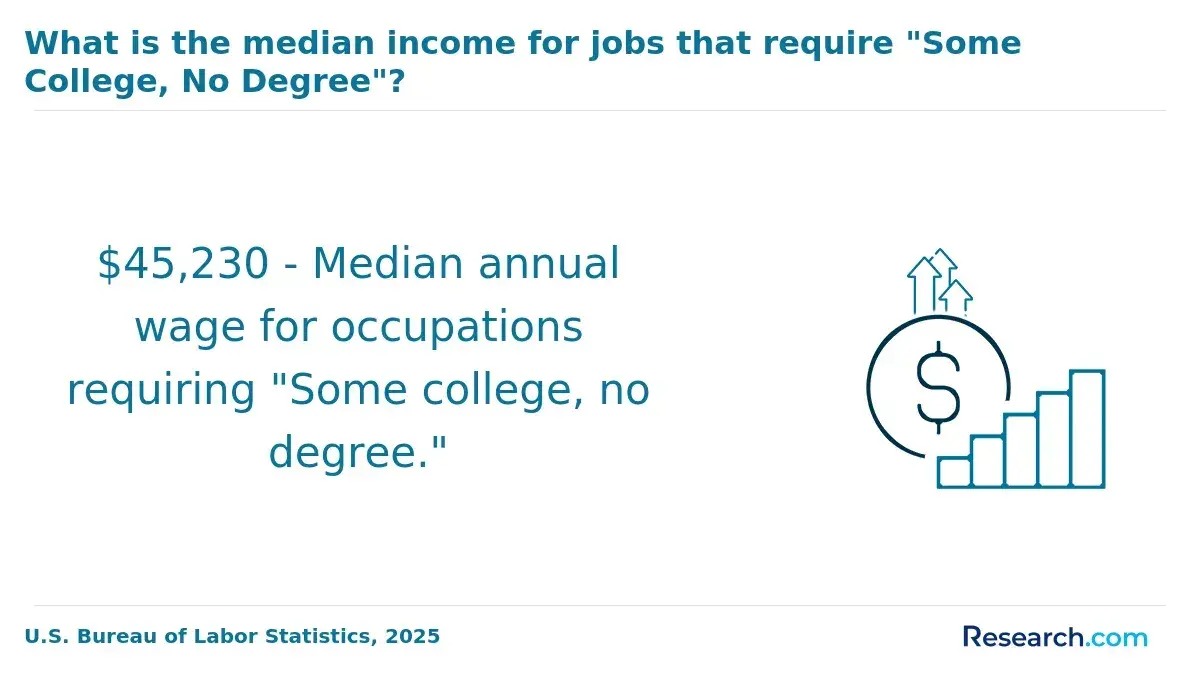
Georgetown University research highlights a 20% to 30% wage increase over time, reflecting a clear salary premium tied to degree completion. Many graduates achieve median salaries exceeding $60,000 annually within a few years, compared to roughly $45,000 for those without a bachelor's degree.
Working adults finishing these programs typically leverage existing professional experience, allowing them to pursue leadership or managerial roles sooner than recent graduates.
Career advancement often includes promotion eligibility and access to credential-gated positions such as certified medical manager or healthcare operations supervisor, which require formal credentials beyond experience alone.
Alumni research underscores how degree completion opens doors to senior roles, graduate education, and competitive licensing exams.
- Salary Premium: A consistent increase in earnings following degree completion, often surpassing $60,000 annually within several years.
- Promotion Eligibility: Provides the formal qualifications necessary for moving into mid- and upper-level management positions.
- Credential-Gated Roles: Enables entry into positions mandating a bachelor's degree or specific certification.
- Career Advancement: Supports career changers and mid-career professionals seeking senior roles and advanced credentials.
Prospective students should carefully assess whether programs are accredited and aligned with employer or licensure requirements. Maximizing prior learning credit, verifying financial aid options, and comparing flexible scheduling formats are vital steps for working adults to ensure the program fits their financial and life circumstances while meeting career goals.
How Do Employers View a Healthcare Management Degree Completed Through a Completion Program?
Employer surveys from organizations like the Society for Human Resource Management (SHRM) and the National Association of Colleges and Employers (NACE) reveal that hiring managers emphasize the accreditation and recognized status of the institution awarding the degree rather than the student's method of completion.
Degrees earned through healthcare management completion programs are generally considered equivalent to traditional degrees because accredited institutions issue identical diplomas without indicating the program type.
With this uniform diploma policy, candidates should present their credentials confidently on resumes and applications-highlighting the accelerated, adult-focused format of their program in interviews as a strategic advantage that reflects efficient use of prior learning and professional experience.
- Accreditation: Employers prioritize degrees from regionally or nationally accredited schools with credible healthcare management credentials.
- Diploma Consistency: Completion programs do not differentiate their diplomas from traditional programs, providing equal footing in credential recognition.
- Resume Strategy: Framing the completion program's structure as a benefit during interviews helps underscore readiness and commitment.
- Employer Specifics: Federal roles subject to OPM standards or licensed professions regulated by state boards might require verification of degree pathways; applicants should confirm acceptance with licensing bodies or HR prior to enrollment.
- Experience Over Format: In most private-sector healthcare management hiring, demonstrated job performance and professional references carry more influence than how the degree was completed.
This perspective shows that healthcare management completion degrees serve as legitimate credential enhancers—not second-tier options—and, when selected thoughtfully, support career growth tailored to working adults navigating financial, professional, and life demands.
What Graduates Say About Healthcare Management Degree Completion Programs for Working Adults
- Nathanael: "Completing the healthcare management degree as a working adult was a game changer for me. The program's flexible scheduling formats allowed me to balance coursework with my job and family commitments seamlessly-no late-night cram sessions necessary. Plus, the transfer credit policies were refreshingly straightforward, letting me capitalize on prior credits without hassle, which saved both time and money."
- Russell: "What stood out most during my healthcare management degree journey was the program's strong accreditation standards. Knowing the curriculum met rigorous quality benchmarks gave me confidence when pursuing leadership roles afterward. Additionally, the emphasis on career outcomes-such as practical skills and networking-was clearly designed to position graduates well beyond generic undergraduate options."
- Jose: "The cost considerations of healthcare management completion programs often give working adults pause-but this program was thoughtfully priced with real value in mind. Beyond affordability, its structural features provided a well-organized learning path that felt tailored for professionals like me managing busy lives. The combination of these factors helped me align my educational goals with my financial reality and long-term career ambitions."
Other Things You Should Know About Healthcare Management Degrees
Healthcare management degree completion programs often provide tailored support services such as academic advising, career counseling, and technical assistance designed for working adults. Many programs also feature flexible tutoring options and access to online libraries to help students balance work and study. These services ensure students stay on track and succeed despite their busy schedules.
Yes, many healthcare management degree completion programs are structured with transferability in mind, allowing earned credits to count toward graduate degrees such as a master's in healthcare administration. However, transfer policies vary by institution, so it's important to confirm credit acceptance with both the undergraduate and prospective graduate programs. Ensuring this transferability can save time and money down the line.
Networking is a crucial component of healthcare management degree completion programs, offering working adults the opportunity to connect with industry professionals, alumni, and peers. These connections can lead to mentorship, job referrals, and collaborations that enhance career growth. Programs often integrate networking events, online forums, and group projects to facilitate these professional relationships.
Many programs offer tailored resources for military veterans, such as dedicated advisors, veteran-specific scholarships, and assistance with navigating GI Bill benefits. Some institutions also provide mentorship opportunities with veterans who have transitioned into healthcare management roles.
References
- Master’s in Healthcare Administration (MHA) Programs https://nursinglicensemap.com/resources/healthcare-degree-programs/masters-in-healthcare-administration/
- Navigating the Finish: Bachelor’s Degree Completion Strategies for Adults in Health Care https://yourhealthmagazine.net/article/health-education/navigating-the-finish-bachelors-degree-completion-strategies-for-adults-in-health-care/
- University Programs https://www.achsm.org.au/education/university-programs/
- 6 Most Valuable Certifications for Healthcare Leaders https://www.healthstream.com/resources/6-most-valuable-certifications-for-healthcare-leaders
- What is the Timeline for Obtaining a Degree in Healthcare Management? - Healthcare Management Degree Guide https://www.healthcare-management-degree.net/faq/what-is-the-timeline-for-obtaining-a-degree-in-healthcare-management/
- MHCDS Online Hybrid Learning Model https://mhcds.dartmouth.edu/mhcds-advantage/learning-model/
- How Long is an MHA Program? MHA Programs One Year to 18 Months https://www.onlineeducation.com/healthcare/faqs/length-of-online-mha-programs
- How to Finish a Bachelor’s Degree in Healthcare https://www.collegetransitions.com/blog/how-to-finish-a-bachelors-degree-in-healthcare/
- Who Accredits MHA Programs? https://www.mhaonline.com/faq/who-accredits-online-mha-programs
- Balance Work & an Online Healthcare Management Degree https://www.michiganstateuniversityonline.com/resources/healthcare-management/how-to-balance-an-online-healthcare-management-degree-with-a-full-time-career/