2027 Industrial Organizational Psychology Degree Completion Programs for Working Adults

Co-Founder and Chief Data Scientist
Balancing work, life obligations, and the desire to complete a degree in industrial organizational psychology presents a complex challenge for many adults. They often face unclear credit transfer policies, rigid scheduling formats, and uncertain program quality-factors that affect career advancement and financial stability. Notably, graduates with accredited degree completion programs in this field report a median salary increase of up to 20%, highlighting the tangible return on investment. This article explores the critical factors that distinguish reputable industrial organizational psychology completion programs-such as accreditation, flexibility, and cost-and guides readers in making informed decisions aligned with their professional and financial goals.
Key Things to Know About Industrial Organizational Psychology Degree Completion Programs for Working Adults
- Maximize credit for prior learning by submitting military or professional training evaluations-ACE credit recommendations boost transfer rates, often covering 25-40% of degree requirements for working adults.
- Choose programs with accreditation recognized by employers and licensing boards-this ensures degree credibility and eligibility for certifications crucial in industrial organizational psychology careers.
- Access financial aid options tailored for working adults, such as employer tuition assistance, federal grants, and scholarships targeting part-time students balancing work and study.
What Are Industrial Organizational Psychology Degree Completion Programs, and Who Are They Designed For?
Industrial organizational psychology degree completion programs for working adults provide tailored educational pathways for those who have some college credits but did not earn a bachelor's degree. These programs differ from traditional four-year or graduate programs by focusing on finishing remaining credits faster-often through accelerated courses-and offering credit-for-prior-learning options that recognize professional experience, military training, and previous coursework. They deliver flexible scheduling formats such as evening, weekend, or fully online classes designed specifically for busy professionals.
This approach suits adults who paused their education, military veterans with ACE-credited training, mid-career professionals seeking promotions requiring formal credentials, and career changers entering industrial organizational psychology for new opportunities. The emphasis on practical flexibility and rigorous academic standards enables students to balance education with work and family commitments. Many programs leverage research from the National Student Clearinghouse, the American Association of State Colleges and Universities (AASCU), and the Lumina Foundation, underscoring their legitimacy and growing role in adult education.
- Structural Features: Accelerated pacing; generous transfer credit policies, particularly for military veterans; and class schedules that accommodate working professionals.
- Target Audiences: Adults with some college but no degree; veterans with relevant ACE credits; professionals needing credentials for career advancement; and individuals transitioning into industrial organizational psychology.
- Legitimacy and Scope: Supported by research from leading education organizations highlighting rising enrollment and success rates in adult degree completion programs.
- Key Considerations: Maximizing credit-for-prior-learning; selecting programs recognized by employers and licensure boards; accessing financial aid options for working adults; and objectively comparing program quality to align with career and financial goals.
Many online industrial organizational psychology degree completion programs designed for professionals also integrate affordable options, comparable to other flexible paths such as online MBA programs, which offer similar benefits in credit transfer and scheduling flexibility.
How Do Industrial Organizational Psychology Degree Completion Programs Differ From Traditional On-Campus Degree Programs?
Industrial organizational psychology degree completion programs offer distinct advantages tailored to working adults compared with traditional on-campus degrees. These flexible programs minimize disruptions to employment and family responsibilities by providing varied scheduling formats: evening, weekend, online, or hybrid classes, allowing students to integrate coursework around their busy lives. This contrasts sharply with the fixed daytime, weekday schedules of traditional programs that require physical attendance.
- Pacing Options: Completion programs provide both accelerated cohort models-where students advance together on a set timeline-and self-paced enrollment for individualized progress. Traditional programs usually follow rigid semester calendars that can hamper flexibility.
- Residency Requirements: Degree completion pathways minimize or eliminate in-person residency mandates, typically requiring few or no campus visits. Meanwhile, traditional degrees demand full-time, on-campus presence.
- Coursework Delivery: A substantial portion of completion program coursework is asynchronous-allowing students to engage with lectures, assignments, and discussions on their own schedules. Traditional formats rely heavily on synchronous classes with scheduled meeting times.
- Structural Accommodations: Completion programs feature multiple or rolling start dates yearly, streamlined advising targeted at adult learners, and highly flexible credit transfer policies-including generous acceptance of military training and prior learning assessments. Traditional on-campus programs maintain fixed academic calendars, standard advising, and limited transfer flexibility.
Data from the National Center for Education Statistics (NCES) and IPEDS reveal strong enrollment growth in degree completion programs over the last decade, reflecting rising demand from working adults for career advancement without sacrificing their current job or family life. Both traditional and completion programs award the same Bachelor of Science or Bachelor of Arts in industrial organizational psychology-yet completion programs prioritize accessibility through their flexible structure.
Highly regarded industrial organizational psychology degree completion programs emphasize accreditation, employer and licensure recognition, and policies that maximize credit transfers to acknowledge prior learning. Prospective students-including military veterans with ACE credits, mid-career professionals pursuing credential-gated promotions, and career changers-should assess program costs, available financial aid options tailored for adults, and career outcomes to ensure alignment with their goals. Exploring options such as the accelerated bachelor's degree online can help them find the best fit.
Flexible scheduling and credit transfer in industrial organizational psychology completion programs further support adult learners balancing education with life obligations, making these pathways uniquely suited for those seeking to complete their degree efficiently and effectively.
What Prior Credits and Experiences Count Toward a Industrial Organizational Psychology Degree Completion Program?
Industrial organizational psychology degree completion programs commonly recognize a variety of prior learning and credits, though acceptance can differ widely between schools based on their accreditation and policies. Transfer credits from regionally accredited colleges are typically prioritized, with institutions evaluating course equivalency and grades to determine applicability. Credits from nationally accredited or nonaccredited schools often face stricter scrutiny.
- Transfer Credits: Usually accepted from regionally accredited institutions, subject to individual school policies.
- Military Training Credits: Credits evaluated via the American Council on Education (ACE) registry can translate military experience into valuable academic credit, streamlining degree progress for veterans.
- Professional Certifications: Relevant certifications in organizational behavior, human resources, or business management may count for credit or waivers depending on program alignment.
- Prior Learning Assessment (PLA): Some programs allow submission of detailed portfolios showcasing workplace learning and professional achievements, enabling faculty to award academic credit.
- Credit-by-Examination: Exams such as CLEP and DSST can validate existing knowledge, offering a fast track to earning credits without traditional coursework.
Before enrolling, applicants should request official transcripts and seek a pre-admission credit evaluation to confirm transferability. Research from the Council for Adult and Experiential Learning (CAEL) demonstrates that prior learning recognition can reduce time to degree by several months to over a year-resulting in significant cost savings. Beware of programs rejecting ACE military credits or applying arbitrary transfer limits lacking academic justification. Guidance from the American Association of Collegiate Registrars and Admissions Officers (AACRAO) helps assess fair credit transfer policies.
One professional who completed an industrial organizational psychology degree shared that navigating credit transfers was initially overwhelming due to varied institutional rules. He explained, "I had to coordinate official transcripts from different colleges and compile detailed documentation of my military and certifications. The pre-enrollment credit review was crucial-it clarified which credits counted and saved me months of redundant classes. It felt empowering to see how my experiences translated into academic progress, making the whole process worthwhile."
What Is the Minimum GPA Requirement for Industrial Organizational Psychology Degree Completion Programs?
Admission into industrial organizational psychology degree completion programs often requires meeting specific cumulative GPA benchmarks-typically between 2.0 and 2.5 on a 4.0 scale-based on prior college coursework. These minimum GPA standards serve as indicators of academic readiness for advanced study.
Conditional Admission: Some programs offer provisional acceptance to students below the minimum GPA, contingent on enrollment in academic support or developmental courses designed to enhance success rates.
- Open Admission With Experience: Many adult-focused programs waive strict GPA requirements for applicants who demonstrate relevant professional experience, recognizing practical expertise as an alternative measure of preparedness.
- Holistic Review: GPA is frequently assessed alongside qualitative factors such as years of work experience, letters of recommendation, and personal statements-especially at institutions accredited by regional bodies like the Higher Learning Commission (HLC).
- Academic Forgiveness: Returning adults with earlier low GPAs may benefit from fresh-start policies that reset GPA calculations after a specified absence from higher education, facilitating a new academic beginning.
- Pre-Admission Evaluation: Prospective students should request formal academic evaluations from each program to understand eligibility clearly and avoid unforeseen application obstacles.
These guidelines help candidates navigate the minimum GPA requirement for industrial organizational psychology degree completion programs while weighing how GPA standards for industrial organizational psychology degree completion interact with diverse admission policies. Those seeking flexible pathways might also explore options featuring easiest associate degrees for foundational credit accumulation and career advancement.
How Are Industrial Organizational Psychology Degree Completion Programs Structured Around Full-Time Work Schedules?
Degree completion programs in industrial organizational psychology cater to full-time professionals by offering flexible scheduling such as evening cohorts, weekend intensives, fully online asynchronous courses, or hybrid formats that mix live sessions with digital content. These options enable students to keep working while steadily advancing toward their degrees. Typically, students carry a lighter credit load each term-often between 6 and 9 credits-to balance education with job and family responsibilities without risking burnout.
Many programs operate with a cohort learning model, where students move through the curriculum together as a fixed group on a set timeline. This approach builds accountability and peer support, helping maintain motivation. It also provides predictable schedules that allow working adults to plan months in advance around professional and personal commitments.
Research from the National Student Clearinghouse Research Center shows that students in cohort-based programs tend to persist and graduate at higher rates than those in traditional enrollment formats, highlighting the benefits of structured peer networks.
Prospective students should ask institutions about:
- Course Cancellation Policies: Clarity on how often or under what conditions classes might be canceled.
- Make-Up Provisions: Flexibility options for managing unavoidable work conflicts.
- Student Success Advisors: Availability of dedicated advisors who assist with schedule management and keeping progress on track.
When reflecting on her experience, a professional who completed an industrial organizational psychology degree recalled the challenge of juggling full-time work with coursework deadlines. She emphasized how the cohort's steady rhythm and responsive advisors made it possible to adjust when work emergencies arose without feeling overwhelmed. "Having a set group moving forward together made a huge difference," she said, "and knowing there was support to navigate scheduling hiccups kept me from falling behind." This structure, she explained, was key to staying motivated and successfully completing her degree while maintaining her career.
Is Online or Hybrid Delivery Available for Industrial Organizational Psychology Degree Completion Programs?
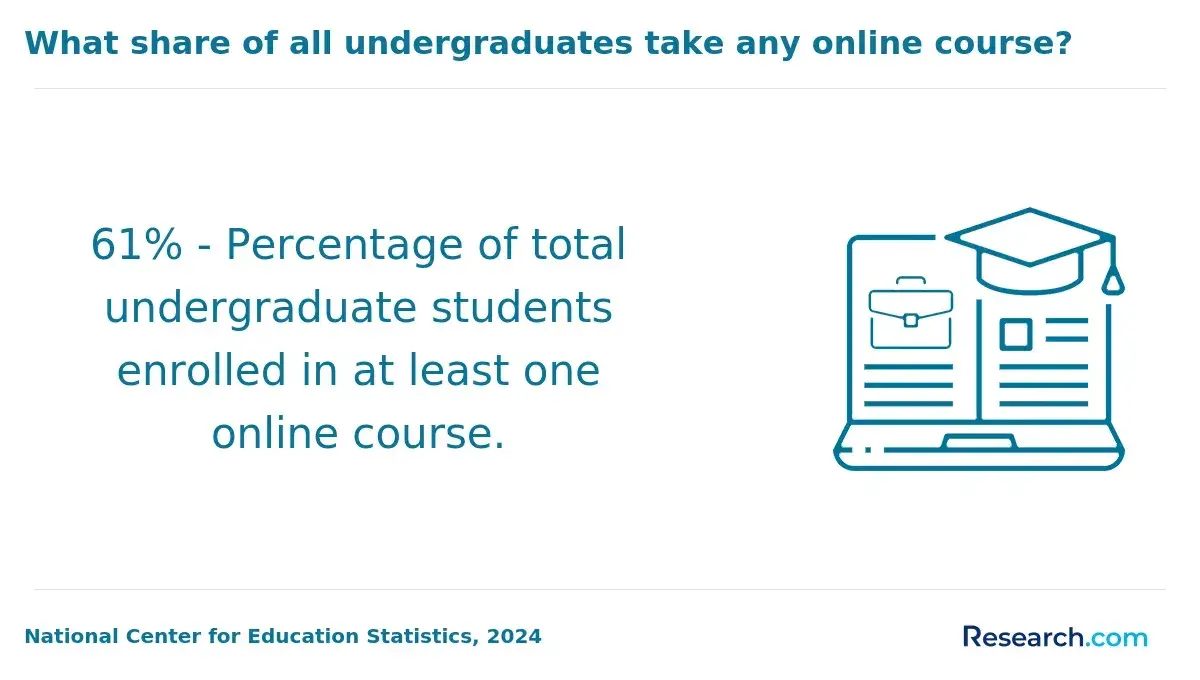
Industrial Organizational Psychology degree completion programs accommodate working adults through flexible delivery options-fully online, hybrid, and in-person. Fully online programs often combine live, synchronous video sessions with asynchronous lectures, catering to learners facing remote locations or irregular work hours. According to the NCES Integrated Postsecondary Education Data System, about 68% of adult learners in degree completion programs enrolled fully online in 2023, highlighting growing demand for this flexible format. Hybrid models mix online coursework with mandatory in-person intensives, usually scheduled on weekends or short residencies, offering a balanced approach valued by approximately 23% of adult students, per the Online Learning Consortium.
The COVID-19 pandemic significantly boosted institutions' ability to provide quality online education through enhanced technology and faculty development, broadening access to comprehensive Industrial Organizational Psychology coursework remotely.
- Faculty Credentials: Evaluate whether instructors hold terminal degrees and relevant experience specific to Industrial Organizational Psychology to ensure academic rigor.
- Student-to-Faculty Ratios: Low ratios in online courses promote personalized feedback and meaningful interaction vital for applied disciplines.
- Academic Support: Access to virtual tutoring, advising, and writing assistance is essential for sustained student success in online environments.
- Accreditation: Confirm that online programs share the same institutional accreditation as their on-campus counterparts, ensuring transferability and recognition.
Choosing the right format depends on personal learning preferences, work schedules, and geographic availability. Prospective students should ask enrollment counselors about the balance of synchronous versus asynchronous courses, frequency of in-person sessions for hybrid options, available academic support services, and faculty dedication to online learners to select a program aligned with their professional and life commitments.
How Long Does It Take to Complete a Industrial Organizational Psychology Degree Completion Program?
Time-to-completion for industrial organizational psychology degree completion programs varies depending on prior credits, enrollment status, and program requirements. Students entering with around 60 prior credits-about two years of college-typically take two to three years part-time to finish. For those with 90 credits, closer to three years of prior study, completion often occurs within one to two years, especially with accelerated or summer courses.
Military veterans or professionals with substantial prior learning assessment (PLA) credits-such as ACE-evaluated military training or formal certifications-may cut completion time to under a year if the program accepts these credits comprehensively. However, this depends heavily on program policies about credit transfer and fixed components like internships or capstone projects that enforce minimum time commitments.
- Credit Transfer: Generous acceptance of transfer and PLA credits shortens degree milestones significantly.
- Enrollment Status: Full-time or accelerated course loads speed completion; part-time fits better for working adults but extends duration.
- Fixed Components: Internships, fieldwork, or capstones often mandate set durations, limiting acceleration.
- Financial Impact: Graduating faster lowers tuition, reduces lost earnings, and enables earlier post-degree salary gains.
- Program Transparency: Request each program's average time-to-degree for your credit profile in writing-don't rely on advertised minimums aimed at the most credit-advantaged students.
Such variables help working adults evaluate industrial organizational psychology programs that balance academic rigor with career goals and financial realities. Maximizing credit for prior learning, verifying employer recognition and licensure alignment, accessing financial aid, and comparing objective quality criteria are essential decisions to ensure success on this credential pathway.
What Accreditation Should a Industrial Organizational Psychology Degree Completion Program Hold?
- Regional Accreditation: Regional accreditation remains the most respected benchmark for industrial organizational psychology degree completion programs. Agencies like the Higher Learning Commission (HLC), the Middle States Commission on Higher Education, and the Southern Association of Colleges and Schools Commission on Colleges (SACSCOC) assess institutions against rigorous academic standards. This accreditation is widely recognized by employers, graduate schools, and qualifies students for federal financial aid, which is critical for working adults balancing education with professional and personal obligations. Graduates from regionally accredited programs typically experience smoother credit transfers and greater acceptance of their credentials.
- National Accreditation: Organizations such as the Distance Education Accrediting Commission (DEAC) grant national accreditation, which generally applies to career-focused or online institutions. While these programs serve many students well, national accreditation is often considered a lower status, limiting credit transferability to regionally accredited schools and potentially affecting employer recognition or graduate admission. Those exploring online MFT programs may find similar distinctions relevant in related fields.
- Programmatic Accreditation: Though no sole accreditor oversees industrial organizational psychology, related programmatic accreditations-such as AACSB or ACBSP for business and management-play a vital role. Additionally, accreditations like ABET for technology programs or CSWE for social work can impact professional licensure eligibility, hiring outcomes, and graduate admissions. High-quality accredited industrial organizational psychology degree programs often leverage such recognitions to enhance academic and career pathways.
- Risks of Unrecognized Accreditation: Beware of programs claiming accreditation from agencies not recognized by the U.S. Department of Education or those holding only national accreditation. Earning a credential from such institutions can pose reputational risks, restrict eligibility for licensure boards, and exclude students from federal aid programs-jeopardizing the long-term value of the education investment.
Prospective students should independently confirm a program's accreditation status through the U.S. Department of Education's Database of Accredited Postsecondary Institutions and Programs (DAPIP). Relying solely on marketing claims can be misleading. Thorough verification helps ensure alignment with industrial organizational psychology program accreditation standards and protects against costly missteps.
How Much Do Industrial Organizational Psychology Degree Completion Programs Cost, and What Financial Aid Is Available?
Costs for industrial organizational psychology degree completion programs vary widely by institution type. Public regional universities typically charge between $300 and $500 per credit hour for in-state students, with higher rates for out-of-state enrollees. Private nonprofit institutions often range from $600 to over $1,000 per credit hour. For-profit programs tend to include mandatory fees, technology charges, and residency or intensive expenses, increasing total costs. Additional expenses such as textbooks and software licenses further contribute to the overall price.
- Pell Grants: Available to eligible part-time learners, these grants reduce direct costs without repayment requirements.
- Employer Tuition Reimbursement: Many employers cover partial or full tuition for career-related fields like industrial organizational psychology.
- Military Benefits: Veterans may utilize GI Bill benefits, while spouses and service members can access MyCAA funding for tuition assistance.
- Institutional Scholarships: Some colleges offer scholarships targeting adult and non-traditional students to reduce out-of-pocket costs.
Adult students must submit the FAFSA independently to access federal aid and can consider tax incentives such as the Lifetime Learning Credit, offsetting educational expenses. The employer-provided educational assistance exclusion under IRS Section 127 allows tax-free tuition benefits up to set limits. Consulting a tax professional is advised for personalized guidance.
To evaluate industrial organizational psychology degree completion program tuition costs effectively, students should compare net tuition after factoring in transferred credits, employer reimbursement eligibility, and other aid rather than relying solely on sticker prices. This approach often reveals substantially lower out-of-pocket expenses.
Working adults choosing the right credential pathway can also benefit by exploring programs across disciplines, like a mechanical engineering degree, to understand broader pricing and financial aid options.
What Career Outcomes Can Working Adults Expect After Completing a Industrial Organizational Psychology Degree?
Completing a bachelor's degree in industrial organizational psychology offers significant career benefits-especially for working adults balancing experience with academics. Data from the College Scorecard highlights that graduates see median earnings notably higher than those with some college but no degree, supported by Bureau of Labor Statistics wage trends for human resources specialists, organizational development consultants, and training specialists.
- Promotion Eligibility: Many employers require a bachelor's degree in industrial organizational psychology or related fields to access mid- and upper-management roles, making degree completion essential for career advancement.
- Credential-Gated Roles: Specialized positions such as labor relations specialists or organizational development analysts often mandate a formal degree to qualify-unlocking higher responsibility and compensation.
- Salary Premium: Graduates typically experience a 15-25% increase in salary compared to peers without a completed degree, underscoring the market value of finishing their credential.
- Experienced Professional Advantage: Adults earning the degree while working leverage their background to pursue senior roles immediately post-graduation instead of entry-level jobs, distinguishing them from traditional graduates.
- Career Goal Alignment: Prospective students should verify that their chosen program's accreditation and credential meet specific career objectives-such as licensure eligibility, promotion criteria, or graduate school admission-before enrolling.
How Do Employers View a Industrial Organizational Psychology Degree Completed Through a Completion Program?
Employer surveys from organizations like the Society for Human Resource Management (SHRM) and the National Association of Colleges and Employers (NACE) reveal that hiring managers focus chiefly on whether a degree comes from a regionally accredited institution-not on how the degree was earned. Whether candidates complete an industrial organizational psychology degree through a traditional track or a completion program using prior learning assessments, employers generally regard these pathways equally.
- Accreditation: The most crucial factor is institutional accreditation-employers rely on this to verify educational quality.
- Diploma Presentation: Degrees awarded do not specify if the credential was earned via completion programs or conventional coursework, giving all graduates equal standing.
- Resume Strategy: Candidates should list their degree straightforwardly but may mention the accelerated or adult learner focus during interviews to demonstrate dedication and effective time management.
- Sector-Specific Scrutiny: Federal jobs, governed by OPM standards, and licensed professions often require more detailed verification about how degrees were completed. Checking with licensing boards or HR is advisable prior to enrollment.
- Private Sector Views: In corporate environments, practical experience, demonstrated skills, and strong references usually outweigh concerns about degree format-making the completion degree a respected credential boost.
Understanding these nuances enables working adults to evaluate industrial organizational psychology completion programs as valid, career-enhancing options-and to make informed educational and professional decisions aligned with their goals and obligations.
What Graduates Say About Industrial Organizational Psychology Degree Completion Programs for Working Adults
- Tobias: "Completing my industrial organizational psychology degree online was an eye-opening experience-especially the accreditation standards that set this program apart from many generic options. Knowing the curriculum met rigorous benchmarks helped me feel confident about the value of my credential in today's competitive job market. Plus, the flexible scheduling formats were a lifesaver, allowing me to balance coursework with a demanding full-time job."
- Rex: "Reflecting on my journey through the industrial organizational psychology program, one standout feature was the institution's clear and generous credit transfer policies-it made advancing my education much more affordable and accessible. Cost considerations were crucial since returning to school felt like a huge commitment, but this program's structure provided transparency and realistic budgeting options. Graduating, I now appreciate how thoughtfully designed the program was for working adults striving to enhance their career outcomes effectively."
- Arthur: "What really impressed me about this industrial organizational psychology completion program was how focused it was on structuring coursework to fit the realities of adult learners. Courses were delivered in concise formats that respected my time without compromising depth-quite different from traditional undergrad degrees. This approach, combined with strong accreditation and positive career trajectory support, convinced me this wasn't just about earning a degree but about truly advancing my professional path."
Other Things You Should Know About Industrial Organizational Psychology Degrees
Networking is crucial in Industrial Organizational Psychology degree completion programs as it connects working adults with peers, mentors, and industry professionals. These connections can lead to career advancement opportunities, collaboration on projects, and access to job openings within the field.
Yes, credits earned in degree completion programs often transfer to graduate studies, especially if the program is regionally accredited and aligned with graduate-level standards. This transferability helps students pursue advanced degrees without repeating coursework, saving time and money while expanding career opportunities.
Veterans can use benefits such as the GI Bill and Tuition Assistance to fund their education, with many schools offering specialized admissions support and credit for military training. Programs that recognize ACE evaluations allow veterans to maximize transferred credits-enabling a faster and more affordable path to degree completion.
References
- How Long Does it Take to Become an Industrial Psychologist? - Organizational Psychology Degrees https://www.organizationalpsychologydegrees.com/faq/how-long-does-it-take-to-become-an-industrial-psychologist/
- Business Psychology Degree Online https://www.snhu.edu/online-degrees/bachelors/bs-in-business-administration/industrial-organizational-psychology
- Psychology Programs Accreditation | Psychology.org https://www.psychology.org/resources/accreditation/
- What Can You Do With a Degree in Industrial and Organizational Psychology? - Brooklyn College https://www.brooklyn.edu/psychology/graduate/industrial-organizational/what-can-you-do-with-a-degree-in-industrial-and-organizational-psychology/
- Best Accredited I/O Psychology | Business Psychology Degrees and Programs https://www.psychologydegree411.com/degrees/business-psychology/
- Industrial/Organizational Psychology vs. Business Psychology https://www.thechicagoschool.edu/insight/business/industrial-and-organizational-psychology/
- Graduate admissions: Master of Arts in I/O Psychology https://clas.wayne.edu/psychology/admissions/grad/ma-io
- Grad School: Should I Get a Traditional or Online I/O Master's/Ph.D.? - NeoAcademic https://neoacademic.com/2012/05/09/grad-school-online-or-brick-and-mortar-io/
- Admission Requirements - Saint Peter's University Online Master's of Industrial Organizational Psychology https://www.saintpeters.edu/academics/graduate-programs/master-of-industrial-organizational-psychology/admission-requirements/
- Industrial Organizational Psychology Master's Degree | Elmhurst University https://www.elmhurst.edu/academics/departments/psychology/programs/industrial-organizational-psychology/