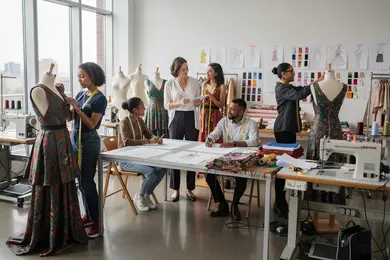
2026 Job Placement Rates for Fashion Design Master's Graduates: Employment Outcomes

Co-Founder and Chief Data Scientist
Graduates with a master's in fashion design often face a complex job market shaped by factors such as industry specialization, internship quality, and regional hiring trends. For instance, employment rates vary significantly between luxury brands and fast fashion sectors, influencing how quickly graduates secure roles and build careers. According to a 2024 National Center for Education Statistics report, the rise of flexible, hybrid graduate programs has expanded access for adult learners balancing work and study, yet this shift also reshapes employer expectations around hands-on experience. Understanding these dynamics is essential for assessing how a fashion design master's translates into sustainable employment outcomes.
Key Things to Know About the Job Placement Rates for Fashion Design Master's Graduates
- Industry sector concentration shapes job placement; graduates in luxury and sustainable fashion report faster hires, reflecting employer demand shifts toward brand specialization and ethics-driven innovation.
- Geographic location imposes access and cost tradeoffs, as urban hubs yield higher placement rates but entail greater living expenses and competition, crucial for adult learners balancing resources.
- Internship experience remains a key employer signal, with 68% of recent master's graduates securing roles via prior placements, highlighting practical engagement as decisive over academic rigor alone.
What Are the Typical Job Placement Rates for Fashion Design Master's Graduates?
Job placement rate in the context of graduate education for fashion design master's graduates is less a fixed metric than a nuanced indicator shaped by varied definitions and reporting practices. Rather than simply reflecting full-time employment in a directly related fashion design role, placement rates often mix outcomes including part-time work, freelancing, positions in adjacent creative sectors, and even continued education pursuits.
For a recent bachelor's graduate considering how these numbers might inform their decision, it's critical to parse these distinctions carefully, as the meaning behind a high reported placement rate can shift dramatically based on what it counts. Programs that report upwards of 80-90% placement may do so by including any form of employment or graduate study, which contrasts sharply with broader data from the National Center for Education Statistics (NCES) and U.S. Bureau of Labor Statistics (BLS) that adopt more stringent criteria emphasizing sustained, relevant employment. This variance underscores the importance of weighing placement figures in light of detailed methodology notes rather than headline percentages alone.
- Employment Definition: Placement rates vary substantially depending on whether programs count exclusively full-time, fashion design-specific roles or also include any part-time, freelance, or tangential creative work, which can inflate perceived success.
- Continued Education: Some programs incorporate graduates pursuing further specialization or complementary degrees into placement figures, reflecting an accepted pathway that delays traditional labor market entry without deeming it unsuccessful.
- Data Sources and Timeframes: Program-reported rates often rely on self-reported alumni outcomes within one year, while NCES and BLS figures aggregate broader longitudinal data for more conservative but stable estimates.
- Industry and Location Impact: Proximity to fashion industry centers and internship opportunities heavily influence time to relevant employment, creating a wide range of placement experiences within reported data.
- Program Transparency: Clear disclosure of response rates, employment verification, and criteria allows prospective students to differentiate meaningful outcomes from marketing-inflated statistics.
For international fashion design master's degree holders and domestic students alike, understanding how placement is classified affects expectations about entry into competitive hubs versus regional markets. For example, a graduate in New York or Los Angeles with a well-integrated internship may find faster and more relevant job placement compared to peers elsewhere, which program outcomes reports often reflect.
These considerations also have workforce implications: hiring managers prioritize proven experience and skill relevance over degree credentials alone, so a program's ability to facilitate meaningful industry connections can be as decisive as its formal placement rate. Prospective students looking into more lucrative pathways may also consider top paying degrees.
Table of contents
How Does Fashion Design Master's Graduate Employment Compare to the National Average?
Graduates with a master's in Fashion Design generally face a more challenging employment landscape compared to the average for all master's degree holders, which has direct implications for career planning and timing. Choosing this degree means grappling with a sector where employment opportunities are less abundant and more sensitive to geographic and industry-specific factors than many other advanced degrees.
Data from the BLS Occupational Outlook Handbook and NCES graduate outcome reports indicate that while overall master's degree employment rates commonly exceed 85% within one year, fashion design graduates typically achieve employment rates in the 75-85% range. This gap reflects unique industry dynamics, including a greater emphasis on portfolios and practical experience rather than formal credentials, as well as cyclical demand concentrated in major fashion hubs.
- Field Demand: The fashion industry's cyclical nature and its heavy geographic concentration limit hiring opportunities; many regions simply lack sufficient industry presence to sustain high employment rates.
- Credential Specificity: Unlike broader academic master's fields, the technical and creative skills honed in fashion design do not always translate directly into available roles, extending the job search and requiring strategic talent positioning.
- Regional Variance: Locations like New York and Milan provide stronger employment markets, whereas graduates outside these centers often encounter fewer openings and slower hiring.
- Data Interpretation: Variation in "employment" definitions-such as inclusion of part-time or unrelated jobs-complicates direct comparisons; discerning professional relevance is key for accurate assessment.
- Industry Factors: Internships, networking, and program reputation often outweigh the credential itself in determining job placement, necessitating that candidates plan beyond simply earning the degree.

Which Industries and Sectors Hire the Most Fashion Design Master's Graduates?
Fashion design master's graduates predominantly find employment concentrated in a few industries, reflecting both the specialized skill set they develop and market demand realities. While the credential does not broadly unlock sectors like healthcare or finance, it does provide access to creative and consumer-focused fields where design expertise aligns with employer needs. This concentration offers greater depth but less breadth, so prospective students should weigh the tradeoff between specialization and potential flexibility. Geographic and curricular factors considerably influence placement, with metro fashion hubs and programs emphasizing internships or thesis work enhancing employability.
- Apparel and Textiles: The primary hiring industry, this sector employs graduates in design studios, textile production, product development, and merchandising, capitalizing on their technical and creative mastery.
- Luxury Goods and Retail: Graduates often shift toward upscale retail management, brand strategy, or merchandising within luxury fashion brands, where advanced design insight and market understanding are highly valued.
- Entertainment and Media: Costume design, styling, and editorial roles in film, theatre, and fashion publications present viable secondary markets, rewarding portfolios that highlight creative innovation.
- Technology and Innovation: Emerging yet smaller niches in wearable technology and sustainable materials development attract some graduates combining interdisciplinary design, engineering, and environmental awareness.
- Education and Consulting: A segment pursues academic roles or private consulting advising on fashion trends and sustainability, though these paths often require additional credentials or significant experience.
These industry distributions signal that most fashion design master's graduates see early career opportunities primarily within traditional and adjacent creative sectors rather than widely across unrelated fields. Students targeting job placement should consider how program concentrations and geographic markets influence outcomes, especially because top regions for fashion design graduate jobs often cluster around established metropolitan fashion centers. Additionally, the choice between thesis and non-thesis tracks can impact access to certain research-driven or consulting roles.
For those balancing career shifts or returning to study, this focus informs realistic expectations and strategic decisions about the credential's alignment with long-term employment goals. For a comparative perspective on credential accessibility, one might also examine the distribution of fields enrolling in the easiest associate degree programs, which contrast sharply with specialized graduate outcomes.
What Types of Job Titles Do Fashion Design Master's Graduates Most Commonly Hold?
Job titles held by master's graduates in fashion design reveal how the degree functions both as an entry point and as a tool for career progression, depending largely on prior experience and program focus. Recent graduates often begin in roles emphasizing foundational skills, while those further along professionally use the degree to specialize or assume more technical or managerial responsibilities. Understanding common titles provides a practical framework for gauging employer expectations and identifying realistic job targets when searching the market.
- Assistant Designer: Frequently the primary professional role for fresh graduates, this position typically involves supporting senior staff through tasks like sketching and fabric research, serving as a bridge from academic learning to industry work.
- Technical Designer: This mid-career title demands detailed knowledge of garment construction and production workflows, reflecting a sharper technical competence developed through master's-level coursework or experience.
- CAD Designer: Highlighting digital proficiency, these roles require aptitude with computer-aided design tools, increasingly valued by employers prioritizing precision and innovation in product development.
- Product Developer: Professionals in this position combine creative and logistical skills to transform designs into viable products, requiring insight into cost management and supply chain that advanced degrees help cultivate.
- Fashion Merchandiser: While less design-centric, this role integrates creativity with market strategy and consumer trend analysis, appealing to graduates seeking broader engagement with the business side of fashion.
One graduate recalled navigating rolling admission deadlines, submitting applications incrementally to manage uncertainty about acceptance timing. They hesitated because early offers required quick decisions conflicting with internship schedules. The applicant ultimately balanced prompt responsiveness with thorough portfolio refinement, learning that deliberate pacing during admissions can alleviate stress without forfeiting opportunities. This experience illustrates how strategic timing and preparedness critically shape both entry into and outcomes from fashion design master's programs.
How Soon After Graduation Do Fashion Design Master's Graduates Typically Find Employment?
Graduates of Fashion Design master's programs often face varied timelines for securing employment, influenced heavily by the distinction between accepting a job offer and actually starting work. Programs typically report time-to-offer as the primary measure, which usually falls within three to six months after graduation. However, the start date can lag due to factors like seasonal hiring patterns or relocation needs, creating a gap that affects workforce entry timing.
Many institutions include graduates who secured positions before finishing their degrees in placement statistics, which can distort typical outcomes by suggesting faster employment than most experience when starting job searches post-graduation. Prospective students should critically assess whether reported placement rates reflect three-month, six-month, or one-year post-graduation windows, as shorter intervals may mask common challenges in obtaining relevant jobs.
Other critical variables shaping outcomes include sector focus within fashion design, geographic location, and the depth of internship or practical experience. Employers place significant weight on applied skills and industry connections, making program design a decisive factor in employment speed and salary potential.
Understanding these nuances offers realistic expectations: faster job offers often correspond to strong industry ties and practical exposure, while delays highlight the competitive, cyclical nature of the fashion labor market and regional hiring practices.

What Is the Average Salary for Fashion Design Master's Graduates in Their First Job?
First-job salary trends for fashion design master's degree holders reveal notable variation shaped by industry and geographic realities. Graduates entering high-end fashion houses or luxury brands in metropolitan hubs such as New York or Milan often receive starting salaries significantly above those accepted by peers in smaller cities or mass-market apparel firms. This disparity highlights that salary expectations should be closely aligned with the targeted employment sector and location rather than generalized averages.
For instance, a recent graduate hired by a prestigious design agency in Los Angeles may earn a competitive wage reflecting both brand reputation and local living costs, whereas a career changer transitioning into fashion design may initially face a salary reset as they acquire relevant experience.
- Industry Sector: Salaries vary widely across sectors; luxury brands and established agencies typically provide higher entry-level pay compared to startups or broader retail fashion companies.
- Geographic Location: Major metropolitan areas with concentrated fashion industries offer superior compensation, but cost of living tradeoffs must be factored into net earning potential.
- Program Selectivity: Graduates from selective or well-known master's programs may access better roles, though internship experience and alumni networks play crucial roles.
- Career Track: Those advancing within fashion design tend to leverage past experience to command better starting salaries compared to career changers starting anew.
- Data Reliability: Consulting multiple data sources such as BLS Occupational Employment and Wage Statistics and NACE salary surveys is essential, as program-published medians often reflect limited subsets of graduates who disclose income.
Prospective students should also consider how a master's credential compares with alternative pathways such as an online MBA no GMAT for broader business roles in fashion or related industries, weighing salary outcomes alongside career goals.
Employer Confidence in Online vs. In-Person Degree Skills, Global 2024

How Do Fashion Design Master's Program Rankings Affect Graduate Employment Outcomes?
Higher-ranked master's programs in fashion design can provide enhanced visibility and resource access, but these rankings often reflect academic or research prestige rather than direct employment metrics. For graduates, this distinction matters: a top-ranked program located far from industry hubs may not offer the same immediate job prospects as a moderately ranked school embedded within a major fashion market. The tangible outcomes of interest-job placement rates, hiring employer profiles, and salary data-frequently correlate more strongly with local opportunity networks and the program's industry integration than with ranking position alone.
- Program Ranking: Rankings often prioritize faculty research or institutional reputation which may not translate into strong employer connections or job placement efficiency.
- Location: Being situated in or near global fashion centers like New York or Milan significantly boosts access to internships and industry contacts, accelerating transition to paid roles.
- Alumni Network Strength: Active alumni who mentor and facilitate job referrals can sharply improve graduate employment outcomes beyond what rankings capture.
- Employer Partnerships: Programs with formal ties to fashion companies enable structured internship and recruitment pipelines crucial for timely employment.
- Concentration Availability: Specialized tracks tuned to evolving industry demands may open niche roles that generalist curricula do not address.
One graduate recalled hesitating through a rolling admissions cycle at two differing programs. The higher-ranked school's delayed notification left uncertainty about financing and start dates, while the lower-ranked, well-located program offered quicker admission and clearer internship pathways. Ultimately, the graduate accepted the latter, noting that the practical advantage of proximity and early industry immersion outweighed the prestige associated with rankings during the initial career phase.
What Role Does Geographic Location Play in Fashion Design Master's Graduate Job Placement?
Geographic location critically influences job placement rates, starting salaries, and the speed with which fashion design master's graduates secure employment. Graduates enrolled in programs situated near major metropolitan fashion hubs typically experience more immediate access to recruiting events, internships, and active alumni connections embedded within those local markets. For instance, a graduate from a New York-based program often benefits from direct on-campus recruiting by leading luxury brands headquartered in the city, accelerating time to hire compared to peers who relocate after graduation. Conversely, graduates moving to new markets face the practical challenge of establishing local networks and demonstrating relevance to employers unfamiliar with their previous education or experience, often resulting in delayed employment and reduced initial offers.
Students with geographic flexibility should therefore evaluate how closely the location of their chosen program aligns with their target employment market. Those geographically fixed must prioritize programs boasting robust, longstanding relationships with local employers to enhance their immediate employability. This alignment between program location and job market is a strategic factor shaping career outcomes.
- Proximity: Attendance at institutions in established fashion centers provides easier access to on-campus recruiting and a diverse pool of employer contacts, increasing internship and job opportunities directly through the program.
- Internship Access: Being near industry headquarters facilitates securing internships critical for practical experience and often leads to direct hire offers, reflecting a common employer preference for candidates with local internship history.
- Alumni Networks: Local alumni presence strengthens mentoring and referral opportunities-key elements that expedite job placements within the same geographic market.
- Relocation Challenges: Graduates who move post-degree must rebuild networks and prove their market fit, which can extend job search duration and compress salary negotiation leverage.
- Salary Variations: According to BLS state-level data, major employment hubs show higher salary ranges driven by cost of living and market demand, while smaller markets tend to offer fewer positions and lower wages.
- Decision Implications: Students flexible on location benefit from considering program-market alignment, while those restricted geographically should seek programs with demonstrated local employer engagement for better placement outcomes.
In understanding these dynamics, prospective students exploring job prospects in creative fields comparable to fashion design master's graduates can also examine jobs for environmental science majors, which show parallel influences of geographic market factors on employment. This cross-field perspective underscores the broad workforce principle that geographic alignment remains a decisive variable in graduate employability.
How Do Internship and Practicum Experiences Influence Fashion Design Master's Employment Rates?
Internship and practicum experiences significantly enhance employment prospects for fashion design master's graduates by providing applied learning that traditional coursework cannot replicate. These supervised placements offer crucial field exposure, fostering professional networks and references that influence hiring decisions. For example, a graduate completing a practicum with a textile innovation firm gains both specialized skills and employer recognition, accelerating job placement compared to peers lacking such experience. Programs with professional or hybrid tracks commonly integrate these experiences more systematically than thesis-only tracks, emphasizing career-readiness alongside academic research.
Evaluating fashion design master's programs solely on the presence of internships overlooks the importance of how these experiences are structured. Effective placements are supervised, have clear learning objectives, and are aligned with students' target sectors-whether apparel design, fashion marketing, or other niches. This alignment leverages employer perception, which favors candidates demonstrating applied knowledge and adaptability. The impact of internship experience on fashion design master's employment is well-documented by NACE research and peer-reviewed studies: hands-on training correlates with quicker employment and higher starting salaries.
Other variables like geographic location and program concentration further influence outcomes, but the practicum benefits for job placement in fashion design graduates remain a critical differentiator. Those who engage in well-designed internships tap into networks across key fashion hubs, enhancing their competitive positioning. For learners assessing degree costs and formats, asynchronous and hybrid delivery options affect affordability and flexibility differently, influencing time-to-degree and indirect expenses such as travel.
For those comparing credentials with different delivery modes and expenses, it is useful to consider models such as those found in less costly programs, including the cheapest online computer science degree pathways, which illustrate scalable tuition approaches that may also inform cost strategies in fashion design master's education.
What Career Services and Job Placement Support Do Fashion Design Master's Programs Offer?
The quality and scope of career services in Fashion design master's programs significantly impact graduate employment outcomes, especially for individuals new to the industry or facing competitive local markets. Programs that invest in a comprehensive career services infrastructure often reduce job search duration and expand access to relevant employers, which can translate into earlier entry-level roles and stronger initial salaries.
For example, a graduate entering New York's saturated fashion scene may rely heavily on targeted employer recruiting events and alumni mentorship to differentiate themselves and make meaningful connections. The tradeoff for students is clear: programs lacking robust career support may increase the risk of prolonged job searches or reliance on less relevant networks. Robust career services commonly incorporate:
- Dedicated Career Advising: Advisors knowledgeable about fashion industry hiring trends help students craft strategic job searches and tailor their portfolios to distinct market segments.
- Employer Recruiting Events: Organized access to fashion houses and design studios through fairs and networking boosts direct employer engagement beyond online applications.
- Alumni Mentorship Platforms: Graduates offering sector-specific career coaching and referrals provide a realistic understanding of roles and pay scales, often bridging academic experience to industry expectations.
- Resume and Interview Coaching: Targeted workshops refine presentation skills to align with employer standards, crucial for competitive hiring environments.
- On-Campus Recruiting Partnerships: Formal collaborations with established fashion employers create direct hiring channels and exclusive internships, improving job placement rates.
While many programs describe these services in broad terms, prospective students should demand specific data on participation rates, job placements facilitated through program connections, and average placement timelines. Such transparency is critical given that employer perception and geographic factors heavily mediate the salary range-which typically falls between $50,000 and $85,000 annually depending on location and niche-and long-term career sustainability in this field.
What Graduates Say About the Job Placement Rates for Fashion Design Master's Graduates
- Natalie: "Balancing my job and master's program was a constant challenge, so I chose a part-time Fashion Design course that allowed me to continue working freelance. That choice delayed finishing by a year, but it gave me the flexibility to build a portfolio with real client work. I found that employers cared far more about my completed projects and internship experience than any certification, which eased my entry into a boutique design house."
- Jimmy: "I was dealing with a tight budget and debated skipping grad school altogether, but decided the investment in a Fashion Design master's would open doors for internships that pay, rather than just entry-level gigs. The intensity of the program was exhausting, but it sharpened my technical skills and network. Post-graduation, I landed a valuable internship through a professor's connection, though I noticed some colleagues without formal degrees advanced faster by jumping into fast-paced commercial roles."
- Everett: "Shifting from a marketing career meant I needed quick workforce entry, so I picked a condensed Fashion Design master's with strong portfolio mentorship rather than a lengthier program. The workload was intense, and I had to prioritize only projects that would enhance my portfolio. Ultimately, it paid off: while salary growth is slower without licensure, the hands-on experience secured me a remote role with a sustainable brand that values adaptability over formal accreditations."
Other Things You Should Know About Fashion Design Degrees
Employment rates for fashion design master's graduates tend to vary significantly depending on the specialization within the program. Graduates focusing on technical garment construction or sustainable fashion often see quicker placement in design houses or companies prioritizing innovation and ethics, as these areas reflect current industry trends. Conversely, those concentrating on more niche or avant-garde specializations may experience longer job searches due to narrower employer demand. Prospective students should prioritize programs that align their specialization with market needs and offer strong industry connections in those segments for better job prospects.
In the highly competitive fashion industry, employers frequently view a master's degree as a symbol of advanced skill and creativity, but not as a guaranteed ticket to employment. Hiring decisions often weigh practical experience, portfolio strength, and internship quality more heavily than the degree alone. For this reason, graduates who complement their master's credentials with substantial industry internships or real-world projects tend to outperform those who rely solely on academic credentials. Applicants should therefore seek programs that integrate hands-on learning and direct employer engagement.
On-campus programs generally hold an advantage in job placement for fashion design master's graduates due to better access to studios, face-to-face mentorship, and industry network opportunities. Online programs can struggle to replicate the tactile and collaboration-driven aspects of fashion design education, which are critical for employer-readiness. However, well-established online programs that include mandatory apprenticeships or capstone projects with industry partners can narrow this gap. Prospective students must weigh the convenience of online options against potential limitations in hands-on skill development and networking.
Candidates should ask for detailed employment statistics broken down by industry sector, job title, and geographic region rather than accepting aggregated data. Inquiry into how soon graduates secure related employment and the nature of their roles-creative design, technical production, or branding-is critical for evaluating program effectiveness. Additionally, students should request information on employer types and the role of internships or co-op experiences in placement. Prioritizing programs transparent about these factors provides clearer insight into real-world outcomes and alignment with personal career goals.
References
- The Fashion Design Institute https://www.thefashiondesigninstitute.com/us/en/blog-salary
- How Much Do Fashion Designers Make in 2025? - Style3D https://www.style3d.com/blog/how-much-do-fashion-designers-make-in-2025/
- Designing internships: Student demographics and student motivation https://sajesbm.co.za/index.php/sajesbm/article/view/650/785
- Fashion Internships | Higherin https://higherin.com/career-guides/fashion/fashion-internships
- Master of Arts in Fashion Design (Pathways in Accessory Design, Fashion Design, Knitwear… | Institut Français de la Mode https://www.ifmparis.fr/en/programs/degree-certificate/master-of-arts-in-fashion-design
- Internship Program - H&M Careers https://career.hm.com/internship/
- How Indian Fashion Startups Are Revolutionizing D2C https://www.pearlacademy.com/blog/fashion/fashion-design-salary-india-abroad
- What Are the Most In-Demand Fashion Careers? https://www.eaebarcelona.com/en/blog/fashion-career-opportunities
- Graduating soon?How to Get a Job in Fashion Straight out of University - GLAM OBSERVER https://glamobserver.com/graduating-soon-how-to-get-a-job-in-fashion-straight-out-of-university/
- Fashion designer vs pattern maker: which career pays more? https://fashioninsta.ai/blog/fashion-designer-vs-pattern-maker-career-salary-comparison