2027 Online BA in Psychology - General Psychology After an Unfinished Sociology Degree: Compare Transfer Credit and Remaining Coursework
Audited and Verified:
Our Editorial and Data Verification Process
Research.com uses government datasets, official education statistics and primary institutional information to support its career and degree guides. Our review process checks factual accuracy, occupational definitions, source dates and the requirements associated with the credentials discussed.
How This Article Was Fact-Checked
Our editorial team verifies salary estimates, employment projections, education requirements and program information against original data providers and official organizations. Salary figures are checked against the relevant occupational definitions and reporting periods. Information about licensure, accreditation and required in-person training is reviewed separately.
Fact-checked and verified on:

Co-Founder and Chief Data Scientist
An unfinished sociology degree can be a useful starting point for an online psychology BA, but the number of credits a school accepts is not the number that will necessarily move you toward graduation. For returning students, that difference can determine whether switching majors saves time or adds coursework. This guide shows where sociology classes commonly fit, which psychology requirements may remain, and how to compare degree audits, schedules, and costs before committing to a program.
Key Things You Should Know
- Sociology courses may satisfy general education, electives, or some psychology-adjacent requirements; only an approved degree audit shows which requirements they actually fulfill.
- Expect to check psychology foundations, statistics, research methods, upper-level major courses, and the new school's residency requirement separately - even if many prior credits are accepted.
- Compare programs using the remaining required courses and their availability, not an advertised transfer-credit maximum or a promised completion date.
What Is an Online BA in Psychology After an Unfinished Sociology Degree?
It is a psychology bachelor's program entered as a transfer student, using coursework from a sociology degree you did not complete. "General psychology" usually means a broad major rather than a formal clinical or other specialized concentration. The BA may include general education, psychology core courses, electives, and a capstone or other culminating requirement, depending on the school.
Your sociology background can be especially relevant to social behavior, inequality, communities, and research on groups. Psychology adds a stronger focus on psychological science across areas such as learning, development, cognition, and individual differences.
If your goal is a specialized legal-setting curriculum, compare general psychology with forensic psychology degree formats and academic requirements; a specialty label is useful only if its additional courses serve your goal without delaying completion.
First decide what you want the completed degree to do. A broad psychology BA can support applications to nonclinical roles or later study, but finishing the sociology degree may be more efficient if you are close to graduating and your target job does not require psychology coursework.
How Do Sociology Credits Transfer to an Online Psychology Bachelor's Degree?
Accepted credit and useful credit are different. A university might accept a sociology course as a free elective while still requiring you to take a psychology major course covering related material. It may also accept a statistics class without finding it equivalent to the psychology department's required statistics course.
The table shows common possibilities, not guaranteed equivalencies. The receiving institution has final authority over how each course applies.
| Previous coursework | Possible application | What needs checking |
| Writing, mathematics, and humanities | General education | Whether each course meets a specific category |
| Sociological theory and substantive sociology courses | Electives or, occasionally, an approved related-field requirement | Whether the psychology major permits outside-department courses |
| Social statistics | Quantitative general education, elective, or statistics requirement | Topic coverage, software or lab expectations, and department approval |
| Sociology research methods | Elective or possible methods substitution | Coverage of psychological research design and any major-specific requirement |
Request an official transcript from every college attended, including institutions where you took only a course or two. Keep syllabi, catalog descriptions, and major assignments for statistics and methods courses; a course title alone may not establish equivalence.
Ask the transfer-credit office how credits will be accepted, then ask a psychology adviser or department approver how they will satisfy major requirements. Request a written degree audit and, where appropriate, a written substitution decision or appeal.
Also check quarter-to-semester conversion, course recency rules, minimum grades, duplicate-credit policies, and required credits earned at the graduating institution. For more schools to investigate, use a guide to psychology degree completion with transfer coursework, then obtain an individual evaluation from each school before comparing offers.
Which Psychology Courses Remain After Transferring Sociology Credits?
A substantial sociology transcript can clear general education and electives yet leave much of the psychology major unfinished. Requirements vary, but introductory psychology, psychology statistics, research methods, and upper-level psychology coursework are the most important items to inspect on an audit. Developmental, cognitive, biological, social, and personality psychology may also appear in the core or as choices within it.
Look beyond the number of remaining courses. If research methods requires psychology statistics, and an advanced seminar requires research methods, those courses may span multiple terms even when the total credit load appears manageable. A required course offered infrequently can create the same delay. Ask for a term-by-term plan that identifies prerequisites and the expected online offering pattern.
If speed is a priority, compare the actual remaining sequence with alternatives such as short-duration undergraduate forensic psychology programs. An advertised fast format does not make a specialized major faster for you if it accepts fewer sociology courses toward its requirements.
Some are, but verify the institution's accreditation rather than assuming accreditation from an online program's advertising. In the United States, "regional accreditation" is an older, still commonly used description for certain institutional accreditors.
Check the school's current accreditor and status through the accreditor's directory or the U.S. Department of Education's accreditation database, and confirm that the accreditation covers the institution awarding your degree.
Institutional accreditation matters for transfer review, federal aid eligibility, and how future schools may assess your credential. It does not guarantee that another university will accept every course or that a graduate program will waive prerequisites. The American Psychological Association does not accredit general psychology bachelor's programs; do not treat the absence of APA accreditation for a BA as a defect.
Accreditation questions change if your eventual goal is a regulated profession. For example, choosing an accredited accelerated clinical counseling pathway involves checking the graduate program and the licensing rules of the state where you intend to practice. That is a separate evaluation from checking an online psychology BA's institutional accreditation.
Requirements vary by school and sometimes by whether you are applying to the university, an online completion track, or the psychology major. Schools commonly request an application and official college transcripts; they may also set minimum prior-credit, GPA, or course-grade requirements. Admission to the institution does not necessarily mean that every prior course has been evaluated or that you have entered the major.
Ask admissions whether the program accepts students without an associate degree, whether prerequisite psychology courses must be completed before entry, and when you will receive a major-specific degree audit. If earlier grades are a concern, ask how the school evaluates cumulative academic history and whether it offers a defined academic-renewal policy. Do not assume a new institution erases previous grades.
Your future plans may affect which courses you should preserve room for. If forensic graduate study is a possibility, reviewing forensic psychology graduate study in an intensive format can help you identify programs whose entry requirements call for particular psychology or research preparation. Such graduate planning should inform - not replace - the immediate decision about whether the BA admission offer and transfer audit work for you.
No reliable completion time or total price can be calculated from your unfinished sociology transcript alone. The useful measure is the remaining required coursework on your approved audit, arranged by prerequisite order and course availability. Your enrollment pace, transfer substitutions, residency requirement, and any required capstone or internship will affect the finish date.
For cost, compare the tuition charged for remaining credits, mandatory online or technology fees, books and software, and any travel or unpaid experiential requirement. Check whether your planned enrollment level meets aid conditions, and ask the financial aid office how satisfactory academic progress and previously attempted credits affect eligibility. Employer education benefits, if available, may change the comparison.
Request a written estimate based on your audit rather than a generic full-program price. Compare that estimate and course schedule with shorter routes to an online psychology major. An accelerated calendar helps only if required courses are offered in the right order and the pace fits your work and other commitments.
A general psychology BA typically builds from introductory psychology into research literacy and upper-level study of behavior and mental processes. Depending on the program, the curriculum may address development, social behavior, cognition, biological foundations, personality, and psychological disorders.
Statistics and research methods are particularly valuable if you want to interpret evidence, assist with research, or prepare for graduate applications. Use electives to address a specific gap rather than collecting loosely related course titles.
A former sociology student interested in community programs, for example, might prioritize developmental psychology and research methods while applying existing knowledge of social institutions to an approved nonclinical project. Check whether a capstone, lab, internship, or research experience is required or merely available online.
Coursework on addiction or mental health teaches academic concepts; it does not qualify a student to provide treatment. If your target job specifically involves substance-use counseling, compare the BA curriculum with addiction counseling programs and education requirements and check the credential rules in the state where you would work.
Both formats can teach the same academic subject, but access to courses and experiences differs by institution. Online lectures may be asynchronous while exams, group projects, faculty research meetings, or an approved placement have fixed times. Campus study may make in-person collaboration easier, but commuting can limit the courses a working or returning student can take.
Before choosing, ask whether every remaining required course is available online, whether live attendance or campus visits are required, and how online students access research supervision and career services.
If a capstone or internship is required, confirm who finds the site, who approves it, and whether local, in-person hours are necessary. "Online degree" should describe your workable path to graduation, not just the delivery method for introductory classes.
If you ultimately intend to train for counseling, format becomes a separate question at the graduate level. A comparison of choosing a shorter clinical mental health counseling master's should account for supervised training and state requirements; an online undergraduate BA does not eliminate those later obligations.
A completed psychology BA can support applications for nonclinical work in human services, community outreach, intake coordination, research support, or organizational roles.
Your sociology coursework and prior employment may be just as important as the new major: employers may look for documentation skills, data handling, experience with communities, or knowledge of service systems. Check postings for the specific job title and location before assuming the degree meets its requirements.
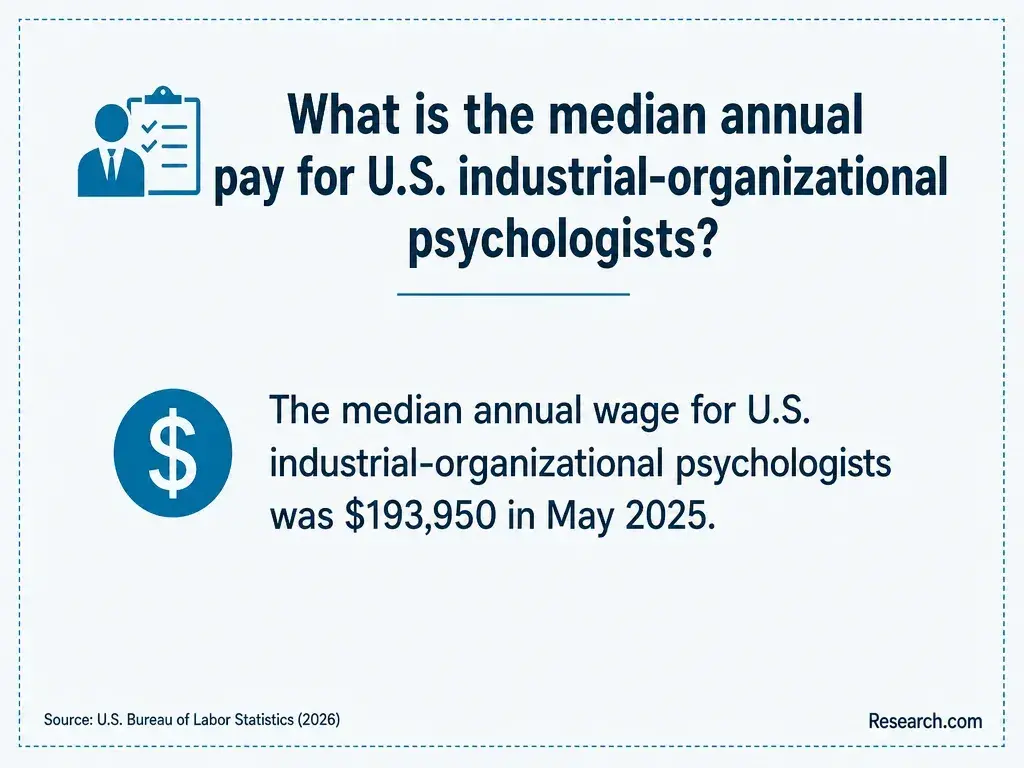
Salary comparisons require the same care. The U.S. Bureau of Labor Statistics publishes occupation-wide pay and outlook data, not a salary for graduates of a particular psychology BA. Compare the relevant occupation's duties and typical entry requirements with the jobs you would actually pursue; its median wage is not a starting-pay offer or a return-on-investment forecast.
If your goal is a particular substance-use support role, investigate its state credential requirements before selecting a major. Compare the cost of this BA with a more targeted route, including financial aid planning for a substance use counseling bachelor's where that degree better matches the job. If you already qualify for the role through experience or another credential, targeted training may be more economical than switching majors.
Does a Psychology Bachelor's Degree Qualify Graduates for Licensure?
A general psychology BA does not by itself authorize psychotherapy, diagnosis, independent psychological assessment, or use of a protected psychologist title. Licensed psychologist, counselor, and clinical social worker are distinct pathways with their own qualifying education, supervised experience, examinations, and state rules. The appropriate next degree depends on the profession and jurisdiction, not simply on whether its title includes "psychology."
A graduate psychology degree may be useful for research or nonclinical career development without being a licensure-qualifying degree. If considering fast-track graduate psychology programs, confirm their stated purpose and check the relevant licensing board before treating one as professional training. For now, choose the BA based on its transfer fit, academic preparation, and realistic next step - not an assumed clinical credential.
Other Things You Should Know About Psychology
Possibly, if the new school offers that minor and enough of your sociology coursework meets its rules. Ask for a separate minor audit; accepted electives do not automatically become a minor.
The new school may calculate its own institutional GPA, but your previous transcript remains part of your academic record. Ask how transfer grades affect admission, honors, aid, and future graduate applications.
Sometimes. Obtain written preapproval for the exact course and requirement first; residency rules or a prohibition on duplicate credit may prevent it from advancing your degree.
Usually you can inquire or apply, but the receiving school will need your complete academic history and may require a final transcript before completing its evaluation. Confirm how courses still in progress will be reviewed.
- Cost of Attendance (Budget) | 2025-2026 Federal Student Aid Handbook https://fsapartners.ed.gov/knowledge-center/fsa-handbook/2025-2026/vol3/ch2-cost-attendance-budget
- Transfer Credit Guidelines | Undergraduate Admissions https://admissions.uconn.edu/apply/transfer/transfer-credit-guidelines/
- General Education Electives | Northern Virginia Community College Academic Catalog https://catalog.nvcc.edu/general-education-electives/
- Bachelor's Degree Requirements | University of Oregon Academic Catalog https://catalog.uoregon.edu/admissiontograduation/bachelorrequirements/
- Academic Advising & Transfer Credits | nyu.edu https://cas.nyu.edu/newstudents/transfer-transition-students/external-transfers/academic-advising.html
- Online Psychology Bachelor's Degree - ODUGlobal https://online.odu.edu/academics/programs/online-psychology-degree
- Transfer Plan - Department of Psychology https://psychology.louisiana.edu/programs/psychology-major/transfer-plan
- Transfer Credit Evaluation | Mercy University https://mercy.edu/admissions-aid/transfer-admissions/transfer-credit-evaluation
- Transfer Credit Policies | Transfer & Transition Services https://transfer.fiu.edu/transfer-101/credit-options/transfer-credit-policies/
- Minimum Grade Standard Public Comment | SUNY Transfer Equivalency Platform https://step.transfer.suny.edu/hub/public-comment/1-min-grade/