2027 Online BA in Psychology - General Psychology for Food Assistance Program Staff: Compare Transferable Skills and Degree Requirements
Audited and Verified:
Our Editorial and Data Verification Process
Research.com uses government datasets, official education statistics and primary institutional information to support its career and degree guides. Our review process checks factual accuracy, occupational definitions, source dates and the requirements associated with the credentials discussed.
How This Article Was Fact-Checked
Our editorial team verifies salary estimates, employment projections, education requirements and program information against original data providers and official organizations. Salary figures are checked against the relevant occupational definitions and reporting periods. Information about licensure, accreditation and required in-person training is reviewed separately.
Fact-checked and verified on:

Co-Founder and Chief Data Scientist
Food assistance staff already use skills that matter in psychology-related work: listening, explaining complex rules, coordinating referrals, and recognizing barriers to participation. An online BA in general psychology could strengthen those skills, but it may not be the most direct route to every promotion or career change. This guide compares your experience with typical degree requirements, shows where psychology coursework adds value, and identifies the accreditation, transfer-credit, scheduling, cost, and career questions to settle before enrolling.
Key Things You Should Know
- Food assistance experience transfers most directly to nonclinical outreach, service coordination, and program-support work; a psychology BA adds research and behavioral-science skills, not clinical authority.
- A bachelor's degree commonly requires about 120 semester credits overall, but accepted transfer credits may not satisfy psychology-major, upper-division, or residency requirements.
- Compare the school's degree audit, actual online schedule, total remaining cost, and target job postings before choosing a program; a shorter credential may better serve a narrow goal.
What Is an Online BA in General Psychology for Food Assistance Staff?
An online BA in general psychology is a broad undergraduate degree delivered primarily through online courses. Students study behavior and mental processes through psychology theory, research methods, and statistics alongside general education requirements.
"General psychology" usually means breadth rather than a formal food assistance or behavioral-health specialization; confirm the exact degree name and available electives in each catalog.
For a SNAP eligibility worker, food pantry coordinator, or nutrition-benefits outreach specialist, the degree is most useful when the next role calls for stronger evidence interpretation, program evaluation, training, or human-services leadership.
It is less direct preparation for administering benefits policy or becoming a licensed clinician. If the goal is specifically substance-use counseling, compare the state's credential requirements and planning a degree focused on addiction counseling rather than assuming general psychology meets them.
How Can Psychology Skills Transfer to Food Assistance Program Careers?
Your work may already demonstrate client communication, documentation, referral coordination, and sensitivity to the effects of financial stress. Psychology coursework can add a framework for examining motivation, learning, development, and social context without reducing a household's choices to individual behavior. It can also help you question whether an outreach strategy reaches people who face language, transportation, disability, or administrative barriers.
The strongest transfer happens when you can show both workplace experience and a new academic skill. For example, a supervised project might review an agency-approved, aggregate measure of appointment completion and explain its limitations.
It should not use identifiable client records without authorization or claim that an observed association proves why participation changed. If your intended work is treatment rather than service coordination, investigate the separate education and supervised-practice costs involved in financial planning for accredited counseling degrees.
What Are the Requirements for an Accredited Online Psychology Bachelor's Degree?
Start by confirming that the institution holds accreditation recognized by the U.S. Department of Education or the Council for Higher Education Accreditation, then examine the psychology BA's published requirements. Institutional accreditation matters for degree recognition and often for transfer and financial-aid eligibility.
It does not establish that a BA qualifies graduates for clinical licensure; the American Psychological Association does not accredit general psychology bachelor's programs. Degree requirements commonly combine general education, a psychology core, upper-division electives, a minimum overall credit total, and credits that must be earned at the awarding institution.
An internship or capstone may be required, optional, or unavailable. Ask for a written degree audit showing where each prior course applies - not merely how many credits were accepted. For a closer look at this distinction, see psychology major credit portability.
A general psychology BA typically begins with introductory psychology and builds toward statistics, research methods, and upper-division study. Common subject areas include developmental, social, cognitive, biological, and abnormal psychology. The exact mix and course sequence vary; statistics may be a prerequisite for methods, and a needed upper-division course may run only in selected terms.
Food assistance staff should give particular weight to methods, statistics, social psychology, lifespan development, and electives addressing communities or health behavior. These courses can support careful outreach planning and evaluation, but a class about mental health or forensic psychology does not authorize assessment or treatment.
If an elective sparks interest in another field, compare its actual requirements and outcomes separately; online forensic psychology tuition, admissions, and outcomes concern a different educational decision from completing a general BA.
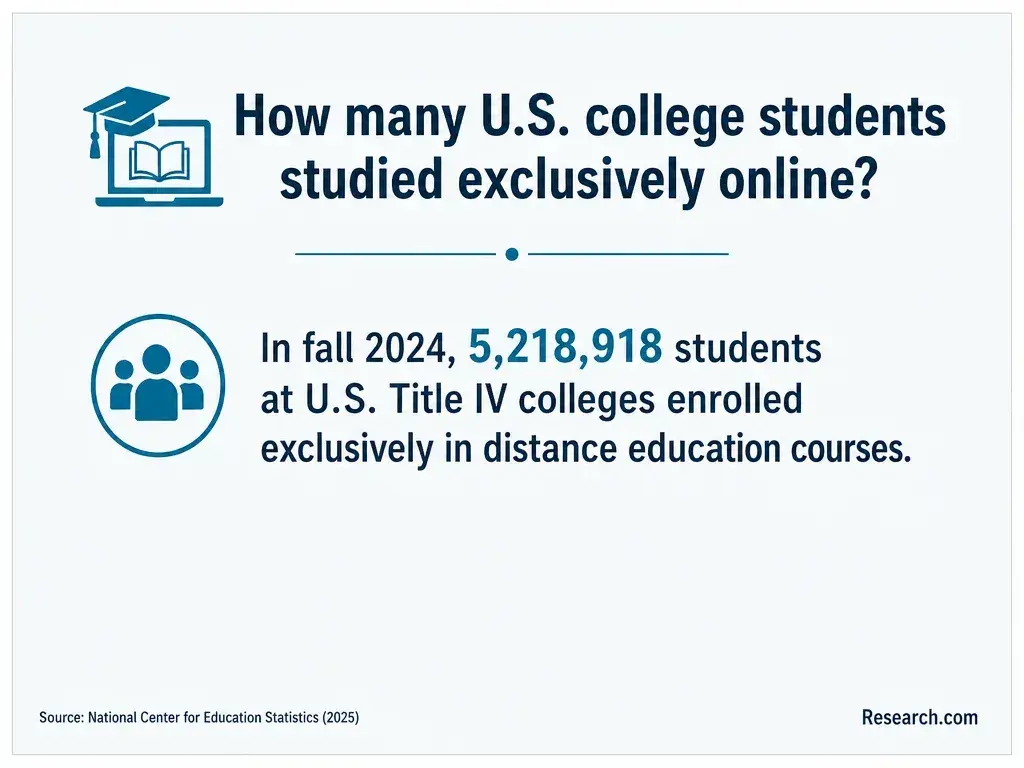
Online and campus programs can teach the same psychology content, but their practical demands differ. Recorded lessons may fit around intake appointments or pantry hours, while live seminars, scheduled exams, group projects, or required placements may not. Campus study may make in-person faculty contact and research opportunities easier to access, though online students can also have meaningful mentorship when a program provides it.
Request a sample term schedule and ask whether research participation, exams, or any internship requires travel or fixed hours. Also ask how online students obtain advising, faculty recommendations, and project supervision. An accelerated label alone does not answer those questions - even faster online forensic psychology master's completion describes a distinct graduate pathway, not evidence that a particular BA will fit a full-time work schedule.
Applicants generally need to meet the institution's undergraduate admission rules and submit official records from prior schools. A transfer applicant may also need to meet a minimum GPA or complete prerequisites before entering the major; policies differ by institution. Work experience can strengthen an application or support prior-learning review where offered, but it should not be assumed to replace required academic credit.
Before applying, collect transcripts, course descriptions for statistics or psychology classes, and any associate-degree documentation. Ask admissions about entry requirements, then ask the registrar or psychology department who makes final equivalency and major-substitution decisions.
Keep graduate admission rules separate: a BA can provide preparation for later study, but twelve-month forensic psychology graduate study pathways have their own prerequisites and should not drive a bachelor's transfer decision unless that is your confirmed next goal.
A full-time bachelor's degree is conventionally planned around four academic years, but a working student's remaining time depends on the approved degree audit, course sequence, and sustainable enrollment load. Transferred credits can shorten the path only when they apply to outstanding requirements. Taking fewer courses each term may protect employment and household income while extending the time until graduation.
Compare schools using the tuition and mandatory fees for remaining required credits, plus books, technology, travel, and any unpaid placement time. Ask whether employer education assistance applies, what grades it requires, and whether changing enrollment intensity affects financial aid.
If graduate school is a possibility rather than a firm plan, avoid treating future tuition as inevitable; lower-tuition psychology master's options are a separate comparison to make only if a target role calls for that study.
The most plausible next steps usually build on your existing food assistance experience. Depending on the employer's requirements, possibilities include outreach coordinator, human-services program specialist, intake or referral coordinator, volunteer trainer, and program-evaluation assistant.
Those jobs may involve explaining services, coordinating partners, training staff, maintaining records, or summarizing program data - not diagnosing clients or providing psychotherapy.
For each target posting, separate required degrees and credentials from preferred skills. A psychology BA may help with a role that asks for a bachelor's degree and analytical or communication ability; an internal promotion may instead depend more on benefits-policy expertise, supervisory experience, or agency hiring rules.
More distant paths, such as those discussed under forensic psychology graduate career value and qualifications, require a different comparison and should not be treated as natural outcomes of food assistance work.
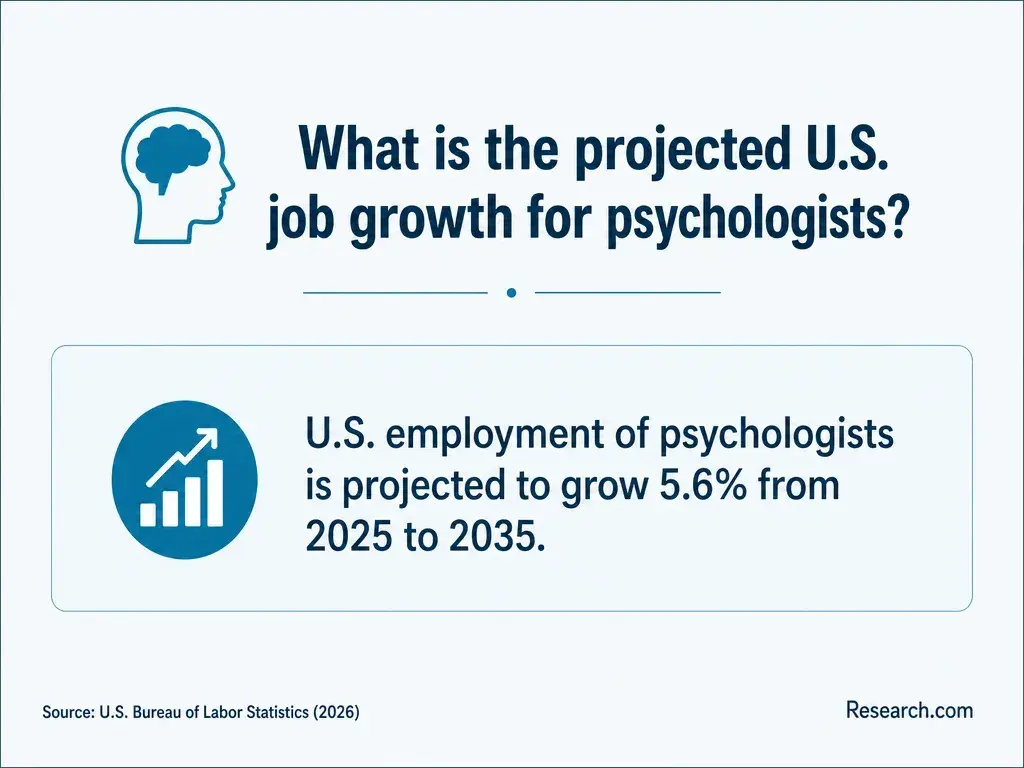
There is no reliable single salary or job-growth figure for "psychology BA graduates": pay follows the occupation, employer, location, and experience. For a useful comparison, match an actual job posting to its occupation in the U.S. Bureau of Labor Statistics Occupational Outlook Handbook, then check the stated wage year, projection period, and typical entry requirements.
A published occupational median describes workers across that occupation, not what a new BA graduate or a particular agency employee will earn.
For public agencies and nonprofits, posted pay bands, union agreements where applicable, and internal promotion rules may be more decision-relevant than a national median. Compare the likely pay difference with your remaining education cost and time away from paid work. If a future role truly requires graduate study, planning a faster psychology master's degree may affect that calculation, but speed alone is not a reason to add another credential.
Does a Psychology BA Qualify Graduates for Licensure or Certification?
A general psychology BA alone does not qualify someone to practice as a licensed psychologist, diagnose mental disorders, provide psychotherapy independently, or use another protected clinical title. It may satisfy an education requirement for some nonclinical jobs, while state or employer rules can impose additional training, supervision, examinations, or background checks for particular certifications.
If you want to provide counseling, identify the exact state license and check its board's education and supervised-practice rules before selecting a program. A nonclinical psychology BA and a qualifying counseling degree serve different purposes; even shorter routes through mental health counseling graduate study must be evaluated against the jurisdiction's requirements. If your goal remains food access, outreach, or program leadership, clinical licensure may be unnecessary.
Other Things You Should Know About Psychology
Possibly. Obtain instructor and agency approval first, define a nonclinical task, and confirm what information you may access or share. Employment alone does not make a project an approved internship.
Compare the actual curricula, not just the letters. A BS may require more science or quantitative coursework, while either degree can include research methods. Choose the requirements that fit your target role and existing credits.
It may be if you already have a relevant degree and mainly need behavioral-science background. Check job postings before paying for an additional bachelor's degree.
Ask which positions you could realistically pursue, whether a bachelor's degree is required for them, and whether your employer offers education assistance or an approved project opportunity.
- Frequently Asked Questions - California Board of Psychology https://www.psychology.ca.gov/licensees/faq.shtml
- How to Become a Licensed Psychologist | Texas Behavioral Health Executive Council https://bhec.texas.gov/texas-state-board-of-examiners-of-psychologists/applying-for-a-psychology-license/how-to-become-a-licensed-psychologist/
- Accreditation in the U.S. | ed.gov http://www.ed.gov/laws-and-policy/higher-education-laws-and-policy/college-accreditation/accreditation-in-the-us
- Understanding College Costs | studentaid.gov https://studentaid.gov/resources/prepare-for-college/students/choosing-schools/consider-costs
- How to Become a Social Worker - MSW | Syracuse University Online Master's Programs https://onlinegrad.syracuse.edu/social-work/msw/become-a-social-worker/
- How Do Transfer Credits Work When You Go Back to School? | Whitworth Online https://online.whitworth.edu/news-articles/how-do-transfer-credits-work-when-you-go-back-to-school/
- General Psychology | Online Bachelor's Degree | Capella University https://www.capella.edu/online-psychology-degrees/bs-psychology-program/bachelors-general-psychology/
- Online Bachelor's in Psychology | University of Kansas https://online.ku.edu/undergraduate-programs/online-bachelors-psychology
- View Transfer Guide - AA - FSU - Psychology (BS) https://coursetransfer.northcarolina.edu/guide/2024-2025/1381
- Bachelor of Arts in Psychology | CUNY SPS https://sps.cuny.edu/academics/undergraduate/bachelor-arts-psychology-ba