2027 Online BA in Psychology - General Psychology for Home Health Aides: Compare Transferable Skills and Degree Requirements
Audited and Verified:
Our Editorial and Data Verification Process
Research.com uses government datasets, official education statistics and primary institutional information to support its career and degree guides. Our review process checks factual accuracy, occupational definitions, source dates and the requirements associated with the credentials discussed.
How This Article Was Fact-Checked
Our editorial team verifies salary estimates, employment projections, education requirements and program information against original data providers and official organizations. Salary figures are checked against the relevant occupational definitions and reporting periods. Information about licensure, accreditation and required in-person training is reviewed separately.
Fact-checked and verified on:

Co-Founder and Chief Data Scientist
Home health aides already use observation, communication, and patience every shift. An online BA in general psychology can help explain the science behind those skills and open some nonclinical career options - but it takes substantial time and money, and it does not qualify graduates to provide therapy. This guide compares your existing experience with degree requirements, realistic job paths, online-study demands, and alternatives. Use it to decide whether a psychology BA advances your specific goal or whether a shorter, more direct qualification would serve you better.
Key Things You Should Know
- Home health aide experience can strengthen an application and support future human-services work, but it does not automatically replace psychology courses or qualify as academic credit.
- A psychology bachelor's degree commonly requires about 120 semester credits, including general education, psychology, statistics, and research methods; a school's degree audit determines what remains after transfer.
- A general psychology BA can support moves into nonclinical coordination, outreach, or research-support roles. It does not authorize diagnosis, psychotherapy, or independent psychological assessment.
What Is an Online BA in General Psychology for Home Health Aides?
An online BA in general psychology is a broad undergraduate degree in how people think, develop, behave, and interact. "For home health aides" describes a possible student background, not a separate professional credential. Aides typically study the same curriculum as other psychology majors while drawing on their care experience in discussions and assignments.
The fit depends on your intended move. If you want broader preparation for human-services jobs or later graduate study, a BA may be useful. If you primarily want to advance in hands-on home care, ask employers whether a supervisory credential, nursing pathway, or targeted training would matter more. When reviewing distance learning psychology degree options, check the actual curriculum and required activities rather than assuming "online" means entirely self-paced.
How Can Psychology Skills Transfer to Home Health Care Careers?
Home health aides bring direct experience noticing changes, adapting communication, respecting routines, and reporting concerns. Psychology coursework can give those observations a stronger foundation in lifespan development, motivation, social behavior, and evidence evaluation. The value lies in combining both forms of learning - not relabeling care experience as clinical psychology training.
The comparison below separates skills aides may already demonstrate from knowledge they would need to develop or document for a different role.
| Experience from home care | Relevant psychology learning | Possible nonclinical use |
| Communicating with clients and families | Development, social psychology, and cultural responsiveness | Explaining services or supporting outreach |
| Observing and reporting changes | Research methods and the limits of behavioral observation | Accurate support-service documentation |
| Following a care plan and reporting concerns | Ethics, confidentiality, and professional boundaries | Working within a supervised service team |
An aide should continue to follow the employer's care plan and escalation procedures; a psychology class does not expand the aide's permitted duties. If your goal is substance-use recovery work, compare academic routes into addiction counseling with your state's credential rules. Recovery support and licensed counseling can have very different requirements.
What Are the Requirements for an Online Psychology Bachelor's Degree?
Most bachelor's programs combine general education, electives, and major courses within a degree commonly totaling about 120 semester credits. Psychology requirements often include introductory study, statistics, research methods, and advanced coursework; some schools also require a capstone or a minimum number of credits earned at that institution. A BA may include different language or liberal-arts requirements from a BS, but the label alone does not establish a consistent curriculum.
For a working aide, the crucial distinction is between credits accepted and requirements satisfied. Prior college courses might transfer as electives without replacing statistics or a major prerequisite. Employer training and aide certification generally do not count unless the college has an approved credit-evaluation process. Request a written degree audit showing remaining requirements, course sequence, and residency credits before relying on a projected graduation date.
If the goal is a state-recognized substance-use counseling role rather than a broad psychology education, compare the required coursework with cost-conscious substance use counseling undergraduate options. A more specialized degree is useful only if its curriculum matches the credential or employer requirements that apply to you.
An online degree can teach the same academic subjects as a campus degree, but effectiveness depends on course design, feedback, access to faculty, and the work you complete. Compare syllabi for research-methods practice, statistics support, writing feedback, and opportunities to work with faculty or community organizations. Ask whether group meetings, exams, internships, or campus visits occur at fixed times.
For aides with rotating shifts, asynchronous lectures may help, while scheduled meetings and placement hours may still be difficult. A campus program could be preferable if it offers research access or local employer connections that the online option lacks. If your eventual goal is licensed counseling, do not assume a psychology BA - or a flexible online schedule - settles the later training question; accredited counseling study with accelerated schedules involves separate program and fieldwork considerations.
A general psychology major typically builds from introductory psychology into developmental, social, cognitive, biological, and abnormal psychology, alongside statistics and research methods. The latter courses teach students to assess evidence rather than assume that a behavior has one obvious cause. Abnormal psychology covers disorders as academic subject matter; taking it does not qualify a student to diagnose someone receiving home care.
Choose electives by the work you hope to do. Lifespan development and health psychology may connect closely to older-adult support; community psychology may suit outreach; additional methods coursework may help with research-support jobs or graduate applications. Course names vary, so check prerequisites and whether electives are offered often enough to fit your schedule.
A specialized elective is not a formal concentration or professional qualification. The same distinction matters if a later interest shifts toward legal settings: forensic psychology master's accelerated curriculum planning concerns further academic study, not automatic authority to conduct forensic evaluations.
First-year applicants generally submit secondary-school records, while transfer applicants provide transcripts from previous colleges. Schools may also set GPA thresholds, application deadlines, or separate conditions for admission to the psychology major. A home health aide credential or work history may strengthen an application, but neither necessarily substitutes for academic admission requirements.
If you have previous college coursework, ask admissions how to apply and ask the registrar or transfer-credit office how courses will be evaluated. Then obtain a psychology degree audit: admission, transfer-credit acceptance, and application of those credits to the major are separate decisions. Keep course descriptions and syllabi for statistics or methods courses in case an equivalency needs review.
If you intend to pursue graduate study soon after the BA, check that target program's prerequisites before choosing undergraduate electives. Planning a faster psychology master's degree is a separate decision: completing a BA quickly will not erase a master's program's research, statistics, or admissions expectations.
A full-time student commonly plans around a four-year bachelor's pathway, but an aide's remaining time depends on accepted credits, how those credits apply to requirements, course availability, and a workable enrollment pace. Part-time study can make employment manageable while extending the time over which tuition and fees are paid. Ask for a term-by-term plan that identifies courses offered only in particular terms.
Compare schools using the cost of remaining required credits, not an advertised price per credit alone. Include mandatory fees, books or software, any travel or placement expense, and the income you might lose if coursework reduces your hours. Financial aid eligibility and employer tuition assistance depend on their own rules; neither should be assumed in a budget.
If a counseling-oriented undergraduate route better fits your target job, bachelor's-level substance use counseling scholarship planning can help frame funding questions. Confirm aid terms with the school and confirm credential relevance with the appropriate state authority before choosing that route.
A psychology BA may make an aide more competitive for some nonclinical human-services positions, especially when combined with documented care experience. Potential targets include service coordinator, community outreach worker, intake or referral assistant, and research assistant. Titles are inconsistent across employers: compare actual duties, required credentials, and experience rather than treating a job title as proof of eligibility.
The following comparison shows where prior experience helps and where an additional qualification may still be necessary.
| Target work | How aide experience helps | What to verify |
| Service coordination or intake | Client communication and knowledge of care routines | Degree requirements, documentation systems, and supervision |
| Community outreach | Trust-building and familiarity with service barriers | Local hiring criteria and required outreach experience |
| Research support | Understanding of care settings | Statistics, data-handling skills, and research experience |
| Licensed counseling | Experience interacting respectfully with clients | A separate qualifying education and supervised-practice pathway |
For a career move, pair the degree with evidence an employer can assess: a supervised project, approved internship, or strong work examples that disclose no client information. If therapy is your intended destination, compare qualifying programs and their full cost using accredited counseling program affordability comparisons. A general psychology BA is preparation, not a counseling license.
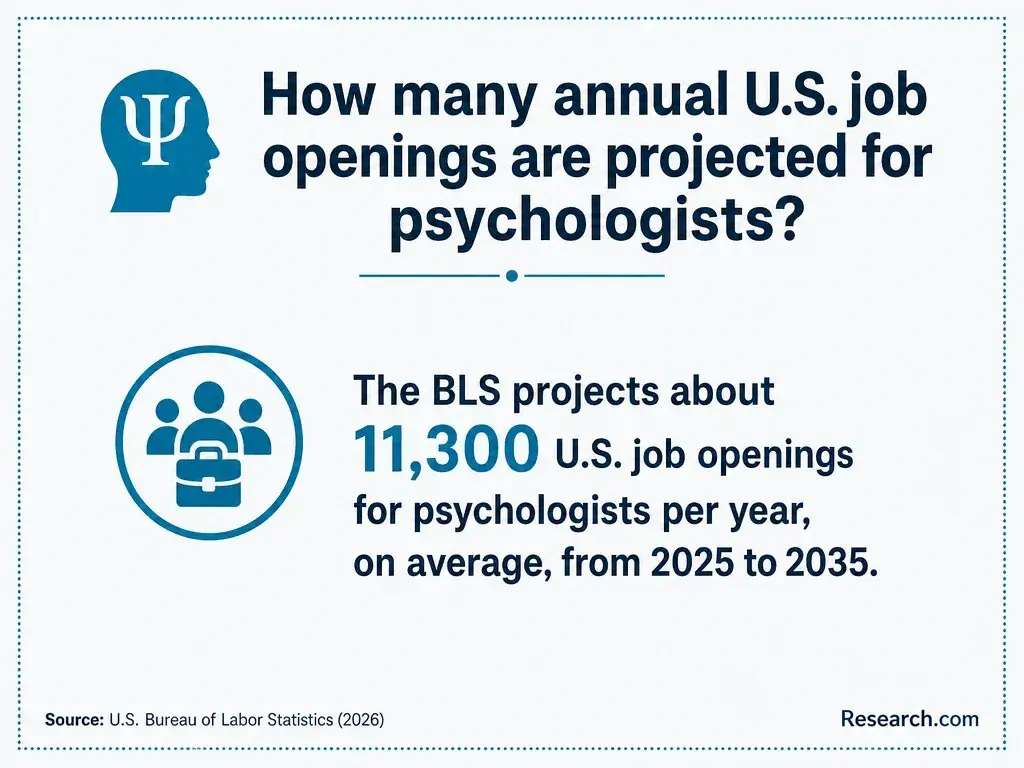
There is no single salary or job-growth rate for "psychology graduates." A home health aide who stays in direct care, a human-services assistant, and a research assistant belong to different labor-market categories with different duties and hiring requirements. The U.S. Bureau of Labor Statistics Occupational Outlook Handbook reports occupation-wide pay and projections - not earnings caused by holding a psychology BA.
For a useful comparison, identify two or three actual job titles in your area, check their stated qualifications and pay ranges, and compare the matching BLS occupation where one exists. Then weigh a plausible change in duties and compensation against your remaining degree cost and any reduced work hours. Do not use a psychologist's occupational wage as the expected outcome of a BA: psychologist roles generally require substantial graduate education and, for practice, applicable licensure.
Graduate education can change both the opportunities and the investment. If you are considering it for a nonclinical goal, planning the cost of a psychology master's is more useful after you establish that employers actually seek that degree for your target role.
How Can Students Choose an Accredited Online Psychology Program?
Start by verifying the institution's recognized institutional accreditation, then examine the specific online BA rather than relying on the school's general reputation. APA accreditation is not the standard for a general undergraduate psychology BA; it applies to specified professional psychology training programs at other levels. Institutional accreditation also does not prove that an online program fits your schedule or qualifies you for a licensed profession.
A short comparison process can expose the differences most likely to affect a working aide's completion plan:
- Request an official transfer evaluation and degree audit showing major, general-education, elective, and residency requirements separately.
- Ask for a realistic course sequence, including live meetings, exams, campus visits, and any approved placement requirements.
- Compare the full cost of remaining coursework and ask what academic, statistics, and career support online students can use.
- Check whether graduates have opportunities to demonstrate the skills required by your target employers, and verify those employers' current job postings.
Use comparing affordable psychology colleges online as a starting point, not a substitute for a school-specific audit. The best value may be a program with fewer remaining requirements and dependable course availability rather than the lowest advertised credit price.
Other Things You Should Know About Psychology
Possibly, but only if the college accepts it through an applicable prior-learning or transfer process. Ask what documentation is required and whether any awarded credit satisfies a degree requirement.
Follow employer confidentiality rules and your instructor's directions. Do not submit identifiable client details or records without explicit authorization; a generalized or fictional example is often safer.
Yes. Ask which programs qualify, whether assistance is paid upfront or reimbursed, what grades or continued employment are required, and whether changing jobs triggers repayment.
That depends on the school. Request both degree audits first: changing tracks may add science, mathematics, or other requirements without improving your fit for a particular job.
- Accreditation in the U.S. | ed.gov http://www.ed.gov/laws-and-policy/higher-education-laws-and-policy/college-accreditation/accreditation-in-the-us
- Thinking About Careers in Psychology - Penn State https://psych.la.psu.edu/undergraduate/planning-and-career-resources/thinking-about-careers-in-psychology/
- Psychology Bachelor's Degree Online | UAGC https://www.uagc.edu/online-degrees/bachelors/psychology
- BA in Psychology | Cal State LA https://www.calstatela.edu/nss/psychology/ba-psychology
- How to Get College Credit for Work Experience | post.edu https://post.edu/blog/pla-101-can-a-prior-learning-assessment-get-me-college-credit-for-work-experience/
- What's the Difference Between a B.A. & B.S. in Psychology? | The Chicago School https://www.thechicagoschool.edu/insight/career-development/difference-between-ba-and-bs-in-psychology/
- Modes of Instruction - Hunter College - CUNY https://www.hunter.cuny.edu/center-for-digital-learning-and-innovative-pedagogy/policies/modes-of-instruction/
- Online Bachelor's Degree in Psychology | Purdue Global https://www.purdueglobal.edu/degree-programs/psychology/bachelor-degree-psychology-online/
- What Can You Do with a bachelor's in Psychology? | UMass Global https://www.umassglobal.edu/blog-news/can-you-do-a-bachelors-psychology-top-careers-skills-build-your-future
- What's the Difference Between Asynchronous and Synchronous Learning? | Ohio State Online https://online.osu.edu/content-hub/blogs/whats-the-difference-between-asynchronous-and-synchronous-learning/