2027 Online BA in Psychology - General Psychology for Psychology of Environmental Behavior: Which Courses Should You Look For?
Audited and Verified:
Our Editorial and Data Verification Process
Research.com uses government datasets, official education statistics and primary institutional information to support its career and degree guides. Our review process checks factual accuracy, occupational definitions, source dates and the requirements associated with the credentials discussed.
How This Article Was Fact-Checked
Our editorial team verifies salary estimates, employment projections, education requirements and program information against original data providers and official organizations. Salary figures are checked against the relevant occupational definitions and reporting periods. Information about licensure, accreditation and required in-person training is reviewed separately.
Fact-checked and verified on:

Co-Founder and Chief Data Scientist
An online general psychology BA can be a useful route into studying how people respond to buildings, neighborhoods, climate risks, and opportunities to conserve resources, but the degree title alone tells you little about that preparation. If you are choosing courses or comparing programs, the crucial differences are in methods training, relevant electives, and access to a feasible project.
This guide shows what to look for, which gaps another department can fill, and how to judge whether a program supports your intended research or nonclinical career goal.
Key Things You Should Know
- Prioritize statistics and research methods, then look for social, cognitive, and learning courses that explain behavior in physical settings.
- An environmental psychology elective is valuable, but a supervised project and access to relevant courses may matter more than a concentration label.
- Check the actual course rotation, online research support, total cost, and degree requirements, a general psychology BA is not a clinical credential.
What Is a General Psychology Degree Focused on Environmental Behavior?
Environmental behavior concerns how people perceive, use, and respond to physical surroundings - and how those surroundings shape behavior. Examples include whether a transit stop feels usable, why residents adopt energy-saving practices, and how noise or crowding affects experience. A general psychology BA approaches such questions through behavioral theory and evidence rather than through architectural design or environmental science alone.
"Focused on environmental behavior" may describe a student's choice of electives and projects, not an officially named concentration. Check the catalog before assuming the focus will appear on a transcript. If your actual goal is substance-use services rather than behavior in physical environments, comparing accredited addiction psychology BA pathways is a different, and more relevant, decision.
What Courses Should an Online Psychology Bachelor's Program Include?
Start with courses that let you explain a behavior, measure it responsibly, and test competing explanations. The table distinguishes the strongest foundations from useful additions; course titles and availability vary by institution.
| Course area | Why it matters for environmental behavior | What to check in the syllabus |
| Statistics and research methods | Supports surveys, observational studies, comparisons, and cautious interpretation of results. | Research design, sampling, measurement, uncertainty, and the distinction between association and causation. |
| Social psychology | Explains social norms, group influence, and cooperation in shared spaces or conservation efforts. | Opportunities to apply theory to a real-world behavior rather than only memorize classic studies. |
| Cognitive psychology, perception, and learning | Connects attention, wayfinding, habits, and feedback to how people navigate and use environments. | Coverage of perception and behavior change, with attention to the limits of laboratory findings. |
| Environmental psychology or related elective | Brings psychological concepts together around place, nature, built settings, or environmental decisions. | Recent offerings, prerequisites, and whether online students can enroll. |
| Complementary study outside psychology | Adds context about the setting being studied. | Relevant options in geography, public health, urban planning, environmental studies, or accessible design. |
Take introductory psychology before advanced electives, and complete methods and statistics early enough to use them in a later project. If no environmental psychology course is offered, a social psychology course plus an approved project on a place-based question may be more useful than an attractive concentration name with little research access. Conversely, comparing three-year forensic psychology bachelor's routes addresses a different subject area; speed alone should not determine your course choices.
Is an Online Psychology Bachelor's Degree Accredited and Legitimate?
Verify the institution's accreditation through the accreditor or the U.S. Department of Education's recognition information, and confirm that the accreditation covers the institution offering the online degree. Then inspect the university catalog for the exact degree, required courses, and graduation rules. Institutional accreditation does not establish that an environmental-behavior elective is offered or that a graduate qualifies for a particular occupation.
The American Psychological Association does not accredit general psychology bachelor's programs. Be wary of claims that an "APA-accredited BA" confers professional standing. The same distinction matters when reading forensic psychology admissions and education planning: accreditation, degree content, and professional qualifications are separate questions, regardless of the specialty named in marketing materials.
Online study can make lectures and readings easier to fit around work, but research access depends on the program. Ask whether online students can meet faculty, join research teams, use statistical software, and complete a supervised project. A campus program may offer easier access to laboratories and local partners; an online program may work equally well for an approved literature review or analysis of suitable existing data.
"Asynchronous" does not necessarily apply to every requirement. Group meetings, presentations, internships, or project supervision may have fixed times or local attendance requirements. If pace is a deciding factor, examine online psychology programs with faster pacing alongside their course sequence and research opportunities - not just their advertised completion speed.
First-year applicants generally submit prior school records, while transfer applicants also need college transcripts. Requirements for entering the institution can differ from requirements for declaring the psychology major. An admissions decision does not confirm that previous statistics, psychology, or general-education courses satisfy degree requirements; request an official degree audit if you have prior credits.
Ask when you can enroll in methods and upper-level electives, particularly if you are entering with transfer credit. If you are comparing psychology with a service-oriented counseling route, check that route's admission and aid rules separately; aid eligibility for online substance use counseling study should not be assumed to match the terms of a psychology BA.
A conventional full-time bachelor's path takes about four academic years, but transfer credit, part-time enrollment, prerequisite order, and when electives run can change the timeline. Online delivery does not remove courses from the degree. For this focus, a delayed methods course can also delay the project that would demonstrate your skills.
Compare a written estimate of remaining tuition and required fees - not a per-credit price alone. Include software, materials, possible travel, and the cost of an additional term if a needed course is offered infrequently. Lower-cost online psychology study pathways are worth investigating, but the least expensive advertised tuition may not produce the lowest cost to completion for your particular degree audit.
A psychology BA can support applications to nonclinical work involving research support, program coordination, community outreach, or user research, depending on the employer and your experience. In an environmental-behavior setting, tasks might include organizing a permitted survey, reviewing evidence about public-space use, supporting a conservation program, or communicating findings to a project team. Employers may also seek planning, design, geography, or data skills that the BA does not provide.
Look at job descriptions for the work you want before choosing electives. If they emphasize spatial analysis, add relevant training; if they emphasize evaluation, prioritize methods and a supervised project. If your goal instead involves substance-use counseling, substance abuse counseling bachelor's program value comparisons are more pertinent, and state credential rules need separate review. A general psychology BA does not authorize psychotherapy, diagnosis, or independent psychological assessment.
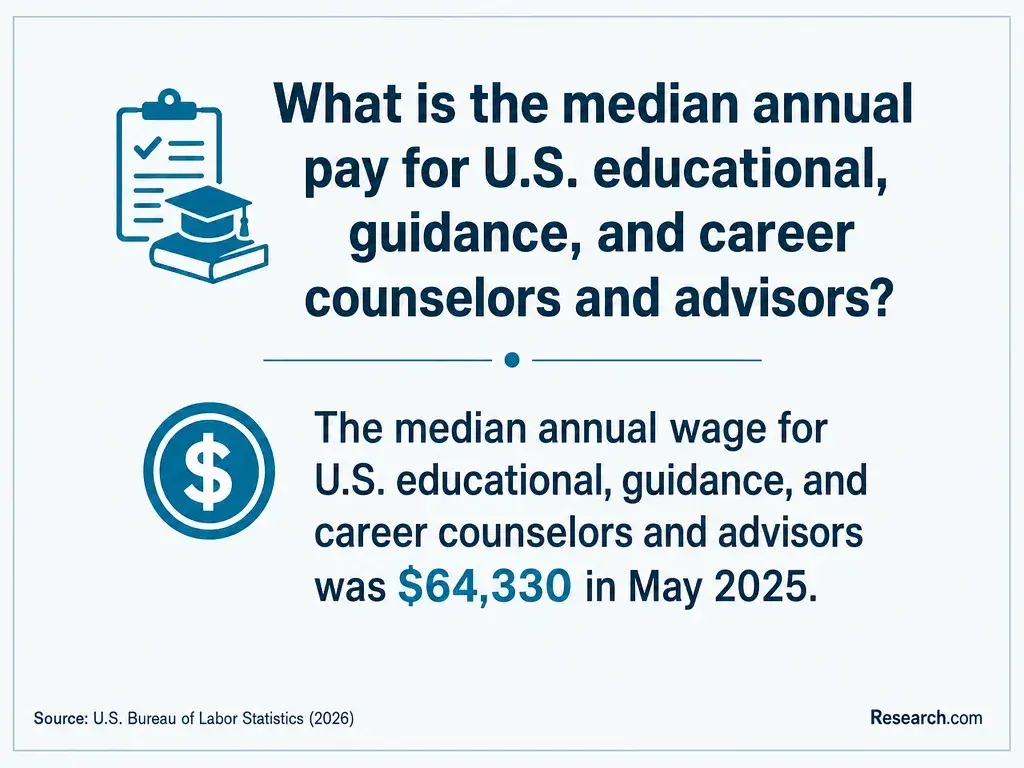
There is no reliable single salary for "environmental behavior psychology BA graduates." Pay follows the occupation, employer, location, duties, and experience - not the degree label. A research support position and a planning-related position may have different qualifications and wage distributions, even if both address human behavior in physical settings.
For a useful comparison, identify actual job titles you could meet the requirements for, then check their current U.S. Bureau of Labor Statistics occupational wage data and local postings. Do not use a licensed psychologist's wage as a BA outcome. Similarly, forensic psychology master's education and job earning prospects describe a different educational and occupational comparison, not an earnings forecast for this undergraduate focus.
For environmental-behavior research, possible next steps include graduate study in psychology, environmental studies, public health, planning, or a related field. Requirements differ: a research-oriented program may value statistics, methods, faculty fit, and evidence of a well-executed project. A psychology master's is not universally required before doctoral study.
Clinical practice is a separate pathway. Counseling and other licensed professions require qualifying education and jurisdiction-specific steps beyond a general psychology BA. If that is your goal, examine the curriculum and licensure disclosures of fast online clinical mental health counseling master's programs rather than assuming an environmental-behavior focus supplies clinical training.
How Should You Choose an Online Psychology Program for Environmental Behavior?
Compare programs against the work you hope to do, not against a single elective title. The following checks expose the differences most likely to affect your preparation.
- Request the current catalog and recent course schedule; confirm when statistics, methods, social psychology, and any environmental elective are actually available online.
- Ask whether online students can complete a faculty-supervised project on behavior in a physical setting and what approval, data-access, or local-site conditions apply.
- Request a degree audit and cost estimate that account for accepted credits, required courses, fees, and likely enrollment pace.
- Compare the resulting skills with several target job postings or graduate program prerequisites; fill any remaining gap with an elective, relevant experience, or targeted training.
If your intended outcome has changed from environmental research to licensed counseling, make that decision explicitly before paying for additional undergraduate electives. Accelerated clinical counseling degrees and study length address a distinct professional pathway; a shorter program is useful only if it meets the requirements relevant to where you intend to practice.
Other Things You Should Know About Psychology
Usually, statistics and sound research reasoning matter more than advanced calculus for undergraduate work. Check specific graduate prerequisites if you plan to pursue quantitative research.
Not for every project. GIS can help when the question involves locations, travel patterns, or neighborhood features, but interviews, surveys, and observational methods can address other environmental-behavior questions.
Ask your instructor first. Recruitment, consent, site permission, privacy, and possible institutional review depend on the project's design and the information collected.
If you want to design buildings professionally, investigate architecture education and licensing requirements. If you want to study how people experience or use spaces, psychology and research methods may be a better starting point.
- DAPIP | Homepage - Office of Postsecondary Education (OPE) https://ope.ed.gov/dapip/
- Best practice assessment methods for the undergraduate psychology program: a narrative review of the literature - PMC https://pmc.ncbi.nlm.nih.gov/articles/PMC12218498/
- Which PSYC Courses Count for Social Science vs Natural Science? | Department of Psychology https://psychology.yale.edu/which-psyc-courses-count-social-science-vs-natural-science
- PSYC: BA - Bachelor of Arts in Psychology | Florida International University Catalog https://catalog.fiu.edu/programs/PSYC%3ABA/requirements-uz47h
- PSYCH 419: Psychology for a Sustainable World | psu.edu https://sustainability.la.psu.edu/course-list/psych-419-psychology-for-a-sustainable-world-section/
- A Career in Climate and Environmental Psychology | apa.org https://www.apa.org/education-career/guide/subfields/environment/education-training
- Environmental Sciences and Studies - Brown Bulletin https://bulletin.brown.edu/the-college/concentrations/envs/
- Psychology | CSUDH | Carson, CA https://catalog.csudh.edu/academics/psychology/
- Suggested Guidelines for Psychology Sequencing Requirements | Department of Psychology & Neuroscience https://psychandneuro.duke.edu/courses/psy-sequence
- Environment & Society Department Courses | Utah State University Catalog https://catalog.usu.edu/departments/ENVS/courses