
2027 Online BA in Psychology - General Psychology for Psychology of Group Identity: Which Courses Should You Look For?
Audited and Verified:
Our Editorial and Data Verification Process
Research.com uses government datasets, official education statistics and primary institutional information to support its career and degree guides. Our review process checks factual accuracy, occupational definitions, source dates and the requirements associated with the credentials discussed.
How This Article Was Fact-Checked
Our editorial team verifies salary estimates, employment projections, education requirements and program information against original data providers and official organizations. Salary figures are checked against the relevant occupational definitions and reporting periods. Information about licensure, accreditation and required in-person training is reviewed separately.
Fact-checked and verified on:

Co-Founder and Chief Data Scientist
An online psychology BA can help you study how people identify with groups, but the degree title alone tells you little about the training you will receive. Social psychology may be required, offered only as an elective, or unavailable in the term you need it.
If you are choosing a program or planning electives, this guide shows which courses matter most, how to check whether you can take them online, and what research opportunities turn an interest in group identity into demonstrable skill.
Key Things You Should Know
- Prioritize social psychology, research methods, and statistics; add cultural psychology, personality, or intergroup-relations electives that address your specific interests.
- Check the course rotation and prerequisites, not just the catalog: an elective that is rarely offered online may not fit your graduation plan.
- A bachelor's degree commonly requires about 120 credits, but group identity research readiness depends more on methods training and supervised work than on the degree title.
What is a BA in General Psychology and Group Identity?
A BA in general psychology is a broad undergraduate degree covering psychological science rather than a qualification dedicated to one research topic. Group identity refers to how people understand their membership in social groups - and how that membership relates to belonging, attitudes, behavior, and relationships between groups. Researchers might study identification with a workplace team, community, cultural group, or political group.
"Group identity" is usually a topic pursued through courses, faculty research, or a capstone, not a separately awarded concentration. If you want broad psychology preparation with room to explore that topic, a general BA can fit. Compare online psychology education pathways by their actual requirements and elective availability rather than assuming similar degree names mean similar curricula.
What courses should you look for in a group identity psychology program?
Start with social psychology, research methods, and statistics. Social psychology introduces concepts such as social categorization, norms, prejudice, and intergroup behavior. Methods and statistics teach you how to turn a question about belonging or bias into a study whose evidence you can evaluate. The table distinguishes that foundation from electives worth seeking when they match your interests.
| Course or experience | Contribution to studying group identity | What to check |
| Social psychology | Theories and evidence about groups, attitudes, influence, and intergroup relations | Whether it is required or regularly offered online |
| Research methods and statistics | Study design, sampling, analysis, and limits on conclusions | Prerequisites, course sequence, and opportunities to analyze data |
| Cultural or cross-cultural psychology | Context, cultural variation, and cautions against treating groups as uniform | Whether the course examines research methods as well as concepts |
| Personality or developmental psychology | Individual differences or changes in identity across the lifespan | Fit with the age group or question you hope to study |
| Research seminar, independent study, or capstone | Practice defining a question and communicating evidence | Eligibility, supervision, and remote participation rules |
Choose electives by the question you want to investigate. Someone interested in identity and recovery communities, for example, might pair social psychology with coursework on substance use - but studying recovery does not qualify a student to provide addiction counseling. Compare that academic interest with the distinct preparation described in distance learning degrees in addiction counseling if counseling is the intended occupation.
Request a sample degree plan showing when each course is offered. A strong catalog is less useful if methods is a prerequisite for a seminar that will not run again before you graduate.
How do you choose an accredited online psychology bachelor's program?
First, confirm the institution's current accreditation with its recognized accreditor and verify that the online BA is an authorized degree offering. Institutional accreditation matters for education quality review, credit-transfer decisions, and eligibility for federal aid; it does not prove that particular electives or research opportunities exist. The American Psychological Association does not accredit general psychology bachelor's programs.
Next, ask the psychology department for its current online course rotation, a sample degree audit, faculty research areas, and the rules for remote research or independent study. Check whether students can access research mentoring and library databases, and whether the program publishes meaningful completion or student-outcome information. If a later counseling degree is your goal, assess that professional program separately; counseling degree affordability and accreditation involve different questions from accreditation of a psychology BA.
Requirements vary by institution and by whether you are entering as a first-year or transfer student. Schools generally request an application and prior academic records; some set separate requirements for entry to the psychology major or upper-level courses. Ask admissions which requirements apply to your entry route, then ask the psychology department whether you can begin social psychology, statistics, and methods on your proposed schedule.
If you have prior college credits, distinguish credits accepted from requirements satisfied. A transferred statistics course may count toward total credits without replacing the major's statistics requirement. Obtain a written degree audit showing course equivalencies, remaining prerequisites, and any credits that must be earned at the new institution. For a closer look at what to verify, see psychology program transfer policies.
Online study can eliminate a commute and expand your choice of institutions. Campus study may make scheduled lab meetings, informal faculty contact, and local research-team participation easier. Neither format inherently provides better group identity training: the decisive question is whether you can take the relevant courses and complete substantive research work with feedback.
Ask whether classes are asynchronous, whether seminars require live attendance, and how online students join research projects. Remote collaboration can still involve fixed meeting times, group assignments, or locally arranged activities. If speed is appealing, compare intensive online psychology program formats against the time you need for statistics practice and a supervised project; a shorter calendar is not necessarily the best research preparation.
A bachelor's degree commonly totals about 120 credits and takes roughly four years of full-time study from the start. Transfer credit, part-time enrollment, course sequencing, and institutional residency requirements can change the remaining time substantially. Request a term-by-term plan that includes the specific electives and research experience you want - not merely the earliest possible graduation date.
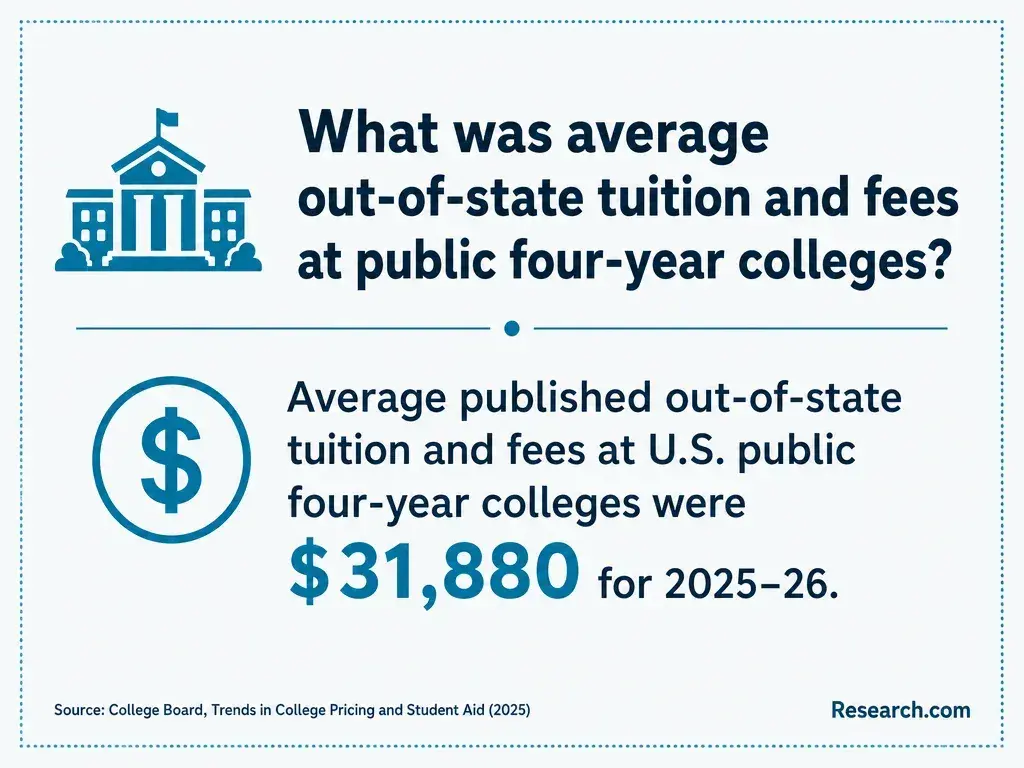
For cost, compare the price of remaining required credits at each school, then add mandatory fees, books, technology, and any travel or unpaid research obligations. Ask for an institution-specific aid estimate before treating advertised tuition as your net cost. If you are considering later graduate study, budget for it separately: accelerated forensic psychology master's costs and outcomes, for example, concern a different degree and should not be folded into a BA price comparison.
A well-chosen sequence should help you define what "identification" means in a particular study, distinguish it from simply belonging to a group, evaluate a measure, and interpret results without overstating them. Statistics and methods help you recognize selection bias, confounding, and the difference between an association and a causal effect. Social and cultural psychology help you question whether a finding applies across settings rather than assuming one group's experiences represent everyone's.
To demonstrate those skills, look for a supervised opportunity to produce a literature review, research proposal, or analysis using data you are permitted to access. Projects involving people or sensitive identity information may require consent, institutional review, and data-use approval; a course assignment is not automatic permission to collect or publish responses. If graduate research is your aim, investigate supervision and methods depth alongside forensic psychology master's programs by study length. Duration alone does not indicate research preparation.
A psychology BA can support applications for nonclinical work in research coordination, community outreach, program support, human services, or organizational settings. Group identity knowledge may be useful when helping a team understand participation, belonging, or communication across communities. Employers will still assess the specific role's experience, data skills, and any background-check or training requirements.
For an entry-level research role, show evidence of data handling, literature searches, and careful reporting. For community-facing work, demonstrate communication, documentation, and respect for referral and confidentiality boundaries. If your intended career is psychotherapy rather than research or support work, investigate a qualifying professional degree instead; faster clinical mental health counseling graduate pathways address a different educational objective, subject to state licensing rules.
There is no single salary or job-growth rate for "psychology BA graduates." Federal occupational figures describe jobs, not everyone holding a particular degree; research support, community services, and organizational roles have different entry requirements and pay. For a useful comparison, identify two or three job titles you would actually pursue, then check the latest US Bureau of Labor Statistics Occupational Outlook Handbook entry for each occupation's wage reference year, projected growth period, and typical education.
Do not use the occupational median for psychologists as an expected BA outcome: psychologist positions generally require advanced education and, for many roles, licensure. The same caution applies when reading about forensic psychology master's education and job earning prospects; compare the qualifications of the named jobs before applying any salary figure to your own plan.
Does a psychology bachelor's degree qualify you for licensure or certification?
No psychology BA alone qualifies you to practice as a licensed psychologist or independently provide psychotherapy, diagnosis, or psychological assessment. A course on identity, mental health, or testing is academic preparation, not authorization to perform regulated work. Requirements for other credentials, including peer-support or substance-use roles, depend on the state and the specific certification or license.
If you want a regulated clinical role, begin with the licensing board for the state and occupation you intend to enter, then check whether a prospective graduate program meets its educational requirements. Time to qualification includes more than classes: supervised practice and examinations may also be required. Descriptions of clinical counseling master's completion time and employment outlook are useful only when read alongside those jurisdiction-specific steps.
Other Things You Should Know About Psychology
No. Membership describes an association; identification concerns how meaningful that association is to a person. A study should specify which concept it measures.
Yes. A literature review or analysis of appropriately available, aggregate information may fit some assignments. Your instructor must still approve the project and its data source.
No. Public visibility does not settle research ethics, platform rules, privacy expectations, or institutional review requirements. Check permissions before collecting or quoting posts.
Define the population and setting precisely, report variation where the evidence permits, and avoid extending findings beyond the people and circumstances studied.
- Courses - Psychology - Virginia Commonwealth University https://psychology.vcu.edu/undergraduate/courses/
- SAC: Academics: Programs: Psychology | Alamo Colleges https://www.alamo.edu/sac/academics/program-index/social-cultural-and-behavioral-studies/psychology/
- Bachelor of Arts in Psychology - Online Program | CSULB CPaCE https://www.cpace.csulb.edu/courses/bachelor-of-arts-in-psychology
- Bachelor of Arts Psychology Online or On Campus | University at Albany https://www.albany.edu/psychology/programs/ba-psychology
- Online Psychology Degree Program - Courses | Capella University https://www.capella.edu/online-psychology-degrees/bs-psychology-program/bachelors-general-psychology/courses/
- Social Psychology | apa.org https://www.apa.org/education-career/guide/subfields/social
- 1.3 Conducting Research in Social Psychology | Advanced Legal Research: Process and Practice https://opentext.uoregon.edu/socialpsychology/chapter/conducting-research-in-social-psychology/
- Capstone Requirements - Psychology | Penn State Altoona https://altoona.psu.edu/academics/bachelors-degrees/psychology/handbook/capstone-requirements
- PSYC: Psychology | Empire State University https://catalog.sunyempire.edu/courses/psyc/
- Capstone Undergraduate Research (PSYC 492 or BCOG 492) | Illinois https://psychology.illinois.edu/research/undergraduate-research/capstone-undergraduate-research-psyc-492-or-bcog-492


