2027 Online BA in Psychology - General Psychology for Psychology of Memory and Learning: Which Courses Should You Look For?
Audited and Verified:
Our Editorial and Data Verification Process
Research.com uses government datasets, official education statistics and primary institutional information to support its career and degree guides. Our review process checks factual accuracy, occupational definitions, source dates and the requirements associated with the credentials discussed.
How This Article Was Fact-Checked
Our editorial team verifies salary estimates, employment projections, education requirements and program information against original data providers and official organizations. Salary figures are checked against the relevant occupational definitions and reporting periods. Information about licensure, accreditation and required in-person training is reviewed separately.
Fact-checked and verified on:

Co-Founder and Chief Data Scientist
An online psychology BA may advertise cognition without offering the courses or research experience you need to study memory and learning in depth. For prospective students comparing general psychology programs, the useful question is not whether a catalog mentions these topics, but whether you can build a coherent path from statistics and research methods to advanced coursework and an applied project. This guide identifies the courses to prioritize, shows how to check whether they are actually available online, and explains when a different educational route may be more efficient.
Key Things You Should Know
- Prioritize three layers: statistics and research methods, cognitive psychology and learning, then an advanced course or supervised project that lets you investigate a memory-related question.
- Check the course schedule, not just the catalog: an elective is useful only if it is offered online often enough to fit your graduation plan.
- A general psychology BA can prepare you for nonclinical work or further study, but memory coursework does not qualify you to diagnose, provide therapy, or administer restricted psychological assessments.
What Is an Online BA in General Psychology for Memory and Learning?
It is usually a broad psychology bachelor's degree in which you select courses and projects related to how people acquire, retain, retrieve, and use information. Memory and learning may be interests you pursue within the major, not an officially named concentration. Confirm what the transcript and diploma will actually say before treating a set of electives as a formal specialization.
A BA commonly combines psychology with general education and electives; the letters BA alone do not tell you how much laboratory science or quantitative work is required. Compare the degree audit instead. If your primary goal is a legal-system career rather than the science of cognition, undergraduate forensic psychology programs by completion time offer a different comparison point - but their title does not establish expertise in memory research or forensic practice.
Which Courses Should You Look For in a Psychology of Memory and Learning Program?
Start with methods, then study mechanisms, then apply what you have learned. Course titles differ by school, so read descriptions and prerequisites rather than counting every class containing the word "memory." The table separates foundational courses from electives whose value depends on your goal.
| Course or experience | What to look for | Why it matters |
| Statistics and research methods | Research design, sampling, uncertainty, data analysis, and ethical treatment of participants | These skills help you evaluate claims about learning rather than merely repeat them. |
| Cognitive psychology | Attention, encoding, retrieval, forgetting, and decision-making | This is often the central course for studying human memory. |
| Learning or behavioral psychology | Conditioning, reinforcement, skill acquisition, and the limits of applying laboratory findings | It explains learning processes that may receive less attention in a cognition course. |
| Biological psychology or neuroscience | Brain systems and biological approaches to cognition, taught at an appropriate undergraduate level | It adds a useful perspective on memory without replacing behavioral evidence. |
| Developmental or educational psychology | Age-related change or learning in educational settings | Choose it when your interests involve children, aging, instruction, or accessibility. |
| Advanced seminar, lab, or capstone | Faculty feedback on a literature review, research proposal, analysis, or approved project | It gives you a way to demonstrate that you can use the coursework together. |
For a research-oriented student, a strong sequence is statistics before research methods, followed by cognitive psychology and an advanced project. Ask whether the project teaches you to distinguish an experimental result from a correlation and whether online students can receive substantive faculty feedback. A study of recall, for example, needs a clearly defined measure of memory; a self-report of "learning better" measures something different. Work with participants or restricted data also requires the applicable instructor, institutional, and site approvals.
Do not add a second degree merely to obtain one missing course. If you already hold a bachelor's degree, a suitable undergraduate prerequisite or focused research experience may be more direct than another BA. Compare that route with the actual prerequisites and research opportunities of any low-cost master's degrees in psychology you are considering.
How Do You Choose an Accredited Online Psychology Bachelor's Program?
First, confirm that the institution holds recognized institutional accreditation and that the specific BA can be completed in the format available to you. APA accreditation is not the test for a general psychology BA: its accreditation scope covers particular professional psychology training programs, not undergraduate majors broadly.
Next, request the current degree requirements and recent or planned online course schedules. Ask an advisor which cognition and learning courses are required, which are electives, how frequently each runs, who supervises online research, and whether a capstone, residency, or local placement is mandatory. If you are transferring, obtain an official evaluation showing not just accepted credits but which major requirements they satisfy. Published institutional accreditation does not settle those course-level questions.
If licensed counseling is your eventual goal, evaluate that professional pathway separately rather than assuming a BA concentration meets its requirements. Compare the relevant program recognition, state rules, and total financing; funding options for accredited mental health counseling programs concern a different degree-level decision than selecting BA electives.
Both formats can teach the same psychological concepts, but access to research experiences may differ. An online program may suit a student who needs to study around work or caregiving; a campus program may make it easier to attend a lab meeting or find an in-person assistantship. Neither format guarantees hands-on work.
Ask whether lectures are asynchronous while exams, group projects, research meetings, or capstone presentations are scheduled live. Check whether remote students can join faculty projects, use suitable datasets, or arrange an approved local experience - and who provides supervision. These questions remain relevant if you later consider comparing the fastest psychology master's formats: a shorter calendar does not necessarily mean fewer scheduled commitments.
Requirements depend on whether you apply as a first-year student, transfer student, or returning student. Schools typically review prior schooling and transcripts, while individual programs may set additional major-entry or prerequisite rules. Admission to the university is not always the same as admission to the psychology major.
For transfer applicants, the decisive document is a degree audit showing where previous statistics, introductory psychology, and other courses apply. Ask whether research methods must be taken at the new institution and whether prerequisite sequencing could postpone an advanced cognition course. If a later graduate degree is part of your plan, check its admission rules directly; even planning a forensic psychology master's in less than two years starts with verifying that program's prerequisites, not assuming every psychology BA meets them.
Completion time depends on the credits you still need, your course load, prerequisite order, and how often advanced electives run. A fast general education schedule offers little advantage if the memory seminar you want is unavailable until a later term. Request a term-by-term plan that includes your intended electives before relying on an advertised completion timeline.
For cost, compare tuition for remaining credits plus mandatory fees, materials, technology, and any travel or unpaid project time. Ask how part-time enrollment affects aid eligibility and whether your employer offers education assistance. Online psychology programs with faster pacing may reduce time away from other goals, but accelerated terms can also make a methods course and research project harder to manage alongside paid work.
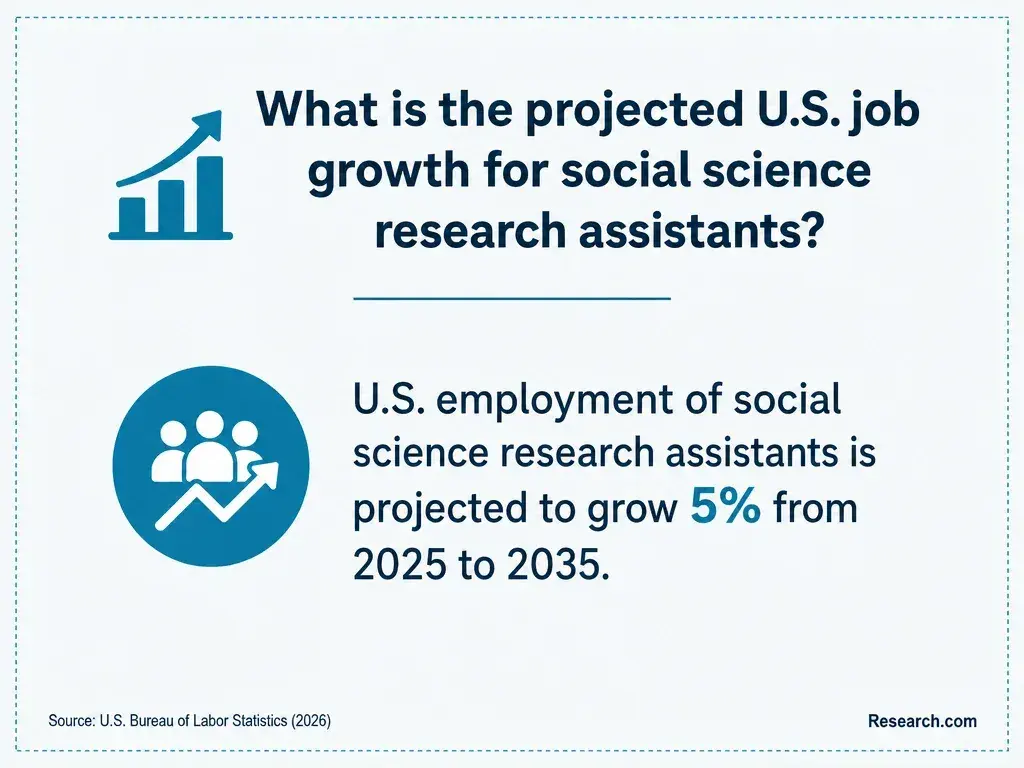
Memory-and-learning coursework is most useful when paired with evidence of a skill employers need: organizing research data, explaining findings, supporting instruction, or evaluating a program. Depending on experience and local hiring requirements, graduates may pursue research-support, education-support, human-services coordination, or training-related roles. Job titles alone are unreliable; compare posted duties, required credentials, and opportunities for supervised entry-level work.
Someone interested in community services may find that a placement, employer training, or a role-specific credential matters more than another cognition elective. For example, working in substance use recovery support involves service-specific duties and potentially state-specific credential rules; studying learning theory is useful background, not authorization to counsel or treat clients.
There is no dependable single salary for an online psychology BA or for students who choose memory electives. Pay follows the occupation, location, employer, and experience, not the course cluster on a transcript. For a realistic comparison, select a job title you could meet the stated requirements for, then consult the latest US Bureau of Labor Statistics occupation-specific wage data and local postings. An occupation-wide median is not a new graduate's starting offer.
Do not use pay figures for more advanced credentials to estimate the return on a BA. A forensic psychology master's employment and pay guide, for instance, concerns different qualifications and roles; neither forensic nor general psychology coursework by itself establishes eligibility for licensed practice.
Does a Psychology Bachelor's Degree Qualify You for Licensure or Certification?
No general psychology BA, online or campus-based, independently qualifies someone to practice as a licensed psychologist or provide psychotherapy. Learning about memory, psychological tests, or mental disorders also does not authorize diagnosis or independent assessment. Requirements for other certifications and support roles vary by state, credential, and employer; check the responsible board or certifying body before enrolling for that purpose.
If counseling is the intended profession, investigate a qualifying graduate pathway and its supervised-experience requirements rather than treating BA electives as clinical training. Even fast online clinical mental health counseling master's programs must be evaluated against the rules of the state where you intend to seek licensure. If your aim is instead to study how memory works, prioritize rigorous methods and accessible research mentorship over a clinical-sounding course title.
Other Things You Should Know About Psychology
No. Cognitive psychology may cover memory thoroughly. Compare syllabi for encoding, retrieval, forgetting, and the methods used to study them.
Yes. A supervised literature review, research proposal, or analysis of an appropriately available dataset may be suitable if your program accepts it. Confirm project and data-use rules first.
Not necessarily. Educational psychology emphasizes learning in instructional contexts; cognitive psychology typically examines memory and other mental processes more directly. The better choice depends on your goal and each course's syllabus.
Ask what projects online undergraduates can join, what preparation is expected, how often supervision occurs, and whether the work can support a capstone or recommendation letter. Do not assume a place on a research team is guaranteed.
- Accreditation in the U.S. | ed.gov http://www.ed.gov/laws-and-policy/higher-education-laws-and-policy/college-accreditation/accreditation-in-the-us
- Memory: Neurobiological mechanisms and assessment - PMC https://pmc.ncbi.nlm.nih.gov/articles/PMC8611531/
- Psychology Curriculum | charlotte.edu https://psych.charlotte.edu/undergraduate-program/psychology-courses/
- What's the Difference Between a B.A. & B.S. in Psychology? | The Chicago School https://www.thechicagoschool.edu/insight/career-development/difference-between-ba-and-bs-in-psychology/
- Psychology and Neuroscience, Undergraduate Programs | Boston College https://www.bc.edu/bc-web/academics/sites/university-catalog/undergraduate/mcas/psychology.html
- Policies - Department of Psychology - Penn State https://psych.la.psu.edu/undergraduate/academic-advising/policies/
- Memory Lab | stanford.edu https://memorylab.stanford.edu/
- COURSE CATALOG - Department of Psychology | Northwestern University https://psychology.northwestern.edu/courses/2019-2020/course-descriptions/
- What's the Difference Between Asynchronous and Synchronous Learning? | Ohio State Online https://online.osu.edu/content-hub/blogs/whats-the-difference-between-asynchronous-and-synchronous-learning/
- Bachelor of Psychology Online Degree | University of Florida Online https://ufonline.ufl.edu/degrees/undergraduate/psychology/