2027 Online BA in Psychology - General Psychology: How to Evaluate Writing Support for Psychology Research Papers
Audited and Verified:
Our Editorial and Data Verification Process
Research.com uses government datasets, official education statistics and primary institutional information to support its career and degree guides. Our review process checks factual accuracy, occupational definitions, source dates and the requirements associated with the credentials discussed.
How This Article Was Fact-Checked
Our editorial team verifies salary estimates, employment projections, education requirements and program information against original data providers and official organizations. Salary figures are checked against the relevant occupational definitions and reporting periods. Information about licensure, accreditation and required in-person training is reviewed separately.
Fact-checked and verified on:

Co-Founder and Chief Data Scientist
An online psychology program may advertise a writing center, but that alone does not tell you whether anyone will help you turn a research question into a sound paper. For prospective BA students - especially those returning to school or studying around work - access to timely, psychology-specific feedback matters more than a long list of services. This guide shows you what support to look for, how to compare online and campus options, and what to verify before enrolling. The aim is to find a program that teaches you to evaluate evidence and write independently, not merely format citations.
Key Things You Should Know
- Look for support across the full paper-writing process: finding studies, evaluating methods, drafting, receiving feedback, and revising - not just proofreading.
- Ask how the program teaches APA Style, 7th edition, and whether feedback addresses psychological evidence and research claims as well as formatting.
- Many US bachelor's degrees require about 120 semester credits; request a degree audit and sample course sequence to see when research-writing assignments and support become available.
What writing support should an online psychology program provide for research papers?
Effective writing support helps students make better research decisions. In general psychology, a polished sentence cannot compensate for a weak source, an unclear definition of a concept, or a claim that a correlational study proves causation. Look for instruction that connects library searching, study appraisal, argument development, ethical source use, and revision.
A useful test is to ask for a sample assignment and rubric from a required methods course. Check whether students submit a proposal or outline, receive substantive comments before the final deadline, and have time to revise. Also ask who can help when the difficulty is psychology-specific: a course instructor, librarian, trained tutor, or research mentor. A general writing center can help with structure and clarity, but may not be equipped to assess whether a measure fits a research question.
Use those answers - not the presence of a "writing support" badge - to compare psychology degree options for distance learners. Confirm that any advertised service is available to fully online undergraduates in the courses you expect to take.
How does APA Style instruction prepare psychology students for research writing?
APA Style, 7th edition, is a set of conventions for communicating psychological research. It covers citations and references, but also paper organization, tables, precise language, and transparent reporting. Strong instruction explains why those practices matter: readers need to trace evidence, understand what was measured, and distinguish results from interpretations.
Look for a progression from introductory citation practice to writing a literature review and, where required, a methods or results section. Students should learn to paraphrase accurately, cite primary studies where appropriate, and describe participants and findings without overgeneralizing. A citation generator may save time, but it cannot decide whether a source supports a claim.
If you are comparing general psychology with online addiction counseling degree programs, examine each program's writing rubrics rather than assuming the assignments are equivalent. Both may use APA Style, while their research questions and professional purposes differ.
How can you compare writing support in online and campus psychology programs?
Delivery mode does not determine feedback quality. Compare what a student can actually access, when, and how often. The table distinguishes common arrangements; individual schools may offer a mix of them.
| Support feature | Online program: what to verify | Campus program: what to verify |
| Draft feedback | Whether annotated comments or conferences arrive before revision is due | Whether office hours and draft reviews fit your schedule |
| Research help | Remote librarian appointments and access to psychology databases | Library instruction and help outside scheduled class hours |
| Peer discussion | Whether discussion or group work has fixed meeting times | Whether collaboration requires additional trips to campus |
| Writing center | Eligibility, appointment hours, and support for lengthy research papers | Appointment availability during busy assignment periods |
For an online option, request the schedule for a required research course. An asynchronous lecture can still come with live conferences, group meetings, or short turnaround windows. For a campus option, account for travel and whether help is offered outside daytime hours. Compare the time between draft submission, feedback, and final submission; that interval determines whether revision is realistic.
Assignment names vary, but general psychology students commonly encounter source evaluations, article critiques, literature reviews, research proposals, and papers explaining a study's design or findings. Statistics or methods courses may add results interpretation; an advanced seminar or capstone may require a larger synthesis. Check the actual catalog and sample syllabi rather than assuming every BA includes an original experiment or thesis.
For a student new to research, the most informative assignment sequence starts with reading studies and builds toward a defensible question, an evidence-based argument, and a revision. Ask whether a paper requires collecting participant data or instead uses published research. If data collection is proposed, course instructions should explain when faculty approval, institutional review, consent, and data permissions need to be checked; a class assignment is not automatic permission to recruit participants.
These undergraduate writing samples can help you assess readiness for later study, but graduate requirements differ. If further study is a goal, compare its research expectations separately from tuition-focused psychology master's program choices; a lower price does not establish that a program offers the writing or research preparation you need.
Online programs may offer tutoring, faculty office hours, librarian consultations, and writing centers, but access and scope differ. Before enrolling, ask whether writing appointments are available remotely, whether tutors can review psychology research papers, how far ahead appointments fill, and whether instructors comment on drafts. Distinguish feedback on reasoning and evidence from proofreading or citation checks.
Ask the program to describe a typical feedback cycle in a required upper-level course. For example, can a student submit a draft, receive comments while the assignment is still in progress, and discuss a confusing methods critique with the instructor? If work or caregiving limits your availability, confirm evening options and whether live appointments are mandatory. No published tutoring hours should be treated as a promise that a particular appointment will be open.
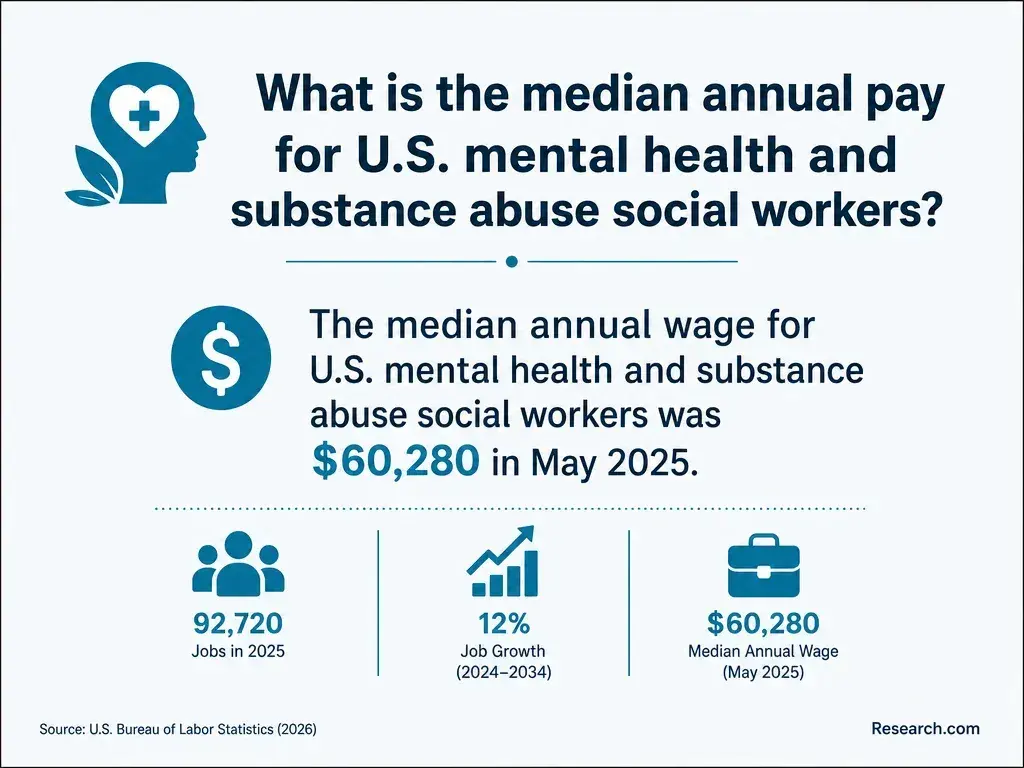
If your longer-term aim is clinical counseling, evaluate undergraduate writing support on its own merits. The separate decision about a qualifying graduate program - including cost and career fit - calls for a different comparison, such as a mental health counseling master's investment and pay outlook.
Institutional accreditation is a baseline check: confirm the school's status with its recognized accreditor and verify that it applies to the institution awarding the degree. It can matter for federal aid and credit recognition, but it does not prove that an online psychology major offers strong draft feedback. The American Psychological Association does not accredit general psychology bachelor's programs, so an "APA-accredited BA" claim warrants scrutiny.
After checking accreditation, examine the program's own evidence: required course descriptions, student-service eligibility, writing-center policies, and sample research rubrics. Ask which policies apply to your entry term. If you are also considering a counseling pathway, affordability checks for online counseling study involve separate program-recognition and state-licensure questions; institutional accreditation alone cannot answer them.
Admission requirements depend on the institution and on whether you apply as a first-year or transfer student. Schools may request prior transcripts and evidence of secondary-school completion or earlier college study; some have additional major-entry rules. Ask admissions whether statistics, introductory psychology, or writing courses are admission prerequisites, graduation requirements, or simply recommended preparation.
For transfer students, the crucial distinction is between credits accepted and requirements satisfied. A prior statistics or research-methods course may transfer as elective credit without replacing the psychology major's required course. Request a written degree audit showing general education, major, prerequisite, and remaining residency requirements. Guidance on applying associate-level credits to psychology study can help frame your questions, but the receiving school makes the equivalency decision.
Many US bachelor's programs are built around approximately 120 semester credits, but your completion time depends on accepted credits, course sequencing, enrollment pace, and when required writing-intensive courses run. Online delivery does not eliminate weekly reading, drafting, or revision time. Ask for a term-by-term plan that includes statistics, research methods, and any capstone, especially if you cannot take every course when offered.
For cost, calculate the credits you still need at the applicable tuition rate, then add mandatory fees, books, technology, and any required travel. Do not infer your total from an advertised per-credit price or assume aid will cover every expense. If you are comparing a different undergraduate route, substance abuse counseling bachelor's affordability and duration deserve a separate calculation because its curriculum and career aim may differ from a general psychology BA.
Before committing, ask the financial-aid office what aid you can apply for and how your enrollment pace affects eligibility. Students considering the substance-use-services pathway can also review financial support for substance abuse counseling majors, while confirming that any opportunity applies to their own school and degree.
A general psychology BA can support applications for nonclinical roles in research support, community services, program coordination, recruiting, or human services. The degree is most useful when you can show relevant work: a well-reasoned literature review, careful data handling, a supervised project, or experience communicating with the people a service supports. Employers may also require specific experience, training, or credentials.
For example, someone exploring addiction recovery job families should distinguish outreach, coordination, and peer-support duties from substance-use counseling. Titles and credential rules vary by state and employer. If your target job mainly requires a short credential or supervised experience, that route may be more direct than a full psychology degree; if it requires graduate professional training, the BA is preparation rather than the final qualification.
What salary and licensing requirements apply to psychology degree careers?
There is no reliable single "psychology BA salary." Pay belongs to a defined occupation and depends on duties, location, employer, and experience. For a target job, consult the US Bureau of Labor Statistics Occupational Outlook Handbook's most recent wage and employment projections for that occupation, then compare local postings. An occupation-wide median is not a forecast of an individual graduate's starting pay.
A general psychology BA does not itself authorize psychotherapy, diagnosis, independent psychological assessment, or use of the licensed psychologist title. Those pathways require further education and jurisdiction-specific licensing steps. Even advanced study must be matched to the intended role: understanding pay and entry requirements in forensic psychology careers requires distinguishing research or justice-support work from licensed forensic evaluation. Verify regulated duties with the relevant state board before treating any degree title as a qualification.
Other Things You Should Know About Psychology
Follow the course's AI policy. If use is permitted, verify every citation and claim yourself, disclose use when required, and never upload confidential participant or client information.
Ask whether writing tutors support language development as well as paper structure, and whether appointments, examples, or workshops are available before major assignments are due.
Usually you can ask your instructor about sharing your own work, but remove confidential information and confirm any restrictions on collaborative work, unpublished data, or participant materials.
Contact the school's accessibility office before classes begin to discuss its accommodation process and the services available to online students. Tutoring and formal accommodations serve different purposes.
- Students tell us what good written feedback looks like - PMC https://pmc.ncbi.nlm.nih.gov/articles/PMC7193163/
- Library Research in Psychology: Finding it Easily | apa.org https://www.apa.org/education-career/undergrad/library-research
- Using artificial intelligence in academic writing and research | sciencedirect.com https://www.sciencedirect.com/science/article/pii/S2666990024000120
- Feedback for Learning | columbia.edu https://ctl.columbia.edu/resources-and-technology/resources/feedback-for-learning/
- Literature Reviews - The Writing Center https://writingcenter.unc.edu/tips-and-tools/literature-reviews/
- Guidelines for Using AI Tools in Writing and Research | Academics at Walden University https://academics.waldenu.edu/artificial-intelligence
- Teaching Asynchronous Writing and Communication Classes | gatech.edu https://sites.gatech.edu/bfhandbook/teaching-asynchronous-writing-and-communication-classes/
- Reading Scholarly Articles: Evaluating Information | emory.edu https://guides.libraries.emory.edu/c.php
- Giving Effective Feedback on Student Writing | Resource Library | Notre Dame Learning https://learning.nd.edu/resource-library/giving-effective-feedback-on-student-writing/
- Using AI tools in your research | wiley.com https://www.wiley.com/en-us/publishing/article/ai-guidelines