
2027 Online BA in Psychology - General Psychology: Should You Take an Entry-Level Related Job Before Enrolling?
Audited and Verified:
Our Editorial and Data Verification Process
Research.com uses government datasets, official education statistics and primary institutional information to support its career and degree guides. Our review process checks factual accuracy, occupational definitions, source dates and the requirements associated with the credentials discussed.
How This Article Was Fact-Checked
Our editorial team verifies salary estimates, employment projections, education requirements and program information against original data providers and official organizations. Salary figures are checked against the relevant occupational definitions and reporting periods. Information about licensure, accreditation and required in-person training is reviewed separately.
Fact-checked and verified on:

Co-Founder and Chief Data Scientist
A related job can clarify why you want to study psychology, but waiting to find one may delay a degree you could start now. If you are considering an online BA in general psychology, the useful question is whether work experience will improve your decision, finances, or readiness for a specific role - not whether it looks impressive on an application. This guide compares working first with enrolling first, explains what each path can and cannot do for your career, and gives you a practical way to choose.
Key Things You Should Know
- Usually, you do not need a related job before enrolling. Work first if you need to test a career goal, build income, or confirm that the daily duties suit you.
- Experience does not replace academic requirements automatically. Ask the college whether employment can earn credit and whether any awarded credit applies to the major; a typical bachelor's degree requires about 120 semester credits.
- Choose experience for its tasks, not its title. Supervised support, research, documentation, or service coordination can build useful skills, but a psychology BA alone does not authorize therapy or diagnosis.
Should You Take a Related Job Before Enrolling in an Online BA in Psychology?
For most applicants, a related job is an option, not a prerequisite. Enroll first if you are ready for college coursework and waiting would mainly postpone progress. Work first if you are unsure whether you want a support-services, research, organizational, or eventual clinical career - and can obtain a job that lets you examine that work safely and realistically.
The best choice depends on what the experience would actually change. This comparison separates a useful trial of the field from an avoidable delay.
| Path | Best fit | Main trade-off |
| Work before enrolling | You need income or firsthand exposure before committing to tuition. | The job may offer little relevant learning, and delaying enrollment can delay completion. |
| Enroll and work concurrently | You have a manageable schedule and can apply coursework to supervised, nonclinical tasks. | Shift work, live classes, and caregiving can compete for the same hours. |
| Enroll before finding related work | You know why you want the degree but have limited local openings or need introductory skills first. | You will need to seek experience deliberately during the program. |
Before accepting a role, read its actual duties and training plan. An intake or recovery-support position may teach documentation, respectful communication, and referral boundaries; it does not train you to provide treatment. If your specific goal is substance-use counseling, compare the role's state credential requirements with planning affordable bachelor's-level substance abuse counseling study rather than assuming a general psychology BA is the most direct route.
A sensible next step is to identify two target job postings, note their required credentials and tasks, and ask whether working for a term would resolve a genuine uncertainty. If not, consider enrolling while seeking part-time work, volunteering, or a later supervised opportunity.
What Is an Online BA in General Psychology?
An online BA in general psychology is a bachelor's degree covering psychological science across several areas rather than training for one licensed occupation. Its online format describes how coursework is delivered, not whether every activity is asynchronous or can be completed from any location.
General programs often leave room for electives in development, social behavior, mental health, or research. A BA may also have different general-education or science requirements from a BS; the institution's degree plan, not the letters alone, determines the difference. When comparing online psychology study and degree choices, check live meeting times, group work, exams, any campus visits, and access to research or internships. Those details matter especially if you intend to keep an entry-level job while studying.
What Careers Can You Pursue With a Bachelor's in Psychology?
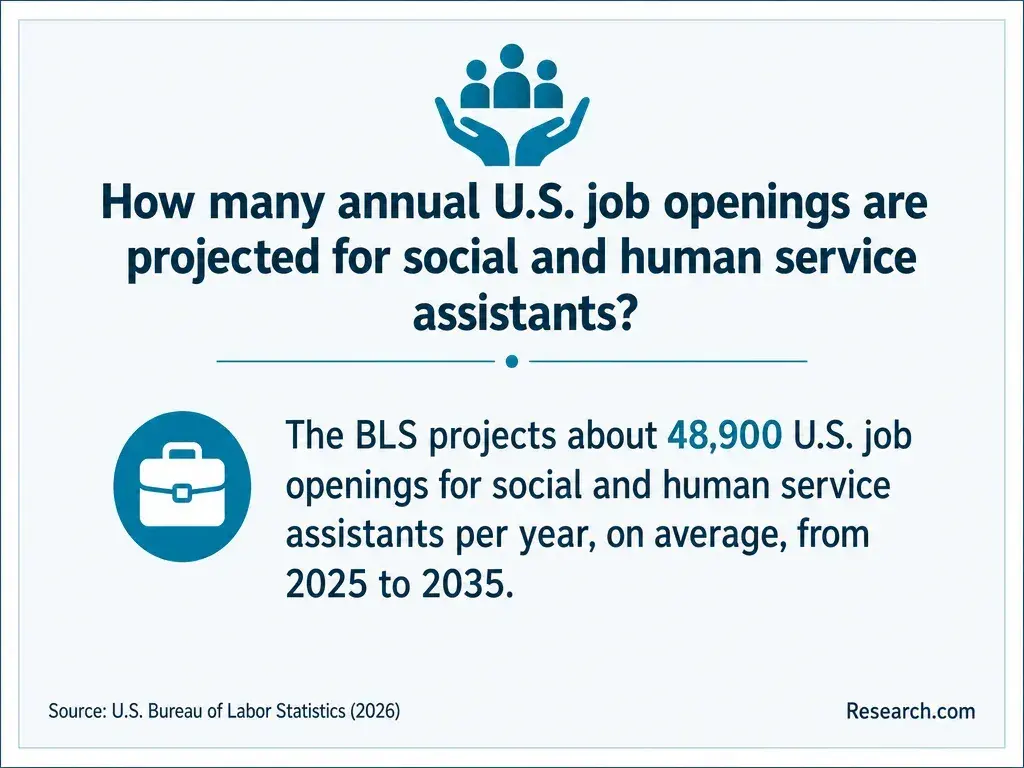
A psychology bachelor's can support applications for nonclinical work, but eligibility depends on the employer, your experience, and sometimes a state credential. Relevant possibilities include human-services assistant, victim-services advocate, intake coordinator, program assistant, and research assistant. Duties may involve scheduling, referrals, participant recruitment under supervision, records, or program reporting - not independent assessment or treatment.
Working before or during college is most valuable when the duties build evidence for your intended next job. Someone aiming for research support should look for data quality and study-coordination tasks; someone interested in community services may benefit more from supervised outreach and referral work. Neither needs to hold a job with "psychology" in its title.
If your eventual goal is forensic work, distinguish support or research jobs from licensed forensic assessment. Even higher-paying career paths after forensic psychology graduate study can have requirements beyond the graduate degree named in a program's marketing. Check the actual occupation before choosing an undergraduate job around a hoped-for title.
It can strengthen an application when a college considers experience, but it usually cannot substitute for stated academic admission or transfer requirements. Some online bachelor's programs admit eligible applicants without psychology-related employment. Others may offer a process for evaluating prior learning; receiving credit and having that credit fulfill a psychology requirement are separate decisions.
Ask admissions what is required for entry, then ask the registrar or transfer-credit office for a written evaluation of previous coursework. If a school offers credit for prior learning, request its rules, fees, documentation standards, and a degree audit showing where any credit would apply. Do not leave a useful job - or postpone college - on an assumption that experience will shorten the degree.
Applicants attracted to accelerating a forensic psychology bachelor's degree should make the same distinction: a faster advertised pathway is only faster for you if your accepted credits satisfy the right requirements and the remaining courses are available when needed.
Typical study includes psychological theories, development, social and biological influences on behavior, statistics, research methods, and scientific writing. Programs differ in electives and applied opportunities. These courses help you evaluate evidence and communicate responsibly; they do not qualify you to diagnose a client because you studied psychopathology or to administer restricted assessments because you read about testing.
Use an entry-level job to identify a skill gap, then choose courses or projects that address it. For example, a program assistant who prepares service reports may gain more immediate value from statistics and research methods than from an unrelated elective. If graduate study is a possibility, check prospective programs' prerequisites before choosing electives. Even when considering choosing a shorter forensic psychology graduate pathway, assess research preparation and the intended occupation - not just how quickly another credential could be completed.
A conventional full-time bachelor's path is often planned around four academic years and roughly 120 semester credits, but your remaining time depends on transfer evaluations, enrollment pace, course sequencing, and the institution's residency rules. Online delivery does not remove prerequisites or make every required course available every term.
Working first delays the start date unless it enables a better-funded or more sustainable plan. Working while enrolled may require a lighter course load, which can extend completion time but make persistence more realistic. Before planning an intensive online psychology degree, request a term-by-term degree plan and compare it with your work schedule, including live sessions, exams, and any supervised activities.
There is no reliable single price for an online psychology BA. Compare each school's tuition per credit or term, mandatory fees, remaining credits after evaluation, materials, and any travel or placement expenses. Then consider the opportunity cost: working first may generate income, while enrolling sooner may bring forward degree completion. Neither outcome is guaranteed to produce a higher salary.
Use the same remaining-credit estimate for every school when comparing affordable psychology colleges online. Ask whether tuition varies by residency, whether part-time enrollment changes aid eligibility, and whether your employer reimburses courses in this degree. Compare the likely amount you would pay and borrow - not just the advertised tuition rate.
Check the institution's accreditation through its accreditor and the U.S. Department of Education's recognized-accreditor information; do not assume that "online" or a program's subject establishes accreditation. APA accreditation applies to specified professional psychology training programs, not general psychology bachelor's degrees. Institutional accreditation is important, but it does not guarantee that another college will accept a course or count it toward a particular major requirement.
If you might change schools or pursue graduate study, save course descriptions and syllabi, and request a written transfer evaluation or degree audit before enrolling. For a specialized interest, resources on accredited addiction psychology undergraduate education can help you identify questions to ask, but verify the institution's accreditation and the exact degree or concentration yourself. A concentration is not a counseling license.
Some do; many entry-level support roles do not. Independent psychotherapy, diagnosis, and practice as a licensed psychologist require a qualifying professional pathway and jurisdiction-specific requirements beyond a general psychology BA. Licensure routes also differ among psychologists, counselors, social workers, and other professionals.
This distinction should shape whether you work before enrolling. If you want to test whether you enjoy supporting people in a service setting, a supervised nonclinical role can be informative. If you already know you want to become a licensed counselor, map the requirements of the state where you plan to practice and the qualifying graduate program before treating the BA as a complete career plan. Information on clinical counseling master's completion time and employment outlook is a starting point for that later decision, not proof that any particular program meets your state's rules.
How Much Can You Earn With a Bachelor's in Psychology?
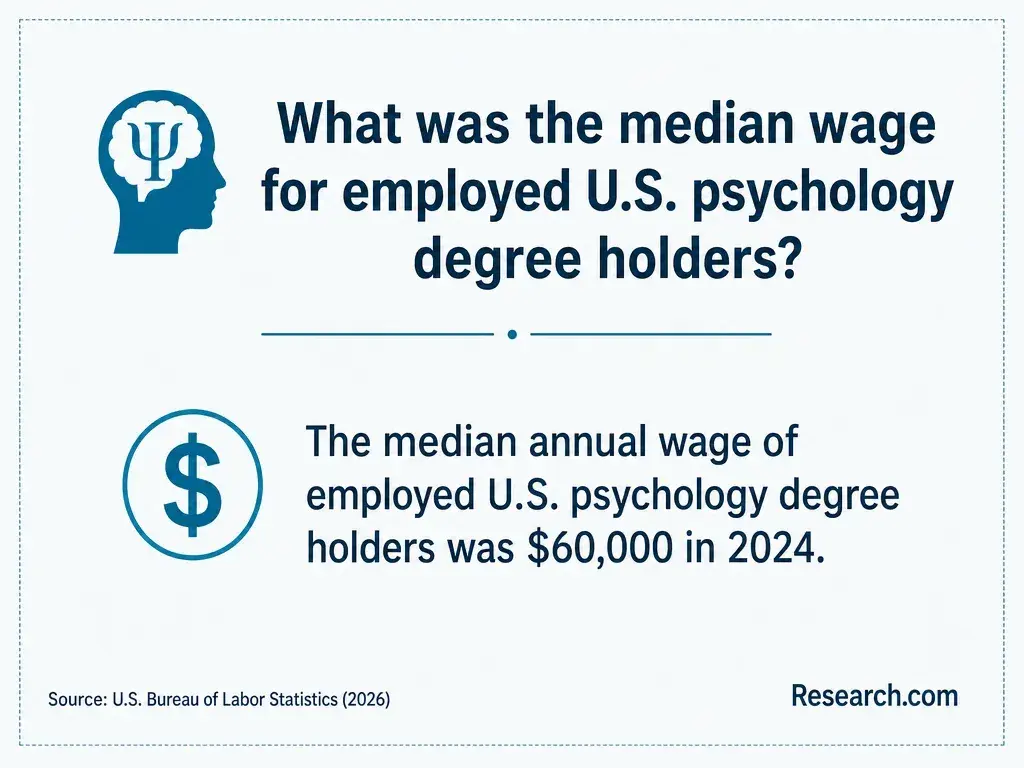
There is no single salary for psychology BA holders: earnings attach to occupations, locations, employers, and experience rather than the major alone. For a realistic estimate, identify an actual target position, check its current local postings and the U.S. Bureau of Labor Statistics Occupational Outlook Handbook entry for the closest matching occupation, and confirm that its typical entry requirements fit your qualifications. An occupation-wide median is not a starting salary or a forecast for graduates of one program.
Compare the pay and duties of jobs you could seek now with those available after the BA. If you are considering graduate school, include its additional cost and credential requirements rather than assuming a higher-paying title follows automatically. This caution also applies when reviewing accelerated forensic psychology master's costs and outcomes: the price of a degree and the wages reported for an occupation measure different things. For many readers, a related job is worth taking first for income and informed career testing, not for an assumed salary boost from experience alone.
Other Things You Should Know About Psychology
You can ask, but access to clients and records depends on the organization's privacy, safety, and consent rules. Request an approved informational interview or observation arrangement rather than assuming shadowing is permitted.
Tell them when you need schedule changes, education benefits, or approval for a work-based academic activity. Agree on work hours and confidentiality expectations before proposing to use workplace material for class.
Focus on what you learned about your responsibilities without identifying a person or revealing protected details. Follow your employer's confidentiality rules even if you change names.
Only the college can decide. Ask whether it evaluates that specific training for credit and, separately, whether any credit awarded would fulfill a degree requirement.
- Handy Reference Guide to the Fair Labor Standards Act | dol.gov https://www.dol.gov/agencies/whd/compliance-assistance/handy-reference-guide-flsa
- Psychology careers guide | apa.org https://www.apa.org/education-career/guide/careers
- How Can You Earn College Credit for Work Experience? | UC News https://www.online.uc.edu/blog/work-experience-for-college-credit.html
- and Ask For - Employer Tuition Reimbursement Benefits | Harvard Extension School https://extension.harvard.edu/blog/how-to-use-and-ask-for-employer-tuition-reimbursement-benefits/
- Online Psychology B.A. or B.S. Degree Completion Program | gsu.edu https://online.gsu.edu/program/psychology-ba-or-bs-completion-program/
- College Credit for Work and Life Experience | Purdue Global https://www.purdueglobal.edu/transfer-students/work-life-experience/
- Careers in Psychology | Cal State LA https://www.calstatela.edu/nss/psychology/careers-psychology
- What Can You Do with a Psychology Degree? 13 Careers | UMass Global https://www.umassglobal.edu/blog-news/can-you-do-a-psychology-degree-13-careers
- Psychology Program FAQs | University of La Verne https://health.laverne.edu/psychology/faq/
- Employer Tuition Assistance: How to Use Your Workplace Education Benefits | American College of Healthcare Sciences https://achs.edu/blog/employer-tuition-assistance-workplace-benefits/


