2027 Online BA in Psychology - General Psychology vs. a BS in Business Administration: Compare Curriculum, Cost, and Career Fit
Audited and Verified:
Our Editorial and Data Verification Process
Research.com uses government datasets, official education statistics and primary institutional information to support its career and degree guides. Our review process checks factual accuracy, occupational definitions, source dates and the requirements associated with the credentials discussed.
How This Article Was Fact-Checked
Our editorial team verifies salary estimates, employment projections, education requirements and program information against original data providers and official organizations. Salary figures are checked against the relevant occupational definitions and reporting periods. Information about licensure, accreditation and required in-person training is reviewed separately.
Fact-checked and verified on:

Co-Founder and Chief Data Scientist
An online psychology BA and a business administration BS can both lead to people-focused work, but they prepare you for different tasks. That distinction matters if you are choosing a first degree, returning to finish one, or changing careers without paying for coursework you will not use.
This comparison explains what each curriculum teaches, where graduates may need additional experience or credentials, and how to compare the full cost of completing either degree. Use it to match a program to your target role - not just to an appealing major name.
Key Things You Should Know
- Choose general psychology for behavioral-science and research preparation; choose business administration for a broader foundation in finance, operations, marketing, and management.
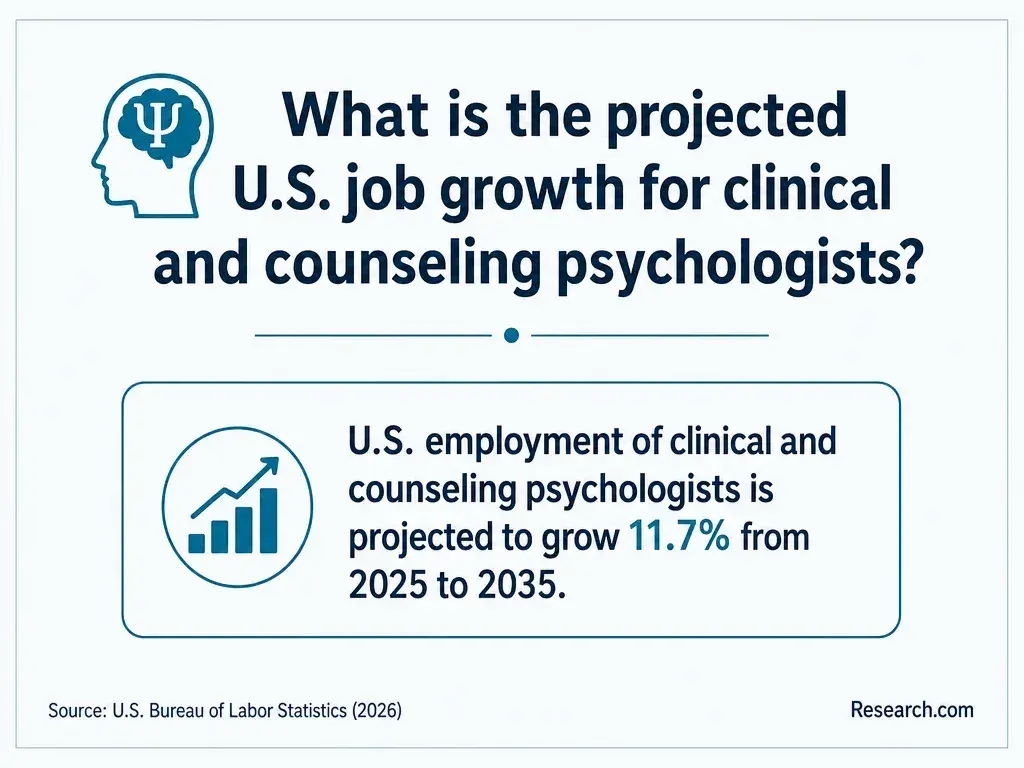
- Neither bachelor's degree alone qualifies a graduate to practice as a psychologist or therapist. For many entry-level jobs, relevant projects and experience matter alongside the major.
- Both degrees commonly require about 120 semester credits, but transfer-credit application, required courses, and remaining tuition - not the advertised program length - determine your personal time and cost.
What Is the Difference Between an Online BA in General Psychology and a BS in Business Administration?
A general psychology BA studies behavior and mental processes through psychological theory, research methods, and statistics. A business administration BS studies how organizations manage resources, people, products, and decisions. "BA" and "BS" describe degree structures, not a universal ranking of rigor: individual schools set their own science, quantitative, and general-education requirements.
The deciding question is what you want to do with the education. Psychology fits someone who wants to investigate behavior, prepare for further psychology study, or apply evidence about people in a nonclinical role. Business fits someone aiming to work directly with organizational budgets, processes, customers, or commercial strategy. An established professional may need only targeted coursework rather than another bachelor's degree. To see how psychology requirements vary by school, use online psychology degree program comparisons as a starting point, then check each institution's current catalog.
Which Degree Has Better Career Options: General Psychology or Business Administration?
Neither degree has universally better prospects. Business is the more direct curricular match for many operations, sales, and entry-level business functions. Psychology may be the stronger foundation for research support, behavioral-science work, and some human-services roles. Employers can accept either major for jobs such as recruiting or customer research, but they may also require software skills, relevant experience, or another credential.
The table distinguishes possible directions from guaranteed job eligibility. Compare its examples with actual postings in the location and industry where you intend to work.
| Career goal | More direct academic fit | Preparation beyond the major |
| Business operations or sales | Business administration | Industry experience, spreadsheets, and performance reporting |
| Recruiting or employee support | Either; business for organizational processes, psychology for behavior and research | Employment-law awareness, HR systems, and practical experience |
| Research or program-evaluation assistance | Psychology, especially with strong methods coursework | Data handling, research projects, and writing samples |
| Community-service coordination | Psychology may align with client-facing support; business may align with operations | Local employer requirements, supervised experience, and clear service boundaries |
If recovery services interest you, distinguish coordination and peer-support work from regulated counseling. Recovery support career planning can help you identify a specific role before choosing a major. For pay comparisons, consult the U.S. Bureau of Labor Statistics occupation that matches that role - not an occupation-wide median presented as the expected salary of either degree's graduates.
How Do Psychology and Business Administration Curricula Compare?
Both majors may teach writing, statistics, and teamwork. Their difference is what students use those skills to explain. Psychology students might evaluate whether a behavioral measure is reliable and whether a study supports its conclusion. Business students might assess a market, interpret financial statements, or recommend an operational change.
This comparison shows where course depth usually sits; electives and concentrations can change it substantially.
| Learning area | General psychology BA | Business administration BS |
| Core subject | Behavior, cognition, development, and social processes | Organizations, markets, finance, and operations |
| Quantitative work | Statistics and psychological research design | Business statistics, accounting, and financial analysis |
| Typical applied work | Research report or behavioral-science project, if offered | Business case, team project, or strategic plan, if offered |
| Common limitation | May offer little accounting or operations training | May offer little psychological theory or research-methods depth |
A specialized goal can change the comparison. For example, someone considering accelerated forensic psychology graduate completion routes should check the graduate program's actual prerequisites and research expectations first. Neither an undergraduate psychology elective nor a fast graduate timeline establishes eligibility for forensic assessment practice.
Requirements vary, but a general psychology major commonly includes introductory psychology, statistics, research methods, and courses spanning areas such as development, social behavior, cognition, and biological or abnormal psychology. General education and electives complete the degree. Some schools require a capstone; others offer optional research or internships. Reading about disorders or assessments builds academic knowledge, not clinical authority.
For graduate-study preparation, look beyond the course titles: check whether methods courses involve designing a study, interpreting evidence, and writing a research report. If you want an addictions focus, determine whether it is an official concentration, a set of electives, or a separate degree. A guide to choosing an accredited addiction psychology bachelor's can inform that comparison, but the school's catalog controls what appears on your academic record.
A business administration BS commonly covers accounting, economics, finance, marketing, management, operations, business law, and quantitative analysis. Programs may add a strategy capstone or offer a concentration in areas such as human resources or analytics. A concentration's courses and transcript designation depend on the school.
If your goal is managing a service organization, business coursework may address its budget and staffing needs more directly than a psychology major. If your goal is providing substance-use counseling, however, general management classes are not a substitute for the education and supervision your state requires. Compare addiction counseling education options online against the rules for the exact credential you seek before selecting either bachelor's major.
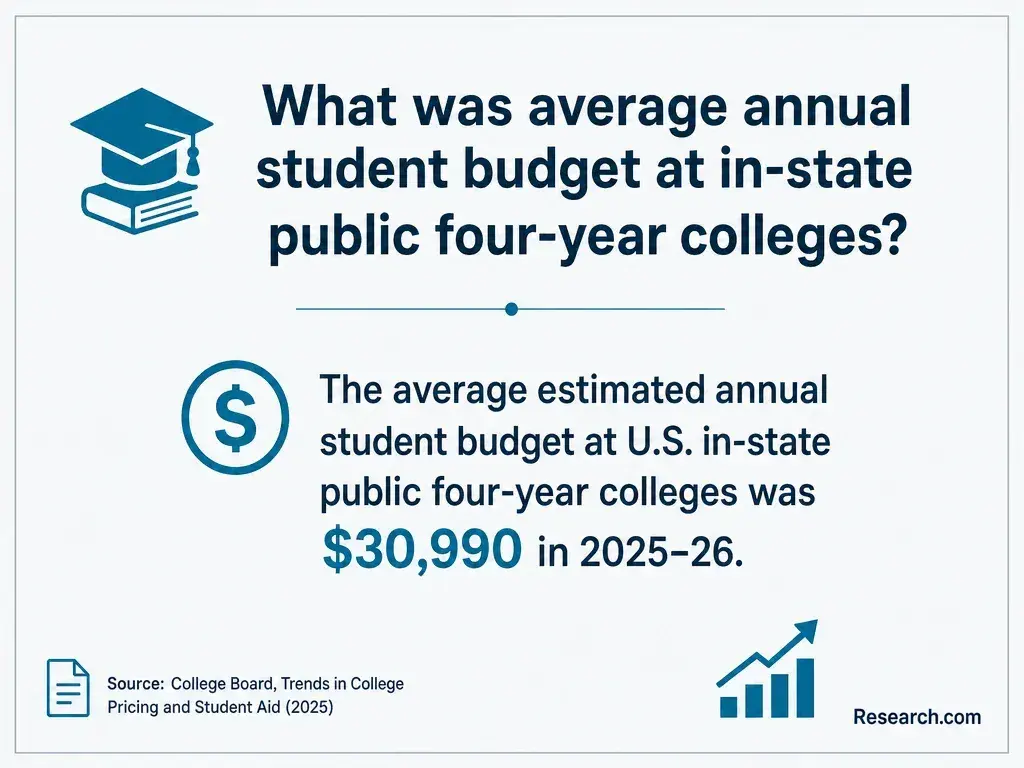
There is no reliable degree-wide price difference: the institution, residency policy, transferred coursework, and enrollment pattern can matter more than the major. Compare each school's published tuition basis - per credit, course, or term - and add mandatory online fees, books, software, and any travel or placement costs. Do not treat an advertised per-credit rate as a total program price.
For a useful personal estimate, request a written degree audit for each major. Multiply the remaining billable credits by the applicable tuition rate, add required fees, and account for courses you may need to repeat or take before entering the major. Then compare the estimate with available grants, employer assistance, and the borrowing you would actually need. If your goal is a specific support-service career, substance use counseling undergraduate tuition versus salary outlook offers a more targeted comparison than assuming either broad major will pay for itself. Employment and earnings still depend on the occupation and local requirements.
Both degrees commonly total about 120 semester credits, so a first-time student studying full time often plans around four academic years. Part-time study generally takes longer, while accepted prior coursework can shorten the path. The decisive number for a transfer student is credits remaining in required categories, not simply credits accepted by the institution.
Ask when statistics, research methods, accounting, and other prerequisite courses run; a course offered infrequently can delay graduation. Online delivery also does not guarantee self-paced study: live meetings, group projects, exams, or an approved internship may impose fixed schedules. If you ultimately need a counseling credential, comparing counseling master's tuition with completion time helps reveal the additional education after the bachelor's, including possible placement commitments.
First-time applicants typically submit a high school credential or its accepted equivalent; transfer applicants generally submit transcripts from every college attended. A school may set additional GPA, prerequisite, or major-entry rules. Requirements for admission to the university are not necessarily requirements for admission to its psychology or business major.
Returning students should request separate audits before choosing. Ask how prior statistics, psychology, accounting, or economics courses apply to each major; whether accepted credits meet general education or only elective requirements; and how many credits must be completed at the awarding institution. Comparing transfer-friendly psychology degree programs can narrow the search, but only the school's evaluation can establish which requirements your coursework satisfies.
Neither broad bachelor's degree normally carries a license to work as a psychologist, therapist, or counselor. Those regulated roles have distinct education, supervised-practice, examination, and state requirements. A business graduate also should not assume that a general BS automatically confers a specialized professional credential. For either major, check the rules attached to the job title and duties you want.
Optional certifications can be useful when employers value a particular skill, but their relevance differs by role and experience level. If graduate psychology study is part of your plan, an online psychology master's affordability guide can help frame the added expense. Verify the specific program's purpose: an affordable general psychology master's is not automatically a licensure-qualifying counseling program.
How Do You Choose an Accredited Online Psychology or Business Program?
First, confirm the institution's accreditation through its accreditor and the U.S. Department of Education's accreditation records. Then inspect the exact degree's catalog, required courses, online format, transfer rules, and total cost. Institutional accreditation supports a basic quality check; it does not prove that every course, placement, or future professional pathway meets your needs. Do not expect APA accreditation of a general undergraduate psychology BA.
Compare programs against your target outcome. Ask for a degree audit and course rotation; check whether methods training or business analytics is substantial enough for your goal; and confirm who helps arrange any required applied experience. For a specialized psychology option, forensic psychology degree program quality checks illustrate why a concentration label alone is insufficient. Choose the program that closes your actual skill gaps at a manageable remaining cost - not the one with the broadest career claims.
Other Things You Should Know About Psychology
Often, yes. Check whether one program permits a minor or electives in the other subject, and whether the added courses fit your graduation plan. A focused project may also demonstrate how you apply both fields.
No. General psychology covers multiple subfields. Organizational psychology focuses on behavior at work; a course or elective in it does not automatically constitute a formal specialization.
Preferences depend on the job. Review postings for required subjects and skills rather than assuming the degree letters outweigh relevant coursework, experience, or work samples.
Not necessarily. If you already have a degree, compare job requirements with your existing skills first. Prerequisite courses, a certificate, supervised experience, or a qualifying graduate program may be a more direct route.
- Accreditation in the U.S. | ed.gov http://www.ed.gov/laws-and-policy/higher-education-laws-and-policy/college-accreditation/accreditation-in-the-us
- College Cost and Financial Aid Terms Explained | Illinois State Treasurer https://illinoistreasurer.gov/home/individuals/college-savings/key-terms-for-understanding-education-costs/
- Cost of Attendance (Budget) | 2025-2026 Federal Student Aid Handbook https://fsapartners.ed.gov/knowledge-center/fsa-handbook/2025-2026/vol3/ch2-cost-attendance-budget
- BA in Psychology | University of Missouri Academic Catalog https://catalog.missouri.edu/collegeofartsandscience/psychology/ba-psychology/
- Bachelor of Arts in Psychology - Texas State's online programs https://online.txst.edu/degrees/undergraduate/ba-psychology/
- Business Administration - Bachelor of Science (BSBA) | colorado.edu https://catalog.colorado.edu/undergraduate/colleges-schools/business/programs-study/business-administration/business-administration-bachelor-science-bsba/
- What can you do with a psychology degree? Explore career paths | Psychology | Capella University Blog https://www.capella.edu/blog/psychology/what-can-you-do-with-a-psychology-degree-explore-career-paths/
- Types of Business Degrees: Your Complete Guide | UWA Online https://online.uwa.edu/news/types-business-degrees/
- Career Paths for Working Professionals With a Psychology Degree | YSU https://online.ysu.edu/degrees/undergraduate/ba-psychology/paths-for-working-professionals/
- Career Pathways in Psychological & Brain Sciences | Information Technology Services https://artsandsciences.louisville.edu/psychological-and-brain-sciences/career-pathways