
2027 Best ABSN Programs - List of Accelerated BSN Programs in Minnesota: Online & Campus

Co-Founder and Chief Data Scientist
Minnesota reports a nurse demand growth rate exceeding 20% through 2030, making accelerated Bachelor of Science in Nursing (ABSN) programs a strategic choice for those seeking rapid entry into nursing careers. Both online and on-campus ABSN options provide flexible pathways that accommodate diverse learning preferences and scheduling needs. The state's healthcare landscape supports strong clinical placement opportunities, enhancing practical training vital for licensure and employment. This combination of time efficiency and regional employment demand makes pursuing an ABSN in Minnesota a practical investment for aspiring nurses.
This article offers an expert overview on what constitutes ABSN programs in Minnesota. It guides readers through essential considerations, expected outcomes, and decision-making factors involved in selecting the right accelerated nursing track. The goal is to equip readers with clear knowledge and actionable steps to navigate available ABSN options effectively and confidently.
Key Benefits of ABSN Programs in Minnesota
- Minnesota's ABSN programs typically take 12 to 18 months, allowing quicker entry into nursing careers compared to traditional routes.
- Many programs offer flexible online coursework combined with local clinical placements, supporting working adults and non-traditional students.
- Graduates benefit from Minnesota's strong healthcare job market, with a 15% projected growth in RN positions through 2030, enhancing employment opportunities post-graduation.
- Who can apply for accelerated BSN programs in Minnesota?
- What are the admission requirements for accelerated BSN programs in Minnesota?
- Do accelerated BSN programs in Minnesota require entrance exams?
- What does the curriculum of an accelerated BSN program in Minnesota include?
- What accreditation should I look for in an ABSN program in Minnesota?
- How long does it take to complete an accelerated BSN in Minnesota?
- How much does an accelerated BSN program cost in Minnesota?
- What financial aid options are available for ABSN students in Minnesota?
- What career paths are available after earning an ABSN in Minnesota?
- What is the average salary for nurses with an ABSN degree in Minnesota?
Who can apply for accelerated BSN programs in Minnesota?
ABSN programs in Minnesota are tailored for individuals who already hold a bachelor's degree in a non-nursing field and wish to transition into nursing quickly. These programs focus solely on nursing-specific coursework and clinical training, eliminating the need to retake general education classes.
Applicants must meet certain prerequisites and show academic readiness through a minimum GPA, which varies by school. Understanding the core admission requirements for ABSN programs in Minnesota can help prospective students prepare adequately before applying. This streamlined approach allows candidates to concentrate their efforts on gaining the knowledge and skills essential for a nursing career.
Those who pursue ABSN programs in Minnesota typically include career changers moving from sectors like business, education, or the arts into healthcare. Recent graduates are another group, often motivated by a newfound interest in nursing and seeking a faster path into the field. Additionally, some professionals pursue ABSN to find more meaningful, stable work in community-focused health environments.
Successful applicants usually share strong academic motivation, excellent time management skills, and a genuine passion for patient care. Meeting these qualities is crucial for students to thrive in the fast-paced environment of accelerated nursing programs. For those curious about advanced nursing roles, understanding the DNP meaning can also inform long-term career planning.
What are the admission requirements for accelerated BSN programs in Minnesota?
Admission into accelerated BSN programs in Minnesota is highly competitive and designed to identify students who are academically prepared and motivated to handle an intensive nursing curriculum. Both online and on-campus ABSN programs require candidates to meet specific standards that ensure success. Here are the core admission requirements common to these programs.
- Non-Nursing Bachelor's Degree: Applicants must hold a bachelor's degree in a field other than nursing from an accredited institution. This ensures candidates have essential critical thinking and communication skills needed for advanced nursing study.
- Completion of Prerequisite Courses: Key courses such as anatomy and physiology, microbiology, chemistry, statistics, and human growth and development must be completed with at least a "C" grade. These prerequisites establish a strong foundation for the scientific components of the accelerated program, reflecting the prerequisites for ABSN programs in Minnesota.
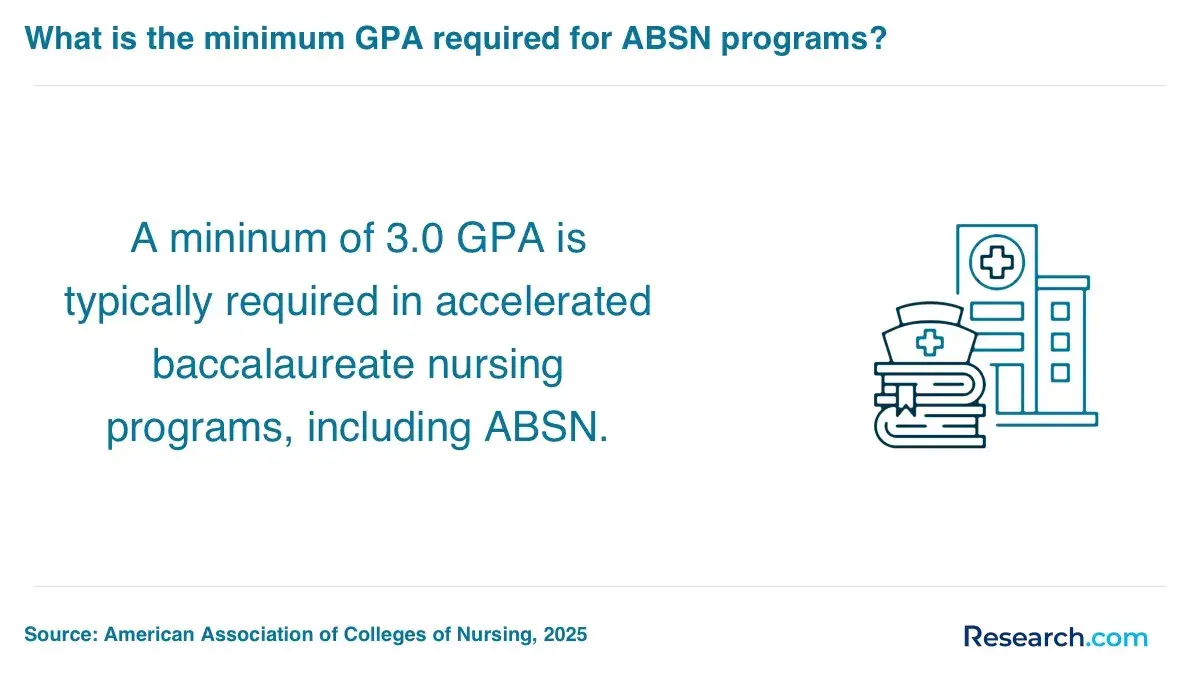
- Minimum GPA Standards: Most programs require a cumulative GPA between 2.75 and 3.0, with some favoring higher grades in prerequisite courses. This metric helps programs gauge a student's ability to manage the accelerated pace.
- Official Transcripts: Submission of official transcripts from all postsecondary institutions attended is mandatory. These transcripts verify degree completion, course grades, and overall academic performance.
- Personal Statement or Essay: Applicants are asked to submit a personal statement articulating their motivation for nursing and career goals. This narrative reveals qualities like commitment and resilience important in nursing professions.
- Letters of Recommendation: One to three letters from instructors, employers, or healthcare professionals are required. Recommendations provide insight into the candidate's character and suitability for nursing.
- Resume or Curriculum Vitae: A current resume or CV listing academic, professional, and volunteer experiences is essential. This helps identify relevant healthcare exposure and leadership capabilities.
- Interview (Optional in Some Programs): Some ABSN programs may include an interview to assess communication skills and alignment with program values.
For those exploring career advancement, understanding these admission requirements can also inform how to transition effectively. For example, nurses looking into how to transition from RN to NP will find a stronger foundation by first meeting these accelerated BSN admission requirements Minnesota programs expect.
Do accelerated BSN programs in Minnesota require entrance exams?
Entrance exam requirements for ABSN programs in Minnesota vary depending on the institution. Some schools, like Concordia University, St. Paul, and Herzing University, require applicants to take the ATI Test of Essential Academic Skills (TEAS) and meet minimum score thresholds.
Other programs, such as the University of Minnesota's BSN, do not mandate a standardized entrance exam but instead focus on the successful completion of prerequisite coursework with specific grade criteria. The most commonly used exam among these programs is the TEAS, which evaluates skills in reading, math, science, and English language usage. Less commonly, exams like the HESI or GRE are not typically required, but applicants should verify individual program requirements before applying.
Schools use entrance exams like the TEAS to assess academic readiness and critical thinking skills necessary for the accelerated nature of ABSN programs. These exams help measure foundational knowledge in subjects that directly impact nursing coursework, such as science and mathematics, alongside problem-solving and comprehension abilities.
By incorporating these assessments, nursing programs aim to identify candidates most likely to succeed within a condensed timeline that demands quick adaptation and a strong academic base. Entrance exams also support admission committees in fairly comparing applicants from diverse educational backgrounds, ultimately promoting strong graduation and licensing exam pass rates.
I spoke with a Minnesota nurse who graduated from a local ABSN program about his experience with entrance exams. He explained that while the on-campus program he attended required the TEAS exam and thorough preparation to meet the minimum score, the school also offered resources to help applicants improve their test readiness.
Conversely, he noted that some of his colleagues who pursued the online ABSN formats mentioned less emphasis on entrance exams but a stronger focus on demonstrated academic performance in prerequisite courses. He reflected that understanding these differences helped him approach his application with clear expectations and minimized surprises during admissions. His journey highlighted that, whether online or on-campus, prospective students benefit from researching specific program policies well in advance to tailor their preparation accordingly.
What does the curriculum of an accelerated BSN program in Minnesota include?
The accelerated BSN curriculum in Minnesota is structured to build clinical competence and nursing knowledge efficiently within a condensed timeframe, typically between 12 and 20 months. Below are the core components that shape both online and on-campus ABSN programs in the state, guiding students toward readiness for professional nursing roles.
- Foundational Nursing Courses: These courses cover applied pathophysiology, pharmacology, and health assessment, providing essential scientific knowledge and clinical reasoning skills. Completing these early ensures a solid base for understanding patient care and medication management.
- Clinical Training: Extensive hands-on experience through supervised clinical rotations, usually totaling 500 or more hours, exposes students to diverse healthcare settings such as hospitals, community clinics, and specialty units. This practical exposure develops real-world skills and adaptability.
- Simulation Labs: High-fidelity simulations use advanced mannequins and realistic scenarios to practice critical nursing skills safely. This method enhances decision-making and technical proficiency, allowing practice before direct patient care.
- NCLEX-RN Preparation: The curriculum integrates focused review and practice to prepare students thoroughly for the licensing exam. Emphasis is placed on applying knowledge under exam conditions to ensure confidence and success.
What accreditation should I look for in an ABSN program in Minnesota?
Accreditation is essential when selecting an ABSN program in Minnesota because it guarantees the program meets high educational standards, ensures eligibility for nursing licensure, and supports your future career growth. Here are the main accrediting bodies and approvals to consider:
- Institutional Accreditation: This accreditation is granted to the entire college or university by regional agencies like the Higher Learning Commission. It confirms overall academic quality, financial stability, and student support, which affects degree recognition and access to federal financial aid.
- Programmatic Accreditation - CCNE (Commission on Collegiate Nursing Education): CCNE specifically accredits nursing programs, including ABSN degrees. It focuses on curriculum quality, clinical training, and outcomes, ensuring graduates are prepared for professional nursing roles and advanced studies.
- Programmatic Accreditation - ACEN (Accreditation Commission for Education in Nursing): ACEN accredits nursing programs across levels and verifies they meet nursing profession standards for quality. Some Minnesota ABSN programs hold this accreditation, providing an additional assurance of program effectiveness.
- State Board of Nursing Approval: Approval from the Minnesota Board of Nursing is mandatory. It ensures the program meets state requirements for licensure eligibility and enables graduates to take the NCLEX-RN® exam, which is necessary to practice as a registered nurse in Minnesota.
- Specialized Accreditors like NLN CNEA: Additional accreditation from agencies such as the National League for Nursing Commission for Nursing Education Accreditation signals ongoing commitment to quality and continuous improvement.
How long does it take to complete an accelerated BSN in Minnesota?
ABSN programs in Minnesota are designed for students holding a non-nursing bachelor's degree who want to transition into nursing swiftly. Several key factors determine how long it takes to finish these programs:
- Typical Program Lengths: Most ABSN programs take between 12 and 16 months of full-time study, with some offering 12-month intensive tracks and others extending to 16 months in hybrid formats.
- Full-Time vs. Part-Time Study: These programs are almost exclusively full-time due to their fast pace, requiring about 40 hours weekly, leaving little room for part-time pacing.
- Online vs. On-Campus Formats: Theory courses may be online, but hands-on labs and clinicals demand in-person attendance, which can affect scheduling and location choices.
- Clinical Hour Requirements: Students must complete extensive clinical rotations-often 500+ hours-typically scheduled weekdays, which adds to the program's intensity.
- Course Sequencing: Courses and clinicals follow a tight, cohort-based schedule year-round, limiting breaks and requiring consistent progress to stay on track.
A nurse who completed an ABSN program from Minnesota shared how the 12-month intensive experience was both challenging and rewarding. "There were weeks I felt completely overwhelmed balancing clinical hours with coursework, but the pace kept me focused," she recalled. She appreciated the program's clear structure that helped her transition quickly from a previous career into nursing, noting, "Knowing the program wouldn't let me slow down pushed me to manage my time better than ever." Her journey highlights how the program's duration and intensity prepare students for the demands of nursing with speed and dedication.
How much does an accelerated BSN program cost in Minnesota?
Tuition and fees for accelerated BSN programs in Minnesota can vary depending on the school, program format, and additional educational costs students should plan for. Below are the primary expenses to consider when calculating the total cost of an accelerated nursing degree.
- Tuition Rates per Credit: Tuition pricing varies widely, with institutions charging between $1,000 and $1,600 per credit hour depending on whether the program is part-time or full-time. This significantly impacts the total cost, which often ranges from $40,000 to over $60,000 for the entire accelerated BSN curriculum.
- Technology and Program Fees: Online and hybrid programs typically include technology fees to cover learning platforms and simulation software. These fees can add several hundred to over a thousand dollars, especially for those enrolled in the cost of online ABSN programs in Minnesota where access to reliable internet and software is essential.
- Clinical and Laboratory Costs: Clinical training fees and lab expenses vary by institution. Students should budget for mandatory clinical fees per course and lab fees for nursing skills practice. These charges often include standardized assessment fees required for NCLEX preparation.
- Clinical Supplies and Travel Expenses: Whether enrolled on-campus or in a hybrid format, students must purchase clinical supplies such as uniforms and medical equipment, and may also face travel costs for in-person clinical and lab sessions. These can add $1,000 to $2,000 or more to the overall investment.
- Financial Aid and Scholarships: Many programs require FAFSA completion to qualify for federal loans, grants, and work-study. Additionally, some Minnesota nursing schools provide scholarships specifically for accelerated BSN students. It's important to connect with admissions counselors early to identify all available funding options and plan accordingly.
For those exploring advanced nursing education, reviewing options related to the best adult gerontology acute care nurse practitioner programs can also provide a helpful perspective on future career paths following completion of ABSN studies.
What financial aid options are available for ABSN students in Minnesota?
Because accelerated nursing programs in Minnesota can be costly, many students explore different financial aid opportunities to make their education more affordable. Below are the most common financial aid options for prospective and current students.
- Federal Student Loans: Students in accelerated BSN programs are typically eligible for federal loans through the FAFSA application. These include Direct Subsidized and Unsubsidized Loans, which can cover tuition, fees, and living expenses, with repayment deferred until after graduating.
- State and Institutional Grants: Minnesota offers grants for students with demonstrated financial need, while many ABSN programs provide additional institutional scholarships. For example, some schools award scholarships distributed over multiple terms to help reduce overall costs.
- Nursing Scholarships: Merit- and need-based scholarships are available through various Minnesota colleges and private organizations, including local healthcare providers. These competitive awards specifically support nursing students pursuing their BSN.
- Employer Tuition Assistance: Healthcare employers in the state often provide tuition reimbursement or assistance programs to employees working toward a BSN, especially when they commit to working with the organization after graduation. This can significantly decrease out-of-pocket expenses.
- Loan Forgiveness Programs: Graduates serving in underserved or high-need areas may qualify for federal and state loan forgiveness plans, such as the Nurse Corps Loan Repayment Program or Minnesota-specific initiatives. These programs forgive a portion of loan debt in exchange for service commitments.
- Payment Plans and Veteran Benefits: Many ABSN programs offer monthly payment plans to ease budgeting, and veteran students can access benefits through the GI Bill or related programs.
For those researching options beyond traditional funding, exploring the best nurse practitioner online programs can also provide insight into financial pathways and career advancement after completing an accelerated BSN in Minnesota.
What career paths are available after earning an ABSN in Minnesota?
Completing an ABSN program in Minnesota opens doors to diverse nursing career opportunities in Minnesota for ABSN graduates across hospitals, community health, and leadership roles. Below are the most common career paths for those who earn this accelerated degree.
- Registered Nurse (RN): Graduates qualify to take the NCLEX-RN licensing exam to become RNs, delivering direct patient care in hospitals, clinics, and long-term care. Minnesota's strong healthcare sector employs many RNs, offering competitive wages above the national average.
- Critical Care Nurse: These nurses specialize in intensive care units and emergency settings, managing patients with serious conditions. The ABSN curriculum equips graduates with clinical skills and quick decision-making abilities essential for this high-pressure environment.
- Public Health Nurse: Focused on community health promotion and disease prevention, public health nurses often work in government agencies and schools. ABSN graduates are prepared for public health roles through training in outreach and policy advocacy, key to addressing statewide health issues.
- Nurse Educator: Teaching future nurses or providing continuing education, nurse educators apply leadership and communication skills gained in ABSN programs. Careers in academia, hospitals, or community programs enable them to shape the nursing workforce.
- Nurse Manager: With responsibilities including supervising nursing staff and managing care coordination, nurse managers rely on skills developed in ABSN leadership courses. They ensure efficient operations and high-quality patient care within healthcare organizations.
For ABSN graduates aiming for advanced nursing roles after ABSN Minnesota, options include specialized nursing positions like Nurse Practitioner or Clinical Nurse Specialist, often accessed through continued education.
Additionally, some pursue healthcare administration or consulting, leveraging leadership training from the ABSN degree. Those interested in advancing their clinical practice may consider programs such as the most affordable online psychiatric nurse practitioner program to further expand their expertise and career potential.
What is the average salary for nurses with an ABSN degree in Minnesota?
Earning an ABSN degree in Minnesota opens the door to competitive salaries that vary based on several important factors. These include experience, specialization, employer type, and geographic location, all of which shape a graduate's earning potential in this dynamic healthcare market. Understanding these elements can help prospective students and professionals make informed decisions about their careers. Key factors influencing ABSN nurse salaries in Minnesota include:
- Years of Experience: Salaries generally increase steadily as nurses gain clinical expertise and move into leadership roles. Entry-level nurses start near average RN wages, but those with more experience, advanced certifications, or supervisory duties earn significantly higher pay.
- Type of Employer: The healthcare setting greatly impacts salary, with major hospitals and specialty centers typically offering higher wages and better benefits compared to smaller clinics or public agencies.
- Geographic Area: Urban centers like Minneapolis-St. Paul tend to offer higher salaries to offset living costs, while rural areas may provide other incentives such as signing bonuses to attract talent.
- Specialization or Certification: Nurses with certifications in high-demand specialties often command premium wages, reflecting their advanced skills and expertise.
- Level of Education: While an ABSN is an important credential, further education such as an MSN or DNP can unlock higher-paying roles in clinical practice, education, or administration.
Here's What Graduates Have to Say About Their ABSN Degree in Minnesota
- Jesse: "Completing the ABSN program at St. Catherine University gave me the perfect balance between rigorous academics and practical clinical experience right here in Minnesota. The on-campus setting allowed me to build strong relationships with my peers and instructors, which was incredibly motivating throughout the intense coursework. Starting my nursing career after graduation felt seamless thanks to the program's strong connections with local healthcare facilities. I now feel empowered in my role, making a real difference in patients' lives every day. The support network I gained during my studies continues to inspire my professional growth. "
- Hank: "Kwame The online ABSN program at Bethel University was a game changer for me as a working parent. It challenged me to manage my time efficiently while staying connected with my instructors and classmates virtually. Pursuing my degree in Minnesota helped me understand the specific healthcare needs of our community, fueling my passion to contribute positively to the wellbeing of those around me. Starting my nursing career locally allowed me to give back immediately and grow professionally in a supportive environment. This program truly ignited my confidence and commitment to lifelong learning. "
- Lydia: "Reflecting on my time at Augsburg University's ABSN program, I appreciate how the curriculum integrated Minnesota's unique healthcare landscape with cultural competence. The challenges of accelerated study and clinical hours taught me resilience and adaptability. I've seen firsthand how nurses with ABSN degrees can advance quickly in their careers and take on leadership roles within local healthcare settings. This journey deepened my dedication to serving diverse populations and strengthened my belief in the power of education to drive community impact. I am proud to be part of Minnesota's nursing workforce making a meaningful difference. "
Related Articles for Nearby States
- 2027 Best ABSN Programs - List of Accelerated BSN Programs in Wisconsin: Online & Campus
- 2027 Best ABSN Programs - Accelerated BSN Programs in Iowa: Online & Campus
- 2027 Best ABSN Programs - List of Accelerated BSN Programs in North Dakota: Online & Campus
- 2027 Best ABSN Programs - List of Accelerated BSN Programs in South Dakota: Online & Campus
- 2027 Best ABSN Programs - Accelerated BSN Programs in Nebraska: Online & Campus
- 2027 Best ABSN Programs - Accelerated BSN Programs in Illinois: Online & Campus
- 2027 Best ABSN Programs - Accelerated BSN Programs in Missouri: Online & Campus
- 2027 Best ABSN Programs - Accelerated BSN Programs in Michigan: Online & Campus
- 2027 Best ABSN Programs - Accelerated BSN Programs in Kansas: Online & Campus
- 2027 Best ABSN Programs - Accelerated BSN Programs in Indiana: Online & Campus
References:
- Please validate your request https://mn.gov/boards/nursing/education/approved-professional-nursing-programs/index.jsp
- Common Challenges of Nursing School and How to Overcome Them https://www.herzing.edu/node/1923
- Is Working While in Nursing School Possible? - CSP ABSN https://absn.csp.edu/blog/is-working-while-in-nursing-school-possible/
- Which Program is Right for Me Overview https://nursing.umn.edu/academics-admissions/which-program-right-me/which-program-right-me-overview
- Nurse Salary in Minnesota: Pay by Specialty https://www.carerev.com/blog/how-much-nurses-make-in-minnesota
- Nursing | University of Northwestern, St. Paul https://www.unwsp.edu/program/nursing/
- Registered Nurse Salary in Minnesota (2024) | Trusted Health https://www.trustedhealth.com/nurse-salary-guide/minnesota
- Accelerated Bachelor of Science (ABSN) Degree in Nursing at SMU https://www.samuelmerritt.edu/college-nursing/accelerated-bachelor-science-nursing
- Financial Aid Programs https://ohe.mn.gov/financial-aid-programs
- Minnesota ABSN Programs - Accelerated Nursing Schools https://www.absnprograms.org/programs/minnesota/
Other Things You Need to Know About Accelerated BSN Programs in Minnesota
In 2027, some of the top campus options for ABSN programs in Minnesota include Saint Mary's University of Minnesota, Concordia University, and the University of Minnesota. These institutions offer comprehensive programs designed to facilitate a smooth transition into nursing with strong clinical exposure and academic support.
ABSN programs in Minnesota typically require a bachelor’s degree in any field, a minimum GPA of 2.5 or higher, and completion of prerequisite courses such as Anatomy, Physiology, and Microbiology. Many programs also require a background check and proof of immunizations.
In 2027, students in Minnesota's ABSN programs often face intense coursework and rigorous clinical schedules. Financial strain from tuition and fees can also pose challenges, alongside balancing personal responsibilities. Additionally, limited clinical placement opportunities in some areas may increase competitiveness among students.


