
2027 Best ABSN Programs - Accelerated BSN Programs in Indiana: Online & Campus

Co-Founder and Chief Data Scientist
Accelerated BSN programs in Indiana are designed for people who already earned a non-nursing bachelor's degree and now want to qualify for registered nurse licensure as quickly as possible. The decision is significant: ABSN programs move fast, cost a substantial amount, require in-person clinical training, and often leave little room for work or family schedule conflicts. Indiana's projected 15% increase in nursing employment over the next decade makes the pathway attractive, but speed alone should not drive your choice.
This guide explains how accelerated Bachelor of Science in Nursing programs work in Indiana, who they fit best, what admissions committees usually expect, how online and campus formats differ, what accreditation matters, how to estimate total cost, and how to think about career outcomes after graduation. The goal is to help you compare ABSN options with clear criteria instead of choosing based only on convenience, program length, or a school's marketing language.
Quick Answer: Is an Accelerated BSN in Indiana Worth Considering?
An accelerated BSN in Indiana can be a practical route if you already hold a bachelor's degree in another field, can commit to an intensive full-time schedule, and want to become eligible for the NCLEX-RN exam without completing a traditional four-year nursing degree. The strongest candidates choose programs that are approved by the Indiana State Board of Nursing, hold recognized nursing accreditation, offer reliable clinical placements, and provide transparent information about tuition, fees, NCLEX preparation, and student support.
Online ABSN programs may offer more flexibility for coursework, but they are not fully remote. Students still complete labs, simulations, clinical rotations, and other hands-on requirements in person. Campus-based programs may provide more face-to-face structure, while hybrid options can help career changers manage lectures and assignments around other responsibilities. The best format depends on your schedule, learning style, location, clinical placement needs, and ability to handle a compressed curriculum.
Main Advantages of Indiana ABSN Programs
- Faster entry into nursing: ABSN programs are built for second-degree students who want a shorter route to RN preparation than a traditional BSN sequence.
- Strong licensure focus: Indiana ABSN programs often report NCLEX pass rates exceeding 90%, which can indicate structured exam preparation within a demanding format.
- Flexible course delivery in some programs: Many hybrid models combine online didactic coursework with required in-person labs, simulations, and clinical experiences.
- Alignment with local workforce needs: Graduates enter a healthcare market where nursing employment is projected to grow 15% through 2030.
- Clear pathway to advanced nursing study: A BSN can support later movement into graduate-level nursing roles, leadership, education, or specialty practice.
- Who is eligible for accelerated BSN programs in Indiana?
- What admissions requirements should Indiana ABSN applicants expect?
- Do Indiana ABSN programs require entrance exams?
- What will you study in an accelerated BSN program in Indiana?
- Which accreditation and approvals matter for Indiana ABSN programs?
- How long does an accelerated BSN take in Indiana?
- How much should you budget for an Indiana ABSN program?
- What financial aid can ABSN students in Indiana use?
- What jobs can Indiana ABSN graduates pursue?
- What affects nurse salaries after an ABSN in Indiana?
- What do graduate experiences reveal?
- References
Who can apply for accelerated BSN programs in Indiana?
Accelerated Bachelor of Science in Nursing programs in Indiana are intended primarily for students who already completed a bachelor's degree in a field other than nursing. Instead of repeating general education coursework, these programs build on the applicant's prior college experience and move quickly into nursing science, patient care, clinical judgment, and professional practice.
The typical applicant is a career changer, recent graduate, or working professional who wants to move into healthcare without starting college over from the beginning. Students may come from business, psychology, education, biology, technology, public health, or unrelated fields. What matters most is not the name of the first major but whether the applicant has completed the required science and general education prerequisites and can handle a fast, structured nursing curriculum.
An ABSN is not the right fit for everyone. Students who need a light course load, want to keep a demanding full-time job, or have not yet completed prerequisite coursework may be better served by a traditional BSN, an associate degree in nursing, or a slower part-time route. Applicants who already know they want advanced practice later can also compare long-term options, including the differences between graduate nursing roles and doctoral preparation. For example, Research.com's guide on adult gerontology nurse practitioner career pathways can help readers think beyond the first RN credential.
| Applicant Profile | ABSN Fit | What to Check Before Applying |
| Second-degree career changer | Often a strong fit if prerequisites are complete and the student can study full time. | Confirm required science courses, GPA standards, and clinical schedule expectations. |
| Recent bachelor's graduate | Can be a good fit for students ready for an intensive professional program. | Ask whether recent coursework satisfies prerequisites and whether labs are accepted. |
| Working adult with family obligations | Possible, but schedule planning is critical because clinicals and labs are in person. | Clarify weekly time commitments, clinical locations, and attendance policies. |
| Student without a prior bachelor's degree | Usually not eligible for ABSN admission. | Compare traditional BSN or associate degree pathways instead. |
| Student seeking a fully online nursing degree | Not a realistic expectation for prelicensure nursing education. | Verify all required campus visits, skills labs, simulations, and clinical rotations. |
What are the admission requirements for accelerated BSN programs in Indiana?
Indiana ABSN admissions standards vary by school, but most programs look for evidence that the applicant can succeed in a compressed, science-heavy, clinically focused curriculum. Because students move quickly from classroom learning into patient care settings, admissions committees tend to evaluate both academic readiness and professional maturity.
- Completed non-nursing bachelor's degree: Applicants are generally expected to hold a bachelor's degree in another field from a regionally accredited college or university.
- Required prerequisite coursework: Common prerequisites include anatomy, physiology, microbiology, statistics, human development, and sometimes chemistry. Lab requirements are especially important because some schools will not accept online or outdated science labs.
- Minimum GPA: Many programs set a cumulative GPA requirement between 2.75 to 3.0 and may also review a separate science GPA.
- Official transcripts: Schools typically require transcripts from every college attended so they can verify degree completion, prerequisites, repeated courses, withdrawals, and GPA calculations.
- Recommendations: Letters from professors, supervisors, or healthcare professionals can help demonstrate work ethic, reliability, communication skills, and readiness for patient-facing training.
- Personal statement: Many programs ask applicants to explain why they are moving into nursing, how they understand the demands of the profession, and what experiences prepared them for the transition.
- Resume or curriculum vitae: A resume helps admissions teams evaluate employment history, volunteer work, healthcare exposure, leadership, and service experience.
- Interview: Some schools use interviews to assess professionalism, communication, judgment, and fit for the program's pace and clinical expectations.
How to Strengthen an Indiana ABSN Application
- Finish prerequisites before the deadline when possible. An application with completed science courses is easier to evaluate than one with multiple courses still in progress.
- Earn strong grades in anatomy, physiology, and microbiology. These courses are closely tied to early nursing coursework and clinical reasoning.
- Get direct healthcare exposure. Paid or volunteer experience in hospitals, long-term care, clinics, public health, or patient support roles can clarify your motivation and help your statement sound grounded.
- Ask each school how it evaluates repeated courses. A retaken prerequisite may improve your readiness, but each institution handles GPA recalculation differently.
- Apply only after confirming clinical feasibility. Admission is not useful if the required clinical schedule or location is impossible for you to complete.
Do accelerated BSN programs in Indiana require entrance exams?
Some accelerated BSN programs in Indiana require an entrance exam, while others do not. Requirements depend on the institution and may change by admission cycle. Common assessments include the HESI A2, TEAS, and occasionally the GRE, although many programs place more emphasis on prerequisite grades, science GPA, transcripts, essays, and interviews.
When an exam is required, it is usually used to measure readiness in areas such as math, science, reading comprehension, English, critical thinking, and learning skills. In an accelerated program, this matters because students do not have much time to remediate weak academic foundations after classes begin. A standardized assessment can give the school one more way to judge whether an applicant is prepared for the pace.
Students should not assume that a test-optional program is easier or less rigorous. A school that does not require an entrance exam may apply stricter review to prerequisite grades, prior academic performance, or interviews. The safest approach is to create a school-by-school checklist and verify the current requirement directly with the admissions office before paying application fees.
| Entrance Exam Question | Why It Matters | What to Ask the Program |
| Is the HESI A2, TEAS, or GRE required? | Exam preparation can affect your application timeline. | Which exam is accepted, and what score is considered competitive? |
| Can I retake the exam? | Retake policies can affect admission chances. | How many attempts are allowed, and which score is reviewed? |
| Are section scores reviewed separately? | A strong total score may not offset a weak science or reading score. | Are there minimum scores by subject area? |
| Is there an expiration date? | Older scores may not be accepted. | How recent must the exam score be? |
| Is the exam waived for some applicants? | Some schools may waive testing based on GPA or prior coursework. | Who qualifies for a waiver, and is it automatic? |
What does the curriculum of an accelerated BSN program in Indiana include?
An Indiana ABSN curriculum covers the same core preparation expected of a prelicensure BSN program, but the schedule is compressed. Students move through nursing theory, skills training, simulation, clinical rotations, and NCLEX-RN preparation at a rapid pace. Some programs describe the path as a 16-month timeframe, while others use a different structure within the broader accelerated range.
- Foundational science and prerequisite knowledge: Students use anatomy, physiology, microbiology, chemistry, psychology, and statistics to understand disease processes, medication effects, assessment findings, and patient care decisions.
- Nursing fundamentals: Early coursework introduces safety, infection control, patient communication, documentation, mobility, hygiene, vital signs, and basic bedside care.
- Health assessment: Students learn to collect patient histories, perform physical assessments, identify abnormal findings, and communicate concerns to the care team.
- Pharmacology: Medication administration, dosage concepts, drug classifications, side effects, interactions, and safety checks are central to RN preparation.
- Pathophysiology: Students study how illness develops and affects body systems, which supports clinical judgment in acute and chronic care.
- Adult medical-surgical nursing: This area prepares students to care for adults with common and complex health conditions in hospital and clinical settings.
- Maternal, pediatric, and mental health nursing: Specialized courses and rotations expose students to pregnancy, newborn care, child health, family-centered care, psychiatric conditions, and therapeutic communication.
- Community and public health nursing: Students examine prevention, health promotion, population health, and care delivery outside the hospital.
- Simulation and skills labs: High-fidelity simulations allow students to practice assessment, prioritization, medication safety, emergency response, and teamwork before working with patients.
- Clinical rotations: Supervised experiences in healthcare settings help students apply classroom knowledge to real patient care.
- Evidence-based practice and research: Students learn to evaluate clinical evidence and use research to support safe nursing interventions.
- Leadership and interprofessional collaboration: Coursework often covers delegation, quality improvement, healthcare systems, ethics, policy, and teamwork.
- NCLEX-RN preparation: Programs typically integrate practice questions, readiness assessments, review sessions, and test-taking strategies.
Online vs. Campus ABSN Coursework in Indiana
| Feature | Hybrid or Online Coursework Model | Campus-Based Model |
| Lecture delivery | Many theory courses may be completed online through recorded or live instruction. | Lectures are usually delivered in person on a set campus schedule. |
| Labs and simulations | Still require in-person attendance at designated times and locations. | Usually completed on campus using school facilities. |
| Clinical rotations | Completed in person at approved healthcare sites; online coursework does not remove this requirement. | Completed in person through the school's clinical partners. |
| Best for | Self-directed students who can manage online learning and travel for hands-on requirements. | Students who prefer regular face-to-face structure and immediate campus access. |
| Main risk | Underestimating the time required for labs, clinicals, exams, and independent study. | Underestimating commute time, fixed class schedules, and campus attendance expectations. |
What accreditation should I look for in an ABSN program in Indiana?
Accreditation and state approval should be checked before you compare tuition, format, or start dates. For a prelicensure nursing program, the central question is whether the education will make you eligible to pursue RN licensure in the state where you plan to practice. A program can sound convenient and still be a poor choice if it lacks the right approval or if its clinical arrangements do not meet state expectations.
- Institutional accreditation: The college or university should hold recognized institutional accreditation. This affects the credibility of the degree, access to some forms of aid, transferability of credits, and graduate school options.
- CCNE accreditation: The Commission on Collegiate Nursing Education accredits many bachelor's-level nursing programs and evaluates factors such as curriculum quality, faculty, clinical learning, and outcomes.
- ACEN accreditation: The Accreditation Commission for Education in Nursing accredits nursing programs at multiple degree levels and is another recognized nursing accreditation body.
- Indiana State Board of Nursing approval: For students intending to become registered nurses in Indiana, state board approval is essential because it is tied to eligibility for the NCLEX-RN and licensure.
- Authorization for multi-state or distance programs: If a program enrolls students across state lines or places students in clinical sites outside its home state, students should verify that the school is authorized to deliver instruction and arrange clinical education where they live or plan to train.
How to Verify a Program Before You Apply
- Find the nursing program's accreditation page and identify whether CCNE or ACEN accreditation is listed.
- Confirm the institution's broader accreditation through the university's official accreditation information.
- Check whether the program is approved by the Indiana State Board of Nursing if you plan to seek RN licensure in Indiana.
- Ask whether online or hybrid students are guaranteed clinical placement support or must secure placements themselves.
- Request recent NCLEX-RN pass-rate information and ask how the school supports students who are not on track for exam readiness.
- Confirm that the program meets licensure requirements in the state where you intend to practice if that state is not Indiana.
How long does it take to complete an accelerated BSN in Indiana?
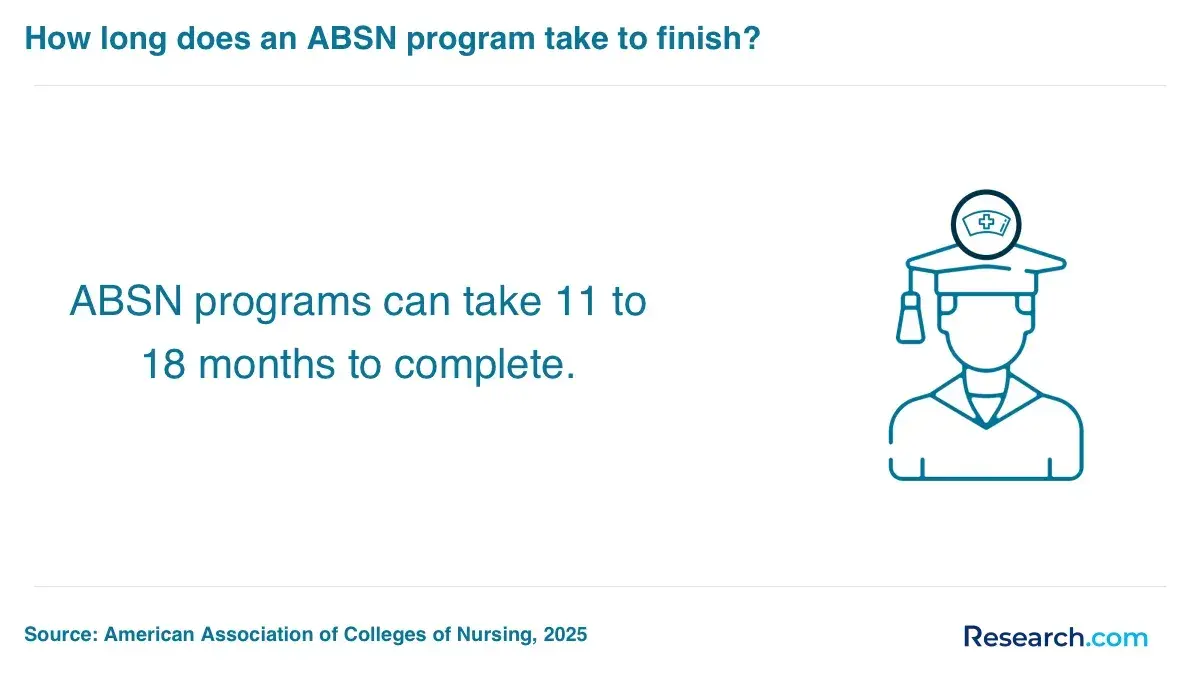
Accelerated BSN programs in Indiana commonly take 12 to 24 months, with many clustered around 13 to 16 months. The exact timeline depends on the school's academic calendar, cohort structure, prerequisite policy, clinical scheduling, and whether the program uses a hybrid or campus-based format.
- Program design: Some schools organize ABSN coursework into consecutive terms with few long breaks, while others use a slightly longer sequence to spread out clinical and classroom demands.
- Full-time intensity: ABSN programs are usually built as full-time study. Even when lectures are online, the combined workload can feel like a full-time job or more.
- Clinical scheduling: Required clinical hours prevent students from simply moving faster through the program on their own.
- Prerequisite completion: Students who still need science or statistics courses may need additional months before they can enter the nursing cohort.
- Cohort sequencing: Many accelerated programs require students to take courses in a fixed order, so failing or withdrawing from one course can delay graduation.
Typical ABSN Timeline for a Second-Degree Student
| Stage | What Happens | Planning Tip |
| Before applying | Complete prerequisites, gather transcripts, request recommendations, prepare essays, and verify accreditation. | Start early because science courses with labs may not be offered every term. |
| Admission and onboarding | Accepted students complete health records, background checks, immunization documentation, and clinical requirements. | Budget time and money for onboarding tasks that may not be included in tuition. |
| Early nursing coursework | Students begin fundamentals, health assessment, pharmacology, skills labs, and simulations. | Build a weekly study system immediately; falling behind early is difficult to fix. |
| Clinical and specialty rotations | Students rotate through patient care settings while completing advanced nursing courses. | Plan around unpredictable clinical schedules, commute time, and preparation work. |
| Final term and licensure preparation | Programs emphasize readiness assessments, capstone experiences, and NCLEX-RN preparation. | Ask the school how it supports students who need additional exam preparation. |
How much does an accelerated BSN program cost in Indiana?
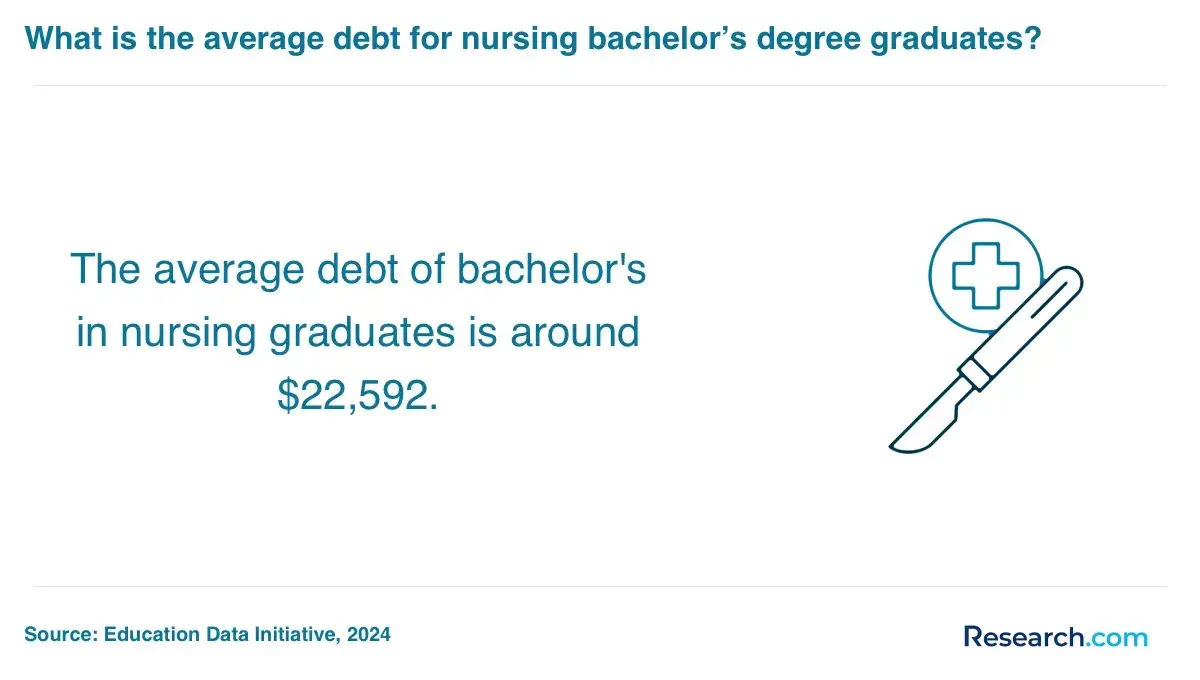
The cost of an accelerated BSN in Indiana depends on tuition, fees, program length, delivery format, supplies, clinical expenses, and living costs. Tuition is often the largest charge, and many programs can total from $40,000 to over $50,000. However, tuition alone does not show the full financial commitment.
- Tuition: Schools may charge per credit or by term. Compare total program tuition rather than only the per-credit rate.
- University and program fees: Technology, lab, simulation, testing, student services, and graduation fees can add to the total.
- Clinical supplies: Students may need uniforms, shoes, equipment, assessment kits, background checks, drug screening, health documentation, and certification fees.
- Books and learning platforms: Nursing courses often require textbooks, digital resources, exam preparation tools, and clinical documentation systems.
- Travel and housing: Hybrid students still travel for labs and clinicals, while campus students may commute daily or relocate.
- Lost income: Because ABSN programs are intensive, many students reduce work hours or stop working during the program. This opportunity cost should be part of the ROI calculation.
| Cost Category | Why It Matters | Question to Ask |
| Tuition | It sets the baseline cost and varies widely by school. | What is the total tuition for the entire ABSN program? |
| Mandatory fees | Fees can make a lower tuition program more expensive than it first appears. | Which fees are required each term? |
| Clinical expenses | These costs are often paid before or during rotations. | What clinical onboarding, supplies, and compliance costs should I expect? |
| Travel | Clinical sites may not be near home or campus. | Where are clinical placements typically located? |
| Living expenses | A compressed schedule may reduce your ability to work. | How many hours per week do successful students usually commit? |
| Exam preparation | NCLEX readiness tools may be included or charged separately. | Are review materials included in tuition and fees? |
Students comparing long-term nursing education options can also review advanced practice pathways, such as Research.com's overview of online acute care nurse practitioner programs, to understand how a BSN may fit into later graduate study.
What financial aid options are available for ABSN students in Indiana?
ABSN students in Indiana may use several funding sources, but eligibility depends on the school, enrollment status, prior borrowing history, and program structure. Because accelerated nursing programs can move quickly, financial planning should begin before admission rather than after the first tuition bill arrives.
- Federal student loans: Eligible students may use federal loan programs to help pay tuition and approved education expenses. Borrowing limits may be affected by previous undergraduate debt.
- PLUS Loans: Some students consider PLUS Loans when other federal loan options do not cover the full cost of attendance.
- State and institutional grants: Grant availability varies by school and student profile. These funds do not require repayment when conditions are met.
- Nursing scholarships: Scholarships may be based on academic record, financial need, service commitment, location, background, or career goals.
- Employer tuition assistance: Healthcare employers may help pay for nursing education, often with work requirements or service agreements.
- Workforce or service-based programs: Some loan repayment or forgiveness options are tied to working in shortage areas, public service, or specific healthcare settings.
- Private loans: Private financing may fill gaps but should be compared carefully because interest rates, repayment terms, deferment options, and protections differ from federal loans.
How to Reduce ABSN Debt
- Ask each school for a complete cost-of-attendance estimate, not just tuition.
- Submit financial aid forms as early as the school allows.
- Apply for nursing scholarships before admission decisions are finalized when possible.
- Compare commute, housing, and clinical travel costs across programs.
- Ask hospitals and healthcare systems whether they offer tuition support for nursing students or new graduate nurses.
- Avoid borrowing for expenses that can be reduced through budgeting, used books, shared housing, or lower-cost transportation.
- Before enrolling, compare your expected debt with realistic entry-level RN compensation in your target region.
If your long-term plan includes advanced practice, factor future graduate tuition into your decision. Research.com's guide to online BSN-to-FNP programs can help you understand how today's borrowing may affect tomorrow's education choices.
What career paths are available after earning an ABSN in Indiana?
After completing an approved ABSN program and passing the NCLEX-RN, graduates can pursue registered nurse roles in hospitals, clinics, community agencies, long-term care, schools, public health settings, and specialty units. The ABSN itself is not a separate license; it is a BSN pathway that prepares second-degree students for RN licensure.
- Registered nurse: RNs assess patients, administer medications, coordinate care, document treatment, educate patients and families, and collaborate with physicians and other healthcare professionals.
- Medical-surgical nurse: Many new graduates begin in medical-surgical units, where they build broad clinical skills across common adult health conditions.
- Critical care nurse: Nurses in intensive care or emergency settings care for patients with serious or unstable conditions. These roles may require experience and additional training.
- Public health nurse: Public health nurses focus on prevention, health education, outreach, screening, and community-based care.
- School nurse: School nurses support student health, medication administration, care planning, health education, and emergency response in educational settings.
- Nurse educator: Some nurses move into teaching, staff development, or academic roles, often after gaining clinical experience and additional education.
- Nurse manager: Leadership roles may involve staffing, quality improvement, budgeting, compliance, workflow, and supervision of nursing teams.
| Career Direction | Best Fit For | Likely Next Step |
| Hospital bedside nursing | Graduates who want fast-paced patient care and strong clinical skill development. | Apply for new graduate RN residencies or unit-based training programs. |
| Community or public health | Nurses interested in prevention, education, and population health. | Look for local health department, nonprofit, clinic, or outreach positions. |
| Specialty care | Nurses drawn to areas such as pediatrics, emergency care, maternal health, or critical care. | Gain experience, pursue unit training, and consider specialty certification later. |
| Leadership | Nurses with strong communication, organization, and systems-thinking skills. | Build clinical credibility first, then pursue charge nurse or management opportunities. |
| Advanced practice | Nurses who want future roles as nurse practitioners or other graduate-prepared clinicians. | Research graduate requirements and timelines, including how long nurse practitioner school takes. |
What is the average salary for nurses with an ABSN degree in Indiana?
Nurse salaries after an ABSN in Indiana depend on the role, employer, region, shift, specialty, experience level, and additional credentials. The ABSN does not usually create a separate salary category from other BSN-prepared RN pathways; employers typically pay based on the registered nurse role, experience, unit, location, and compensation structure.
- Experience: New graduates generally start lower than nurses with several years of clinical experience.
- Employer type: Hospitals, specialty facilities, outpatient clinics, schools, public health agencies, and long-term care employers may use different pay scales.
- Location: Pay can differ between metropolitan areas such as Indianapolis and less populated regions.
- Shift and differential pay: Nights, weekends, holidays, overtime, and high-need units may affect total earnings.
- Specialty preparation: Experience in critical care, emergency nursing, perioperative care, or other specialty areas can influence compensation over time.
- Advanced education: Graduate nursing degrees can open roles with different salary structures, but they also require additional time and cost.
How to Evaluate Salary and ROI Before Enrolling
- Ask the program whether it publishes graduate employment outcomes.
- Compare tuition and fees with realistic entry-level RN pay in the Indiana region where you want to work.
- Include lost income during the program in your cost calculation.
- Ask local employers whether they hire new ABSN graduates and whether they offer nurse residency programs.
- Compare benefits, shift differentials, tuition reimbursement, and loan repayment opportunities, not just hourly or annual pay.
- Be cautious of any program that implies a specific salary is guaranteed after graduation.
What Graduate Experiences Can Tell You About Indiana ABSN Programs
Graduate stories can be useful, but they should be treated as individual experiences rather than guaranteed outcomes. Use them to identify questions to ask: How much support did students receive? Were clinical placements organized well? Did the schedule match what admissions promised? Did the program prepare students for their first RN role?
- Alonzo described Indiana Wesleyan University's online ABSN format as a way to manage family responsibilities while completing demanding nursing coursework. He credited the program's local clinical connections with helping him gain hands-on experience and said his later work in a school setting allowed him to support student health in his community. - Alonzo
- Kolin said his on-campus ABSN experience at Purdue University Fort Wayne gave him structure, peer interaction, and exposure to real clinical challenges. After becoming a school nurse, he connected his nursing preparation to student well-being and noted that Indiana's need for qualified nurses made the job market promising but still competitive. - Kolin
- Luis characterized Ball State University's accelerated nursing pathway as intense but meaningful. He emphasized the resilience required to complete the coursework and described school nursing as a role where everyday care can contribute to a healthier local community. - Luis
Common Mistakes to Avoid When Choosing an ABSN Program in Indiana
- Choosing the shortest program without checking fit: A faster timeline is only helpful if you can keep up academically, financially, and personally.
- Assuming online means fully remote: Prelicensure nursing requires in-person labs, simulations, and clinical rotations.
- Ignoring accreditation and state approval: Always verify institutional accreditation, nursing accreditation, and Indiana State Board of Nursing approval before applying.
- Comparing only tuition: Fees, clinical supplies, travel, housing, and lost income can change the real cost.
- Overlooking clinical placement details: Ask who arranges placements, where sites are located, and what happens if a placement falls through.
- Underestimating the workload: ABSN programs compress major nursing content into a short period, which can make outside employment difficult.
- Assuming licensure transfers automatically: If you plan to work outside Indiana, verify that the program meets requirements in your target state.
- Relying only on rankings or advertising: Rankings can provide a starting point, but program approval, outcomes, cost, support, and clinical access matter more.
Questions to Ask Indiana ABSN Programs Before You Apply
- Is the nursing program approved by the Indiana State Board of Nursing?
- Does the program hold CCNE or ACEN accreditation?
- What is the total estimated cost, including tuition, fees, supplies, testing, travel, and clinical requirements?
- How many months does the program take from first nursing course to graduation?
- Are all prerequisites required before application, before admission, or before enrollment?
- Does the school arrange clinical placements, or must students find their own sites?
- Where are clinical rotations typically located?
- What entrance exam, if any, is required?
- What GPA is required, and what GPA is typically competitive?
- How does the program support students who struggle academically?
- What NCLEX-RN preparation is included?
- What percentage of students complete the program on time?
- Do local employers recruit from the program?
- Can the program meet licensure requirements if you plan to practice outside Indiana?
Related Articles for Nearby States
- 2027 Best ABSN Programs - Accelerated BSN Programs in Ohio: Online & Campus
- 2027 Best ABSN Programs - Accelerated BSN Programs in Illinois: Online & Campus
- 2027 Best ABSN Programs - Accelerated BSN Programs in Kentucky: Online & Campus
- 2027 Best ABSN Programs - Accelerated BSN Programs in Michigan: Online & Campus
- 2027 Best ABSN Programs - List of Accelerated BSN Programs in Wisconsin: Online & Campus
- 2027 Best ABSN Programs - Accelerated BSN Programs in Missouri: Online & Campus
- 2027 Best ABSN Programs - List of Accelerated BSN Programs in Tennessee: Online & Campus
- 2027 Best ABSN Programs - Accelerated BSN Programs in Iowa: Online & Campus
- 2027 Best ABSN Programs - List of Accelerated BSN Programs in West Virginia: Online & Campus
- 2027 Best ABSN Programs - List of Accelerated BSN Programs in Minnesota: Online & Campus
References:
- Navigating Online ABSN Programs as a Student or Young Professional: Tips for Busy Career Changers - Indiana Daily Student https://www.idsnews.com/article/2024/09/sponsor-navigating-online-absn-programs-as-a-student-or-young-professional-tips-for-busy-career-changers
- Top 10 Online ABSN Programs for 2025 https://nurse.org/education/online-absn-programs/
- Online Accelerated BSN https://onlinedegrees.elmhurst.edu/programs/accelerated-bsn-online
- 5 Nursing Career Paths in OKC and Nashville - Marian https://onlineabsn.marian.edu/blog/nursing-career-paths/
- Accelerated BSN In-Person Track https://uindy.edu/health-sciences/nursing/bsn/on-campus-absn
- BSN Salary in Indiana | RN-BSN Salary in IN https://www.bsnedu.org/indiana-salary/
- Cost & Financial Aid https://nursing.iu.edu/indianapolis/admissions/cost-fin-aid/index.html
- Financial Aid | Nursing Education | Nursing Scholarships https://ic4n.org/nursing-education/financial-aid/
- Accelerated Bachelor of Science (ABSN) Degree in Nursing at SMU https://www.samuelmerritt.edu/college-nursing/accelerated-bachelor-science-nursing
- Accelerated BSN Program (ABSN) | Bellarmine University https://www.bellarmine.edu/lansing/nursing/second-degree-programs/accelerated-bachelor-of-science-in-nursing/
Key Insights
- An Indiana ABSN is best for second-degree students who can commit to a full-time, intensive nursing program and want a faster path toward RN licensure preparation.
- Online ABSN coursework does not eliminate in-person requirements. Clinical rotations, labs, simulations, and skills assessments remain essential parts of prelicensure nursing education.
- Program approval matters more than convenience. Verify institutional accreditation, CCNE or ACEN nursing accreditation, and Indiana State Board of Nursing approval before applying.
- Most accelerated BSN programs take 12 to 24 months, with many around 13 to 16 months, but prerequisite completion and cohort sequencing can extend the total timeline.
- Costs can reach from $40,000 to over $50,000 before added expenses, so students should compare total cost of attendance rather than tuition alone.
- Career outcomes depend on licensure, location, employer type, specialty, shift, and experience. No program can guarantee a specific salary or job placement.
- The strongest program choice is the one that fits your learning style, finances, clinical location needs, licensure goals, and capacity to handle an accelerated workload.
Other Things to Know About ABSN Programs in Indiana
Indiana's ABSN program admission requirements typically include a bachelor's degree in any field, a minimum GPA, completion of prerequisite courses like anatomy and microbiology, letters of recommendation, and a personal statement. Competition varies by school, with some requiring an entrance exam like the TEAS or HESI.
In 2027, ABSN students in Indiana can explore various scholarships, such as the Indiana Nursing Scholarship Fund and school-specific grants offered by institutions like Indiana University and Purdue University. These scholarships aim to financially assist nursing students committed to working in the state post-graduation. **Question** What are the admission requirements for ABSN programs in Indiana in 2027? **Answer** Admission requirements for ABSN programs in Indiana in 2027 typically include a bachelor's degree in any field, a minimum GPA (often around 3.0), completion of prerequisite science and math courses, and passing the TEAS or a similar entrance exam. Some programs may also require clinical experience or volunteer work. **Question** Which Indiana schools offer top-ranked ABSN programs in 2027? **Answer** In 2027, leading ABSN programs in Indiana are offered by institutions such as Indiana University Bloomington, Purdue University West Lafayette, and Ball State University. These schools are recognized for their comprehensive curricula, experienced faculty, and robust clinical training opportunities. **Question** What are the top-ranked ABSN programs offered by Indiana schools in 2027? **Answer** Top-ranked ABSN programs in Indiana for 2027 include Indiana University, known for its cutting-edge simulation labs, and Marian University's accelerated track, praised for its strong clinical partnerships. Purdue University also offers a highly regarded program with a focus on innovative nursing practices.
In 2027, the top-ranked ABSN programs in Indiana include Indiana University School of Nursing, Marian University, and Purdue University Northwest. These programs offer a blend of theoretical learning and clinical practice, preparing students for a successful nursing career.
Indiana ABSN programs in 2027 require clinical experience as part of the curriculum. Students typically need to complete around 700–800 hours in various healthcare settings, such as hospitals and clinics, to ensure hands-on learning and competency in practical nursing skills before graduation.


