
2027 Best ABSN Programs - Accelerated BSN Programs in Texas: Online & Campus

Co-Founder and Chief Data Scientist
Texas ranks among the top states with a growing demand for registered nurses, expecting over 50,000 new nursing jobs by 2030. Choosing an online or campus accelerated Bachelor of Science in Nursing (ABSN) program in Texas offers flexibility and access to quality education tailored to fast-track a nursing career. The blend of hands-on experience and innovative online coursework makes these programs especially appealing for career changers or busy students.
This article, prepared by experts in career planning, breaks down what an accelerated BSN program in Texas really means. It guides readers on what to expect, what to consider, and how to navigate the decision-making process to find the right fit. Understanding these essentials helps students make informed choices that align with their goals.
Key Benefits of ABSN Programs in Texas
- Texas ABSN programs usually take about 12 to 18 months, letting you jump into nursing faster than traditional routes.
- Many Texas schools mix online theory with on-campus clinicals, giving you flexibility without sacrificing hands-on training.
- The state boasts a high NCLEX pass rate-over 90% for ABSN grads-boosting your chances to get licensed and hired quickly.
- Who can apply for accelerated BSN programs in Texas?
- What are the admission requirements for accelerated BSN programs in Texas?
- Do accelerated BSN programs in Texas require entrance exams?
- What does the curriculum of an accelerated BSN program in Texas include?
- What accreditation should I look for in an ABSN program in Texas?
- How long does it take to complete an accelerated BSN in Texas?
- How much does an accelerated BSN program cost in Texas?
- What financial aid options are available for ABSN students in Texas?
- What career paths are available after earning an ABSN in Texas?
- What is the average salary for nurses with an ABSN degree in Texas?
Who can apply for accelerated BSN programs in Texas?
If you already have a non-nursing bachelor's degree and want to switch gears into nursing quickly, accelerated BSN programs in Texas are a great fit. These programs cut out the general education courses you've already completed and focus solely on nursing-specific studies. It means you don't waste time retaking basic classes and can dive straight into what really counts. To meet the accelerated BSN admission requirements in Texas, you typically need to hold that previous degree from an accredited school and have completed some science prerequisites like anatomy and microbiology. Having a decent GPA, often around 3.0 or higher, also plays a key role in qualifying for these programs.
The folks who go for ABSN programs in Texas come from all kinds of backgrounds. Many are career changers moving on from business, education, or other fields, while others might be recent grads eager for a faster path into healthcare. Plus, a good number are professionals chasing more stability or a job with real meaning. What really helps someone succeed in these accelerated programs is having strong academic motivation, excellent time management, and a true passion for patient care. These qualities help handle the intense pace and demands of nursing school. If you're curious about career options beyond nursing, checking out FNP vs DNP which is better could offer some useful insights into related paths as well. This mix of aspiration and preparation truly defines eligibility for ABSN programs in Texas.
What are the admission requirements for accelerated BSN programs in Texas?
Getting into accelerated BSN programs in Texas, whether online or on-campus, is pretty competitive because schools want students who are not only smart but also driven to handle a fast-paced and intense nursing curriculum. To help you get a clear picture, here's a quick rundown of the most common Texas ABSN admission requirements that schools use to find the best candidates ready for this challenge.
- Non-Nursing Bachelor's Degree: You need to have a bachelor's degree in a field other than nursing from an accredited school. This way, the program builds on your existing academic skills while focusing specifically on nursing content.
- Completion of Prerequisite Courses: Most programs require specific courses like anatomy and physiology, microbiology, chemistry, and statistics. These prerequisite courses for accelerated BSN programs in Texas ensure you have the science background needed to succeed in nursing classes and clinical work.
- Minimum Cumulative GPA Standards: Schools look for a solid GPA, usually somewhere between 2.75 and 3.0 or higher, to make sure you're academically prepared to keep up with the rigorous workload.
- Submission of Official Transcripts: Official transcripts from all colleges you've attended must be submitted so programs can verify your degree, course completions, and GPA, confirming you meet all academic criteria before starting.
- Letters of Recommendation: Most programs ask for two or three letters from people like professors, employers, or healthcare pros who can vouch for your abilities and work ethic.
- Personal Statement or Statement of Purpose: A short essay lets you explain why you want to become an accelerated BSN student and how your background fits, showing the admissions committee your dedication and communication skills.
- Resume or Curriculum Vitae (CV): Highlighting your relevant experience, achievements, volunteering, or healthcare exposure with a resume or CV gives schools a better sense of your overall fit for nursing.
Thinking about pursuing a nursing path with an awareness of career outlook? Check out this forensic nurse career outlook insight for a broader perspective on nursing specialties.
Do accelerated BSN programs in Texas require entrance exams?
Many Accelerated Bachelor of Science in Nursing (ABSN) programs in Texas do require entrance exams, but the exact requirements can vary quite a bit depending on the school. The most common tests you'll likely encounter are the TEAS (Test of Essential Academic Skills) and the HESI Admissions Assessment. The TEAS covers areas like reading, math, science, and English usage, while the HESI focuses on things like math, reading comprehension, vocabulary, grammar, and anatomy and physiology. Some programs might have different passing score expectations or even require one exam over the other, so it's important to check with each school's admissions criteria. The GRE is generally not a standard requirement for ABSN programs in Texas.
Schools use these entrance exams because ABSN programs move quickly and demand a solid academic foundation upfront. They want to make sure students have the right critical thinking skills and knowledge to keep up with the fast-paced coursework. Since these programs usually last about a year, there's little room to struggle if you're not prepared. Testing applicants helps nursing schools maintain high standards and makes sure those admitted are ready for the challenge. It also creates a more level playing field, especially in programs where spots are limited and competition is stiff.
When I spoke with a Texas nurse who graduated from a local ABSN program, he shared how the entrance exam shaped his experience. He recalled feeling nervous about the TEAS at first, especially balancing study time between work and family. The online format of his program required a strong start, so clearing that exam was like a confidence boost that he could handle the intensity ahead. Although the exam felt tough, he appreciated how it prepared him for the kind of thinking and knowledge he'd need both in class and in clinical rotations. Whether on-campus or online, he felt these entrance exams were a helpful gateway, rather than just a hurdle, setting the tone for a successful nursing journey.
What does the curriculum of an accelerated BSN program in Texas include?
The accelerated BSN curriculum in Texas is built to help you quickly gain the clinical skills and nursing knowledge needed to jump into the nursing field, all within a tight 12 to 16-month timeframe. Whether you're learning online, on campus, or through a mix of both, these programs share key parts that get you ready for real-world nursing.
Here's what you can expect:
- Foundational Nursing Science Courses: You'll dive into the essentials like anatomy, physiology, microbiology, and pharmacology. These classes build the science background that's crucial for safe and effective patient care.
- Core Nursing Theory and Practice: Covering everything from adult and pediatric nursing to mental health and community care, these courses mix theory with hands-on practice so you're prepared for a range of patient needs.
- Clinical Practicum Experiences: With around 900 to 945 clinical hours, you get real-time experience in hospitals and clinics, working alongside seasoned nurses and faculty to sharpen your bedside skills.
- Simulation Laboratory Training: High-tech simulation labs help you practice complex scenarios safely, boosting your critical thinking and teamwork before stepping into actual clinical settings.
- Online Didactic Coursework: Many programs offer flexible online lessons and interactive modules, letting you learn theoretical stuff at your own pace while juggling clinical demands.
- Evidence-Based Practice and Research: You'll learn how to evaluate research and apply the latest best practices in patient care, which really helps with making sound clinical decisions.
- Leadership and Professionalism: Courses on ethics, healthcare systems, and teamwork prepare you to be a confident, collaborative nurse ready to navigate complex healthcare environments.
- NCLEX-RN Preparation: The program wraps up with focused review and practice exams to make sure you're set to pass the licensure test and start your nursing career strong.
- Capstone or Transition-to-Practice Experience: In the final stretch, a supervised capstone experience ties everything together, helping you polish your skills and get ready to work independently.
What accreditation should I look for in an ABSN program in Texas?
Accreditation is key when picking an ABSN program in Texas because it guarantees the school meets solid educational standards, lets you qualify for the nursing license exam, and keeps your career options open down the line.
Here are the main accreditations you want to keep an eye on:
- Institutional (Regional) Accreditation: This is granted to the whole college or university by recognized bodies like the Southern Association of Colleges and Schools. It means the school is credible overall, making your credits easier to transfer and helping with financial aid.
- Commission on Collegiate Nursing Education (CCNE): CCNE is a top accrediting agency focusing just on nursing programs. Programs with CCNE accreditation meet high national standards and grads are often preferred by employers and nursing boards.
- Accreditation Commission for Education in Nursing (ACEN): Like CCNE, ACEN is a respected national nurse education accreditor covering many levels. Having ACEN accreditation means the program stays up to date and prepares students for real-world nursing.
- Texas Board of Nursing (BON) Approval: The state board must approve any ABSN program in Texas before you can sit for the NCLEX-RN exam. BON approval ensures the program meets Texas' specific rules about clinical hours and curriculum.
How long does it take to complete an accelerated BSN in Texas?
Accelerated BSN programs in Texas are perfect for those who already have a bachelor's degree in another field and want to jump into nursing fast. These programs pack a lot into a short time.
Here's a quick look at what affects how long it takes to finish:
- Typical Program Length: Most programs last between 12 and 16 months full-time, depending on the school and curriculum design.
- Full-Time vs. Part-Time Study: Nearly all ABSN tracks require full-time commitment since the schedules are intense and packed with coursework and clinical hours.
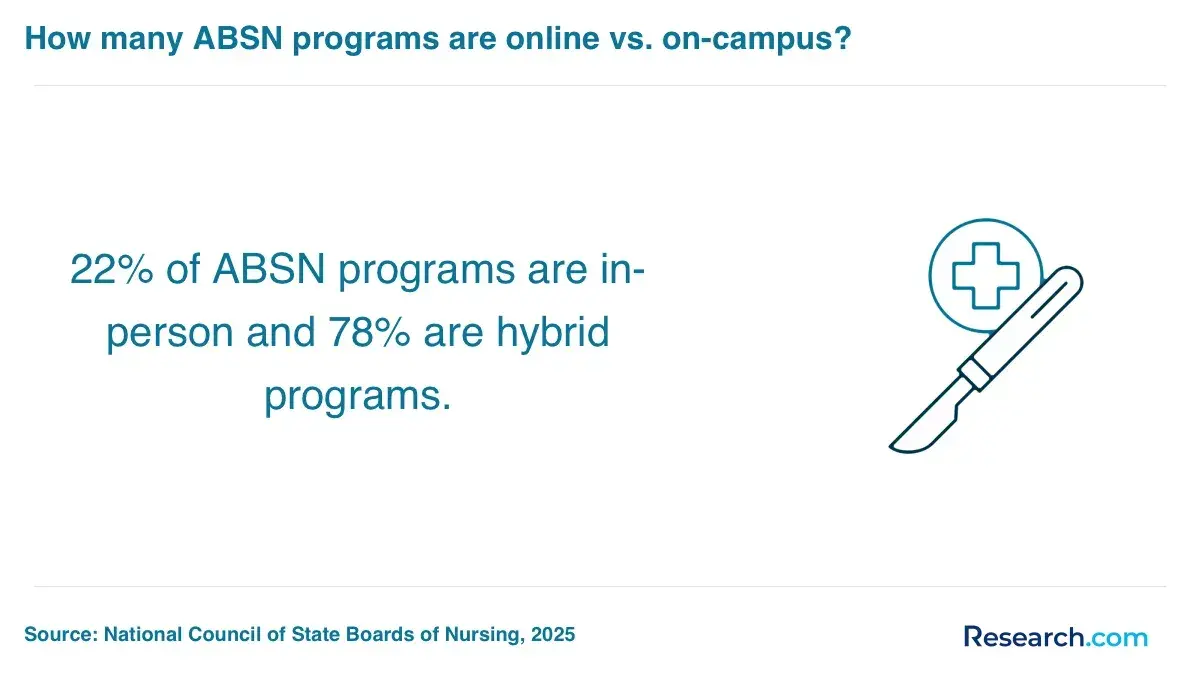
- Online vs. On-Campus Formats: Many offer hybrid setups blending online learning with in-person labs and clinical rotations, but you'll still spend lots of time on campus or at clinical sites.
- Clinical Hour Requirements: You're expected to log hundreds of clinical hours, starting early and spread throughout the program, which keeps the timeline steady.
- Course Sequencing: Courses follow a strict order and are only available at certain times, so sticking to that plan is crucial to finishing on time.
I chatted with a nurse who finished her ABSN at a local Texas school. She shared how those 14 months felt like a whirlwind-balancing intense classes, clinical shifts, and real-life stress all while pushing full steam ahead. She remembered thinking, "It's not just about studying; it's about showing up every day, hands-on experience, and staying focused." What stood out was how quickly she moved from a completely different career into nursing-and how rewarding that intense time frame really was once she held her degree. It gave her confidence that yes, you can seriously switch gears fast in Texas.
How much does an accelerated BSN program cost in Texas?
Tuition and fees for accelerated BSN programs in Texas can vary quite a bit depending on the school you choose, the program format, and extra costs you might run into along the way.
To give you a clearer picture, here are the main expenses you'll want to keep in mind when considering the cost of accelerated BSN programs in Texas:
- Tuition Rates: This is the biggest chunk of your costs and can range widely. For example, some schools charge per semester while others charge per credit hour, and public schools often have different rates for residents and non-residents. These variations will definitely influence the total accelerated nursing program tuition in Texas.
- Program-Specific Fees: Beyond tuition, expect mandatory fees like clinical simulation, special instruction, and tech fees. These might seem small individually but can add up to thousands per semester, covering essentials like malpractice insurance and learning resources.
- Clinical and Lab Supplies: Hands-on training requires you to purchase uniforms, supplies, and pay for background checks or drug screenings. If your clinical placements are far from home, travel and lodging costs can also stack up, especially affecting online students who need to attend in-person sessions.
- Technology Requirements: Online and hybrid programs come with their own price tag. Schools may charge IT fees and you'll need reliable devices, high-speed internet, and possibly special software to keep up with virtual coursework.
- Financial Aid and Scholarships: The good news? Many Texas ABSN programs offer scholarships and financial aid options to make the cost of accelerated BSN programs in Texas more manageable. For instance, some institutions provide specific nursing scholarships to help lighten the financial load.
If you want to get a better look at options for advanced nursing education after your ABSN, you might find useful insights by exploring direct entry nurse practitioner programs.
What financial aid options are available for ABSN students in Texas?
Because accelerated nursing programs in Texas can be costly, many students explore different financial aid opportunities to make their education more affordable.
Here are some of the most common types of financial aid available to ABSN students in Texas.
- Federal Student Loans: If you're enrolled at least half-time, you can apply for federal Direct Student Loans by filling out the FAFSA. Independent students can borrow up to $12,500 per year, while dependent ones may get up to $7,500. These loans help cover tuition, fees, and living expenses during your studies.
- State and Institutional Grants: Many Texas schools offer grants based on need or merit, which don't have to be paid back. For example, the Future Nurses Fund at UTHealth Houston covers tuition and fees for full-time BSN students from low-income families. These grants vary by school and state funding availability.
- Nursing Scholarships: Scholarships specifically targeting nursing students, including those in accelerated programs, are offered by schools and nursing groups. Texas Lutheran University, for instance, provides a $6,000 scholarship for ABSN students. These awards often consider academic performance, leadership, or community involvement.
- Employer Tuition Assistance: If you're working in healthcare, some Texas employers will reimburse part or all of your tuition costs. This is especially common in nursing shortage areas and can be a huge help in reducing your out-of-pocket expenses.
- Loan Forgiveness and Repayment Programs: After graduating, working in underserved or high-need Texas areas might qualify you for loan forgiveness programs like the Nurse Corps Loan Repayment Program. These programs repay part of your student loans in exchange for service.
If you're curious about the nursing career path, you might also want to check out what is the easiest online MSN program, which could be a great option after finishing your ABSN.
What career paths are available after earning an ABSN in Texas?
Completing an ABSN program in Texas opens doors to diverse nursing roles across various healthcare settings, giving graduates plenty of options to explore. Whether you want to work in a hospital or the community, these programs set you up for success.
Here are some of the common career paths for those stepping into nursing careers in Texas after earning their degree:
- Registered Nurse (RN): This is the most common starting point, where you'll provide direct patient care in hospitals, clinics, or even home health settings. The hands-on clinical hours and nursing coursework in ABSN programs build your skills to assess patients, administer meds, and coordinate care plans efficiently.
- Critical Care Nurse: If you thrive in fast-paced, high-stakes environments like ICUs or emergency rooms, this role fits well. ABSN grads develop the stamina and clinical know-how to monitor critical patients and react quickly to changing conditions alongside healthcare teams.
- Public Health Nurse: These nurses focus on improving health at the population level by working in schools, community centers, or nonprofits. ABSN training emphasizes holistic care, preparing you to run wellness programs, provide immunizations, and promote disease prevention effectively.
- Nurse Educator: After some clinical experience, many ABSN grads move into teaching roles, helping to train the next generation of nurses. The leadership and critical thinking skills gained during the program make this a natural fit for those who enjoy mentorship and curriculum development.
- Nurse Manager: If leadership and organization appeal to you, managing nursing units could be the path. ABSN grads are ready to handle budgets, staff schedules, and quality improvement efforts, creating positive work environments and improving patient care.
For those wondering is pediatric nurse practitioner online program easy to get into, exploring ABSN job opportunities in Texas can be a great starting point to understand the pathways and credentials needed.
What is the average salary for nurses with an ABSN degree in Texas?
Earning an Accelerated Bachelor of Science in Nursing (ABSN) degree in Texas can lead to competitive salaries, with pay varying a lot depending on experience, specialization, healthcare setting, and location.
If you're wondering what really moves the needle on ABSN nurse salaries in Texas, here are the key factors to keep in mind:
- Years of Experience: The more time you spend in clinical roles, the better the pay gets. Entry-level nurses start toward the lower end of the scale, while seasoned pros can earn substantially higher salaries.
- Type of Employer: Big hospital systems, especially well-known Magnet hospitals, often offer higher pay and better growth chances compared to smaller clinics or rural providers.
- Geographic Area: Urban hotspots like Houston, Dallas, and Austin usually come with higher salaries, reflecting the cost of living and demand for skilled nurses.
- Specialization or Certification: Nurses who develop specialized skills or certifications often see a boost in earnings and career options.
- Level of Education: Holding a BSN or ABSN generally opens doors to better-paying roles than an associate degree or diploma.
Here's What Graduates Have to Say About Their ABSN Degree in Texas
- Completing the ABSN program entirely online through Lone Star College was a transformative experience for me. Balancing coursework with my family responsibilities was challenging but the flexible schedule allowed me to stay on track. Starting my career as a nurse in a local school has been incredibly rewarding, especially knowing that I contribute to the health and success of children every day. The program's strong focus on clinical skills gave me confidence from day one. I'm proud to be making a difference in my community with this degree. Hollis
- Attending the University of Texas Health Science Center's on-campus ABSN program pushed me beyond my limits and helped me grow both professionally and personally. The rigorous training prepared me well for the fast-paced environment of working as a nurse in a nearby school district. I cherish the opportunity to support young students' wellness and feel that I'm truly impacting lives positively. Pursuing nursing in Texas brought unique challenges like adapting to diverse patient needs but the academic community was very supportive. This journey has solidified my passion for lifelong learning and career advancement. Novara
- The accelerated nursing program at Texas Woman's University gave me access to unparalleled resources and expert faculty, which made me feel ready to join the nursing workforce quickly. Starting my nursing job within a local school system connected me instantly with families and students, enriching my sense of purpose. The professional development opportunities available for ABSN graduates in Texas are impressive and have motivated me to aim for leadership roles. I've learned to navigate the challenges of healthcare disparities here and feel honored to contribute to a healthier next generation. It's been a fulfilling path that blends compassion with ongoing growth. Colson
Related Articles for Nearby States
- 2027 Best ABSN Programs - List of Accelerated BSN Programs in Louisiana: Online & Campus
- 2027 Best ABSN Programs - Accelerated BSN Programs in Oklahoma: Online & Campus
- 2027 Best ABSN Programs - Accelerated BSN Programs in Arkansas: Online & Campus
- 2027 Best ABSN Programs - List of Accelerated BSN Programs in New Mexico: Online & Campus
- 2027 Best ABSN Programs - Accelerated BSN Programs in Kansas: Online & Campus
- 2027 Best ABSN Programs - Accelerated BSN Programs in Missouri: Online & Campus
- 2027 Best ABSN Programs - Accelerated BSN Programs in Colorado: Online & Campus
- 2027 Best ABSN Programs - List of Accelerated BSN Programs in Mississippi: Online & Campus
- 2027 Best ABSN Programs - List of Accelerated BSN Programs in Tennessee: Online & Campus
- 2027 Best ABSN Programs - Accelerated BSN Programs in Arizona: Online & Campus
References:
- Texas ABSN Programs - Accelerated Nursing Schools https://www.absnprograms.org/programs/texas/
- Hunt School of Nursing Accelerated Bachelor of Science in Nursing Academic Year 2025-2026 https://ttuhscep.edu/elpaso/fiscal/businessaffairs/studentbusserv/resources/tuition-and-fee-estimates/gghson-accelerated-bsn.aspx
- ABSN Prerequisites & Requirements - University of St. Thomas https://absn.stthom.edu/admissions/prerequisites/
- Online ABSN Prerequisites - Concordia University Texas https://absn.concordia.edu/admissions/absn-prerequisites/
- ADN vs Accelerated BSN (ABSN) - Which Program Is Right for You? https://absn.org/resources/adn-vs-absn/
- 7 Challenges to Prepare for in Accelerated Nursing Programs https://www.edumed.org/articles/7-challenges-to-prepare-for-in-accelerated-nursing-programs/
- All About ABSN https://onlinedegrees.rockhurst.edu/blog/all-about-absn-infographic
- Accelerated Bachelor of Science in Nursing https://onlinenursing.baylor.edu/consortium/absn
- Bachelor of Science in Nursing: Accelerated Track https://uthscsa.edu/nursing/programs/undergraduate/bsn-accelerated-track
- Pacesetter Accelerated BSN https://nursing.uth.edu/programs/bsn/pacesetter/
Other Things You Should Know About Accelerated BSN Programs in Texas
Before enrolling in a 2027 Accelerated BSN program in Texas, candidates typically need a bachelor's degree in a non-nursing field and specific science prerequisites like anatomy, microbiology, and physiology. Requirements may vary slightly by school, so checking individual program details is essential.
Typical admission requirements for accelerated BSN programs in Texas in 2027 include holding a non-nursing bachelor's degree, completing prerequisite courses like anatomy and microbiology with a minimum GPA, and submitting all transcripts. Some programs may also request personal statements and interview sessions.
In 2027, Accelerated BSN programs in Texas typically span 12 to 18 months. These programs are intensive, combining classroom instruction with clinical experience. Their structure is designed to cover nursing fundamentals efficiently, enabling students with a prior bachelor's degree to transition into nursing careers quickly.


