
2027 Best ABSN Programs - Accelerated BSN Programs in Colorado: Online & Campus

Co-Founder and Chief Data Scientist
Colorado is experiencing a growing demand for registered nurses, with the state's healthcare employment projected to increase by over 15% through 2030. Pursuing an accelerated Bachelor of Science in Nursing (ABSN) program, whether online or on-campus, offers a fast-track path for students seeking to join this thriving profession. These programs combine intensive coursework and clinical experience, making them ideal for motivated individuals eager to advance their nursing careers quickly within Colorado's diverse healthcare landscape.
This article, crafted by experts in career planning, guides readers through understanding what an ABSN program in Colorado entails. It highlights what to expect, important factors to consider, and how to navigate the decision-making process to find the right accelerated nursing option tailored to individual goals and needs.
Key Benefits of ABSN Programs in Colorado
- Colorado's ABSN programs offer a fast-track path, enabling students to complete their BSN in as little as 12-18 months, ideal for career changers seeking rapid entry into nursing.
- With both online and campus options, these programs provide flexible learning schedules while maintaining accreditation and clinical experience, combining convenience with quality education.
- The strong healthcare industry in Colorado, growing by 20% over the past decade, ensures abundant job opportunities and a supportive network for ABSN graduates in diverse clinical settings.
- Who can apply for accelerated BSN programs in Colorado?
- What are the admission requirements for accelerated BSN programs in Colorado?
- Do accelerated BSN programs in Colorado require entrance exams?
- What does the curriculum of an accelerated BSN program in Colorado include?
- What accreditation should I look for in an ABSN program in Colorado?
- How long does it take to complete an accelerated BSN in Colorado?
- How much does an accelerated BSN program cost in Colorado?
- What financial aid options are available for ABSN students in Colorado?
- What career paths are available after earning an ABSN in Colorado?
- What is the average salary for nurses with an ABSN degree in Colorado?
Who can apply for accelerated BSN programs in Colorado?
Accelerated Bachelor of Science in Nursing (ABSN) programs in Colorado offer a unique opportunity for individuals who already hold a non-nursing bachelor's degree to transition into nursing more quickly. These programs compress essential nursing education, enabling students to build on their prior academic achievements. Applicants must meet ABSN admission requirements in Colorado, which typically include prerequisite coursework like anatomy, physiology, and microbiology. This pathway is ideal for motivated learners ready to combine previous knowledge with focused nursing training to enter the healthcare field with confidence and skill.
The typical students pursuing online or on-campus accelerated nursing program prerequisites Colorado often include career changers seeking a more rewarding profession, recent graduates who want an expedited route into healthcare, and healthcare support professionals aiming for clinical licensure. Successful applicants often demonstrate strong academic motivation, excellent time management, and a genuine passion for patient care. These qualities help students thrive within the demanding ABSN framework. For those wondering is there a difference between adult-gerontology nurse practitioner and family nurse practitioner, this focused education lays the groundwork for various nursing specialties and advanced roles.
What are the admission requirements for accelerated BSN programs in Colorado?
Admission into accelerated BSN programs in Colorado is highly competitive and thoughtfully designed to identify students who are academically prepared and motivated to handle an intensive nursing curriculum. These programs seek individuals ready to embrace challenges and make a meaningful impact in healthcare. Here are some of the essential ABSN admission requirements Colorado applicants can expect to meet:
- Non-Nursing Bachelor's Degree: Applicants must hold a bachelor's degree in a non-nursing field from an accredited institution. This ensures students have a solid foundation of higher education, preparing them to transition efficiently into rigorous nursing studies.
- Prerequisite Coursework: Completion of specific science and general education courses, such as anatomy, physiology, microbiology, and statistics, is required. These prerequisite classes establish critical knowledge necessary for success in accelerated nursing program prerequisites Colorado schools commonly emphasize.
- Minimum GPA Standards: Programs generally require a competitive GPA, often around 3.0 or higher, to demonstrate consistent academic achievement. This benchmark helps schools gauge an applicant's ability to manage fast-paced coursework effectively.
- Application Materials: Prospective students must submit detailed applications that typically include recommendation letters and personal statements. These components allow admissions committees to assess motivation, communication skills, and commitment to the nursing profession.
These requirements highlight the dedication and preparedness expected from students seeking a path to nursing excellence in Colorado. For those inspired to advance further, exploring the psychiatric nurse practitioner career path can offer rewarding opportunities beyond the accelerated BSN journey.
Do accelerated BSN programs in Colorado require entrance exams?
Entrance exam requirements for Accelerated Bachelor of Science in Nursing (ABSN) programs in Colorado vary depending on the institution. Some schools do require exams such as the ATI Test of Essential Academic Skills (TEAS), which evaluates skills in reading, math, science, and English language usage to gauge preparedness for rigorous nursing coursework. Other programs may waive these exams if applicants have completed specific science prerequisites with a strong GPA. Meanwhile, certain universities prioritize prerequisite coursework and overall academic performance without mandating formal entrance exams. Overall, the ATI TEAS stands out as the most commonly used standardized test, helping schools objectively assess applicants' academic foundations.
Entrance exams serve an important role in nursing education by helping programs evaluate critical thinking abilities and readiness for an accelerated learning pace. These exams provide a consistent benchmark to compare candidates coming from diverse educational backgrounds, ensuring admitted students possess the foundational knowledge necessary to excel. The intensive nature of ABSN programs demands quick comprehension and application of complex concepts, and entrance exams help identify those best equipped to succeed. This strategy supports high graduation and licensing exam pass rates, reinforcing the quality of nursing professionals entering the field.
When speaking with a nurse who graduated from a Colorado ABSN program, he shared that navigating entrance requirements was a vital part of his journey. He recalled feeling encouraged by the clear structure of the application process, where the entrance exam offered him a chance to demonstrate his abilities and confidence. Although the pressure was real, he appreciated how the exam helped focus his preparation for the accelerated curriculum, both online and on-campus. Reflecting now, he emphasizes that this step was not merely a hurdle but a valuable moment that strengthened his resolve and readiness for nursing school challenges ahead.
What does the curriculum of an accelerated BSN program in Colorado include?
The accelerated Bachelor of Science in Nursing (ABSN) curriculum in Colorado is thoughtfully designed to equip students with prior degrees to build clinical competence and nursing knowledge swiftly, typically within 12 to 24 months. This rigorous program blends theory and hands-on practice to prepare graduates for real-world nursing challenges. Key components shared by both online and campus-based ABSN programs include:
- Foundational Nursing Science Courses: These courses provide an intensive study of anatomy, physiology, microbiology, pharmacology, and health assessment, laying the scientific groundwork essential for clinical reasoning and safe patient care.
- Nursing Theory and Evidence-Based Practice: Emphasizing research methods, ethics, and nursing theories, this area sharpens critical thinking and the ability to apply current scientific evidence to improve patient outcomes.
- Medical-Surgical and Specialty Nursing: Students explore care for adults, geriatrics, pediatrics, maternal-child health, mental health, and community nursing, preparing them to meet diverse patient needs across various settings.
- Clinical Rotations: Hands-on experiences in hospitals and clinics, often within prominent Colorado health systems, provide 500-700+ supervised hours to translate classroom learning into confident, compassionate care.
- Simulation Labs: Using advanced manikins and virtual scenarios, simulation labs offer a safe and realistic environment to practice critical nursing skills and decision-making before patient interaction.
- Online and Blended Learning: Flexible asynchronous coursework, virtual labs, and digital case studies, combined with in-person skills training, create an adaptable learning path without compromising quality.
- Professional Development and Leadership: Content on leadership, communication, and ethical responsibilities fosters strong professional identity and prepares students for collaborative healthcare roles.
- NCLEX-RN Preparation: Intensive review sessions and practice exams help ensure students are well-prepared to pass the licensing exam and begin their nursing careers confidently.
What accreditation should I look for in an ABSN program in Colorado?
Accreditation is the cornerstone that guarantees the quality of your education, ensures you meet licensure requirements, and opens doors to thriving nursing careers in Colorado and beyond. When considering an ABSN program, look for these essential accreditations that affirm the program's credibility and your future success:
- Institutional Accreditation: This confirms that the college or university offering the ABSN program meets high standards of educational quality. Regional accreditation by bodies like the Higher Learning Commission (HLC) is vital, impacting credit transfer, financial aid, and employer recognition.
- Programmatic Accreditation (CCNE or ACEN): These accreditations focus specifically on nursing education quality. Programs accredited by the Commission on Collegiate Nursing Education (CCNE) or the Accreditation Commission for Education in Nursing (ACEN) demonstrate adherence to rigorous national standards, enhancing your readiness for nursing practice and advancing your career prospects.
- Colorado State Board of Nursing Approval: This mandatory approval ensures the ABSN curriculum complies with Colorado's nursing regulations. Only graduates from state-approved programs are eligible to sit for the NCLEX-RN licensure exam, a crucial step toward becoming a registered nurse in Colorado.
How long does it take to complete an accelerated BSN in Colorado?
Accelerated Bachelor of Science in Nursing (ABSN) programs in Colorado are designed for students who already hold a non-nursing bachelor's degree and want to transition into nursing quickly. Several key factors influence how long it takes to complete these programs, offering flexibility and structure to meet different needs:
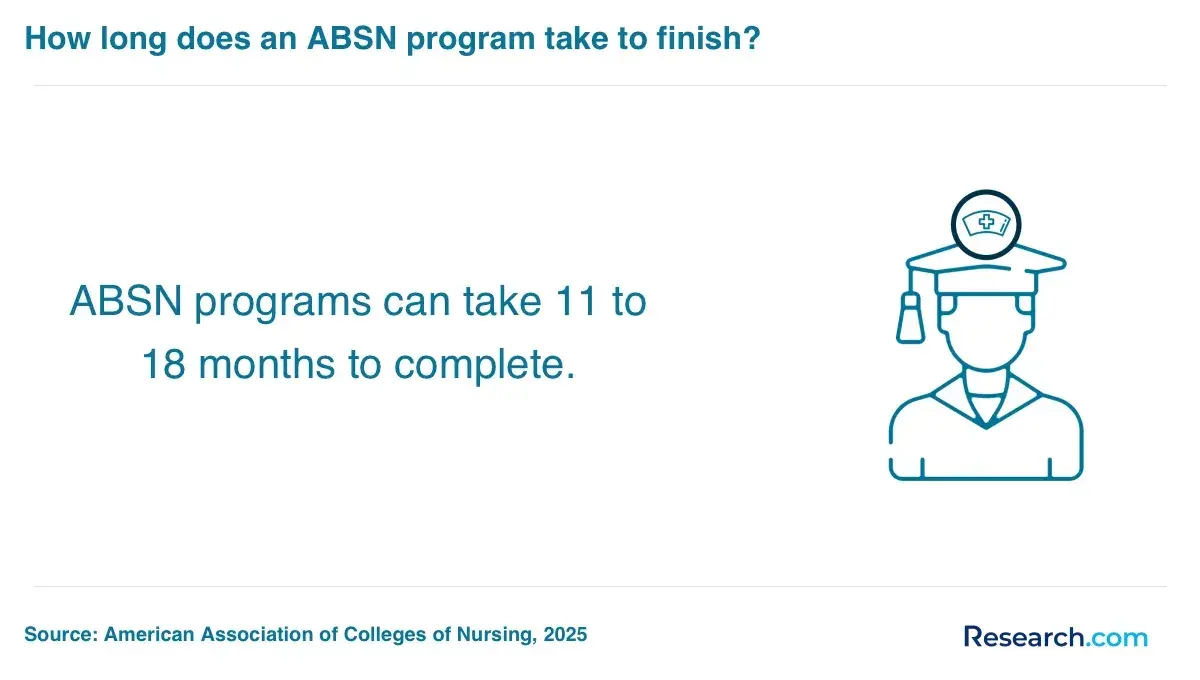
- Typical Program Length: Most programs take about 16 to 20 months of full-time study, providing an intensive path to becoming a registered nurse.
- Full-Time vs. Part-Time Study: These programs usually require full-time commitment, as part-time options are rare and can significantly extend completion time.
- Online vs. On-Campus Formats: Hybrid models combine online coursework with in-person clinicals, offering flexibility without shortening the program length.
- Clinical Hour Requirements: Students complete 300 to 700 hours of hands-on clinical experience, essential for skill development and RN licensure.
- Course Sequencing: Cohort-based, structured schedules mean students follow a set timeline, keeping progress steady but inflexible.
A nurse who completed an ABSN program from a local Colorado school shared that the journey felt both challenging and rewarding. She recalls, "Balancing intense coursework and clinical hours pushed me every day, but knowing I was on a clear path made every moment count." The fixed cohort schedule meant she had to stay disciplined and focused, embracing the fast pace. Though the learning curve was steep, the program's structure ensured she graduated within 18 months, quickly transitioning from her former career into nursing with confidence and pride.
How much does an accelerated BSN program cost in Colorado?
Tuition and fees for accelerated BSN programs in Colorado can vary widely depending on the school, program format, and additional expenses beyond tuition. Knowing these costs upfront empowers you to plan effectively and pursue your nursing dreams with confidence. Here are the main cost factors to consider when evaluating the accelerated BSN program cost Colorado offers:
- Tuition Rates: Tuition is the largest portion of your investment, ranging significantly among institutions. Public universities may offer more affordable rates, while private schools often have higher tuition per credit. This range allows you to find programs that fit your budget and goals.
- Technology and Lab Fees: Both online and on-campus students may pay extra fees for simulation labs, software licenses, or technology platforms. These fees are essential for hands-on learning and can add several thousand dollars to the program's total cost.
- Clinical Supplies and Uniforms: Clinical participation requires specific supplies like uniforms, shoes, and books. Though these expenses are smaller than tuition, they are necessary for your success and typically cost a few hundred to a couple thousand dollars across the program.
- Travel and Accommodation: Even online ABSN students need to complete in-person clinical rotations, which may involve travel to healthcare facilities. Planning for travel, lodging, and meals during these times is important, especially if you live far from clinical sites.
- Financial Aid and Scholarships: Many programs offer scholarships and financial aid options that can substantially reduce your out-of-pocket costs. Exploring these opportunities helps make accelerated nursing education more accessible and affordable.
By carefully considering each of these factors, you can better estimate the overall ABSN tuition fees Colorado programs require and make informed decisions. To learn more about related nursing degree options, check out this best bsn to np degree program.
What financial aid options are available for ABSN students in Colorado?
Because accelerated nursing programs in Colorado can be costly, many students explore different financial aid opportunities to make their education more affordable. Below are some of the most effective options to help manage these expenses.
- Federal Student Loans: These are a primary resource for many ABSN students in Colorado, offering Direct Subsidized, Unsubsidized, and PLUS Loans that cover tuition and fees. Federal loans provide flexible repayment plans after graduation, easing the financial burden during studies.
- State and Institutional Grants: Available to students with demonstrated financial need, these grants include the Federal Pell Grant and Federal Supplemental Educational Opportunity Grant (FSEOG). Some Colorado schools supplement this aid with their own grants that don't require repayment, reducing overall costs significantly.
- Nursing Scholarships: Scholarships from schools, local organizations, and groups like the Colorado Nurses Foundation reward merit and need-based achievements. For example, the Joe Lee Memorial Scholarship supports upper-division nursing students at Platt College, making these awards vital financial assistance for many.
- Employer Tuition Assistance: Many healthcare employers, especially large hospital systems in Colorado, offer tuition reimbursement programs for employees pursuing a BSN degree. This helps working students offset a large portion of their educational expenses while gaining valuable experience.
- Loan Forgiveness Programs for Nurses: Graduates working in critical healthcare roles or shortage areas may qualify for programs like the Nurse Corps Loan Repayment Program, which can forgive up to 60% of qualifying student loans after two years of service. These opportunities incentivize service while greatly reducing debt.
For those looking to further their career, exploring what are the best online bsn to fnp programs can provide additional pathways to financial and professional growth, complementing the Colorado ABSN program financial assistance options available today.
What career paths are available after earning an ABSN in Colorado?
Completing an Accelerated Bachelor of Science in Nursing (ABSN) in Colorado unlocks access to diverse nursing career paths across hospitals, clinics, community organizations, and educational settings. This degree equips graduates to thrive in a variety of roles that meet the state's growing healthcare needs. Below are some of the most common career directions for ABSN graduates in Colorado.
- Registered Nurse (RN): After passing the NCLEX-RN, RNs provide essential patient care in settings like hospitals, outpatient clinics, and long-term care. The ABSN program's clinical experiences prepare graduates to manage patient assessments, medication administration, and care coordination confidently.
- Critical Care Nurse: Specializing in intensive care units and emergency settings, critical care nurses handle life-threatening conditions with advanced skills. Hands-on rotations in acute care during the ABSN help master the rapid decision-making and technical expertise needed here.
- Public Health Nurse: Focusing on community health and prevention, public health nurses engage in education, vaccination efforts, and health promotion. ABSN curricula include population health projects, readying graduates to address diverse community needs throughout Colorado.
- Nurse Educator: Nurse educators support and train future nurses or healthcare staff. While further education may be required for some roles, ABSN graduates can start as clinical instructors, utilizing their leadership and teaching foundations gained during their studies.
- Nurse Manager: With leadership training from the ABSN, nurse managers oversee staff, budgets, and quality care in various healthcare settings. Experience combined with ABSN leadership seminars positions graduates to advance into these pivotal roles.
In addition to these roles, ABSN graduates interested in specialties can explore pediatric, mental health, and perioperative nursing. To enhance career prospects, consider pursuing specialty certification or explore a list of most affordable online pmhnp degree programs. Colorado's accelerated BSN programs offer strong clinical partnerships and preparation that set graduates up for success in many nursing career opportunities after ABSN in Colorado.
What is the average salary for nurses with an ABSN degree in Colorado?
Earning an Accelerated Bachelor of Science in Nursing (ABSN) degree in Colorado opens the door to competitive salaries, which vary depending on experience, specialization, healthcare setting, and geographic location. Understanding the factors that influence earning potential can help you make informed career decisions. Here are the key elements affecting ABSN nurse salaries in Colorado:
- Years of Experience: Salaries tend to grow with experience; entry-level nurses may start around $60,000 annually, while those with five or more years of practice often earn upwards of $95,000, reflecting the increasing value of expertise.
- Type of Employer: Larger hospitals in urban areas typically offer higher salaries compared to smaller clinics or rural providers. Employer benefits and bonuses can also enhance overall compensation.
- Geographic Area: Metropolitan cities like Aspen and Basalt provide some of the highest salaries in the state, exceeding $100,000 annually, while rural areas generally offer lower pay but may have a reduced cost of living.
- Specialization or Certification: Nurses with advanced certifications or specialized skills in areas such as critical care or pediatrics can command higher wages due to the additional training and expertise required.
- Level of Education: Further education beyond the ABSN, such as a Master's degree, can open doors to advanced roles and increased pay, though holding the ABSN itself is already a highly valued credential.
Here's What Graduates Have to Say About Their ABSN Degree in Colorado
- Completing the ABSN program at Colorado Christian University truly transformed my understanding of nursing and patient care. The on-campus experience allowed me to build strong connections with both faculty and peers, which made the rigorous coursework feel manageable. Starting my career as a nurse in a local school has been incredibly rewarding, as I get to support and advocate for the health and wellness of young students daily. The program's focus on holistic care prepared me well to handle the diverse health needs I encounter. I'm grateful for the confidence and skills this pathway has given me. Isaiah
- Enrolling in the University of Northern Colorado's ABSN program challenged me in ways I hadn't expected, especially balancing the clinical requirements with my personal commitments. However, it provided unique insights into the healthcare needs of Colorado's communities, reinforcing my motivation to contribute at the grassroots level. After graduating, stepping into a nursing role within a local school environment allowed me to combine my passion for education and healthcare, advancing not just students' physical health but their overall well-being. This journey also helped me grow professionally, opening doors to future leadership opportunities in school nursing. Sydney
- The online ABSN option at Regis University was perfect for me since I could continue working while advancing my education. This flexible approach gave me a deep sense of accomplishment and allowed me to maintain stability. The program highlighted the importance of community health, especially in Colorado's diverse population, which inspired me to focus my nursing career on making an impact locally. Starting work in a local school setting has been fulfilling as I get to directly influence children's lives and contribute positively to their learning environment. The professional growth I experience daily keeps me motivated and passionate about this field. Phoebe
Related Articles for Nearby States
- 2027 Best ABSN Programs - Accelerated BSN Programs in Wyoming: Online & Campus
- 2027 Best ABSN Programs - Accelerated BSN Programs in Nebraska: Online & Campus
- 2027 Best ABSN Programs - Accelerated BSN Programs in Kansas: Online & Campus
- 2027 Best ABSN Programs - List of Accelerated BSN Programs in New Mexico: Online & Campus
- 2027 Best ABSN Programs - Accelerated BSN Programs in Utah: Online & Campus
- 2027 Best ABSN Programs - Accelerated BSN Programs in Oklahoma: Online & Campus
- 2027 Best ABSN Programs - Accelerated BSN Programs in Arizona: Online & Campus
- 2027 Best ABSN Programs - Accelerated BSN Programs in Texas: Online & Campus
- 2027 Best ABSN Programs - List of Accelerated BSN Programs in South Dakota: Online & Campus
- 2027 Best ABSN Programs - Accelerated BSN Programs in Nevada: Online & Campus
References:
- Registered Nurse Salary in Colorado (2024) | Trusted Health https://www.trustedhealth.com/nurse-salary-guide/colorado
- Master’s in Nursing Schools in Colorado https://www.rntomsn.com/states/colorado/
- Can I work during an ABSN program? - General Student Support https://allnurses.com/can-i-work-absn-program-t695318/
- Best Nursing Schools in Colorado - ADN, BSN - Updated https://www.registerednursing.org/state/colorado/
- Financial Aid for Nursing Students | CTU Online https://www.coloradotech.edu/degrees/studies/nursing/articles/nursing-financial-aid
- Working In Nursing School | Can You Work During an ABSN Program? https://bayadaeducation.org/resources/absn/working-in-nursing-school
- CU Nursing Scholarships & Financial Aid https://nursing.cuanschutz.edu/tuition-aid/scholarships-financial-aid
- ABSN Denver Admissions Requirements - Concordia University, St. Paul https://www.csp.edu/nursing-programs/absn-denver-admissions-requirements/
- Traditional and Accelerated Nursing Options - MSU Denver https://www.msudenver.edu/nursing/traditional-and-accelerated-nursing-options/
- Financing the Accelerated Nursing Program https://son.rochester.edu/academics/accelerated-nursing-programs/absn/financing-accelerated-nursing-program.html
Other Things You Need to Know About Accelerated BSN Programs in Colorado
The top Accelerated BSN programs in Colorado for 2027 include offerings from institutions such as the University of Colorado College of Nursing, Regis University, and Metropolitan State University of Denver. These programs provide students with a rigorous education designed to be completed in a shorter timeframe, typically 12-18 months.
To be admitted into top Accelerated BSN programs in Colorado, students typically need a bachelor's degree in a non-nursing field, completion of prerequisite courses such as anatomy, physiology, and microbiology, and a minimum GPA, often around 3.0 or higher.
Accelerated BSN programs in Colorado in 2027 are intense, requiring a substantial commitment of time and effort. Students often face challenges balancing coursework with personal obligations, as these programs compress nursing education into 12-18 months. Financial pressures can also be significant, given the full-time enrollment requirement. --- **Question** What are the top Accelerated BSN (ABSN) programs available in Colorado in 2027? **Answer** The top Accelerated BSN programs in Colorado for 2027 include the University of Colorado Anschutz Medical Campus, Regis University, and Colorado State University-Pueblo. These programs are recognized for their high NCLEX pass rates, comprehensive coursework, and robust clinical placement opportunities. --- **Question** What prerequisites are needed for admission into the best Accelerated BSN programs in Colorado? **Answer** To be admitted into the leading Accelerated BSN programs in Colorado, applicants typically need a bachelor’s degree in a non-nursing field and prerequisite courses such as Anatomy, Physiology, Microbiology, and Statistics. Each program may have specific GPA requirements and additional criteria, so it’s important to check individual program specifics. --- **Question** How long do Accelerated BSN programs take to complete in Colorado? **Answer** Accelerated BSN programs in Colorado generally take between 12 and 18 months to complete. These intensive programs are designed to quickly transition individuals with non-nursing bachelor’s degrees into nursing careers, allowing them to enter the workforce as registered nurses swiftly.


