
2027 Best ABSN Programs - List of Accelerated BSN Programs in Connecticut: Online & Campus

Co-Founder and Chief Data Scientist
Connecticut's healthcare sector is growing steadily, with a 12% projected increase in nursing employment over the next decade. Pursuing accelerated BSN programs in this state, whether online or on-campus, offers access to solid clinical opportunities and a strong professional network. The flexibility of online formats can accommodate diverse schedules while campus programs provide immersive, hands-on training. Both pathways prepare candidates efficiently for the evolving demands of healthcare in Connecticut's communities.
This article explores what accelerated BSN programs in Connecticut truly involve. Created by career planning experts, it aims to clarify what to expect, what factors to prioritize, and how to navigate the selection process. The goal is to provide thoughtful, well-informed guidance to support confident decision-making for prospective nursing students.
Key Benefits of ABSN Programs in Connecticut
- Connecticut's ABSN programs offer a streamlined pathway, allowing students to complete their degree in as little as 12 to 18 months, speeding entry into the nursing workforce.
- Many programs blend online coursework with clinical placements in top Connecticut hospitals, providing flexible learning without sacrificing hands-on experience.
- The state boasts a robust healthcare job market with a 15% projected growth in nursing positions through 2030, enhancing graduates' employment prospects after program completion.
- Who can apply for accelerated BSN programs in Connecticut?
- What are the admission requirements for accelerated BSN programs in Connecticut?
- Do accelerated BSN programs in Connecticut require entrance exams?
- What does the curriculum of an accelerated BSN program in Connecticut include?
- What accreditation should I look for in an ABSN program in Connecticut?
- How long does it take to complete an accelerated BSN in Connecticut?
- How much does an accelerated BSN program cost in Connecticut?
- What financial aid options are available for ABSN students in Connecticut?
- What career paths are available after earning an ABSN in Connecticut?
- What is the average salary for nurses with an ABSN degree in Connecticut?
Who can apply for accelerated BSN programs in Connecticut?
Accelerated Bachelor of Science in Nursing (ABSN) programs in Connecticut cater specifically to individuals who have already earned a bachelor's degree in a non-nursing field and seek to transition into nursing efficiently. These programs build on the foundation of previous undergraduate education, allowing students to focus on nursing-specific coursework, clinical practice, and professional competencies. Candidates must satisfy certain admission requirements for ABSN programs in Connecticut, including holding a conferred BA or BS degree from an accredited institution and completing prerequisite science courses. This focused approach helps streamline entry into nursing careers for those committed to making a meaningful change in their professional trajectory.
The typical ABSN applicant in Connecticut includes career changers moving from fields like business or education, recent graduates aiming for a quicker route into healthcare, and professionals seeking more security and purpose in their work lives. For these individuals, an accelerated nursing program represents an avenue to align their careers with their personal values and aspirations. Successful applicants often demonstrate strong academic motivation, excellent time management skills, and resilience, as accelerated programs demand rigorous full-time effort. Above all, candidates must embody a genuine passion for patient care, which is vital not only for thriving in the demanding curriculum but also for delivering compassionate nursing. Those curious about specialized nursing roles can explore resources on how to become a psychiatric nurse practitioner, as part of a broader understanding of nursing careers.
What are the admission requirements for accelerated BSN programs in Connecticut?
Admission into accelerated BSN programs in Connecticut is competitive and designed to identify students who are academically prepared and motivated to handle an intensive nursing curriculum. To help applicants understand what it takes to succeed, here are the core requirements commonly expected for both online and on-campus ABSN programs in Connecticut.
- Bachelor's Degree Requirement: Applicants must hold a non-nursing bachelor's degree from an accredited institution. This ensures students bring a solid academic foundation, allowing the program to focus on nursing-specific content within an accelerated timeframe.
- Prerequisite Coursework: Completion of key prerequisite courses such as anatomy, physiology, microbiology, statistics, and human development is essential. These courses, usually required with a minimum grade of 'C' or better and completed recently, guarantee you have the scientific knowledge necessary to thrive in nursing studies, reflecting the typical prerequisites for ABSN programs in Connecticut.
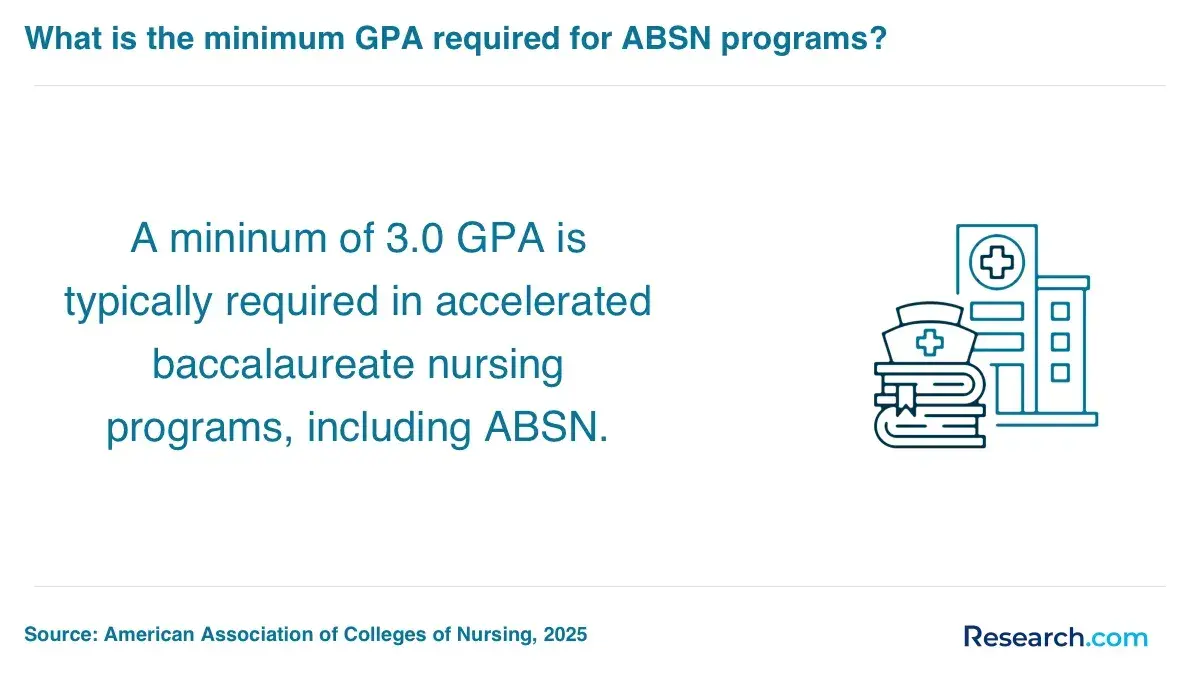
- Minimum GPA Standards: Most programs expect a minimum undergraduate GPA between 3.0 and 3.2 on a 4.0 scale. This academic benchmark allows admissions committees to gauge your readiness for the demanding accelerated curriculum and overall academic consistency.
- Transcripts Submission: Official transcripts from all previous post-secondary institutions are required to verify degree completion, prerequisite coursework, and GPA. Transcripts provide an essential overview of your academic history and preparedness.
- Personal Statement or Essay: A written personal statement offers an opportunity to express your motivation, relevant experiences, and communication skills. This helps programs assess your commitment and suitability for an accelerated nursing path.
- Letters of Recommendation: Two or three letters from professors or supervisors are usually requested. These highlight qualities like leadership, teamwork, and resilience, critical for success in a fast-paced nursing program.
- Resume or Curriculum Vitae: A current resume or CV detailing your education, work experience, volunteer work, and certifications helps demonstrate relevant skills and healthcare exposure.
- Interview (When Required): Some programs may conduct interviews to evaluate interpersonal skills and professionalism, ensuring candidates fit the rigorous demands of accelerated nursing education.
For those curious about how these academic requirements align with long-term nursing careers, it's useful to explore how long does it take to become a nurse practitioner, adding perspective to this initial accelerated BSN admission journey.
Do accelerated BSN programs in Connecticut require entrance exams?
Entrance exam requirements for Accelerated Bachelor of Science in Nursing (ABSN) programs in Connecticut differ between institutions. While some schools, such as Goodwin University and CT State Community College, mandate entrance exams like the Test of Essential Academic Skills (TEAS), others may not require any specific test. The TEAS commonly assesses fundamental skills in reading, mathematics, science, and English language usage, providing a standardized way to evaluate applicants' academic preparedness. Other exams, such as the HESI or GRE, are less commonly referenced for these programs in the state. This variability means applicants must carefully review each school's admissions criteria to understand whether an entrance exam is part of the process.
Schools that implement entrance exams often do so to gauge academic readiness and critical thinking capabilities objectively. Given the accelerated pace and intensity of ABSN programs, admissions committees seek assurance that candidates possess the essential knowledge and skills to manage a compressed curriculum successfully. These exams serve as a benchmark to compare applicants from diverse educational backgrounds, aiming to admit those who are most likely to thrive. By screening for foundational competencies, institutions can also better predict student success and support higher pass rates on licensure exams like the NCLEX-RN.
Reflecting on these insights, a nurse from Connecticut, who graduated from a local ABSN program, shared that the entrance exam was a memorable yet fair challenge. He recalled that preparing for the TEAS required focused study and self-discipline, especially while balancing work and family commitments. Though initially intimidating, the exam helped clarify his own strengths and weaknesses, shaping a stronger approach to the rigorous coursework ahead. Whether enrolled online or on-campus, he emphasized that the entrance exam was more than a hurdle; it was part of the transformative journey that prepared him for his nursing career with confidence.
What does the curriculum of an accelerated BSN program in Connecticut include?
The accelerated BSN curriculum in Connecticut is intentionally designed to build clinical competence and comprehensive nursing knowledge within a condensed timeframe, typically between 12 to 16 months. This focused approach ensures students develop the essential skills needed for professional nursing practice efficiently and effectively. The core components shared by both online and on-campus ABSN programs include the following key areas:
- Foundational Nursing Science and Theory: Courses cover essentials such as human anatomy, physiology, pharmacology, and health assessment, creating a solid scientific base for clinical decision-making and evidence-based care.
- Adult Health and Medical-Surgical Nursing: Emphasizing care for adults with diverse conditions, this component strengthens critical thinking and problem-solving skills vital to managing complex patient needs safely.
- Pediatrics, Maternal-Child, and Family Nursing: Focused modules address healthcare across the lifespan, from infancy through adolescence and family dynamics, preparing students to provide compassionate, specialized care.
- Mental Health and Psychiatric Nursing: Through targeted coursework and clinical experiences, students gain competence in supporting patients with psychiatric conditions, enhancing therapeutic communication and mental health promotion.
- Community and Population Health Nursing: This area teaches public health principles and strategies to address disparities, positioning future nurses to improve wellness at both individual and community levels.
- Clinical Rotations and Direct Patient Care: Extensive hands-on practice in varied healthcare settings ensures students develop confidence and real-world skills under supervision throughout their training.
- Simulation Labs and Skills Training: High-fidelity simulations provide a controlled environment for practicing technical procedures, decision-making, and teamwork before direct patient interaction, a critical element especially for online learners.
- Leadership, Ethics, and Professional Practice: Curriculum components focus on healthcare policy, ethics, and advocacy, molding students into reflective practitioners aware of their role within complex healthcare systems.
- NCLEX-RN Preparation and Review: Comprehensive review sessions, practice exams, and case studies are integrated to optimize students' readiness and confidence for licensure exams.
What accreditation should I look for in an ABSN program in Connecticut?
Accreditation ensures that an ABSN program in Connecticut upholds rigorous educational standards, qualifying graduates for RN licensure and enhancing career prospects in nursing. Here are the key accreditations you should verify when evaluating ABSN programs, whether online or on-campus:
- Regional Institutional Accreditation: This is the foundational accreditation granted by the New England Commission of Higher Education (NECHE) for schools in Connecticut. It confirms the institution's overall quality, allows access to federal financial aid, and facilitates credit transfer between regionally accredited colleges.
- Programmatic Accreditation by the Commission on Collegiate Nursing Education (CCNE): CCNE accreditation specifically evaluates the nursing program's curriculum, faculty, and clinical training to meet national standards. Graduating from a CCNE-accredited program is often required to take the NCLEX-RN exam and is highly regarded by employers and graduate programs.
- Programmatic Accreditation by the Accreditation Commission for Education in Nursing (ACEN): ACEN is another respected accreditor focusing on nursing education quality at the baccalaureate level. It ensures that the program delivers appropriate clinical experiences and outcomes, making graduates eligible for licensure and recognized nationally by employers.
- State Board of Nursing Approval: The Connecticut Board of Examiners for Nursing must approve all ABSN programs in the state. This approval confirms the program's compliance with state-specific educational and clinical requirements, a vital step for eligibility to sit for the NCLEX-RN and secure nursing licensure within Connecticut.
- Accreditation for Online and Hybrid Programs: Distance learning ABSN options must meet the same institutional, programmatic, and state approval standards as traditional programs. Accreditation in this blend of modalities guarantees equivalent quality, clinical preparation, and licensure eligibility tailored to Connecticut's nursing workforce needs.
How long does it take to complete an accelerated BSN in Connecticut?
Accelerated Bachelor of Science in Nursing (ABSN) programs in Connecticut cater to individuals holding a prior non-nursing bachelor's degree who want to transition into nursing efficiently. Several key factors shape how long it takes to complete these programs, influencing the pace and structure of your studies:
- Typical Program Length: Programs usually last between 12 to 16 months; this timeframe depends on the school's curriculum design and cohort scheduling.
- Full-Time vs. Part-Time: Most ABSN programs are full-time and intense, requiring full commitment. Part-time options are rare, as the accelerated path demands continuous engagement.
- Online vs. On-Campus Formats: Connecticut offers mostly on-campus or hybrid models with in-person clinicals. Fully online options are unavailable, and clinical placements can affect overall duration.
- Clinical Hour Requirements: Extensive hands-on clinical experience is required and must be completed in person, sometimes influencing the overall timeline based on placement availability.
- Course Sequencing: Nursing courses follow a cohort-based, lockstep progression; missing prerequisites or courses can delay completion.
When I spoke with a nurse who graduated from a Connecticut ABSN program, she reflected on how compressed yet rewarding the journey was. "It was intense-back-to-back classes and clinicals-but the structure helped me stay focused," she said. Transitioning from a different profession, she found the 14-month program flew by despite the challenges of rigorous scheduling and fatigue. She emphasized how the cohort support and hands-on clinical experiences shaped her readiness for nursing quickly and solidly. "Looking back, the time invested was exactly what I needed to shift careers confidently and swiftly."
How much does an accelerated BSN program cost in Connecticut?
Tuition and fees for accelerated BSN programs in Connecticut vary significantly depending on the institution, program format, and additional required expenses. Prospective students should consider multiple cost components to fully understand their financial commitment. Below are the primary cost factors impacting the total investment in online and on-campus ABSN programs in Connecticut:
- Tuition Rates: Tuition is the largest expense in the cost of accelerated BSN programs in Connecticut. Public universities generally offer lower per-semester rates compared to private colleges, with some charging tuition based on credits or semesters. This difference can influence the overall financial burden as program lengths and course structures vary.
- Technology and Lab Fees: Additional fees for technology use and laboratory access are common. On-campus students often pay lab fees to support hands-on training, while online students might face technology fees for virtual simulation platforms. These costs can add several hundred dollars each semester to the total.
- Clinical Supplies and Uniforms: Clinical supplies such as uniforms, medical instruments, and other essentials are usually not covered by tuition. These one-time or recurring expenses typically range between $200 and $500, depending on program requirements, and represent an important budget item for students.
- Travel and Housing Expenses: Even online ABSN programs in Connecticut require in-person clinical rotations, which incur travel, parking, and potentially temporary housing costs. Students in on-campus programs should also allocate funds for commuting or living near their campus, which can vary widely by location.
- General and Miscellaneous Fees: Additional charges might include student services fees, health insurance, and student government contributions. These fees differ among schools and can increase the annual cost beyond tuition alone.
- Financial Aid Availability: Access to federal aid, scholarships, loans, and tuition reimbursement programs can significantly reduce out-of-pocket expenses. It is wise for students to consult school financial aid offices and research programs such as loan forgiveness. Some institutions may offer specific scholarships to help with the cost of accelerated BSN programs in Connecticut.
For further insights into nursing education pathways and funding options, you can explore the rankings of the best bsn to np degree programs which provide a useful context for evaluating nursing degrees and their associated costs.
What financial aid options are available for ABSN students in Connecticut?
Accelerated nursing programs in Connecticut demand a significant financial commitment, prompting many students to seek out various forms of support to ease the burden. Exploring multiple sources of aid can create a more manageable path through these intensive programs. Below are some of the key financial aid options available to students.
- Federal Student Loans: By completing the FAFSA, students can access Federal Direct Loans tailored for undergraduate-level funding. These loans typically cover tuition and living expenses, making them a foundational component of financial aid for ABSN students.
- State and Institutional Grants: Connecticut offers targeted grants such as the CT Health Horizons program, which can provide up to $10,000 in tuition assistance. These grants often prioritize students meeting specific eligibility criteria, including Pell Grant qualification or residency in designated school districts, offering significant relief.
- Nursing Scholarships: Numerous nursing schools across Connecticut provide scholarships aimed specifically at ABSN students. Programs like the Health Horizons CT grant at Sacred Heart University exemplify opportunities that reduce out-of-pocket expenses substantially.
- Employer Tuition Assistance: Many healthcare employers support staff pursuing nursing degrees through tuition reimbursement plans. This assistance not only helps finance education but also encourages continued professional growth within the healthcare sector.
- Loan Forgiveness Programs: Nursing graduates who commit to teaching in the field may qualify for loan forgiveness initiatives. These programs offer debt relief in exchange for a set period serving as nursing faculty, incentivizing expertise to be passed on to future nurses.
For students comparing pathways to optimize both education and career prospects, understanding options such as what are the easiest nurse practitioner degree programs to get into can also provide insightful guidance alongside financial planning.
What career paths are available after earning an ABSN in Connecticut?
Completing an ABSN program in Connecticut opens doors to diverse nursing roles across various healthcare settings, providing a solid foundation for a meaningful career. Graduates often find opportunities in multiple rewarding positions, each benefiting from the comprehensive training and clinical experiences these programs offer. Below are some common career paths for Nursing Career Paths in Connecticut available to ABSN holders.
- Registered Nurse (RN): Delivering direct patient care and coordinating treatment plans, RNs work in hospitals, clinics, and long-term care facilities. The ABSN curriculum prepares graduates to meet the demands of these varied environments and supports strong job prospects in Connecticut's healthcare system.
- Critical Care Nurse: Specializing in intensive care units and emergency departments, critical care nurses handle severe and life-threatening conditions. The hands-on clinical training in ABSN programs equips graduates to thrive in these high-pressure settings.
- Public Health Nurse: Focusing on community health promotion and preventive care, public health nurses often serve at local health departments and nonprofit organizations. Connecticut's ABSN programs emphasize population health competencies essential for these impactful roles.
- Nurse Educator: ABSN graduates can become clinical instructors or health educators within healthcare facilities, supporting ongoing nurse training. While advanced degrees may be required for academic positions, ABSN graduates contribute significantly to workforce development.
- Nurse Manager: Leading nursing units and managing staff, nurse managers ensure quality care and regulatory compliance. The leadership skills incorporated in Connecticut's ABSN curricula prepare graduates for entry-level supervisory roles and future management positions.
Additionally, graduates with experience often pursue specialty roles such as pediatrics, oncology, or labor and delivery, expanding their professional scope. For those curious about nursing specialization pathways, exploring what are the easiest pediatric nurse practitioner online programs to get into can offer useful insights. Overall, Jobs for ABSN Graduates in CT reflect a broad range of career possibilities that align with individual interests and professional growth ambitions.
What is the average salary for nurses with an ABSN degree in Connecticut?
Earning an Accelerated Bachelor of Science in Nursing (ABSN) degree in Connecticut opens doors to competitive salaries, reflecting variations influenced by experience, specialization, healthcare settings, and geographic location. Understanding these factors can help prospective nurses gauge their future earning potential. Key elements affecting ABSN nurse salaries include:
- Years of Experience: Entry-level nurses with an ABSN usually start with modest salaries, but as clinical expertise grows, so does earning power, with seasoned nurses earning significantly higher wages.
- Type of Employer: Compensation varies across healthcare sectors, with higher salaries often available in pharmaceutical manufacturing, government roles, and specialized employment services.
- Geographic Area: Salaries fluctuate depending on regional cost-of-living and demand, with Connecticut offering some of the nation's most lucrative nursing markets.
- Specialization and Certification: Nurses who pursue certifications in high-demand fields can command higher salaries beyond general nursing roles.
- Educational Advancement: Further education beyond the ABSN, such as graduate degrees or specialized training, can substantially boost a nurse's compensation over time.
Here's What Graduates Have to Say About Their ABSN Degree in Connecticut
- Completing the online ABSN program at Quinnipiac University allowed me to balance my family life while pursuing my passion for nursing. The flexibility of the virtual classes and local clinical experiences truly prepared me for the demands of the profession. Starting my nursing career at a nearby school has been incredibly rewarding, especially knowing I'm contributing to the health and safety of children in my community. The program's focus on evidence-based practice has boosted my confidence as a new nurse. I'm excited about the many opportunities for growth and specialization that the ABSN degree offers here in Connecticut. - Lena
- Attending the on-campus ABSN program at Fairfield University was a transformative period of my life. The rigor of the program challenged me academically and personally, fostering a new level of discipline and empathy. After graduation, I began working as a nurse at a local school, where I've been able to make a direct impact on the well-being of young people in my community. Connecticut's strong healthcare environment offers promising professional development pathways, and I feel well-equipped to continue advancing my career. Reflecting on my journey, I'm grateful for the supportive faculty and tight-knit student community that made this experience so enriching. - Mary
- Going through the ABSN program at the University of Saint Joseph opened up unique opportunities for me to network within Connecticut's healthcare system. The blend of theoretical knowledge and hands-on clinical practice helped me hone my skills and adapt quickly to the challenges of nursing. Starting my career in a local school setting has been fulfilling, allowing me to contribute positively to children's health and academic success. The program's focus on cultural competence and community health aligns with my passion for serving diverse populations. Professionally, I'm enthusiastic about the stability and advancement potential that an ABSN degree brings in this region. - Naomi
Related Articles for Nearby States
- 2027 Best ABSN Programs - Accelerated BSN Programs in New York: Online & Campus
- 2027 Best ABSN Programs - List of Accelerated BSN Programs in Rhode Island: Online & Campus
- 2027 Best ABSN Programs - List of Accelerated BSN Programs in Massachusetts: Online & Campus
- 2027 Best ABSN Programs - List of Accelerated BSN Programs in New Jersey: Online & Campus
- 2027 Best ABSN Programs - List of Accelerated BSN Programs in Pennsylvania: Online & Campus
- 2027 Best ABSN Programs - Accelerated BSN Programs in Vermont: Online & Campus
- 2027 Best ABSN Programs - List of Accelerated BSN Programs in New Hampshire: Online & Campus
- 2027 Best ABSN Programs - Accelerated BSN Programs in Delaware: Online & Campus
- 2027 Best ABSN Programs - Accelerated BSN Programs in Maryland: Online & Campus
- 2027 Best ABSN Programs - Accelerated BSN Programs in Maine: Online & Campus
References:
- Challenges of Teaching Accelerated Second Degree Nursing Students: Identifying Stressors and Developing Strategies to Enhance the Teaching and Learning Experience of Faculty and Students https://southernct.elsevierpure.com/en/projects/challenges-of-teaching-accelerated-second-degree-nursing-students
- Accelerated Bachelor of Science in Nursing (BSN) Program https://www.goodwin.edu/majors/accelerated-bsn/
- Registered Nurse Salary in Connecticut | Incredible Health https://www.incrediblehealth.com/salaries/rn/ct
- Connecticut ABSN Programs Guide - Accelerated BSN Degrees https://absn.org/states/connecticut/absn-programs-ct/
- Accelerated Bachelor of Science in Nursing https://www.qu.edu/schools/nursing/programs/bachelors-degree/accelerated-bsn/
- Accelerated Nursing Program Curriculum https://www.bridgeport.edu/academics/programs/absn/curriculum
- Online ABSN Programs in CT: Key Insights and Best Degrees https://www.edumed.org/online-schools/nursing-rn-programs/accelerated-bsn/connecticut-ct/
- Is Working While in Nursing School Possible? - CSP ABSN https://absn.csp.edu/blog/is-working-while-in-nursing-school-possible/
- Is An MSN Degree Worth It? | Salary & Guide 2025 https://nurse.org/articles/advantages-drawbacks-msn-masters-science-nursing/
- Licensed Practical Nurse Salary in Connecticut https://ceufast.com/nursesalaryguide/state/connecticut
Other Things to Know About ABSN Programs in Connecticut
The top Accelerated BSN programs in Connecticut for 2027 include Sacred Heart University, Fairfield University, and the University of Connecticut. These programs offer intensive, fast-paced curricula designed for students with a prior bachelor's degree, providing a direct pathway to becoming a registered nurse.
An accelerated Bachelor of Science in Nursing (ABSN) is often an excellent pathway for individuals in Connecticut aiming to pursue a Master of Science in Nursing (MSN). Since the ABSN program is designed for students who already hold a bachelor's degree in another field, it allows for a faster transition into nursing, which can shorten the timeline for entering an MSN program. Many Connecticut nursing schools recognize the ABSN as strong preparation due to its rigorous clinical and theoretical components, making graduates well-equipped for advanced study. Additionally, completing an ABSN in Connecticut can offer access to state-specific nursing resources and networks that support further education and career advancement toward an MSN.
Prospective students should evaluate accreditation status, NCLEX-RN pass rates, clinical placement opportunities, tuition costs, and program duration when selecting an ABSN program in Connecticut for 2027. These factors will influence the quality of education and preparedness for a nursing career.


