
2027 Best ABSN Programs - List of Accelerated BSN Programs in New Mexico: Online & Campus

Co-Founder and Chief Data Scientist
New Mexico reports a growing demand for nurses, with employment expected to increase by 15% over the next decade, reflecting a statewide shortage and expanding healthcare needs. Pursuing accelerated BSN programs-whether online or on-campus-offers a strategic pathway for aspiring nurses to enter the workforce swiftly without compromising educational quality. Online options provide flexibility for working adults, while campus programs facilitate direct clinical experience within the state's diverse healthcare settings.
This article, prepared by experts in career planning, offers a comprehensive overview of what accelerated BSN programs in New Mexico entail. It guides prospective students through understanding program structures, expectations, and key considerations to make informed decisions when selecting an ABSN program tailored to their career goals in New Mexico.
Key Benefits of ABSN Programs in New Mexico
- Accelerated BSN (ABSN) programs in New Mexico offer completion times as short as 12 to 18 months, enabling quicker entry into the nursing workforce compared to traditional routes.
- These programs combine online coursework with on-campus clinical experiences, providing flexibility for working adults and exposure to diverse healthcare settings.
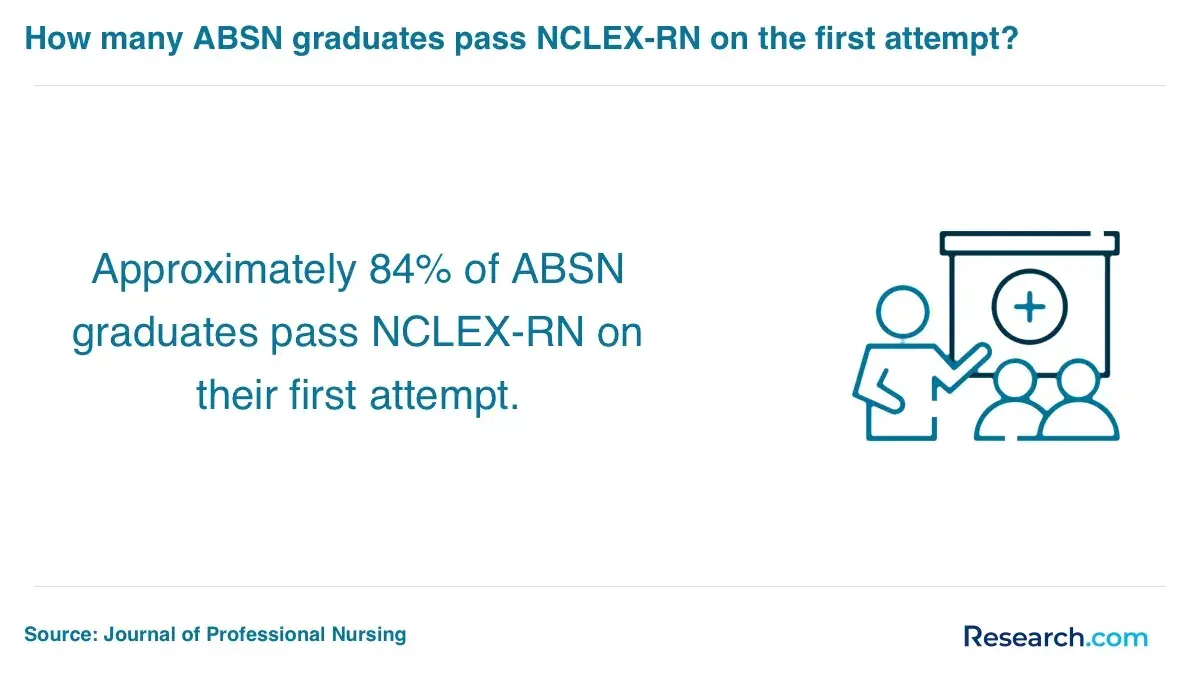
- Graduates benefit from high NCLEX-RN pass rates exceeding 90%, reflecting strong program quality and alignment with state licensure requirements.
- Who can apply for accelerated BSN programs in New Mexico?
- What are the admission requirements for accelerated BSN programs in New Mexico?
- Do accelerated BSN programs in New Mexico require entrance exams?
- What does the curriculum of an accelerated BSN program in New Mexico include?
- What accreditation should I look for in an ABSN program in New Mexico?
- How long does it take to complete an accelerated BSN in New Mexico?
- How much does an accelerated BSN program cost in New Mexico?
- What financial aid options are available for ABSN students in New Mexico?
- What career paths are available after earning an ABSN in New Mexico?
- What is the average salary for nurses with an ABSN degree in New Mexico?
Who can apply for accelerated BSN programs in New Mexico?
ABSN programs in New Mexico are tailored for individuals who already possess a bachelor's degree in a non-nursing discipline and seek a faster transition into the nursing profession. These programs recognize previous undergraduate coursework by crediting general education requirements, allowing students to concentrate solely on nursing-specific studies from the start.
Applicants must satisfy certain academic prerequisites and demonstrate readiness for rigorous nursing education. Importantly, prior healthcare experience is not a mandatory condition for admission. Understanding the eligibility for New Mexico ABSN programs involves meeting minimum GPA standards, completing science prerequisites, and showing competence through standardized assessments.
Students who pursue accelerated BSN programs in New Mexico commonly include career changers from fields such as business, education, or technology who desire more meaningful or stable work in healthcare. Recent graduates aiming for a quick pathway into the nursing workforce also make up a significant portion of enrollees. Successful applicants exhibit strong academic motivation, exceptional time management skills, and the capacity to handle demanding clinical and coursework schedules simultaneously.
Admissions committees value qualities such as a genuine passion for patient care, proficiency in second languages, and relevant community volunteer experience. For those interested in advanced nursing roles, exploring what is a family nurse practitioner can provide deeper insight into career pathways following nursing education. Meeting the accelerated BSN programs in New Mexico requirements ensures candidates are well-prepared to excel in these intensive programs.
What are the admission requirements for accelerated BSN programs in New Mexico?
Admission into accelerated BSN programs in New Mexico is competitive and designed to identify students who are both academically prepared and motivated to handle an intensive nursing curriculum. To assist prospective students in understanding the expectations, below are the key admission requirements common to both online and on-campus ABSN programs in New Mexico.
- Non-Nursing Bachelor's Degree: Applicants must hold a bachelor's degree in a non-nursing field. This ensures candidates have a well-rounded academic foundation necessary to transition into nursing successfully.
- Prerequisite Courses: Completion of prerequisite courses such as anatomy, physiology, microbiology, and chemistry is required. These courses equip students with essential scientific knowledge and better prepare them for the rigors of nursing coursework.
- Minimum GPA Standards: A minimum GPA, often around 3.0, is typically required. This criterion confirms that applicants have demonstrated consistent academic performance and possess the capability to meet the program's demands.
- Application Materials: Submission of recommendation letters, personal statements, and official transcripts is necessary. These materials allow admissions committees to evaluate an applicant's motivation, commitment to the profession, and overall suitability for an accelerated BSN program.
Students seeking to enter nursing from another bachelor's degree field will find these requirements reflect the rigor and dedication needed to succeed. For those interested in advancing beyond the registered nurse level, learning more about the pathology nurse practitioner career path can be an insightful resource.
Do accelerated BSN programs in New Mexico require entrance exams?
Entrance exam requirements for ABSN programs in New Mexico vary by institution. While some programs, such as those at New Mexico State University and Brookline College, mandate the HESI Admission Assessment (A2) exam, others like the University of New Mexico's Accelerated 2nd Degree BSN Option waive this requirement entirely.
The most commonly used exams are the HESI A2 and ATI TEAS, which evaluate core academic skills including reading comprehension, math, science, and critical thinking. These standardized tests serve to assess an applicant's readiness to handle an intensive, fast-paced curriculum and help schools maintain consistent admissions standards. Applicants often have multiple attempts to meet or exceed minimum passing scores in categories like English, Biology, Chemistry, and Math, with the highest results influencing admission decisions.
New Mexico nursing schools employ entrance exams to objectively measure candidates' academic foundation and cognitive abilities essential for success in accelerated programs. Given the demanding nature of ABSN curricula-often completed within 12 to 18 months-these exams help ensure students can assimilate complex information quickly and perform well under pressure.
Entrance exams also create a level playing field for applicants with diverse educational backgrounds by providing a standard metric for evaluation. This rigorous selection process is crucial due to limited cohort sizes and competitive admission rates, allowing schools to identify those most likely to excel in both theoretical coursework and clinical practice.
When I spoke with a nurse from New Mexico who graduated from a local ABSN program, he reflected on the entrance exam experience with nuance. He recalled feeling anxious yet determined when preparing for the HESI A2 exam required by his on-campus program.
Although balancing study with a demanding job was challenging, he appreciated the clear benchmarks the exam provided, helping him identify areas needing improvement before enrollment. He also mentioned that while his program included an online component, the exam was a necessary step to ensure all candidates met the same academic standards regardless of their learning format.
Overall, his journey emphasized how entrance exams in New Mexico's ABSN programs serve as gatekeepers fostering preparedness without diminishing opportunity.
What does the curriculum of an accelerated BSN program in New Mexico include?
The accelerated BSN curriculum in New Mexico is designed to equip students with essential nursing knowledge and clinical competence through an intensive and focused educational pathway. This curriculum combines rigorous coursework with practical experiences to prepare students for the demands of professional nursing. Key components of the curriculum include:
- Foundational Nursing Science Courses: These prerequisite courses encompass anatomy, physiology, microbiology, chemistry, and related sciences that establish a critical understanding of the biological and chemical principles underlying patient care.
- Core Nursing Curriculum Aligned with AACN Essentials: Covering topics such as pediatrics, mental health, pharmacology, and dosage calculations, this segment integrates holistic patient care principles consistent with national nursing education standards.
- Asynchronous Online Theory Coursework: Flexible online classes provide theoretical knowledge through lectures, virtual labs, and case studies, enabling students to balance coursework with personal commitments while developing critical thinking skills.
- Simulation and Skills Laboratory Training: Advanced simulation labs offer hands-on practice in clinical decision-making and complex patient care scenarios, fostering clinical judgment in a controlled, risk-free setting.
- Supervised Clinical Rotations: Real-world clinical placements at hospitals and community health sites allow students to apply learned skills under professional supervision, including unique opportunities within Native American communities.
- NCLEX-RN Preparation and Success Coaching: Dedicated support and coaching throughout the program help students refine test-taking strategies and content mastery to enhance licensure exam readiness and success rates.
What accreditation should I look for in an ABSN program in New Mexico?
Accreditation is essential for ensuring the educational quality of ABSN programs, affecting a student's eligibility for licensure and future career prospects. Prospective students should carefully consider the following types of accreditation when selecting an ABSN program in New Mexico:
- Institutional Accreditation: This accreditation is granted by regional agencies and confirms that the entire institution meets rigorous quality standards. It ensures that the college or university providing the ABSN program offers a credible and comprehensive educational environment.
- Programmatic Accreditation by CCNE: The Commission on Collegiate Nursing Education (CCNE) specifically accredits bachelor's and graduate nursing programs. This accreditation verifies that the program meets high standards related to curriculum, faculty qualifications, and resources, essential for a solid nursing foundation.
- Programmatic Accreditation by ACEN: The Accreditation Commission for Education in Nursing (ACEN) accredits a broad range of nursing programs, including ABSN degrees. ACEN accreditation confirms adherence to national nursing education standards, ensuring graduates are well-prepared for professional nursing roles.
- State Board of Nursing Approval: Approval from the New Mexico Board of Nursing (NMBON) is mandatory for all nursing programs in the state. It guarantees that the program complies with state-specific requirements and that graduates are eligible to sit for the NCLEX-RN licensure examination.
How long does it take to complete an accelerated BSN in New Mexico?
ABSN programs in New Mexico cater to individuals holding a non-nursing bachelor's degree who seek a rapid transition into nursing. The duration varies based on several key factors that influence program length and completion time. Consider the following:
- Typical Program Length: Most accelerated BSN programs in New Mexico require 16 to 19 months of full-time study, reflecting an intensive, structured curriculum geared toward swift completion.
- Full-Time Commitment: ABSN tracks are exclusively full-time, demanding unwavering focus from students as part-time options are not offered, which maintains program intensity but limits scheduling flexibility.
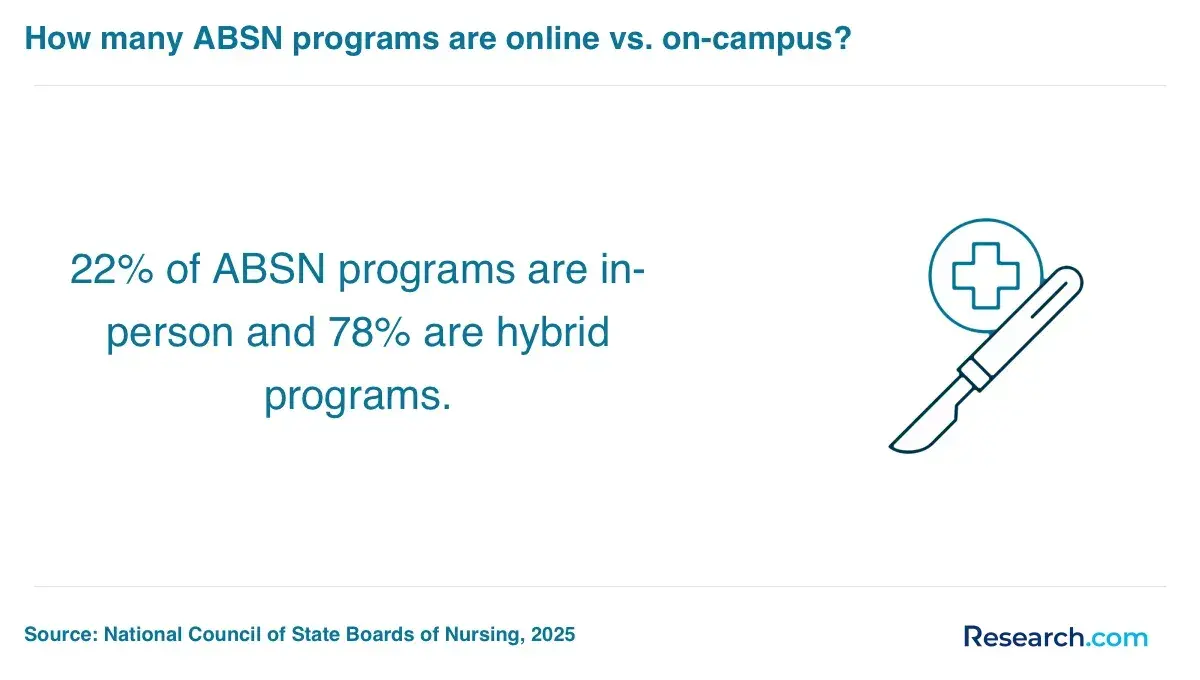
- Online vs. On-Campus: Some institutions provide hybrid or asynchronous online coursework combined with mandatory in-person labs and clinicals, offering some scheduling convenience without reducing total duration.
- Clinical Hour Requirements: Mandatory supervised clinical hours embedded throughout programs cannot be accelerated or bypassed, ensuring mastery of practical skills and regulatory compliance.
- Course Sequencing: Strict progression through required courses and clinical rotations prevents shortening timelines, and missing prerequisites may extend the total program length.
A nurse who graduated from an ABSN program at a New Mexico school reflected on her journey: "Completing the program in under 18 months felt both exhilarating and demanding. Balancing the rigorous schedule and intense clinical hours was challenging, but knowing the clear timeframe helped me stay motivated.
Transitioning from a non-healthcare career, I appreciated how the program's structure pushed me to focus deeply without distractions. The clinical rotations, especially in diverse local settings, reinforced my learning and prepared me thoroughly for nursing practice here." Her experience underscores the commitment required but also the rewarding precision of completing an ABSN in New Mexico within a defined, relatively brief period.
How much does an accelerated BSN program cost in New Mexico?
Tuition and fees for accelerated BSN programs in New Mexico vary considerably depending on the institution, program format, residency status, and additional expenses. These factors collectively influence the overall investment required for students pursuing an accelerated nursing degree. Below are the primary cost considerations for online and campus ABSN programs in New Mexico.
- Tuition Rates: Tuition is generally charged per credit hour and differs for residents and non-residents. Public universities in New Mexico typically charge lower rates for residents, making program costs more affordable for in-state students compared to non-residents or private school attendees.
- Technology and Lab Fees: Both online and on-campus programs incorporate fees to cover simulation equipment, virtual learning platforms, and laboratory access. These mandatory fees can add several thousand dollars to the total cost and may be higher for online students requiring remote lab experiences.
- Clinical Supplies and Uniforms: Students must budget separately for clinical equipment such as uniforms, stethoscopes, and other necessary supplies. These are not usually included in tuition and can add a few hundred dollars depending on program requirements.
- Travel and Housing for In-Person Components: Even online accelerated BSN programs in New Mexico require face-to-face clinical rotations and on-campus sessions. Travel, temporary housing, and related expenses can significantly increase the total cost, especially if clinical sites are distant from the student's residence.
- Books and Course Materials: Textbooks and digital resources represent another out-of-pocket cost. Expenses may vary per semester, and students should plan accordingly to cover these necessary learning tools.
- Financial Aid and Scholarships: Many ABSN programs participate in federal financial aid and offer institutional scholarships or tuition discounts to eligible students. Prospective students are encouraged to explore these options early to reduce the accelerated BSN program cost New Mexico.
For students researching options, it is also valuable to consult rankings of the best acute care nurse practitioner programs to identify institutions recognized for quality and potential value, such as those listed on rankings of the best acute care nurse practitioner programs.
What financial aid options are available for ABSN students in New Mexico?
Because accelerated nursing programs in New Mexico can be costly, many students explore different financial aid opportunities to make their education more affordable. Prospective students should consider the following common financial aid options available to assist with the cost of an ABSN program.
- Federal Student Loans: Most students qualify for federal loans such as Direct Unsubsidized Loans and Graduate PLUS Loans by completing the FAFSA. These loans offer lower interest rates and flexible repayment plans, helping students manage expenses without the burden of high private loan rates.
- State and Institutional Grants: New Mexico provides limited state-specific grants and institutional scholarships, often through nursing schools like the UNM College of Nursing. These grants reduce out-of-pocket costs but may not be available during summer terms, so students should verify current offerings.
- Nursing Scholarships: Numerous institutions in New Mexico award scholarships targeted specifically at nursing students. These scholarships typically require separate applications and are granted based on merit, financial need, or dedication to servicing underserved communities.
- Employer Tuition Assistance: Some healthcare employers offer tuition reimbursement programs for nursing employees, including those in accelerated programs. Accepting this aid usually involves a commitment to work for the employer for a set time after graduation.
- Loan Forgiveness Programs: The New Mexico Nursing Loan-for-Service Program encourages graduates to serve in healthcare shortage areas by forgiving a portion or all of their student loans for each year worked. Awards can amount up to $16,000 annually, making it an attractive option for those planning to practice in rural or underserved regions.
For students seeking additional resources to ease the financial demands associated with a nursing degree, exploring private scholarships and loans is advisable, though these often carry higher interest rates. Additionally, those considering advanced roles might research the easy np specialty program to get into to plan future education pathways effectively.
What career paths are available after earning an ABSN in New Mexico?
Completing an ABSN program in New Mexico opens doors to diverse nursing roles across various healthcare settings, enabling graduates to contribute meaningfully within the healthcare system. Below are some of the most common career paths available to those with an ABSN degree in New Mexico.
- Registered Nurse (RN): Registered nurses provide direct patient care, administer medications, and perform health assessments in hospitals, clinics, and community health centers. The ABSN curriculum equips graduates with the knowledge and skills necessary to succeed in the NCLEX-RN exam and excel in registered nurse jobs New Mexico offers.
- Critical Care Nurse: Specializing in the care of critically ill patients, critical care nurses work primarily in intensive care units, managing life-support technology and medications to stabilize patients. The comprehensive acute care training in ABSN programs prepares graduates for the demanding environment of critical care nursing.
- Public Health Nurse: Public health nurses focus on disease prevention and health promotion at the community level through education programs and policy advocacy. Graduates with an ABSN find opportunities in government and non-profit sectors, addressing public health disparities prevalent in New Mexico.
- Nurse Educator: Nurse educators play a vital role in academic institutions by developing curricula and mentoring nursing students. ABSN graduates who gain clinical experience can pursue this career path to shape future healthcare professionals.
- Nurse Manager: Nurse managers oversee nursing staff and coordinate care delivery within healthcare facilities. With leadership skills fostered in ABSN programs, graduates can advance into managerial roles that influence operational efficiency and patient outcomes.
Those considering an online or campus-based ABSN program in New Mexico may also explore most affordable online nurse practitioner programs as a subsequent step toward advanced clinical roles.
What is the average salary for nurses with an ABSN degree in New Mexico?
Earning an ABSN degree in New Mexico opens pathways to competitive salaries within the state's healthcare sector, with compensation influenced by various factors such as experience, specialization, employer type, and geographic location. Understanding these elements can provide prospective nursing students with critical insights into potential earnings. Key factors affecting ABSN nurse salaries include:
- Years of Experience: Salary progression is closely tied to experience, with entry-level nurses earning at the lower spectrum and seasoned professionals commanding significantly higher wages, reflecting skills and tenure in the field.
- Type of Healthcare Employer: Employment settings such as hospitals, outpatient clinics, and specialty centers offer varying salary scales, with BSN-prepared nurses generally earning more than those with associate degrees due to expanded roles and responsibilities.
- Geographic Location: Urban areas, particularly large metropolitan centers, tend to offer higher median salaries compared to rural regions, influenced by cost of living and healthcare demand.
- Specialization and Certification: Nurses with additional certifications or specialized expertise in high-demand areas often access superior compensation opportunities relative to general nursing roles.
- Educational Advancement: Pursuing graduate degrees beyond the ABSN can lead to advanced practice positions with substantially higher earning potential, though currently a small proportion of nurses take this path.
Here's What Graduates Have to Say About Their ABSN Degree in New Mexico
- Todd: "Completing the online ABSN program at the University of New Mexico offered me incredible flexibility while still providing rigorous training. Being able to balance my family life and studies was a game changer, especially living in a rural area where commuting to campus daily isn't practical. The program's strong clinical partnerships in local hospitals allowed me to gain hands-on experience essential for starting my nursing career. I feel well-prepared and confident working in my community as a nurse, knowing I received a quality education tailored to New Mexico's healthcare needs. "
- Miranda: "Diego Attending the on-campus ABSN program at New Mexico State University was a transformative experience. The intensive curriculum pushed me to grow both professionally and personally, and the support from faculty was outstanding. I appreciated learning within a culturally rich environment that reflected the diverse population we serve in this state. Starting my nursing career now, I'm passionate about giving back and making a tangible difference in the health outcomes of our local youth, which makes every challenge worthwhile. "
- Jack: "Pursuing an ABSN degree at the University of the Southwest opened doors I never imagined. The program's emphasis on community health and outreach prepared me to face New Mexico's unique healthcare challenges head-on. This degree has not only advanced my professional development but also strengthened my commitment to advocate for underserved populations. The career stability and growth opportunities I've found as a nurse in New Mexico affirm that this path was absolutely worth it. "
Related Articles for Nearby States
- 2027 Best ABSN Programs - Accelerated BSN Programs in Arizona: Online & Campus
- 2027 Best ABSN Programs - Accelerated BSN Programs in Colorado: Online & Campus
- 2027 Best ABSN Programs - Accelerated BSN Programs in Texas: Online & Campus
- 2027 Best ABSN Programs - Accelerated BSN Programs in Utah: Online & Campus
- 2027 Best ABSN Programs - Accelerated BSN Programs in Oklahoma: Online & Campus
- 2027 Best ABSN Programs - Accelerated BSN Programs in Nevada: Online & Campus
- 2027 Best ABSN Programs - Accelerated BSN Programs in Kansas: Online & Campus
- 2027 Best ABSN Programs - Accelerated BSN Programs in Wyoming: Online & Campus
- 2027 Best ABSN Programs - Accelerated BSN Programs in Nebraska: Online & Campus
- 2027 Best ABSN Programs - List of Accelerated BSN Programs in California: Online & Campus
References:
- Get Your BSN Nursing Degree with Brookline in Albuquerque NW https://www.brooklinecollege.edu/programs/nursing/accelerated-bachelor-of-science-in-nursing/albuquerque/
- FAQs https://hsc.unm.edu/nursing/programs/bsn/pre-licensure/absn/faq.html
- Post-Baccalaureate: Accelerated Bachelor of Science in Nursing Online - Edgewood University https://www.edgewood.edu/academics/programs/online-accelerated-post-bachelor-science-nursing/
- New Mexico State University https://schoolofnursing.nmsu.edu/nursing/son-pages/2nd-degree-BSN-options.html
- Accelerated Nursing Programs: How Do They Work? | NurseJournal.org https://nursejournal.org/resources/accelerated-nursing-programs/
- University of New Mexico Accelerated BSN 2024 - School Programs Support https://allnurses.com/university-new-mexico-accelerated-bsn-t758573/
- Working In Nursing School | Can You Work During an ABSN Program? https://bayadaeducation.org/resources/absn/working-in-nursing-school
- New Mexico Nursing School | Joyce University of Nursing https://www.joyce.edu/locations/new-mexico-nursing-school/
- Accelerated Bachelor of Science (ABSN) Degree in Nursing at SMU https://www.samuelmerritt.edu/college-nursing/accelerated-bachelor-science-nursing
- Registered Nurse Salary in New Mexico | Incredible Health https://www.incrediblehealth.com/salaries/rn/nm
Other Things You Need to Know About Accelerated BSN Programs in New Mexico
As of 2027, some ABSN programs in New Mexico, like the University of New Mexico's accelerated BSN, offer hybrid options with online coursework components. Prospective students should verify specific details with each program to understand the balance of online and in-person requirements.
ABSN students in New Mexico often face a challenging balance between their rigorous coursework and clinical requirements, making it difficult to work while completing their degree. Due to the accelerated nature of these programs, most students find it necessary to focus full-time on their studies and clinical hours to ensure timely graduation and mastery of nursing skills.
While some part-time or flexible work options may exist, students should carefully consider their ability to manage job responsibilities alongside demanding clinical schedules. Ultimately, prioritizing the ABSN program is crucial for success, though individual circumstances and program flexibility can vary.


