
2027 Best ABSN Programs - Accelerated BSN Programs in Vermont: Online & Campus

Co-Founder and Chief Data Scientist
Vermont's healthcare sector is growing rapidly, with a 15% projected increase in registered nurse demand over the next decade. Choosing to pursue an online or campus accelerated Bachelor of Science in Nursing (ABSN) program here offers a strategic path to join this thriving field swiftly. These programs provide a condensed timeline to transition into nursing, combining flexibility and rigorous training that meets Vermont's healthcare standards. Education designed with local industry needs maximizes job readiness and professional growth.
This article, crafted by experts in career planning, explores what an ABSN program in Vermont truly entails. It guides prospective students through what to expect, what to seek in quality programs, and how to navigate choices effectively to find the right accelerated nursing education pathway in Vermont.
Key Benefits of ABSN Programs in Vermont
- Vermont's ABSN programs offer a fast-track path to nursing licensure, typically completed in 12-18 months, enabling quick career advancement in a high-demand field.
- Students benefit from flexible learning options including hybrid and fully online formats, accommodating working professionals and those balancing family commitments.
- With a growing healthcare sector in Vermont, ABSN graduates enjoy a strong job market and competitive salaries averaging over $70,000 annually, fostering both stability and growth.
- Who can apply for accelerated BSN programs in Vermont?
- What are the admission requirements for accelerated BSN programs in Vermont?
- Do accelerated BSN programs in Vermont require entrance exams?
- What does the curriculum of an accelerated BSN program in Vermont include?
- What accreditation should I look for in an ABSN program in Vermont?
- How long does it take to complete an accelerated BSN in Vermont?
- How much does an accelerated BSN program cost in Vermont?
- What financial aid options are available for ABSN students in Vermont?
- What career paths are available after earning an ABSN in Vermont?
- What is the average salary for nurses with an ABSN degree in Vermont?
Who can apply for accelerated BSN programs in Vermont?
Accelerated Bachelor of Science in Nursing (ABSN) programs in Vermont offer a unique opportunity for individuals who already hold a bachelor's degree in a non-nursing field to make a swift and focused transition into nursing. These programs build on students' existing academic foundation, emphasizing essential nursing skills and knowledge to prepare them for a rewarding healthcare career. Applicants typically need to meet specific academic standards, including completion of prerequisite science courses, reflecting the rigorous nature of these programs. This pathway is perfect for those ready to dedicate themselves fully to entering the nursing profession without starting from scratch.
The Vermont ABSN program eligibility criteria attract a diverse and driven group of students. Many are career changers from fields such as business, education, or psychology who seek more meaningful and impactful work centered on patient care. Others are recent graduates eager to pursue the fastest route into healthcare, while some professionals aim for greater job security and advancement in a growing field. Successful applicants are often those with strong academic motivation, excellent time management skills, and a genuine passion for patient care. These qualities help students thrive in the demanding environment of accelerated nursing education, allowing them to balance intensive study with their personal and professional lives. For those curious about nursing specialties, exploring the highest paying nurse practitioner jobs can also provide inspiring career goals to pursue after completing an ABSN program.
What are the admission requirements for accelerated BSN programs in Vermont?
Admission into accelerated BSN programs in Vermont is highly competitive and designed to identify students who are both academically prepared and motivated to handle an intensive nursing curriculum. Whether pursuing online or on-campus options, applicants must meet key criteria that demonstrate their readiness to succeed in a fast-paced environment.
Below are the common admission requirements to guide you on how to qualify for ABSN programs in Vermont.
- Non-Nursing Bachelor's Degree: Applicants must hold a bachelor's degree from an accredited institution in a field other than nursing. This ensures that candidates have proven their ability to complete rigorous academic work and are prepared to undertake the focused nursing curriculum.
- Completion of Prerequisite Courses: Prospective students need to complete foundational courses such as anatomy and physiology, microbiology, chemistry, statistics, and psychology. These prerequisites provide essential scientific knowledge needed for success in nursing studies and are usually required with a minimum grade to demonstrate competency.
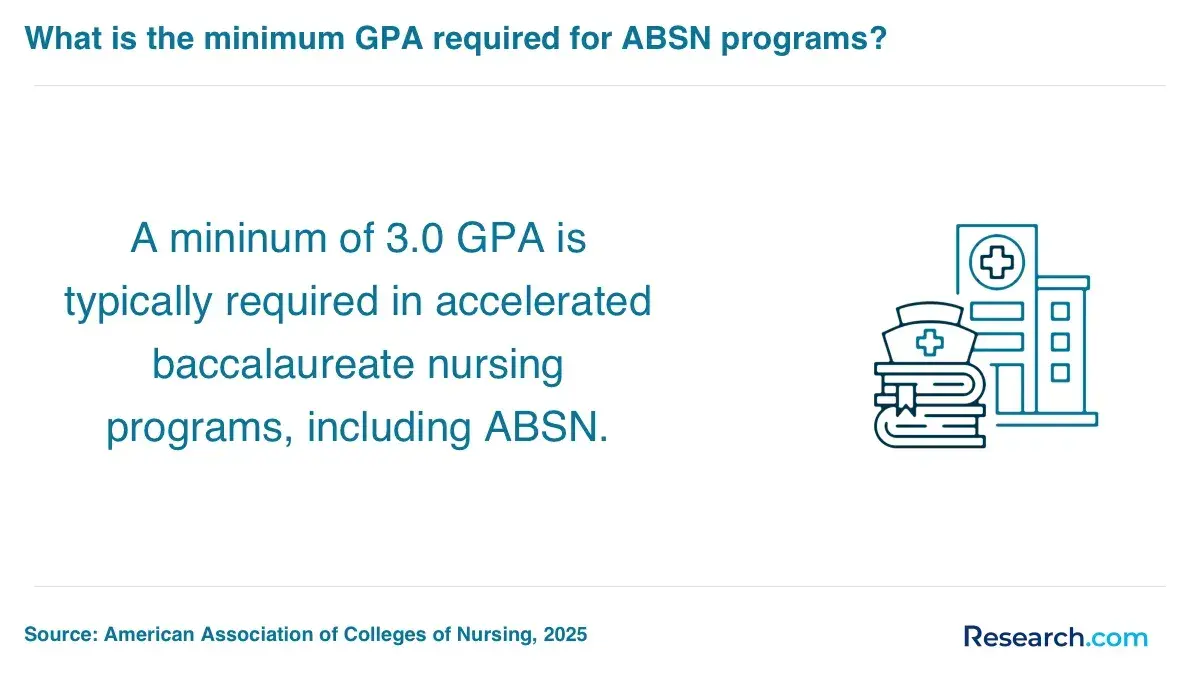
- Minimum GPA Requirement: Most programs expect a competitive undergraduate GPA, often between 3.0 and 3.5 on a 4.0 scale. Meeting this benchmark helps schools assess an applicant's academic capability and readiness for the accelerated nature of the program.
- Application Materials: A complete application usually includes official transcripts, letters of recommendation, a personal statement, and a resume. These documents allow admissions committees to understand an applicant's motivation, character, and professional background. Strong recommendation letters and a well-crafted personal statement often make a significant difference.
- Interview and Additional Requirements: Some programs may require interviews to evaluate communication skills and professionalism, while others mandate background checks and health clearances. These steps protect patients and ensure students are prepared to meet clinical practice standards.
For those interested in advancing their nursing career with specialized paths, exploring options like becoming a womens health nurse practitioner can be a valuable next step beyond ABSN completion.
Do accelerated BSN programs in Vermont require entrance exams?
Entrance exam requirements for Accelerated Bachelor of Science in Nursing (ABSN) programs in Vermont vary depending on the institution. While no universal mandate exists, many schools use exams such as the Test of Essential Academic Skills (TEAS) or the Health Education Systems, Inc. (HESI) Admission Assessment to review applicants. These exams cover vital areas like reading comprehension, math, science, and critical thinking abilities-skills that are essential for nursing success. Some programs may also include the GRE, but this is less common. Ultimately, prospective students should verify specific testing policies with their chosen schools to ensure they meet all admission criteria.
Many Vermont nursing schools employ entrance exams as a way to assess a candidate's readiness for the demanding ABSN curriculum. These assessments help identify students with a solid foundation in subjects such as biology, chemistry, and math, which are foundational for accelerated nursing education. By evaluating critical thinking and academic knowledge early, schools can better support students, potentially offering resources to those who need extra preparation. This thoughtful approach promotes success and confidence throughout the intensive program, empowering students to thrive in both online and on-campus formats.
When speaking with a nurse from Vermont who graduated through a local ABSN program, I gained insight into the realities of entrance exams. He recalled feeling both nervous and determined as he prepared for the TEAS exam, which the school required. Despite some initial anxiety, the exam helped him realize areas where he needed to focus, ultimately strengthening his readiness for the fast-paced curriculum. He noted that whether studying online or on campus, the entrance exam was a valuable step in building his confidence and ensuring he was set up for success. This experience affirmed his belief that these exams serve as a helpful tool rather than an obstacle, guiding students toward their nursing careers with clarity and preparation.
What does the curriculum of an accelerated BSN program in Vermont include?
The accelerated BSN curriculum in Vermont is designed to help students build clinical competence and nursing knowledge in a condensed timeframe, typically between 12 to 16 months. This intense yet well-structured approach blends theory with hands-on experience to prepare students quickly and effectively for nursing careers.
Key components of these programs include:
- Prerequisite Foundation Courses: These essential science and liberal arts courses, such as Anatomy, Physiology, Microbiology, and Ethics, ensure students possess the necessary background to excel in nursing studies and handle the program's fast pace.
- Core Nursing Theory and Practice: Focused nursing coursework covers a broad range of specialties, including adult health, pediatrics, and mental health, integrating critical thinking with real-world nursing principles to build strong clinical judgment.
- Clinical Rotations and Immersions: Hands-on training in hospitals and clinics allows students to apply their knowledge under expert supervision, fostering confidence and patient-centered care skills across diverse settings.
- Simulation Laboratory Training: Advanced simulation labs provide safe, controlled environments to practice complex procedures and decision-making, bridging classroom learning with practical nursing realities.
- Evidence-Based Practice and Leadership Development: Courses emphasize applying research to improve care and cultivate leadership skills essential for modern nursing roles and healthcare improvement.
- NCLEX-RN Preparation: Integrated exam preparation ensures students are fully equipped with the knowledge and test-taking skills required to succeed on the licensure exam and launch their nursing careers.
What accreditation should I look for in an ABSN program in Vermont?
Accreditation is fundamental to ensuring that an ABSN program in Vermont delivers high-quality education, prepares you for licensure, and opens doors to rewarding nursing careers. To help you make an informed choice, here are the key accreditations to look for in reputable ABSN programs:
- Institutional Accreditation: This recognition by a regional accrediting body, like the New England Commission of Higher Education (NECHE), confirms that the entire college or university maintains strong academic standards, qualified faculty, and reliable student support. It ensures your degree is respected nationwide and facilitates credit transfers or graduate school admission.
- Programmatic Accreditation by CCNE: The Commission on Collegiate Nursing Education (CCNE) is the premier accreditor for nursing programs at the baccalaureate and graduate levels. CCNE accreditation verifies that the curriculum, faculty, and clinical experiences meet rigorous national standards, preparing you thoroughly for professional nursing roles and advanced education.
- Programmatic Accreditation by ACEN: The Accreditation Commission for Education in Nursing (ACEN) offers a respected alternative, accrediting nursing programs across all degree levels. Having ACEN accreditation means the program meets federal quality benchmarks and equips graduates with the skills needed for diverse nursing career paths.
- State Board of Nursing Approval: Approval from Vermont's State Board of Nursing is vital as it legally authorizes the program to prepare students for the NCLEX-RN licensing exam. This approval ensures that your education aligns with state-specific standards, making you eligible for licensure and safe, competent practice in Vermont.
How long does it take to complete an accelerated BSN in Vermont?
Accelerated Bachelor of Science in Nursing (ABSN) programs in Vermont offer a fast-paced path for those with a non-nursing bachelor's degree eager to enter the nursing field. The timeframe to complete these programs varies, influenced by several important factors:
- Program Length: Most ABSN programs in the region take between 11 and 18 months of full-time study, allowing you to transition quickly from one career to nursing.
- Delivery Format: Online or hybrid options provide flexibility for theoretical coursework, while on-campus programs maintain immersive, hands-on learning experiences, both fitting within similar timeframes.
- Clinical Hours: Intensive clinical training of 600 to 760 hours is required, demanding dedicated, full-time commitment to gain essential real-world skills.
- Course Prerequisites: Completing required science and healthcare foundations beforehand can impact your start date and overall timeline, so early preparation is key.
When I spoke with a nurse who completed an ABSN program at a Vermont school, she reflected on the intensity and rewarding nature of the journey. "Balancing immersive clinical hours and coursework was challenging, but knowing it was a focused 15-month path helped me stay motivated," she shared. She recalled long days filled with learning and hands-on practice, but also the excitement of seeing her progress each semester. The structure kept her engaged and ultimately transformed her from a career-changer into a confident nurse ready to serve her community.
How much does an accelerated BSN program cost in Vermont?
Tuition and fees for accelerated BSN programs in Vermont vary by school, program format, and additional expenses, influencing the overall cost of your nursing education. Consider these key cost factors to better prepare your budget and confidently pursue your goals in nursing.
- Tuition Rates: Tuition is the largest expense and differs significantly across institutions and residency status. In Vermont, costs can range from moderately priced per-credit fees to total program costs exceeding $20,000, reflecting the quality and intensity of the program.
- Program and Technology Fees: Many accelerated BSN programs charge extra fees covering administrative support, clinical platforms, and essential learning tools. These fees, though sometimes overlooked, ensure access to vital resources and can add several thousand dollars to your total investment.
- Clinical Supplies and Equipment: Hands-on learning requires necessary supplies such as uniforms, stethoscopes, and medical tools. These essential items typically represent a few hundred dollars in costs but are indispensable for successful clinical experiences.
- Travel and In-Person Expenses: Even for programs with online components, travel to campus or clinical sites across Vermont may be required. Costs for transportation, parking, and meals during in-person sessions contribute to your overall budget and vary depending on your location and schedule.
- Financial Aid Availability: Vermont's educational institutions offer a variety of financial aid options including loans, grants, scholarships, and work-study opportunities. Exploring these resources can make accredited accelerated BSN program cost in Vermont more manageable and support your path to nursing success.
Whether choosing an online or on-campus ABSN program, researching financial aid and program expenses is crucial. For those interested, exploring the best acute care NP programs can also offer advanced career pathways after completing your nursing degree.
What financial aid options are available for ABSN students in Vermont?
Because accelerated nursing programs in Vermont can be costly, many students explore different financial aid opportunities to make their education more affordable and attainable.
Below are some of the most common types of financial aid available to support ABSN students throughout their journey.
- Federal Student Loans: Most students qualify for federal direct subsidized and unsubsidized loans by submitting the FAFSA. These loans help cover tuition, fees, and living expenses and offer flexible repayment options, making them a practical choice for managing educational costs.
- State and Institutional Grants: Vermont offers grants such as those through the Vermont Student Assistance Corporation (VSAC) to provide need-based aid. Additionally, many nursing schools award merit- or need-based grants, helping reduce the financial burden without incurring debt.
- Nursing Scholarships: Scholarships targeting nursing students are available both nationally and within Vermont, focusing on academic achievement, financial need, or specific demographics. These awards provide valuable non-repayable support and are worth exploring extensively.
- Employer Tuition Assistance: Several Vermont hospitals and healthcare employers partner with ABSN programs to offer tuition reimbursement or assistance. This aid is particularly beneficial for students committed to working at those facilities after graduation, combining education and career opportunities.
- Loan Forgiveness and Repayment Programs: Graduates working in high-need areas can benefit from loan forgiveness options like the Nurse Corps Loan Repayment Program, which can eliminate a significant portion of nursing education debt. Vermont also provides programs offering financial help to graduates working full-time for state employers. This support creates a powerful incentive to serve communities in need while easing financial stress.
Students interested in advanced nursing credentials might also consider exploring the fastest PMHNP certificate programs as a potential pathway to enhance their qualifications alongside their ABSN studies.
What career paths are available after earning an ABSN in Vermont?
Completing an Accelerated Bachelor of Science in Nursing (ABSN) in Vermont opens doors to a variety of nursing roles across hospitals, community settings, and public health institutions. Graduates find rewarding opportunities that match their skills and passion for care.
Here are some common career paths available to new ABSN nurses in Vermont:
- Registered Nurse (RN) in Acute Care: These nurses provide direct patient care in dynamic hospital environments such as emergency rooms and surgical units. The ABSN program equips graduates with hands-on experience and essential clinical knowledge to thrive in high-pressure situations while supporting diverse patient needs.
- Critical Care Nurse: Working in intensive care units and trauma centers, critical care nurses manage complex, life-threatening conditions. ABSN graduates build a strong foundation in clinical judgment and patient assessment, preparing them for advanced training and challenging roles in critical care settings.
- Public Health Nurse: Focused on community wellness, public health nurses collaborate with agencies to promote disease prevention and health education. Vermont ABSN job opportunities include working with vulnerable populations to improve health outcomes and address social determinants of health beyond hospital walls.
- Nurse Educator: These professionals train and mentor future nurses in academic or clinical settings. The comprehensive ABSN curriculum develops the communication and leadership skills needed to guide nursing students and support ongoing professional development.
- Nurse Manager: Nurse managers oversee nursing teams and coordinate patient care to ensure quality and efficiency. Graduates prepared through accelerated programs can step into leadership roles that blend clinical expertise with administrative responsibilities.
For those considering advancement, understanding how long does nurse practitioner school take is an essential next step for expanding their nursing career in Vermont.
What is the average salary for nurses with an ABSN degree in Vermont?
Earning an Accelerated Bachelor of Science in Nursing (ABSN) degree in Vermont unlocks the potential for competitive salaries, with compensation influenced by several key factors including experience, specialization, healthcare setting, and geographic location. Understanding these elements can empower prospective ABSN students to strategically plan their nursing careers.
The following factors highlight the main influences on ABSN nurse salaries in Vermont:
- Years of Experience: Entry-level ABSN nurses often start with modest salaries, but as their clinical expertise grows, so do their earnings. Experienced nurses can see significant salary increases, reflecting their advanced skills and value in healthcare settings.
- Type of Employer: Compensation varies depending on whether nurses work in hospitals, outpatient clinics, or specialized care centers, with varied pay scales reflecting differences in organizational resources and care requirements.
- Geographic Area: Urban centers, especially around Burlington-South Burlington, offer higher salaries due to greater healthcare demand and cost-of-living adjustments compared to rural locations.
- Specialization and Certification: Nurses who pursue certifications or specialize in high-demand fields such as critical or emergency care typically command premium salaries thanks to their advanced qualifications.
- Level of Education and Cost of Living: Vermont's slightly below-average cost of living enhances the value of nursing salaries, making the state an attractive place for ABSN graduates seeking both competitive pay and quality of life.
Here's What Graduates Have to Say About Their ABSN Degree in Vermont
- Completing the on-campus ABSN program at Vermont Technical College was a transformative journey for me. The hands-on experience and supportive faculty prepared me thoroughly for the challenges of nursing. Starting my career in a local school setting has allowed me to apply my skills directly to help children and adolescents thrive. I feel a deep sense of fulfillment knowing that I contribute to the well-being and health education of youth in my community. This program made me confident and ready to face the dynamic field of nursing. Maddox
- The online ABSN program through Champlain College was a perfect fit for balancing my work and studies. The flexibility allowed me to learn at my own pace while still engaging deeply with instructors and peers. Beginning my nursing career in a Vermont school district has been incredibly rewarding, especially as I bring my knowledge to promote healthier lifestyles among students. Pursuing the ABSN degree pushed me to develop professionally and personally, expanding my passion for community health. The remote learning experience also gave me resilience and adaptability, valuable traits in nursing. Brielle
- Pursuing an ABSN degree at Norwich University offered unique challenges due to Vermont's rural healthcare demands, but it also opened unparalleled opportunities for professional advancement. The program emphasized practical skills and community impact, which motivated me to focus on preventive care and advocacy in local schools. I have grown tremendously as a nurse, learning to navigate complex situations and collaborate effectively with multidisciplinary teams. Watching my efforts improve student health outcomes continues to inspire me daily. I appreciate how the ABSN program positioned me to make a meaningful difference in Vermont's communities. Harlow
Related Articles for Nearby States
- 2027 Best ABSN Programs - List of Accelerated BSN Programs in New Hampshire: Online & Campus
- 2027 Best ABSN Programs - List of Accelerated BSN Programs in Massachusetts: Online & Campus
- 2027 Best ABSN Programs - Accelerated BSN Programs in New York: Online & Campus
- 2027 Best ABSN Programs - List of Accelerated BSN Programs in Connecticut: Online & Campus
- 2027 Best ABSN Programs - List of Accelerated BSN Programs in Rhode Island: Online & Campus
- 2027 Best ABSN Programs - Accelerated BSN Programs in Maine: Online & Campus
- 2027 Best ABSN Programs - List of Accelerated BSN Programs in New Jersey: Online & Campus
- 2027 Best ABSN Programs - List of Accelerated BSN Programs in Pennsylvania: Online & Campus
- 2027 Best ABSN Programs - Accelerated BSN Programs in Delaware: Online & Campus
- 2027 Best ABSN Programs - Accelerated BSN Programs in Maryland: Online & Campus
References:
- 7 Challenges to Prepare for in Accelerated Nursing Programs https://www.edumed.org/articles/7-challenges-to-prepare-for-in-accelerated-nursing-programs/
- How to Apply for Financial Aid https://www.vsac.org/pay/student-aid-options
- Top 10 Online ABSN Programs for 2025 https://nurse.org/education/online-absn-programs/
- Nursing, A.S. https://vermontstate.edu/academic-programs/nursing-as/
- Best Nursing Schools in Vermont - ADN, BSN - Updated https://www.registerednursing.org/state/vermont/
- Working In Nursing School | Can You Work During an ABSN Program? https://bayadaeducation.org/resources/absn/working-in-nursing-school
- Accelerated BS in Nursing https://home.norwich.edu/on/academics/programs/accelerated-bs-nursing
- Average RN Salary In Vermont | NurseJournal.org https://nursejournal.org/state/vermont/rn-salary/
- Opportunities for New Nurse Graduates https://svmc.org/careers/new-nurse-graduates
- ABSN Tuition & Fees - Northeastern University Accelerated Nursing https://absn.northeastern.edu/admission/tuition-and-fees/
Other Things You Should Know About Accelerated BSN Programs in Vermont
In 2027, Vermont offers top-notch Accelerated BSN programs including those at the University of Vermont and Norwich University. These programs provide intensive coursework and clinical experiences to prepare students for a nursing career in a shorter timeframe compared to traditional BSN programs.
In 2027, Vermont's ABSN programs prepare students for the NCLEX exam through rigorous coursework, clinical experiences, and simulation labs. These programs focus on critical thinking and patient care skills, which are essential for passing the NCLEX and succeeding in nursing careers.
In 2027, top-ranked ABSN programs in Vermont include those at the University of Vermont and Norwich University. They offer comprehensive curricula combined with clinical experiences designed to prepare students effectively for nursing careers.
To enroll in an ABSN program in Vermont, students typically need a non-nursing bachelor's degree, a minimum 3.0 GPA, completion of prerequisite courses such as anatomy and microbiology, and some healthcare experience or certification may be preferred by certain programs.


