
2027 Best ABSN Programs - Accelerated BSN Programs in Nevada: Online & Campus

Co-Founder and Chief Data Scientist
Nevada's healthcare sector is growing rapidly, with a 12% projected increase in registered nurse employment over the next decade. Pursuing an accelerated BSN program, whether online or on-campus, allows students to enter the workforce faster while adapting to Nevada's dynamic healthcare needs. The flexibility of online ABSN programs complements the traditional structure of campus-based options, offering tailored paths suited to diverse learning preferences and schedules.
This article explains what an accelerated BSN program in Nevada involves. Prepared by career planning experts, it guides readers on what to expect, what criteria matter, and how to navigate choosing the right ABSN options effectively. Clear strategies will help students make informed, practical decisions aligned with their career goals.
Key Benefits of ABSN Programs in Nevada
- Accelerated BSN programs in Nevada typically take 12 to 18 months, allowing students to enter the nursing workforce faster than traditional routes.
- Many programs offer hybrid formats, combining online coursework with on-campus clinical rotations, providing flexibility for working adults.
- Nevada's growing healthcare market increases job placement rates for ABSN graduates, with some programs reporting over 85% employment within six months of graduation.
- Who can apply for accelerated BSN programs in Nevada?
- What are the admission requirements for accelerated BSN programs in Nevada?
- Do accelerated BSN programs in Nevada require entrance exams?
- What does the curriculum of an accelerated BSN program in Nevada include?
- What accreditation should I look for in an ABSN program in Nevada?
- How long does it take to complete an accelerated BSN in Nevada?
- How much does an accelerated BSN program cost in Nevada?
- What financial aid options are available for ABSN students in Nevada?
- What career paths are available after earning an ABSN in Nevada?
- What is the average salary for nurses with an ABSN degree in Nevada?
Who can apply for accelerated BSN programs in Nevada?
Accelerated Bachelor of Science in Nursing programs in Nevada are tailored for individuals who already possess a non-nursing bachelor's degree and wish to transition into the nursing field more rapidly. These programs integrate core nursing coursework with hands-on clinical experiences, enabling students to build essential nursing skills efficiently. To qualify, applicants generally must have completed prerequisite science courses and hold a bachelor's degree in any discipline. Understanding ABSN admission requirements Nevada is crucial for prospective students to prepare effectively, as many programs require a minimum GPA, completion of specific coursework, and a successful score on exams like the TEAS.
The typical students pursuing accelerated BSN programs Nevada include career changers seeking a new direction from fields such as business, education, or the sciences, as well as recent graduates eager to enter healthcare quickly. Many professionals are drawn by the prospect of finding more meaningful, stable employment with strong future demand. Successful applicants usually demonstrate strong academic motivation, excellent time management skills, and a genuine passion for patient care, all vital qualities for thriving in a fast-paced nursing program.
Additionally, understanding the potential outcomes of nursing specialization can be motivating, as certain DNP specialties salary prospects highlight long-term financial and career growth in nursing.
What are the admission requirements for accelerated BSN programs in Nevada?
Admission into accelerated BSN programs in Nevada is highly competitive and intentionally designed to identify students who are academically prepared and motivated to succeed in an intensive nursing curriculum. Below are the key admission requirements that both online and on-campus ABSN programs in Nevada typically expect from applicants.
- Non-Nursing Bachelor's Degree: Applicants must hold a bachelor's degree in a non-nursing field from a regionally accredited institution. This prerequisite ensures candidates have a solid foundation of higher education and the critical thinking skills necessary for accelerated nursing study.
- Completion of Prerequisite Courses: Prospective students need to complete specific prerequisite courses such as human anatomy and physiology, microbiology, chemistry, statistics, and developmental psychology, typically earning a minimum grade of "C" or better. Meeting these prerequisites for ABSN programs in Nevada demonstrates academic readiness and provides essential scientific knowledge for clinical practice.
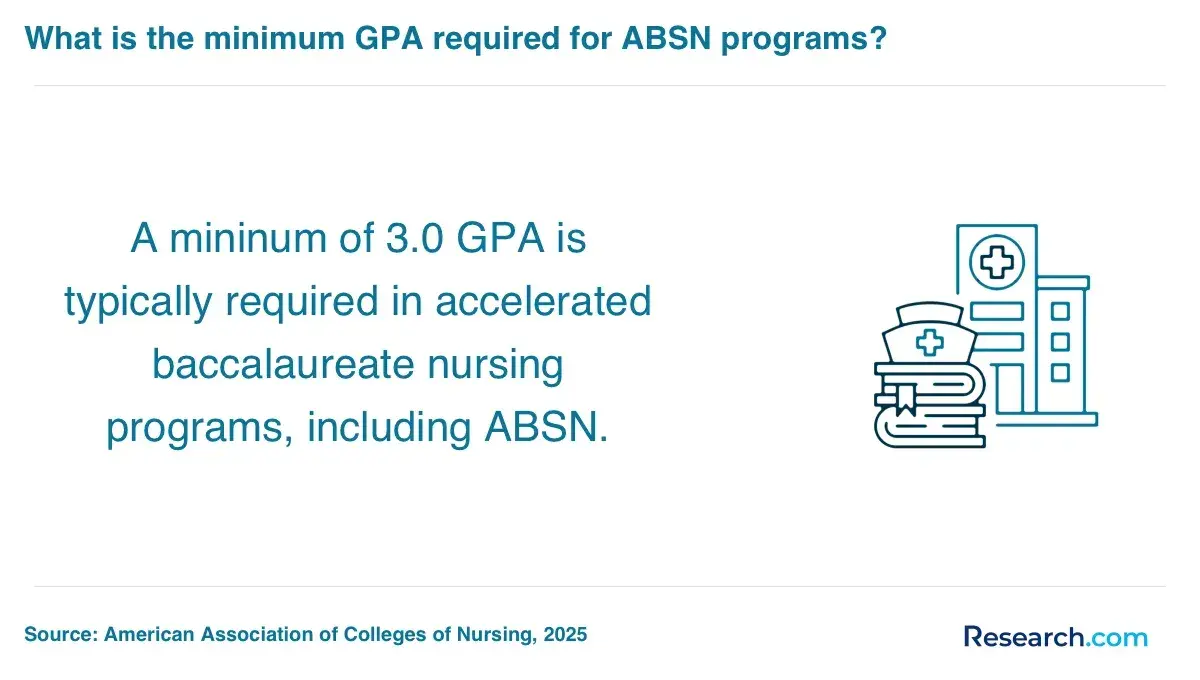
- Minimum GPA Standards: Most programs require a minimum cumulative undergraduate GPA between 2.75 and 3.0 on a 4.0 scale, with some also expecting higher GPAs in prerequisite coursework. These GPA benchmarks help schools assess the likelihood of an applicant thriving in a fast-paced, demanding curriculum.
- Official Transcripts: Applicants must submit official transcripts from all postsecondary institutions attended. These documents verify degree completion, prerequisite coursework, and GPA, enabling admissions committees to objectively evaluate academic qualifications.
- Personal Statement or Essay: A personal statement describing the applicant's motivation for entering nursing, relevant experiences, and career objectives is usually required. This essay allows candidates to showcase their commitment and alignment with nursing values, offering insight into their communication skills and professional goals.
- Letters of Recommendation: Most programs request two or three letters of recommendation from academic or professional sources who can vouch for the applicant's abilities and suitability for nursing. These references provide external validation of the candidate's readiness for nursing education.
- Resume or Curriculum Vitae (CV): A current resume or CV detailing educational background, work experience, volunteer activities, and healthcare exposure is often requested. This helps admissions teams identify relevant experience that supports success in clinical settings and nursing studies.
- Background Check and Immunizations: While often completed after conditional admission, applicants should be ready to undergo a criminal background check and provide proof of required immunizations. This requirement ensures eligibility for clinical placements and compliance with state healthcare facility standards.
Students interested in further advancing their nursing careers can explore what does a nurse practitioner do through well-informed resources that provide detailed career insights.
Do accelerated BSN programs in Nevada require entrance exams?
Entrance exams are commonly required for admission to Accelerated Bachelor of Science in Nursing (ABSN) programs in Nevada, but requirements can differ depending on the institution. The most frequently used exam is the Test of Essential Academic Skills (TEAS), which evaluates knowledge in reading, mathematics, science, and English language usage. Some schools, however, opt for the HESI A2 exam, assessing areas such as reading, grammar, vocabulary, math, and science. These exams serve as standardized tests designed to measure applicants' academic skills necessary for success in demanding nursing programs. While the GRE is generally less common for ABSN admissions in Nevada, certain programs may still request it depending on their specific criteria.
Many Nevada nursing schools use entrance exams to objectively assess an applicant's academic readiness and critical thinking skills before admission. These exams provide a consistent benchmark across diverse educational backgrounds, supplementing GPA and prerequisite coursework during selection. Given the accelerated pace of ABSN programs, usually lasting 12 to 16 months, students must quickly absorb complex material, and entrance exams help ensure candidates have a strong foundation. Moreover, schools aim to admit applicants most likely to succeed not only academically but also in passing mandatory licensure exams such as the NCLEX-RN. This rigorous evaluation process supports both student success and the quality of Nevada's nursing workforce.
A nurse from Nevada who graduated from a local ABSN program shared his experience navigating entrance exams. He recalled feeling anxious while preparing for the TEAS, especially balancing study with a full-time job, but emphasized that the exam helped him identify areas needing improvement early on. Whether enrolled in online or on-campus tracks, he noted that all students had to pass an entrance exam, which ultimately boosted their confidence before facing the program's challenging curriculum. He described the process as demanding but fair, reflecting on how the exam ensured that everyone started on a level academic playing field. This foundation proved invaluable throughout his accelerated studies and eventual nursing career.
What does the curriculum of an accelerated BSN program in Nevada include?
The accelerated BSN curriculum in Nevada is structured to help students develop essential clinical skills and nursing knowledge efficiently within 16 to 20 months, enabling rapid entry into professional nursing roles. Key components of this curriculum ensure comprehensive preparation across both online and on-campus formats.
- Foundational Nursing Courses: These courses cover critical topics such as anatomy, pharmacology, and health assessment, building a strong theoretical base. Students engage with evidence-based practice to enhance critical thinking essential for quality patient care.
- Clinical Training: Hands-on rotations provide real-world experience in hospitals and community settings under expert supervision. This practical exposure hones clinical judgment and patient interaction skills, vital for safe nursing practice.
- Simulation Labs: Using advanced manikins and virtual scenarios, simulation labs allow students to practice complex procedures in a safe environment. This blend of virtual and in-person training strengthens decision-making and clinical competence before direct patient care.
- NCLEX-RN Preparation: Dedicated review courses and practice exams focus on the licensure exam's format and content. This targeted preparation increases the likelihood of passing the NCLEX-RN on the first attempt, a crucial step to becoming a registered nurse.
What accreditation should I look for in an ABSN program in Nevada?
Accreditation is essential for ensuring educational quality, eligibility for licensure, and strong career prospects in nursing. Here are the key types of accreditation to look for when choosing an Accelerated Bachelor of Science in Nursing (ABSN) program in Nevada:
- Institutional Accreditation: This accreditation verifies that the entire college or university meets high standards of quality and effectiveness. Regional accrediting bodies like the Northwest Commission on Colleges and Universities (NWCCU) or the Western Association of Schools and Colleges (WASC) grant this status, which helps ensure your credits are transferable and the institution operates with academic integrity.
- Commission on Collegiate Nursing Education (CCNE) Accreditation: A national agency focused specifically on nursing programs, CCNE accreditation confirms that the ABSN curriculum meets rigorous standards. Programs with CCNE accreditation are often favored by employers and signal strong preparation for the NCLEX-RN licensure exam and nursing practice.
- Accreditation Commission for Education in Nursing (ACEN) Accreditation: While more common for associate degree nursing programs, some ABSN programs hold ACEN accreditation. This assures that the program offers a comprehensive nursing education aligned with nationally recognized standards.
- Nevada State Board of Nursing Approval: This approval is mandatory for ABSN programs to qualify graduates for licensure in Nevada. It confirms the program complies with state-specific nursing education requirements and allows students to become eligible to take the NCLEX-RN exam.
How long does it take to complete an accelerated BSN in Nevada?
Accelerated BSN programs in Nevada cater to students holding a non-nursing bachelor's degree who want to enter the nursing field swiftly. Several key factors influence how long it takes to complete these programs, outlined below:
- Typical Program Length: Most ABSN programs last between 12 and 24 months, with many offering a focused 16- to 18-month curriculum for full-time students.
- Full-Time vs. Part-Time: These programs are predominantly full-time due to their intensive nature, so part-time attendance is uncommon and generally prolongs the completion time significantly.
- Online vs. On-Campus Format: Hybrid options combine online coursework with mandatory clinical and simulation hours, which remain in-person, thus maintaining the program's usual length.
- Clinical Hours: Extensive hands-on training at Nevada healthcare sites is required, setting a fixed minimum time to complete the program.
- Course Sequencing and Prerequisites: Sequential course structures and prerequisite requirements may extend the timeline for those who need to complete additional science classes before starting.
A nurse who completed an ABSN program from a Nevada school shared her journey, emphasizing the intense but rewarding experience. She recalled how tight the schedule was during the 17 months, especially balancing clinical rotations with demanding coursework. "It felt overwhelming at times, but knowing the timeline kept me focused," she said.
The clinical hours, while time-consuming, provided critical hands-on skills that accelerated her confidence. She appreciated that the program's structured pacing prevented burnout while pushing her forward. Transitioning from a previous career, she found that the total time was just right to quickly enter nursing without sacrificing quality learning.
For those planning their long-term nursing careers, understanding advanced roles and compensation trends—such as the family nurse practitioner salary by state—can help in setting future goals after completing an ABSN program.
How much does an accelerated BSN program cost in Nevada?
Tuition and fees for accelerated Bachelor of Science in Nursing (ABSN) programs in Nevada vary widely depending on the institution, whether the program is online, on-campus, or hybrid, and other related expenses. Considering these factors carefully can help you plan your total investment in nursing education. Here are the main cost factors to keep in mind when comparing online and on-campus ABSN programs in Nevada:
- Tuition Rates: Tuition is the largest cost for ABSN programs and varies by school and program format. Public universities typically offer lower rates for Nevada residents, often around $30,000, while private or hybrid programs can charge upwards of $70,000. Confirm exact tuition figures directly with each institution to avoid surprises.
- Technology and Lab Fees: Many online and hybrid programs charge additional fees to support virtual learning tools and lab experiences. These fees can range from several hundred to a few thousand dollars and cover access to simulations and necessary hands-on training components.
- Clinical Supplies and Equipment: Clinical training requires uniforms, stethoscopes, and sometimes specialized equipment. Some programs also include technology fees for items like laptops. These supplies add to the overall cost but are essential for completing practical requirements.
- Travel and Housing Expenses: On-campus and hybrid ABSN students should budget for travel to campus or clinical sites. Housing near campus may also be necessary, particularly for students relocated for in-person labs or clinical rotations. Travel frequency varies between programs, so verify requirements with your chosen school.
- Health Insurance and Miscellaneous Fees: Many programs require students to maintain health insurance, which can cost several thousand dollars for the program duration. Additional fees may include background checks, graduation fees, and immunizations required for clinical clearance.
- Financial Aid and Scholarships: Federal financial aid, institutional scholarships, and private loans may be available but often do not cover the full cost of tuition for accelerated programs. Students should actively pursue and compare aid options to help offset expenses and visit resources like the best BSN to NP program pages for further information.
What financial aid options are available for ABSN students in Nevada?
Because accelerated nursing programs in Nevada can be costly, many students explore different financial aid opportunities to make their education more affordable. Below are the most common forms of support that can help manage these expenses.
- Federal Student Loans: These loans, including Direct Unsubsidized and PLUS Loans, are available to students completing the FAFSA. They cover tuition, fees, and living costs with flexible repayment plans set by the federal government, encouraging students to borrow only what is necessary.
- State and Institutional Grants: Nevada offers need-based grants such as the Silver State Opportunity Grant and Nevada State Access Grant, awarded through FAFSA. These grants do not require repayment and provide crucial assistance for students facing financial challenges within the Nevada nursing scholarships for accelerated BSN students landscape.
- Nursing Scholarships: Competitive scholarships from organizations like the Nevada Nurses Foundation and individual universities can offset costs. Many scholarships require essays or community service and help reduce reliance on loans.
- Employer Tuition Assistance: Healthcare employers including Renown Health and University Medical Center may provide tuition reimbursement or loan repayment for nurses who commit to work post-graduation, easing immediate financial burdens.
- Loan Forgiveness Programs: Programs such as the Nurse Corps Loan Repayment offer loan repayment in exchange for service in underserved or high-need areas. Nevada may also have state-specific forgiveness initiatives targeting rural nursing roles.
Students should also consider additional expenses like textbooks and exam fees when budgeting. For those seeking further guidance on advanced nursing education, exploring the rankings of the best online BSN to FNP programs can provide valuable direction toward their career goals.
What career paths are available after earning an ABSN in Nevada?
Completing an Accelerated Bachelor of Science in Nursing (ABSN) program in Nevada opens doors to diverse nursing roles across various healthcare settings, offering graduates a strong foundation to succeed in the evolving healthcare landscape. Below are some of the most common career paths available for ABSN graduates in Nevada, highlighting how this education prepares them for rewarding opportunities.
- Registered Nurse (RN): RNs provide direct patient care in hospitals, clinics, and community health centers. ABSN programs emphasize clinical skills and healthcare knowledge, equipping graduates to manage patient needs efficiently in high-demand urban areas and beyond.
- Critical Care Nurse: These nurses specialize in intensive care units and emergency departments, handling patients with serious medical conditions. The rigorous clinical training in Nevada's ABSN programs prepares graduates for the fast-paced, high-pressure environment of critical care nursing.
- Public Health Nurse: Focusing on prevention and community wellness, public health nurses work to educate and protect populations. Nevada's community health focus supports ABSN graduates in addressing health disparities and promoting disease prevention in diverse settings.
- Nurse Educator: Nurse educators teach future nurses, sharing practical knowledge gained through accelerated programs. While additional certifications may be needed, ABSN graduates have a solid base for contributing to nursing education and workforce development.
- Nurse Manager: Nurse managers lead nursing teams and coordinate patient care services in healthcare facilities. ABSN graduates can advance to these leadership roles by combining clinical experience with strong management skills emphasized in their programs.
Exploring these Nevada nursing careers after accelerated BSN completion helps graduates identify paths that match their strengths. For those seeking specialized training, it's worthwhile to consider options like a cheap online PMHNP degree program to further enhance expertise and expand career opportunities.
What is the average salary for nurses with an ABSN degree in Nevada?
Earning an Accelerated Bachelor of Science in Nursing (ABSN) degree in Nevada can lead to competitive salaries, with pay varying based on factors such as experience, specialization, healthcare setting, and location. Understanding these factors can help prospective nurses maximize their earning potential. Here are the key elements that influence ABSN nurse salaries in Nevada:
- Years of Experience: Salary levels typically increase with more years of experience. New graduates start lower, but seasoned nurses benefit from higher pay due to their skills and expertise.
- Type of Employer: Hospitals and large healthcare systems generally offer higher salaries than smaller clinics or community health centers, especially in urban areas.
- Geographic Area: Urban centers like Las Vegas and Reno tend to provide better compensation compared to rural regions, reflecting demand and cost-of-living differences.
- Specialization or Certification: Nurses with specialized certifications, such as critical care or pediatrics, often command premium salaries beyond the standard ABSN pay.
- Level of Education: Pursuing advanced degrees beyond the ABSN, such as a Master's, can significantly elevate salary prospects by opening doors to advanced roles.
Here's What Graduates Have to Say About Their ABSN Degree in Nevada
- Completing the on-campus ABSN program at Sierra Nevada College allowed me to immerse myself fully in both the academic and local community. The hands-on clinical experience was invaluable in preparing me to start a fulfilling career as a nurse right here in Nevada. The faculty's support helped me grow not only professionally but personally, deepening my commitment to patient care in diverse settings. I truly appreciate how the program balanced rigorous study with compassionate practice. Javi
- Enrolling in the online ABSN program at Nevada State College was a game-changer for me, offering the flexibility to balance family and studies while advancing my nursing career. Starting my nursing role at a local school gave me the chance to connect directly with students and make a positive impact on their health and well-being daily. This experience has fueled my passion for community health and encouraged continuous professional growth within Nevada's healthcare system. Phyllis
- My ABSN journey at Truckee Meadows Community College was both challenging and rewarding, particularly with Nevada's unique healthcare needs and diverse population. The program equipped me with advanced skills that accelerated my career advancement and opened doors to leadership opportunities. I'm proud to contribute to the community's wellness and inspire future nurses through my work and ongoing education. This path has been transformative professionally and personally. Kate
Related Articles for Nearby States
- 2027 Best ABSN Programs - List of Accelerated BSN Programs in California: Online & Campus
- 2027 Best ABSN Programs - Accelerated BSN Programs in Oregon: Online & Campus
- 2027 Best ABSN Programs - Accelerated BSN Programs in Idaho: Online & Campus
- 2027 Best ABSN Programs - Accelerated BSN Programs in Arizona: Online & Campus
- 2027 Best ABSN Programs - Accelerated BSN Programs in Utah: Online & Campus
- 2027 Best ABSN Programs - List of Accelerated BSN Programs in Washington: Online & Campus
- 2027 Best ABSN Programs - Accelerated BSN Programs in Montana: Online & Campus
- 2027 Best ABSN Programs - Accelerated BSN Programs in Wyoming: Online & Campus
- 2027 Best ABSN Programs - Accelerated BSN Programs in Colorado: Online & Campus
- 2027 Best ABSN Programs - List of Accelerated BSN Programs in New Mexico: Online & Campus
References:
- Best Nursing Schools in Nevada for 2023 | Incredible Health https://www.incrediblehealth.com/blog/best-nursing-schools-nevada/
- Advancement Opportunities Are Available for Registered Nurses https://nevadastate.edu/son/rn-bsn/advancement-opportunities-registered-nurses/
- Home - Accelerated BSN Degrees https://absn.org/
- Orvis School of Nursing Accreditation https://www.unr.edu/nursing/about/accreditation
- How an Advanced Degree in Nursing Opens Career Opportunities https://www.unlv.edu/news/article/how-advanced-degree-nursing-opens-career-opportunities
- Working In Nursing School | Can You Work During an ABSN Program? https://bayadaeducation.org/resources/absn/working-in-nursing-school
- Accelerated Bachelor of Science in Nursing (ABSN) Application - Roseman University https://www.roseman.edu/academic-programs/college-of-nursing/accelerated-bachelor-of-science-in-nursing/apply/
- Nevada ABSN Programs - Accelerated Nursing Schools https://www.absnprograms.org/programs/nevada/
- Registered Nurse Salary in Nevada (2024) | Trusted Health https://www.trustedhealth.com/nurse-salary-guide/nevada
- 2025 Best MSN and RN-to-MSN Programs in Nevada https://www.registerednursing.org/degree/msn/nevada/
Other Things You Should Know About Becoming a Nurse in Nevada
In 2027, top accelerated BSN programs in Nevada include those offered by the University of Nevada, Las Vegas, and Nevada State College. These programs offer rigorous coursework and clinical experiences designed to swiftly prepare students for nursing careers.
To enroll in an ABSN program in Nevada, students typically need a bachelor's degree in another field, along with completed prerequisites such as anatomy, physiology, microbiology, and statistics. Each program may have specific requirements, so it's essential to check with the chosen institution for precise details.
ABSN students in Nevada face challenges like balancing rigorous coursework with job responsibilities. The intensive nature of the program can lead to stress and time management issues, potentially impacting academic performance and personal well-being. Most programs recommend minimal to no employment during studies.


