
2027 Best ABSN Programs - List of Accelerated BSN Programs in South Dakota: Online & Campus

Co-Founder and Chief Data Scientist
South Dakota's nursing workforce demand is projected to grow by 15% over the next decade, making accelerated Bachelor of Science in Nursing (ABSN) programs a strategic choice for career advancement. Pursuing ABSN programs online or on campus offers flexibility and access to quality education tailored to fast-track students who already hold a non-nursing degree. The state's supportive healthcare infrastructure and rising patient needs create ample employment opportunities for nursing graduates.
This article, prepared by career planning experts, provides clear guidance on what accelerated BSN programs in South Dakota entail. It helps readers understand program structures, key considerations, and how to evaluate options effectively. Practical advice is offered to ease decision-making for those seeking the optimal ABSN path in South Dakota.
Key Benefits of ABSN Programs in South Dakota
- South Dakota's ABSN programs combine online coursework with on-campus labs, offering flexibility while ensuring hands-on clinical experience vital for nursing competence.
- Graduates benefit from a strong state nursing workforce demand, with South Dakota projecting a 15% growth in RN jobs through 2030, enhancing job security.
- Accelerated BSN tracks typically take 12 to 18 months, allowing career changers to efficiently transition into nursing faster than traditional programs.
- Who can apply for accelerated BSN programs in South Dakota?
- What are the admission requirements for accelerated BSN programs in South Dakota?
- Do accelerated BSN programs in South Dakota require entrance exams?
- What does the curriculum of an accelerated BSN program in South Dakota include?
- What accreditation should I look for in an ABSN program in South Dakota?
- How long does it take to complete an accelerated BSN in South Dakota?
- How much does an accelerated BSN program cost in South Dakota?
- What financial aid options are available for ABSN students in South Dakota?
- What career paths are available after earning an ABSN in South Dakota?
- What is the average salary for nurses with an ABSN degree in South Dakota?
Who can apply for accelerated BSN programs in South Dakota?
ABSN programs in South Dakota cater to individuals who already hold a bachelor's degree in a non-nursing field and want to enter the nursing profession more quickly. These programs offer a focused curriculum that leverages prior academic experience, allowing students to concentrate solely on nursing-related coursework and clinical training.
Applicants must meet specific eligibility requirements for ABSN programs in South Dakota, which often include a completed bachelor's degree from an accredited institution outside nursing. Admission tends to be competitive, emphasizing academic records and prerequisite science and math coursework to ensure readiness for the rigorous curriculum.
The typical applicants in South Dakota include career changers from diverse industries, recent college graduates aiming for a faster route into healthcare, and professionals seeking more meaningful or stable employment through nursing. Success in accelerated BSN programs relies on qualities like strong academic motivation, efficient time management, and a genuine passion for patient care.
These programs demand the ability to adapt quickly and maintain resilience under pressure. Those who meet the accelerated BSN admission criteria South Dakota seek tend to thrive in intense learning environments and demonstrate a commitment to succeeding in nursing. For those considering the career outlook, exploring nurse practitioner career salary data can provide insight into the field's financial potential.
What are the admission requirements for accelerated BSN programs in South Dakota?
Admission into accelerated BSN programs in South Dakota is highly competitive and designed to identify students who are academically prepared and motivated to handle an intensive nursing curriculum. Both online and on-campus ABSN pathways share core requirements that ensure candidates can succeed in a fast-paced and challenging environment. Below are the key admission requirements commonly expected across programs.
- Non-Nursing Bachelor's Degree: Applicants must hold a bachelor's degree in a field other than nursing from an accredited institution. This ensures foundational academic skills are in place and aligns with the structure of accelerated BSN admission requirements South Dakota schools apply.
- Completion of Prerequisite Courses: Candidates need to have successfully completed prerequisite courses such as anatomy and physiology, microbiology, chemistry, human growth and development, nutrition, and statistics, often within the past five to seven years. These courses prepare students with essential knowledge for nursing studies and clinical work.
- Minimum Cumulative GPA: A minimum undergraduate cumulative GPA of around 3.0 on a 4.0 scale is typically required. Some programs evaluate both overall GPA and prerequisite course GPA to ensure applicants demonstrate consistent academic performance and readiness.
- Official Transcripts: Submission of official transcripts from all previously attended colleges or universities is mandatory. These documents verify degree completion, prerequisite fulfillment, and GPA standards.
- Personal Statement or Essay: Most programs request a personal statement that outlines the applicant's motivation for nursing, relevant experiences, and communication abilities. This essay helps admissions committees gauge the commitment and suitability of candidates for the accelerated format.
- Letters of Recommendation: Usually two or three letters are required, often from instructors, employers, or healthcare professionals familiar with the applicant's qualifications. These provide an external assessment of the student's readiness and professional qualities.
- Resume or Curriculum Vitae: A current resume or CV highlighting professional, volunteer, or healthcare-related experience is often requested. Such experience, while not always mandatory, strengthens applications by showing familiarity with the nursing profession's demands and values.
- Interview (if required): Some programs may conduct interviews in person or virtually to further assess interpersonal skills, professionalism, and fit for the program.
For those interested in related healthcare roles, understanding what requirements are needed to become a holistic nurse practitioner can also be valuable in planning a nursing career path.
Do accelerated BSN programs in South Dakota require entrance exams?
Entrance exam requirements for ABSN programs in South Dakota differ depending on the institution. Some schools, like the University of South Dakota, require the HESI Admission Assessment Exam (HESI A2), which tests skills in math, science, reading comprehension, and vocabulary. Other universities such as the University of Sioux Falls focus on prerequisite coursework and GPA without mandating an entrance exam.
The most frequently used exams in these programs are the TEAS (Test of Essential Academic Skills) and the HESI A2, both designed to measure foundational knowledge in relevant academic areas. Prospective students should check each program's specific admissions criteria, especially when comparing online and on-campus options, to understand their testing expectations.
Many nursing schools in South Dakota use entrance exams to determine whether applicants have the academic skills and critical thinking needed for accelerated nursing studies. These exams evaluate essential subjects like anatomy, physiology, and problem-solving, helping programs select candidates prepared for intense, fast-paced learning environments.
Assessing readiness through standardized testing can improve student success and retention rates, as well as bolster performance on the NCLEX-RN licensing exam. This careful screening process supports not only individual achievement but also the overall quality of nursing graduates entering the workforce.
A nurse from South Dakota shared his experience completing an ABSN program at a local university, explaining the challenge of preparing for the required entrance exam. He recalled, "Studying for the HESI was intense but necessary; it highlighted areas I needed to strengthen before starting the program." He noted that even though the pressure was high, passing the exam gave him confidence going into both the online coursework and clinical experiences on campus.
Reflecting on his journey, he emphasized that understanding the entrance exam helped him manage expectations and adapt his study habits early, making the accelerated pace more achievable and rewarding.
What does the curriculum of an accelerated BSN program in South Dakota include?
The accelerated BSN curriculum in South Dakota is designed to help students rapidly build strong clinical competence and nursing knowledge within a condensed 12 to 20-month timeframe. This focused approach ensures graduates are prepared for immediate entry into nursing practice. Key curriculum components include:
- Foundational Nursing Sciences: These courses cover anatomy, physiology, microbiology, and nutrition to provide essential scientific knowledge vital for safe and effective patient care.
- Nursing Theory and Professional Practice: Coursework emphasizes health assessment, pharmacology, and evidence-based practice, honing critical thinking and ethical decision-making skills needed in complex healthcare settings.
- Clinical Training: Students complete supervised rotations in hospitals and community settings, progressing from basic skills to managing complex patient cases to ensure readiness for real-world nursing demands.
- Simulation Labs: High-fidelity simulation allows students to practice responding to clinical scenarios safely, reinforcing clinical judgment and teamwork before patient interaction.
- Population Health and Community Nursing: Focused on public health and preventive care, this component prepares nurses to address diverse patient populations, including underserved rural communities common in South Dakota.
- Leadership and Healthcare Systems: Courses develop skills in nursing leadership, policy, and interprofessional collaboration to prepare graduates for advocacy and team coordination roles.
- NCLEX-RN Preparation: Comprehensive review sessions and practice exams boost confidence and ensure success on the licensure exam critical for nursing practice.
- Capstone and Transition to Practice: A guided clinical experience under a preceptor helps students apply their learning confidently as they transition into professional nursing roles.
What accreditation should I look for in an ABSN program in South Dakota?
Accreditation is essential to ensure that an ABSN program in South Dakota meets high educational standards, qualifies graduates to take the nursing licensure exam, and supports future career growth. When choosing a program, you should verify several key types of accreditation to confirm the program's credibility and quality.
- Institutional Accreditation: This verifies that the college or university offering the ABSN program meets broad academic quality standards. In South Dakota, look for regional accreditation by the Higher Learning Commission, which ensures credits are transferable and degrees are widely recognized by employers and graduate schools.
- CCNE Programmatic Accreditation: The Commission on Collegiate Nursing Education accredits nursing programs at the bachelor's and graduate levels. Programs accredited by CCNE meet rigorous nursing education standards, which many employers and advanced nursing programs prefer or require.
- ACEN Programmatic Accreditation: The Accreditation Commission for Education in Nursing evaluates nursing programs at all academic levels. ACEN accreditation confirms that the program meets comprehensive educational criteria including curriculum quality, faculty expertise, and student support.
- South Dakota Board of Nursing Approval: This state approval is mandatory for all nursing programs. Only programs approved by the Board allow graduates to sit for the NCLEX-RN licensure exam. Full approval indicates consistent compliance with state nursing education standards, while interim approval may reflect new or developing programs.
How long does it take to complete an accelerated BSN in South Dakota?
ABSN programs in South Dakota are tailored for students with a non-nursing bachelor's degree seeking a fast track into nursing. Several key factors influence how long it takes to complete these accelerated programs:
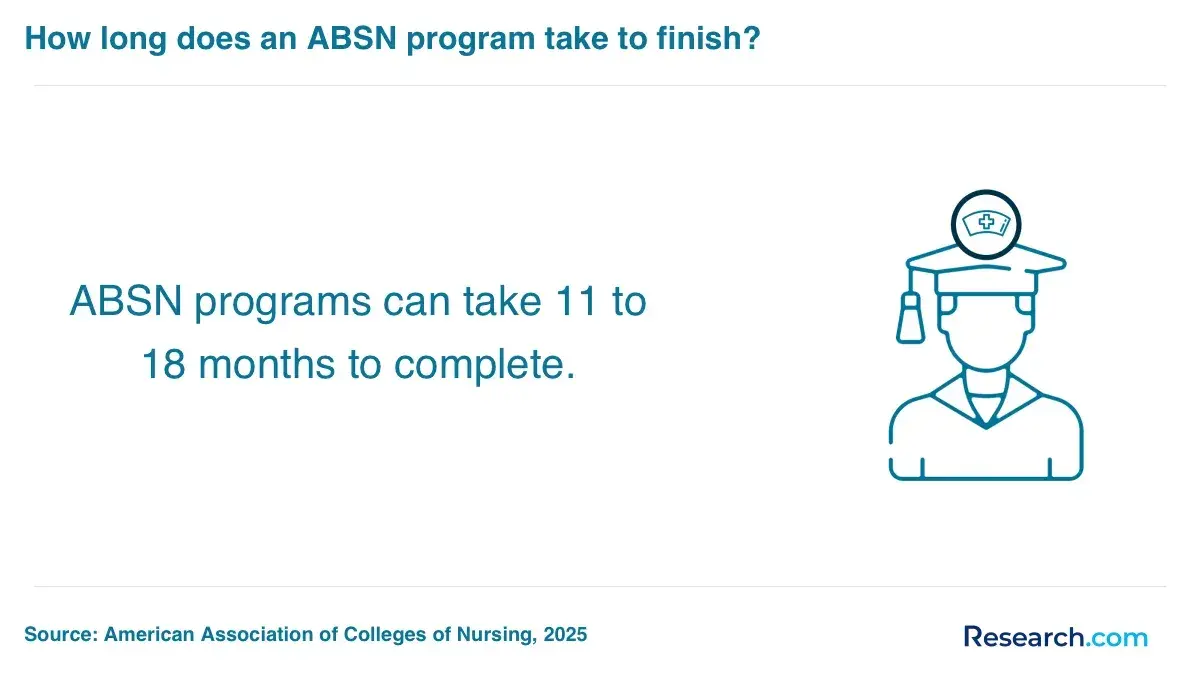
- Typical Program Length: Most programs last between 12 and 20 months, with full-time study usually enabling completion in about 16 months. Program structures and credit transfer options can affect this timeline.
- Full-Time vs. Part-Time Study: Programs are mostly full-time due to the intensive curriculum, and part-time options are rare; choosing part-time can significantly extend completion time.
- Online vs. On-Campus Formats: Hybrid formats help balance flexibility with required clinical hours, but all students must complete in-person labs and clinicals, keeping overall duration similar to on-campus tracks.
- Clinical Hour Requirements: Approximately 300-400 clinical hours are mandatory and must be scheduled carefully-delays in placement can lengthen program time.
- Course Sequencing: Courses must be taken in order with limited admission cycles; missing a course may delay graduation by several months or more.
When I spoke with a nurse who completed an ABSN program from a South Dakota school, she reflected on the challenge of balancing an intense schedule with clinical placements while transitioning from a different career. "The program demanded total focus-once the courses started, everything moved quickly," she said. Planning around clinical shifts and the strict sequencing of classes sometimes felt overwhelming but ultimately helped maintain steady progress.
She emphasized that dedicating full-time effort and staying organized made completing the ABSN in just under 18 months achievable, allowing her to begin nursing sooner than she expected.
How much does an accelerated BSN program cost in South Dakota?
Tuition and fees for accelerated BSN programs in South Dakota can vary depending on the school, program format, and other related expenses. Prospective students should understand the key cost components when estimating the total investment needed to complete an ABSN degree. The main cost factors include:
- Tuition Rates: Tuition varies by institution and residency status, often charged per credit hour. Rates can range significantly, with some schools charging around $408 per credit for residents and others up to $620 per credit, impacting total costs from roughly $22,500 to over $30,000.
- Mandatory Fees: Additional fees such as student fees and nursing-specific charges can add several hundred to over a thousand dollars per semester, increasing the overall program cost beyond base tuition.
- Technology and Lab Fees: Many programs include extra fees for simulation labs and online course delivery, which support practical learning components. These can vary by school and program delivery model.
- Clinical Supplies and Course Materials: Students must budget for essentials like uniforms, textbooks, and assessment kits, which can total anywhere from $1,000 up to nearly $3,000 depending on the program requirements.
- Travel and Housing for In-Person Components: Even online ABSN programs require clinical placements or labs on campus, resulting in travel, lodging, and meal costs. Housing expenses can range from about $4,250 to over $11,000 annually for on-campus students.
- Indirect and Personal Expenses: Costs such as personal items and miscellaneous needs during an intensive nursing program can add several thousand dollars and should be planned for accordingly.
- Financial Aid and Scholarships: Federal and private loans are commonly available, and many schools encourage completing the FAFSA. Exploring scholarships specifically for accelerated nursing students can help reduce the final financial burden.
For those considering cost management options, reviewing each program's detailed tuition and fees and investigating financial aid is essential. Additionally, prospective students might find value in resources like the list of best 1 year nurse practitioner online programs to explore related accelerated healthcare education pathways.
What financial aid options are available for ABSN students in South Dakota?
Accelerated nursing programs in South Dakota can be costly, so many students explore different financial aid opportunities to make their education more affordable. Below are the main types of financial aid options available for ABSN students in the state.
- Federal Student Loans: By completing the FAFSA, students can access federal student loans that usually offer lower interest rates and flexible repayment plans. These loans can be deferred while attending at least half-time and represent a key funding source for many pursuing accelerated BSN programs in South Dakota.
- State and Institutional Grants: Needs-based grants in South Dakota range from $500 to $2,000 and help reduce out-of-pocket expenses. Eligibility is determined through FAFSA submissions and coordination with campus financial aid offices, making these grants an essential part of managing tuition costs.
- Nursing Scholarships: South Dakota nursing scholarships and grants include awards like the Nurse Education Assistance Scholarship, which provides up to $1,000 for direct education costs, and the Dakota Corps Scholarship, covering full tuition for qualifying students in critical-need nursing programs.
- Employer Tuition Assistance: Many healthcare employers offer tuition reimbursement to staff working toward nursing degrees. This benefit allows students to alleviate financial pressure while gaining relevant clinical experience.
- Loan Forgiveness Programs: Graduates who commit to serving in underserved communities or critical-need facilities in South Dakota may qualify for loan forgiveness. These programs reduce debt burdens and encourage nurses to support healthcare workforce shortages.
Students interested in progressing beyond an ABSN might also explore the ranking of the best online BSN to FNP programs to find quality pathways for advanced nursing careers.
What career paths are available after earning an ABSN in South Dakota?
Completing an ABSN program in South Dakota opens doors to diverse nursing roles across various healthcare settings. Graduates benefit from strong career opportunities for nurses in South Dakota that allow them to quickly enter the workforce and advance in specialized fields. Below are some of the most common career paths available to ABSN graduates in the state:
- Registered Nurse (RN): ABSN graduates are eligible to take the NCLEX-RN licensure exam, enabling them to practice as registered nurses in hospitals, clinics, and long-term care facilities. The program's clinical training ensures they are prepared for patient care, assessment, and treatment coordination.
- Critical Care Nurse: These nurses work in intensive care units, emergency rooms, and cardiac care, requiring advanced skills and quick decision-making. ABSN programs emphasize hands-on experiences and simulation, which are vital for thriving in these demanding settings.
- Public Health Nurse: Focused on community health, these nurses work in public health departments and nonprofit agencies promoting disease prevention and health education, especially in rural and underserved communities. The ABSN curriculum supports these roles with population-based care training.
- Nurse Educator: Graduates who pursue further education can teach in clinical or academic settings. ABSN programs include leadership and teaching components that build foundational skills for nursing education careers.
- Nurse Manager: With clinical experience, ABSN graduates can advance to supervisory roles, managing nursing teams and coordinating patient care. The leadership training within ABSN programs fosters essential management and organizational abilities.
Additionally, many pursue advanced degrees such as MSN or Nurse Practitioner programs for expanded job prospects for ABSN graduates in South Dakota, including specialized and higher autonomy roles. For those interested in advanced practice, exploring most affordable online psychiatric nurse practitioner programs can be a valuable next step.
What is the average salary for nurses with an ABSN degree in South Dakota?
Earning an ABSN in South Dakota can lead to competitive salaries, with compensation varying based on experience, specialization, healthcare setting, and location within the state. Understanding these key factors helps prospective nurses make informed decisions about their career pathway. Consider the following influences on ABSN nurse salaries in South Dakota:
- Years of Experience: Starting salaries for entry-level ABSN nurses typically begin around $46,500 annually, increasing significantly with experience. Seasoned nurses can earn upwards of $76,500 to $96,500 based on their clinical expertise and tenure.
- Type of Employer: Salary ranges depend on the healthcare setting, with hospitals, specialty centers, rural clinics, and long-term care facilities offering diverse compensation levels. Differences can exceed $30,000, reflecting varied career advancement opportunities.
- Geographic Area: Despite South Dakota's lower state ranking for nurse salaries, the reduced cost of living balances earnings, with average annual pay around $65,860.
- Specialization or Certification: Advanced certifications in fields such as oncology, perioperative care, or ICU nursing can boost salaries well above state averages, reaching over $100,000 annually in some specialties.
- Level of Education: Pursuing graduate degrees beyond the ABSN, such as MSN or DSN, correlates with higher earning potential, reflecting progression in professional qualifications and responsibilities.
Here's What Graduates Have to Say About Their ABSN Degree in South Dakota
- Gomez: "Completing the on-campus ABSN program at Dakota Wesleyan University was a truly transformative experience. The faculty's dedication and the hands-on clinical training prepared me well for the real challenges of nursing. Starting my nursing career locally has allowed me to give back directly to the community that supported me throughout my studies. The balance of academic rigor and community involvement has made me feel genuinely empowered as a healthcare provider. I am proud to serve the people of South Dakota with the skills I gained here. "
- Justine: "The flexibility of the online ABSN program at Augustana University allowed me to continue working while advancing my education. This program's design accommodated my busy schedule without compromising the quality of instruction. After graduation, I was able to start my nursing career in a local school setting, where I genuinely enjoy helping students maintain their health and wellness. The program instilled strong clinical knowledge and compassion, which are essential in my daily work. It's rewarding to see how my career growth positively impacts young lives."
- Sheila: "Pursuing my ABSN degree through the University of Sioux Falls was both challenging and inspiring, especially given South Dakota's unique healthcare needs. The program emphasized cultural competency and adaptability, which are vital here. Through this experience, I have grown personally and professionally, gaining confidence to advocate for underserved populations. I'm excited about the career advancement opportunities that my ABSN opens up within South Dakota's expanding healthcare landscape. This journey has deepened my passion for nursing and community service. "
Related Articles for Nearby States
- 2027 Best ABSN Programs - List of Accelerated BSN Programs in North Dakota: Online & Campus
- 2027 Best ABSN Programs - Accelerated BSN Programs in Nebraska: Online & Campus
- 2027 Best ABSN Programs - List of Accelerated BSN Programs in Minnesota: Online & Campus
- 2027 Best ABSN Programs - Accelerated BSN Programs in Wyoming: Online & Campus
- 2027 Best ABSN Programs - Accelerated BSN Programs in Iowa: Online & Campus
- 2027 Best ABSN Programs - Accelerated BSN Programs in Montana: Online & Campus
- 2027 Best ABSN Programs - Accelerated BSN Programs in Colorado: Online & Campus
- 2027 Best ABSN Programs - Accelerated BSN Programs in Kansas: Online & Campus
- 2027 Best ABSN Programs - List of Accelerated BSN Programs in Wisconsin: Online & Campus
- 2027 Best ABSN Programs - Accelerated BSN Programs in Missouri: Online & Campus
References:
- Registered Nurse Salary in South Dakota (2024) | Trusted Health https://www.trustedhealth.com/nurse-salary-guide/south-dakota
- Licensed Practical Nurse Salary in South Dakota https://ceufast.com/nursesalaryguide/state/south%20dakota
- Accelerated Bachelor of Science (ABSN) Degree in Nursing at SMU https://www.samuelmerritt.edu/college-nursing/accelerated-bachelor-science-nursing
- BSN Salary in South Dakota | RN-BSN Salary in SD https://www.bsnedu.org/south-dakota-salary/
- Working In Nursing School | Can You Work During an ABSN Program? https://bayadaeducation.org/resources/absn/working-in-nursing-school
- 7 Challenges to Prepare for in Accelerated Nursing Programs https://www.edumed.org/articles/7-challenges-to-prepare-for-in-accelerated-nursing-programs/
- Financial Aid https://www.usd.edu/Admissions-and-Aid/Financial-Aid
- Accelerated BSN (ABSN) Programs by State for 2025 https://nurse.org/education/absn-programs-by-state/
- Best Nursing Schools in South Dakota for 2023 | Incredible Health https://www.incrediblehealth.com/blog/best-nursing-schools-south-dakota/
- South Dakota State ABSN - Accelerated Nursing Program https://www.absnprograms.org/absn-schools/south-dakota-state-absn/
Other Things You Need to Know About Accelerated BSN Programs in South Dakota
In 2027, top accelerated BSN programs in South Dakota include those at Augustana University and the University of South Dakota. Both offer rigorous curricula designed to fast-track students into nursing roles, with options for online and campus-based learning to accommodate diverse needs.
As of 2027, South Dakota offers both online and campus-based Accelerated BSN (ABSN) programs. Dakota Wesleyan University and South Dakota State University offer comprehensive campus-based curricula, while some online options include combinations of virtual coursework and in-person clinical practice.
ABSN students in South Dakota often find it challenging to work full-time while completing their accelerated nursing degree due to the program's intensive and fast-paced nature. Clinical hours, coursework, and lab requirements demand significant time and commitment, leaving limited flexibility for employment.
However, some students choose part-time or flexible jobs, such as healthcare support roles or campus positions, to maintain income while managing their studies. Prospective students should carefully consider their personal schedules and financial needs when planning to work during their ABSN program in South Dakota.


