
2027 Best ABSN Programs - Accelerated BSN Programs in Florida: Online & Campus

Co-Founder and Chief Data Scientist
Florida's healthcare demand is rising, with the state projected to add over 60,000 nursing positions by 2030. Accelerated BSN programs respond to this need, offering fast-tracked nursing education both online and on-campus. These programs enable career changers and degree holders to enter nursing rapidly while balancing personal commitments. The flexibility of online options combined with the immersion of campus experiences shape the future of nursing education in Florida, adapting to evolving workforce challenges and technological advances.
This article, crafted by experts in career planning, explores what accelerated BSN programs in Florida entail. It guides readers through key considerations, expectations, and decision-making strategies to navigate available ABSN options effectively as healthcare education continues to evolve.
Key Benefits of ABSN Programs in Florida
- Florida ABSN programs offer accelerated pathways completing degrees in 12 to 18 months, meeting the rising demand for nurses amid a predicted 17% job growth by 2030.
- The blend of online coursework and clinical practice on campus provides flexibility for working adults while ensuring hands-on experience in diverse healthcare settings.
- These programs often feature strong partnerships with Florida hospitals, enhancing graduate employment rates which currently exceed 85% within six months of completion.
- Who can apply for accelerated BSN programs in Florida?
- What are the admission requirements for accelerated BSN programs in Florida?
- Do accelerated BSN programs in Florida require entrance exams?
- What does the curriculum of an accelerated BSN program in Florida include?
- What accreditation should I look for in an ABSN program in Florida?
- How long does it take to complete an accelerated BSN in Florida?
- How much does an accelerated BSN program cost in Florida?
- What financial aid options are available for ABSN students in Florida?
- What career paths are available after earning an ABSN in Florida?
- What is the average salary for nurses with an ABSN degree in Florida?
Who can apply for accelerated BSN programs in Florida?
Accelerated Bachelor of Science in Nursing (ABSN) programs in Florida cater to individuals who have already earned a bachelor's degree in a non-nursing discipline and seek to enter the nursing profession through a faster, more focused pathway. These programs are tailored to meet the needs of students aiming to shift careers efficiently while building on their previous academic achievements. Applicants must meet specific academic benchmarks and complete prerequisite courses to qualify, reflecting the rigorous standards behind accelerated BSN program admission requirements in Florida. As online and on-campus formats continue to evolve, these programs may increasingly incorporate hybrid learning models, broadening access while maintaining educational quality.
Those pursuing ABSN degrees in Florida come from diverse backgrounds such as business, technology, education, and other non-healthcare sectors, often motivated by a desire for greater job stability or more meaningful work. Recent graduates looking to enter healthcare quickly and professionals seeking purposeful careers also find accelerated programs appealing. Successful candidates typically demonstrate strong academic motivation, excellent time management skills, and a genuine passion for patient care-qualities that help them thrive in the program's demanding environment. As demand for nursing professionals grows, meeting the eligibility criteria for ABSN programs Florida will likely remain competitive, requiring applicants to balance academic excellence with interpersonal strengths. For those interested in long-term nursing career options, exploring how to become a family nurse practitioner without a degree offers valuable perspective beyond initial licensure.
What are the admission requirements for accelerated BSN programs in Florida?
Admission into accelerated BSN programs in Florida is highly competitive and structured to identify students who are both academically prepared and motivated to handle the demands of an intensive nursing curriculum. To support this goal, programs typically enforce specific criteria designed to evaluate readiness for accelerated study. The following outlines the core admission requirements for both online and on-campus options.
- Bachelor's Degree from an Accredited Institution: Applicants must possess a non-nursing bachelor's degree from a regionally accredited college or university. This ensures foundational academic skills and maturity needed for an accelerated nursing curriculum and reflects important admission requirements for ABSN programs in Florida.
- Completion of Prerequisite Courses: Programs require completion of essential courses in sciences and general education, including anatomy, physiology, microbiology, chemistry, statistics, and human development. These prerequisites demonstrate mastery of foundational knowledge and are vital Florida ABSN program prerequisites and GPA requirements.
- Minimum GPA Requirement: A cumulative GPA typically ranging from 3.0 to 3.2 on a 4.0 scale is required both for the bachelor's degree and prerequisite coursework. This standard serves as an objective measure of academic capability and predicts success in the accelerated, rigorous curriculum.
- Official Transcripts Submission: Candidates must submit official transcripts from all post-secondary institutions attended. These documents confirm degree conferral and prerequisite completion, ensuring accurate academic assessment.
- Letters of Recommendation: Two or three recommendation letters from academic, professional, or healthcare-related sources are usually required. These letters offer insight into the applicant's character, work ethic, and potential for success beyond academic records.
- Personal Statement or Essay: A personal essay describing motivation for nursing, relevant experiences, and career goals allows applicants to express passion and self-awareness, important traits for thriving in accelerated programs.
- Resume or Curriculum Vitae (CV): A current resume or CV helps admissions committees evaluate relevant educational background, work experience, volunteer activities, and healthcare exposure, highlighting transferable skills for nursing.
- Background Check and Immunization Records: Prior to enrollment, students are typically required to complete a criminal background check and provide immunization records to meet clinical placement standards.
As accelerated programs continue to evolve, these requirements may integrate more technology-enhanced assessments and personalized admission criteria to better match candidate potential with program intensity. Meanwhile, prospective students interested in advancing further can explore how much does it cost to become a adult gerontology nurse practitioner, aligning future specialization options with their academic preparation.
Do accelerated BSN programs in Florida require entrance exams?
Entrance exam requirements for Accelerated Bachelor of Science in Nursing (ABSN) programs in Florida vary by institution. Many schools do require an exam as part of their admissions process, but some do not, reflecting a diversity of policies. The most commonly used exams are the Test of Essential Academic Skills (TEAS) and the HESI A2, both designed to measure academic and cognitive skills necessary for nursing success. These exams typically assess areas such as anatomy and physiology, biology, math, reading comprehension, grammar, and critical thinking. Unlike graduate nursing programs, the GRE is generally not required for entering an undergraduate ABSN program.
Florida nursing schools employ entrance exams to objectively evaluate applicants' academic readiness and critical thinking abilities before admission. This is especially important given the accelerated nature of these programs, which condense traditional nursing coursework into just 12 to 16 months. Exams like the TEAS and HESI A2 help identify candidates capable of handling the fast-paced, demanding curriculum and the pressure of clinical responsibilities. Using entrance exams also supports maintaining high academic standards, ensuring students are well-prepared for both the program and their future roles as registered nurses in a competitive healthcare environment.
When I spoke with a nurse from Florida who completed an ABSN program at a local university, he highlighted how entrance exam policies impacted his experience. He explained that despite initially feeling anxious about the testing, the exam gave him a clear benchmark of his readiness, especially transitioning between the online coursework and on-campus clinical training. He mentioned that some peers in his cohort faced the requirement differently-some programs required a minimum TEAS score while others waived exams-leading to diverse levels of preparedness. Reflecting on this, he described the entrance exam as both a challenge and a helpful filter that ultimately boosted his confidence and focus throughout the accelerated program.
What does the curriculum of an accelerated BSN program in Florida include?
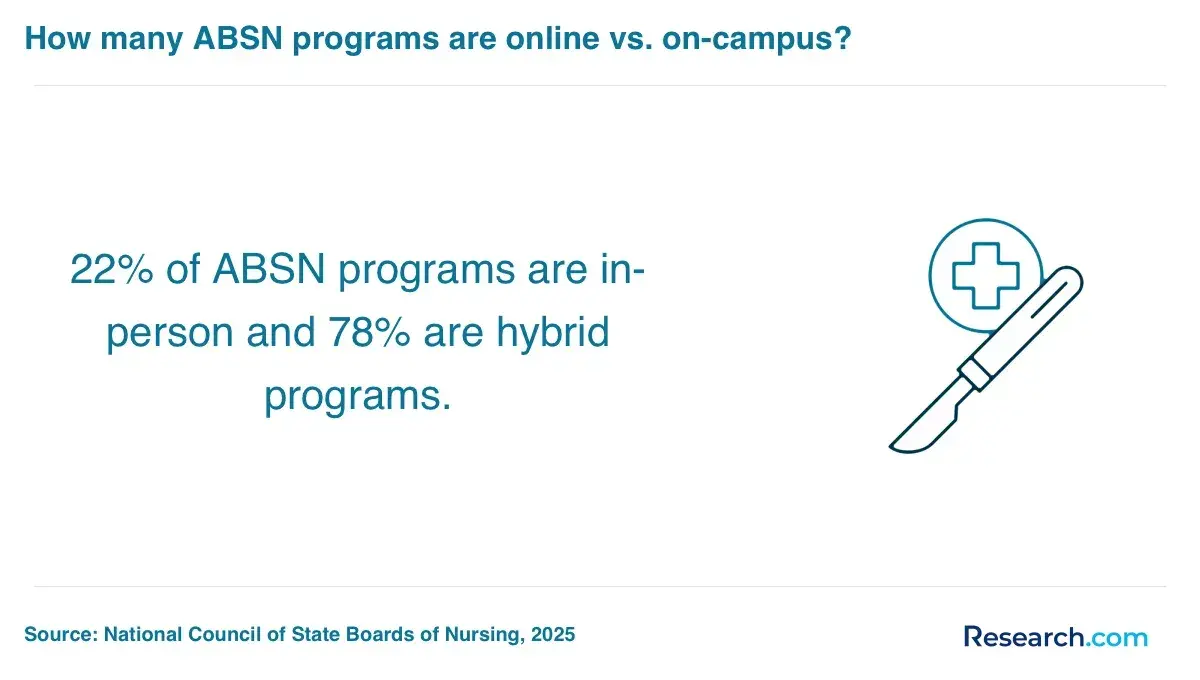
The accelerated BSN curriculum in Florida is thoughtfully designed to rapidly build both nursing knowledge and clinical competence, equipping students to meet the demands of modern healthcare in a shortened timeframe. Below are the fundamental components that shape the core learning experience in both online and on-campus ABSN programs.
- Foundational Nursing Theory and Science Courses: These courses provide an essential scientific framework covering anatomy, physiology, microbiology, pharmacology, and nutrition. This knowledge enables students to understand complex health conditions and forms the basis for informed clinical decision-making.
- Nursing Fundamentals and Health Assessment: Early coursework introduces core nursing principles, patient safety, and communication skills, alongside comprehensive health assessment techniques vital for accurate patient evaluation and care planning.
- Adult, Pediatric, Maternal, and Mental Health Nursing: Specialized courses integrate theory with practical cases addressing diverse populations, from newborns to mental health patients, preparing students for a wide range of clinical environments.
- Clinical Practice Rotations: Students engage in rigorous hands-on training across hospitals and community settings, applying classroom knowledge under supervision, with schedules often demanding up to 40 hours per week to simulate real-world nursing responsibilities.
- Simulation Laboratories: Utilizing advanced simulation technology, students refine critical thinking and technical skills within a risk-free setting, increasingly incorporating virtual and augmented reality to enhance experiential learning.
- Evidence-Based Practice and Research: Training focuses on evaluating scientific literature and applying research findings to improve patient outcomes, fostering skills essential for adaptive, lifelong nursing practice amid evolving healthcare trends.
- Leadership, Ethics, and Professionalism: Curriculum components emphasize ethical decision-making, teamwork, cultural competence, and leadership to prepare nurses for dynamic roles in collaborative care settings.
- NCLEX-RN Preparation: Integrated exam preparation ensures students are well-positioned to pass licensure exams confidently, reflecting the programs' commitment to producing competent, practice-ready nurses.
- Capstone or Senior Practicum: Final immersive experiences with clinical mentors consolidate skills and nurture professional autonomy, bridging academic learning with the realities of nursing careers.
What accreditation should I look for in an ABSN program in Florida?
Accreditation is essential for ensuring educational quality, eligibility for licensure, and future career opportunities in nursing. When evaluating online or on-campus Accelerated Bachelor of Science in Nursing (ABSN) programs in Florida, certain key types of accreditation stand out as indicators of a credible and effective education. Consider these:
- Institutional Accreditation: This ensures the entire college or university meets broad educational standards recognized nationwide. In Florida, institutional accreditation by agencies like the Southern Association of Colleges and Schools Commission on Colleges (SACSCOC) guarantees not only academic quality but also affects financial aid eligibility and credit transferability.
- Programmatic Accreditation by CCNE: The Commission on Collegiate Nursing Education (CCNE) focuses specifically on nursing programs. Accreditation by CCNE means an ABSN program adheres to rigorous standards in curriculum and outcomes, assuring comprehensive preparation for the NCLEX-RN exam and professional nursing careers.
- Programmatic Accreditation by ACEN: The Accreditation Commission for Education in Nursing (ACEN) evaluates nursing programs' curriculum, faculty, and student success measures. ABSN programs with ACEN accreditation are recognized for preparing graduates effectively for real-world nursing demands and professional practice.
- State Board of Nursing Approval: Approval from the Florida State Board of Nursing confirms that a program satisfies state-specific requirements. This approval is vital for students to be eligible to sit for the NCLEX-RN licensure exam and to practice as registered nurses within Florida.
How long does it take to complete an accelerated BSN in Florida?
Accelerated BSN programs in Florida cater to students who already have a non-nursing bachelor's degree and wish to swiftly enter nursing. Various elements influence how long these programs take to finish, including study format and clinical obligations. Here are key factors shaping program duration:
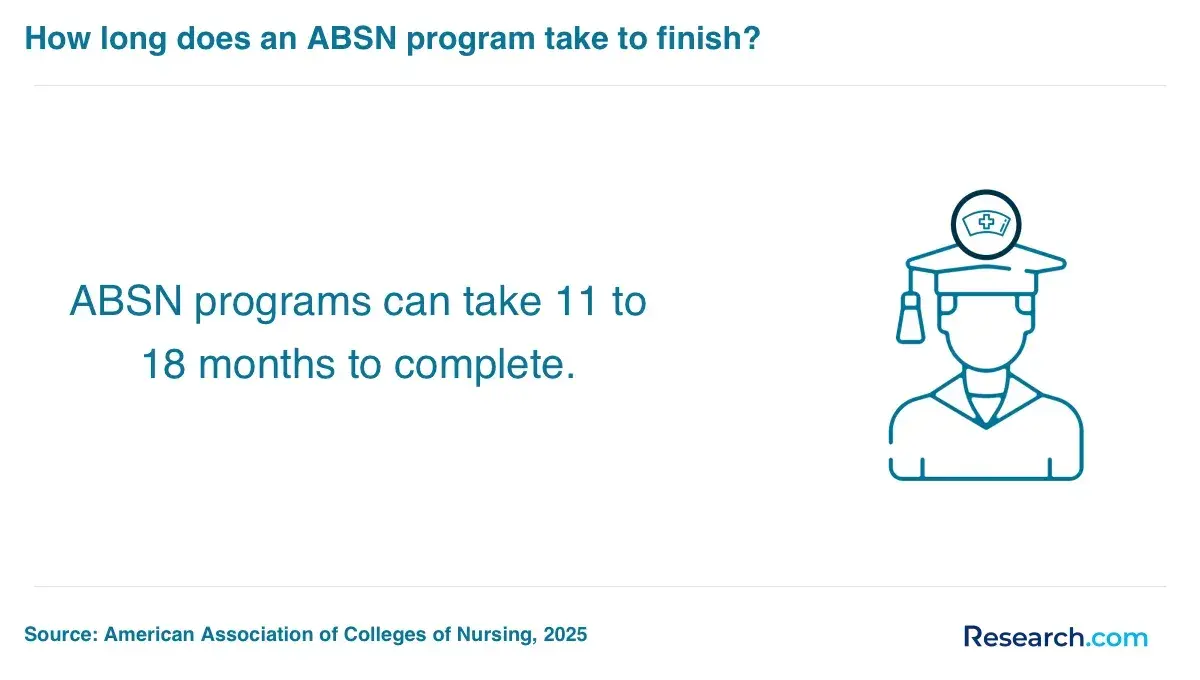
- Typical Program Length: Most programs span 12 to 16 months, offering a structured, fast-paced curriculum designed for full-time students.
- Full-Time Study Requirement: Due to intense coursework, programs generally require full-time enrollment, eliminating part-time options and compressing learning into a shorter timeframe.
- On-Campus vs. Online: Nearly all programs require on-campus attendance for clinical hours, which cannot be completed remotely, impacting scheduling and length.
- Course Sequencing and Clinical Hours: Lock-step progression through courses alongside hands-on clinical rotations means continuous study without breaks, influencing overall completion time.
When I spoke with a nurse who graduated from a Florida ABSN program, she reflected on the intense, focused nature of her year-long journey. Transitioning from a previous career, she described balancing nonstop classes and demanding clinical shifts as challenging but rewarding. "It felt like everything was condensed into that short time," she said, emphasizing that the program's demanding pace necessitated undivided commitment but also accelerated her career change. Her experience highlights how the program's length pushes students to immerse fully, emerging ready for nursing roles in less than a year and a half.
How much does an accelerated BSN program cost in Florida?
Tuition and fees for accelerated BSN programs in Florida can vary widely depending on the institution, program format, and additional expenses beyond base tuition. These variations mean that prospective students must carefully consider multiple cost components when planning their educational investment. Below are the key factors influencing the overall cost of accelerated nursing degrees in Florida.
- Tuition Rates: Tuition constitutes the largest expense and differs notably across schools and residency status. Online formats might offer different pricing structures compared to on-campus options, with some institutions charging per credit hour while others use flat-rate semester fees. This variation plays a significant role in the total tuition for ABSN programs in Florida.
- Technology and Lab Fees: Both online and in-person students face additional costs for digital learning platforms, exam software, and virtual labs. These fees ensure access to essential educational tools and may fluctuate each term depending on course requirements, impacting the overall financial outlay.
- Clinical Supplies and Travel Expenses: On-campus ABSN students often need to purchase scrubs, shoes, and other clinical gear. Additionally, travel costs may arise for clinical rotations or in-person intensives, especially for online learners required to attend occasional on-site sessions. These factors contribute noticeably to total program expenses.
- Pre-enrollment and Compliance Costs: Students must budget for background checks, immunizations, certifications, and health compliance monitoring. These upfront fees are mandatory for clinical placement but can vary between programs, affecting initial out-of-pocket costs for students.
- Financial Aid and Scholarships: Many programs in Florida offer scholarships, tuition discounts, or financial assistance tailored to nursing students. Utilizing these options can substantially reduce the cost of accelerated BSN programs in Florida and make them more accessible.
For those exploring paths in nursing beyond the accelerated BSN, understanding related advanced degrees is also valuable. Resources like best rated acute care nurse practitioner programs provide insights on future specialization opportunities after completing your initial nursing education.
What financial aid options are available for ABSN students in Florida?
Because accelerated nursing programs in Florida can be costly, many students explore different financial aid opportunities to make their education more affordable. Below are some key options that can help reduce the financial burden on those pursuing nursing careers through accelerated pathways.
- Federal Student Loans: These loans, including Direct Unsubsidized and Grad PLUS Loans, offer fixed interest rates and flexible repayment plans. They provide upfront funding to cover tuition, fees, books, and living expenses, making them an accessible option for many ABSN students who seek financial support.
- State and Institutional Grants: Grants such as the LINE Fund provide targeted aid to Florida nursing students, often covering significant costs like tuition and materials. These funds typically come with service commitments that align with addressing Florida's nursing shortage, encouraging students to contribute locally after graduation.
- Nursing Scholarships: Specialized scholarships, often private or institutional, award financial support based on merit or need. Opportunities like the Helene Fuld Health Trust Scholarship or university-specific awards reduce debt load and recognize commitment to nursing, making them crucial for many students exploring Florida ABSN scholarships and financial aid.
- Employer Tuition Assistance: Many healthcare employers now offer tuition reimbursement programs that help current employees finance their ABSN education. These programs often require post-graduation service at the employer facility, fostering workforce growth while supporting educational expenses.
- Loan Forgiveness Programs for Nurses: Designed to decrease debt for nurses who serve in high-need areas, these programs forgive a portion of student loans in exchange for community service. Expanding loan forgiveness options may further motivate graduates to fill critical nursing vacancies across the state.
For students navigating financial aid strategies alongside challenging coursework, exploring whether an is online msn program easy to get into may also be a worthwhile consideration when planning long-term career development.
What career paths are available after earning an ABSN in Florida?
Completing an ABSN program in Florida opens doors to a variety of nursing jobs for ABSN graduates in Florida, spanning hospitals, community settings, and academic environments. Below are some of the most common career paths that align with the skills and training obtained through accelerated BSN programs in the state.
- Registered Nurse (RN): ABSN graduates typically step into RN roles where they provide direct patient care, perform health assessments, and manage medications across diverse healthcare settings such as hospitals and outpatient clinics. Florida's programs prepare students rigorously to pass the NCLEX-RN, enabling quick entry into the workforce.
- Critical Care Nurse: Specialized in handling acute, life-threatening patient conditions, critical care nurses operate in ICUs, emergency rooms, and trauma centers. The advanced clinical reasoning honed in ABSN programs equips graduates to contribute effectively to Florida's expanding critical care units.
- Public Health Nurse: These nurses focus on community well-being by implementing health education and disease prevention in agencies and nonprofit organizations. Through targeted coursework and rotations, ABSN students develop a strong foundation for addressing Florida's complex public health challenges.
- Nurse Educator: Nurse educators shape future nurses by teaching and mentoring in academic and clinical settings. Many ABSN graduates pursue further credentials to meet the rising demand for educators as Florida expands its nursing programs.
- Nurse Manager: Leadership roles like nurse managers involve supervising nursing teams, coordinating patient care, and improving operational efficiency. ABSN curricula emphasize management skills, preparing graduates for growing leadership opportunities within Florida's healthcare systems.
As advanced nursing careers in Florida for ABSN holders continue to evolve, accelerated programs with flexible online and campus options provide graduates a pathway to both immediate employment and long-term growth. For those seeking further education, exploring the list of most affordable online RN to MSN degree programs can offer opportunities for advanced specialization and leadership.
What is the average salary for nurses with an ABSN degree in Florida?
Earning an Accelerated Bachelor of Science in Nursing (ABSN) in Florida can lead to competitive salaries, with compensation influenced by experience, specialization, healthcare setting, and geographic location. As the healthcare landscape evolves, these factors remain critical in shaping earning potential for ABSN graduates. The following outlines the key influences on ABSN nurse salaries in Florida:
- Years of Experience: Entry-level nurses typically start with modest salaries, but gains in experience drive significant increases. Veteran nurses often command top-tier wages reflecting their expertise and clinical proficiency.
- Type of Employer: Hospitals and large healthcare systems generally provide higher pay and benefits compared to outpatient clinics or private practices. Government and specialty hospitals may offer bonuses that enhance overall compensation.
- Geographic Area: Metropolitan regions such as Miami and Tampa offer elevated wages due to higher living costs and demand, while rural areas generally have lower salary scales.
- Specialization or Certification: Advanced certifications in critical care or emergency nursing can yield premium pay, recognizing the added skills and responsibilities.
- Level of Education: Further schooling beyond the ABSN, such as MSN or DNP degrees, boosts prospects for advanced roles with substantially higher salaries.
Here's What Graduates Have to Say About Their ABSN Degree in Florida
- Completing the on-campus ABSN program at the University of Central Florida was a transformative experience. The hands-on clinical practice and close-knit faculty support gave me the confidence to step into my nursing role with strong practical skills. Starting my career working in a local school allowed me to directly witness the positive impact of quality healthcare on children's lives. The demand for nurses in Florida's educational settings feels stable, which is reassuring as I develop my career. I'm truly passionate about being a part of a community that nurtures both students' health and their futures. Kris
- My decision to pursue the online ABSN program through Florida Atlantic University was largely driven by the flexibility it provided while juggling family responsibilities. The curriculum challenged me academically but also offered unique insights into Florida's diverse healthcare landscape, which was invaluable. Starting my nursing career in a local school setting has been incredibly rewarding, allowing me to use my skills to support young students' well-being. The professional growth opportunities have been impressive, motivating me to continue advancing in the healthcare field. Thomas
- Reflecting on my time at Florida International University's ABSN program, I realize how much personal growth I achieved during those intensive months. The experience deepened my empathy and commitment to community health, especially serving Florida's multicultural populations. Entering the nursing workforce with this degree opened doors to leadership roles and gave me a platform to influence healthier school environments. Facing the challenges of accelerated study amidst Florida's fast-paced health sector only strengthened my resilience and passion. Tammy
Related Articles for Nearby States
- 2027 Best ABSN Programs - Accelerated BSN Programs in Georgia: Online & Campus
- 2027 Best ABSN Programs - Accelerated BSN Programs in Alabama: Online & Campus
- 2027 Best ABSN Programs - List of Accelerated BSN Programs in South Carolina: Online & Campus
- 2027 Best ABSN Programs - List of Accelerated BSN Programs in Mississippi: Online & Campus
- 2027 Best ABSN Programs - List of Accelerated BSN Programs in Tennessee: Online & Campus
- 2027 Best ABSN Programs - List of Accelerated BSN Programs in North Carolina: Online & Campus
- 2027 Best ABSN Programs - List of Accelerated BSN Programs in Louisiana: Online & Campus
- 2027 Best ABSN Programs - Accelerated BSN Programs in Kentucky: Online & Campus
- 2027 Best ABSN Programs - Accelerated BSN Programs in Arkansas: Online & Campus
- 2027 Best ABSN Programs - Accelerated BSN Programs in Virginia: Online & Campus
References:
- Admissions | SONHS Accelerated BSN | University of Miami https://www.sonhs.miami.edu/academics/bachelors-programs/accelerated_bsn/admissions/index.html
- All About ABSN https://onlinedegrees.rockhurst.edu/blog/all-about-absn-infographic
- Accelerated Bachelor of Science (ABSN) Degree in Nursing at SMU https://www.samuelmerritt.edu/college-nursing/accelerated-bachelor-science-nursing
- What is an Accelerated Nursing Program? And is it the Right Path for You? https://www.herzing.edu/blog/what-accelerated-nursing-program-and-it-right-path-you
- Connect with Your Advisor https://health.usf.edu/nursing/undergraduate/programs/second-degree-details
- Florida ABSN Programs - Accelerated Nursing Schools https://www.absnprograms.org/programs/florida/
- Master’s title https://www.ecpi.edu/blog/accelerated-nursing-programs-what-are-the-challenges-and-benefits
- 12-Month Second Degree BSN Program https://www.ju.edu/nursing/undergraduate/accelerated-12-month-bsn.php
- Traditional and Accelerated BSN Student Expenses » College of Nursing » University of Florida https://nursing.ufl.edu/programs/bachelor-of-science-bsn/traditional-bsn/traditional-and-accelerated-bsn-student-expenses/
- Accelerated BSN (ABSN) Programs in Florida https://nurse.org/education/absn-programs-florida/
Other Things You Should Know About ABSN Programs in Florida
When selecting an accelerated BSN program in Florida for 2027, consider accreditation status, NCLEX-RN pass rates, clinical placement opportunities, faculty qualifications, and program length. These elements are crucial for a robust educational experience and successful transition into a nursing career.
Most top ABSN programs in Florida in 2027 require a minimum GPA of 3.0 for admission. However, competitive programs may have higher GPA requirements, so it is crucial for applicants to verify with individual schools for specific standards and expectations.
In 2027, top ABSN programs in Florida include the University of Florida, Florida Atlantic University, and the University of Miami. These programs offer robust curriculums, strong clinical partnerships, and comprehensive support to ensure student success in accelerated learning environments.


