
2027 Best ABSN Programs - List of Accelerated BSN Programs in New Hampshire: Online & Campus

Co-Founder and Chief Data Scientist
New Hampshire's healthcare sector grows steadily, with a 12% projected increase in nursing jobs by 2030. This surge makes accelerated Bachelor of Science in Nursing (ABSN) programs appealing for career changers and aspiring nurses alike. Choosing between online or campus ABSN programs in New Hampshire offers flexibility and immersive learning opportunities tailored to diverse needs. Exploring these options reveals how the state supports rapid, quality nursing education aligned with workforce demands and accredited standards.
This article unpacks what ABSN programs in New Hampshire really involve. Prepared by career planning experts, it guides readers on what to expect, what to seek, and how to decide when selecting the right ABSN path. The journey ahead ensures clarity and confidence in navigating accelerated nursing education here.
Key Benefits of ABSN Programs in New Hampshire
- New Hampshire's ABSN programs cut traditional BSN study time by up to 50%, enabling career shifts in just 12-18 months for motivated students.
- Students benefit from a blend of online coursework and hands-on clinical placements at top regional hospitals, ensuring real-world experience alongside flexibility.
- Graduates enjoy strong licensure pass rates often exceeding 90%, reflecting the state's commitment to rigorous, high-quality accelerated nursing education.
- Who can apply for accelerated BSN programs in New Hampshire?
- What are the admission requirements for accelerated BSN programs in New Hampshire?
- Do accelerated BSN programs in New Hampshire require entrance exams?
- What does the curriculum of an accelerated BSN program in New Hampshire include?
- What accreditation should I look for in an ABSN program in New Hampshire?
- How long does it take to complete an accelerated BSN in New Hampshire?
- How much does an accelerated BSN program cost in New Hampshire?
- What financial aid options are available for ABSN students in New Hampshire?
- What career paths are available after earning an ABSN in New Hampshire?
- What is the average salary for nurses with an ABSN degree in New Hampshire?
Who can apply for accelerated BSN programs in New Hampshire?
Accelerated Bachelor of Science in Nursing (ABSN) programs in New Hampshire offer an exciting pathway for individuals who already hold a non-nursing bachelor's degree and want to transition into nursing quickly. These programs are structured to build on previous academic achievements, making it possible to gain nursing knowledge and skills in an intensive format. Applicants typically must meet admission requirements for accelerated BSN in New Hampshire, which include having completed prerequisite coursework such as anatomy, physiology, and microbiology. This focused approach allows students to shift gears efficiently while maintaining the depth and rigor essential for nursing education.
The eligibility for New Hampshire ABSN programs attracts a diverse group of students. Many are career changers eager to leave behind unrelated fields and pursue a profession with direct impact on people's lives. Recent college graduates who want a fast track into healthcare find ABSN programs appealing as well, alongside professionals who seek a more meaningful and stable career. Successful candidates usually demonstrate strong academic motivation, excellent time management skills, and a genuine passion for patient care, which are vital to navigate the demanding pace of accelerated nursing study. For those curious about advancing in specialized nursing roles, understanding the psychiatric nurse practitioner career requirements might also provide inspiring context for their journey.
What are the admission requirements for accelerated BSN programs in New Hampshire?
Admission into accelerated BSN programs in New Hampshire is competitive and designed to identify students who are academically prepared and motivated to handle an intensive nursing curriculum. To help you navigate this journey, here are some key requirements that most programs expect from applicants, whether you choose the online or on-campus route.
- Non-nursing Bachelor's Degree: Applicants typically must hold a bachelor's degree in a field other than nursing. This prerequisite ensures students bring diverse knowledge and life experience, which strengthens the nursing cohort and provides a solid foundation for accelerated study.
- Prerequisite Coursework: Completion of specific science and general education courses is essential. Prerequisites for ABSN programs in New Hampshire often include subjects like biology, chemistry, anatomy, physiology, and statistics. These courses prepare students for the rigorous scientific and clinical material in the accelerated curriculum.
- Minimum GPA Standards: Most programs require a competitive minimum GPA, commonly around 3.0 on a 4.0 scale. This metric helps schools assess applicants' academic ability to succeed in a fast-paced learning environment where mastering material quickly is critical.
- Application Materials: A complete application package usually includes recommendation letters and a personal statement. These components allow admission committees to evaluate an applicant's motivation, communication skills, and readiness to embrace the challenges of nursing education.
If you're eager to explore pathways to nursing, learning how to become a nurse practitioner fast can also complement your ABSN ambitions by offering a glimpse into the broader nursing career landscape.
Do accelerated BSN programs in New Hampshire require entrance exams?
Accelerated Bachelor of Science in Nursing (ABSN) programs in New Hampshire vary in their entrance exam requirements, depending largely on the institution. Some schools ask applicants to complete exams like the ATI Test of Essential Academic Skills (TEAS), which evaluates knowledge in reading, math, science, and English language usage. Others may require a minimum score to move forward in the admission process. While the TEAS is the most commonly cited test, a few programs might mention the HESI exam, though it is less frequent, and the GRE is generally not required for ABSN entry. Meanwhile, several schools focus more on prerequisite coursework and GPA rather than standardized testing for admission.
Entrance exams serve as a tool for nursing programs to measure a student's readiness and critical thinking skills before they embark on the fast-paced, demanding journey of an ABSN. These tests offer a consistent benchmark to compare applicants from diverse academic backgrounds, helping programs maintain rigorous standards. Beyond assessing foundational knowledge, entrance exams support schools in selecting candidates likely to succeed, which can positively impact graduation rates and licensing exam performance. This approach reflects a commitment to preparing a competent nursing workforce ready for the challenges ahead.
When I spoke with a nurse from New Hampshire who completed an ABSN program through a mix of online and on-campus courses, he recalled feeling apprehensive about the entrance exam requirement. "The TEAS was definitely a hurdle," he said, "but it also gave me confidence that I had the base knowledge needed for the intense program." He shared that while some classmates attended schools without mandatory exams, his program's screening helped create a motivated cohort prepared to tackle accelerated learning. Reflecting back, he described the exam as a necessary filter that ultimately eased the pressure during coursework, making the experience "challenging but manageable."
What does the curriculum of an accelerated BSN program in New Hampshire include?
The accelerated BSN curriculum in New Hampshire is crafted to help students rapidly build clinical competence and nursing knowledge within an intensive 12 to 16-month period. This approach encourages an immersive learning experience that blends theory and practice seamlessly. Here are the essential components that shape this dynamic curriculum:
- Foundational Nursing Courses: These cover core subjects like health assessment, pharmacology, and pathophysiology, providing students with a solid theoretical base essential for clinical application.
- Clinical Training: Hands-on clinical rotations immerse students in diverse healthcare settings, from pediatrics to mental health, sharpening their practical skills and adaptability.
- Simulation Labs: High-fidelity simulation environments recreate real-life nursing scenarios, helping students develop critical thinking and confident decision-making under pressure.
- NCLEX-RN Preparation: Integrated throughout the program, this preparation equips students with strategies and knowledge to excel on the licensure exam crucial for becoming registered nurses.
What accreditation should I look for in an ABSN program in New Hampshire?
Accreditation serves as the compass that guides your choice in an Accelerated Bachelor of Science in Nursing (ABSN) program, ensuring your education meets high standards, qualifies you for licensure, and opens doors to nursing careers. Here are the key types of accreditation to seek when exploring online and on-campus ABSN programs in New Hampshire:
- Institutional Accreditation: This guarantees that the college or university as a whole meets rigorous academic and operational standards. In New Hampshire, regional accreditation by the New England Commission of Higher Education (NECHE) is the hallmark, confirming overall educational quality and eligibility for federal aid.
- Programmatic Accreditation (ACEN): The Accreditation Commission for Education in Nursing zeroes in on the nursing program itself, reviewing curriculum quality, faculty expertise, and student success. An ACEN-accredited ABSN program aligns with national benchmarks and is recognized by employers and licensing boards alike.
- Programmatic Accreditation (CCNE): The Commission on Collegiate Nursing Education also accredits baccalaureate nursing programs, especially at four-year institutions. Although less common in New Hampshire's ABSN offerings, CCNE accreditation remains a strong indicator of program excellence and licensure acceptance.
- State Board of Nursing Approval: Approval from the New Hampshire Board of Nursing ensures the program meets specific state educational standards and prepares graduates to sit for the NCLEX-RN licensure exam. This approval is crucial for practicing nursing within the state and often influences eligibility in other locations.
How long does it take to complete an accelerated BSN in New Hampshire?
Accelerated Bachelor of Science in Nursing (ABSN) programs in New Hampshire cater to students with a previous non-nursing bachelor's degree eager to shift into nursing quickly. The length of these programs varies based on several key factors that shape how soon you can start your nursing career. Consider these points:
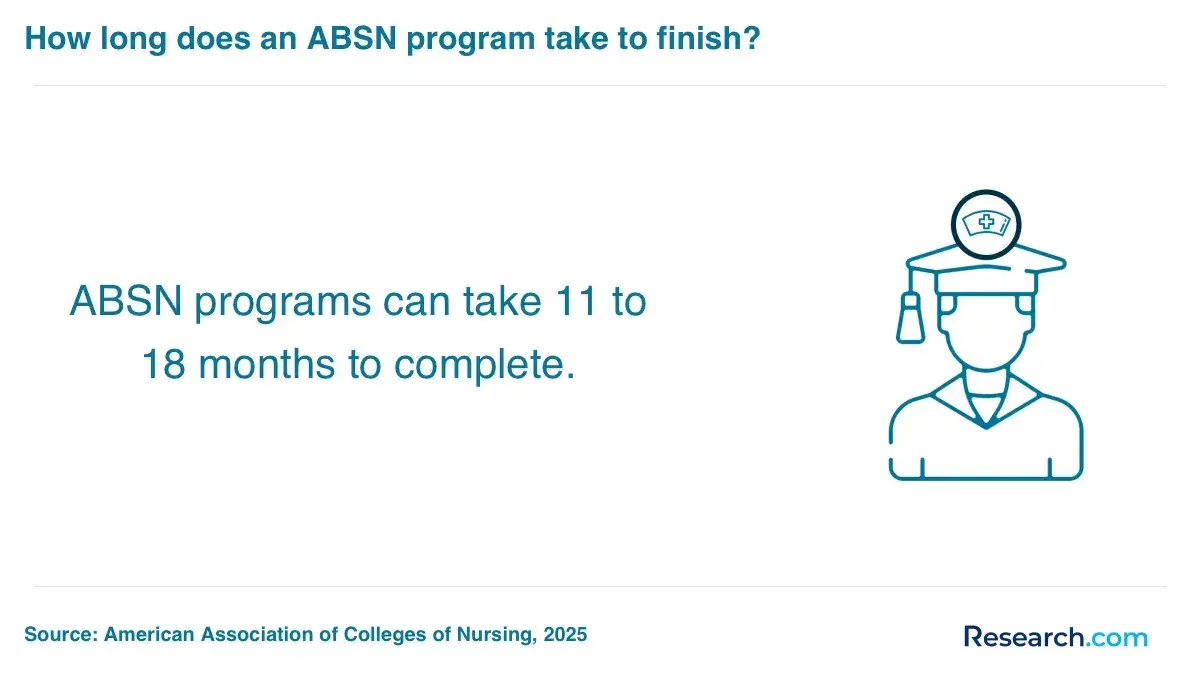
- Program Length Variability: ABSN programs usually take between 12 and 18 months, influenced by each institution's curriculum pace and structure.
- Full-Time vs. Part-Time Study: Most ABSN students study full-time, immersing fully for rapid completion, while part-time options extend duration considerably.
- Online vs. On-Campus Formats: Hybrid models offer flexibility but still require on-campus clinical hours, which can affect scheduling and length.
- Clinical Hour Requirements: Completing 700 to 800 clinical hours is essential, setting a minimum practical training period before graduation.
- Course Sequencing: Well-planned course progression ensures a steady, accelerated pace to finish all requirements on time.
When I spoke with a nurse who graduated from an ABSN program at a local New Hampshire school, she shared that the intensity was daunting but rewarding. "It felt like running a marathon at sprint speed," she reflected, remembering how the 16-month program demanded nonstop focus and energy. Shifting from a non-nursing background meant adapting quickly to the clinical hours and fast-moving courses. Still, she says, "knowing it would get me to my new career faster kept me motivated when exhaustion crept in." Her journey highlights how time flies in such immersive programs, blending challenge with a thrilling sense of progress.
How much does an accelerated BSN program cost in New Hampshire?
Tuition and fees for accelerated BSN programs in New Hampshire vary widely depending on the institution, program format, and associated expenses beyond just tuition. These factors shape the overall cost of pursuing an accelerated BSN, whether you choose an online or on-campus path. Here are the primary cost elements to consider:
- Tuition Rates: Tuition forms the bulk of expenses, with schools charging per credit hour or offering flat-rate bundles. For example, some programs may charge over $400 per credit, while others provide bundled tuition covering the entire course load. Understanding the specific pricing structure is essential for budgeting your accelerated BSN program tuition in New Hampshire.
- Technology and Lab Fees: Both program types can include fees for technology access or lab use. Online students might pay for virtual resources, while on-campus students often incur lab fees for hands-on training. Sometimes these fees are packaged with tuition; other times, they appear as separate charges.
- Clinical Supplies and Materials: Expect additional costs for clinical attire and equipment like stethoscopes and assessment kits. These necessary tools are typically out-of-pocket expenses and crucial for practical training in nursing, adding to the overall investment.
- Travel and Housing Expenses: Online ABSN programs often require on-site clinical sessions and orientations that involve travel. These costs, including lodging and meals, can significantly affect your budget depending on your proximity to clinical sites.
- Financial Aid and Scholarships: Many programs offer access to federal loans, scholarships, and institutional aid; however, eligibility and amounts vary. Completing the FAFSA is a key step to unlocking these resources and easing the financial burden of the cost of online ABSN programs in New Hampshire.
For those curious about the broader landscape of nursing education options beyond accelerated programs, exploring the best bsn to np degree program can offer valuable insights into career advancement opportunities.
What financial aid options are available for ABSN students in New Hampshire?
Accelerated nursing programs in New Hampshire can be a notable financial commitment, so many students eagerly explore various ways to ease the cost and make their education more manageable. Here are some key financial aid options that open doors for ABSN students:
- Federal Student Loans: By submitting the FAFSA, most students gain access to federal direct subsidized and unsubsidized loans, which cover tuition, fees, and living expenses. These loans come with competitive interest rates and flexible repayment plans, making federal student loans for ABSN programs in New Hampshire a foundational financial resource.
- State and Institutional Grants: Grants from New Hampshire and colleges like Rivier University help reduce tuition burdens without adding debt, as these funds do not require repayment. These awards often emphasize financial need and directly support students' education costs.
- Nursing Scholarships: A variety of scholarships exist specifically for nursing students, from merit-based awards to those supporting underrepresented groups or financial need. Many offer substantial aid, and exploring nursing scholarships and grants in New Hampshire can reveal surprising opportunities for funding.
- Employer Tuition Assistance: Some healthcare employers invest in their staff's growth by offering tuition reimbursement or assistance, often requiring a service commitment afterward. This path can make gaining nursing credentials more affordable while advancing your career.
- Loan Forgiveness Programs for Nurses: Programs like the Nurse Corps Loan Repayment incentivize work in high-need areas by forgiving a portion of student loans after fulfilling service requirements. These initiatives significantly reduce debt for graduates willing to serve in critical healthcare roles.
For those interested in expanding their nursing career into areas like advanced practice, exploring options such as a holistic nurse practitioner pathway may provide additional opportunities alongside financial aid options.
What career paths are available after earning an ABSN in New Hampshire?
Completing an Accelerated Bachelor of Science in Nursing (ABSN) program in New Hampshire opens doors to diverse nursing roles across hospitals, clinics, community settings, and more. These programs prepare graduates to step confidently into varied careers, each offering unique opportunities to make a difference. Here are some common paths for ABSN graduates in New Hampshire:
- Registered Nurse (RN): Delivering direct patient care across hospitals, outpatient clinics, and long-term care facilities, RNs administer medications and collaborate with healthcare teams. ABSN programs equip students with the clinical skills and knowledge to quickly pass the NCLEX-RN exam and enter the workforce, meeting local demand for skilled nurses.
- Critical Care Nurse: Specializing in intensive care units, emergency departments, and trauma centers, these nurses monitor complex cases, manage life-support systems, and respond swiftly to critical changes. Hands-on simulation labs and clinical placements in ABSN programs hone the essential acute care abilities needed in these high-pressure environments.
- Public Health Nurse: Focused on disease prevention and health education, public health nurses work in communities, schools, and government agencies to coordinate screenings, vaccination drives, and policy advocacy. Coursework in population health prepares ABSN graduates to address public health challenges affecting vulnerable groups.
- Nurse Educator: Teaching future nurses and leading clinical instruction, nurse educators develop curricula and mentor students within academic or healthcare organizations. ABSN graduates aiming for this role often pursue further study, benefiting from foundational leadership and evidence-based practice skills gained during their accelerated programs.
- Nurse Manager: Leading clinical teams, managing budgets, and ensuring regulatory compliance, nurse managers oversee staffing and quality improvement in healthcare facilities. ABSN graduates ready for supervisory roles can advance further through graduate studies in nurse executive leadership.
Exploring these ABSN jobs and salaries in New Hampshire can guide your next steps, whether you seek hands-on patient care or leadership roles. For those considering further education, some programs offer pathways to accelerated master's degrees; discovering the most affordable online rn to msn degree program can be the key to advancing your nursing career.
What is the average salary for nurses with an ABSN degree in New Hampshire?
Earning an Accelerated Bachelor of Science in Nursing (ABSN) degree in New Hampshire can open doors to competitive salaries, with pay influenced by several dynamic factors such as experience, specialization, healthcare setting, and geographic location. Understanding these key elements reveals how your career path can shape your financial future. Consider the following factors that impact ABSN nurse salaries in New Hampshire:
- Years of Experience: Nurses beginning their careers with an ABSN typically start at the lower salary range. As clinical expertise and skills develop, their earnings grow substantially, reflecting the value of gained experience.
- Type of Employer: Salary variations occur depending on whether nurses work in hospitals, outpatient centers, or long-term care facilities, with some employers offering notably higher compensation.
- Geographic Area: Local living costs and healthcare demand differ across New Hampshire regions, affecting salary scales and the practical purchasing power of earnings.
- Specialization or Certification: Advanced roles like nurse practitioners and anesthetists command significantly higher salaries, highlighting the benefit of pursued certifications.
- Level of Education: Additional graduate education and specialized training often lead to increased earning potential beyond the ABSN base level.
Here's What Graduates Have to Say About Their ABSN Degree in New Hampshire
- Completing the on-campus ABSN program at Granite State College was a truly transformative experience. The hands-on clinical practice combined with supportive faculty made the transition into nursing seamless. Starting my career in a local school setting has allowed me to directly impact the lives of children by providing essential health education and care. New Hampshire's close-knit community emphasized the importance of personalized nursing, which deepened my commitment to this profession. I feel empowered knowing that my education prepared me well for both challenges and opportunities ahead. - Andre
- Enrolling in the online ABSN program at Southern New Hampshire University gave me the flexibility I needed while balancing family and work. The curriculum was rigorous but accessible, with excellent virtual support and interactive learning. Beginning my nursing career in a local school environment has been rewarding, allowing me to help students maintain their well-being and focus on their academic success. The unique challenges faced by New Hampshire schools, especially in rural areas, have honed my critical thinking and adaptability. I'm grateful for how this program advanced my professional growth and opened so many doors. - Normi
- The accelerated ABSN program at Rivier University pushed me beyond my limits, but the experience was incredibly fulfilling. As a nurse now working in a local school, I've witnessed firsthand how vital it is to support the physical and emotional health of young people. My time in New Hampshire offered unique community engagement opportunities, especially in diverse populations, which enriched my perspective and practice. This program also boosted my confidence in clinical leadership and health advocacy, setting a strong foundation for career advancement. I'm proud to contribute meaningfully to the well-being of our youth. - Leonardo
Related Articles for Nearby States
- 2027 Best ABSN Programs - Accelerated BSN Programs in Vermont: Online & Campus
- 2027 Best ABSN Programs - List of Accelerated BSN Programs in Massachusetts: Online & Campus
- 2027 Best ABSN Programs - Accelerated BSN Programs in Maine: Online & Campus
- 2027 Best ABSN Programs - Accelerated BSN Programs in New York: Online & Campus
- 2027 Best ABSN Programs - List of Accelerated BSN Programs in Connecticut: Online & Campus
- 2027 Best ABSN Programs - List of Accelerated BSN Programs in Rhode Island: Online & Campus
- 2027 Best ABSN Programs - List of Accelerated BSN Programs in New Jersey: Online & Campus
- 2027 Best ABSN Programs - List of Accelerated BSN Programs in Pennsylvania: Online & Campus
- 2027 Best ABSN Programs - Accelerated BSN Programs in Delaware: Online & Campus
- 2027 Best ABSN Programs - Accelerated BSN Programs in Maryland: Online & Campus
References:
- Registered Nurse Salary in New Hampshire (2024) | Trusted Health https://www.trustedhealth.com/nurse-salary-guide/new-hampshire
- How Do ABSN Graduates Compare to BSN Graduates? | Saint Joseph's College of Maine https://studyonline.sjcme.edu/blog/how-do-absn-graduates-compare-bsn-graduates
- ADN vs Accelerated BSN (ABSN) - Which Program Is Right for You? https://absn.org/resources/adn-vs-absn/
- Accelerated B.S. in Nursing: 12 Month https://www.une.edu/wchp/nursing/accelerated-bs-nursing-12-month
- Best Nursing Schools in New Hampshire for 2023 | Incredible Health https://www.incrediblehealth.com/blog/best-nursing-schools-new-hampshire/
- Nurse Salary: How Much Do Nurses Make? https://nurse.org/education/how-much-do-nurses-make/
- Accelerated BSN Program | MGH Institute of Health Professions https://www.mghihp.edu/nursing/programs/accelerated-bsn
- 7 Challenges to Prepare for in Accelerated Nursing Programs https://www.edumed.org/articles/7-challenges-to-prepare-for-in-accelerated-nursing-programs/
- Financing Your Accelerated Bachelor of Science in Nursing (ABSN) https://www.assumption.edu/admissions-financial-aid/financing-post-bacc-nursing-program
- Navigating New Hampshire's Accelerated Nursing Programs https://shark1053.com/navigating-new-hampshires-education-landscape-with-accelerated-nursing-programs/
Other Things to Know About ABSN Programs in New Hampshire
In 2027, some of the best Accelerated Bachelor of Science in Nursing (ABSN) programs in New Hampshire include those offered by the University of New Hampshire, Rivier University, and Southern New Hampshire University. These programs are renowned for their comprehensive curriculum and hands-on clinical experiences.
An accelerated BSN (ABSN) is an excellent stepping stone toward earning an MSN in New Hampshire, especially for those who hold a non-nursing bachelor's degree and want to enter the nursing field quickly. The ABSN program provides the foundational nursing knowledge and clinical experience required to meet RN licensure requirements, which is essential before pursuing advanced nursing studies. Furthermore, many New Hampshire institutions offer seamless RN-to-MSN pathways or graduate programs that build directly on the ABSN curriculum, facilitating faster progression to advanced practice roles. Overall, an ABSN offers a focused, time-efficient route that aligns well with the prerequisites and professional demands of MSN programs in the state.
Many ABSN students in New Hampshire find it challenging to work while completing their degree due to the program's accelerated and intensive nature, which demands a significant time commitment for coursework and clinical rotations. Although part-time jobs or healthcare-related positions may be possible during less demanding periods, most students prioritize their studies to meet rigorous program requirements. Additionally, balancing work with clinical hours can be difficult, making full-time employment rare. Prospective ABSN students should plan their finances accordingly and consider flexible financial aid options to support themselves while focusing on their education.


