
2027 Best ABSN Programs - Accelerated BSN Programs in Idaho: Online & Campus

Co-Founder and Chief Data Scientist
Idaho's healthcare sector is growing rapidly, with a 12% projected increase in registered nurse opportunities over the next decade. Choosing an accelerated Bachelor of Science in Nursing (ABSN) program, whether online or on-campus, allows students to enter this thriving job market more quickly while gaining essential clinical skills tailored to Idaho's unique healthcare needs. This pathway provides flexibility without compromising quality, making it an appealing option for career changers and recent graduates alike.
This article, crafted by career planning experts, guides readers through understanding what ABSN programs in Idaho involve. It clarifies what to expect, what criteria to evaluate, and how to navigate the decision-making process to find the right accelerated nursing path that aligns with individual goals and Idaho's healthcare landscape.
Key Benefits of ABSN Programs in Idaho
- Idaho's ABSN programs offer accelerated pathways, with many students completing their degree in 12 to 18 months-significantly faster than traditional programs.
- These programs blend online coursework and local clinical placements, providing flexibility for working adults while ensuring hands-on experience in state-of-the-art facilities.
- Graduates benefit from high NCLEX pass rates, often above 90%, reflecting the quality and rigorous preparation that Idaho ABSN programs provide for immediate entry into nursing careers.
- Who can apply for accelerated BSN programs in Idaho?
- What are the admission requirements for accelerated BSN programs in Idaho?
- Do accelerated BSN programs in Idaho require entrance exams?
- What does the curriculum of an accelerated BSN program in Idaho include?
- What accreditation should I look for in an ABSN program in Idaho?
- How long does it take to complete an accelerated BSN in Idaho?
- How much does an accelerated BSN program cost in Idaho?
- What financial aid options are available for ABSN students in Idaho?
- What career paths are available after earning an ABSN in Idaho?
- What is the average salary for nurses with an ABSN degree in Idaho?
Who can apply for accelerated BSN programs in Idaho?
Accelerated Bachelor of Science in Nursing (ABSN) programs in Idaho are tailored for individuals who already hold a non-nursing bachelor's degree and want to transition into nursing more quickly. These programs recognize prior general education and elective coursework, allowing students to concentrate on the core nursing curriculum and clinical experiences required for licensure. Admission typically involves meeting specific ABSN program requirements Idaho, including prerequisite courses like anatomy, physiology, microbiology, chemistry, and psychology, along with maintaining a competitive GPA. Applicants may need to provide transcripts and demonstrate that their previous coursework aligns with program standards. This structure offers an effective route for degree holders eager to begin a rewarding career in nursing without repeating foundational studies.
Those drawn to accelerated BSN admission requirements often come from varied backgrounds in Idaho. Career changers from fields such as business, education, and the sciences pursue these programs to find more stable, meaningful work in healthcare. Recent graduates seeking a fast path into nursing also frequently apply, motivated by a newfound passion for patient care. Professionals already working in healthcare support roles enroll to advance their qualifications and earning potential. Successful ABSN students typically possess strong academic motivation, excellent time management skills, and a genuine passion for patient care. The demanding nature of these programs rewards resilience and dedication, qualities essential for thriving in nursing. For those considering this path, understanding the highest paying nursing salary prospects can provide valuable inspiration for your future career decisions.
What are the admission requirements for accelerated BSN programs in Idaho?
Admission into accelerated BSN programs in Idaho is highly competitive, designed to identify students who are academically prepared and motivated to handle an intensive nursing curriculum. Whether you choose an online or on-campus track, meeting specific criteria is essential to demonstrate your readiness and commitment. Here are the main admission requirements you should focus on:
- Non-Nursing Bachelor's Degree: Candidates must hold a bachelor's degree in a field other than nursing from an accredited institution. This foundation allows programs to accelerate your path by concentrating on nursing-specific courses, building on your prior academic achievements.
- Completion of Prerequisite Courses: You'll need to complete key undergraduate courses such as anatomy, physiology, microbiology, and statistics with satisfactory grades. These prerequisites ensure you have the scientific background necessary for success in nursing. Most Idaho programs require a minimum grade of "C" or better, often within the last 5 to 10 years, reflecting the importance of current knowledge.
- Minimum GPA Standards: A minimum cumulative GPA, usually between 3.0 and 3.2, is required. Idaho's competitive programs often admit students with GPAs above 3.2, highlighting the need for strong academic performance to thrive in an accelerated setting.
- Submission of Application Materials: Applicants must submit official transcripts, recommendation letters, and a personal statement. These documents provide insight into your work ethic, goals, and readiness for the demanding nursing curriculum. Articulating your motivation clearly can set you apart in the selection process.
- Background Check and Health Clearance: To ensure safety during clinical rotations and comply with regulations, programs require a criminal background check and proof of immunizations or health screenings.
Embracing these prerequisites for ABSN programs in Idaho is a vital step toward joining a profession that offers both challenge and reward. For those interested in expanding their expertise after admission, exploring how to become functional medicine nurse practitioner can open further career pathways.
Do accelerated BSN programs in Idaho require entrance exams?
Most Accelerated Bachelor of Science in Nursing (ABSN) programs in Idaho require applicants to take standardized entrance exams, although the specific requirements can vary among schools. The two most common exams are the Test of Essential Academic Skills (TEAS) and the Health Education Systems, Inc. (HESI) pre-admission exam. These assessments evaluate essential skills such as reading comprehension, mathematics, science knowledge, and English language usage. Some institutions may also look for minimum score thresholds to move forward in the admissions process. While a few programs might have additional criteria like GPA minimums or prerequisite coursework, successfully passing one of these exams is often a key step toward admission.
Schools use these entrance exams as reliable tools to gauge an applicant's academic readiness and critical thinking abilities before they begin the intense accelerated curriculum. Because ABSN programs typically condense traditional nursing coursework into a shorter timeframe, it's crucial that students have a strong foundational skill set and quick learning capacity. These tests help educators identify candidates who are equipped to handle rigorous study and complex problem-solving under pressure. Ultimately, this selective approach aims to support student success and ensure prepared nurses enter the healthcare workforce.
When I spoke with a nurse from Idaho who graduated from a local ABSN program, he shared how the entrance exam proved to be a meaningful hurdle rather than a mere formality. He recalled feeling anxious before the test but also viewed it as a good measure of where he stood academically. Whether he was attending classes online or on campus, the exam's challenge helped him focus his study efforts and confirmed his commitment to the demanding pace of the program. In his words, "It wasn't just about passing the test-it was about proving to myself that I could meet the high standards required to succeed in nursing school." This perspective highlights how entrance exams serve as both gatekeepers and motivators in Idaho's ABSN pathways.
What does the curriculum of an accelerated BSN program in Idaho include?
The accelerated BSN curriculum in Idaho is designed to help students build clinical competence and nursing knowledge in a condensed timeframe, typically lasting between 12 and 16 months. This rigorous structure blends theory with practical experience to prepare students quickly and effectively for professional nursing roles. Key curriculum components include:
- Foundational Nursing Courses: These courses cover essential nursing principles such as health assessment, anatomy, and ethics, creating a strong theoretical base. This foundation equips you with the critical thinking skills necessary for success in clinical settings.
- Specialized Clinical Content: Focused study on adult health, pediatrics, women's health, mental health, and population health prepares students to care for diverse patient groups. Emphasizing real-world applications, this content readies you for varied healthcare environments.
- Clinical Rotations and Practicum: Hands-on experiences in healthcare facilities allow you to apply classroom knowledge under professional supervision. These rotations build confidence and competence across multiple nursing specialties.
- Simulation and Skills Laboratories: High-fidelity simulation labs provide a safe space to develop technical skills and clinical judgment. Practicing in realistic scenarios sharpens your readiness for actual patient care.
- Evidence-Based Practice and Research: Coursework emphasizes integrating current research into nursing decisions, ensuring care is up to date and effective. This training fosters a mindset of continual learning and critical appraisal.
- Leadership and Management: Preparing for leadership roles, these courses teach teamwork, system navigation, and professional accountability. You'll develop skills to coordinate care and lead within interdisciplinary teams.
- NCLEX-RN Preparation: The program aligns closely with the NCLEX-RN examination framework, focusing on knowledge and competencies needed to pass. This approach maximizes your readiness for licensure and success as a registered nurse.
What accreditation should I look for in an ABSN program in Idaho?
Accreditation is essential for ensuring educational quality, eligibility for licensure, and strong future career opportunities in nursing. When evaluating Accelerated Bachelor of Science in Nursing (ABSN) programs in Idaho, focus on these key types of accreditation and approvals:
- Institutional Accreditation: This confirms that the entire college or university meets high standards of academic quality and rigor. Attending an institution with recognized regional accreditation, such as from the Northwest Commission on Colleges and Universities, ensures your degree holds weight with employers, graduate schools, and federal aid programs.
- Programmatic Accreditation (CCNE or ACEN): Look for ABSN programs accredited by the Commission on Collegiate Nursing Education (CCNE) or the Accreditation Commission for Education in Nursing (ACEN). This ensures the nursing curriculum, faculty, and clinical resources meet professional standards that prepare you well for the NCLEX-RN licensing exam and nursing practice.
- Idaho State Board of Nursing Approval: ABSN programs must have explicit approval from the Idaho State Board of Nursing. This is mandatory to be eligible to sit for the NCLEX-RN exam and become a licensed nurse in Idaho, so confirm this approval before enrolling.
- Clinical Placement Quality: Although not formal accreditation, strong clinical partnerships with accredited healthcare facilities are vital for hands-on training. Programs that offer well-supervised, local clinical rotations give you essential real-world experience and improve your job prospects.
- Online Program Accreditation and Local Authorization: For online or hybrid ABSN options, verify they hold the same institutional and programmatic accreditations as on-campus programs and are authorized to operate in Idaho. Confirm clinical requirements involve approved in-person experiences within the state to ensure eligibility for licensure.
How long does it take to complete an accelerated BSN in Idaho?
Accelerated Bachelor of Science in Nursing (ABSN) programs in Idaho cater to students holding a non-nursing bachelor's degree, aiming for a swift transition into nursing. Below are key factors affecting how long it typically takes to complete an ABSN program in the state:
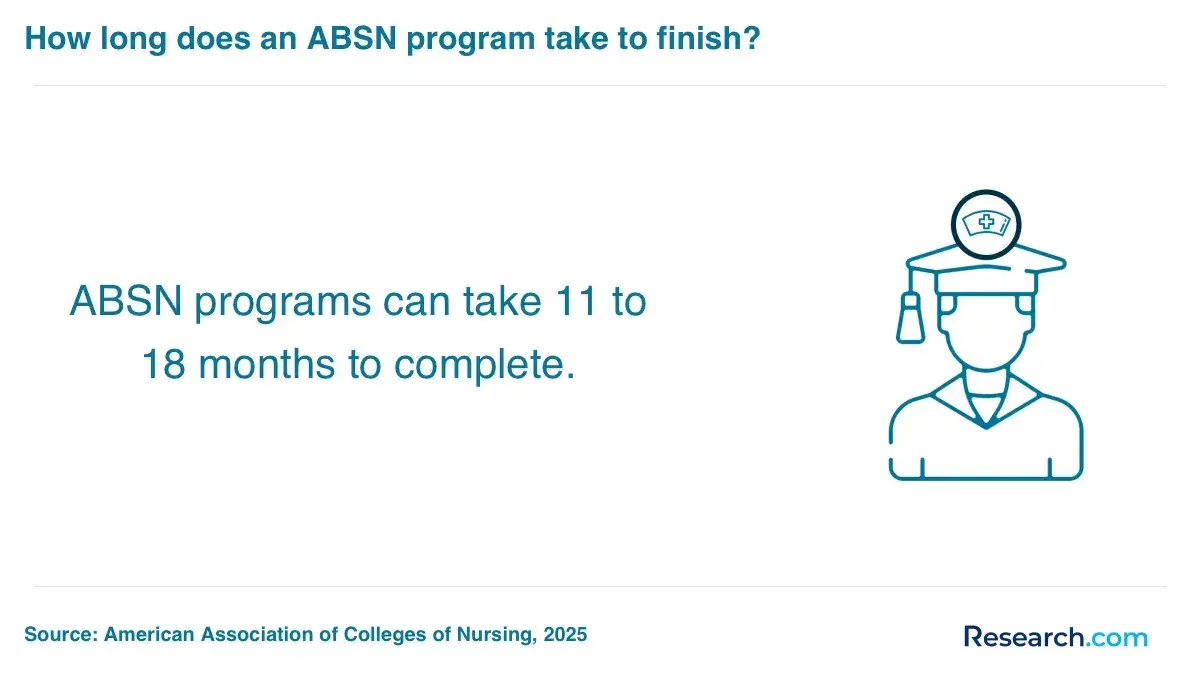
- Typical Program Length: Most ABSN programs run between 12 to 16 months of full-time study, designed for an intensive, immersive learning experience that gets you ready for clinical practice quickly.
- Full-Time vs. Part-Time Study: ABSN programs usually require full-time enrollment, as part-time options are rare due to the demanding nature of coursework and clinical hours.
- Online vs. On-Campus Formats: While online or hybrid classes offer flexibility, all Idaho ABSN programs include mandatory in-person labs and clinical experiences, which do not substantially shorten or extend the timeline.
- Clinical Hour Requirements: Hands-on clinical training is vital, with hours scheduled throughout the program; this commitment anchors the program length firmly, requiring students to be near clinical sites.
- Course Sequencing and Prerequisites: Completion depends on prerequisite courses and lockstep progression; any delay in prerequisites or course retakes can affect your overall timeline.
When I spoke with a nurse who completed an ABSN program locally, she reflected on the experience saying, "Though it felt like a race against time, the structure kept me focused. Balancing clinical hours and coursework was intense, but I never felt alone. It took nearly 15 months, and every moment was worth it." She recalled nights spent reviewing clinical skills and the satisfaction of knowing each step brought her closer to becoming a registered nurse. Her journey shows how determination and effective time management help navigate Idaho's demanding but rewarding ABSN path.
How much does an accelerated BSN program cost in Idaho?
Tuition and fees for accelerated BSN programs in Idaho can vary widely depending on the school you choose, whether the program is online or on-campus, and additional expenses involved. To help you assess the full scope of what to expect, here are some key cost factors to consider when planning your educational journey.
- Tuition Rates: Tuition can range significantly across institutions in Idaho and nearby states. Public universities generally have lower tuition than private schools. For residents, tuition per credit hour might be comparable to rates seen in surrounding areas, but it's important to verify exact costs for each program.
- Technology and Lab Fees: Besides tuition, ABSN programs often require extra fees for technological resources, lab usage, and simulation tools. These fees can add up, reflecting the practical nature of nursing training that relies heavily on hands-on experience.
- Clinical Supplies and Attire: Students must budget for clinical gear such as uniforms, stethoscopes, and other required tools. These costs vary by program and typically are not included in tuition, sometimes totaling several hundred dollars or more.
- Travel Expenses for In-Person Components: Even online ABSN programs require attendance at clinical rotations or orientations on campus, leading to travel, lodging, and meal expenses. Planning for these costs is crucial as they are often not covered by financial aid.
- Financial Aid Availability: Many programs offer scholarships, federal loans, or private financing options to help manage the accelerated BSN program cost Idaho students face. Completing the FAFSA early can open doors to assistance, allowing you to focus more on your studies. For those curious about nursing career paths beyond a BSN, it's worthwhile to explore whether can you become a nurse practitioner online to plan your long-term goals.
What financial aid options are available for ABSN students in Idaho?
Because accelerated nursing programs in Idaho can be costly, many students explore different financial aid opportunities to make their education more affordable. Here are the most common options that can help ease the financial burden while you focus on excelling in your studies.
- Federal Student Loans: Available through the FAFSA application, these loans offer lower interest rates and flexible repayment plans. They allow you to defer payments until after graduation, giving you time to establish your nursing career before handling loan repayment.
- State and Institutional Grants: Idaho's state grants and school-specific aid provide vital financial help without needing to be repaid. These awards are often based on financial need or academic merit and can significantly reduce tuition expenses during your accelerated program.
- Nursing Scholarships: Numerous scholarships target nursing students committed to serving in specific specialties or underserved areas. Offered by professional organizations, foundations, and private donors, these can boost your funding by thousands of dollars each year and complement other aid options, perfect for those seeking ABSN scholarships and grants Idaho.
- Employer Tuition Assistance: Healthcare employers in Idaho often support their employees pursuing nursing degrees through tuition reimbursement programs. This assistance typically requires a post-graduation work commitment but makes balancing education and employment financially feasible.
- Loan Forgiveness Programs: Programs like Public Service Loan Forgiveness (PSLF) and the NURSE Corps Loan Repayment offer forgiveness on remaining student loans for nurses working in qualifying public or shortage areas. These programs reward dedication to critical community healthcare needs and can eliminate a substantial portion of your debt.
For students interested in further advancing their nursing career, exploring the easiest neonatal nurse practitioner online programs can also open doors to specialized practice areas with additional financial and professional opportunities.
What career paths are available after earning an ABSN in Idaho?
Completing an Accelerated Bachelor of Science in Nursing (ABSN) in Idaho opens doors to diverse nursing career paths in the state's expanding healthcare landscape. These roles span from direct patient care to leadership and education, offering graduates a variety of opportunities to make a meaningful impact. Here are some common ABSN jobs in Idaho available to new nursing professionals:
- Registered Nurse (RN): The foundation for all ABSN graduates, RNs provide hands-on patient care, coordinate treatments, and administer medications in hospitals, clinics, and community settings. The accelerated program's focused clinical training equips graduates to confidently pass the licensure exam and enter the workforce ready to meet Idaho's healthcare needs.
- Critical Care Nurse: After gaining RN experience, many pursue specialized roles in intensive care units or emergency departments, managing complex cases and using advanced medical technology. ABSN graduates benefit from immersive simulation labs that prepare them for the fast-paced decisions required in critical care.
- Public Health Nurse: Serving communities throughout Idaho, these nurses lead disease prevention, health education, and immunization initiatives. The ABSN's community-focused clinical experiences build the skills needed to support population health and address social determinants effectively.
- Nurse Educator: With ongoing nursing shortages, experienced graduates often move into teaching roles, developing curricula and mentoring students. The program's exposure to contemporary teaching methods helps prepare future educators to strengthen Idaho's nursing workforce.
- Nurse Manager: Combining clinical expertise with leadership training, nurse managers oversee staff, coordinate patient care, and manage operations. The problem-solving and organizational skills fostered by the ABSN curriculum set graduates up for success in these key administrative roles.
For those interested in expanding their expertise beyond these paths, exploring an affordable online psychiatric nurse practitioner program could be a rewarding next step in Idaho's healthcare environment.
What is the average salary for nurses with an ABSN degree in Idaho?
Earning an Accelerated Bachelor of Science in Nursing (ABSN) in Idaho opens the door to competitive salaries within the state's expanding healthcare sector, with compensation influenced by several key factors such as experience, specialization, healthcare setting, and location. Understanding these elements can help you strategically shape your nursing career and maximize your earning potential. Consider the following important influences on ABSN nurse salaries in Idaho:
- Years of Experience: Salary typically starts near the state average for BSN nurses and rises significantly with experience, with entry-level positions earning less and seasoned nurses commanding higher wages and advanced roles.
- Type of Employer: Larger hospitals and urban medical centers generally offer higher pay and better benefits compared to smaller community or long-term care settings.
- Geographic Area: Urban areas like Boise tend to provide greater wages due to higher living costs and demand, while rural areas may compensate with unique incentives.
- Specialization or Certification: Nurses with advanced certifications or specialized skills often earn premium salaries over general medical roles.
- Level of Education: Holding an ABSN grants a clear salary advantage over associate degree nurses, opening doors to higher-paying, responsible positions.
Here's What Graduates Have to Say About Their ABSN Degree in Idaho
- Completing the ABSN program at Boise State University was a transformative experience for me. The blend of on-campus learning with hands-on clinicals in local hospitals allowed me to build confidence quickly. I embraced the supportive community of instructors who truly cared about my success, making the learning process both challenging and rewarding. Now, as I begin my career in a local school setting, I feel equipped to inspire and care for young patients with compassion and competence. -Alexis
- Choosing an online ABSN program from the University of Idaho was one of the best decisions I have made. Balancing coursework with family commitments was challenging, but the flexibility and accessible resources made it manageable. This journey has deepened my professional development and opened doors to stable nursing roles in my community. I now feel proud to contribute meaningfully to the well-being of the children I work with and continue to grow in my nursing career. - Moira
- Attending Northwest Nazarene University for my ABSN degree gave me unique opportunities to engage with Idaho's diverse communities and healthcare needs. The program's focus on practical skills and cultural competence helped me grow not only professionally but personally. Facing the challenges of remote clinical placements taught me resilience and adaptability. This education has fueled my passion to make a lasting, positive impact as a nurse educator in local schools. - John
Related Articles for Nearby States
- 2027 Best ABSN Programs - Accelerated BSN Programs in Montana: Online & Campus
- 2027 Best ABSN Programs - List of Accelerated BSN Programs in Washington: Online & Campus
- 2027 Best ABSN Programs - Accelerated BSN Programs in Oregon: Online & Campus
- 2027 Best ABSN Programs - Accelerated BSN Programs in Nevada: Online & Campus
- 2027 Best ABSN Programs - Accelerated BSN Programs in Utah: Online & Campus
- 2027 Best ABSN Programs - Accelerated BSN Programs in Wyoming: Online & Campus
- 2027 Best ABSN Programs - List of Accelerated BSN Programs in California: Online & Campus
- 2027 Best ABSN Programs - Accelerated BSN Programs in Colorado: Online & Campus
- 2027 Best ABSN Programs - Accelerated BSN Programs in Arizona: Online & Campus
- 2027 Best ABSN Programs - List of Accelerated BSN Programs in New Mexico: Online & Campus
References:
- Accelerated BSN (ABSN) Programs by State for 2025 https://nurse.org/education/absn-programs-by-state/
- Accelerated Nursing Degree https://www.kh.org/absn/
- Working In Nursing School | Can You Work During an ABSN Program? https://bayadaeducation.org/resources/absn/working-in-nursing-school
- Program / Student Outcomes https://www.isu.edu/registerednurse/program--student-outcomes/
- ABSN Programs and Considering an Second Degree BSN https://www.registerednursing.org/degree/accelerated-nursing-programs/bsn/
- Registered Nurse Salary in Idaho | Incredible Health https://www.incrediblehealth.com/salaries/rn/id
- Accelerated Nursing Programs: How Do They Work? | NurseJournal.org https://nursejournal.org/resources/accelerated-nursing-programs/
- Post-Baccalaureate: Accelerated Bachelor of Science in Nursing Online - Edgewood University https://www.edgewood.edu/academics/programs/online-accelerated-post-bachelor-science-nursing/
- Is Working While in Nursing School Possible? - CSP ABSN https://absn.csp.edu/blog/is-working-while-in-nursing-school-possible/
- Idaho ABSN Programs - Accelerated Nursing Schools https://www.absnprograms.org/programs/idaho/
Other Things to Know About ABSN Programs in Idaho
To enroll in a 2027 accelerated BSN program in Idaho, candidates typically need a bachelor's degree in any field and must have completed prerequisite courses. Common prerequisites include anatomy, physiology, microbiology, statistics, and human development. Each program might have specific requirements, so checking directly with the institution is essential.
ABSN students in Idaho often face rigorous coursework and clinical requirements, making it challenging to maintain regular employment while completing their degree. Many programs recommend minimizing work hours or avoiding employment altogether to focus on intensive study and hands-on training. However, some students manage part-time jobs or paid clinical positions related to healthcare, which can provide valuable experience and income. Ultimately, the ability to work depends on individual time management and the specific program's schedule, but prioritizing the program's demands is crucial for successful completion.


