2027 Online MS in Psychology - Forensic Psychology After a BA in Communications: Compare Prerequisites and Admission Options
Audited and Verified:
Our Editorial and Data Verification Process
Research.com uses government datasets, official education statistics and primary institutional information to support its career and degree guides. Our review process checks factual accuracy, occupational definitions, source dates and the requirements associated with the credentials discussed.
How This Article Was Fact-Checked
Our editorial team verifies salary estimates, employment projections, education requirements and program information against original data providers and official organizations. Salary figures are checked against the relevant occupational definitions and reporting periods. Information about licensure, accreditation and required in-person training is reviewed separately.
Fact-checked and verified on:

Co-Founder and Chief Data Scientist
A communications BA can be a useful starting point for an online MS in forensic psychology, but admission depends on the program's psychology and research prerequisites, not the degree title alone.
If you are considering a move into justice-related research, victim services, or another nonclinical role, choosing the wrong program could mean paying for coursework that does not advance your goal.
This guide compares admission routes, ways to close preparation gaps, online study demands, and professional limits so you can identify programs worth applying to before you invest.
Key Things You Should Know
- A communications BA does not automatically rule out admission; programs may accept applicants from other majors but require or recommend specific psychology, statistics, or research-methods coursework.
- Compare a program's formal prerequisites with its expectations for competitive applicants, and get written confirmation of whether planned courses can be completed before enrollment or after conditional admission.
- An online forensic psychology MS is generally an academic or nonclinical credential, not a license to practice psychology or conduct independent forensic evaluations.
What Is an Online MS in Forensic Psychology After a Communications BA?
An online MS in forensic psychology studies psychological science in legal and justice-system contexts. Depending on the program, students may examine behavior relevant to courts, corrections, policing, or victim services while learning to evaluate research and communicate findings.
"Online" describes course delivery; it does not establish that every meeting, project, or applied experience can be completed remotely.
Your communications degree may already demonstrate strengths in writing, interviewing, audience analysis, and explaining complex evidence. The likely gaps are more specific: psychological theory, statistics, and research design.
A second bachelor's degree is usually worth considering only if a target program requires substantial undergraduate preparation that cannot be met through individual courses.
Even accelerated bachelor's program choices in forensic psychology should be compared against the shorter, less costly possibility of completing only the prerequisites you need.
Can You Enter Forensic Psychology Graduate School With a Communications Degree?
Yes, potentially. The admissions office decides whether your bachelor's degree meets its eligibility rule; the program decides how your prior coursework and experience affect your preparation.
Some programs accept applicants from any accredited bachelor's major, while others specify psychology courses or expect evidence of research readiness. Eligibility to apply is not the same as being a strong applicant.
A useful application narrative connects a defined goal to your existing skills: for example, evaluating victim-service outreach materials or communicating research to justice-system staff. It should also identify the psychology and methods training you still need.
If a program asks for extensive undergraduate psychology coursework, compare individual prerequisites with shorter routes to an online psychology major; do not assume earning another major is necessary.
Before paying an application fee, send admissions staff your transcript and ask which requirements are mandatory at application, which may be completed before enrollment, and whether conditional admission or a documented waiver is possible. Request the answer in writing for your intended entry term.
What Prerequisites Do Online Forensic Psychology Master's Programs Require?
There is no universal prerequisite list. The comparison below separates common areas of preparation from the different ways a program might treat them; only the current catalog and admissions office can establish your actual requirements:
| Preparation area | What to check | Possible evidence from a communications BA |
| Introductory psychology | Required course, recommended background, or introductory graduate work? | A psychology elective, if the program accepts its content and credit. |
| Statistics | Does a prior quantitative course meet the stated subject and grade rules? | Statistics used in media research or another approved course. |
| Research methods | Must the course cover psychological research design specifically? | Survey or communication-research coursework may help, but equivalence needs approval. |
| Advanced psychology | Are abnormal, social, or developmental psychology required before entry? | Relevant electives; professional experience rarely substitutes automatically. |
| Application materials | What are the current GPA, test, writing-sample, and recommendation rules? | Research papers, analytical projects, and informed recommendations. |
Start with a transcript-to-requirement comparison, then ask the program to review course descriptions for any uncertain equivalencies. Take missing courses in an order that builds from introductory psychology to methods or advanced subjects, subject to the school's sequencing rules.
If your real goal is substance-use services rather than forensic research, compare that preparation with addiction psychology bachelor's degree planning before filling gaps for the wrong specialization.
The meaningful distinction is access to the instruction, feedback, research support, and approved experiences you need, not whether lectures appear on a screen. This comparison highlights obligations that can affect an applicant who works or cannot relocate.
| Feature | Online program: verify | Campus program: verify |
| Class schedule | Recorded lessons versus required live sessions and group work. | Class times, commuting, and access to evening courses. |
| Research development | Faculty mentoring, methods feedback, and thesis access at a distance. | Availability of faculty projects and on-site research roles. |
| Applied experience | Whether a local site is required and who approves it. | Whether university-area partnerships are available to students. |
| Additional attendance | Residencies, examinations, or occasional campus visits. | On-site requirements beyond scheduled classes. |
Do not confuse an online forensic psychology degree with online professional training that requires supervised client-facing practice. If your intended work is addiction counseling, online colleges offering addiction counseling study represent a different program search, with credential and placement questions to check against your state's rules.
Curricula vary, but a forensic psychology MS may combine psychological theory, research methods, statistics, psychology and law, ethics, and electives on topics such as victimization, eyewitness evidence, or behavior in correctional settings.
Review course descriptions rather than relying on a concentration name: one program may emphasize research and a thesis, while another favors applied analysis and a capstone.
For a communications graduate, the most valuable courses may be those that test claims, assess measurement quality, and distinguish correlation from causation.
Ask whether assignments involve evaluating published studies or producing an original research proposal. Coursework about assessment or psychopathology does not authorize you to administer restricted tests, diagnose people, or offer therapy.
If you want to treat clients rather than study behavior in legal settings, compare the curriculum with a qualifying counseling pathway. Financial support for substance abuse counseling majors may also matter if that different objective requires you to change programs or complete additional undergraduate preparation; it does not make a forensic MS a counseling credential.
Completion time depends on the required credits, course availability, enrollment pace, and whether a thesis, capstone, or approved experience is required. A program's advertised fastest timeline may assume uninterrupted full-time enrollment and that you already meet every prerequisite.
Ask for a course sequence based on your transcript, not a general completion estimate. Confirm when required courses are offered, whether summer enrollment is possible, and how long students may take to finish a thesis or capstone.
If speed matters because you are balancing work and study, compare faster forensic psychology master's study for working professionals against the actual weekly schedule and academic support, not the headline duration alone.
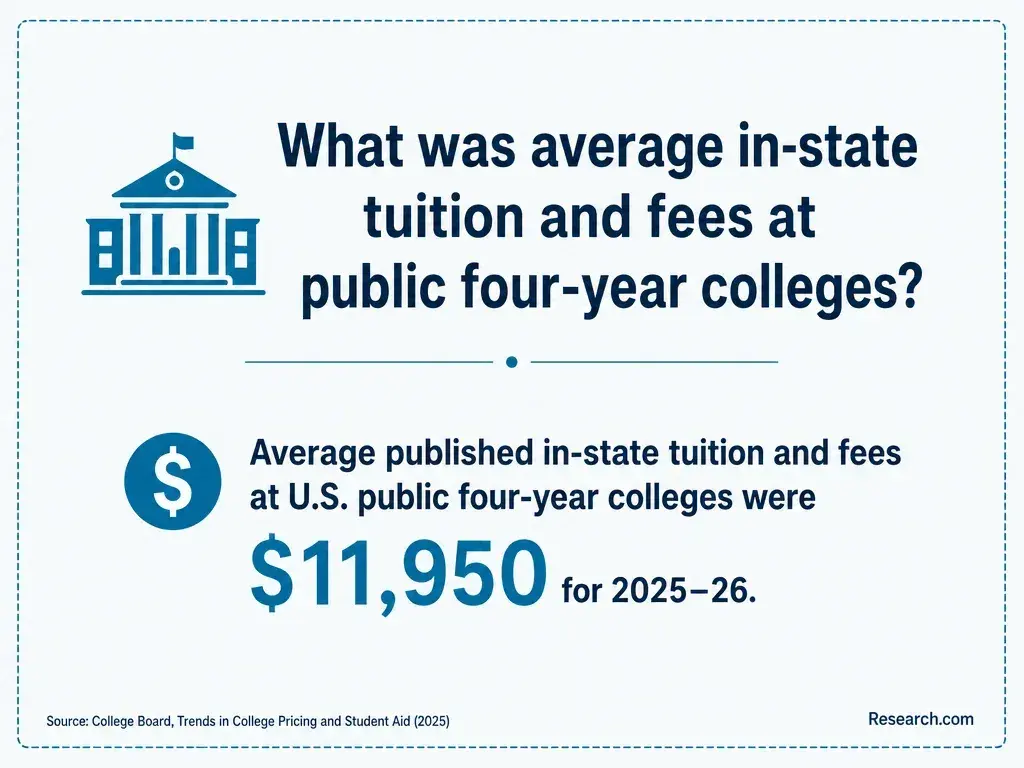
Compare total expected cost, not just the advertised tuition rate. Ask each school for the credits you must complete, tuition charged per credit or term, mandatory fees, and any costs for technology, travel, residencies, or an applied project. Add the cost of prerequisites that cannot count toward the MS. A slower schedule can also change the total if fees recur by term.
For a career changer, the financial question is whether the degree supplies skills or access that a target employer values beyond your existing BA and experience.
Check financial-aid eligibility and any employer education benefit before relying on either. If you are comparing forensic study with a licensure-oriented alternative, budget planning for mental health counseling study belongs in a separate cost comparison because the required training and professional goal differ.
A forensic psychology MS may support applications for nonclinical work in victim services, justice-program coordination, corrections-related services, research support, or program evaluation. Actual eligibility depends on the job's duties, your experience, and employer or government requirements.
Your communications background can be particularly useful in outreach, evidence summaries, stakeholder interviews, and public-facing materials; methods coursework and supervised projects can help demonstrate the skills you have added.
Read job descriptions before selecting a program. A role involving client referrals and service coordination is different from one involving independent psychological evaluation.
For compensation research, higher-paying career paths after forensic psychology graduate study can help you identify occupations to investigate, but occupation-wide pay figures are not salaries promised to MS graduates. Compare the qualifications in actual openings with the program's curriculum and your work history.
Do not assume so. A nonclinical MS in forensic psychology does not by itself qualify someone to become a licensed psychologist, provide psychotherapy, or conduct independent forensic assessments. Psychologist licensure generally requires qualifying doctoral-level professional education and additional jurisdiction-specific steps.
Other licensed roles, such as professional counselor, follow their own educational and supervised-practice rules.
If licensure is your goal, start with the rules of the state where you intend to practice and ask its licensing board whether a specific program meets the applicable educational criteria. Compare the full pathway, not simply courses with similar names.
For example, clinical counseling master's duration and earning potential concerns a distinct professional route that may be more direct for a prospective therapist. Neither route grants criminal-investigation authority or legal-practice credentials.
How Do You Choose an Accredited Online Forensic Psychology Program?
First confirm that the institution holds recognized institutional accreditation and that the advertised degree is the program you would actually enter.
Do not expect APA accreditation of a general, nonclinical forensic psychology MS; APA accreditation applies to specified professional psychology training categories, not every psychology degree.
Then ask admissions and program staff to resolve the decision points that matter for a communications graduate:
- Will my BA qualify, and which transcripted courses satisfy each mandatory prerequisite?
- Can missing courses be completed before entry or under an approved conditional-admission plan?
- What live meetings, campus visits, research supervision, and local site obligations apply?
- What is my individualized course sequence and estimated total cost, including prerequisites?
- What evidence can the program provide about graduates' roles, while separating those outcomes from licensure claims?
If the answers show that a broad psychology MS would meet your goal just as well, compare choosing a fast-track psychology master's program with the forensic option. Choose the specialization only when its coursework, faculty support, and applied opportunities justify the additional constraints or cost.
Other Things You Should Know About Psychology
Usually, if the program permits academic references from any discipline. Choose people who can describe your analytical writing, research judgment, and readiness for graduate work; check whether a psychology faculty reference is specifically required.
Possibly. Ask the graduate program to approve the course's level, content, credit, and grading format before enrolling. An accepted course may satisfy admission without counting toward graduate-degree credits.
It may if a site works with protected populations or restricted records. Ask the program what site screening is required and whether alternative approved experiences are available; policies vary by placement.
Tell the school before moving. Enrollment authorization, access to an approved local site, and any future credential rules may differ by state, even when classes remain online.
- Recommendations for the Use of Telepsychology in... - PMC https://pmc.ncbi.nlm.nih.gov/articles/PMC10880951/
- Cost of Attendance (Budget) | 2025-2026 Federal Student Aid Handbook https://fsapartners.ed.gov/knowledge-center/fsa-handbook/2025-2026/vol3/ch2-cost-attendance-budget
- Eligibility Requirements | Federal Student Aid https://studentaid.gov/understand-aid/eligibility/requirements
- How to Become a Forensic Psychologist in California (2026) | Touro University Worldwide https://www.tuw.edu/psychology/how-to-become-a-forensic-psychologist-in-california/
- Careers With a Forensic Psychology Master's Degree | The Chicago School https://www.thechicagoschool.edu/insight/career-development/career-options-masters-degree-forensic-psychology/
- Practicum Education | Columbia MSSW https://onlinemsw.socialwork.columbia.edu/practicum-education/
- MS in Criminal Justice | Forensic Psychology Degree | Military Affairs https://www.liberty.edu/online/government/masters/criminal-justice/forensic-psychology/
- More about the Field Placement | Online MSW@Denver https://onlinemsw.du.edu/curriculum/field-internships/placement-options/
- Undergraduate Degree Programs: IU Indianapolis Bulletin https://bulletins.iu.edu/iuin/2026-2027/schools/science/departments/psychology/undergraduate-programs.shtml
- A Career in Forensic and Public Service Psychology | apa.org https://www.apa.org/education-career/guide/subfields/forensic/education-training