2027 Online MS in Psychology - Forensic Psychology for Work in Probation Departments: Compare Degree Fit and Hiring Requirements
Audited and Verified:
Our Editorial and Data Verification Process
Research.com uses government datasets, official education statistics and primary institutional information to support its career and degree guides. Our review process checks factual accuracy, occupational definitions, source dates and the requirements associated with the credentials discussed.
How This Article Was Fact-Checked
Our editorial team verifies salary estimates, employment projections, education requirements and program information against original data providers and official organizations. Salary figures are checked against the relevant occupational definitions and reporting periods. Information about licensure, accreditation and required in-person training is reviewed separately.
Fact-checked and verified on:

Co-Founder and Chief Data Scientist
If you want to work in a probation department, an online MS in forensic psychology may sound like a direct qualification. It usually is not: probation agencies set their own hiring standards, and many officer positions are open to applicants with a bachelor's degree.
This guide is for prospective students and justice-system professionals weighing graduate study against a faster route into the field. It compares degree fit with actual job duties, hiring rules, cost, and career alternatives so you can decide whether the master's would add value to your specific goal.
Key Things You Should Know
- A bachelor's degree is the typical entry-level education for probation officers and correctional treatment specialists in the U.S.; a forensic psychology MS is generally not required.
- Hiring may also involve a background investigation, assessments, training, and jurisdiction-specific eligibility rules. Coursework cannot substitute for those requirements.
- Compare a master's degree against direct applications and relevant work experience first; choose graduate study when its documented benefits justify the additional time and total cost.
What Is an Online Forensic Psychology Master's Degree for Probation Work?
An online MS in forensic psychology is graduate study of psychological science in legal and justice settings. Depending on the program, students may examine behavior, research methods, mental health systems, and the use and limits of psychological evidence. It is academic preparation, not a probation officer credential.
That distinction matters in daily work. Probation officers supervise people under court-ordered conditions, document compliance, prepare reports, connect clients with services, and respond to violations within agency policy. Forensic coursework may sharpen a student's understanding of behavior and evidence, but an employer must train and authorize the officer to carry out agency duties.
Program titles alone do not establish what students learn. When comparing forensic psychology study choices and employment preparation, check the actual courses, applied opportunities, and whether graduates have entered the kinds of roles you want.
What Education and Hiring Requirements Apply to Probation Officers?
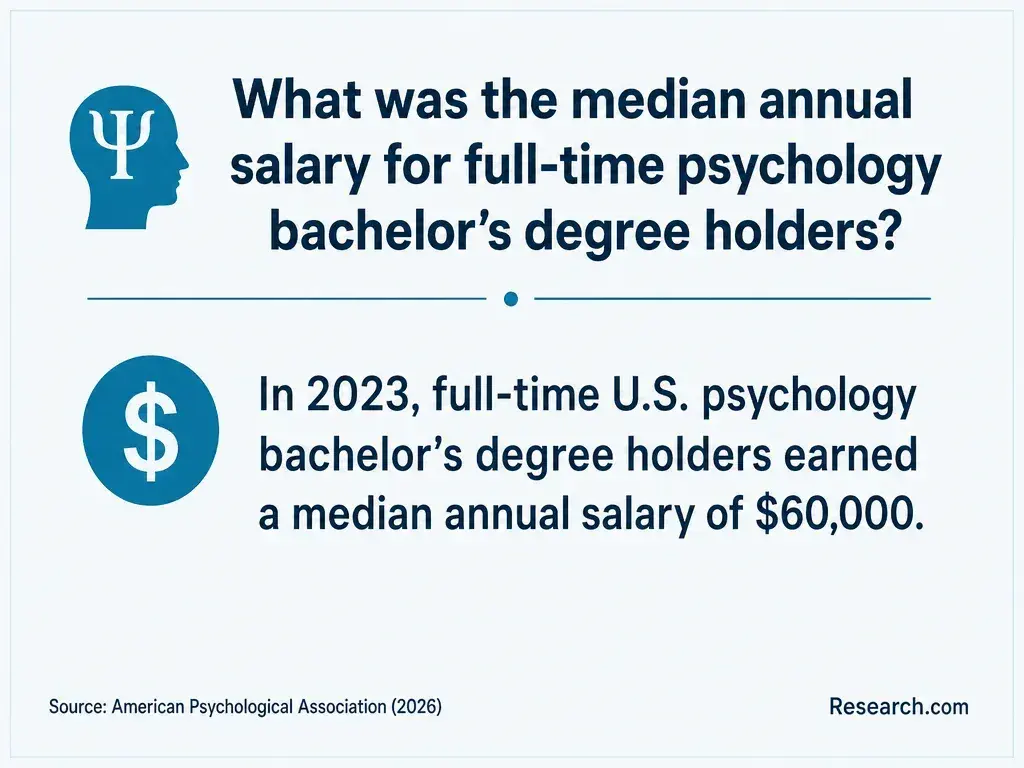
The U.S. Bureau of Labor Statistics identifies a bachelor's degree as the typical entry-level education for its combined occupation of probation officers and correctional treatment specialists. Agencies may accept several majors, including psychology, criminal justice, social work, and related fields. The controlling document is the vacancy announcement, not a general description of the occupation.
Federal, state, and local agencies can differ in experience requirements, background investigations, examinations, driving requirements, training, and conditions of employment. Juvenile and adult supervision positions may also differ. A person working with confidential records or justice-involved clients must follow agency rules on privacy, documentation, safety, and appropriate referrals.
If you have not completed a bachelor's degree, compare the eligible majors in local postings before choosing one. Online bachelor's program choices in psychology may offer relevant preparation, but an agency may value a different major or qualifying experience equally. Ask its hiring office whether your existing coursework or employment meets the stated criteria.
Is a Forensic Psychology Master's Degree Required for Probation Careers?
Usually, no. If you already meet the educational minimum, applying for probation positions and building qualifying experience may be more direct than enrolling in an MS. A graduate degree can make sense if a particular agency recognizes it for advancement, your target role requires specialized research or program-evaluation skills, or you want academic preparation for another clearly defined position. Confirm those benefits with the employer before paying for them.
The best route depends on what you lack. This comparison separates hiring eligibility from education that may be useful after entry.
| Current position and goal | Route to consider first | What to verify |
| No bachelor's degree; seeking officer eligibility | Complete an accepted bachelor's degree | Agency degree rules, remaining credits, and total completion cost |
| Bachelor's degree; seeking a first officer job | Apply and build relevant service or justice-system experience | Experience substitutions, assessments, and training requirements |
| Current agency employee; seeking advancement | Compare the MS with employer training and other eligible degrees | Promotion rules, tuition assistance, and whether the degree changes pay |
For someone still finishing undergraduate study, shorter routes through forensic psychology bachelor's coursework are worth evaluating against ordinary psychology or criminal justice programs. An advertised fast route matters only if its courses satisfy your remaining degree requirements and its pace is workable.
Online and campus programs can cover similar academic material; the meaningful differences are access and scheduling. An online student may be able to remain employed near a target probation agency, while a campus student may have easier access to in-person research teams or local partnerships. Neither format guarantees a placement or a hiring advantage.
Ask each program whether courses are asynchronous, whether live meetings occur during work hours, and whether a thesis, internship, examination, or residency requires travel. If an applied placement is offered, check who secures the site, who supervises it, and whether your employer can approve participation without creating conflicts over confidential records.
Students completing an undergraduate degree before the MS should resolve credit questions separately. Guidance on applying associate-level credits to psychology study can help frame questions, but only the receiving institution can determine which credits satisfy its degree requirements. Online delivery does not change that decision.
Curricula vary, but relevant subjects may include forensic psychology, research design, statistics, psychopathology, social behavior, ethics, and the justice system. For probation work, favor courses that develop evidence evaluation, clear report writing, cultural responsiveness, and an understanding of referral and service systems. Check whether these are required courses, optional electives, or simply topics mentioned in a program description.
Coursework on addiction can help an officer understand recovery services and communicate appropriately with providers. It does not qualify the officer to diagnose a substance use disorder or provide counseling. If direct treatment work is your actual goal, compare the education and credentials associated with addiction recovery occupations and education rather than assuming a forensic MS covers them.
A research or agency-based project can be especially useful if it produces a permitted, nonconfidential writing sample or demonstrates program-evaluation skills. Obtain agency and university approval before using client information; access to records through employment is not permission to use them for coursework.
Programs commonly evaluate an accredited bachelor's degree, transcripts, and evidence that an applicant can handle graduate-level reading and writing. Individual schools may also specify a GPA, psychology or statistics prerequisites, recommendations, a statement of purpose, or an interview. A non-psychology major does not automatically rule you out; ask whether prior courses or professional experience meet the specific program's requirements.
Before applying, compare your transcript with the published prerequisites and request clarification about any missing course. Describe probation, corrections, human-services, or research experience in terms of actual responsibilities - not clinical skills you were not authorized to perform.
Also test whether you are applying to the right field. An applicant drawn primarily to substance use treatment should compare forensic graduate admission with the distinct substance abuse counseling undergraduate education investment and the credential rules for the intended treatment role. Admission to a forensic program does not resolve those rules.
Completion time depends on required credits, course availability, enrollment pace, and any thesis or applied requirement. Do not infer your graduation date from an advertised minimum: ask for a term-by-term plan based on your intended start date and working schedule.
Compare total cost to completion, not tuition per credit alone. Request a written estimate covering required credits, mandatory fees, books or software, any travel, and charges that could arise if a project extends into another term. Then ask your employer whether education assistance applies to this degree and whether reimbursement has grade or continued-employment conditions.
If cost is the barrier and your real objective is a different occupation, funding should be compared within that occupation's qualifying education path. For example, scholarship options for online addiction counseling undergraduates concern undergraduate study, not aid automatically available for a forensic MS. Confirm aid eligibility with each school before using it in a cost comparison.
Depending on the employer and your experience, a forensic psychology MS may support applications to probation and corrections roles, victim services, justice-program coordination, policy support, or research and evaluation positions. It does not create eligibility for every job with "forensic" in its title. Compare the posting's required degree, experience, and duties with work you can actually demonstrate.
For probation, strong evidence of readiness may include accurate case documentation, interviewing within role boundaries, service coordination, and experience following agency procedures. Current public-sector employees should also check internal promotion criteria: a degree may help develop skills without changing a classification or salary step.
A forensic psychology MS does not by itself qualify someone to practice as a licensed psychologist, independently conduct forensic evaluations, or provide psychotherapy. If clinical treatment is the intended career, compare programs designed for the applicable professional credential, including tuition-conscious mental health counseling degree choices, and verify the licensing board's rules for the state where you plan to practice.
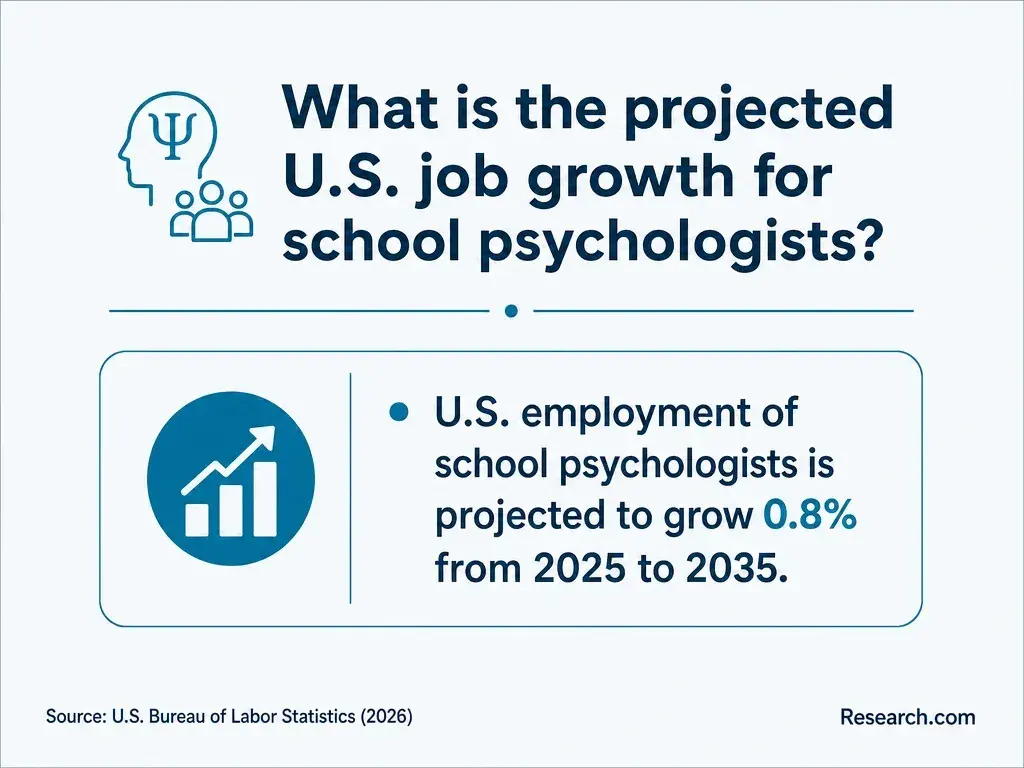
The Bureau of Labor Statistics reports pay and employment projections for the combined occupation probation officers and correctional treatment specialists. That category is useful for understanding the broader labor market, but its median wage is not the expected starting salary of a probation officer - or the earnings outcome of a forensic psychology MS graduate. Check the latest Occupational Outlook Handbook entry for its wage reference year and projection period, then compare it with actual postings from agencies where you could work.
Public-sector pay schedules, location, position classification, and experience can matter more than the title of a degree. Before estimating a return on graduate study, ask the hiring or human-resources office whether an MS changes starting placement, promotion eligibility, or neither. Faster study, including faster pathways through graduate psychology coursework, may reduce time in school but cannot establish a pay increase that the agency does not offer.
How Can You Choose an Accredited Forensic Psychology Master's Program?
First, verify that the institution holds recognized institutional accreditation and that the exact degree, delivery format, and location are covered by its published information. Do not expect APA accreditation for a general, nonclinical forensic psychology MS; institutional accreditation also does not prove that a program meets requirements for psychologist licensure.
Next, work backward from your target vacancy and your budget. These checks help separate useful graduate preparation from an appealing program description:
- Match required courses and applied work to the skills named in target agency postings.
- Ask whether any placement requires a local site, approved supervisor, background clearance, or travel.
- Request a personalized course sequence and complete cost estimate.
- Ask the employer - not just admissions - whether the degree affects hiring or advancement.
If speed is important, use the same checks when evaluating twelve-month forensic psychology master's routes. A shorter schedule is worthwhile only if its workload is feasible and the degree serves a verified career objective. If you already qualify for officer vacancies and no employer benefit is evident, applying now may be the better choice.
Other Things You Should Know About Psychology
Only as their agency authorizes and trains them to do so. Using a screening process for referral or case planning is not the same as independently diagnosing a condition or conducting a restricted psychological assessment.
Not automatically. The program and employer must approve the site, supervisor, duties, and learning objectives. Ordinary access to case files does not authorize their use in a student project.
A thesis may help if you want research or evaluation responsibilities. For an officer role, compare its time demands with opportunities to gain agency experience; neither option replaces the employer's hiring requirements.
Often, but confirm live-class times, project deadlines, travel requirements, and your employer's outside-education and confidentiality policies before enrolling.
- What Is Risk Assessment | PSRAC | Bureau of Justice Assistance https://bja.ojp.gov/program/psrac/basics/what-is-risk-assessment
- Becoming a PPO | NC DPS https://www.ncdps.gov/blog/2020/07/24/becoming-ppo
- Background Evaluation/Investigation | U.S. Office of Personnel Management https://www.opm.gov/policy-data-oversight/assessment-and-selection/other-assessment-methods/background-evaluationinvestigation/
- U.S. Probation & Pretrial Services Employment Suitability Requirements | United States Courts https://www.uscourts.gov/careers/who-works-judiciary/us-probation-pretrial-services-careers/us-probation-pretrial-services-employment-suitability-requirements
- Ohio Probation Officer Training Program https://www.supremecourt.ohio.gov/education/judicial-college/ohio-probation-officer-training-program/
- Probation Officer Core - The Academy https://theacademy.ca.gov/event/probation-officer-core/
- What Type of Psychology Degree Do I Need to Become a Forensic Psychologist? | Palo Alto University https://paloaltou.edu/resources/business-of-practice-blog/what-type-of-psychology-degree-do-i-need-to-become-a-forensic-psychologist
- Forensic Psychology | Ocean County College - https://www.ocean.edu/area-of-study/behavioral-science-public-service/forensic-psychology-foren/
- How to Become a Forensic Psychologist in California (2026) | Touro University Worldwide https://www.tuw.edu/psychology/how-to-become-a-forensic-psychologist-in-california/
- Forensic Psychology, MS - ASU degree programs https://degrees.asu.edu/masters-phd/major/ASU00/ASFPSYMS/forensic-psychology-ms