
2027 Financial Analyst vs. Accountant: Explaining the Difference

Co-Founder and Chief Data Scientist
Choosing between financial analysis and accounting is not just a choice between two “numbers” careers. It is a choice between two different ways of working with financial information. Financial analysts use financial data to evaluate performance, estimate future outcomes, and support investment or business strategy. Accountants build, verify, organize, and explain the financial records that companies rely on for compliance, reporting, tax planning, and internal control.
Both careers can lead to stable, well-paid roles, but they suit different strengths. If you enjoy forecasting, market research, valuation, and strategic recommendations, financial analysis may be the stronger fit. If you prefer accuracy, structure, regulatory rules, audits, tax work, and reliable financial reporting, accounting may be the better path. This guide compares the two careers by responsibilities, skills, salary, job outlook, advancement, stress, and transition options so you can choose based on how you want to work, not just what sounds similar on paper.
Key Points About Pursuing a Career as a Financial Analyst vs an Accountant
- Financial Analysts have a projected job growth of 7% through 2031, higher than Accountants' 6%, reflecting strong demand in investment and forecasting roles.
- Median salaries for Financial Analysts hover around $95,000 annually, generally exceeding Accountants' median of $77,000, highlighting greater earning potential.
- Financial Analysts influence strategic decisions and market evaluations, while Accountants focus on compliance, record-keeping, and financial accuracy.
What does a Financial Analyst do?
A financial analyst studies financial data to help organizations make better decisions about budgets, investments, growth plans, risk, and profitability. The role is forward-looking. Instead of only explaining what has already happened, financial analysts estimate what may happen next and what a company should do about it.
Typical work includes reviewing financial statements, building forecasts, tracking market and industry trends, comparing company performance, preparing management reports, and creating financial models. These models may estimate revenue, expenses, cash flow, valuation, return on investment, or the financial impact of a new project. Analysts often present their findings to executives, finance managers, investors, or department leaders who need clear recommendations rather than raw data.
Financial analysts work in banks, investment firms, consulting agencies, insurance companies, corporations, healthcare organizations, technology companies, energy firms, and other industries that depend on financial planning. In 2025, the role demands strong collaboration and data proficiency, especially as employers use more advanced financial software, dashboards, and automation tools. The best analysts combine technical modeling skills with business judgment: they can explain not only what the numbers show, but why the numbers matter.
What does an Accountant do?
An accountant prepares, reviews, organizes, and verifies financial records so an organization can report accurately, meet tax and regulatory obligations, manage cash flow, and make informed operating decisions. The role is more rules-based and documentation-focused than financial analysis, although many accountants also provide advisory support.
Common responsibilities include reconciling bank statements, recording income and expenses, maintaining ledgers, preparing financial statements, supporting payroll, assisting with budgets, managing tax documents, and using accounting software to produce reports. Accountants may also participate in audits, investigate discrepancies, monitor internal controls, and identify financial risks or process weaknesses.
Accountants work across finance, healthcare, manufacturing, government, nonprofit organizations, public accounting firms, and private companies. In the United States, the profession remains broad and durable, with over 1.4 million individuals employed as accountants or auditors. That scale matters for career planning: accounting skills are needed in nearly every industry, making the field less dependent on one sector than many finance-focused roles.
What skills do you need to become a Financial Analyst vs. an Accountant?
Financial analysts and accountants both need comfort with numbers, business documents, and financial software. The difference is in emphasis. Financial analysts need to interpret data and make projections. Accountants need to ensure records are complete, accurate, compliant, and defensible.
Skills a Financial Analyst needs
- Analytical thinking: Financial analysts must connect financial statements, market conditions, economic indicators, and company strategy to draw useful conclusions.
- Financial modeling: Analysts often build models that forecast company performance, estimate valuation, compare scenarios, or test the financial impact of a decision.
- Attention to detail: Small errors in assumptions, formulas, or source data can change a recommendation, so accuracy still matters even though the role is strategy-oriented.
- Communication skills: Analysts must translate complex findings into clear recommendations for managers, clients, or executives who may not want technical detail.
- Technical proficiency: Strong Excel skills are essential, and many roles also require financial software, visualization tools, databases, or programming languages for data analysis.
Skills an Accountant needs
- Accuracy: Accountants are responsible for clean financial records and reports that can withstand review, audit, and regulatory scrutiny.
- Knowledge of accounting principles: Accountants need a working command of GAAP or IFRS, depending on the organization and reporting environment.
- Organizational skills: Accounting work involves recurring deadlines, multiple accounts, documentation requirements, and period-end or year-end close processes.
- Problem-solving: Accountants must trace discrepancies, correct classification issues, reconcile accounts, and identify weaknesses in financial processes.
- Ethics and integrity: Because accounting supports tax filings, audits, investor reporting, and internal controls, trust and professional judgment are central to the role.
A useful way to compare the two: financial analysts are usually judged by the quality of their insight and recommendations, while accountants are judged by the reliability, completeness, and compliance of the financial information they produce.
How much can you earn as a Financial Analyst vs. an Accountant?
Financial analyst vs. accountant salary comparisons usually show higher earning potential for financial analysts, especially in investment-focused roles and major financial markets. Accountants also earn competitive salaries, with strong upside in senior, specialized, or licensed roles. Your actual pay will depend on industry, employer size, location, experience, credentialing, and whether the job is in corporate finance, public accounting, tax, audit, investment banking, or another specialty.
A financial analyst in the United States has a median annual salary of about $87,682, with entry-level roles starting around $38,000. Salaries can rise substantially, reaching $221,000 or more for analysts in lucrative industries like investment banking or in major cities such as San Francisco and New York, where average salaries exceed $95,000. This wide range reflects how strongly financial analyst pay can be affected by specialization, performance expectations, market exposure, and location.
Accountants earn a median salary of approximately $75,449 annually, starting near $54,603 for entry-level roles. Senior accountant positions, including roles like Senior Accountant or Controller, offer salaries ranging from $93,000 to $143,000 depending on experience and scope of responsibility. Specialized fields such as forensic accounting or metropolitan locations often provide higher pay.
Certification can also change the salary picture. Accountants who pursue the CPA credential may qualify for stronger roles in audit, tax, reporting, controllership, and public accounting leadership. Financial analysts may improve advancement prospects through deeper modeling skills, industry specialization, or investment-focused credentials. For students comparing education timelines, colleges with fast track programs may help shorten the time needed to enter or advance in either field.
What is the job outlook for a Financial Analyst vs. an Accountant?
The job outlook is positive for both careers, but the drivers of demand are different. Financial analyst demand is tied to investment activity, corporate planning, data-driven decision-making, and the need for financial strategy. Accounting demand is tied to tax rules, audits, compliance, reporting requirements, and the basic need for organizations to maintain accurate records.
Financial analysts are expected to see an 8% increase in employment from 2022 to 2032, a rate considered faster than the average for all jobs. Growth is supported by expanding markets and the rising importance of data-driven financial planning. Employers increasingly value analysts who can work with data visualization tools, advanced financial software, and forecasting systems.
Accountants are projected to grow between 4% and 6% through 2032, which still surpasses many other professions. Demand is supported by changes in tax laws and regulatory requirements, along with ongoing financial reporting responsibilities. Accountants with skills in automation tools, accounting software, audit, tax, and enterprise resource planning systems are especially useful to employers.
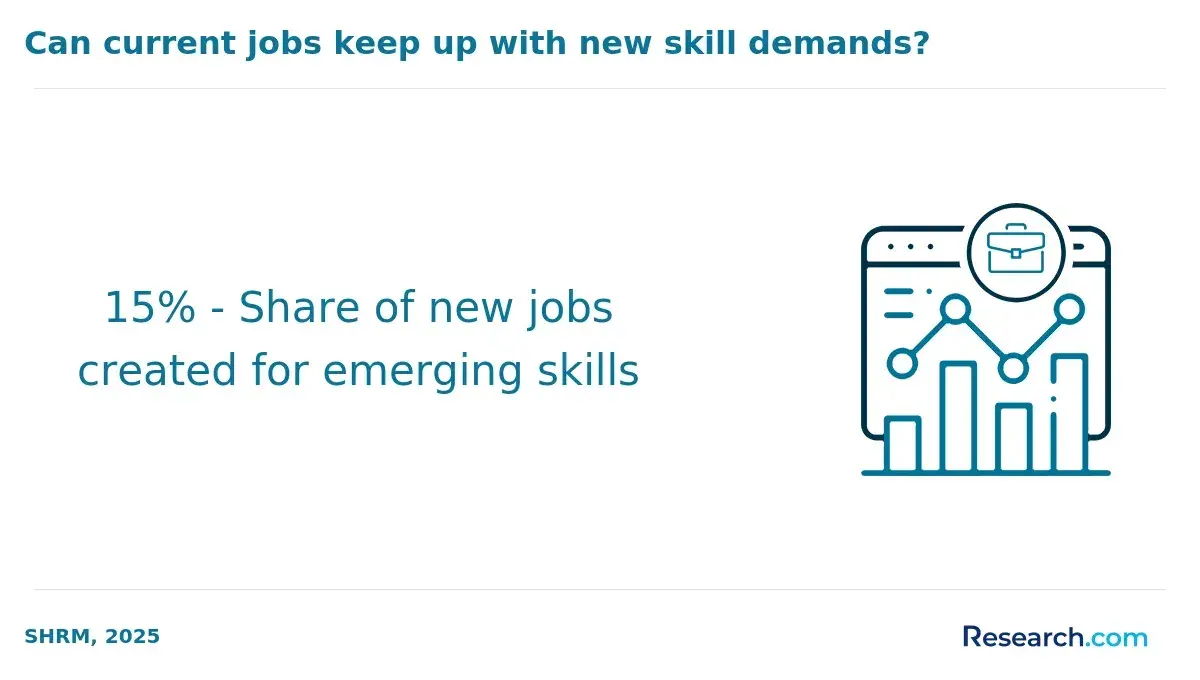
AI and automation are changing both fields, but they are not eliminating the need for skilled professionals. Routine tasks are becoming faster and more automated. The advantage goes to professionals who can review outputs, interpret results, identify risks, explain implications, and use technology responsibly. Accountants may see steady demand across a wider range of industries, while financial analyst openings can be more competitive and concentrated in organizations that prioritize growth, investment, and strategic planning.
What is the career progression like for a Financial Analyst vs. an Accountant?
Financial analyst and accountant career paths both offer advancement, but they reward different kinds of growth. Financial analysts often move toward strategic finance, investment analysis, planning, or executive finance roles. Accountants often move toward senior accounting, audit, tax, controllership, public accounting leadership, or financial management.
Typical career progression for a Financial Analyst
- Junior Analyst: Gathers data, updates spreadsheets, supports reporting, and assists senior analysts with models and presentations.
- Financial Analyst: Performs deeper analysis, builds forecasts, compares financial scenarios, and makes recommendations about budgets, investments, or business performance.
- Specialist Roles: Develops expertise in areas such as portfolio management, risk analysis, corporate finance, valuation, or financial planning and analysis.
- Senior and Executive Roles: Advances to senior analyst, finance manager, director of financial planning and analysis, or potentially CFO with the right mix of technical, strategic, and leadership skills.
Typical career progression for an Accountant
- Staff Accountant: Handles reconciliations, journal entries, bookkeeping support, financial statement preparation, and compliance tasks.
- Senior Accountant: Manages more complex reporting, reviews work, supports audits, and may specialize in tax, forensic accounting, audit, or financial reporting.
- Accounting Manager or Specialist: Leads accounting teams, manages close processes, oversees internal controls, or develops deeper expertise in a niche area.
- Leadership Roles: Moves into roles such as partner in public accounting, corporate controller, or CFO; advisory and technology skills are increasingly valuable at senior levels.
Credentials can influence advancement. Accountants often benefit from CPA preparation and licensure when their target roles involve public accounting, audit, tax, or controllership. Financial analysts may benefit from the CFA credential when their goals involve investment analysis, portfolio work, or asset management. Job growth for financial analysts is projected at 9% through 2033, which is faster than average, while accountants can expect 6% growth in the same period.
Professionals who want to deepen research, teaching, or executive-level expertise may also compare advanced pathways such as easy online PhD programs, although most analyst and accountant roles do not require a doctorate.
Can you transition from being a Financial Analyst vs. an Accountant (and vice versa)?
Yes. Moving between financial analysis and accounting is possible because both careers rely on financial statements, business data, and quantitative reasoning. The transition is easiest when you identify the skill gap clearly: financial analysts moving into accounting need more compliance and reporting depth, while accountants moving into financial analysis need stronger forecasting, modeling, and strategic interpretation skills.
A financial analyst who wants to become an accountant should build knowledge in tax preparation, audit processes, regulatory compliance, internal controls, and accounting standards. Analysts are often comfortable interpreting financial statements, but accounting roles require greater precision in how transactions are recorded, classified, reconciled, and reported. For many growth-oriented accounting roles, especially those connected to public accounting or higher-level reporting responsibility, the Certified Public Accountant (CPA) license can be important. CPA requirements include passing a national exam and meeting state-specific education and experience mandates. Additional coursework in accounting or auditing may also be necessary.
An accountant who wants to become a financial analyst starts with a useful advantage: strong knowledge of financial statements and reporting. To compete for analyst roles, accountants should add financial modeling, forecasting, valuation, market research, dashboarding, and presentation skills. The Chartered Financial Analyst (CFA) designation can improve opportunities in investment analysis and portfolio management by signaling advanced expertise. This path often appeals to professionals who want more strategy-oriented work and higher median salaries, as financial analysts in the US earn about 20% more than the typical accountant.
If you are switching roles, avoid assuming that a similar job title means the same daily work. Build a portfolio of relevant skills: models and scenario analysis for financial analysis, or reconciliations, reporting samples, tax knowledge, and audit support experience for accounting. Some professionals also consider a quickest associates degree online to help meet qualification requirements during a career change.
What are the common challenges that you can face as a Financial Analyst vs. an Accountant?
Both careers can be demanding because financial decisions and records affect budgets, taxes, investors, leaders, employees, and compliance obligations. The main challenge for financial analysts is making useful judgments in uncertain conditions. The main challenge for accountants is maintaining accuracy and compliance under strict deadlines and evolving rules.
Challenges for a Financial Analyst
- Economic uncertainty: Forecasts can change quickly when interest rates, market conditions, consumer demand, or industry performance shift. Analysts must make recommendations without perfect information.
- Data accuracy demands: Financial models are only as reliable as their assumptions and source data. Analysts need to catch errors before those errors influence decisions.
- Technology adaptation: The growing use of big data tools, automation, dashboards, and AI-supported analysis increases the need for continuous technical learning.
Challenges for an Accountant
- Financial reporting pressure: Accountants must keep pace with evolving regulatory frameworks and complex sustainability reporting while meeting close, tax, and audit deadlines.
- Cybersecurity threats: Accountants often work with sensitive payroll, tax, vendor, and financial information, so data protection and access controls matter.
- Talent shortage and training: A shortage of skilled accountants can increase workloads, while new systems and standards require ongoing education.
AI and automation add pressure in both fields because professionals must learn new tools while still owning the quality of the final work. Technology can reduce repetitive tasks, but it also raises expectations for speed, review, and interpretation. Readers looking for lower-cost ways to build relevant skills may compare options through the least expensive online college.
Is it more stressful to be a Financial Analyst vs. an Accountant?
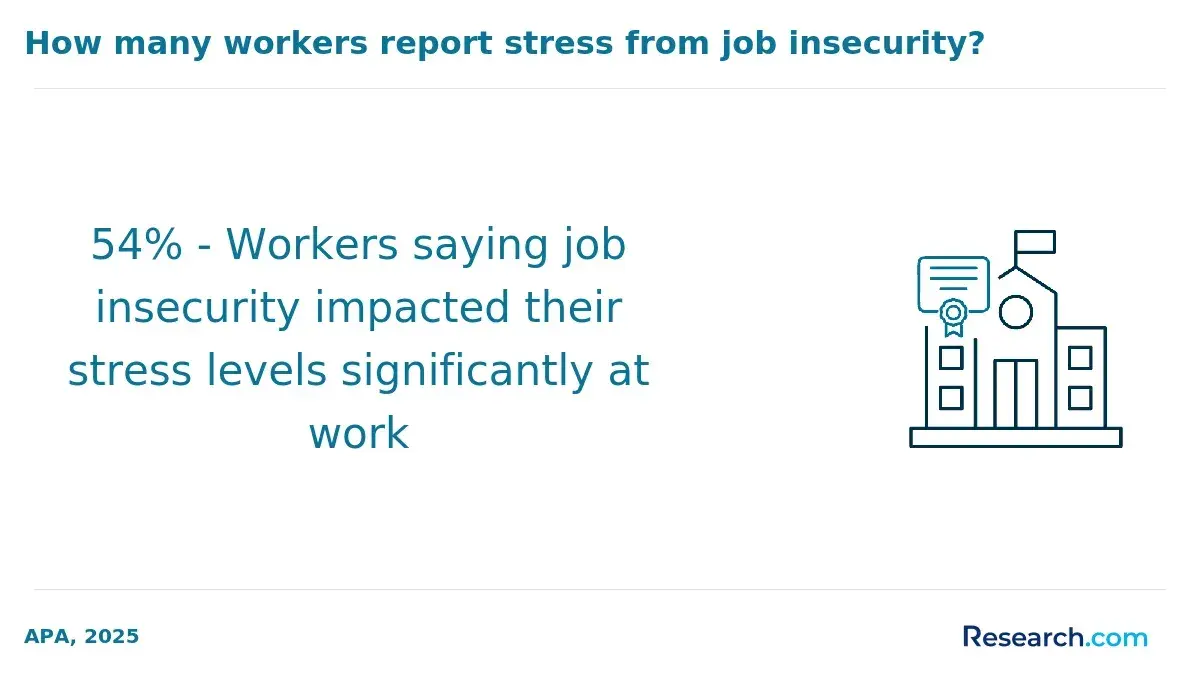
Neither career is stress-free, but the stress pattern is different. Financial analysts often face ongoing pressure because their work supports investment decisions, business strategy, budgets, forecasts, and performance expectations. Accountants often face deadline-driven pressure tied to month-end close, audits, tax season, reporting cycles, and compliance requirements.
Financial analysts may experience more continuous stress in roles where markets move quickly, executives need fast answers, clients expect timely recommendations, or financial models influence major business decisions. The work can involve tight deadlines, high visibility, frequent revisions, and the need to defend assumptions. In sectors such as banking or investment, long hours and travel may add to the pressure.
Accountants may experience stress that is more predictable but intense during peak periods. Tax season, audit deadlines, quarterly reporting, and year-end close can require long hours and very careful work. Outside those cycles, many accounting roles offer a steadier routine than analyst roles. However, accountants in understaffed teams, public accounting firms, or complex regulatory environments may still face sustained pressure.
If you handle ambiguity well and enjoy making recommendations with incomplete information, financial analysis may feel energizing rather than stressful. If you prefer structure, deadlines, and clear rules, accounting may be easier to manage. The best choice depends less on which title is “harder” and more on which type of pressure you can sustain.
How to choose between becoming a Financial Analyst vs. an Accountant?
Choose financial analysis if you want a career centered on forecasting, strategy, market trends, performance analysis, and decision support. Choose accounting if you want a career centered on accuracy, compliance, financial records, reporting, tax, audit, and internal controls. Both paths can lead to senior finance roles, but they start from different strengths.
- Choose financial analysis if you like: Building forecasts, comparing scenarios, researching industries, explaining business performance, evaluating investments, and presenting recommendations.
- Choose accounting if you like: Organizing financial records, applying rules, reconciling accounts, preparing statements, supporting audits, and ensuring reporting accuracy.
- Compare the daily work: Accountants often work with recurring cycles and compliance deadlines, while financial analysts often work with changing questions, models, and strategic projects.
- Consider credentials: Accountants often pursue CPA certification; financial analysts may seek the CFA credential. These credentials can improve prospects, but requirements and benefits vary by role and state or employer.
- Think about work-life balance: Accountants may have more predictable schedules outside peak seasons, while financial analysts may face longer hours, tighter turnaround times, or travel in some finance sectors.
- Review salary and outlook carefully: Salary figures vary by dataset, job definition, and location. One comparison lists financial analysts with higher average salaries at ~$71,345 and faster projected job growth at 9% vs. 6%.
A practical test is to ask what kind of problem you would rather solve. If you want to answer, “What happened, is it accurate, and does it comply with the rules?” accounting is likely the better fit. If you want to answer, “What might happen next, what does it mean, and what should the organization do?” financial analysis is likely the better fit. If you are also comparing career options outside traditional finance, you can review broader earnings paths such as the highest paying job in trade school.
What Professionals Say About Being a Financial Analyst vs. an Accountant
-
: "Choosing a career as a Financial Analyst has truly paid off in terms of job stability and salary growth. The demand for skilled analysts in sectors like banking and investment steadily increases, ensuring a strong career outlook. It's rewarding to see how my expertise directly influences crucial business decisions.
— Caleb"
-
: "Working as an Accountant offers a unique blend of routine and challenge that keeps me engaged daily. From managing complex tax regulations to consulting on financial compliance, the role pushes me to continuously expand my knowledge and adapt quickly. This dynamic environment has sharpened my problem-solving skills in ways I hadn't anticipated.
— Dennis"
-
: "The professional development opportunities in accounting have been instrumental in advancing my career. Structured training programs and certifications like CPA open doors to diverse roles within corporate finance and auditing. Reflecting on my journey, the career growth possibilities are substantial, motivating me to strive for leadership positions.
— Thomas"
Other Things You Should Know About a Financial Analyst & an Accountant
In 2027, financial analysts typically work in dynamic, team-oriented environments, often in investment firms or corporate settings. Accountants usually work in more structured environments, like accounting firms or corporate finance departments, focusing on detailed financial records.
While certification is not always mandatory, many Financial Analysts pursue the Chartered Financial Analyst (CFA) designation to enhance their qualifications and career opportunities. Accountants often seek the Certified Public Accountant (CPA) credential, which is widely recognized and typically required for higher-level accounting roles.
In 2027, financial analysts often work in dynamic environments, focusing on data analysis and market trends in sectors like investment and corporate finance. Accountants typically work in more stable settings, handling financial records, compliance, and reporting within various organizations, including public accounting firms and private companies.
References
- The 10 Vital Accountant Duties You Need for Success â Vintti https://www.vintti.com/blog/the-10-accountant-duties-you-need-for-success
- Stress Management Techniques for Accounting Professionals https://www.fctraining.org/softskillshub/stress-management-techniques-for-accounting-professionals.php
- Accounting or Finance Jobs: Choosing the Right Career Path – 365 Financial Analyst https://365financialanalyst.com/career-advice/accounting-or-finance-jobs/
- Accountants and Auditors : Occupational Outlook Handbook: : U.S. Bureau of Labor Statistics https://www.bls.gov/ooh/business-and-financial/accountants-and-auditors.htm
- Is Being a Financial Planner & Analyst a Stressful Job? [2025] https://digitaldefynd.com/IQ/is-being-a-financial-planner-analyst-a-stressful-job/
- Financial analyst or Accountant: Which career suits you best? - Rotheram Carrington Financial Recruitment (RCFR) https://rotheramcarrington.co.uk/financial-analyst-or-accountant/
- Top 5 Tasks of a Financial Analyst https://www.financialprofessionals.org/training-resources/resources/articles/Details/top-5-tasks-of-a-financial-analyst
- Financial Analyst vs. Accountant: What’s the Difference? https://customcareer.miami.edu/blog/2024/04/23/financial-analyst-vs-accountant-whats-the-difference/
- Financial Analyst vs. Accountant: What's the Difference? https://www.theforage.com/blog/careers/financial-analyst-vs-accountant-whats-the-difference
- Career Paths in Accounting vs Finance: Which is Harder? https://midvalley.edu.np/accounting-vs-finance-which-is-harder/


