2027 Online MS in Psychology - Forensic Psychology: How to Evaluate a Research Mentor Assigned Before the Final Term
Audited and Verified:
Our Editorial and Data Verification Process
Research.com uses government datasets, official education statistics and primary institutional information to support its career and degree guides. Our review process checks factual accuracy, occupational definitions, source dates and the requirements associated with the credentials discussed.
How This Article Was Fact-Checked
Our editorial team verifies salary estimates, employment projections, education requirements and program information against original data providers and official organizations. Salary figures are checked against the relevant occupational definitions and reporting periods. Information about licensure, accreditation and required in-person training is reviewed separately.
Fact-checked and verified on:

Co-Founder and Chief Data Scientist
Being assigned a research mentor before your final term gives you a chance to test whether your forensic psychology project is actually finishable, not just interesting. That matters when access to justice-system data, ethics review, and remote supervision may take longer than expected.
This guide is for online MS students preparing a thesis, capstone, or research proposal. It explains what to verify with your mentor and program, how to spot a project at risk of delay, and when to request a narrower topic or a different supervisory arrangement.
Key Things You Should Know
- Judge the assignment by research fit, reliable feedback, and a project that can meet the final-term deadline, not the mentor's reputation alone.
- Confirm who approves the project, whether data access and ethics requirements are settled, and what happens if a mentor becomes unavailable.
- A strong fallback may be a literature review or research proposal; access to restricted records or participants should never be assumed.
What Is an Online MS in Forensic Psychology?
An online MS in forensic psychology is graduate study of psychological science in legal and justice-related contexts.
Depending on the program, students may examine research on eyewitness memory, decision-making, victim services, corrections, or behavioral-health needs in justice settings. A thesis or capstone may develop research skills, but the degree name does not establish clinical training or authority to conduct forensic evaluations.
If you are still completing undergraduate preparation, online forensic psychology bachelor's programs in three years or less illustrate a different degree stage. Before choosing an MS, check whether its final project offers the kind of supervision and methods practice your intended job or next degree requires.
How Do You Evaluate a Research Mentor Before Your Final Term?
Start with the program's written project requirements: deliverable, approval process, milestones, and the mentor's formal role. An assigned mentor might advise the topic, supervise methods, grade the work, or share those duties with another faculty member.
Ask which responsibilities are theirs. If you are comparing online psychology study and degree choices before enrollment, seek the same information before relying on a promise of "faculty mentorship."
Use the first meeting to establish a workable supervision agreement. The following questions reveal more than a faculty biography:
- Fit: What experience does the mentor have with your proposed question and method? Who can advise on a method outside their expertise?
- Feasibility: What can you finish using sources you are authorized to access? What narrower deliverable would meet program rules if data access falls through?
- Feedback: How often will you meet, by what format, and when should you expect comments on drafts?
- Approvals: Who determines whether institutional review, site permission, consent, or a data-use agreement is needed? What must happen before recruitment or analysis?
- Progression: What are the proposal and draft deadlines, who resolves disagreements, and what is the process if supervision must change?
Forensic topics can involve sensitive victim, patient, or justice-involved-person information. A mentor's interest in a topic is not permission to use agency records, and removing names does not automatically remove confidentiality or data-use obligations.
If your project depends on an agency or research team, confirm access with the authorized data owner and follow the institution's review process before committing to that design.
After the meeting, email a short summary of the agreed question, deliverable, deadlines, feedback schedule, and unresolved approvals. If the mentor cannot confirm a feasible scope or regular contact before the final term, ask the program director promptly about a second methods adviser, a revised project, or the formal reassignment process.
What Accreditation Should an Online Forensic Psychology Program Have?
Verify the university's recognized institutional accreditation and that it covers the institution awarding the MS. Then check the catalog for the exact degree and its research-project rules. Institutional accreditation matters, but it does not guarantee a particular mentor, dataset, thesis option, or professional license.
Do not assume APA accredits a nonclinical forensic psychology MS. APA program accreditation applies to specified professional psychology training programs, not every degree with "psychology" in its name. When using forensic psychology degree accreditation comparisons, verify each claim against the institution and any relevant accreditor. For a regulated career goal, consult the applicable state board separately.
Coursework varies, but programs may combine psychological research methods and statistics with subjects such as psychology and law, violence research, victimology, and ethics. For mentor fit, the crucial question is whether methods instruction precedes the final project and whether the project can use approaches the student has learned to apply responsibly.
Compare the catalog's thesis, capstone, and elective descriptions rather than assuming every forensic MS teaches the same skills. For example, studying substance use in justice settings is different from completing the supervised preparation required for counseling.
Students pursuing that work should investigate academic routes into addiction counseling against the rules for their target state and role.
Programs set their own requirements. Applicants commonly need a bachelor's degree and may be asked for transcripts, a statement, recommendations, or evidence of statistics and research-methods preparation. A non-psychology major is not necessarily disqualifying; what matters is the particular program's prerequisites and whether the applicant can handle graduate research.
Before applying, ask whether prerequisites must be completed before admission or can be taken after enrollment. If you are finishing a bachelor's degree elsewhere, evaluating transfer options before psychology enrollment may help you avoid assuming that accepted credits satisfy statistics or methods requirements. Only the receiving institution can confirm how credits apply.
Completion depends on the required credits, course rotation, enrollment pace, and project approval process. Ask for a term-by-term plan showing when a mentor is assigned, when the proposal is due, and whether a delayed approval requires another enrollment term. "Online" does not tell you whether research meetings or presentations must occur live.
If you have not yet earned a bachelor's degree, accelerated undergraduate psychology program choices concern an earlier part of the education timeline. Do not let a shorter advertised undergraduate schedule obscure the MS program's separate project and supervision requirements.
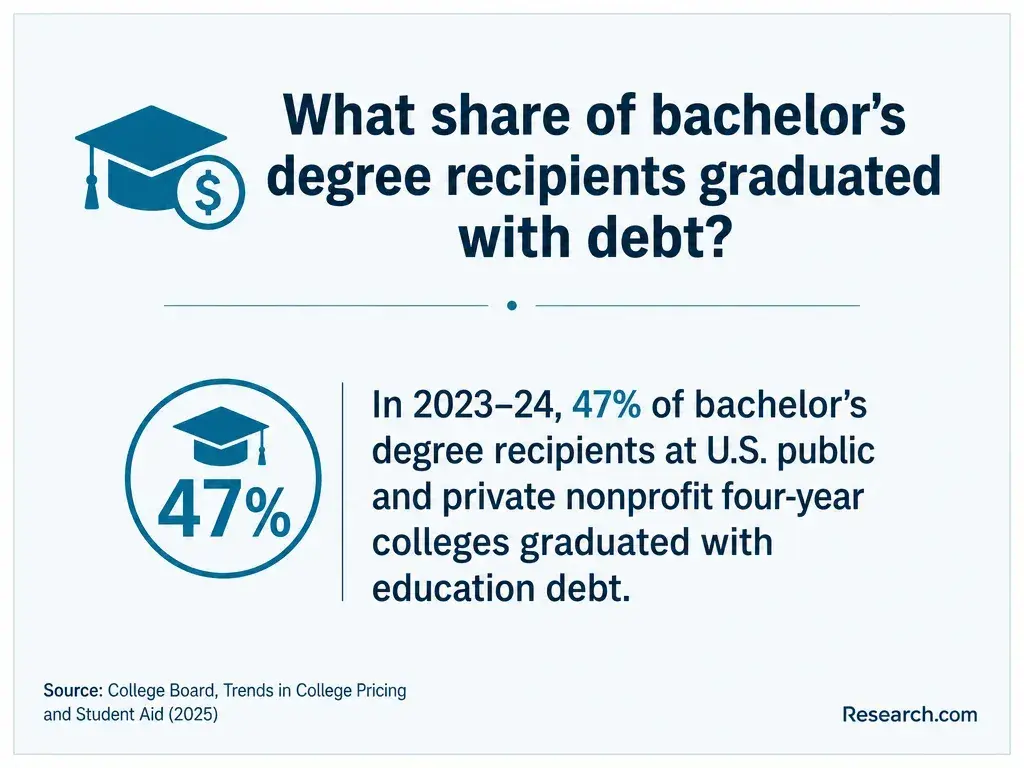
Calculate the cost from the current tuition schedule, required credits, fees, books or software, and any charges for continuing project enrollment. Then ask whether a slower pace, postponed data access, or a required presentation could add cost. Do not budget for an assistantship or employer reimbursement until its eligibility and terms are confirmed.
If your goal is a credentialed substance-use counseling role rather than forensic research, compare the cost of the qualifying pathway before borrowing for this MS. Guidance on aid eligibility for online substance use counseling study addresses a different degree route; its aid terms should not be assumed to apply to graduate forensic study.
The strongest fit is often work that uses research, writing, and knowledge of justice-related services: research support, program evaluation, victim-services coordination, or corrections-related program support.
Employers may also require direct experience, background screening, or agency-specific training. A supervised project can provide evidence of analytical ability, but it does not replace those requirements.
Match a prospective mentor to the work you want to demonstrate. A documented evaluation plan may be more useful for a service-program role than a broad paper on criminal behavior. If recovery services are your target, understanding career progression in addiction recovery can help you compare role-specific experience and credentials with what a forensic MS actually provides.
Do not assume so. An online forensic psychology MS designed for research or nonclinical work generally does not, by its title alone, meet the education and supervised-practice requirements to become a licensed psychologist.
State rules and the specific credential sought control eligibility. Coursework about assessment, testimony, or therapy also does not authorize a graduate to perform those services independently.
If your goal is psychotherapy rather than forensic research, compare licensure-designed degrees and state requirements before enrolling. Shorter accredited clinical mental health counseling study plans describe a distinct professional pathway; confirm that any program you consider meets your state's educational and supervised-training rules.
What Salary and Job Outlook Can Forensic Psychology Graduates Expect?
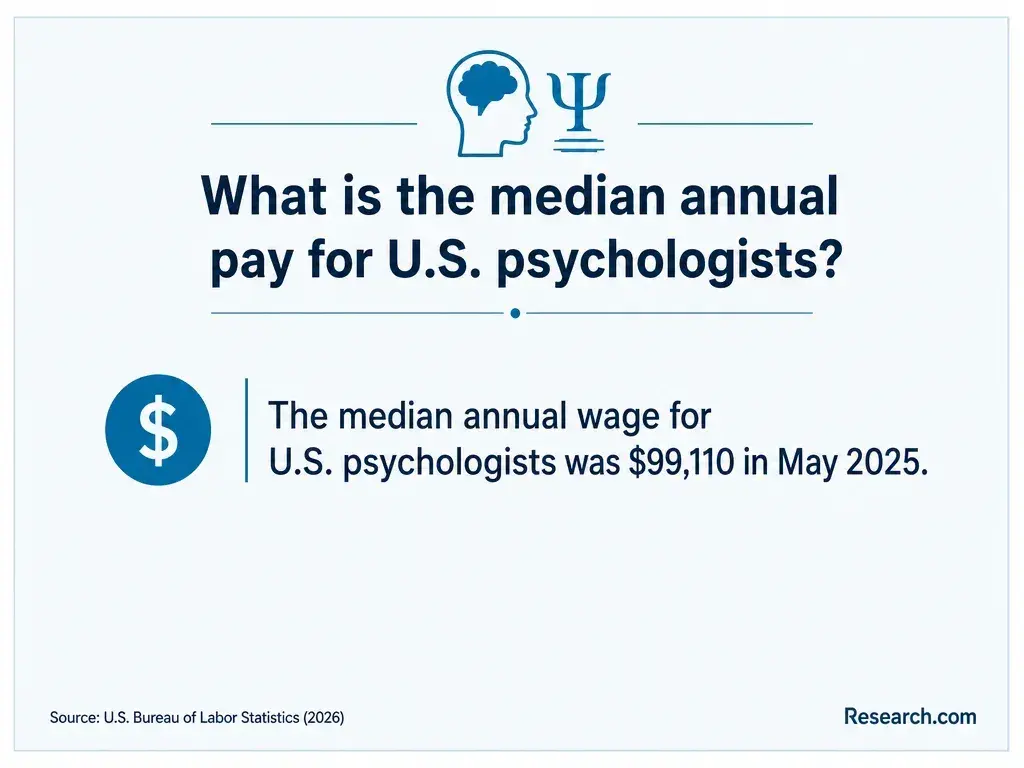
There is no single salary or employment projection for "forensic psychology MS graduates." Pay depends on the actual occupation, location, employer, experience, and any required credential. In particular, Bureau of Labor Statistics figures for psychologists should not be treated as expected earnings for graduates who are not licensed psychologists.
For a useful comparison, choose job postings with duties you could lawfully perform, identify their required qualifications, and then consult the corresponding occupation in the latest US Bureau of Labor Statistics Occupational Outlook Handbook for wage and growth context.
If your intended work is counseling, compare the full cost of a qualifying route, including supervised training, rather than its tuition alone; lower-cost accredited counseling degree pathways offer a starting point for that separate calculation.
Other Things You Should Know About Psychology Programs
Not necessarily. A researcher in psychology, criminology, public health, or another relevant field may be suitable if they can supervise your question and method under program rules.
Possibly, but employer support is not the same as permission to use records or recruit participants. Obtain the required academic and workplace approvals first.
Ownership and permitted use depend on university policy and any team or data-use agreement. Clarify these terms before contributing work or sharing it in a portfolio.
Explain your goals and propose a feasible alternative that meets the assignment. If you cannot agree, ask the program director about its topic-approval and reassignment procedures.
- Building and sustaining mentor interactions as a mentee - PMC https://pmc.ncbi.nlm.nih.gov/articles/PMC8490489/
- Institutional Review Board (IRB) Written Procedures | hhs.gov https://www.hhs.gov/ohrp/regulations-and-policy/requests-for-comments/guidance-for-institutions-and-irbs/index.html
- Expectations, Goals and Objectives | The Office of Research Integrity https://ori.hhs.gov/education/products/niu_mentorship/mentoring/goals/goals.html
- Mentorship and the Research Training Experience - NCBI - NIH https://www.ncbi.nlm.nih.gov/books/NBK236193/
- Research Involving Individuals with Questionable Capacity to Consent | Grants & Funding https://grants.nih.gov/policy-and-compliance/policy-topics/human-subjects/policies-and-regulations/vulnerable-populations/questionable-capacity
- Institutional Review Boards Frequently Asked Questions | fda.gov https://www.fda.gov/regulatory-information/search-fda-guidance-documents/institutional-review-boards-frequently-asked-questions
- IRB Guidebook Chapter III: Basic IRB Review | lsu.edu https://biotech.law.lsu.edu/research/fed/ohrp/gb/irb_chapter3.htm
- Specialty guidelines for forensic psychology | apa.org https://www.apa.org/practice/guidelines/forensic-psychology
- Research mentoring | wisc.edu https://ctlm.wisc.edu/get-help/research-mentoring/
- Frequently Asked Questions | Office of Research and Sponsored Programs | Loyola University Maryland https://www.loyola.edu/department/orsp/irb/faq.html