2027 Online MS in Psychology - Forensic Psychology: How to Evaluate Internship Approval at Your Current Employer
Audited and Verified:
Our Editorial and Data Verification Process
Research.com uses government datasets, official education statistics and primary institutional information to support its career and degree guides. Our review process checks factual accuracy, occupational definitions, source dates and the requirements associated with the credentials discussed.
How This Article Was Fact-Checked
Our editorial team verifies salary estimates, employment projections, education requirements and program information against original data providers and official organizations. Salary figures are checked against the relevant occupational definitions and reporting periods. Information about licensure, accreditation and required in-person training is reviewed separately.
Fact-checked and verified on:

Co-Founder and Chief Data Scientist
Keeping your job while completing a forensic psychology internship could make an online master's degree feasible - but employment does not automatically count as fieldwork. Your program must approve the site, supervisor, learning activities, and assessment plan, while your employer must authorize the arrangement. This guide is for working applicants and students, particularly those in justice, victim-service, and community organizations. It explains what to document, which questions to ask before enrolling or registering for an internship, and when a different placement or program is the safer choice.
Key Things You Should Know
- Get written approval before counting work hours. Confirm the program's site, supervisor, duties, documentation, and timing rules; employer permission alone is insufficient.
- Separate internship learning from routine employment. An approved placement may require new responsibilities, protected supervision time, and evidence of competencies - not simply a record of shifts worked.
- Check the degree's purpose. A forensic psychology MS may support nonclinical justice-related work, but it does not, by itself, qualify you as a licensed forensic psychologist.
What is an online MS in forensic psychology, and what careers can it support?
An online MS in forensic psychology applies psychological science to legal and justice settings. Programs may emphasize research, behavior in legal contexts, victimization, corrections, or policy. "Online" usually describes coursework delivery; an internship, if required, may still involve in-person work and scheduled supervision.
For someone already employed in a court-related agency, correctional program, victim-service organization, or research unit, the degree may strengthen skills used in program support, service coordination, research, and policy work.
Advancement still depends on the job's requirements and your experience. If you have not completed a bachelor's degree, compare shorter routes to an online psychology major before planning graduate study; check whether your intended MS actually requires a psychology major.
Can an online forensic psychology master's degree lead to licensure?
Do not assume so. A nonclinical forensic psychology MS does not by itself authorize psychotherapy, diagnosis, independent psychological assessment, or use of the protected title "psychologist." Licensed forensic evaluation generally requires a qualifying professional pathway and compliance with the relevant state's licensing rules. The word forensic describes a subject area, not a credential.
If your goal is counseling rather than justice-system research or support work, compare the educational and supervised-practice requirements for that license before enrolling. Comparing fast-track mental health counseling master's formats can help frame that separate decision, but the state licensing board - not a program's title - determines whether a pathway meets its rules.
How can you verify whether your employer internship will satisfy program requirements?
Ask the academic internship coordinator for the handbook and approval form that will apply to your entry term. Then compare those documents with a written proposal from your employer. Program approval, employer authorization, and permission to use workplace information are separate decisions. Do not assume that any one of them grants the others.
Use this sequence before committing to a placement or counting hours:
- Confirm the academic rules. Ask whether current employment is eligible, whether hours can begin before registration, what minimum hours and site conditions apply, and who signs the final approval.
- Define distinct learning work. Propose supervised duties tied to course competencies - such as reviewing public research, supporting a service evaluation, or preparing a policy brief - rather than relabeling ordinary shifts.
- Identify an acceptable supervisor. Ask what credentials, experience, availability, and relationship to your current manager the program requires, and whether supervision must occur separately from routine performance reviews.
- Set the operating agreement. Have the program and employer confirm schedule, location, safety training, liability coverage, evaluation forms, and what happens if your job duties or supervisor change.
- Resolve information access before choosing a deliverable. Obtain separate authorization for any records, interviews, or data use; ask whether research review is needed. A confidential case file is not automatically available for coursework because you can access it at work.
A useful proposal names the activities, expected learning evidence, supervisor, and hours that can be verified. If employer policy prevents academic review of the work, propose a public-information project or a different site instead. Compressed schedules leave less time to fix an approval problem; review intensive forensic psychology master's admissions and study plans with that lead time in mind.
Verify the institution's recognized accreditation and that it covers the institution awarding the online degree. Then inspect the actual MS curriculum and internship policy. Institutional accreditation does not establish that a particular workplace placement is approved or that the degree meets a licensing board's educational requirements.
Do not reject a nonclinical forensic MS merely because it lacks APA accreditation: APA accreditation applies to specified professional psychology programs and internships, not every psychology master's degree.
Conversely, do not infer professional eligibility from institutional accreditation alone. If counseling licensure is your aim, lower-cost accredited counseling degree pathways are a more relevant comparison - but confirm the program and state requirements individually.
Course lists vary, but relevant study may include psychology and law, research methods, statistics, ethics, violence or victimization, and justice-system policy. Some programs offer an internship, while others use a capstone or thesis. Read the catalog closely: an elective on psychological assessment is not training or authorization to administer restricted tests independently.
For an employer-based internship, methods and ethics courses can be particularly useful. They help you distinguish an answerable organizational question from a clinical judgment you are not qualified to make.
If your actual work centers on substance-use counseling rather than legal settings, compare that curriculum and its credential implications with substance abuse counseling bachelor's affordability and duration rather than assuming a forensic specialization is the closest fit.
Programs set their own requirements. Check the current admissions page for acceptable bachelor's degrees, GPA policy, prerequisites, recommendations, statements, and any test requirement. A criminal justice, social science, or other non-psychology major may be eligible, but an applicant might need preparation in psychology, statistics, or research methods.
Ask admissions staff whether outstanding prerequisites can be completed before or after admission, then ask the internship coordinator a separate question: whether your proposed employer site could qualify.Admission is not placement approval. If you still need to finish a bachelor's degree, investigate transferring college credits into a psychology degree; only the receiving institution can determine which credits fulfill its requirements.
Completion time depends on required credits, course availability, enrollment pace, and whether the internship can be arranged when needed. An employer placement may reduce travel or a job-search disruption, but it may also require unpaid time for supervision, assignments, or duties outside your usual position.
Request a term-by-term estimate of tuition and mandatory fees, plus any internship registration, background-check, travel, or continuation charges. Ask whether employer education assistance covers internship credits and what happens to that benefit if you change jobs.
If a bachelor's degree is still the necessary first step and addiction services are your target field, scholarship options for online addiction counseling undergraduates may be relevant; undergraduate funding is not a substitute for checking graduate costs.
For an employed student, the decisive difference may be access to approved supervision, not where lectures happen. Online delivery can reduce commuting, but live seminars, group work, and fieldwork evaluations may still occur at fixed times. Campus-based study may offer easier access to local faculty or partner sites, without guaranteeing placement approval at your employer.
Ask both types of program to review the same proposed workplace duties and supervisor qualifications. Compare their written responses alongside scheduling and total cost. Condensed online psychology master's study may appeal to working students, but a faster course sequence does not shorten an internship's required approval process.
Possible nonclinical targets include victim-services coordinator, corrections program specialist, research or program-evaluation staff member, and justice-agency policy analyst. These are examples to investigate, not jobs the degree automatically qualifies you to hold. Employers may value agency experience, data skills, specific certifications, or public-sector hiring eligibility more than the concentration name.
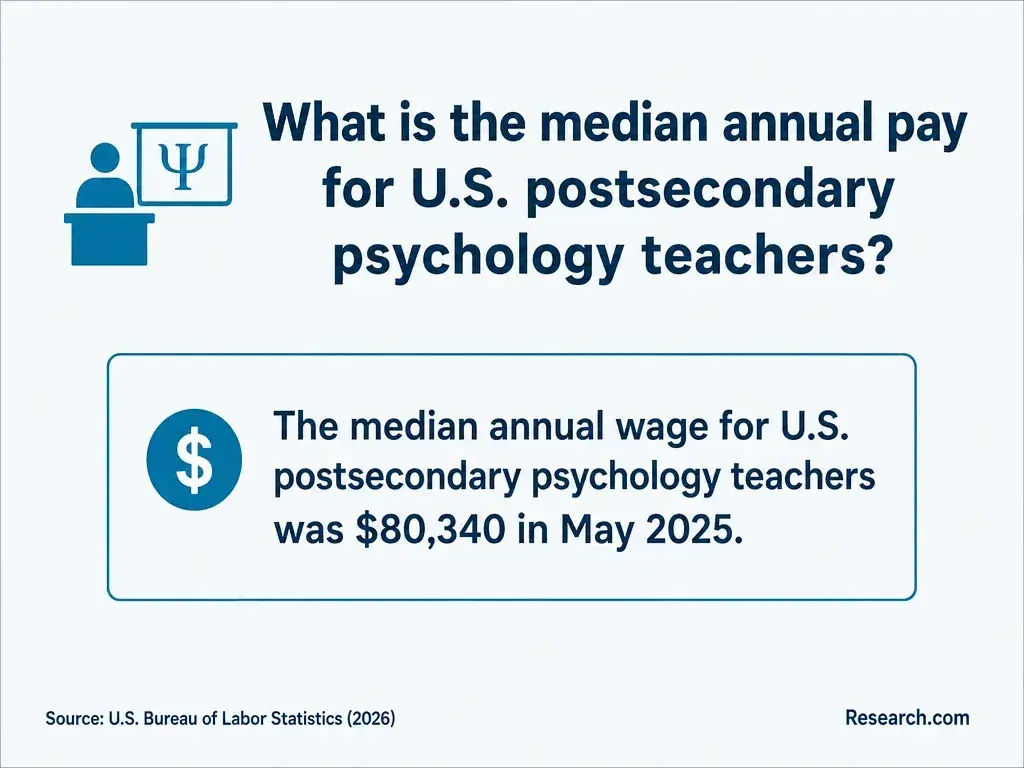
Compare pay using the specific job title, location, employer pay scale, and required credentials. Broad occupational wage figures are not salaries for forensic psychology MS graduates; "psychologist" wage data is especially misleading if you are not pursuing psychologist licensure. For a starting comparison of roles, see pay comparisons across forensic psychology-related careers, then verify current postings and public salary schedules for your target position.
What job outlook and professional standards affect forensic psychology careers?
"Forensic psychology" spans occupations with different hiring conditions, so no single job-growth figure describes the field. For a realistic outlook, identify the occupation that matches your intended duties and consult its most recent US Bureau of Labor Statistics Occupational Outlook Handbook profile alongside local agency openings.In a public-sector role, budget cycles, civil-service classifications, and required credentials can matter more to your next move than a national projection.
Professional standards also follow the work, not just the degree: protect client information, follow agency safeguarding and reporting procedures, avoid making clinical or legal determinations outside your role, and seek appropriate supervision. If your intended transition is into recovery support rather than forensic work, compare career choices across recovery service settings and check the applicable state and employer requirements before paying for another degree.
Other Things You Should Know About Psychology
Possibly. Being paid is not necessarily the obstacle; the program must accept the arrangement and verify the required learning, supervision, and hours.
Only if the program and employer permit the proposed remote duties and supervision. Online classes do not establish remote-placement eligibility.
Notify the academic coordinator before continuing hours at a new site. A change in employer, duties, or supervisor may require a new agreement and approval.
Use only materials your employer and program authorize for external sharing. Remove confidential information, and do not assume that removing names makes a document safe to publish.
- Psychology Internship Program | DSHS - WA.gov https://www.dshs.wa.gov/mental-health-and-recovery/forensic-mental-health-services/psychology-internship-program
- Fact Sheet #71: Internship Programs Under The Fair Labor Standards Act | U.S. Department of Labor https://www.dol.gov/agencies/whd/fact-sheets/71-flsa-internships
- Employers and the Form I-983 - Study in the States https://studyinthestates.dhs.gov/stem-opt-hub/for-employers/employers-and-the-form-i-983
- FERPA | Protecting Student Privacy - Department of Education https://studentprivacy.ed.gov/ferpa
- Chapter 5 - Practical Training https://www.uscis.gov/policy-manual/volume-2-part-f-chapter-5
- Practicum Education Manual - VI. Practicum Education Placement Policies, Procedures, and Processes https://socialwork.wayne.edu/practicum/manual/policies
- Academic Affiliation Agreements | Slippery Rock University https://www.sru.edu/offices/academic-affairs/field-experience-agreements