2027 What Requirements Do You Need for an Online Business Development & Sales Bachelor's Degree? Admission Rules, Credits & Eligibility

Co-Founder and Chief Data Scientist
Choosing an online business development & sales bachelor's degree is not just about finding a program that sounds career-focused. Applicants also need to know whether they qualify, how many credits they must complete, what documents are required, and whether prior coursework can shorten the path to graduation.
That planning matters because eligibility rules and credit policies vary widely by school. A student with transfer credits, for example, may finish much faster at one university than at another. A working adult may also benefit from test-optional admission, prior learning credit, or an online tuition policy that does not depend on state residency.
According to recent data, enrollment in online business development & sales programs has increased by 40% over the past five years, reflecting growing demand for flexible, career-oriented education. This guide explains the major admission and completion requirements so prospective students can compare programs more confidently, avoid application delays, and choose a degree path that fits their academic record, budget, and career goals.
Key Benefits of Preparing for Online Business Development & Sales Bachelor's Degree Requirements
- Choosing the right online business development & sales program ensures alignment with your career goals and maximizes eligibility for scholarships and financial aid tailored to your profile.
- Understanding transfer credit policies can save time and reduce tuition by recognizing prior coursework, with some programs accepting up to 90 credits from accredited institutions.
- Meeting admission requirements and completing 120-128 credit hours online leads to a respected degree that significantly improves job prospects in a growing market projected to expand by 10% over the next decade.
What are the basic eligibility requirements to apply for an online business development & sales bachelor's degree?
The basic eligibility requirements for an online business development & sales bachelor's degree usually include a high school diploma or GED, proof of identity, and the legal ability to enroll in a U.S.-based college program. These are baseline requirements. Meeting them means you may apply; it does not guarantee admission.
According to the U.S. Department of Education, the most common admission criteria across accredited programs include completion of a high school diploma or GED certificate, meeting minimum age requirements, and satisfying residency or citizenship status. Individual colleges may add their own requirements, such as a minimum GPA, prerequisite coursework, an essay, or an interview.
Applicants should review each school's admission page before applying because online business development & sales bachelor's degree admission criteria can differ even among accredited institutions. A program designed for first-time college students may review high school coursework closely, while a completion-focused program may place more weight on transfer credits and professional experience.
- High school diploma or GED: Most programs require proof that you completed accredited secondary education or earned a GED. This confirms readiness for college-level general education and business coursework.
- Minimum age rules: Applicants generally must be at least 16 or 17 years old to apply, and many schools require students to be 18 or older to enroll.
- Residency, citizenship, or visa status: Some programs require applicants to be U.S. citizens, permanent residents, or eligible visa holders. International applicants may also need to show English proficiency.
- Identity and transcript verification: Schools commonly require official transcripts, diplomas, and a government-issued ID before final admission or enrollment.
- School-specific standards: GPA thresholds, prerequisite courses, transfer credit limits, and test policies vary. Contacting admissions before applying can prevent wasted application fees and delays.
Students comparing several options should also look beyond the minimum eligibility checklist. Ask whether the program is accredited, how transfer credits are evaluated, whether online students qualify for the same financial aid, and whether courses are offered in a format that matches your schedule. For broader degree-planning context, reviewing programs listed among the easiest online degrees that pay well may help students compare flexible pathways and realistic completion timelines.
What is the minimum GPA required for admission to an online business development & sales bachelor's degree program?
The minimum GPA required for admission to an online business development & sales bachelor's degree program depends on the school. Many programs accept applicants with a cumulative high school GPA as low as 2.0, while more selective institutions often require a minimum of 2.5 or higher.
GPA is important, but it is rarely the only factor. Online bachelor's programs may use a holistic review process that considers class rank, standardized test scores, letters of recommendation, essays, work experience, and prior college coursework. This is especially helpful for adult learners whose recent professional record may better reflect their readiness than older high school grades.
Applicants should also confirm whether the school reviews weighted or unweighted GPA. A weighted GPA gives additional value to more demanding courses such as honors or Advanced Placement classes. An unweighted GPA treats all courses the same. Reporting the wrong type of GPA can create confusion during transcript review.
| Applicant situation | What it may mean for admission |
| GPA at or above the stated minimum | You meet the academic baseline, but admission may still depend on documents, deadlines, and program capacity. |
| GPA slightly below the minimum | You may still qualify through conditional or probationary admission if the school offers that option. |
| Strong transfer record | College grades may carry more weight than high school GPA, especially in degree-completion programs. |
| Older academic record | Work experience, recommendations, and a strong personal statement may help explain readiness for college study. |
Before applying, request official transcripts and calculate your GPA carefully. If your GPA is close to the cutoff, ask admissions whether the program offers conditional admission, academic support, or a pathway that starts with a limited course load. Students comparing cost and access can also review online business degree programs accredited to identify affordable options while checking each school's admission standards.
- Common GPA range: Some schools accept applicants with a 2.0 GPA, while more selective programs may require at least a 2.5 GPA.
- Holistic review: Schools may consider test scores, recommendations, essays, class rank, and professional background alongside GPA.
- Weighted vs. unweighted GPA: Confirm how the institution interprets your transcript so your academic record is evaluated accurately.
- Conditional admission: Applicants below the minimum may be admitted on probation and required to meet performance standards after enrollment.
- Accurate reporting: Use official transcripts rather than memory or estimates to avoid processing delays.
Do online business development & sales bachelor's degree programs require SAT or ACT test scores?
Many online business development & sales bachelor's degree programs do not require SAT or ACT scores, especially programs built for adult learners, transfer students, or working professionals. Test-optional policies make admission more accessible for applicants whose strongest qualifications are college credits, work experience, or recent training rather than standardized test results.
Some programs still request SAT or ACT scores. This is more common for honors admission, merit-based scholarships, selective business tracks, or applicants who do not meet other academic benchmarks. When scores are required, competitive applicants often submit SAT totals above 1200 or ACT composites near 25 to 28.
Policies remain fluid, and many colleges updated their standards after 2020. Over 70% of U.S. colleges have permanently reduced reliance on standardized exams, but that does not mean every program treats scores the same way. Always check the admission page for the specific online business development & sales program, not just the university's general undergraduate policy.
- Test-optional admission: Many programs allow applicants to apply without SAT or ACT scores.
- Scholarship considerations: Some merit aid or honors programs may still require scores even if general admission does not.
- Competitive benchmarks: When tests are required, SAT scores above 1200 or ACT scores near 25 to 28 may strengthen an application.
- Adult learner advantage: Test-optional policies can benefit students who have been out of high school for several years.
- Policy verification: Requirements may differ by school, program, scholarship, and applicant category.
One professional who enrolled in an online business development & sales bachelor's program said the absence of a testing requirement made the application less stressful. "I was juggling a full-time job and family responsibilities, so knowing I could apply without worrying about the SAT helped a lot," he explained.
He also noticed that some scholarship opportunities still asked for test scores. That distinction matters: a test-optional program may admit you without scores, while a scholarship committee may still use scores to compare applicants. If you have strong scores, submitting them may help. If you do not, focus on transcripts, work history, recommendations, and a clear statement of goals.
How many total credit hours are needed to complete an online business development & sales bachelor's degree?
Most accredited online business development & sales bachelor's degree programs require about 120 credit hours for graduation. Some specialized majors may require up to 128 or 130 credits, depending on the curriculum, accreditation expectations, electives, and capstone requirements.
Credit hours usually include general education, business core courses, major-specific sales and business development courses, electives, and a final applied experience such as a capstone, practicum, or internship-style project. Understanding these requirements early helps students estimate time to completion, tuition cost, and how transfer credits will apply.
| Credit category | Typical range | Purpose |
| General education | 30 to 40 credits | Builds foundational skills in communication, math, social sciences, and related subjects. |
| Core business development and sales courses | 40 to 50 credits | Covers sales strategy, marketing, business development, customer relationship management, and related business concepts. |
| Electives and specializations | 20 to 30 credits | Allows students to tailor the degree toward areas such as digital sales, entrepreneurship, or international business. |
| Capstone or practicum | 3 to 6 credits | Requires students to apply business and sales knowledge through a final project or practical experience. |
Most schools count credits in semester credit hours (SCH), commonly based on a 15-week term. Some institutions use quarter credit hours, which do not convert one-to-one. Students comparing programs should ask the registrar how quarter credits translate into semester credits so they do not overestimate progress toward graduation.
Prior learning can reduce the number of credits a student must complete at the degree-granting institution. AP exams, CLEP exams, prior college coursework, military training, and professional learning may satisfy some requirements if the school accepts them. This can lower cost and shorten the path to completion, but policies vary by institution and by course category.
- Plan around total credits: Confirm whether the program requires about 120 credit hours or a higher total such as 128 or 130 credits.
- Separate major credits from electives: A large number of transfer credits may not help if they do not match degree requirements.
- Check capstone timing: Capstones are usually taken near the end of the program and may have prerequisite requirements.
- Ask about credit conversion: Semester and quarter credit systems can affect how transfer work is counted.
- Use prior learning carefully: AP, CLEP, and transfer credits can be valuable, but only if they apply to required categories.
Students who want a shorter or more intensive schedule can compare programs offering an accelerated business degree, while still confirming total credit requirements and transfer limits before enrolling.
What high school courses or prerequisites are required before enrolling in an online business development & sales bachelor's degree?
Most online business development & sales bachelor's degree programs do not require an extensive list of specialized high school prerequisites, but they do expect students to be prepared for college-level writing, quantitative reasoning, and introductory business concepts. Requirements vary by institution, so applicants should compare the program catalog with their transcript before applying.
- Mathematics: Algebra is commonly expected, and some programs recommend statistics or precalculus. These courses support later work in sales forecasting, pricing, analytics, and market research.
- English and composition: Strong reading and writing skills are essential because business programs require reports, presentations, proposals, and professional communication.
- Social studies: Economics, government, history, or similar courses help students understand markets, institutions, consumer behavior, and business environments.
- Business electives: Marketing, accounting, entrepreneurship, computer applications, or business technology courses are often helpful, even when not required.
- Dual enrollment: Credits earned through high school dual enrollment or community college coursework may satisfy general education or introductory business requirements if accepted by the university.
Students missing a prerequisite should not assume they are ineligible. Many schools offer bridge, developmental, or introductory courses that help students build the needed foundation. The trade-off is that these courses may add time and cost if they do not count toward degree requirements.
A professional who advanced her career after completing an online business development & sales bachelor's degree said the prerequisite review felt overwhelming at first because she was balancing work and school planning. She had to verify which high school and college credits would apply and complete supplementary coursework before full enrollment.
Her experience highlights a practical lesson: ask for advising early. Sending transcripts for review before the application deadline can reveal missing coursework, transfer opportunities, and the most efficient sequence for starting the degree.
Can transfer credits count toward an online business development & sales bachelor's degree, and how many are accepted?
Yes. Most accredited colleges allow transfer credits to count toward an online business development & sales bachelor's degree, but the number accepted varies by school. Many institutions accept between 60 and 90 credits, especially in bachelor's completion programs designed for students who have already attended college.
Transfer policies can significantly affect cost and time to graduation. A student with an associate degree may be close to halfway finished at one institution but may lose credits at another if courses do not match requirements. This is why applicants should request an official or preliminary transfer evaluation before committing to a program.
| Transfer issue | Why it matters |
| Maximum transfer limit | Schools may cap accepted credits between 60 and 90 credits, which affects how much prior coursework can be used. |
| Course equivalency | A course must usually match the content and level of a required course or elective to apply toward the degree. |
| Accreditation of prior school | Credits from non-accredited schools are often rejected or reviewed more cautiously. |
| Grade minimums | Courses with low grades may not transfer, even if the subject is relevant. |
| Major requirements | General education courses often transfer more easily than specialized business development & sales courses. |
Transfer-friendly institutions often have 2+2 agreements with community colleges. These agreements map two years of community college coursework into the final two years of a bachelor's program. More restrictive universities may require students to retake courses, complete a minimum number of upper-division credits in residence, or satisfy specific business core requirements.
- Ask for a transfer evaluation: Do this before enrolling, not after paying tuition.
- Submit all transcripts: Schools generally require official transcripts from every college attended.
- Compare degree audits: If two schools accept different numbers of credits, the cheaper tuition rate may not be the cheaper total path.
- Check major fit: Sales, marketing, management, and business courses may transfer differently depending on course descriptions.
- Confirm graduation residency rules: Some schools require a certain number of credits to be completed through their institution.
A 2023 report from the National Student Clearinghouse Research Center found nearly 35% of college students transfer credits between schools, highlighting why transfer rules should be part of the program comparison process from the start.
Does accreditation status affect admission requirements for an online business development & sales bachelor's degree?
Yes. Accreditation can affect admission requirements, credit transfer, financial aid eligibility, graduate school options, and employer recognition for an online business development & sales bachelor's degree. At a minimum, students should confirm that the institution is accredited by an agency recognized by the Council for Higher Education Accreditation (CHEA) or the U.S. Department of Education.
Accredited schools are more likely to have clear admission standards, documented transfer policies, and consistent academic requirements. They may also require official transcripts, minimum GPA thresholds, English proficiency documentation, and other verification steps to maintain quality standards.
- Regional accreditation: Regionally accredited institutions often provide stronger credit transfer options and are commonly preferred by employers and graduate programs.
- Programmatic accreditation: Some business-related programs may hold specialized accreditation. When present, it can add expectations related to prerequisites, curriculum structure, or professional preparation.
- Degree recognition: Degrees from unaccredited schools may not be accepted by graduate programs, employers, or licensing-related bodies where applicable.
- Admission standards: Accredited programs may enforce stricter documentation, GPA, and readiness requirements than unaccredited or low-quality providers.
- Verification: Students should check official accreditation databases rather than relying only on marketing language from a school website.
According to the National Center for Education Statistics, approximately 85% of employers prioritize candidates holding degrees from accredited institutions. For students pursuing business development & sales, accreditation is therefore not just an academic detail; it can shape how the degree is viewed after graduation.
Before applying, verify both institutional accreditation and any program-specific recognition. Also ask whether credits from the program will transfer to other accredited schools if you later change institutions or pursue graduate study.
What documents do you need to apply for an online business development & sales bachelor's degree program?
Most online business development & sales bachelor's degree applications require documents that verify your identity, prior education, academic readiness, and, in some cases, professional background. Requirements vary by school, but applicants should begin collecting materials at least three to six months before the deadline to avoid delays.
- Official high school transcript or GED record: First-time college students usually need official proof of secondary completion. The transcript often must be sent directly from the issuing school.
- Official college transcripts: Transfer applicants must submit transcripts from all previously attended colleges, even if they do not expect every credit to transfer.
- Government-issued ID: A passport, driver's license, or other valid ID may be required to confirm identity and support residency or eligibility review.
- Application essay or personal statement: Some programs ask applicants to explain career goals, interest in business development & sales, and readiness for online study.
- Letters of recommendation: Selective programs may request academic or professional references who can speak to your reliability, communication skills, and potential.
- Résumé: Adult learners or applicants with sales, customer service, marketing, or management experience may be asked to summarize their work background.
- Portfolio or professional documentation: Some programs may consider evidence of relevant experience, certifications, or prior learning.
- Certified translations: International applicants must provide certified translations for documents not originally issued in English.
Official documents are different from unofficial copies. Official transcripts are sent directly from the school or include authorized seals and verification. Unofficial transcripts can help with early advising, but they are usually not enough for final admission.
Applicants should also ask admissions offices about transfer credit rules, English proficiency requirements, financial aid eligibility, and enrollment deadlines. A complete file can speed up admission review, while missing transcripts or untranslated documents can delay the start term. Students considering related career paths may also review project management degree jobs to understand how business, sales, and organizational skills may connect after graduation.
Are there English language proficiency requirements for non-native speakers applying to an online business development & sales bachelor's degree?
Yes. Most accredited U.S. online business development & sales bachelor's degree programs require non-native English speakers to demonstrate English proficiency. This requirement helps ensure students can read textbooks, participate in discussions, complete written assignments, and communicate effectively in business coursework.
- TOEFL iBT: Undergraduate applicants are generally asked to submit TOEFL iBT scores between 61 and 80.
- IELTS Academic: Many universities expect IELTS Academic scores of 6.0 to 6.5.
- Duolingo English Test: Many programs accept Duolingo English Test scores, often requiring scores from 90 to 110.
- Exemptions: Applicants from English-speaking countries or those who completed several years of education at English-medium institutions may be exempt.
- Conditional admission: Students who do not meet the minimum score may be admitted conditionally and required to complete ESL or bridge coursework before starting or while beginning degree classes.
Applicants should not assume that one English proficiency score applies everywhere. Minimum scores, accepted tests, expiration rules, and exemption policies vary by institution. Some programs may also require a placement test after admission, especially if writing support is recommended.
If you are applying from outside the United States, ask whether the school requires transcript evaluation, certified translations, proof of financial support, or specific visa documentation. Conditional pathways may resemble the structure of speech pathology bridge programs online in that they help students complete preparatory requirements before moving into full degree coursework.
Do online business development & sales bachelor's degree programs accept CLEP exams or prior learning credits?
Many online business development & sales bachelor's degree programs accept CLEP exams or other forms of prior learning credit, but policies differ by institution. CLEP can be especially useful for satisfying general education requirements, introductory business courses, or elective credits.
The College-Level Examination Program (CLEP) allows students to earn college credit by passing subject exams. A score of 50 or higher, as recommended by the American Council on Education (ACE), may grant undergraduate credit at more than 2,900 colleges nationwide. However, each college decides which CLEP exams it accepts, how many credits it awards, and whether those credits apply to the major, electives, or general education.
- CLEP exams: Some programs accept CLEP for general education or introductory business requirements, while others limit how credits can be used.
- DANTES/DSST exams: These exams may provide another credit-by-exam option, particularly for adult learners and military-affiliated students.
- Portfolio assessment: Students may document work experience, training, projects, or professional achievements to request academic credit.
- Professional certifications: Some schools review industry certifications or employer-based training for possible credit.
- Military learning: Military transcripts may be evaluated for credit if the coursework or training aligns with degree requirements.
The best time to ask about CLEP and prior learning credit is before enrollment. Once you register for courses, you may accidentally pay for a class that an exam or prior learning evaluation could have satisfied. Contact the registrar or transfer credit office and request written confirmation of how each credit source would apply to the business development & sales degree plan.
Are there residency or in-state tuition requirements that affect enrollment in an online business development & sales bachelor's degree?
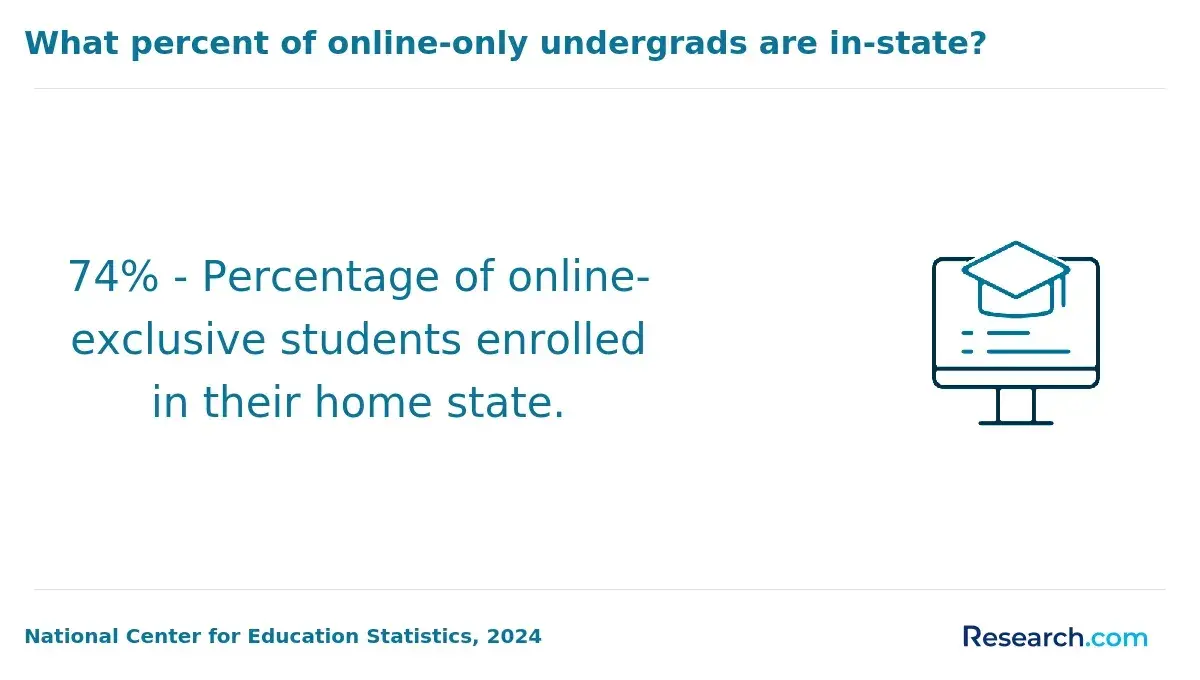
Yes. Residency and tuition policies can affect the cost and sometimes the availability of an online business development & sales bachelor's degree. Some public universities charge the same online tuition rate regardless of where students live, while others maintain separate in-state and out-of-state rates.
Many public universities participate in the State Authorization Reciprocity Agreement (SARA), which allows accredited schools in participating states to offer online programs to students in other member states without seeking separate approvals in each state. SARA can make cross-state online enrollment easier, but it does not automatically guarantee in-state tuition.
- SARA membership: SARA helps institutions legally enroll online students across state lines when both the school and student's state participate.
- Tuition differences: Some schools charge one online rate for all students, while others charge higher out-of-state tuition. Confirm the exact rate before applying.
- Residency documents: To qualify for in-state tuition, schools may request proof such as a driver's license, voter registration, utility bills, or other residency evidence.
- Program availability: In rare cases, a school may not be authorized to enroll students from certain states in specific online programs.
- Financial planning: Tuition classification can change the total cost of the degree, so ask for a written cost estimate that includes fees.
Do not rely only on the phrase "online program" when estimating cost. Ask whether tuition is charged per credit, whether online students pay technology or distance-learning fees, and whether residency status affects scholarships or institutional aid.
What Graduates Say About Preparing for the Online Business Development & Sales Bachelor's Degree Requirements
- Jacqueline: "The most important part of my journey was clearly understanding the admission requirements for the online business development & sales bachelor's degree program. This knowledge helped me avoid unnecessary delays and ensured I met all eligibility criteria upfront. Thanks to this preparation, I felt confident and was able to focus entirely on my studies, which have truly transformed my career prospects."
- Paula: "Reflecting back, having a solid grasp of credit policies and transfer eligibility was a game-changer for me. It allowed me to maximize my previous coursework and shorten the time needed to graduate. Pursuing an online business development & sales bachelor's degree gave me both the flexibility I needed and the professional edge to step into a competitive marketplace with confidence."
- Maxine: "Professionally, completing the online business development & sales bachelor's degree program opened doors I hadn't imagined. Understanding exactly what the program required for admission and what credits I could bring with me ensured a smooth enrollment process. This strategic approach helped me finish my degree efficiently while gaining skills essential for advancing my career."
Other Things You Should Know About Business Development & Sales Degrees
Students can access various financial aid options such as federal grants, loans, and scholarships specifically for online business programs. Many institutions also offer merit-based and need-based scholarships tailored to business development and sales students. It is important to complete the FAFSA early and check with the school's financial aid office about program-specific awards.
A standard online Business Development & Sales bachelor's degree usually takes four years to complete for full-time students. However, accelerated programs and part-time options may allow completion in as little as two and a half to three years or extend to five years, depending on the student's pace and transfer credits.
Students in 2027 may encounter challenges such as managing time effectively due to flexible schedules, maintaining motivation in a self-directed environment, and ensuring stable internet access. Additionally, they must develop strong virtual communication skills for active participation in discussions and projects.
Many online programs offer flexible admission options for adult learners, including prior learning assessments and recognition of professional experience for credit. Some institutions may waive standardized test requirements for students with relevant work history or previous college coursework.
References
- World's Largest platform as University Common Application https://www.planstudyabroad.uniagents.com/course-details.php
- SBA 011 - Start Your Own Online Business https://www.ccbcmd.edu/Programs-and-Courses-Finder/course/SBA/011
- Why Accreditation Matters for Business Schools - IBA | International Business Academy https://ibalondon.co.uk/why-accreditation-matters-for-business-schools/
- English language requirements https://www.imperial.ac.uk/business-school/programmes/english-language-requirements/
- Which Business Degree Prerequisites Can You Take Online? https://straighterline.com/blog/business-degree-prerequisites-online
- Online Bachelor of Business Administration Degree: Benefiets https://edglobalacademy.com/benefits-of-earning-an-online-bachelor-of-business-administration-degree/
- In-State Tuition Residency Requirements https://www.accesslex.org/in-state-tuition-residency-requirements
- Undergraduate Business Major Prerequisites | OnlineMBA.com https://www.onlinemba.com/resources/undergraduate-business-major-prerequisites/
- What studies are required to learn about business development? - INSEEC https://www.inseec.com/en/guides/orientation-guide/what-studies-are-required-to-learn-about-business-development/