
2027 Which Anthropology Degree Careers Offer the Best Return Without Graduate School?

Co-Founder and Chief Data Scientist
With rising education costs leading to an average student debt of $32,000 among recent college graduates, many are reconsidering the need for graduate school to ensure financial stability.
For those holding a bachelor's degree in anthropology, the question becomes whether it is feasible to secure strong earnings and career growth without the burden of additional degrees. Entry-level positions such as cultural resource management technicians, museum assistants, and research analysts offer practical pathways that often do not require graduate education.
This article explores which anthropology degree careers provide the best return on investment without graduate school, guiding prospective students toward informed decisions.
Key Benefits of Anthropology Degree Careers That Offer the Best Return Without Graduate School
- Strong earning potential and early salary growth in anthropology-related roles enhance long-term return on investment, with median starting salaries around $50,000 after a bachelor's degree.
- Stable job demand and career advancement prospects in fields like cultural resource management ensure financial security without graduate education.
- Accessible entry requirements allow quicker workforce entry, enabling graduates to gain experience and income sooner than careers requiring advanced degrees.
Which Anthropology Careers Offer the Best Return Without Graduate School?
Evaluating career paths in anthropology without pursuing graduate school is essential for identifying roles that offer strong financial return and sustainable growth. The U.S. Bureau of Labor Statistics notes that anthropology graduates with only a bachelor's degree can still achieve a median annual salary near $63,000 when advancing into specialized roles.
Below are some of the best anthropology degree careers with the highest salary without graduate school:
- Cultural Resource Management (CRM) Technician: CRM technicians play a critical role in preserving historical sites and artifacts, especially for construction and government projects. This career path provides steady employment with increasing responsibilities and does not require graduate education, aligning well with best anthropology jobs for strong financial return without advanced degrees.
- Market Research Analyst: Leveraging skills in human behavior and cultural trends, anthropology graduates excel as market research analysts. This role blends qualitative and analytical expertise, providing solid earning potential and opportunities to grow across diverse industries.
- Heritage Site Interpreter or Museum Educator: These roles combine public education and engagement with cultural history. Typically requiring only a bachelor's degree, they offer meaningful work and paths for growth in museums or cultural institutions without additional academic credentials.
- Human Factors Specialist: Applying anthropological insights to improve product design and user experience, human factors specialists bridge social science and business. This career offers promising long-term prospects and does not mandate graduate-level education.
What Are the Highest-Paying Anthropology Jobs Without a Master's Degree?
Salaries for careers in anthropology and related fields can vary significantly, especially for individuals without graduate degrees. The U.S. Bureau of Labor Statistics reports a median annual wage of around $66,000 for roles tied to anthropology and archaeology, but some positions accessible with a bachelor's degree offer even higher earning potential.
Here are some of the highest-paying anthropology jobs available to those holding only a bachelor's degree:
- Archaeological Technician: Earning between $40,000 and $65,000 annually, these technicians support archaeological digs and help preserve artifacts. This role commands a solid salary due to its hands-on fieldwork and specialized skills required, making it one of the top-paying jobs for bachelor-level graduates.
- Cultural Resource Manager: With salaries ranging from $50,000 to $80,000, these managers oversee the protection and compliance of historic sites for government agencies or private companies. Their expertise in managing valuable resources drives competitive pay without the need for graduate credentials.
- Market Research Analyst: Typically earning from $55,000 to $85,000, market research analysts use anthropological techniques to understand consumer behavior and trends. This crossover into business boosts salary potential significantly for those applying anthropology skills in marketing fields.
- Forensic Science Technician: Earning between $45,000 and $75,000 per year, forensic technicians assist criminal investigations by analyzing physical evidence. Anthropology graduates can specialize here to enter a high-demand, well-compensated sector without further schooling.
Students exploring easy online degrees may also consider anthropology because its broad focus on culture, communication, and research skills can support entry into multiple career paths without requiring graduate education.
Which Industries Offer High Salaries Without Graduate School?
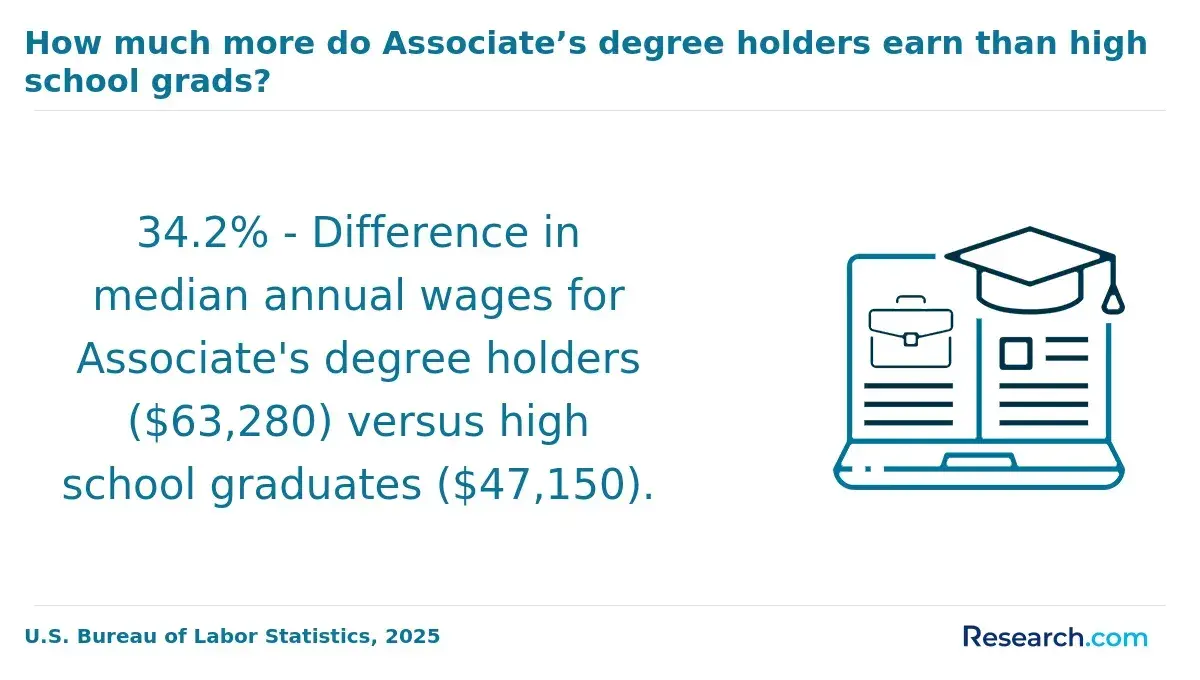
Salary prospects for anthropology bachelor's degree holders vary widely depending on the industry, with median wages differing by over 30% across sectors. Selecting the right field is crucial for maximizing earnings without pursuing advanced degrees.
Below are several industries known for offering substantial salaries to graduates holding only a bachelor's degree:
- Government and Public Administration: This sector employs anthropology graduates in roles like cultural resource management and policy advising. Competitive pay, often bolstered by union agreements and public benefits, can lead to median salaries above $60,000 annually without further education.
- Consulting and Environmental Services: Firms specializing in environmental impact studies and cultural heritage rely on anthropology expertise. Project-driven contracts with both private and public clients result in salaries typically ranging between $55,000 and $75,000, rewarding hands-on experience over advanced degrees.
- Corporate Sector and Market Research: Anthropology graduates are valued for insights into consumer behavior and cultural trends. Businesses invest in market research analysts to enhance product development and marketing strategies, often starting salaries near $60,000 and increasing with experience.
- Nonprofit Organizations and International Development: While compensation varies, certain nonprofits focusing on community growth and cultural preservation offer competitive wages. Salaries generally fall between $50,000 and $70,000, supported by grant funding and project scope.
An anthropology degree graduate shared his experience navigating the job market without a graduate credential. He noted, "Finding positions that matched my skills but didn't require a master's was challenging at first, especially because many listings focus on advanced degrees."
Persistence and networking became key in uncovering roles offering strong pay. He also mentioned the importance of gaining practical experience and adapting to various industries to boost earning potential.
"It wasn't just about the degree," he explained, "but how I applied my knowledge and built relationships within these fields." This perspective highlights the necessity of strategic career moves alongside industry choice to achieve high salaries without further schooling.
What Entry-Level Anthropology Jobs Have the Best Growth Potential?
Choosing entry-level anthropology jobs with strong growth potential is crucial for building a rewarding career. Early-career roles in this field typically experience a 10-15% rise in opportunities over ten years, offering pathways for advancement. Below are some entry points that foster skill development and upward mobility.
- Research Assistant: Assisting with field studies and data analysis, this role helps develop core research skills. It often leads to specialized positions or project management roles within cultural or biological anthropology.
- Museum Technician or Curatorial Assistant: Working in museums provides hands-on experience with artifact care and exhibit planning. Career growth can lead to curator or collections manager positions involving leadership and grant oversight.
- Cultural Resource Management (CRM) Technician: CRM technicians perform site evaluations and support regulatory compliance, serving as a stepping stone to supervisory roles in environmental firms or government agencies.
- Community Outreach Coordinator: Focused on program implementation and stakeholder relations, this job builds essential communication and organizational skills beneficial for nonprofit leadership and policy roles.
Each role emphasizes transferable skills that encourage long-term career advancement in anthropology fields. Many students pursuing 4 year degrees that pay well find these positions to be effective starting points without immediately pursuing graduate education.
What Skills Increase Salary Without a Master's Degree?
Developing targeted skills can boost salary potential substantially for anthropology graduates who forego graduate education. Recent studies show employers offer wage premiums up to 20% for candidates with strong practical expertise rather than advanced degrees.
Below are key competencies that directly enhance earning power and career advancement in anthropology-related roles:
- Data Analysis: Expertise in interpreting both qualitative and quantitative information sharpens decision-making and insight generation. Proficiency with statistical tools or programming languages provides a competitive edge, often leading to higher-paying responsibilities.
- Research Design: The ability to independently plan and execute studies demonstrates leadership and project management skills. Mastery of research methodology allows professionals to deliver impactful findings valued across multiple sectors.
- Cross-Cultural Communication: Navigating cultural nuances improves collaboration and problem-solving with diverse teams or clients. This skill makes anthropology graduates indispensable in global or multicultural environments, often translating into salary growth.
- Technical Literacy: Familiarity with GIS, digital mapping, or ethnographic software equips graduates with specialized capabilities. Such technical skills increase employability and can lead to more lucrative opportunities.
- Critical Thinking: The capacity to assess issues analytically and develop innovative solutions is highly prized by employers. Anthropology majors exhibiting these talents frequently access roles with greater responsibility and compensation.
A professional with an anthropology degree reflected on how mastering technical literacy transformed her career trajectory. Initially overwhelmed by learning GIS software independently, she invested time in tutorials and practice, gradually gaining confidence.
This opened doors to projects others couldn't undertake, boosting her value within her organization. She noted, "It wasn't easy at first, but that skill became a game changer. It showed that experience can outweigh formal education if you're willing to learn and adapt."
Her story illustrates how embracing continuous skill development can overcome traditional credential barriers and lead to better financial rewards.
What Certifications Can Replace a Master's Degree in Anthropology Fields?
Certifications offer a practical pathway for anthropology graduates to boost their professional credibility and improve career flexibility without committing to a master's degree. Studies reveal that individuals holding relevant certifications may see salary increases of up to 15%.
The following certifications are among the most respected and can significantly elevate career prospects in anthropology-related fields:
- Certified Cultural Resource Management Specialist: This credential verifies skills in preserving and managing archaeological and historical sites. It is especially valuable for those engaged with heritage organizations, government bodies, or consultancy firms, enhancing both employability and professional trust.
- Certified Forensic Anthropologist: Granted by the American Board of Forensic Anthropology, this certification validates expertise in analyzing human remains for forensic purposes. It is highly regarded in settings where scientific rigor and accuracy are essential, strengthening career pathways in forensic anthropology.
- GIS Professional Certification: Demonstrating proficiency in Geographic Information Systems, this certificate highlights advanced technical capabilities in spatial analysis. Anthropology professionals with this credential find opportunities in environmental consulting, urban planning, and archaeological research more accessible.
- Museum Studies Certificate: Provided by various academic institutions, this certificate equips candidates with specialized knowledge in museum curation, exhibit design, and archival processes, which can open doors to roles in cultural institutions and museum management.
Can Experience Replace a Graduate Degree for Career Growth?
Professional experience can play a significant role in career advancement within anthropology careers, often serving as a practical alternative to graduate education. Many employers prioritize demonstrated skills, proven performance, and on-the-job learning over formal degrees, especially in applied fields such as cultural resource management, museum work, or nonprofit coordination.
Building a strong track record through hands-on work and effective community engagement can open doors to supervisory and specialized positions. This approach allows individuals to refine both technical abilities and interpersonal skills highly valued in the workplace.
However, relying solely on experience has notable limitations, particularly when seeking research-intensive or senior leadership roles that typically demand advanced degrees. Progression into these positions may be slower or restricted without formal graduate credentials, and some industries require specific certifications alongside experience to meet hiring standards.
Experience yields the greatest benefit when combined with continuous learning and professional networking, enabling upward mobility without necessarily following the graduate degree path.
Maintaining diverse field exposure and skill development strengthens one's career trajectory while balancing practical knowledge with recognized qualifications.
What Are the Downsides of Not Pursuing a Graduate Degree?
Many anthropology professionals weigh the trade-offs between pursuing graduate education and entering the workforce earlier. Statistics from the U.S. Bureau of Labor Statistics show that those with a master's degree earn about 20% more on average than bachelor's degree holders, illustrating a clear earnings gap.
Below are several key limitations of careers with anthropology degree without graduate school:
- Slower Advancement: Stopping at a bachelor's degree often limits access to specialized and senior roles in research, academia, and cultural resource management. Many leadership positions require graduate-level qualifications, so bachelor's holders may compete mainly for entry-level jobs with constrained salary growth and responsibilities.
- Reduced Expertise: Graduate programs provide in-depth training in theory, research methods, and fieldwork vital for niches like forensic anthropology or applied archaeology. Without this specialized education, it is harder to stand out in competitive hiring environments that prioritize advanced degrees as evidence of rigorous skills.
- Grant and Funding Barriers: Graduate credentials often serve as gateways to prestigious fellowships and grant-funded projects, which open doors to leadership and professional networks. Lacking these qualifications can reduce opportunities for involvement in high-profile projects shaping the discipline's future.
- Earnings Gap: The difference in income between bachelor's degree holders and those with graduate degrees reflects the added expertise and responsibilities brought by advanced study. This gap can impact long-term financial stability for those limiting themselves to undergraduate education.
- Career Path Limitations: While some choose to begin work sooner, careers with an anthropology degree without graduate school may face fewer pathways for advancement, especially in highly technical or research-oriented fields. Exploring diverse fields, including game design degrees, can offer alternative routes with strong returns that do not require graduate education.
How Can You Maximize ROI With a Anthropology Degree?
Return on investment (ROI) in education weighs the costs of earning a degree—including tuition, time, and missed earnings—against the financial and career benefits after graduation. For anthropology bachelor's degree holders, the median early-career salary is around $45,000.
Below are practical strategies for maximizing return on investment with an anthropology degree.
- Specialize Strategically: Focusing on subfields like applied anthropology or cultural resource management aligns your skills with higher-paying sectors such as government agencies, consulting, and corporate roles. This targeted expertise helps identify high-paying career paths for anthropology graduates without graduate school.
- Gain Practical Experience: Internships and cooperative education programs during your undergraduate years build valuable skills and professional networks. These experiences often lead to better job offers and faster career advancement, increasing long-term earnings without additional degrees.
- Develop Technical Skills: Complement anthropology studies with quantitative and digital skills like GIS, data analysis, and digital anthropology tools. Such expertise boosts competitiveness for data-driven roles commanding higher salaries.
- Target Competitive Employers: Research employers known for strong salaries and career growth opportunities in anthropology-related fields. Tailoring applications to these organizations raises your chances of landing positions with superior compensation.
- Focus on Career Growth: Early-career professionals should prioritize performance and professional development, leveraging employer resources to pursue leadership roles and promotions. This proactive approach directly contributes to increased earnings over time.
For those considering further studies to enhance leadership skills alongside anthropology expertise, exploring the best organizational leadership master's programs online can provide additional tools for maximizing long-term ROI.
When Is Graduate School Worth It for Anthropology Careers?
The decision to pursue graduate school in anthropology depends largely on one's career objectives, industry standards, and the potential return on investment. According to data, individuals with a master's degree tend to earn about 20% more than those holding only a bachelor's degree, demonstrating a significant financial incentive tied to advanced education.
Graduate education is often worthwhile when targeting specialized roles such as forensic or linguistic anthropology, which demand specific expertise not typically covered in undergraduate programs.
Leadership and administrative positions within academic, governmental, or nonprofit organizations frequently require a master's degree for advancement, providing a clear career pathway. Many regulated professions in anthropology also necessitate graduate credentials for certification or licensing.
Additionally, for those interested in research-intensive careers or university teaching, investing in a graduate degree supports long-term professional growth.
For students considering alternatives, an online math degree or similar undergraduate qualifications may offer strong returns without graduate study.
What Graduates Say About Anthropology Degree Careers That Offer the Best Return Without Graduate School
- Dante: "Choosing not to pursue a graduate degree in anthropology was initially intimidating, but it allowed me to dive directly into the workforce and apply my knowledge in real-world settings. I focused on gaining practical experience through internships and volunteer opportunities, which proved invaluable for building my resume and professional network. This approach maximized the return on my anthropology degree by blending academic understanding with hands-on skills, leading to fulfilling roles in cultural resource management."
- Collin: "Reflecting on my journey, I realize the importance of leveraging my anthropology degree outside traditional academic paths. I invested time in learning data analysis and GIS software, which complemented my anthropological background and made me competitive in urban planning and public policy sectors. By strategically adding these skills, I discovered many career avenues that didn't require a graduate degree yet offered strong professional growth and meaningful community impact."
- Dylan: "My anthropology degree opened unexpected doors in corporate diversity consulting, where understanding cultural nuances is crucial. Opting out of graduate school pushed me to develop soft skills like communication and project management, which enriched my ability to influence organizational change. This combination of anthropological insight and professional polish has made my career both rewarding and sustainable, proving the worth of an anthropology degree even without advanced education."
Other Things You Should Know About Anthropology Degrees
Anthropology graduates with only a bachelor's degree often find employment in museums, cultural resource management firms, non-profit organizations, and government agencies. These organizations typically seek candidates for roles related to field surveys, data collection, and community outreach. Private companies focusing on market research or user experience also value anthropological perspectives without requiring advanced degrees.
Field experience is highly valuable for anthropology careers that do not require graduate degrees. Hands-on experience gained through internships, volunteer work, or undergraduate research projects can demonstrate practical skills and commitment to potential employers. This experience often enhances job prospects and can sometimes compensate for the absence of advanced academic credentials.
Yes, certain specializations like cultural anthropology, archaeology, and forensic anthropology offer more entry-level roles accessible with a bachelor's degree. For example, archaeological technicians and cultural resource management assistants often require only undergraduate education. Selecting a focus aligned with practical applications increases job accessibility without graduate school.
In 2027, anthropology graduates can improve salary outcomes by targeting sectors like market research, user experience design, and public policy. These fields value research and analytical skills, with salaries ranging from $45,000 to $75,000 annually. Networking and internships can also significantly enhance earning potential.
References
- Anthropology College Degree | ROI & More by ABD https://allbachelordegrees.com/degrees/liberal-arts-humanities/anthropology/anthropology-college-degree-cost-and-return-on-investment-all-you-need-to-know/
- How Do PhDs in Anthropology Navigate Non-academic Careers in Today’s Job Market? - The Anthropology Career Readiness Network https://anthrocareerready.net/how-do-phds-in-anthropology-navigate-non-academic-careers-in-todays-job-market/
- 2026 Anthropology Entry-level Jobs | WayUp https://www.wayup.com/s/entry-level-jobs/anthropology/
- 7 Unexpected Ways Anthropology Graduates Apply Their Skills in Diverse Career Fields | 7 Answers - Featured.com https://featured.com/questions/online-anthropology-degree-career-paths-and-marketability
- What Can You Do With an Anthropology Degree? https://www.snhu.edu/about-us/newsroom/social-sciences/what-can-you-do-with-an-anthropology-degree
- 11 Best Graduate Certificates & Diplomas Anthropology courses abroad 2026 https://www.hotcoursesabroad.com/study/training-degrees/international/graduate-certificate-diploma/anthropology-courses/slevel/13-3-3/cgory/l1-3/sin/ct/programs.html
- Anthropological Job-hunting (and gathering): Finding Non-Academic Work (1 of 3) - Allegra Lab https://allegralaboratory.net/anthropological-job-hunting-and-gathering-finding-non-academic-work-1-of-3/
- What can I do with an Anthropology Degree? Jobs & Career Paths - Concordia University | Student Success Centre - Concordia University https://www.concordia.ca/students/success/career-planning/paths/anthropology.html
- What Can You Do With an Anthropology Degree? 2026 Guide | Extern https://www.extern.com/post/what-can-you-do-with-an-anthropology-degree-career-guide


