
2027 Which Child Development Degree Careers Offer the Best Return Without Graduate School?

Co-Founder and Chief Data Scientist
Can a bachelor's degree in child development lead to a financially rewarding career without the need for graduate school? Many prospective students face this dilemma amid rising tuition fees and concerns over student debt. According to the Bureau of Labor Statistics, employment of preschool and childcare center directors, a common role with a bachelor's degree, is projected to grow 13% through 2032, faster than average.
Identifying entry-level jobs that balance salary potential with workforce demand is critical. This article explores which child development degree careers offer the best return on investment without requiring graduate education and why they stand out.
Key Benefits of Child Development Degree Careers That Offer the Best Return Without Graduate School
- Strong earning potential and early salary growth in child development careers can yield a significant long-term return on investment, with average starting salaries often increasing 15% within five years.
- Stable job demand and consistent career growth, supported by a 10% projected increase in childcare-related roles through 2030, enhance long-term financial security.
- Accessible entry requirements without graduate education allow faster workforce entry, enabling bachelor's degree holders to begin earning and advancing sooner than those requiring advanced degrees.
Which Child Development Careers Offer the Best Return Without Graduate School?
Evaluating the return on investment (ROI) in child development careers without pursuing graduate school requires looking at long-term salary potential, career stability, and advancement opportunities. The U.S. Bureau of Labor Statistics notes that related occupations with a bachelor's degree earn a median annual wage between $40,000 and $65,000, showing steady demand over time.
Below are some high-return child development careers that offer solid financial outcomes and growth with only a bachelor's degree.
- Preschool Teacher: Preschool teachers are foundational in early childhood education, fostering key skills for young children. With a bachelor's degree in child development or closely related fields, they can find positions in public schools and private centers, benefiting from steady career demand and financial reliability.
- Child Life Specialist: Supporting children and families in healthcare settings, child life specialists provide emotional and developmental assistance. While certifications may be preferred by some employers, many begin their careers with only a bachelor's degree, enjoying competitive salaries and meaningful work in hospitals or clinics.
- Family Services Coordinator: This role combines advocacy for children with program management in nonprofits or government agencies. A bachelor's degree equips professionals to connect families with community resources, balancing purposeful work with reasonable compensation and job security.
- Early Childhood Program Administrator: Administrators oversee daycare or preschool operations, including staffing and budgeting. The leadership nature of this position offers advancement opportunities and increased earnings, all accessible without graduate education.
For those exploring the best financial return from child development careers without graduate degrees, these paths offer a balanced combination of salary, stability, and advancement. Prospective students may also consider complementary programs such as an accelerated CMA program to diversify their career options within related fields.
What Are the Highest-Paying Child Development Jobs Without a Master's Degree?
Evaluating earning potential in child development careers without pursuing a master's degree is crucial for students aiming to achieve financial independence while advancing professionally. The U.S. Bureau of Labor Statistics reports the median annual wage for social workers focused on children and families, often requiring only a bachelor's degree, is about $51,760.
Highlighting these well-paid roles helps prospective graduates identify lucrative opportunities without additional graduate study.
Several positions within child development stand out for offering strong salaries with a bachelor's degree:
- Child Life Specialist: Earning between $50,000 and $70,000 per year, child life specialists assist children facing illness or trauma. Their specialized emotional support and knowledge of child development warrant higher pay without needing graduate-level education.
- Early Childhood Program Director: With annual salaries typically from $55,000 to $75,000, these directors manage daycare or preschool programs. Their leadership skills combined with child development expertise drive their competitive wages without requiring a master's degree.
- Child Welfare Case Manager: These professionals earn roughly $45,000 to $65,000 annually while coordinating services to protect at-risk children. The significant responsibility placed on them accounts for their relatively high salaries within bachelor's-level roles.
- Educational Consultant: Consultants designing and advising on programs or curricula in child development generally earn $60,000 to $80,000 per year. Their specialized knowledge allows them to command top salaries without graduate credentials.
These roles exemplify some of the highest-paying child development careers available to those holding only a bachelor's degree, emphasizing strong financial returns in this field.
Which Industries Offer High Salaries Without Graduate School?
Industry selection plays a crucial role in salary variations for child development bachelor's degree holders, with wage differences exceeding 20% across comparable positions according to the U.S. Bureau of Labor Statistics. Focusing on sectors that demand specialized expertise and offer stable funding can significantly enhance earning potential.
Below are several industries known for delivering competitive salaries without requiring graduate education.
- Healthcare and Social Assistance: This field involves diverse roles supporting child wellbeing, often backed by regulatory mandates and consistent funding. Salaries typically range between $45,000 and $65,000 annually, reflecting the sector's scale and essential services.
- Government and Public Administration: Positions in local education agencies and child welfare departments benefit from standardized pay grades and periodic cost-of-living increases. Compensation generally falls within the $50,000 to $70,000 range, alongside substantial job stability and benefits.
- Educational Services: Encompassing roles beyond classroom instruction, this sector includes program management and administrative jobs supported by school districts or nonprofits. Salaries are commonly between $40,000 and $60,000 without additional degrees.
- Corporate and Private Programs: Businesses offering child enrichment or family support initiatives employ child development professionals to enhance employee resources. These roles often command salaries above $55,000, driven by private investment and strategic priorities.
A child development degree graduate shared that navigating the job market without a graduate degree was initially daunting. He explained, "I had to research industries carefully to find where my skills were most valued and where I could grow financially."
The steady support and defined pay structures in government roles appealed to him, but the dynamic environment and advancement opportunities in corporate programs eventually stood out. He noted feeling encouraged by discovering that several industries outside traditional education offered rewarding compensation, affirming that with persistence, high salaries are attainable without further schooling.
What Entry-Level Child Development Jobs Have the Best Growth Potential?
Focusing on entry-level positions with upward mobility is essential for building a rewarding career in child development. The U.S. Bureau of Labor Statistics projects a 13% growth rate for childcare workers from 2022 to 2032, signaling robust opportunities for career advancement.
Below are several roles that provide strong foundations and clear pathways for long-term growth.
- Preschool Teacher: This role helps build essential instructional and classroom leadership skills. Preschool teachers often progress into lead teaching, curriculum design, or administrative roles within education settings.
- Childcare Center Assistant Director: Assistants in this role gain hands-on experience in managing operations and staff, developing expertise in budgeting and regulatory compliance that is vital for director-level positions.
- Family Support Specialist: Specialists working with families provide critical developmental resources and guidance, cultivating communication and case management skills that can lead to social services or program coordination careers.
- Early Intervention Specialist: Entry-level specialists support children with developmental delays, gaining targeted experience that can lead to roles in therapy or leadership within intervention programs.
- Behavior Technician: Technicians involved in behavior analysis acquire practical skills that support advanced certifications and supervisory roles in behavioral health and education.
Careers such as these pave the way for the best-paying child development careers without graduate school. For those considering educational pathways, reviewing healthcare administration programs may also offer valuable insights into expanding career options beyond direct child development roles.
What Skills Increase Salary Without a Master's Degree?
Building targeted skills can lead to notable salary increases for individuals with a child development degree, even without advanced degrees. Recent research shows that employers offer wage premiums up to 20% for candidates skilled in high-demand areas, emphasizing the growing value of competencies over credentials.
Below are several essential skills that significantly enhance earning potential in child development-related roles.
- Effective Communication: Demonstrating strong verbal and written communication helps professionals work smoothly with families and colleagues, clearly sharing developmental goals and interventions. This skill boosts an individual's ability to foster trust and collaboration, making them more valuable in their position.
- Analytical Assessment: The capacity to analyze child development data and assess progress objectively allows for evidence-based adjustments in programming. Expertise in interpreting these metrics signals critical thinking and reliability, often rewarded with higher pay.
- Technological Literacy: Proficiency with educational technologies and software streamlines lesson planning and monitoring, enabling innovative approaches to early childhood care. Being adept with these tools sets candidates apart in increasingly digital work environments.
- Leadership Abilities: Managing teams and coordinating activities requires organizational and interpersonal skills that open doors to supervisory roles, which typically offer enhanced compensation and career growth opportunities.
- Creative Problem-Solving: Adapting strategies to meet unique developmental challenges shows flexibility and resourcefulness. Employees who excel here improve program outcomes, often earning recognition that can translate into pay increases.
When speaking with a professional holding a child development degree about what raised her salary without graduate education, she highlighted that gaining real-world experience in managing diverse classroom dynamics was transformative. "Initially, it was overwhelming to juggle different needs, but over time, learning to adjust communication styles and solve unexpected problems made me indispensable," she shared.
She emphasized that becoming confident with technology also helped streamline her workflow, allowing more focus on individualized child support. "The mix of leadership, tech-savviness, and adaptability truly shaped my career path, and those skills steadily increased my earnings without requiring a master's," she concluded thoughtfully.
What Certifications Can Replace a Master's Degree in Child Development Fields?
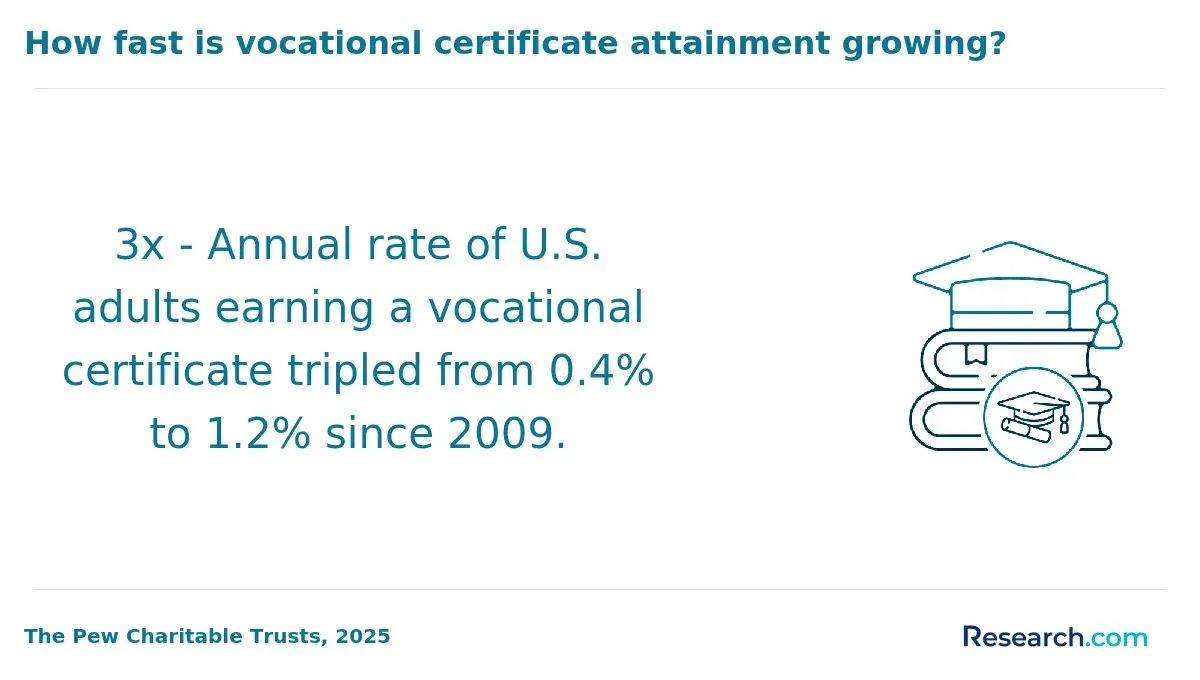
Certifications provide a practical alternative to graduate degrees by boosting professional standing and opening doors to better job opportunities in child development. A 2022 survey from the National Association for Education found that 62% of employers rate certifications as equally or more valuable than advanced degrees when considering raises and promotions.
The following certifications are especially respected for enhancing career growth without the need for further graduate study.
- Certified Child Development Associate (CDA): This credential from the Council for Professional Recognition targets essential skills in early childhood environments. It verifies hands-on expertise that employers often seek in educational and childcare settings, increasing job competitiveness.
- Board Certified Behavior Analyst (BCBA): Focused on applied behavior analysis, the BCBA certification prepares professionals to address developmental challenges. It is well-regarded for expanding opportunities in clinical and educational fields and often leads to higher earning potential.
- Certified Family Life Educator (CFLE): Offered by the National Council on Family Relations, CFLE specialization centers on family support and outreach services. It equips holders to engage effectively in community-based roles, favoring advancement without additional graduate credentials.
- Early Childhood Education (ECE) Certification: State-issued ECE certifications confirm expertise in early learning program management. These qualifications frequently pave the way to leadership positions within preschools and related child development organizations.
Can Experience Replace a Graduate Degree for Career Growth?
Professional experience plays a crucial role in career advancement within many child development fields, with employers often valuing demonstrated skills, practical problem-solving, and proven performance more highly than formal credentials. Candidates who have applied their knowledge in real-world settings gain a deeper understanding of child behavior and effective intervention strategies, along with essential administrative skills.
On-the-job learning fosters communication, collaboration, and adaptability, which are critical soft skills in this sector. Many employers recognize that extensive experience paired with relevant certifications or continuing education can rival outcomes traditionally expected from graduate degrees.
However, relying solely on experience has notable limitations. Entry into leadership, clinical, or specialized roles often requires formal advanced credentials, and positions such as licensed child psychologists or academic researchers typically mandate graduate degrees by regulation. Additionally, some organizations use advanced degrees as baseline criteria for promotions or salary scales, regardless of experience.
Experience becomes most valuable when it aligns directly with job requirements, includes measurable achievements, and is complemented by professional certifications or targeted training. Strategic awareness of credential expectations remains essential for maximizing career growth without graduate education in child development fields.
What Are the Downsides of Not Pursuing a Graduate Degree?
Many professionals in child development weigh the benefits of graduate education against entering the workforce sooner. Data from the U.S. Bureau of Labor Statistics shows that individuals with a master's degree in related fields earn roughly 20% more annually than those with only a bachelor's degree, highlighting a significant earnings gap.
Considering these differences, several important challenges arise when opting not to pursue advanced degrees.
- Slower Career Advancement: Without graduate education, professionals often face limitations in career advancement, as many leadership and specialized roles in child development require or prefer a master's degree or higher. This can restrict progression to higher-level positions and limit long-term growth.
- Restricted Access to Specialized Roles: Graduate programs provide deeper training in niche areas such as early intervention or developmental therapy. Bypassing this education can reduce eligibility for specialized roles that demand advanced expertise or certification.
- Competitive Disadvantages: The job market for child development professionals is competitive, with many employers favoring candidates holding graduate degrees. This makes it harder for bachelor's degree holders to compete, especially in densely populated or specialized regions.
- Licensing and Credential Barriers: Certain employers and state certification bodies require graduate-level credentials for licensure or roles that offer greater responsibility and salary. Without these qualifications, professionals may face limitations on job roles and earning capacity.
- Impact on Salary Growth: Limitations in career advancement without graduate degree in child development can directly affect salary trajectories, with advanced degrees often correlating with higher remuneration over time.
While graduate education offers advantages, many still find meaningful opportunities without it. For those considering alternatives, programs like an accelerated bachelor's degree can provide quicker entry into the workforce while balancing these trade-offs.
How Can You Maximize ROI With a Child Development Degree?
Return on investment (ROI) in education balances the cost and time invested in earning a degree against the financial and career benefits afterward. For those pursuing a child development bachelor's degree, median salaries typically range from $40,000 to $60,000 annually, illustrating the importance of strategic decisions to improve lifetime earnings.
Below are practical strategies to maximize ROI in this field.
- Specialize Early: Focusing on in-demand areas such as early intervention, special education, or child psychology allows graduates to access better-paying roles and specialized employers with higher financial return.
- Gain Relevant Experience: Internships, practicums, and volunteer work within reputable organizations develop essential skills and professional networks, speeding up job placement and salary growth without requiring graduate education.
- Combine Roles: Seeking positions that merge child development knowledge with administrative or leadership duties, like program coordination or community outreach, can boost earnings by leveraging additional responsibilities.
- Develop Transferable Skills: Enhancing competencies in communication, data analysis, and technology relevant to child development can differentiate graduates, making them eligible for advanced roles and promotions.
- Leverage Local Market Demands: Targeting regional job markets with high growth or underserved populations empowers graduates to negotiate better salaries based on supply-demand dynamics, key to child development degree career paths with highest financial return.
By implementing these strategies, graduates can improve long-term outcomes without postgraduate degrees. For those interested in further advancing their qualifications, exploring a master of science in dietetics may offer pathways in related fields that enhance career versatility.
When Is Graduate School Worth It for Child Development Careers?
Deciding whether to pursue graduate school in child development careers hinges on your specific career objectives, industry expectations, and potential return on investment. Statistics from the U.S. Bureau of Labor Statistics indicate that those holding a master's degree in related fields tend to earn roughly 20% more annually than bachelor's degree holders, highlighting the financial benefits of advanced education. However, the value of graduate school varies widely depending on the path chosen and the roles available.
Exploring when graduate education delivers tangible long-term rewards sheds light on strategic career planning in child development fields.
Graduate school is generally worth the investment when targeting specialized roles such as clinical child psychology, speech therapy, or educational counseling that require advanced credentials. It also offers a clear advantage for those aiming for leadership or administrative positions within educational, healthcare, or nonprofit sectors, as well as professions where licensure or certification mandates graduate degrees.
Additionally, engaging in research, policy development, or academia related to child development careers often necessitates advanced study. For many bachelor's degree students, exploring alternatives with strong growth potential, including programs like the easiest RN to BSN online, provides viable routes without further graduate education.
What Graduates Say About Child Development Degree Careers That Offer the Best Return Without Graduate School
- Kaysen: "Choosing not to pursue a graduate degree in child development was a deliberate decision for me, as I wanted to enter the workforce sooner and gain hands-on experience. I focused on internships and certification programs to enhance my practical skills, which ultimately expanded my job opportunities. This path showed me that a bachelor's degree, paired with strategic professional development, can lead to a fulfilling and impactful career."
- Jalen: "Reflecting on my child development degree, I realized that the best return came from leveraging the knowledge in real-world settings rather than immediately continuing with graduate school. I concentrated on networking and volunteering in community programs, which opened doors to significant roles in early childhood education. The degree provided a solid foundation that allowed me to grow professionally without the financial burden of additional schooling."
- Beau: "My career took off by maximizing the value of my child development degree through specialized certifications and targeted job placements instead of pursuing a graduate degree. I appreciate how this choice has enabled me to contribute directly to program development and leadership at a young age. For me, the degree was a practical tool for entering the field confidently and advancing through experience rather than extended academia."
Other Things You Should Know About Child Development Degrees
Yes, continuing education is vital in child development careers if you forgo graduate school. It enhances knowledge, keeps you updated with the latest practices, and improves job prospects in 2027. Certifications and workshops can compensate for the lack of a graduate degree, making candidates more attractive to employers.
Community centers, early childhood education programs, nonprofit organizations, and some healthcare facilities often hire candidates with a bachelor's degree in child development without requiring graduate degrees. These employers may focus more on relevant experience and certifications than on advanced degrees, making them accessible for those seeking strong returns without graduate school.
Without a graduate degree, professionals may face limits in advancing to clinical, research, or administrative leadership positions that typically require advanced credentials. Some specialized roles, such as licensed therapists or school psychologists, require graduate-level education and licensure that are not accessible without further study.
References
- Child Development Careers: 3 Jobs You Can Pursue | USAHS https://www.usa.edu/blog/child-development-careers-3-jobs-you-can-pursue/
- Why a Career in Child Development is Important https://www.pointloma.edu/resources/accelerated-undergraduate/why-career-child-development-important
- The Benefits of Earning an Early Childhood Education Degree in Today's Job Market https://www.athenacareers.edu/the-benefits-of-earning-an-early-childhood-education-degree-in-todays-job-market/
- Unleash Your Potential: Rewarding Careers with a Child Development Degree - Day Early Learning https://dayearlylearning.org/blog/unleash-your-potential-rewarding-careers-with-a-child-development-degree/
- Artwork of a gum leaf symbolising ‘welcome’ and acknowledging diverse countries, environments, communities, cultures, beliefs, and history. https://www.seek.com.au/childcare-entry-level-jobs
- Online Child Development Professional (Voucher Included) from Center for Workforce & Professional Education at Vermont State University https://careertraining.vermontstate.edu/training-programs/child-development-professional-voucher-included/
- Transferable Skills For A Career Change To Early Childhood Education https://practicaloutcomes.edu.au/transferable-skills-career-change/
- ROI in Higher Education - FREOPP https://freopp.org/roi-in-higher-education/
- Tips For No-Degree Jobs | Sunrise Children's Foundation https://sunrisechildren.org/tips-no-degree-jobs/
- Building the ROI/Business Case for Early Childhood Development: A Practical Guide - Childhood Education International https://ceinternational1892.org/article/building-the-roi-business-case-for-early-childhood-development-a-practical-guide/


