2027 Practicum & Supervision in Online BCBA Programs: Requirements Guide

Co-Founder and Chief Data Scientist
Choosing an online BCBA program is not only a coursework decision. To qualify for certification, you also need a fieldwork plan that meets Behavior Analyst Certification Board (BACB) requirements, fits your schedule, and gives you enough high-quality supervision to become competent in applied behavior analysis.
The supervised fieldwork portion is where you learn to apply assessment, intervention, data analysis, caregiver training, documentation, and ethical decision-making with real clients and teams. It is also where many students lose time because they start hours too early, choose the wrong supervisor, overcount restricted activities, or fail to document monthly requirements correctly.
This guide explains how practicum and supervision work in online BCBA programs, including hour requirements, supervision percentages, qualifying activities, supervisor credentials, remote supervision rules, documentation, and common mistakes to avoid. The demand for behavior analysts increased by 58% from 2023 to 2024 alone, according to the Behavior Analyst Certification Board (BACB), and the career sees an average salary of $89,075 per year, making careful planning especially important for students entering the field.
Key Benefits of Practicum & Supervision in Online BCBA Programs
- Step into a profession with explosive growth. The BACB reported a 58% increase in demand for BCBAs from 2023 to 2024, signaling an immense opportunity for new certificants.
- The BACB fieldwork structure requires that at least 60% of your hours be dedicated to unrestricted activities, ensuring you develop the critical assessment, program design, and training skills employers value most.
- With a mandate for regular, documented contacts with a qualified supervisor, the fieldwork process provides consistent, personalized mentorship to refine your clinical abilities and prepare you for independent practice.
What are the fieldwork requirements for online BCBA programs?
Online BCBA programs must align with BACB fieldwork rules. Completing coursework online does not remove the hands-on requirement: you still need supervised experience in settings where behavior-analytic services are delivered and documented appropriately.
The BACB provides two main pathways for meeting the fieldwork requirement:
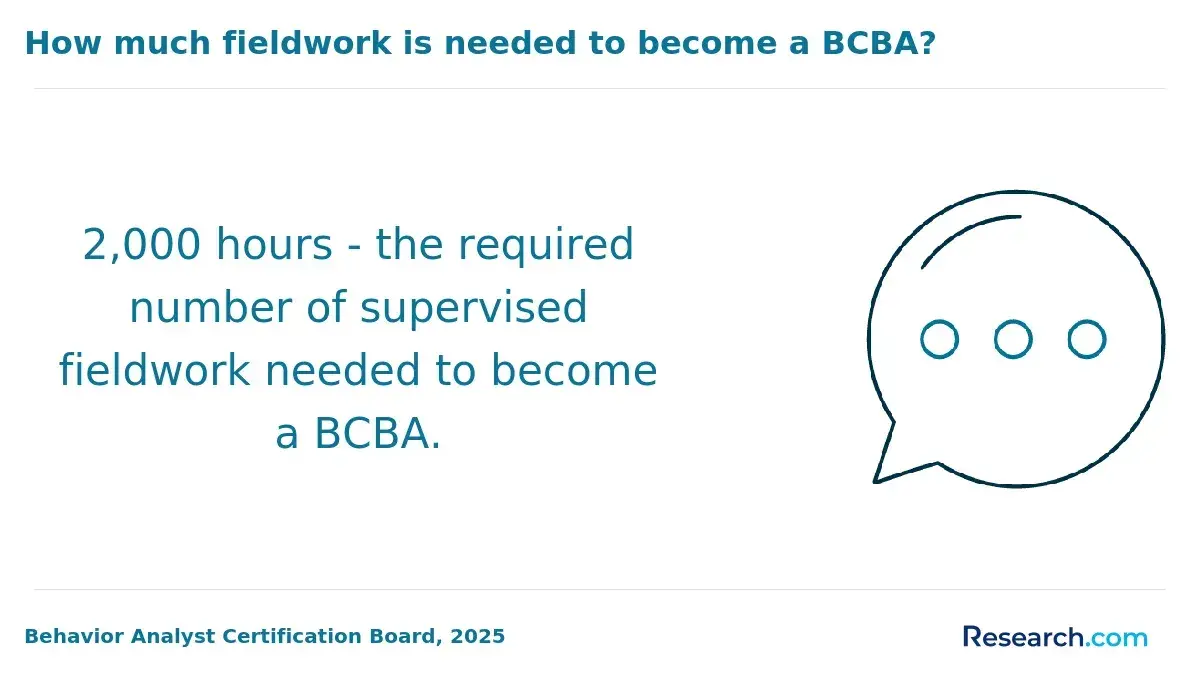
- Supervised Fieldwork: This option requires 2,000 total hours and is often the more flexible route for students who need a steadier pace.
- Concentrated Supervised Fieldwork: This option requires 1,500 hours but includes a higher supervision requirement each month.
According to the official BCBA Handbook, these hours must be accrued over no more than 5 consecutive years and must fall between 20 and 160 hours per calendar month. Hours outside the monthly limits do not help you progress, so your schedule should be planned before you begin.
Planning your fieldwork timeline
A strong fieldwork plan starts with three questions: where you will earn hours, who will supervise you, and how many hours you can realistically complete each month. Students often focus on the total hour requirement, but the monthly rules matter just as much. Accruing hours too slowly can weaken continuity, while trying to reach the 160-hour monthly cap without enough supervision, reflection, and documentation can create compliance problems.
Before you count any hours, confirm that you have a signed supervision contract, a qualified supervisor, a way to separate restricted and unrestricted activities, and a reliable tracking system. These steps are especially important for online students because the university may deliver classes remotely while your fieldwork happens through an employer, clinic, school, agency, or approved community setting.
How does supervision differ between fieldwork options in online BCBA programs?
The two BACB fieldwork options differ mainly in the amount of supervision required. The 2,000-hour supervised fieldwork route requires less supervision per month, while the 1,500-hour concentrated supervised fieldwork route requires more intensive oversight in exchange for a shorter total hour requirement.
The best option depends on your access to a supervisor, the complexity of your clinical setting, your weekly availability, and how much feedback you need to develop safely and confidently.
Supervision percentage requirements
The key difference is the percentage of monthly fieldwork hours that must be supervised:
- Supervised Fieldwork: You must be supervised for at least 5% of your total hours each month.
- Concentrated Supervised Fieldwork: You must be supervised for at least 10% of your total hours each month.
The concentrated route can be valuable if you have consistent access to a strong supervisor and want more frequent feedback. It may also help students who learn best through close coaching, repeated observation, and regular review of clinical decisions. However, it can be harder to manage if your supervisor has limited availability or if your worksite cannot support enough supervised contact each month.
How to choose between the two options
- Choose supervised fieldwork if you need more scheduling flexibility, have variable work hours, or cannot guarantee a higher monthly supervision percentage.
- Choose concentrated supervised fieldwork if you can reliably meet the 10% supervision requirement and want a more intensive training structure.
- Avoid choosing based only on speed. The shorter hour requirement is useful only if the supervision quality, documentation, and activity mix are compliant every month.
What activities count toward practicum hours in online BCBA programs?
BCBA practicum hours include both restricted and unrestricted activities. Restricted activities usually involve direct implementation of behavior-analytic services, while unrestricted activities reflect the broader responsibilities of a behavior analyst, such as assessment, plan development, data interpretation, staff training, and clinical decision-making.
The BACB emphasizes unrestricted activities because BCBAs are expected to design, oversee, evaluate, and adjust services—not only implement them. Strong online ABA masters programs should help students understand this distinction early so they do not over-rely on direct service hours.
Restricted vs. unrestricted activities
- Restricted activities may include direct implementation of skill acquisition programs or behavior reduction procedures.
- Unrestricted activities may include conducting assessments, writing or revising behavior plans, analyzing data, training caregivers or staff, preparing materials based on assessment results, and reviewing treatment progress with a supervisor.
A critical rule is that restricted activities can make up no more than 40% of your total hours. That means at least 60% of your experience must come from unrestricted activities. Students who work in direct therapy roles should pay close attention to this requirement because their paid duties may naturally produce more restricted than unrestricted hours.
Practical ways to build unrestricted hours
- Ask your supervisor to assign assessment-related tasks when appropriate.
- Review and graph client data, then discuss clinical implications during supervision.
- Participate in treatment planning, progress monitoring, and plan modification.
- Observe caregiver or staff training, then gradually take on training responsibilities under supervision.
- Prepare written summaries, procedural fidelity checks, or behavior plan updates for supervisor review.
The goal is not simply to reach a percentage. The goal is to develop the judgment needed to function as an independent behavior analyst after certification.
What qualifications must a supervisor for an online BCBA program have?
Your BCBA supervisor must meet BACB eligibility requirements before you begin counting hours. Choosing a supervisor is one of the most important decisions in your fieldwork experience because invalid supervision can put your accumulated hours at risk.
In general, your supervisor must be an active BCBA in good standing and must have completed BACB-required supervision preparation. The BACB also restricts supervisory relationships that create conflicts of interest. Your supervisor cannot be a relative, subordinate, or employer.
How to verify a supervisor before starting
Do not rely only on a résumé, job title, or verbal assurance. Before you accrue hours, verify that the supervisor meets the requirements and that the arrangement is documented in writing. According to the BCBA Handbook, your supervisor must:
- Be an active, certified BCBA for at least one year.
- Maintain their BCBA certification in good standing.
- Complete an 8-hour supervision training based on the official BACB curriculum.
- Complete ongoing continuing education credits related to supervision every two-year cycle.
What to ask a potential supervisor
- How often will we meet, and how will missed sessions be handled?
- Will you provide individual supervision, group supervision, and direct observation?
- How will you help me obtain enough unrestricted activities?
- What documentation system do you expect me to use?
- How will feedback be delivered, and how will performance concerns be addressed?
A qualified supervisor should be able to answer these questions clearly and should be willing to put expectations in the supervision contract before fieldwork begins.
How are supervision sessions structured in online BCBA programs?
Supervision in online BCBA programs must be structured, recurring, and documented. The BACB requires a minimum of two contacts between trainee and supervisor each month, and supervision should include more than casual check-ins. Effective sessions review clinical work, evaluate decision-making, address ethics, connect practice to behavior-analytic principles, and identify next steps for skill development.
Required supervision formats
The BCBA Handbook allows a combination of individual supervision, group supervision, and direct observation, but each format has limits and expectations:
- Individual Supervision: At least 50% of your total supervised hours in any given month must be individual, one-on-one sessions with your supervisor. This is where you should receive personalized feedback on your cases, documentation, data interpretation, and professional conduct.
- Direct Observation: Your supervisor must observe you providing services at least once per month. This may occur in person or through a live, synchronous video feed when appropriate.
- Group Supervision: Group supervision may include up to 10 trainees. It can support discussion, case review, and peer learning, but it cannot account for more than 50% of your total supervised hours.
What a productive supervision session should include
- Review of recent fieldwork activities and documentation.
- Discussion of restricted and unrestricted hour balance.
- Feedback on direct service, assessment, treatment planning, or data analysis.
- Review of ethical issues, confidentiality, and scope of competence.
- Clear action items for the next supervision period.
Online students should confirm whether observation will occur at the worksite, by secure live video, or through another permitted format. Remote supervision can work well, but only when it is planned, private, reliable, and clinically meaningful.
Can I combine different types of fieldwork in my practicum?
Yes. You may combine supervised fieldwork and concentrated supervised fieldwork as long as each month meets the rules for the type of fieldwork being claimed. This flexibility helps students whose circumstances change—for example, when they move from a lower-supervision site to a more intensive placement, or when a supervisor’s availability changes.
How combined fieldwork is calculated
When you combine the two types, concentrated supervised fieldwork hours are weighted differently. A practical way to remember the calculation is that concentrated supervised fieldwork hours are worth approximately 1.33 times the value of standard supervised fieldwork hours.
However, combining fieldwork does not allow you to blend requirements casually. If you claim concentrated supervised fieldwork for a month, that month must meet the concentrated requirements, including the 10% supervision percentage. If you claim supervised fieldwork for a month, that month must meet the supervised fieldwork requirements, including the 5% supervision percentage.
When combining options may make sense
- You begin in a standard fieldwork setting and later gain access to more frequent supervision.
- Your work schedule changes and allows a more intensive supervision model.
- You need to preserve valid progress from earlier months while adjusting your plan going forward.
The safest approach is to review any change in fieldwork type with your supervisor before the month begins, document the plan, and track the requirements separately.
What is the role of technology in remote supervision for BCBA programs?
Technology makes online BCBA supervision possible, but it does not lower professional or ethical standards. The BACB permits remote supervision through synchronous, two-way video conferencing, allowing supervisors to observe services, discuss cases, and provide real-time feedback when the arrangement protects client welfare and confidentiality.
For students in online BCBA accredited programs, technology can expand access to qualified supervisors, especially in areas where local BCBAs are limited. It can also make supervision more consistent for students balancing work, school, and fieldwork.
Ethical and practical requirements for remote supervision
Remote supervision must be secure, reliable, and appropriate for the services being observed. According to the U.S. Department of Health & Human Services, any platform used must be secure and HIPAA-compliant.
- HIPAA Compliance: Use platforms that offer end-to-end encryption and a Business Associate Agreement (BAA) when required.
- Technical Reliability: Maintain a stable, high-speed internet connection and have backup plans for connection problems.
- Client Privacy: Conduct sessions in a secure, private location where unauthorized people cannot see or hear confidential information.
- Real-Time Interaction: Remote supervision should allow live discussion and feedback when direct observation or synchronous contact is required.
- Worksite Permission: Confirm that your employer, agency, school, or clinical site permits remote observation and that consent procedures are followed.
Technology should support supervision, not replace professional judgment. If a client situation requires in-person support, immediate intervention, or additional safeguards, the supervision plan should reflect that need.
How do I find a qualified supervisor for my online BCBA program?
Finding a qualified supervisor is an active process. Start with your online BCBA program because many universities have practicum coordinators, fieldwork advisors, or approved site relationships. Some programs offer direct placement support, while others expect students to secure their own fieldwork sites and supervisors.
If you are comparing BCBA classes online, ask about fieldwork support before enrolling. A lower-cost program may still be a strong option, but you need to know whether the school helps with placements, verifies supervisors, provides documentation guidance, or only delivers coursework.
Where to search for supervisors
- BACB Certificant Registry: Use the official BACB website to find BCBAs and verify that a potential supervisor’s certification is active.
- University fieldwork office: Ask whether the program maintains a list of approved supervisors or partner sites.
- Professional Organizations: Groups like the Association for Professional Behavior Analysts (APBA) may offer member resources, events, and networking opportunities.
- Employers and clinical agencies: ABA clinics, schools, hospitals, and community agencies may employ qualified BCBAs who supervise trainees.
- Direct Networking: Ask professors, classmates, colleagues, and local behavior analysts for recommendations.
How to evaluate supervisor fit
Credential verification is only the first step. A good supervisor should have time to meet consistently, experience in your area of practice, a clear feedback process, and a plan for helping you build unrestricted hours. Be cautious if a supervisor cannot explain documentation expectations, offers minimal observation, or treats supervision as a signature rather than a training relationship.
What are the ethical responsibilities in BCBA practicum and supervision?
Ethical practice is central to BCBA fieldwork. The BACB's Ethics Code for Behavior Analysts requires both supervisors and trainees to protect client welfare, practice within appropriate boundaries, maintain confidentiality, use evidence-based procedures, and address concerns before they become harmful.
Supervision is not just an administrative requirement. It is a professional safeguard. Supervisors are responsible for guiding trainee development and monitoring the quality of services, while trainees are responsible for being honest, prepared, receptive to feedback, and accurate in their documentation.
The supervision contract as an ethical safeguard
The BACB requires a formal, written supervision contract before fieldwork begins. Hours accrued before the contract is in place do not meet this basic expectation. The contract should clearly define:
- The scope and objectives of the supervision.
- The specific responsibilities of both the supervisor and trainee.
- The frequency, format, and documentation of supervision meetings.
- The criteria for evaluating your performance and providing feedback.
Common ethical issues during fieldwork
- Confidentiality: Client information must be protected during in-person and remote supervision.
- Competence: Trainees should not perform tasks independently if they have not been trained or supervised appropriately.
- Accurate representation: Fieldwork hours, activities, and supervision contacts must be recorded truthfully.
- Conflicts of interest: Supervisory relationships should not compromise objectivity, feedback, or client welfare.
- Client-centered decision-making: Fieldwork should prioritize effective services, not simply the trainee’s need to accrue hours.
If a concern arises, document it, discuss it with your supervisor when appropriate, and use your program’s fieldwork support resources. Ethical fieldwork requires timely action, not avoidance.
How should I document and track my hours for BACB supervision?
You should track BCBA fieldwork hours continuously, not at the end of the month. Use the BACB's official Fieldwork Tracker or another system that captures all required elements. Your records must show what you did, when you did it, whether it was restricted or unrestricted, how much supervision you received, and whether the monthly requirements were met.
Your supervisor must review and sign documentation at the conclusion of each monthly period. If records are incomplete, inconsistent, or reconstructed from memory, you risk losing valid hours or facing problems during an audit.
What to record for each fieldwork entry
- Date of the activity.
- Start and end time or total duration.
- Activity type, including restricted or unrestricted classification.
- Brief objective description of the task performed.
- Client or case reference using appropriate confidentiality safeguards.
- Supervision contacts, observations, and feedback when applicable.
Best practices for accurate tracking
Log hours at the end of each day or session. This habit reduces errors and helps you reflect on your development. Waiting until the end of the month is one of the easiest ways to misclassify activities, forget supervision details, or miss the restricted/unrestricted balance.
Students in modern ABA therapy programs should treat documentation as a professional skill. Accurate records support compliance, but they also prepare you for the documentation standards expected in clinical practice.
What are the top mistakes to avoid during supervised fieldwork?
The biggest fieldwork mistakes are usually preventable. They often involve paperwork, supervision planning, or activity tracking rather than a lack of interest or effort. Avoiding these errors can save months of lost time and protect your eligibility for BCBA certification.
Common fieldwork pitfalls
- Starting without a signed contract: The BACB requires a formal supervision contract before fieldwork begins. Hours completed before the contract is signed by both parties will not count.
- Choosing a supervisor without verification: Always confirm that the supervisor is qualified, active, in good standing, and eligible to supervise.
- Ignoring the activity balance: Restricted activities can make up no more than 40% of your total hours, so you must plan for at least 60% unrestricted activities from the beginning.
- Missing monthly supervision requirements: Each month must meet the required supervision percentage, contact frequency, individual supervision expectations, and observation rules for the fieldwork type claimed.
- Delaying documentation: Rebuilding your fieldwork log from memory creates unnecessary risk. Track hours daily or immediately after each session.
- Assuming online means informal: Remote supervision still requires privacy, secure technology, live interaction when required, and complete documentation.
- Prioritizing hours over learning: Accumulating time is not enough. Your fieldwork should build competence in assessment, intervention design, data analysis, ethical practice, and professional communication.
How to stay on track
Review your hours with your supervisor every month, not only when a problem appears. Compare your fieldwork log against BACB requirements, confirm your restricted and unrestricted percentages, and correct documentation issues immediately. A well-managed practicum is not just a certification requirement; it is the foundation for safe, effective practice as a future BCBA.
Other Things You Should Know About Practicum & Supervision in Online BCBA Programs
For a 2027 Online BCBA Program Practicum, students typically need to complete 1500 hours of supervised experience. Of these, at least 5% of the hours must be under direct supervision from a qualified BCBA supervisor, following the standards set by the Behavior Analyst Certification Board (BACB).
The cost for completing practicum and supervision in online BCBA programs in 2026 can vary widely, typically ranging from $5,000 to $10,000. This includes fees for supervision hours and additional coursework, though prices may differ depending on the institution and specific program structure.
References
- Behavior Analyst Certification Board. (2025). BCBA Handbook. Retrieved November 11, 2025, from BACB.
- Behavior Analyst Certification Board. (2025). US employment demand for behavior analysts: 2010–2024. Retrieved November 11, 2025, from BACB.
- U.S. Bureau of Labor Statistics. (2025). Psychologists. Occupational Outlook Handbook. Retrieved November 11, 2025, from BLS.
- U.S. Department of Health & Human Services. (n.d.). HIPAA security rule. Retrieved November 11, 2025, from U.S. Department of Health & Human Services.
- ZipRecruiter. (2025). BCBA salary. Retrieved November 11, 2025, from ZipRecruiter.