
2027 How to Become a C-level Executive: Salary & Career Paths

Co-Founder and Chief Data Scientist
With over 313,900 chief executives currently employed in the US, competition for C-suite positions remains fierce. Many professionals aspire to reach the top levels of leadership but struggle to navigate the complex path to the executive suite. Questions about the right education, career trajectory, and required skills often leave aspiring executives unsure of where to start. Additionally, compensation, industry trends, and leadership challenges play a crucial role in shaping the reality of these high-stakes roles. This guide breaks down the essential steps to becoming a C-level executive, helping ambitious professionals strategize their career advancement in 2027.
Key Things You Should Know About Becoming a C-level Executive
- While many executives hold advanced degrees, real-world leadership experience and strategic decision-making are crucial for climbing the corporate ladder.
- Some executives rise through traditional corporate hierarchies, while others, especially in startups, achieve leadership roles through innovation and business acumen.
- Strong decision-making, financial expertise, and the ability to manage people and crises effectively are essential for C-suite leadership.
- What is the typical career path to becoming a C-level executive?
- What are the education requirements for C-level executive roles?
- What are the most common C-suite positions?
- Do startups have different paths to C-level leadership?
- What is the job outlook for C-level executive positions?
- Which industries have the highest employment of C-level executives?
- How much do C-level executives make for 2027?
- How can cost-effective educational programs boost executive career advancement?
- Which states pay C-level executives the highest?
- Is pursuing an accredited online DBA a strategic move for executive advancement?
- What skills do C-level executives need?
- What are the biggest trends shaping executive leadership for 2027?
- How does specialized financial expertise contribute to C-level success?
- Is building a strong professional network essential for C-level advancement?
- How does ethical leadership drive sustainable success in the C-suite?
- How can accelerated project management education boost executive performance?
- What common challenges hinder the path to the C-suite?
What is the typical career path to becoming a C-level executive?
Reaching the C-suite is a long-term journey that involves a combination of education, experience, and leadership development. While no single path guarantees success, most executives follow a general progression:
- Starting in Specialized Roles – Many future executives begin their careers in functional areas such as finance, operations, technology, marketing, or sales. This foundational experience helps them develop industry-specific expertise and understand how different business functions contribute to an organization's success.
- Advancing Into Management Positions – As professionals gain experience, they move into supervisory or management roles, taking on responsibilities such as overseeing teams, setting departmental goals, and managing budgets. Strong leadership skills and consistent performance at this stage are crucial for continued advancement.
- Transitioning to Director and Vice President Roles – After proving their leadership capabilities, professionals often progress to director or vice president positions. These roles require broader strategic thinking, cross-functional collaboration, and the ability to drive company-wide initiatives. At this level, executives gain deeper insights into high-level decision-making and long-term business strategy.
- Pursuing Advanced Education – Many aspiring executives choose to accelerate their growth by obtaining an advanced degree, such as an executive MBA or a master’s degree in management or leadership. These programs offer training in strategic decision-making, organizational leadership, and financial management while allowing professionals to continue working.
- Building a Strong Network and Seeking Mentorship – Mentorship and professional networking play a significant role in reaching the C-suite. Learning from experienced executives, attending leadership conferences, and joining industry associations can provide valuable insights, career opportunities, and strategic connections.
- Gaining Hands-On Leadership Experience – Beyond education and networking, practical leadership experience is essential. Successful executives develop a track record of driving growth, leading high-impact projects, and navigating complex business challenges. Those who consistently demonstrate innovation, adaptability, and vision are more likely to secure C-level positions.
While each career path varies based on industry, company size, and individual strengths, these steps create a solid foundation for professionals aiming to reach executive leadership. One of the ways to accelerate this journey is by pursuing an advanced degree, such as the fastest executive MBA online.
What are the education requirements for C-level executive roles?
While no single degree guarantees a path to the executive suite, higher education plays a significant role in shaping future leaders. According to O*NET OnLine, 46% of chief executives hold a master’s degree, 32% have a bachelor’s degree, and only 5% entered leadership with an associate degree. This data highlights the importance of advanced education in reaching top-tier roles.
An MBA remains the most common degree among executives, offering training in finance, leadership, and organizational strategy. However, competition for top MBA programs can be intense, making it essential to research MBA acceptance rates when choosing a school. In some industries, a specialized master’s degree in finance, engineering, or healthcare management may also provide a competitive edge.
What are the most common C-suite positions?
The C-suite refers to the highest-ranking executive roles within an organization, each responsible for different aspects of business strategy and operations. While the specific titles may vary, the most common positions include:
- Chief Executive Officer (CEO) – The highest-ranking executive, responsible for overall business strategy, vision, and company growth.
- Chief Financial Officer (CFO) – Oversees financial planning, risk management, and financial reporting.
- Chief Operating Officer (COO) – Manages daily operations and ensures efficiency across business functions.
- Chief Technology Officer (CTO) – Leads innovation and the company’s technological direction.
- Chief Marketing Officer (CMO) – Drives branding, marketing strategy, and customer engagement.
Aspiring leaders looking to specialize in executive management often pursue an MBA in leadership online to develop the strategic skills necessary for these high-level positions. However, reaching the C-suite requires more than education—it demands years of experience, strong leadership abilities, and a results-driven mindset.
Do startups have different paths to C-level leadership?
Unlike traditional corporations, startups often follow a different leadership trajectory, where founders or early employees naturally evolve into C-suite roles. In many cases, startup executives do not need decades of experience before reaching the top, as leadership is often based on innovation, adaptability, and business acumen rather than tenure.
However, startup founders and executives must still develop strong management skills to scale their companies effectively. Earning a project manager degree can provide valuable expertise in resource allocation, risk management, and strategic planning, which are essential for leading a fast-growing company. Additionally, startup executives often rely on mentorship, accelerator programs, and venture capital networks to refine their leadership skills.
While corporate executives typically move up through structured hierarchies, startup leaders face a more dynamic and high-risk environment, requiring rapid decision-making and resilience.
What is the job outlook for C-level executive positions?
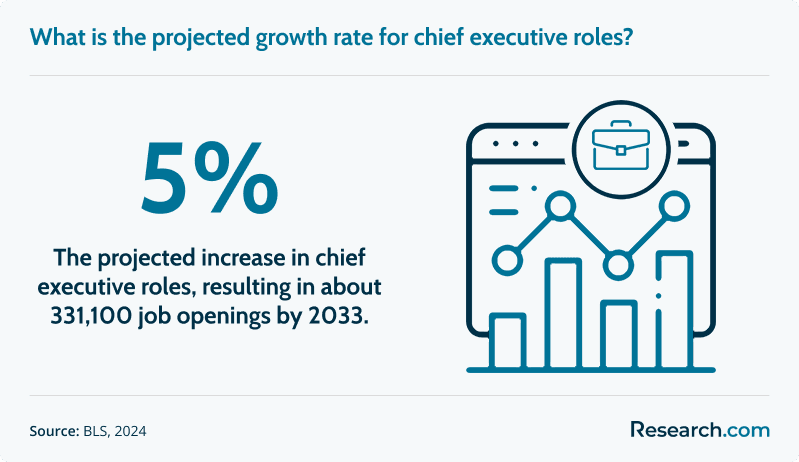
The demand for chief executives is expected to grow steadily over the next decade. According to the US Bureau of Labor Statistics (BLS), overall employment of chief executives is projected to grow 5% from 2023 to 2033, with approximately 331,100 job openings expected by 2033. While growth is modest compared to other occupations, opportunities will emerge as businesses expand, industries evolve, and companies seek innovative leadership.
Competition for these roles remains fierce, with companies prioritizing leaders who understand digital transformation, global markets, and sustainability initiatives. Professionals looking to gain a competitive edge may consider an online PhD in organizational leadership to strengthen their expertise in executive decision-making and corporate governance.
Which industries have the highest employment of C-level executives?
Chief executives are found across various industries, but some sectors employ significantly more top-level leaders than others. According to BLS, the industries with the highest number of C-level executives include the following:
The public sector leads in executive employment, particularly in local government, where city managers and public administrators hold high-ranking positions. Meanwhile, private sector leadership is prominent in corporate management, technology, and consulting firms, reflecting the growing demand for business strategy, digital transformation, and innovation leadership.
How much do C-level executives make for 2027?
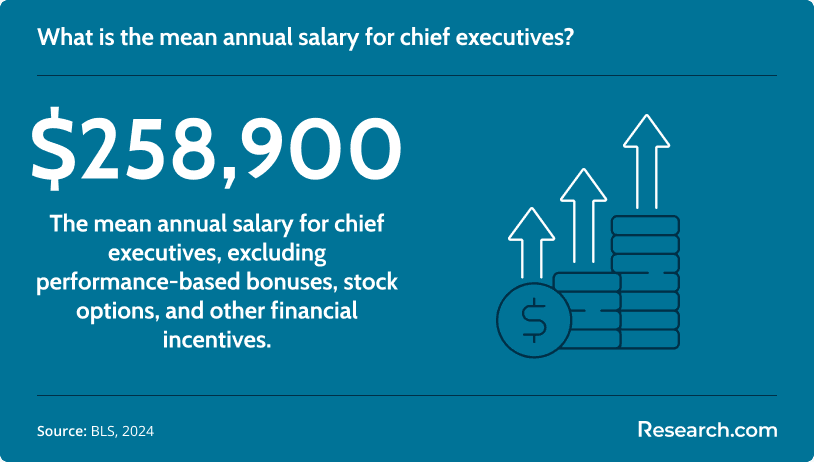
Executive compensation varies widely based on industry, company size, and experience level. However, BLS reports a mean annual salary of $258,900 for chief executives, making these roles among the highest-paid in the workforce.
In addition to base salaries, C-suite executives often receive performance-based bonuses, stock options, and other financial incentives that can significantly increase their earnings. Those looking to maximize their leadership potential may benefit from further education, such as online doctoral programs in leadership, to refine their strategic decision-making skills.
While salaries are impressive, executive compensation is also influenced by market trends, economic conditions, and company performance, making ongoing professional development essential for long-term success.
How can cost-effective educational programs boost executive career advancement?
Advanced education remains a key lever for sustaining strategic leadership, and leveraging cost-effective programs can provide targeted, up-to-date insights without the financial strain of traditional routes. Many executives opt for flexible, high-quality online programs to refine their skills, broaden their strategic vision, and navigate complex challenges in today's evolving marketplace. For instance, programs such as the cheapest business degree online are designed to deliver essential business acumen in a cost-efficient format, ultimately supporting long-term career growth and organizational performance.
Which states pay C-level executives the highest?
Location plays a significant role in executive salaries, with certain states offering substantially higher compensation due to industry demand and cost of living. According to BLS, the highest-paying states for chief executives are:
New Jersey leads the list, largely due to its strong financial and pharmaceutical industries, while Oregon’s booming tech sector also drives high executive salaries. Meanwhile, states like South Dakota and North Carolina offer competitive pay in industries such as healthcare, manufacturing, and corporate management.
For aspiring executives, relocating to a state with strong industry growth and executive demand can be a strategic career move, potentially leading to higher earning potential and expanded leadership opportunities.
Is pursuing an accredited online DBA a strategic move for executive advancement?
Acquiring an advanced degree from an accredited institution can enrich strategic and financial expertise while enhancing credibility with stakeholders. Executives benefit from programs that combine rigorous academic standards with real-world applicability, ensuring they are equipped to navigate complex business challenges. Cost-effective options, such as the cheapest AACSB online DBA, provide a balanced approach to quality and affordability, setting a strong foundation for long-term leadership success in competitive markets.
What skills do C-level executives need?
Success in the C-suite requires more than just experience—it demands a refined skill set that enables leaders to navigate complex business challenges. Some of the most critical competencies include:
- Strategic Decision-Making – Executives must analyze market trends, assess risks, and drive company growth with long-term vision.
- Financial Acumen – Understanding budgeting, revenue models, and financial forecasting is crucial for business sustainability.
- Leadership and People Management – Executives need to motivate teams, manage conflicts, and build a strong organizational culture.
- Innovation and Digital Transformation – In an evolving business landscape, embracing technology, AI, and automation is key.
- Crisis Management and Adaptability – The ability to handle economic downturns, industry disruptions, and organizational changes is essential.
By continuously developing these skills through mentorship, executive education, and hands-on leadership experience, professionals can position themselves for C-suite success in competitive industries.
What are the biggest trends shaping executive leadership for 2027?
As industries evolve, so do the expectations and responsibilities of top executives. Several key trends are shaping C-level leadership in 2027, influencing how organizations operate and grow:
- AI and Automation in Decision-Making – Executives are leveraging AI-driven insights for data analytics, operational efficiency, and strategic planning.
- Sustainability and ESG (Environmental, Social, and Governance) – Companies are prioritizing social responsibility, ethical leadership, and environmental impact.
- Remote and Hybrid Leadership – Managing distributed teams and virtual workforces has become a core leadership skill.
- Cybersecurity and Risk Management – Executives are increasingly responsible for data protection, compliance, and digital security.
- DEI (Diversity, Equity, and Inclusion) Initiatives – Companies are focusing on inclusive hiring practices and equitable workplace policies.
Keeping pace with these trends requires continuous learning and adaptability. Leaders who embrace change, foster innovation, and prioritize ethical business practices will have the greatest impact in the evolving corporate landscape.
How does specialized financial expertise contribute to C-level success?
Executives with refined financial expertise often gain a competitive edge by aligning strategic vision with rigorous fiscal analysis. Advanced training not only supports effective risk assessment and capital allocation but also fosters the ability to steer complex financial decisions during market fluctuations. Pursuing qualifications such as an online masters in finance can provide the analytical tools necessary for optimizing organizational performance and driving sustainable growth.
Is building a strong professional network essential for C-level advancement?
A robust professional network is vital for unlocking opportunities, gaining strategic insights, and accelerating career growth at the C-level. Executives benefit from targeted networking that goes beyond industry confines, fostering relationships with peers, mentors, and key stakeholders. Engagement in executive education programs, including one year MBA programs, can also facilitate access to influential communities and real-world leadership experiences. Prioritizing diverse, high-level connections supports informed decision-making and enhances long-term organizational impact.
How does ethical leadership drive sustainable success in the C-suite?
In today’s competitive landscape, ethical leadership is a strategic imperative that bolsters long-term organizational performance and stakeholder confidence. By integrating robust ethical standards with effective risk management, executives can navigate legal, social, and environmental challenges while reinforcing company integrity. This approach not only enhances corporate reputation but also cultivates internal culture and resilience essential for adapting to evolving markets. Further academic insights and frameworks, such as those provided in an affordable AACSB online MBA, equip leaders with practical tools for embedding ethical practices into strategic decision-making.
How can accelerated project management education boost executive performance?
Accelerated project management education equips executives with agile methodologies and strategic frameworks that are crucial for navigating multifaceted business challenges. Enhanced project management capabilities foster proactive risk mitigation, efficient resource allocation, and effective stakeholder communication—key elements for driving superior operational performance. Integrating these methodologies allows leaders to rapidly implement innovative solutions and adapt to dynamic market conditions. For those seeking to refine these skills, pursuing the fastest project management online degree can provide specialized training and practical insights directly applicable to the executive landscape.
What common challenges hinder the path to the C-suite?
Aspiring executives frequently encounter obstacles such as adapting to rapid technological shifts, managing transformative organizational change, and aligning strategic vision with evolving market demands. Overcoming these challenges requires a proactive approach to continuous learning, leadership agility, and an unwavering commitment to operational excellence. Targeted executive education, including programs like online MBA USA program, can equip professionals with the strategic insights and advanced management techniques necessary to navigate these complexities effectively.
What do C-level executives say about their career journey?
Climbing to the C-suite wasn’t just about degrees or titles—it was about resilience, adaptability, and seizing the right opportunities. My MBA helped sharpen my financial acumen, but the real learning came from navigating market downturns and leading through uncertainty. Becoming a CEO has been the most challenging yet rewarding journey of my life. The key was surrounding myself with the right mentors and never becoming complacent. Every leadership decision I’ve made has shaped not only my company’s success but also my own growth. Leo
Transitioning from a mid-level manager to a C-level executive required more than just experience; it demanded a complete shift in mindset. I had to master strategic thinking, build high-performing teams, and embrace innovation to stay ahead. Looking back, every risk I took was a stepping stone to success. The journey wasn’t always smooth, but every challenge prepared me to lead with confidence. Now, I focus on mentoring future leaders, just as others once guided me. Erin
As a startup founder turned CEO, I quickly learned that leadership isn't just about making decisions—it’s about inspiring people and driving a shared vision. Scaling my company meant constantly learning, from financial management to investor relations, and every challenge pushed me to grow. I wouldn't trade the journey for anything. Every mistake taught me something invaluable, from hiring the right team to pivoting when necessary. The ability to adapt and stay focused on long-term goals has been the biggest factor in my success. Kate
Key Findings
- The demand for chief executives is projected to grow by 5% from 2023 to 2033, with approximately 331,100 job openings expected.
- 46% of chief executives hold a master’s degree, while 32% have a bachelor’s degree.
- The highest number of chief executives work in local government (16,890), followed by corporate management and tech sectors.
- The mean annual salary for chief executives is $258,900, with the highest salaries found in New Jersey ($449,370) and Oregon ($371,290).
- AI-driven decision-making, sustainability initiatives, and hybrid workforce management are shaping the modern executive role.
References:
- BLS. (2024, April 3). Chief executives. BLS.
- BLS. (2024, August 29). Top executives. BLS.
- Khandelwal, S. (2025, March 12). Leadership in startups: Navigating challenges and seizing opportunities. Kapable Blog.
- O*net OnLine. (2025). 11-1011.00 - Chief Executives. onetonline.org.
- Sadun, R., Fuller, J., Hansen, S., & Neal, P. (2022, July 1). The C-Suite skills that matter most. Harvard Business Review.
Other Things You Should Know About Becoming a C-Level Executive
In 2027, aspiring C-level executives need strong leadership and strategic thinking skills, technological fluency, and the ability to drive innovation. Additionally, expertise in areas like data analytics, digital transformation, and crisis management is essential to navigating complex business landscapes.
Common career paths to a C-level executive position include roles such as Vice President or Director of Operations. Many executives start in lower management, progressing through various sectors before reaching senior roles. Each path requires leadership experience and a deep understanding of business operations.


