
2027 How To Become a Supply Chain Analyst: Salary & Career Paths

Co-Founder and Chief Data Scientist
Many people interested in logistics have a hard time identifying a career path that is both in demand and offers strong growth potential. Supply chain analysts are the unsung heroes of modern commerce, using data to streamline operations, reduce costs, and ensure products reach consumers on time. Despite its importance, this career path isn’t widely known, yet it offers excellent job prospects. The broader logistics field, which includes supply chain analysts, is projected to grow 19% from 2023 to 2033—far above the average—driven by the rise of e-commerce and the increasing complexity of global supply chains.
This article will break down everything you need to know about becoming a supply chain analyst, from required skills and education to career paths and salary expectations. Prepared by experts in career planning, it offers data-backed insights to help you make informed decisions about entering this growing field.
Key Things You Should Know About Being a Supply Chain Analyst
- Supply Chain Analyst Role - A supply chain analyst ensures efficient operations by collecting and analyzing data, improving efficiency, and managing vendor relationships.
- Education and Certifications - A bachelor's degree in a relevant field is essential, with additional certifications like CSCP or CPIM enhancing job prospects.
- Key Skills - Strong analytical, problem-solving, organizational, and communication skills are essential for success in this role.
- Salary Insights - The average salary for a supply chain analyst in 2025 is $74,386, with potential for higher earnings in senior or specialized positions.
- Career Advancement - Career paths for supply chain analysts include roles such as logistics manager, process engineer, or supply chain strategist, offering opportunities for growth and specialization.
- What does a supply chain analyst do?
- What are the steps to becoming a supply chain analyst for 2027?
- What skills and qualifications do I need to become a supply chain analyst?
- What is the typical salary of a supply chain analyst for 2027?
- What are the key career paths for a supply chain analyst?
- What industries are hiring supply chain analysts for 2027?
- How do supply chain analysts contribute to business operations?
- How are emerging technologies transforming supply chain analysis?
- How does integrating human resources expertise enhance supply chain analysis?
- Should I pursue an advanced business degree like a DBA to accelerate my supply chain analyst career?
- What software tools and technologies do supply chain analysts use?
- How do I gain experience as a supply chain analyst?
- Can project management expertise accelerate my career growth in supply chain analysis?
- What is the ROI of advanced education for supply chain analysts?
- What certifications can boost my career as a supply chain analyst?
- Can an MBA Elevate My Supply Chain Analyst Role?
- How can I embed sustainability and ethical practices into my supply chain analysis role?
What does a supply chain analyst do?
A supply chain analyst ensures that the supply chain processes in a company run smoothly and efficiently. They use data and analysis to identify areas for improvement and work with various teams to make the entire supply chain more effective.
Key duties of a supply chain analyst include:
- Collecting and analyzing data: They gather information on all aspects of supply chain operations, such as sourcing, logistics, and inventory.
- Improving efficiency: By identifying trends and bottlenecks, supply chain analysts suggest improvements to streamline operations.
- Collaborating with departments: They work with teams like procurement, logistics, and IT to ensure smooth delivery and inventory management.
- Monitoring supply chain performance: They track key metrics like on-time deliveries and inventory levels to assess how well the supply chain is performing.
- Managing relationships with vendors: Supply chain analysts maintain good relationships with shippers and vendors to ensure high-quality service and compliance with standards.
This role requires excellent problem-solving, attention to detail, and strong communication skills. If you’re interested in the financial side, you might also want to look into a logistics degree salary to understand the potential earnings in this field.
What are the steps to becoming a supply chain analyst?
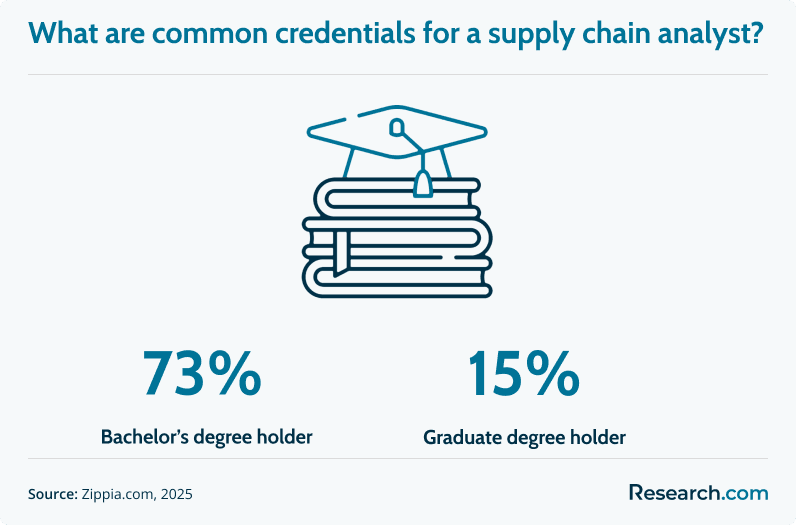
Becoming a supply chain analyst requires education, industry knowledge, and relevant certifications. While a bachelor’s degree is typically the minimum requirement, advancing in this career often involves additional credentials and experience.
Earn a relevant degree
Most supply chain analysts hold a bachelor's degree in supply chain management, business administration, logistics, or a related field. Coursework in data analysis, business strategy, and operations management helps build essential skills. Those looking to enhance their qualifications may pursue a supply chain degree online for added flexibility.
Gain industry experience
Entry-level roles in logistics, procurement, or inventory management provide hands-on experience. Internships or analyst assistant positions help develop practical skills in supply chain operations and data-driven decision-making.
Obtain professional certifications
Certifications can improve job prospects and showcase expertise. Popular options include:
- Certified Supply Chain Professional (CSCP) – Covers end-to-end supply chain management.
- Certified in Planning and Inventory Management (CPIM) – Focuses on inventory control and production planning.
- Certified in Logistics, Transportation, and Distribution (CLTD) – Emphasizes logistics and global supply chain operations.
Consider a master’s degree
A master’s in supply chain management or business analytics can lead to senior analyst positions and higher salaries. This step is ideal for those aiming for leadership roles in supply chain optimization.
What skills and qualifications do I need to become a supply chain analyst?
To become a supply chain analyst, you need a relevant degree, strong analytical skills, and experience with industry tools. Employers look for candidates who can manage supply chains efficiently, analyze data, and communicate insights effectively.
Essential qualifications
- Education – A bachelor's degree in logistics, supply chain management, business, or finance is typically required.
- Technical expertise – Experience with Enterprise Resource Planning (ERP) systems like SAP or Salesforce is essential for managing supply chain data.
- Industry knowledge – Understanding production planning, inventory management, and distribution processes helps in optimizing supply chains.
Key skills
- Analytical thinking – To interpret data, identify inefficiencies, and improve supply chain performance.
- Problem-solving – To address disruptions and develop cost-effective solutions.
- Organizational skills – To manage multiple projects, track shipments, and oversee inventory.
- Communication – To collaborate with suppliers, logistics teams, and business partners.
- Time management – To balance priorities and meet strict deadlines.
Supply chain analysts play a role in various areas, including demand planning, raw material sourcing, and network design. Mastering these skills ensures success in this fast-paced and data-driven career.
What is the typical salary of a supply chain analyst for 2027?
The average annual salary for a supply chain analyst in the United States is $74,386 as of March 2025. The U.S. Bureau of Labor Statistics (BLS) reports that the median salary for logisticians, a broader category that includes supply chain analysts, is $79,400 per year.
Salary breakdown
- Hourly wage: $35.76
- Monthly salary: $6,198
- Weekly salary: $1,430
Higher-paying supply chain roles
- Supply Chain Analytics Manager – $100,315 per year
- Supply Chain Strategist – $92,126 per year
- Senior Supply Chain Analyst – $88,861 per year
Factors influencing salary
Earnings depend on experience, industry, and location. Degree qualifications, such as a logistics degree online, can also lead to better-paying roles in supply chain management.
What are the key career paths for a supply chain analyst?
A supply chain analyst can advance in various directions, depending on their interests and skills. Here are six key career paths in supply chain management:
Logistics manager
Logistics managers oversee the movement, storage, and distribution of goods. They coordinate supply chain operations to ensure timely deliveries and cost efficiency. This role requires problem-solving skills and a strong understanding of logistics networks.
Purchasing manager
Purchasing managers develop procurement strategies, negotiate with suppliers, and manage purchasing records. They play a crucial role in maintaining supply chain efficiency and cost control. Professionals in this field often pursue additional education, such as the cheapest online MBA programs, to strengthen their business and negotiation skills.
Process engineer
Process engineers improve production and logistics workflows. They design efficient systems, troubleshoot operational issues, and ensure compliance with safety standards. This role is ideal for those with technical expertise in manufacturing or industrial engineering.
Supply chain manager
Supply chain managers oversee the end-to-end supply chain, from procurement to distribution. They analyze data, manage supplier relationships, and optimize supply chain processes to enhance efficiency and reduce costs.
Transportation director
Transportation directors focus on logistics networks, overseeing freight movement, cost management, and carrier negotiations. They ensure supply chain reliability by optimizing transportation strategies.
Commodity manager
Commodity managers handle long-term procurement strategies for specific goods or materials. They assess market trends, negotiate contracts, and collaborate with suppliers to improve sourcing efficiency.
Each of these career paths offers opportunities for growth, making supply chain management a dynamic and rewarding field.
What industries are hiring supply chain analysts for 2027?
In 2025, several industries are actively seeking supply chain analysts to enhance their operations and meet evolving demands. These professionals play a crucial role in optimizing supply chains, ensuring efficiency, and reducing costs across various sectors.
E-commerce and Online Retail
The surge in online shopping has led e-commerce companies to invest heavily in logistics and supply chain management. Supply chain analysts are essential in managing inventory, forecasting demand, and streamlining distribution processes to meet customer expectations for rapid delivery.
Automotive Industry
With the rise of electric vehicles (EVs), the automotive sector faces new logistical challenges. Supply chain analysts are needed to coordinate the procurement of raw materials, manage battery production logistics, and oversee the distribution of EV components.
Healthcare and Pharmaceuticals
The healthcare industry requires efficient supply chains to deliver medical supplies, pharmaceuticals, and equipment promptly. Supply chain analysts help ensure that these critical items are available where and when needed, maintaining the integrity of healthcare services.
Fashion and Retail
Fashion retailers are expanding their logistics teams to keep up with fast-changing consumer trends and the demands of omnichannel retailing. Supply chain analysts assist in managing inventory levels, optimizing distribution networks, and integrating sustainable practices into the supply chain.
Construction
The construction industry increasingly relies on prefabricated materials and modular techniques, necessitating efficient supply chain management. Supply chain analysts coordinate the storage and timely delivery of materials to job sites, ensuring projects stay on schedule and within budget.
How do supply chain analysts contribute to business operations?
Supply chain analysts improve business operations by optimizing supply chains, reducing costs, and enhancing efficiency. They use data-driven insights to streamline logistics, inventory management, and procurement processes.
Cost Reduction and Efficiency
Supply chain analysts identify inefficiencies and suggest cost-saving measures. By analyzing transportation, warehousing, and sourcing data, they help businesses minimize waste and improve resource allocation.
Demand Forecasting
Accurate demand predictions ensure that businesses maintain optimal inventory levels. Supply chain analysts use historical data and market trends to forecast demand, preventing stock shortages or overstocking.
Supplier and Vendor Management
Analysts assess supplier performance, negotiate contracts, and ensure timely deliveries. Strong supplier relationships lead to reliable sourcing and better pricing.

How are emerging technologies transforming supply chain analysis?
Supply chain analysts must now adapt to rapidly evolving technologies that redefine data processing, forecasting, and risk management. Advanced analytics driven by artificial intelligence and machine learning are enabling more accurate demand predictions and automated decision-making. Blockchain and Internet of Things (IoT) integration are also streamlining traceability and ensuring transparency across global supply chains. For professionals aiming to broaden their strategic and cross-functional expertise, exploring advanced degrees—such as the cheapest online master's in human resources—can provide a competitive edge in addressing these digital disruptions.
How does integrating human resources expertise enhance supply chain analysis?
Integrating human resources expertise can strengthen supply chain analysis by improving team collaboration, leadership, and communication within cross-functional environments. Leveraging HR principles helps analysts manage personnel challenges, align team capabilities with operational goals, and foster a culture of continuous improvement in supply chain processes. Understanding organizational dynamics and effective conflict resolution techniques supports smoother interactions with vendors and internal stakeholders. Additionally, acquiring how to get a degree in human resources can further develop skills in talent management and change leadership, ultimately contributing to a more agile and resilient supply chain operation.
Should I pursue an advanced business degree like a DBA to accelerate my supply chain analyst career?
For professionals aiming to transition from operational roles to strategic leadership in supply chain management, an advanced business degree offers a unique opportunity to enhance analytical rigor and decision-making frameworks. A Doctorate of Business Administration (DBA) can provide a deep dive into research methodologies, complex market dynamics, and innovative business strategies, complementing practical experience with academic insights. By developing skills in evidence-based analysis and executive leadership, supply chain analysts can better navigate industry advancements and global market challenges. For those evaluating cost-effective options for further education, exploring the cheapest online DBA may present a viable pathway to boost long-term career growth.
What software tools and technologies do supply chain analysts use?
Supply chain analysts use various software tools to optimize supply chains, improve efficiency, and reduce costs. These tools help manage inventory, streamline logistics, and enhance forecasting.
Enterprise resource planning (ERP) software
ERP systems integrate supply chain functions like procurement, inventory, and logistics into a single platform. Companies use software such as SAP ERP and Microsoft Dynamics 365 to centralize data and improve decision-making.
Inventory and warehouse management systems
Inventory management tools like Fishbowl and Cin7 track stock levels in real time, preventing overstocking or shortages. Meanwhile, warehouse management systems, such as Oracle NetSuite, optimize storage, picking, and shipping processes.
Transportation and supplier relationship management
Transportation management software (TMS) like Blue Yonder improves shipping efficiency, while supplier relationship management (SRM) tools such as SAP Ariba help businesses monitor supplier performance.
Demand forecasting and AI tools
To predict market trends, companies use Logility Demand AI+ and IBM Planning Analytics for demand forecasting. AI-powered systems enhance accuracy, reducing waste and improving supply chain resilience.
How do I gain experience as a supply chain analyst?
You can gain experience as a supply chain analyst by developing analytical skills, working in logistics-related roles, and pursuing relevant certifications. Even without a degree, practical experience and industry knowledge can help you build a strong foundation.
Gain hands-on supply chain experience
Start with entry-level positions, internships, or volunteer roles that involve supply chain operations. Jobs in inventory management, procurement, or logistics provide direct exposure to supply chain processes and help you understand how goods move from suppliers to consumers.
Build analytical and technical skills
Supply chain analysts rely on data to optimize operations. Learn to use Excel, SQL, and supply chain management software. Online courses and certifications can help you develop these skills, making you more competitive in the field.
Expand your industry knowledge
Study supply chain principles like demand forecasting and logistics planning. Read industry reports, take online courses, and follow supply chain news to stay updated on emerging trends. For those looking to advance quickly, enrolling in one of the shortest executive MBA programs can provide strategic business insights.
Network with professionals
Join supply chain associations, attend industry events, and engage in online forums. Networking can help you find mentorship, job leads, and opportunities to gain industry-specific insights.
Earn relevant certifications
Certifications like APICS Certified Supply Chain Professional (CSCP) or ISM Certified Professional in Supply Management (CPSM) can validate your expertise and improve your job prospects.
Can project management expertise accelerate my career growth in supply chain analysis?
Integrating project management skills within supply chain analysis can enhance your ability to coordinate cross-functional initiatives, manage risks, and optimize resource allocation. Leveraging structured methodologies and proven frameworks supports effective timeline management and stakeholder communication, ensuring projects remain on track and aligned with strategic goals. Additionally, specialized programs, such as the fastest project management bachelor degree online, can provide relevant expertise to complement analytical proficiencies and drive operational improvements.
What is the ROI of advanced education for supply chain analysts?
Advanced education can yield significant returns by combining strategic insights with technical expertise to drive operational improvements and leadership impact. Investment in degrees such as an MBA not only broadens analytical and management capabilities but also opens doors to higher-level responsibilities and competitive remuneration. Data from industry benchmarks indicates that supply chain professionals with advanced credentials tend to secure managerial roles faster, enhance decision-making processes, and realize measurable increases in profitability. For instance, pursuing online MBA programs has been linked to accelerated career trajectories and improved return on investment through higher starting salaries and future growth opportunities.
What certifications can boost my career as a supply chain analyst?
Earning the right certifications can significantly enhance your career as a supply chain analyst. These credentials validate your skills, boost your marketability, and provide you with the expertise to navigate complex supply chain challenges effectively.
Top Certifications for Supply Chain Analysts
Certified Supply Chain Professional (CSCP)
- Provider: APICS
- Best For: Supply Chain Analysts, Supply Chain Managers
- Description: This certification equips professionals with comprehensive knowledge in global supply chain operations, risk management, and customer-supplier relationships. It covers key concepts like supply chain design, planning, and execution. CSCP-certified individuals are recognized for their ability to optimize supply chain resources and lead initiatives aimed at improving operational efficiency.
Certified in Logistics, Transportation, and Distribution (CLTD)
- Provider: APICS
- Best For: Supply Chain Analysts, Logistics Managers
- Description: The CLTD credential focuses on logistics best practices, transportation management, and distribution systems, providing analysts with a deep understanding of logistics operations.
Certified in Production and Inventory Management (CPIM)
- Provider: APICS
- Best For: Supply Chain Analysts, Inventory Managers
- Description: CPIM certification emphasizes demand management, procurement planning, and inventory control, allowing supply chain analysts to optimize production schedules and improve efficiency.
Why should you pursue certification?
- Professional Validation: Certifications demonstrate your expertise, making you more attractive to employers.
- Career Growth: Certification can open doors to promotions and higher-paying roles.
- Expanded Skillset: You’ll gain practical, real-world skills that enhance your problem-solving abilities in supply chain operations.
Certifications are a strategic investment that can set you apart as a supply chain analyst and help you stay competitive in the ever-evolving field of supply chain management.
Can an MBA Elevate My Supply Chain Analyst Role?
Pursuing an MBA can equip supply chain analysts with advanced leadership and strategic management skills essential for driving operational improvements and managing complex global networks. An MBA program emphasizes in-depth business strategy, financial acumen, and data-driven decision-making that complement technical supply chain expertise. This comprehensive training fosters cross-functional collaboration and positions analysts to address market uncertainties and digital disruptions proactively. For a streamlined pathway to gain these capabilities, consider exploring programs such as MBA online 1 year.
How can I embed sustainability and ethical practices into my supply chain analysis role?
Leverage data analytics to quantify environmental impact and guide initiatives that lower waste and optimize resource usage. Evaluate suppliers based on sustainability and ethical standards to foster a responsible sourcing network. Collaborate with cross-functional teams to integrate environmental best practices into operational processes, ensuring that efficiency goals align with long-term corporate sustainability. Consider advanced business education to deepen these capabilities, such as exploring affordable AACSB accredited online MBA degree programs that emphasize sustainable management practices.
Here’s What Graduates Have to Say about Being a Supply Chain Analyst
The best part about being a supply chain analyst is the ability to see the impact of your work. From streamlining processes to reducing costs, it’s incredibly rewarding to know that you're making businesses more efficient. – Jasmine
I never expected that my job would be such a mix of technical and strategic tasks. I love analyzing data and seeing how small adjustments in supply chains can lead to significant improvements. It’s both challenging and fulfilling. – Andre
What I enjoy the most about being a supply chain analyst is the constant learning. Every day presents new challenges, and I’m able to apply a variety of skills, from analytics to communication. It’s a dynamic field that keeps me engaged and excited about the future of logistics. – Emma
Key Findings
- The average annual salary for a supply chain analyst in 2025 is $74,386, with an hourly wage of $35.76.
- Senior roles like Supply Chain Analytics Manager and Senior Supply Chain Analyst offer higher salaries, with figures around $100,315 and $88,861 respectively.
- Certifications like CSCP and CPIM can significantly enhance job prospects and salary potential for supply chain analysts.
- E-commerce, automotive, healthcare, and retail industries are key employers of supply chain analysts in 2025.
- The AI in Supply Chain market is projected to reach USD 157.6 Billion by 2033.
References:
- Bureau of Labor Statistics. (n.d.). Logisticians. U.S. Department of Labor.
- Indeed. (n.d.). Supply chain analyst job description.
- Coursera. (n.d.). Supply chain analyst.
- Excelsior University. (n.d.). Career spotlight: Supply chain analyst.
- ZipRecruiter. (n.d.). Entry level supply chain analyst: What is it and how to become one.
- ZipRecruiter. (n.d.). Supply chain analyst: What is it and how to become one.
- Zippia. (n.d.). Supply chain analyst jobs.
- Logistics Bureau. (n.d.). Jobs and career paths in supply chain and logistics.
- Investopedia. (n.d.). Supply chain management (SCM).
- Western Governors University. (n.d.). Types of supply chain management software: A detailed guide.
Other Things You Should Know About Being a Supply Chain Analyst
Certifications can enhance career progression for supply chain analysts by demonstrating expertise and dedication. While not mandatory, certifications like the Certified Supply Chain Professional (CSCP) or Six Sigma can provide a competitive edge in 2027, helping professionals stand out in this evolving field.
Yes, obtaining supply chain analyst certifications can significantly aid individuals in transitioning into this role from another career path. Certifications provide essential knowledge and skills, making candidates more competitive in the job market, and can be crucial in demonstrating expertise to potential employers.
Internships significantly aid in becoming a supply chain analyst by providing hands-on experience and industry insights. Employers often prefer candidates with internship experience. In 2027, pursuing internships during or after educational programs can enhance employability in this field.


