
2027 What is a Clinical Nurse Educator: Salary & Career Paths?

Co-Founder and Chief Data Scientist
Many experienced nurses reach a point where they seek new ways to contribute—beyond direct patient care—without leaving the profession altogether. However, limited awareness of alternative roles can make this transition difficult. One such path, often overlooked, is that of the clinical nurse educator.
With a 22% job growth projected (2020-2030), this field is booming. An aging population and nursing shortages drive demand, yet nursing schools reject thousands yearly due to faculty shortages. This guide, crafted by career experts, breaks down what clinical nurse educators do, current salaries, and career paths to help you explore this vital role.
Key Things You Should Know About Being a Nurse Educator
- Role Overview – Clinical nurse educators (CNEs) train and mentor nurses, develop training programs, and ensure the integration of evidence-based practices in healthcare.
- Path to Becoming a CNE – Becoming a clinical nurse educator requires earning a nursing degree, gaining clinical experience, pursuing advanced education, and optionally gaining CNE certification.
- Career Timeline – On average, it takes 8-10 years to become a clinical nurse educator, including education, licensure, experience, and specialized training.
- Skills Needed – Clinical nurse educators need skills in curriculum development, leadership, clinical education, assessment, and innovative teaching strategies.
- Work Environment – Clinical nurse educators can work in both academic settings, like nursing schools, and healthcare settings, including hospitals and clinics, offering flexibility and a balanced work-life environment.
- What does a clinical nurse educator do?
- What are the steps to becoming a clinical nurse educator in 2027?
- How long does it take to become a clinical nurse educator?
- Can nurses become educators without a teaching background?
- What skills do clinical nurse educators need?
- Where do clinical nurse educators work?
- What is the average salary of a clinical nurse educator?
- What are the career paths for clinical nurse educators?
- What challenges do clinical nurse educators face?
- Is being a clinical nurse educator a good career in 2027?
- How do bridge programs support career advancement for clinical nurse educators?
- What alternative career advancement paths can broaden a clinical nurse educator’s impact?
- How can clinical nurse educators leverage digital tools and continuing education to stay competitive?
- How can clinical nurse educators expand their professional network and access specialized opportunities?
- How can clinical nurse educators promote cultural competence in clinical education?
- How Can Clinical Nurse Educators Integrate Evidence-Based Research into Curriculum Design?
- How can clinical nurse educators incorporate mental health competencies into their curricula?
- How can clinical nurse educators measure and enhance the impact of their teaching outcomes?
What does a clinical nurse educator do?
A clinical nurse educator is a registered nurse who specializes in training and mentoring other nurses and healthcare staff. They design educational programs, lead hands-on training, and ensure nursing practices stay current with medical research. By combining clinical expertise with teaching, they help nurses deliver safer and more effective patient care.
Most clinical nurse educators work in hospitals, universities, or health systems. Their core responsibilities include:
- Creating and updating training programs for nurses and students
- Mentoring new nurses and nursing students during clinical rotations
- Evaluating performance and identifying skill gaps
- Promoting evidence-based practices in day-to-day care
- Helping licensed nurses maintain certifications and pursue continuing education
Ultimately, clinical nurse educators are essential to strengthening the healthcare workforce and improving long-term patient outcomes. For those still exploring the nursing profession, especially those comparing educational paths, you may also want to check out How Much Does Nursing School Cost to plan ahead.
What are the steps to becoming a clinical nurse educator in 2027?
To become a clinical nurse educator, you need nursing experience, advanced education, and a passion for teaching future nurses. Most nurse educators start out as registered nurses and build years of clinical expertise before transitioning into education. Here's a step-by-step breakdown of the career path:
1. Earn a nursing degree
Start with an ADN or BSN from an accredited nursing school. A BSN is required for future graduate study.
2. Pass the NCLEX-RN
This licensure exam qualifies you to practice as a registered nurse. Once you pass, you can begin working as an RN.
3. Gain clinical experience
Spend several years working in healthcare settings. This hands-on experience prepares you to teach practical, real-world nursing skills.
4. Earn a master’s degree
Pursue an MSN with a focus on nursing education. Some nurses take the shortest DNP program route for broader teaching and leadership roles.
5. Get certified (optional but recommended)
The Certified Nurse Educator (CNE) credential adds credibility and opens more opportunities, especially in academia.
6. Apply for nurse educator roles
You can teach in hospitals, nursing schools, or community settings. Some roles focus on staff training, while others work with student nurses.
With each step, you're building the knowledge and authority needed to shape the next generation of nurses as a clinical nurse educator.
How long does it take to become a clinical nurse educator?
It usually takes 8 to 10 years to become a clinical nurse educator. This timeline includes education, clinical experience, and specialized training. While the path may vary depending on your pace and program choices, here’s a typical breakdown:
1. Earn your nursing degree (2–4 years)
Start with an associate degree in nursing (ADN) or a bachelor’s degree in nursing (BSN). A BSN is preferred since it's required for graduate study.
2. Get licensed and gain experience (2–5 years)
Pass the NCLEX-RN exam and work as a registered nurse. Most clinical nurse educators have several years of hands-on experience before moving into teaching roles.
3. Complete a master’s or post-master’s program (2–3 years)
You’ll need a Master of Science in Nursing (MSN), ideally with a focus on nursing education. If you already have an MSN, a post-master’s certificate can help you shift into education.
Optional certifications like the CNE credential can further boost your qualifications.
Becoming a clinical nurse educator is a long-term commitment—but one that allows you to pass on your knowledge and shape the future of nursing.
Can nurses become educators without a teaching background?
Yes, nurses can become educators even without formal training in teaching or education. You don’t need to take teaching units to start preparing for a role as a clinical nurse educator. Many nurses build their teaching skills informally by mentoring junior staff, precepting new hires, or leading in-service training sessions while working in clinical settings. These experiences can develop your ability to communicate, demonstrate procedures, and guide others—key skills in nursing education.
Hospitals often rely on experienced nurses to coach others at the bedside or during clinical rotations. These opportunities help you gain confidence in instructional roles, even before pursuing a graduate degree. If you want to strengthen your qualifications later, you can pursue a master’s degree or take the CNE certification. But many start the path through hands-on experience, not classroom training. For nurses in supportive environments—such as some of the least stressful nursing specialties—these mentoring roles often come naturally and can spark interest in formal teaching down the line.
What skills do clinical nurse educators need?
Clinical nurse educators need a mix of teaching, leadership, and clinical skills to succeed in both academic and hospital settings.
Core skills include:
- Curriculum development - They must design and review nursing programs that meet educational standards and improve student outcomes.
- Assessment and evaluation - Clinical nurse educators assess student performance, develop tests, and improve how lessons are delivered.
- Innovative teaching strategies - They use new learning methods, tools, and evidence-based practices to help nurses succeed in changing healthcare environments.
- Clinical education - They translate real-world experience into practical lessons, bridging theory with bedside practice.
- Leadership and mentoring - Educators often guide junior staff, lead training sessions, and support ongoing professional development for nurses.
- Theoretical foundations - A strong grasp of nursing theories and how the profession has evolved helps educators teach core concepts clearly.
Many educators also take on roles in educational programs and support ongoing training for staff. Having a BSN or MSN, and relevant experience, often prepares them well for this role. Strong skills in patient care, BLS instruction, and continuous professional development also strengthen a clinical nurse educator’s impact in hospitals or universities.
Where do clinical nurse educators work?
Clinical nurse educators typically work in both academic and healthcare settings, depending on their role and specialization. Their work environment is usually more structured and predictable compared to bedside nursing, with fewer night shifts and more regular hours.
Academic Settings
- Nursing schools
- Community colleges
- Technical or vocational schools
In these roles, they prepare and deliver lectures, mentor students, grade assignments, and attend faculty meetings. They often work a nine-month academic year with summers off or choose to work year-round. Many are also involved in research and curriculum development, helping to shape the future of nursing education.
Healthcare Facilities
- Hospitals
- Clinics
- Long-term care centers
In these settings, they may serve as staff development officers or clinical supervisors. Their focus is on training new nurses, overseeing clinical practice, and improving patient care through continuing education programs.
Compared to clinical nursing, the educator role often allows for better work-life balance. Those interested in transitioning into this career may benefit from affordable education pathways like the cheapest ADN online programs, which offer a flexible and budget-friendly start.
What is the average salary of a clinical nurse educator?
The average salary of a clinical nurse educator in the United States is $76,107 per year. However, this amount can vary based on factors like experience, education level, and where you work. Here's a closer look at the salary range and what influences it:
Salary Range
- Yearly salary typically falls between $58,000 and $99,000
- Hourly pay averages around $36.59
Experience Levels
- Entry-level: Around $60,400 per year ($29.01/hour)
- Mid-level: About $75,900 annually ($36.49/hour)
- Senior-level: Up to $104,000 each year ($50.05/hour)
Other Factors
- Location plays a big role. For example, clinical nurse educators in Alaska tend to earn the highest salaries.
- Education level also matters. Those with advanced degrees can qualify for more senior positions, increasing earning potential.
If you're considering advancing your career further, comparing roles like a doctor of nurse practitioner salary can help you explore future opportunities.
What are the career paths for clinical nurse educators?
Clinical nurse educators have several career paths that allow them to grow in both clinical and academic roles. This role can be a stepping stone to a range of advanced opportunities in healthcare and education. Many clinical nurse educators work in hospitals, nursing homes, community health centers, or colleges. As they gain experience, they often move into leadership or specialized roles.
Common Career Paths
- Specialization: Focus on areas like pediatrics, geriatrics, or critical care to become a subject matter expert.
- Leadership roles: Advance to positions such as director of education or chief nursing officer.
- Academia: Pursue a doctoral degree in nursing to become a professor or work in research.
No matter the path, a career as a clinical nurse educator offers flexibility and room to grow across healthcare and education.
What challenges do clinical nurse educators face?
Clinical nurse educators face several challenges that can impact their ability to teach, support nurses, and stay current in their field. These professionals play a vital role in bridging clinical practice and education, but their job often comes with pressures from multiple directions.
Common Challenges
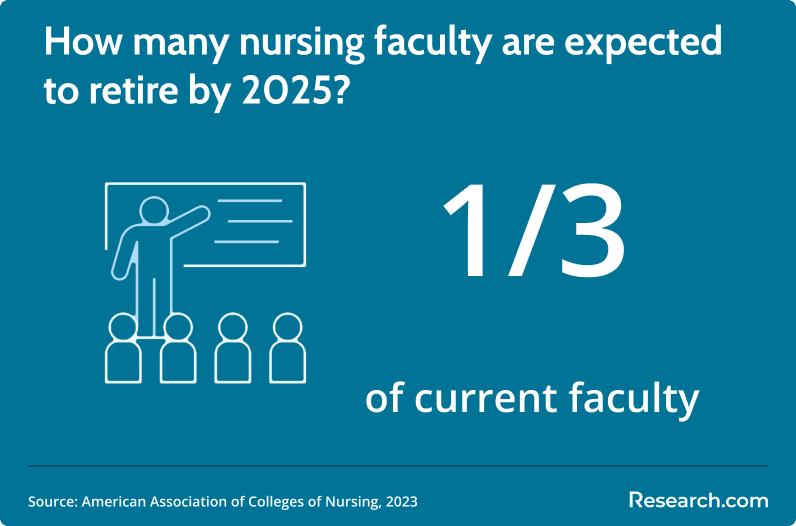
- Faculty shortages: With many experienced educators nearing retirement, there's increasing pressure on current clinical nurse educators to take on more responsibilities.
- Balancing roles: Educators often juggle teaching, mentoring, and administrative duties while keeping up with clinical advancements.
- Limited resources: Some institutions lack updated equipment, simulation tools, or support staff, making it harder to deliver high-quality training.
- Keeping up with changes: Rapid shifts in healthcare technology, treatments, and best practices require educators to constantly update their knowledge and teaching methods.
- Burnout and workload: Heavy caseloads and high expectations can lead to stress and burnout, especially when paired with staffing shortages.
Despite these challenges, many clinical nurse educators remain passionate about shaping the next generation of nurses. Their adaptability and commitment continue to make a lasting impact in both clinical and academic settings.
Is being a clinical nurse educator a good career in 2027?
Yes, being a clinical nurse educator (CNE) is a strong and rewarding career choice this year. With ongoing nursing shortages and a growing demand for well-trained healthcare professionals, clinical nurse educators play a crucial role in shaping the future of nursing. Their work ensures that nurses entering the field are prepared with the latest knowledge, skills, and clinical judgment.
Reasons It’s a Good Career
- High demand: Many nursing schools face faculty shortages, making qualified educators more valuable than ever.
- Career growth: Opportunities for advancement include leadership roles, research positions, or transitioning into specialized fields.
- Meaningful impact: CNEs directly influence patient care by educating the next generation of nurses.
As more educators approach retirement, the need for well-prepared successors grows. If you're planning to pursue this path, preparing with a CNE practice test can help boost your confidence and readiness for certification.
How do bridge programs support career advancement for clinical nurse educators?
Bridge programs offer a streamlined pathway for experienced nurses to advance into educator roles by integrating rigorous coursework with targeted clinical practice. These programs focus on enhancing leadership skills, advancing evidence-based teaching strategies, and fostering a deeper understanding of educational methodologies. By consolidating academic requirements and professional development, they enable a smoother transition from direct patient care to academic and training responsibilities. Additionally, specialized options like ADN to MSN programs provide an efficient solution for nurses seeking to bridge the gap between associate-level and graduate-level education without duplicating coursework.
What alternative career advancement paths can broaden a clinical nurse educator’s impact?
Some clinical nurse educators diversify their roles by integrating advanced clinical practice with educational expertise. Pursuing additional certifications or graduate degrees can empower professionals to assume leadership positions while enhancing teaching methodologies. For instance, enrolling in an accelerated nurse practitioner program offers a dual-focused pathway that complements instructive duties with enriched patient care skills. This approach supports sustained professional development and fosters innovative learning environments aligned with evolving healthcare standards.
How can clinical nurse educators leverage digital tools and continuing education to stay competitive?
Digital literacy and ongoing learning are critical for adapting teaching strategies and keeping pace with evolving clinical practices. Integrating simulation software, virtual collaboration platforms, and data-driven assessment tools enhances both instructional quality and learner engagement. Moreover, targeted certificate courses and specialized online programs help refine these skills while broadening career opportunities. For instance, enrolling in the quickest RN to BSN program can streamline your academic progress and support a smoother transition into advanced educator roles.
How can clinical nurse educators expand their professional network and access specialized opportunities?
Diversifying professional connections is critical for sustained career growth. Clinical nurse educators can enhance their expertise by actively engaging in interdisciplinary forums, professional associations, and mentorship initiatives that open doors to innovative educational practices. Participation in specialized conferences and online communities fosters real-time knowledge sharing and keeps educators informed of emerging trends. Exploring continuing education options—such as affordable online womens health nurse practitioner programs—provides targeted learning experiences that further enrich clinical instruction and leadership skills.
How can clinical nurse educators promote cultural competence in clinical education?
Clinical nurse educators can enhance cultural competence by integrating diverse perspectives and case-based scenarios that reflect the demographic variety of patient populations. Strategies include curating curriculum materials with input from culturally diverse experts, employing simulation exercises that mirror real-world multicultural interactions, and facilitating discussions on health disparities and social determinants of health. Educators may also incorporate community engagement projects and partnerships with local organizations to provide learners with firsthand experiences in diverse settings. Leveraging flexible education pathways—such as online RN to BSN no clinicals—can offer additional insights into innovative approaches for embedding cultural competence throughout clinical instruction.
How Can Clinical Nurse Educators Integrate Evidence-Based Research into Curriculum Design?
Clinical nurse educators can strengthen their programs by systematically incorporating the latest research findings into course materials and teaching methods. By partnering with academic research teams and clinical investigators, educators can translate emerging evidence into practice, ensuring that lesson plans remain aligned with current clinical standards. Utilizing data-driven curriculum development allows for a seamless integration of innovative treatment protocols and patient care strategies, which further enhances critical thinking among students. Additionally, exploring educational frameworks such as direct entry nurse practitioner programs for non-nurses online can inspire cross-disciplinary approaches, enriching the learning experience and fostering a culture of continual improvement.
How can clinical nurse educators incorporate mental health competencies into their curricula?
Integrating mental health education into nursing curricula is essential for preparing nurses to address diverse patient needs. Clinical nurse educators can update course content to include mental health theories, practical assessment techniques, and crisis intervention strategies. Leveraging specialized training programs can enhance educator expertise and support a more holistic approach to patient care. For additional resources, consider exploring the cheapest PMHNP programs to gain insights into effective mental health curriculum integration.
How can clinical nurse educators measure and enhance the impact of their teaching outcomes?
Clinical nurse educators can strengthen program effectiveness by implementing systematic evaluation methods. Utilizing performance-based assessments, structured feedback sessions, and data analytics creates a clear picture of student progress and curriculum impact. Incorporating qualitative measures—such as reflective practice and peer review—with quantitative student evaluation tools allows for precise identification of strengths and areas needing improvement. Educators can further refine teaching strategies by benchmarking results against best practices and exploring innovative learning frameworks, including those found in direct entry nurse practitioner programs for non-nurses. This approach enables a continuous cycle of assessment and enhancement, directly contributing to improved clinical competencies and educational outcomes.
Here’s What People Have to Say about Being a Clinical Nurse Educator
Becoming a clinical nurse educator allowed me to stay close to patient care while mentoring new nurses. Seeing my students grow into confident professionals is incredibly rewarding. — Sophia
The role challenges me to keep learning and stay updated with the latest in healthcare. It’s a meaningful way to blend my clinical experience with my passion for teaching. — Marcus
I love the flexibility of this career—whether I’m working in a hospital or helping shape curriculum, every day feels impactful. The demand for nurse educators makes this a smart and stable path. — Aaliyah
Key Findings
- One-third of current nursing faculty in baccalaureate and graduate programs are expected to retire by 2025.
- Average salary for a clinical nurse educator in the U.S. is $76,107 annually, with salaries ranging between $58,000 and $99,000.
- Entry-level clinical nurse educators earn around $60,400 annually ($29.01/hour), while senior-level educators make up to $104,000 annually ($50.05/hour).
- It typically takes 2-4 years to earn a nursing degree, followed by 2-5 years of clinical experience, and 2-3 years to complete a master’s or post-master’s program to become a clinical nurse educator.
- One in three nursing educators report experiencing significant faculty shortages, making CNE roles critical to the healthcare workforce.
References:
- Bureau of Labor Statistics. (2022, May). Occupational employment and wages, May 2022: 25-1072 nursing instructors and teachers, postsecondary. U.S. Department of Labor.
- Bureau of Labor Statistics. (2023, May). Occupational employment and wages, May 2023: 25-1072 nursing instructors and teachers, postsecondary. U.S. Department of Labor.
- National League for Nursing. (n.d.). Nurse educator.
- Explore Health Careers. (n.d.). Nurse educator.
- Zippia. (n.d.). Clinical nurse educator job description.
- ShiftMed. (n.d.). How to become a nurse educator.
- American Nurses Association. (n.d.). Becoming a nurse educator.
- TogetherSC. (n.d.). Clinical nurse educator job description.
- American Association of Colleges of Nursing. (n.d.). Nursing faculty shortage fact sheet.
Other Things You Should Know about Being a Clinical Nurse Educator
In 2027, Clinical Nurse Educators develop and implement educational programs for nursing staff, focusing on improving clinical skills and patient care standards. Salary is influenced by factors such as geographic location, experience, education level, and the type of healthcare facility.
In 2027, clinical nurse educators primarily work in hospitals, healthcare facilities, or nursing schools. Their work setting influences salary and career prospects, as educators in top-tier hospitals or universities may earn higher wages and have more career advancement opportunities.
Yes, clinical nurse educators can work in online nursing programs or virtual education settings. They develop curriculum, deliver instruction, and assess student performance through digital platforms, blending clinical expertise with technological tools to ensure effective online learning experiences.


