
2027 What is a Legal Nurse Consultant: Salary & Career Paths

Co-Founder and Chief Data Scientist
Legal nurse consulting is a career option for registered nurses who want to use their clinical judgment outside direct patient care. With more than 3.3 million registered nurses (RNs) employed across the US and just under 5,000 professionals working as legal nurse consultants, this is a specialized path rather than a mass-market nursing role. That can make it attractive—but also confusing for nurses who are unsure how to enter the field, what credentials matter, and whether the income justifies the transition.
This guide explains what legal nurse consultants do, what education and licensing they need, how much training can cost, where salary potential is strongest, and how to decide whether this career path fits your experience and goals for 2027. It also covers independent consulting, remote work, certifications, advanced nursing credentials, professional development, liability concerns, marketing, and common mistakes to avoid before investing in training.
Quick Answer: What Is a Legal Nurse Consultant?
A legal nurse consultant is an RN who applies nursing knowledge to legal cases involving healthcare, injury, malpractice, insurance claims, medical devices, disability, or standards of care. Legal nurse consultants review medical records, explain clinical issues to attorneys, identify case strengths and weaknesses, help prepare for trial, and may support expert witness work. Most enter the field after gaining hands-on nursing experience, and many improve their credibility through legal nurse consultant training, certification, or advanced clinical education.
Key Things You Should Know About What a Legal Nurse Consultant Is
- Legal nurse consultants are licensed RNs who translate complex medical information into clear, case-relevant insight for attorneys, insurers, healthcare organizations, and risk management teams.
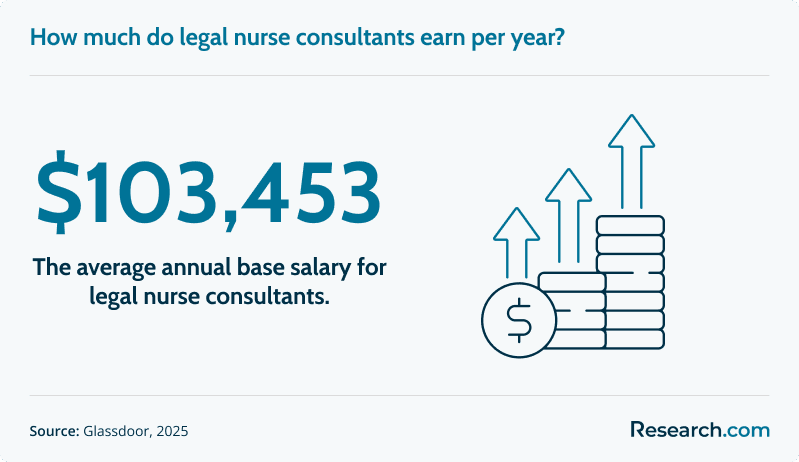
- Glassdoor data indicates legal nurse consultants earn an estimated $117,737 per year in total compensation, including an average base salary of $103,453, compared with the BLS-reported median annual wage of $86,070 for RNs in May 2023.
- A nursing license and clinical experience matter more than a single required degree, but many consultants strengthen their prospects through a BSN, legal nurse consultant certification, paralegal coursework, or advanced nursing credentials.
- Education requirements for legal nurse consultants
- Nursing license and certification requirements
- Legal nurse consultant training costs
- Skills needed for legal nurse consulting
- Average legal nurse consultant salary for 2027
- Highest-paying states for nursing-related legal consulting work
- Job market outlook and competitiveness
- How advanced education and certifications can improve your options
- Industries that hire legal nurse consultants
- Whether nurse practitioner credentials can help
- Continuing education and professional development
- Legal risk and liability issues to address
- Professional associations for legal nurse consultants
- Advanced clinical credentials and niche consulting opportunities
- Healthcare, legal, and technology trends affecting the field
- Independent contractor and freelance consulting options
- Remote legal nurse consultant jobs
- How legal nurse consultants can market themselves
- Common mistakes and questions to ask before choosing this path
What education is required to become a legal nurse consultant?
There is no single required college major or legal degree for legal nurse consulting. The usual starting point is RN licensure plus meaningful clinical experience. However, degree level can affect how employers, attorneys, and clients evaluate your credibility, especially when cases involve complex standards of care.
According to Zippia, 47% of legal nurse consultants in the US have a bachelor’s degree, 28% have an associate degree, and 13% have a master’s degree. This means an associate degree can be enough to enter the field, but a BSN or graduate degree may make it easier to compete for law firm, insurance, healthcare compliance, or expert-support opportunities.
Many working nurses choose an online pathway, such as a BSN online program, because it can help them build academic credentials without immediately leaving full-time nursing work. Nurses who already have a degree may instead look for legal nurse consultant certificates, continuing education courses, mentorship, or case review training focused on litigation support.
Traditional nursing programs usually do not provide deep legal training. That gap matters. Legal nurse consultants need to understand how medical records, standards of care, timelines, documentation gaps, causation questions, and expert opinions fit into legal strategy. Your nursing background gives you the clinical foundation; targeted legal training helps you apply that foundation in litigation and claims settings.
| Education path | When it may make sense | What to watch for |
| Associate degree in nursing | You are already licensed and have strong clinical experience in a relevant specialty. | Some employers or clients may prefer a BSN, especially for competitive consulting roles. |
| BSN | You want broader credibility, leadership preparation, and more flexibility across healthcare and legal settings. | Compare transfer credit policies, format, and total cost rather than tuition alone. |
| MSN or graduate nursing education | You want to consult on complex cases, move into advanced roles, or build a specialized expert profile. | An advanced degree is not automatically required for legal nurse consulting, so weigh the cost against your intended niche. |
| Legal nurse consultant certificate | You need focused training in medical record review, report writing, legal terminology, and litigation workflow. | Check whether the program is respected by employers and whether it includes practical case exercises. |
| Paralegal or legal studies coursework | You want stronger legal vocabulary and a better understanding of law office processes. | Legal training supports nursing expertise; it does not replace RN licensure or clinical judgment. |
Do you need a nursing license to work as a legal nurse consultant?
Yes. A current RN license is central to legal nurse consulting because the role depends on clinical interpretation, not general legal administration. Attorneys hire legal nurse consultants because they understand nursing practice, patient care documentation, medical terminology, provider workflows, and what is clinically reasonable in a given situation.
RN licensing rules vary by state, but the practical expectation is consistent: legal nurse consultants should be able to show active licensure and relevant nursing experience. A nurse with pediatric experience may be better suited for child injury or pediatric malpractice reviews, while a critical care nurse may be valuable in emergency, ICU, trauma, or high-acuity cases. Specialty alignment can matter as much as the credential itself.
Certification is not always mandatory, but it can help demonstrate professional commitment. One widely recognized option is the Legal Nurse Consultant Certified (LNCC) credential. Other credentials mentioned in the field include Certified Case Manager (ACM) and Family Nurse Practitioner credentials. The best choice depends on your clinical background, the cases you want to handle, and whether you plan to work for an employer or build an independent practice.
Nurses who want to move beyond RN-level practice may also consider bridge pathways such as RN to NP programs. Advanced practice credentials are not required for every legal nurse consulting role, but they may support credibility in cases where provider decision-making, diagnosis, treatment planning, or complex standards of care are central issues.
The degree distribution below helps show how legal nurse consultants are commonly educated today.
How much does legal nurse consultant training cost?
Legal nurse consultant training costs vary by provider, depth, format, and whether the program prepares students for a credential. Introductory workshops and short courses may cost about $300 to $500. More comprehensive certificate programs offered through universities or professional organizations may range from $1,000 to $3,500. Programs that include applied case studies, writing practice, mentorship, or extensive review materials often cost more.
Online training is often practical for working nurses because much of the learning involves record review, legal terminology, documentation analysis, and report preparation. Before enrolling, compare what the program actually teaches—not just the title. A low-cost course may be useful for exploration, while a more structured certificate may be better if you plan to actively market yourself to law firms or insurers.
For nurses considering a broader academic move, RN to MSN programs may support long-term clinical leadership, education, advanced practice, or consulting goals. However, an MSN is a larger investment than a legal nurse consultant certificate, so it should match a broader career plan rather than be chosen only for a consulting title.
| Cost factor | Why it matters | Decision tip |
| Program type | Short workshops, certificate programs, and graduate degrees serve different goals. | Choose introductory training if you are exploring; choose applied training if you are preparing to work with clients. |
| Delivery format | Online options may reduce commuting and scheduling barriers. | Confirm that online coursework includes practical assignments, not just passive lectures. |
| Certification preparation | Some programs focus on knowledge-building, while others prepare for a formal credential. | Do not assume a certificate of completion is the same as professional certification. |
| Mentorship and case practice | Realistic record reviews and report writing are highly relevant to the job. | Prioritize programs that show how to produce work attorneys can use. |
| Total out-of-pocket cost | Books, exam fees, software, membership dues, and liability insurance may add expenses. | Build a full budget before committing. |
What are the core skills needed to succeed as a legal nurse consultant?
Legal nurse consulting requires more than being a strong nurse. You need to analyze records objectively, explain medical issues to non-clinicians, understand how legal teams use evidence, and produce written work that is accurate, clear, and defensible. According to Zippia, the eight most common skills found in legal nurse consultant resumes for 2027 include a mix of litigation, malpractice, trial preparation, chart review, and broader clinical knowledge.
Important skills include:
- Litigation support: Legal nurse consultants need to understand how medical evidence fits into pleadings, discovery, depositions, expert review, settlement discussions, and trial strategy.
- Medical malpractice analysis: Many cases involve whether a provider followed the standard of care. Consultants help identify clinical timelines, documentation issues, possible deviations, and questions that require expert review.
- Trial preparation: Consultants may organize exhibits, prepare chronologies, summarize records, help attorneys understand clinical issues, and identify expert witness needs.
- Chart review: Reviewing medical records for missing information, inconsistencies, abnormal findings, delayed interventions, or unclear documentation is a core responsibility.
- Law firm workflow knowledge: Understanding deadlines, attorney communication styles, billing expectations, confidentiality, and case file organization helps consultants work efficiently.
- Clinical issue analysis: Consultants must be able to explain diagnoses, procedures, medications, complications, nursing interventions, and patient outcomes in plain language.
- Product liability insight: Cases involving medical devices, medications, or defective healthcare products may require clinical interpretation of how a product was used and what harm may have resulted.
- Professional writing and communication: Strong consultants can turn complicated records into concise chronologies, reports, questions for experts, and attorney-ready summaries.
Nurses who want formal exposure to legal concepts may consider legal studies coursework, including options such as the most affordable ABA-approved online paralegal programs. This type of training can strengthen legal vocabulary and process knowledge, but it should complement—not replace—clinical expertise.
The chart below shows how often selected skills appear on legal nurse consultant resumes.
What is the average salary of a legal nurse consultant for 2027?
Legal nurse consultant compensation can exceed typical RN earnings, although actual income depends heavily on experience, employer type, location, specialty, workload, and whether the consultant is employed or self-employed. The BLS reported a median annual wage of $86,070 for RNs in May 2023. Glassdoor reports that legal nurse consultants earn an estimated $117,737 per year in total compensation, with $103,453 as the average base salary.
The higher earning potential reflects the specialized nature of the work. Legal nurse consultants are not simply reviewing charts; they are helping legal teams understand causation, damages, standards of care, documentation quality, and medically plausible arguments. Consultants who can write well, meet deadlines, and communicate clearly with attorneys may be more valuable than nurses who only have clinical experience.
Income can also vary by niche. Consultants who support high-demand legal markets, malpractice litigation, insurance disputes, product liability cases, psychiatric injury claims, or expert witness preparation may have different earning opportunities. Nurses with mental health expertise, for example, may find that credentials connected to psychiatric care—such as those discussed in guides to the cheapest PMHNP programs online—can be relevant in disability, injury, custody, correctional healthcare, or behavioral health-related litigation.
| Income factor | How it can affect earnings |
| Clinical specialty | Experience in emergency, ICU, surgical, pediatric, obstetric, psychiatric, long-term care, or other high-liability settings may support niche consulting work. |
| Legal experience | Consultants who understand litigation timelines, attorney expectations, and report formats can often work more efficiently. |
| Credentials | Certifications and advanced degrees may improve credibility, especially for specialized or high-stakes cases. |
| Employment model | Staff roles may provide steadier income, while independent consulting can offer more control but requires client development. |
| Location and market | States with higher RN wages and active legal or healthcare markets may offer stronger compensation opportunities. |
Which states pay the highest salaries for legal nurse consultants?
State-level legal nurse consultant salary data is not always as standardized as RN wage data, so RN earnings are often used as a baseline for understanding regional compensation potential. States with higher healthcare wages, higher costs of living, large hospital systems, and active legal markets may offer stronger opportunities for consultants with the right experience.
Based on BLS data, the top-paying states for RNs include:
| State | Mean Annual Salary |
| California | $148,330 |
| Hawaii | $123,720 |
| Oregon | $120,470 |
| Washington | $115,740 |
| Massachusetts | $112,610 |
Legal nurse consultants in these states may be positioned for stronger compensation, particularly when they work with law firms, insurers, healthcare systems, or risk management teams handling complex claims. However, a high-paying state does not guarantee high consulting income. Your specialty, legal writing ability, professional network, and case experience still matter.
Advanced clinical preparation may also help in competitive markets. For example, nurses exploring family practice expertise can compare options such as an FNP degree program if their long-term plan includes advanced practice plus consulting on primary care, urgent care, family health, or standard-of-care matters.
How competitive is the job market for legal nurse consultants for 2027?
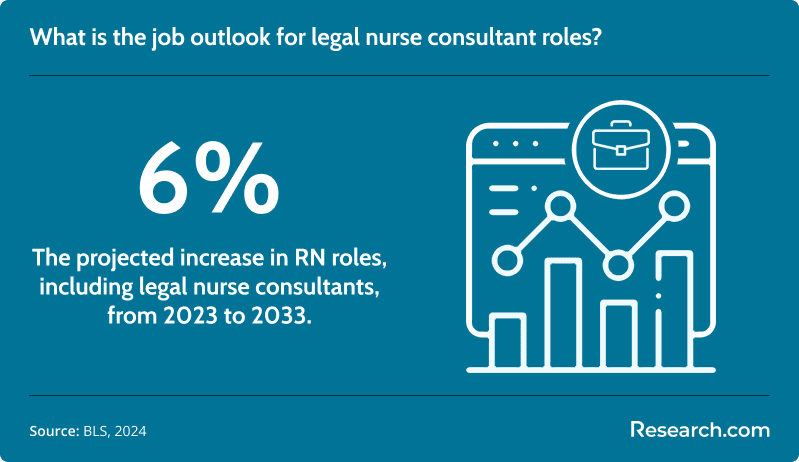
Legal nurse consulting is competitive because it is a niche field, not because nursing expertise is unimportant. The broader RN labor market remains strong: BLS projects employment of RNs to grow 6% from 2023 to 2033, faster than the average for all occupations, with approximately 194,500 RN job openings expected each year over the decade. That demand creates a broad foundation for nurses, but legal nurse consultant roles require additional positioning.
Employers and clients usually look for nurses who can do more than identify medical terms. They want consultants who can evaluate documentation, explain clinical significance, recognize standards-of-care issues, communicate with attorneys, and produce organized work under deadlines. Nurses with specialty experience in emergency care, surgery, critical care, obstetrics, pediatrics, psychiatry, correctional health, case management, or long-term care may be especially useful in related legal matters.
Competition is strongest for nurses trying to enter legal consulting without a clear niche, writing samples, legal process knowledge, or a professional network. The most successful transition usually involves a deliberate plan: identify your clinical strengths, learn the legal workflow, build sample work products, pursue relevant training, and connect with attorneys or organizations that handle cases matching your background.
How can advanced education and certifications elevate your legal nurse consulting career?
Advanced education and certification can make a legal nurse consultant more credible, but they should be chosen strategically. More credentials do not automatically create more clients. The best credentials are those that support the types of cases you want to review.
For example, a nurse with emergency department experience may benefit from emergency or trauma-related credentials, while a nurse interested in primary care malpractice may consider advanced practice preparation. Nurses who want a faster route into advanced clinical study may compare options such as a fast track nurse practitioner pathway, but they should weigh workload, clinical requirements, cost, and long-term goals before enrolling.
| Credential or education option | Best fit | Decision caution |
| Legal nurse consultant certification | RNs who want to demonstrate legal consulting knowledge and commitment. | Confirm eligibility requirements and whether the credential is recognized in your target market. |
| Specialty nursing certification | Nurses who want to consult in a clinical niche such as critical care, pediatrics, psychiatric care, or case management. | Choose a specialty aligned with your actual experience and likely case work. |
| BSN completion | Associate-prepared RNs who want stronger academic credentials and broader career flexibility. | Review accreditation, transfer credits, total cost, and scheduling demands. |
| MSN, NP, or DNP pathway | Nurses pursuing advanced practice, leadership, expert-level clinical credibility, or a broader consulting profile. | These programs require significant time and money; they are not necessary for every consultant. |
| Paralegal or legal studies training | Nurses who want to understand legal terminology, case processes, research, and law office expectations. | Legal training is useful, but clinical judgment remains the core value proposition. |
What industries have the highest demand for legal nurse consultants?
Legal nurse consultants are most useful wherever medical facts must be interpreted accurately for legal, financial, regulatory, or risk-related decisions. Demand is not limited to law firms, although law firms are one of the most visible employers.
- Law firms: Attorneys use legal nurse consultants for malpractice, personal injury, elder care, workers’ compensation, product liability, criminal defense, and medical damages cases.
- Insurance companies: Consultants may review claims, evaluate medical necessity, identify inconsistencies, support fraud investigations, or clarify injury-related documentation.
- Hospitals and healthcare systems: Risk management, quality assurance, and legal departments may use nursing insight to assess adverse events, documentation concerns, and policy compliance.
- Government agencies: Public health entities, Medicare fraud units, Veterans Affairs, and other agencies may need clinical review for audits, investigations, or litigation support.
- Pharmaceutical and medical device companies: Consultants can help evaluate clinical context in product liability, adverse event, device use, or safety-related disputes.
The strongest fit depends on your background. A nurse with long-term care experience may be valuable in nursing home litigation, while an operating room nurse may be better suited for surgical injury claims. The more clearly you connect your nursing history to a legal problem, the easier it is to position your consulting services.
Can adding nurse practitioner credentials enhance a legal nurse consulting career?
Nurse practitioner credentials can help some legal nurse consultants, especially when cases involve diagnosis, prescribing, treatment planning, primary care, psychiatric care, or advanced clinical decision-making. NP preparation may strengthen credibility in matters where attorneys need insight into provider-level reasoning rather than bedside nursing tasks alone.
That said, NP credentials are not required for all legal nurse consulting work. An experienced RN in a high-liability specialty may be more useful for certain cases than a newly credentialed NP without relevant case or specialty experience. The decision should depend on your desired niche, state practice environment, career timeline, and return on investment.
If advanced practice is part of your plan, comparing options such as the cheapest online nurse practitioner programs may help you evaluate cost-conscious routes into broader clinical practice while preserving a potential consulting focus.
Do legal nurse consultants need continuous professional development?
Yes. Legal nurse consultants need ongoing learning because healthcare standards, documentation practices, litigation strategies, telehealth, electronic records, privacy rules, and clinical guidelines continue to evolve. A consultant who stops learning can quickly lose credibility, especially when reviewing cases involving current care models or newer technologies.
Professional development may include legal nurse consultant conferences, specialty nursing continuing education, writing workshops, expert witness training, medical record review practice, HIPAA refreshers, and updates in risk management or healthcare compliance. Nurses who want to strengthen broader administrative and leadership knowledge can also explore options such as RN to BSN programs no clinicals, particularly if they need a flexible degree-completion format.
Continuing education should be purposeful. Focus on the cases you actually handle or want to handle. A consultant specializing in obstetric claims needs different updates than one focused on correctional health, medical devices, psychiatric injury, or long-term care.
What legal risks and liability considerations should legal nurse consultants address?
Legal nurse consultants work with sensitive medical information and may influence legal strategy, so risk management is essential. Consultants should understand confidentiality, HIPAA-related safeguards, scope of work, contract terms, record handling, documentation retention, conflicts of interest, and the limits of their opinions.
Professional liability insurance is often important, especially for independent consultants. Contracts should clearly define deliverables, fees, deadlines, confidentiality obligations, and whether the consultant is serving as a behind-the-scenes reviewer or a testifying expert. Consultants should also avoid overstating conclusions beyond what the records and their expertise support.
Nurses who are still building their academic foundation may consider broader nursing education routes, including BSN accelerated nursing programs, but education alone does not eliminate legal risk. Sound business practices, careful documentation, and ethical boundaries are just as important.
Which professional associations should legal nurse consultants join?
Professional associations can help legal nurse consultants build credibility, learn from experienced practitioners, find continuing education, and stay aware of practice expectations. They may also provide networking opportunities with nurses who already work in litigation support, expert witness coordination, risk management, or independent consulting.
Membership is most valuable when you use it actively. Attend webinars, ask questions, review sample resources, participate in discussions, and learn how established consultants price services, write reports, screen cases, and communicate with attorneys. If you are completing a degree while entering the field, flexible academic options such as an RN to BSN online self paced program may help you continue building credentials while staying engaged professionally.
Can advanced clinical credentials further boost legal nurse consulting opportunities?
Advanced clinical credentials can expand a legal nurse consultant’s case options when they align with the consultant’s experience and target market. For example, credentials in family practice, psychiatric care, critical care, case management, wound care, emergency nursing, or gerontology may help a consultant focus on specific claims and speak more confidently about relevant standards of care.
Direct-entry or advanced practice pathways may interest nurses planning a major career shift. Programs such as direct entry family nurse practitioner programs can support advanced clinical preparation, but they should be evaluated carefully. Consider admissions requirements, clinical placement expectations, accreditation, licensure implications, cost, and whether the credential will truly support your consulting niche.
How can legal nurse consultants stay ahead of evolving legal and healthcare trends?
Legal nurse consultants need to keep pace with both healthcare and legal practice. Electronic health records, telehealth documentation, AI-assisted review tools, cybersecurity concerns, value-based care, regulatory audits, and changing clinical guidelines can all affect how medical evidence is created and interpreted.
AI and software tools may help organize large case files, search records, draft timelines, or flag patterns, but they do not replace clinical judgment. Legal nurse consultants must verify outputs, protect confidential information, and avoid relying on automated summaries without reviewing source documents. Attorneys need defensible analysis, not unverified shortcuts.
Some nurses pursue doctoral or advanced practice education to deepen clinical leadership and evidence-based practice skills. If that fits your long-term plan, resources such as the shortest DNP program guide may help you compare accelerated options. For many consultants, however, targeted continuing education and specialty-specific updates may be more practical than another full degree.
Can legal nurse consultants work independently as contractors?
Yes. Many legal nurse consultants operate as independent contractors, working with attorneys, insurers, healthcare systems, agencies, or other clients on a case-by-case basis. Independent consulting can offer flexibility, niche focus, and control over workload, but it also requires business development and disciplined operations.
Independent consultants may review medical records, prepare chronologies, identify missing documents, locate potential expert witnesses, evaluate damages, help attorneys prepare deposition questions, or provide behind-the-scenes case analysis. Some may also serve as expert witnesses if they have the right qualifications and experience.
Self-employment usually requires more than clinical expertise. You may need a business entity, contracts, liability insurance, secure record management, billing processes, a professional website, referral relationships, and clear policies for confidentiality and conflicts of interest. Nurses who dislike marketing, invoicing, or client management may prefer employed or subcontracted roles before launching a solo practice.
| Work model | Advantages | Challenges |
| Employed legal nurse consultant | More predictable pay, established workflow, access to internal legal or claims teams. | Less control over caseload, schedule, and specialty focus. |
| Independent contractor | More flexibility, ability to choose a niche, potential to build a consulting business. | Requires marketing, contracts, billing, insurance, and client relationship management. |
| Subcontractor for established consultants | Useful entry point for gaining experience and learning expectations. | May offer less visibility and lower control over client relationships. |
| Expert witness role | Can draw on deep clinical expertise and may involve testimony. | Requires strong credentials, defensible opinions, deposition preparation, and comfort under scrutiny. |
Are there remote job opportunities for legal nurse consultants?
Yes. Remote and hybrid legal nurse consulting work is increasingly practical because many tasks can be completed through secure digital access to medical records, case files, and communication platforms. Chart review, chronology development, report writing, medical research, and case screening can often be done from a home office.
Remote work is common when consultants support out-of-state law firms, insurance companies, or organizations that rely on electronic records. However, some responsibilities may still require in-person attendance, especially for depositions, trial preparation meetings, testimony, or onsite risk reviews.
Remote legal nurse consultants must be especially careful with confidentiality, secure file storage, cybersecurity, HIPAA-related practices, and client communication. A home office is only appropriate if it supports professional privacy and reliable handling of sensitive case materials.
How can legal nurse consultants effectively market themselves?
Legal nurse consultants market themselves best by making their clinical value easy for legal professionals to understand. Attorneys do not just need “a nurse.” They need someone who can clarify medical facts, organize records, identify standards-of-care questions, and deliver usable work on deadline.
A strong marketing foundation may include a professional website, a concise services page, a clear specialty statement, a secure contact process, writing samples with no confidential information, a polished LinkedIn profile, and direct outreach to law firms that handle cases matching your background. Networking with plaintiff firms, defense firms, insurance professionals, risk managers, and experienced consultants can also lead to referrals.
Education can support your marketing message when it is relevant. For example, nurses completing RN to BSN fast track online programs may highlight stronger academic preparation along with clinical experience, legal training, and specialty knowledge. The key is to connect each credential to a client problem.
| Marketing asset | What it should communicate |
| Specialty statement | The types of cases you are best qualified to review. |
| Services list | Specific deliverables such as record review, chronologies, merit screening, deposition preparation, or expert witness support. |
| Professional bio | Your nursing experience, credentials, clinical specialties, and legal consulting training. |
| Writing sample | Your ability to organize medical facts clearly and objectively. |
| Referral network | Connections with attorneys, consultants, nurses, expert witnesses, and claims professionals. |
Common mistakes to avoid before becoming a legal nurse consultant
Legal nurse consulting can be rewarding, but nurses often underestimate the transition. The role is not simply a less physical version of bedside nursing. It requires writing, analysis, business judgment, legal awareness, and a willingness to learn how attorneys think.
| Common mistake | Better approach |
| Assuming any RN can immediately consult on any case | Start with cases aligned to your actual clinical experience and build from there. |
| Choosing training based only on price | Compare curriculum, instructor qualifications, case practice, writing assignments, and reputation. |
| Confusing a course certificate with professional certification | Check what credential is awarded and whether it is recognized by employers or clients. |
| Ignoring writing skills | Practice concise medical summaries, chronologies, and attorney-ready reports. |
| Launching an independent practice without contracts or insurance | Set up business basics before accepting sensitive case work. |
| Overpromising opinions | Stay within your expertise and base conclusions on records, standards, and defensible reasoning. |
| Relying only on rankings or program claims | Verify accreditation, outcomes, costs, transfer policies, and licensure implications when choosing degree programs. |
Questions to ask before choosing legal nurse consulting
- Which clinical specialty gives me the strongest consulting credibility?
- Do I want an employed role, subcontracting experience, or an independent consulting business?
- Am I comfortable writing detailed reports and explaining clinical issues to attorneys?
- What type of legal nurse consultant training matches my goal: exploration, employment, certification, or entrepreneurship?
- Do I need a BSN, MSN, NP credential, or specialty certification to reach my intended niche, or would targeted legal training be enough?
- How will I protect confidential records and manage liability if I work independently or remotely?
- What law firms, insurers, healthcare systems, or agencies handle cases connected to my nursing background?
- How much time can I realistically spend networking, marketing, and building a portfolio while still working as a nurse?
What do legal nurse consultants say about their career journey?
-
: "
Transitioning from bedside nursing to legal consulting gave me the work-life balance I desperately needed. I still use my clinical knowledge every day, but now I help attorneys build stronger cases and ensure patients’ stories are understood in court. The flexibility has allowed me to be more present for my family while continuing to make a meaningful impact in healthcare. Michelle
"
-
: "
Earning my LNCC credential opened doors I didn’t even know existed. I’ve reviewed hundreds of malpractice cases, contributed to high-stakes litigation, and even testified in court as an expert witness. This career has challenged me professionally and given me a renewed sense of purpose outside the hospital setting. Carlos
"
-
: "
After 15 years in critical care, I was craving a new direction that still honored my medical background. Legal nurse consulting gave me that fresh start, along with opportunities to specialize in areas like product liability and insurance fraud. The work is intellectually stimulating, financially rewarding, and has helped me grow in ways I never expected. Tricia
"
Key Insights
- Legal nurse consulting is best suited for experienced RNs who can connect clinical knowledge to legal questions involving records, standards of care, causation, damages, and documentation.
- The field is specialized: the US has more than 3.3 million RNs, while just under 5,000 professionals work as legal nurse consultants.
- Degree level varies among legal nurse consultants: 47% hold a bachelor’s degree, 28% hold an associate degree, and 13% hold a master’s degree, according to Zippia.
- Salary potential can be strong, but it is not guaranteed. Glassdoor reports estimated total compensation of $117,737 per year and an average base salary of $103,453 for legal nurse consultants, while BLS reported a median annual wage of $86,070 for RNs in May 2023.
- RN employment is projected by BLS to grow 6% from 2023 to 2033, with approximately 194,500 RN job openings expected each year over the decade, but legal nurse consulting roles still require niche positioning.
- Top-paying RN states that may signal stronger regional earning potential include California ($148,330), Hawaii ($123,720), Oregon ($120,470), Washington ($115,740), and Massachusetts ($112,610).
- The most useful training is practical: medical record review, report writing, legal terminology, case chronology development, litigation workflow, and professional ethics.
- Independent and remote consulting are possible, but they require secure records handling, liability planning, client management, contracts, and consistent marketing.
- Advanced credentials such as BSN, MSN, NP, DNP, specialty certifications, or legal studies coursework can help when they support a clear consulting niche; they should not be pursued without an ROI plan.
- Common resume skills include litigation (12.7%), medical malpractice claims (9.2%), and trial preparation (7.8%), reflecting the need to combine clinical judgment with legal case support.
References:
- BLS. (2024, August 29). Registered nurses. BLS.
- BLS. (2025, April 2). Occupational Employment and Wage Statistics (OEWS) tables. BLS.
- Glassdoor. (2025). Salary: Legal Nurse Consultant in United States 2025. Glassdoor.
- Zippia. (2024, July 25). Legal Nurse Consultant trends. Zippia.
- Zippia. (2025, January 8). Best Colleges and Degrees for Legal Nurse Consultants. Zippia.
- Zippia. (2025, January 8). Legal Nurse Consultant Demographics and Statistics [2025]: Number of legal nurse consultants in the US. Zippia.
- Zippia. (2025, January 8). Legal Nurse Consultant skills for your resume and career. Zippia.
Other Things You Should Know About What a Legal Nurse Consultant Is
Legal nurse consultants in 2027 typically need an active RN license and may pursue certification through the American Legal Nurse Consultant Certification Board (ALNCCB). Obtaining the Legal Nurse Consultant Certified (LNCC) credential requires 2,000 hours of legal nurse consulting experience and passing an exam.
By 2026, the career growth potential for legal nurse consultants is promising due to increasing demand for healthcare expertise in legal cases. Expanding opportunities in fields such as insurance, law firms, and regulatory bodies, along with technological advancements in healthcare, contribute to this upward trend.


