
2027 What is a Nurse Manager: Salary & Career Paths?

Co-Founder and Chief Data Scientist
Nurse managers play a vital role in ensuring smooth operations, quality patient care, and strong leadership within clinical teams. Balancing the responsibilities of both nursing and administration, these professionals are the backbone of effective hospital and healthcare unit management. For aspiring nurse managers, understanding the potential salary and various career paths is essential for setting realistic goals, making informed decisions, and planning for long-term success.
This article provides a comprehensive look at what it means and what it takes to be a nurse manager, including expected earnings and available pathways toward this dynamic role. Whether you're a practicing nurse considering a step up or a student mapping out your future, this guide will help you navigate your journey toward becoming a successful nurse manager.
Key Things You Should Know About Becoming a Nurse Manager
- Most nurse managers begin their careers as registered nurses (RNs) and typically hold a Bachelor of Science in Nursing (BSN) as a minimum requirement. However, many healthcare organizations now prefer or require a Master of Science in Nursing (MSN) or a Master of Healthcare Administration (MHA) for managerial positions.
- As a nurse manager, you’ll be overseeing nursing staff, coordinating schedules, resolving conflicts, and ensuring compliance with healthcare regulations.
- Beyond patient care, nurse managers are responsible for budgeting, staffing, quality assurance, and policy development.
- Nurse managers can work in hospitals, outpatient clinics, nursing homes, and other healthcare facilities.
- Although not always required, professional certifications such as the Nurse Executive Certification (NE-BC) or the Certified in Executive Nursing Practice (CENP) can enhance your qualifications, boost your credibility, and open doors to higher-level leadership roles.
- What is a nurse manager?
- What are the specific responsibilities and tasks of a nurse manager?
- What are the steps to becoming a nurse manager for 2027?
- What skills do you need as a nurse manager?
- Where can you work as a nurse manager?
- How much do nurse managers make?
- What is the job outlook for nurse managers?
- What are the career advancement opportunities for nurse managers?
- How can accelerated online education propel nurse management careers?
- How do emerging healthcare trends impact nurse management strategies?
- Are RN to BSN Programs with No Clinical Hours a Strategic Move for Nurse Managers?
- What are the alternative career options for nurse managers?
- How can nurse managers implement effective staff development and retention strategies?
- What challenges do nurse managers typically encounter?
- How can nurse managers effectively address staff burnout and improve team well-being?
- How Can Advanced Education Drive Nurse Management Success?
- How can nurse managers effectively measure performance outcomes?
- How can professional networks and mentorship enhance nurse management careers?
What is a nurse manager?
A nurse manager is a registered nurse who takes on a leadership role within a healthcare facility, overseeing a team of nurses and managing the day-to-day operations of a nursing unit or department. Often serving as the bridge between clinical staff and upper administration, nurse managers ensure that patient care is delivered efficiently, safely, and in accordance with healthcare regulations and organizational policies.
Unlike bedside nurses who primarily focus on direct patient care, nurse managers have a dual responsibility: they must maintain high standards of clinical care while also handling administrative tasks such as staffing, budgeting, performance evaluations, and policy implementation. They play a key role in mentoring and supporting nursing staff, managing conflicts, and promoting a positive and productive work environment.
In short, nurse managers are both leaders and advocates—guiding their teams, improving patient outcomes, and helping healthcare organizations run smoothly. Their work not only impacts the well-being of patients but also shapes the professional development and satisfaction of the nursing staff they supervise.
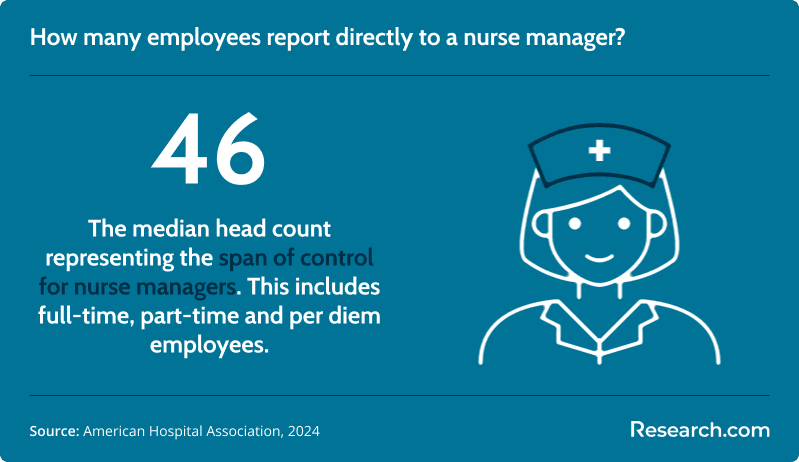
The image below shows the median span of control for nurse managers. The span of control is the number of direct reports assigned to nurse managers.
What are the specific responsibilities and tasks of a nurse manager?
Nurse managers wear many hats, balancing clinical knowledge with organizational leadership. Their responsibilities span across patient care coordination, team management, administrative oversight, and strategic planning. Here are some of the core duties nurse managers typically handle:
- Staff Management and Leadership: Nurse managers are responsible for hiring, training, supervising, and evaluating nursing staff. They create work schedules, delegate tasks, and ensure adequate staffing levels to meet patient care demands. A big part of their role involves mentoring nurses, addressing performance issues, and fostering a supportive work culture that promotes professional growth and teamwork.
- Patient Care Oversight: Although nurse managers are not always involved in direct patient care, they are ultimately accountable for the quality of care delivered by their team. This includes making sure that care standards are met, patient safety protocols are followed, and clinical outcomes are continuously monitored and improved.
- Budgeting and Resource Allocation: Managing the financial health of a nursing unit is a key administrative duty. Nurse managers are often in charge of creating and maintaining budgets, controlling costs, managing supply inventories, and ensuring efficient use of resources without compromising patient care quality.
- Policy Development and Compliance: Nurse managers help implement and enforce hospital policies, nursing procedures, and health regulations. They stay updated on changes in healthcare laws and standards, ensuring their units remain compliant with local, state, and federal guidelines, as well as accreditation requirements.
- Conflict Resolution and Communication: Serving as the go-between for staff nurses, physicians, patients, and hospital administrators, nurse managers must have excellent communication skills. They handle complaints, resolve conflicts, and ensure that concerns are addressed in a fair and timely manner.
- Quality Improvement and Strategic Planning: Nurse managers are also involved in quality assurance initiatives. They analyze performance metrics, identify areas for improvement, and lead efforts to implement best practices and evidence-based care. They play a role in long-term planning and may contribute to broader organizational goals and initiatives.
- Technology and Documentation Management: With the growing use of electronic health records (EHRs) and healthcare tech, nurse managers must be comfortable using digital systems to track care delivery, manage documentation, and analyze data. They may also train staff on how to properly use these tools.
The chart below shows that nurse managers in emergency departments handle the highest number of nursing staff. It also shows the median head count or number of direct reports, which is called the span of control, in other departments.
What are the steps to becoming a nurse manager for 2027?
Becoming a nurse manager is a journey that combines education, clinical experience, and leadership development. If you're aiming for this influential role, here are the typical steps you'll need to follow:
- Earn a Nursing Degree: Start by completing an accredited nursing program. Most nurse managers begin with either an Associate Degree in Nursing (ADN) or a Bachelor of Science in Nursing (BSN). However, a BSN is increasingly preferred and often required for leadership roles, as it provides more comprehensive training in critical thinking, leadership, and public health.
- Pass the NCLEX-RN Exam: After graduating from your nursing program, you’ll need to pass the National Council Licensure Examination for Registered Nurses (NCLEX-RN) to become a licensed registered nurse (RN). This licensure is mandatory to begin practicing as a nurse.
- Gain Clinical Experience: Hands-on experience is crucial. Most nurse managers have several years of bedside nursing under their belt before transitioning into leadership. This clinical background gives you the practical knowledge and credibility needed to manage a nursing team effectively.
- Pursue Advanced Education (Optional but Recommended): While not always mandatory, earning a Master of Science in Nursing (MSN), a Master of Healthcare Administration (MHA), or a related graduate degree can give you a significant advantage. There are various types of MSN degrees, but you can opt for a concentration in Nursing - Leadership and Management. These graduate programs often include coursework in leadership, healthcare policy, and management—skills essential for a nurse manager role.
- Develop Leadership Skills: As you gain experience, take on leadership responsibilities such as mentoring new nurses, leading committees, or managing small teams. These opportunities help you build the communication, problem-solving, and organizational skills needed for management.
- Obtain Professional Certification: Earning nursing certifications can boost your qualifications and show your commitment to excellence. Popular options include Nurse Executive Certification (NE-BC) by the American Nurses Credentialing Center (ANCC) and Certified in Executive Nursing Practice (CENP) by the American Organization for Nursing Leadership (AONL). These credentials validate your expertise and can make you a more competitive candidate for nurse manager roles.
- Apply for Nurse Manager Positions: Once you’ve built a solid foundation of experience and education, start applying for nurse manager roles. Be sure to highlight your leadership experience, clinical accomplishments, and any special training or certifications on your resume.
What skills do you need as a nurse manager?
Being a nurse manager requires more than just clinical expertise—it demands a well-rounded set of leadership, interpersonal, and organizational skills. These skills help you effectively manage staff, ensure high-quality patient care, and handle the administrative side of healthcare operations. Here are the key skills every nurse manager should possess:
- Leadership and Team Management: Nurse managers must inspire and guide their teams while maintaining morale and productivity. Strong leadership includes setting clear expectations, providing mentorship, and helping staff grow professionally. Effective managers lead by example and know how to handle team dynamics with confidence.
- Communication: Clear, respectful communication is essential in this role. Nurse managers must be able to communicate effectively with nurses, physicians, patients, and hospital executives. This includes listening actively, giving constructive feedback, and resolving misunderstandings or conflicts in a calm and professional manner.
- Critical Thinking and Problem-Solving: Healthcare settings are fast-paced and unpredictable. Nurse managers need sharp critical thinking skills to make quick, informed decisions—whether it’s solving a staffing issue, addressing a patient safety concern, or responding to a crisis.
- Organizational and Time Management Skills: With responsibilities ranging from staff scheduling to budget planning and performance reviews, nurse managers must be highly organized. Strong time management helps them juggle multiple priorities without compromising the quality of care or team support.
- Emotional Intelligence: Being aware of your own emotions and understanding the feelings of others is key to managing a team. Emotional intelligence allows nurse managers to build trust, reduce workplace stress, and maintain a supportive environment where staff feel heard and valued.
- Conflict Resolution: Disputes can arise among staff or between patients and caregivers. A successful nurse manager knows how to de-escalate tension, mediate disagreements, and find fair, respectful solutions that keep the team functioning smoothly.
- Clinical Knowledge: While nurse managers may not always provide direct care, a strong foundation in clinical nursing is still essential. It allows them to understand the challenges their teams face, make informed decisions about patient care, and provide meaningful guidance.
- Financial and Administrative Skills: Understanding budgeting, resource allocation, and hospital policies is crucial. Nurse managers often manage department finances, track supply use, and contribute to strategic planning—so being comfortable with numbers and documentation is a big plus.
- Adaptability: The healthcare landscape is constantly evolving, from new technologies to changes in regulations. Nurse managers need to stay flexible, embrace change, and help their teams adapt to new practices and environments.
Where can you work as a nurse manager?
Nurse managers are in demand across a wide range of healthcare settings, each offering unique environments, responsibilities, and patient populations. Whether you prefer the fast-paced nature of hospitals or the more routine rhythm of outpatient care, there’s a workplace that fits your leadership style and career goals. Here are some of the most common places where nurse managers work:
- Hospitals: Hospitals are the most common employers of nurse managers. In this setting, you might oversee specific units such as emergency, intensive care, pediatrics, or surgical departments. Hospital nurse managers often handle large teams and face high-pressure situations that require quick thinking and strong leadership.
- Outpatient Clinics: In outpatient clinics and ambulatory care centers, nurse managers oversee the delivery of care for patients who do not require overnight stays. These roles tend to have more regular hours and a consistent patient flow, making them appealing to those who prefer a structured environment.
- Nursing Homes and Long-Term Care Facilities: Nurse managers in long-term care settings are responsible for ensuring that residents receive quality, compassionate care. These roles involve close collaboration with families and caregivers, as well as the management of ongoing treatment plans for elderly or chronically ill patients.
- Rehabilitation Centers: In rehab facilities, nurse managers coordinate care for patients recovering from injuries, surgeries, or substance use disorders. The focus here is on long-term recovery and multidisciplinary teamwork, which requires excellent coordination and case management skills.
- Home Health Care Agencies: Some nurse managers work for agencies that provide in-home nursing services. In this role, you might manage a team of visiting nurses, oversee patient care plans, and ensure compliance with home care regulations.
- Community Health Organizations: Public health departments and nonprofit organizations often hire nurse managers to lead community health programs, vaccination clinics, and educational initiatives. These positions focus on population health and preventive care, and they often involve outreach and advocacy.
- Academic and Research Institutions: Nurse managers can also work in educational settings, supervising clinical programs for nursing students or managing research projects that contribute to evidence-based practice. These roles are ideal for nurses with a passion for education and innovation.
- Government and Military Health Services: Government-run healthcare facilities and military health services also employ nurse managers. These roles may involve serving veterans, active-duty personnel, or underserved populations, and they often require additional training or security clearances.
How much do nurse managers make?
The salary of a nurse manager can vary widely based on factors such as location, level of experience, education, type of healthcare facility, and even the size of the team they manage. However, nurse managers have one of the highest paying nursing jobs even without a post-graduate degree. They are generally well-compensated for their blend of clinical expertise and leadership responsibilities.
According to Salary.com, a nursing manager's salary in the United States can range from $104,000 to $150,000 per year, with the median annual salary being $125,600.
ZipRecruiter, meanwhile, reports the national average pay for nurse managers to be $102,684 per year.
Several factors can impact how much a nurse manager earns:
- Location: Urban areas and states with a high cost of living (such as Washington, New York, and Massachusetts) often offer higher salaries to remain competitive.
- Education Level: Nurse managers with advanced degrees (such as an MSN or MHA) and certifications (like NE-BC or CENP) often command higher salaries.
- Experience: The more years you've spent in nursing and leadership roles, the more likely you are to earn a higher salary.
- Facility Type: Working in large hospitals or academic medical centers may offer higher pay compared to smaller clinics or long-term care facilities.
- Specialization: Nurse managers who oversee critical care units or high-stress departments (like ER or ICU) may receive additional compensation due to the complexity of their roles.
In addition to base salary, nurse managers may receive:
- Bonuses or performance incentives
- Health and retirement benefits
- Paid time off and continuing education allowances
- Shift differentials or overtime pay (depending on the organization)
This table shows the top 10 states in terms of average salary for nurse managers, according to ZipRecruiter.
| State | Average Annual Salary | Average Hourly Salary |
| 1. Washington | $116,299 | $55.91 |
| 2. District of Columbia | $116,035 | $55.79 |
| 3. New York | $112,340 | $54.01 |
| 4. Massachusetts | $112,143 | $53.91 |
| 5. Alaska | $110,585 | $53.17 |
| 6. Vermont | $109,179 | $52.49 |
| 7. North Dakota | $108,648 | $52.23 |
| 8. Oregon | $108,566 | $52.20 |
| 9. Colorado | $107,974 | $51.91 |
| 10. Hawaii | $106,684 | $51.29 |
What is the job outlook for nurse managers?
The demand for nurse managers is expected to grow significantly in the coming years, reflecting broader trends in healthcare employment. According to the U.S. Bureau of Labor Statistics (BLS), employment of medical and health services managers—which includes nurse managers—is projected to increase by 29% from 2023 to 2033, a rate much faster than the average for all occupations. This growth translates to approximately 61,400 new job openings every year over this 10-year period.
Several factors contribute to this positive job outlook:
- Aging Population: As the baby boomer generation ages, there is an increased need for healthcare services, leading to a higher demand for skilled nursing leadership to manage patient care effectively.
- Healthcare Industry Expansion: The overall growth of the healthcare sector necessitates more managerial roles to oversee operations, ensure compliance with regulations, and maintain quality patient care standards.
- Nursing Workforce Dynamics: Anticipated shortages in the nursing workforce highlight the need for competent nurse managers who can efficiently manage staff and resources to meet patient care demands.
The chart below shows how much more in demand health and medical services management jobs are compared to other management occupations.
What are the career advancement opportunities for nurse managers?
Nurse managers have a strong foundation for advancing into higher leadership roles within the healthcare system. As they gain more experience and pursue certifications or further education, especially through online nursing programs, several career pathways open up—each offering increased responsibility, broader influence, and often higher compensation. Here are some common advancement opportunities for nurse managers:
- Director of Nursing (DON): One of the most common next steps is becoming a Director of Nursing. In this role, you'll oversee multiple units or departments, develop nursing policies, manage budgets, and work closely with senior leadership to align nursing operations with organizational goals.
- Chief Nursing Officer (CNO): The Chief Nursing Officer is the highest-ranking nursing executive in a healthcare facility. CNOs shape the overall vision for nursing services, lead strategic planning, and represent the nursing staff at the executive level. This role often requires a master’s or doctoral degree and extensive leadership experience.
- Healthcare Administrator or Executive: Some nurse managers transition into broader administrative roles, such as hospital administrator or health services manager. These positions go beyond nursing to oversee entire healthcare operations, including finance, staffing, compliance, and long-term planning.
- Clinical Nurse Specialist or Nurse Educator: For those who enjoy the clinical or teaching side of nursing, transitioning into a Clinical Nurse Specialist (CNS) or Nurse Educator role can be a rewarding path. These professionals focus on improving patient care practices or training the next generation of nurses, often working in academic or research settings.
- Quality Improvement or Risk Management Roles: Nurse managers with a strong eye for detail and systems thinking can move into roles focused on patient safety, regulatory compliance, and quality assurance. These roles are critical in enhancing care standards and reducing errors in healthcare settings.
- Consulting or Entrepreneurship: Experienced nurse managers may also explore independent consulting, helping healthcare organizations improve staffing models, streamline operations, or meet regulatory requirements. Others may start their own healthcare-related businesses or training programs.
- Further Education for Advanced Roles: Pursuing advanced degrees like a Doctor of Nursing Practice (DNP), PhD in Nursing, or MBA in Healthcare Management can open doors to executive-level roles, academic positions, or leadership opportunities in policy and research.
So is being a nurse worth it? It is, considering the wide range of nursing roles you can advance into. Becoming a nurse manager alone makes it worthwhile given the compensation and the demand.
How can accelerated online education propel nurse management careers?
Accelerated online education pathways offer nurse managers a flexible and efficient method to deepen their leadership and clinical expertise while continuing to work. This approach not only streamlines the transition from clinical practice to management but also equips professionals with contemporary management strategies, enabling more effective decision-making and team leadership. Incorporating structured, fast-tracked programs can bridge practical experience with advanced theory, reducing the time needed to advance into higher administrative roles. For instance, many nurse managers have successfully leveraged 9 month RN BSN online programs to enhance their credentials and adapt to evolving industry demands.
How do emerging healthcare trends impact nurse management strategies?
Nurse managers are increasingly required to navigate a landscape shaped by rapid digital transformation, evolving regulatory standards, and patient-centered technological innovations. They must integrate advancements such as telehealth, electronic health records, and predictive analytics into both clinical and administrative practices while ensuring robust data security and compliance with new regulations. Embracing these trends not only accelerates process improvements and enhances patient outcomes but also redefines leadership and strategic decision-making roles. For nurse managers seeking to refine their expertise in a digital era, exploring cheapest BSN to FNP online programs can provide a cost-effective pathway to advanced skills and continued career growth.
Are RN to BSN Programs with No Clinical Hours a Strategic Move for Nurse Managers?
Nurse managers face demanding schedules that require balancing clinical oversight with administrative responsibilities. Enrolling in non-clinical RN to BSN programs can provide an efficient pathway to enhance managerial competencies without the added burden of extra clinical hours. These programs focus on developing skills such as strategic planning, financial management, and leadership excellence, directly aligning with the operational needs of healthcare facilities. For professionals aiming to advance their career while minimizing disruptions to their current role, exploring options like RN to BSN no clinical hours enables a targeted educational investment that supports immediate leadership impact.
What are the alternative career options for nurse managers?
While many nurse managers choose to stay on the traditional path of healthcare leadership, others may decide to explore alternative career options that leverage their clinical experience, leadership skills, and healthcare knowledge in new and rewarding ways. Here are several viable alternatives for nurse managers looking to pivot or diversify their careers:
- Nurse Consultant: Nurse consultants provide expert advice to healthcare organizations, legal teams, or insurance companies. This role can involve evaluating clinical practices, improving patient care processes, or serving as a legal nurse consultant in malpractice cases. It offers flexibility and the chance to influence healthcare outcomes from behind the scenes.
- Healthcare Recruiter: With their deep understanding of the healthcare industry, nurse managers make excellent recruiters for nursing and medical staff. Working for staffing agencies, hospitals, or recruitment firms, they help match qualified candidates with healthcare roles while ensuring proper fit and compliance.
- Health Informatics Specialist: Nurse managers who enjoy working with data and technology may transition into health informatics. In this role, they help manage electronic health records (EHRs), optimize clinical workflows, and use data analytics to improve patient outcomes and organizational efficiency.
- Case Manager or Care Coordinator: These roles focus on helping patients navigate the healthcare system, particularly those with chronic conditions or complex care needs. Nurse managers can use their organizational and clinical skills to coordinate treatment plans, manage resources, and ensure continuity of care.
- Healthcare Writer or Educator: If you have a passion for teaching or writing, you could pursue a career as a healthcare writer, content creator, or nursing educator. Whether developing training materials, writing for medical publications, or teaching future nurses, this path offers a creative outlet and the opportunity to make an impact through education.
- Occupational Health Nurse: In this role, nurse managers work within corporate or industrial settings to promote workplace health and safety. Duties may include conducting health screenings, managing employee wellness programs, and responding to workplace injuries or illnesses.
- Policy or Advocacy Roles: Some nurse managers shift into public health, advocacy, or healthcare policy work. They may join nonprofit organizations, government agencies, or think tanks to influence healthcare legislation, advocate for nursing professionals, or contribute to community health initiatives.
- Entrepreneur: With experience in managing teams and operations, some nurse managers start their own businesses—such as home healthcare agencies, consulting firms, or wellness coaching services. This path offers autonomy and the chance to shape your own career vision.
How can nurse managers implement effective staff development and retention strategies?
Effective staff development and retention are pivotal in building resilient, high-performing teams. Nurse managers can establish structured mentoring programs, implement regular performance reviews with actionable feedback, and introduce targeted training sessions that align with both organizational goals and individual career aspirations. Integrating accessible educational options, such as RN to BSN self paced online, provides a flexible pathway for professional growth while fostering continuity in patient care. Leveraging data analytics to monitor progress and adjusting strategies based on staff needs encourages a culture of continuous improvement and long-term retention.
What challenges do nurse managers typically encounter?
The role of a nurse manager can be incredibly rewarding, but it is not one of the easiest nursing jobs. It comes with a unique set of challenges. Balancing clinical responsibilities with administrative duties, leading diverse teams, and navigating constant changes in healthcare requires resilience and adaptability.
Here are some of the most common challenges nurse managers face:
- Staffing Shortages: One of the biggest hurdles for nurse managers is dealing with staffing shortages. Whether caused by high turnover, budget constraints, or a general lack of qualified nurses, insufficient staffing can lead to burnout, decreased morale, and compromised patient care—all of which the nurse manager must address and manage.
- High Stress and Burnout: Managing a nursing unit can be emotionally and physically demanding. Nurse managers are often expected to handle emergencies, mediate conflicts, and stay on call for issues at any time. Without proper support or work-life balance, this constant pressure can lead to burnout.
- Conflict Resolution: Workplace conflict—whether between staff members or between staff and patients—can disrupt team harmony. Nurse managers must act as mediators, resolving issues professionally while maintaining team cohesion and fairness.
- Administrative Overload: Alongside their clinical oversight, nurse managers handle a significant amount of paperwork and administrative tasks, including scheduling, budgeting, compliance documentation, and performance evaluations. Juggling these duties without neglecting staff or patients can be challenging.
- Keeping Up With Regulatory Changes: Healthcare is a constantly evolving field, with frequent changes in laws, policies, and accreditation requirements. Nurse managers must stay informed and ensure their teams comply with the latest standards—often requiring continuous training and policy updates.
- Balancing Patient Care and Operational Goals: Nurse managers are expected to maintain high-quality patient care while also meeting organizational goals like cost-efficiency and productivity. This balancing act can be difficult, especially in under-resourced or high-pressure environments.
- Technology Adoption: With the rise of electronic health records (EHRs) and other healthcare technologies, nurse managers are often tasked with helping staff adapt to new systems. They must ensure successful implementation, provide training, and troubleshoot issues—all while maintaining patient care standards.
- Team Motivation and Retention: Keeping nurses motivated and engaged is a constant challenge, especially in high-stress settings. Nurse managers must foster a positive work environment, recognize achievements, and support professional development to prevent burnout and retain top talent.
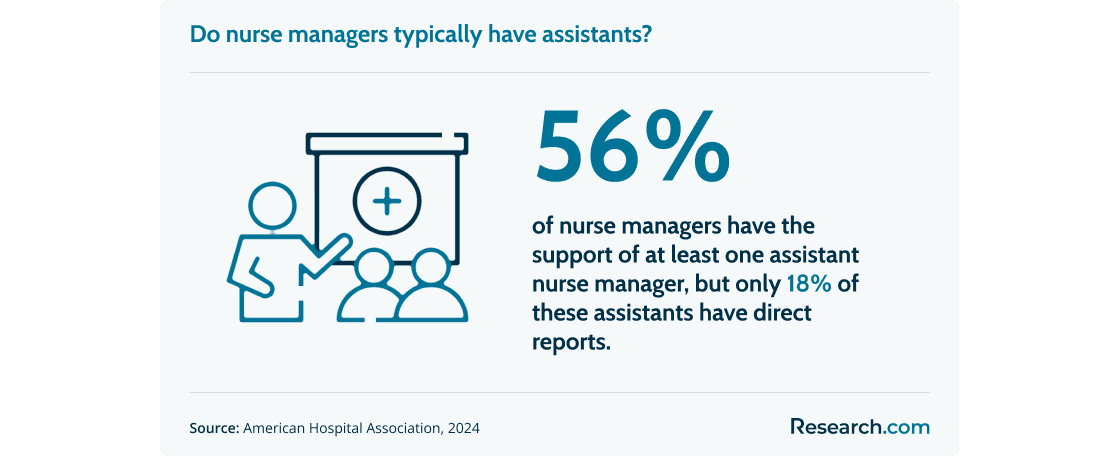
The nurse manager role is one of the most challenging in a hospital setting. Because of staffing shortages, one in four inpatient managers have spans of control of 78 or higher, but many of them do not have the support of an assistant nurse manager.
How can nurse managers effectively address staff burnout and improve team well-being?
Nurse managers can implement targeted strategies to recognize and alleviate burnout among their teams. Developing structured support programs—such as regular mental health evaluations, team debriefings, and stress management workshops—can create an environment that encourages open communication about workload challenges. Incorporating flexible scheduling and workload redistribution practices further ensures sustained staff energy and commitment. In addition, continuous professional development, including advanced clinical leadership courses like DNP online, equips managers with evidence-based approaches to foster resilience and promote a culture of well-being.
How Can Advanced Education Drive Nurse Management Success?
Advanced education plays a vital role in empowering nurse managers to navigate complex healthcare environments with increased confidence and strategic insight. Specialized coursework and targeted degree programs sharpen business acumen, foster innovative leadership, and promote evidence-based decision-making. For example, nurse managers who enhance their clinical expertise through programs like accelerated family nurse practitioner programs gain valuable skills that translate into improved team coordination and operational efficiency. Continuously updating one’s knowledge base through advanced studies supports proactive problem-solving and enables nurse managers to lead with precision in evolving clinical settings.
How can nurse managers effectively measure performance outcomes?
Nurse managers can enhance decision-making by establishing a robust framework of Key Performance Indicators (KPIs) that integrates clinical outcomes with operational efficiency. Quantitative metrics, such as patient satisfaction scores, staffing ratios, and budget adherence, can be balanced with qualitative insights gathered from staff and peer evaluations. Leveraging data analytics tools facilitates real-time monitoring and benchmarking against industry standards, ensuring that adjustments are both timely and evidence-based. In addition, continuous education through programs like online accelerated BSN programs offer practical strategies for aligning performance measurement with evolving healthcare trends.
How can professional networks and mentorship enhance nurse management careers?
Professional networks and structured mentorship programs offer nurse managers access to industry insights, leadership strategies, and peer support that are critical for navigating complex challenges. These relationships foster continuous professional growth by facilitating knowledge exchange about regulatory updates, resource management, and strategic decision-making. Engaging with seasoned professionals and leveraging collaborative platforms can also provide opportunities to explore advanced academic pathways, such as direct entry MSN NP programs, thereby broadening career trajectories without compromising current responsibilities.
Here’s What Nurse Managers Have to Say About Their Career
- Becoming a nurse manager has allowed me to combine my passion for patient care with leadership and strategic planning. The salary increase compared to floor nursing was a game-changer for my family, giving us more financial security. I’m now on a clear path toward becoming a Director of Nursing and making a bigger impact on healthcare. Martha
- Transitioning into a nurse manager role gave me the opportunity to mentor younger nurses and truly shape the quality of care in our unit. It’s not always easy, but the professional growth, leadership experience, and financial rewards are well worth the challenge. I’ve grown more confident, more organized, and more fulfilled in my career. Derrick
- I never imagined I'd go from bedside care to sitting in executive planning meetings, but here I am—and loving it. The structured career path, higher earning potential, and influence on organizational decisions make this role incredibly rewarding. Every day feels like a chance to grow and lead with purpose. Janelle
Key Findings
- As of April 2025, the average annual salary for a nursing manager in the United States is approximately $125,600. Salaries typically range from $104,012 to $149,672, with most professionals earning between $114,300 and $138,200.
- Compensation for nurse managers varies significantly across states. For instance, in California, the average annual salary is $134,700, while in Alabama, it's $112,200. These differences often reflect the local cost of living and demand for healthcare professionals.
- Nurse managers earn substantially more than RNs. While the median annual wage for RNs was $86,070 in May 2023, nurse managers' salaries are notably higher, reflecting their advanced responsibilities and leadership roles.
- A 2024 survey reported that 70% of nurse managers expressed high satisfaction with their jobs, an increase from 63% in 2023. This satisfaction encompasses aspects like salary, benefits, authority level, and opportunities for advancement.
- Employment for medical and health services managers, including nurse managers, is projected to grow by 29% from 2023 to 2033.
- According to the American Hospital Association, the median span of control -- which is the number of direct reports assigned to nurse managers -- for nurse managers is a 46 head count. This includes full-time, part-time and per diem employees.
- One in four inpatient managers have spans of control of 78 or higher.
- Despite positive job satisfaction, the healthcare sector faces challenges. Approximately 41% of nurses have indicated intentions to leave their jobs within two years, which could impact staffing and increase demand for nurse managers to address workforce stability.
References:
- American Hospital Association. (2024, April 30). 4 Ways to Make Nurse Managers More Impactful. AHA.org.
- Gilmartin, D.J., and Saver, C. (2025, February 3). 2024 nursing trends and salary survey. American Nurse.
- Bureau of Health Workforce - Health Resources & Services Administration. (2024, November). State of the U.S. Health Care Workforce, 2024. HRSA.
- Salary.com. (2025, April 1). Nursing Manager Salary in the United States. salary.com.
- United States Bureau of Labor Statistics. (2024, April 3). Occupational Employment and Wage Statistics: 11-9111 Medical and Health Services Managers. BLS.
- United States Bureau of Labor Statistics. (2024, August 29). Occupational Outlook Handbook: Medical and Health Services Managers. BLS.
Other Things You Should Know About Becoming a Nurse Manager
In 2027, nurse managers are primarily responsible for overseeing the nursing staff, ensuring high-quality patient care, managing budgets and resources, and developing policies and procedures. They focus on administrative roles while occasionally providing direct patient care to maintain clinical skills.
In 2027, the average salary for a nurse manager in the U.S. is projected to be around $115,500 annually, with variations depending on factors such as geographic location, level of experience, and the specific healthcare institution. Larger urban hospitals typically offer higher salaries.


