
2027 Adult Learners Are Higher Education’s Largest Untapped Market—But Most Institutions Aren’t Designed for Them

Co-Founder and Chief Data Scientist
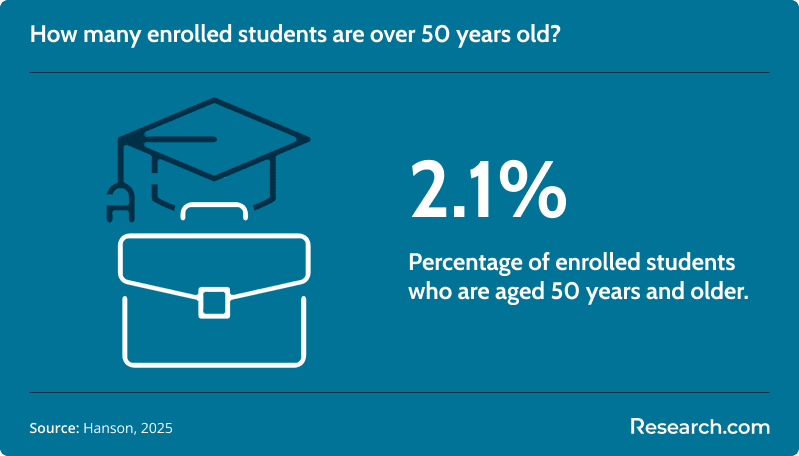
Stepping back into the academic arena after years in the workforce often feels like an insurmountable challenge, especially when university structures seem designed exclusively for teenagers. According to the Education Data Initiative, over 14 million non-traditional students are currently enrolled, proving that adult learners in higher education are fundamentally shifting the academic landscape. The reality is that the modern economy demands continuous upskilling, yet many institutions still force working professionals into rigid, outdated learning models.
Key Benefits of Finishing Higher Education
- BLS data indicate that individuals with a bachelor's degree earn a median weekly income of $1,543, significantly outpacing the $930 earned by those with only a high school diploma.
- The same federal data reveals that bachelor's degree holders face a mere 2.5% unemployment rate, providing crucial job security in a rapidly fluctuating digital economy.
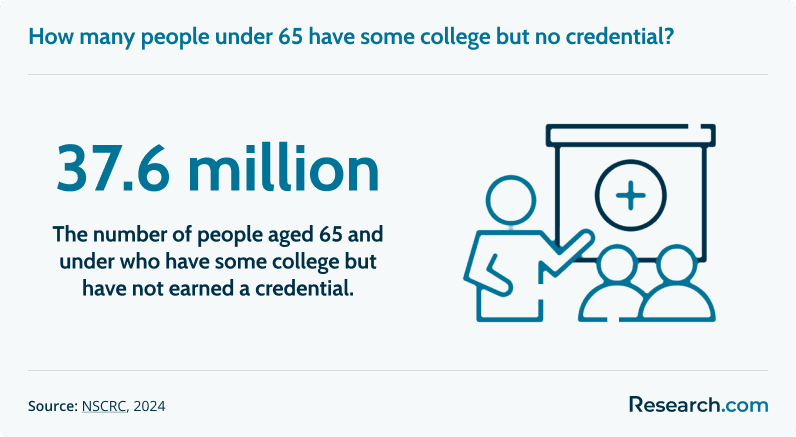
- According to the National Student Clearinghouse Research Center, 43.1 million Americans have some college credit but no credential, representing a massive opportunity to fast-track graduation through transfer credits.
- Why More Adults Are Going Back to College
- First, You Have to Believe You Still Belong
- The Problem Isn't You--It's an Outdated System
- What an Adult-Friendly University Should Do Differently
- Why Online Learning Can Finally Put You in Control
- From Finishing a Degree to Keeping Up With a Changing Workforce
- Your Experience May Be Your Biggest Advantage in an AI-Driven Economy
- [Checklist] How to Tell Whether a University Is Really Built for Working Adults
Why More Adults Are Going Back to College
The rapid technological disruption of the modern economy requires continuous upskilling for professional survival, making adult learners in higher education the new dominant demographic. We are witnessing a fundamental shift where the "half-life" of learned professional skills is shrinking dramatically due to artificial intelligence and automation. The World Economic Forum reports that the core skills required for most roles are changing so rapidly that continuous education is no longer a luxury, but a necessity.
Institutions can no longer rely on the traditional pipeline of 18-year-old high school graduates to fill their physical classrooms. This demographic shift is a massive advantage for an adult learner's career trajectory. Because you represent the core survival mechanism for these universities, you hold the leverage to demand programs that cater specifically to your professional timeline.
First, You Have to Believe You Still Belong
The traditional campus environment often triggers intense imposter syndrome for older students who feel out of place in physical classrooms designed for teenagers. Walking into a lecture hall filled with 18-year-olds when you have a decade of corporate experience can make you question your place in academia. This psychological barrier is one of the most significant, yet least discussed, hurdles preventing capable professionals from completing their degrees.
Your Professional Experience Is an Academic Advantage
You must reframe this anxiety by recognizing that your real-world experience is a profound academic asset, not a liability. When evaluating the best college majors, your years in the workforce provide a practical context that younger students often lack. You are not starting from scratch; you are simply formalizing the expertise you have already built.
The Problem Isn't You--It's an Outdated System
Archaic university bureaucracies actively deter working professionals by demanding they repeat outdated prerequisites and navigate confusing administrative portals. When you decide to return to school, the last thing you need is a demoralizing audit that dismisses your previous academic efforts. The National Student Clearinghouse Research Center notes that millions of adults fall into the "Some College, No Credential" category, often stalled by these exact institutional roadblocks.
Traditional Universities Create Unnecessary Friction
The friction is rarely the coursework itself; it is the bureaucratic maze required just to sit in the digital classroom. To protect your time and resources, you must proactively identify and bypass these common administrative traps. Look out for these specific institutional failures when evaluating potential schools:
- The expiration of prerequisites: Universities arbitrarily deciding that foundational courses taken a decade ago are no longer valid.
- The "college know-how" deficit: A lack of onboarding support for adults who need to learn modern Learning Management Systems.
- The redundancy of 101 courses: Forcing seasoned managers to take introductory business classes.
What an Adult-Friendly University Should Do Differently
True institutional adaptation requires Credit for Prior Learning (CPL) and competency-based models that respect an adult's existing professional expertise. According to the National Center for Education Statistics, non-traditional students have distinct risk factors, such as full-time employment and dependents, which demand specialized institutional support. You have spent years acquiring high-level skills in the workplace, and forward-thinking institutions will translate that expertise directly into academic credit.
When researching the most affordable online colleges for working adults, true affordability is found in the credits you do not have to pay for. Institutions that genuinely support adult learners in higher education will offer clear pathways to bypass redundant coursework. Look for these specific structural adaptations:
- Robust Credit for Prior Learning (CPL) policies: Clear guidelines for converting work experience into transcripts.
- Competency-based assessments: Testing out of subjects you have already mastered in the field.
- Wraparound adult advising: Counselors dedicated specifically to maximizing your transfer credits.
Why Online Learning Can Finally Put You in Control
Asynchronous, accelerated online formats completely eliminate the physical age gap by shifting the focus from classroom attendance to objective skill mastery. In a digital environment, nobody knows or cares about your age; they only see the quality of your insights and the caliber of your work. This format strips away the social anxieties of the traditional campus, allowing you to focus entirely on the academic material.
By enrolling in the best accelerated online undergraduate degrees for working adults, you take absolute control over your pacing. You can move swiftly through familiar concepts and dedicate more time to challenging new material. This agile approach not only moves up your graduation date but also fundamentally aligns your educational progression with the pace of modern business.
From Finishing a Degree to Keeping Up With a Changing Workforce
Forward-thinking institutions are successfully aligning their curricula with market needs by launching targeted, accelerated programs tailored for working adults. "Working adults need programs that prepare them not just for the technology of today, but for whatever comes next," said Dr. Emily Smith, Assistant Provost-Online Learning at Lipscomb University.
Lipscomb University is following this structural evolution, having launched an online accelerated IT management program designed specifically to bridge the gap between rigorous academic theory and immediate workforce demands. "At Lipscomb Online, we designed the IT Management program to combine relevant technical skills with the leadership and critical thinking needed to help organizations navigate rapid change," Dr Smith said.
Pursuing an information technology degree online or a similarly tech-adjacent credential also signals to the market that you are adaptable and forward-thinking. You are saying that you take control of your career trajectory, rather than wait for industry changes to dictate your future.
Your Experience May Be Your Biggest Advantage in an AI-Driven Economy
Non-traditional students can leverage their years of workplace communication and leadership experience to accelerate through competency-based coursework. The conflict resolution, project management, and strategic communication skills you utilize daily are highly advanced academic concepts. While an 18-year-old must learn these theories from a textbook, you already possess a deep, practical understanding of their application.
Turning Lived Experience Into a Career Credential
For adult learners in higher education, your lived experience is the ultimate study guide for advanced coursework. When you approach complex organizational theories, you will naturally map them to real-world scenarios you have navigated in your career. This makes the learning process faster, deeper, and significantly more relevant to your immediate professional goals.
You can strategically formalize these soft skills into powerful credentials. Pursuing the fastest online business communication degree allows you to translate your innate leadership abilities into a recognized academic format. This validates your expertise to future employers while minimizing the time spent in the digital classroom.
[Checklist] How to Tell Whether a University Is Really Built for Working Adults
Working adults must evaluate universities based on their asynchronous flexibility, transparent transfer credit audits, and dedicated support systems for older students.
A university like Lipscomb, which openly recognizes the importance of balancing work, family, and other responsibilities, is a good sign that you’re on the right track.
Whatever university you choose, remember that you are the consumer in this dynamic, and you must rigorously vet institutions to ensure they are structurally designed to support your success. Do not settle for a university that simply records its traditional daytime lectures and calls it an "online program."
To guarantee you are entering an ecosystem built for adult learners in higher education, use a strict evaluation framework before enrolling. You must demand transparency and structural support from any institution asking for your tuition dollars. Look for these non-negotiable elements:
- Asynchronous flexibility: The ability to access lectures and complete assignments on your own weekly schedule.
- Transparent transfer audits: A guaranteed, upfront assessment of how many of your past credits will apply to your new degree.
- Dedicated adult support teams: Access to academic advisors who specialize in the unique logistical challenges of working professionals.
The rigid 16-week semester is rapidly becoming obsolete for professionals who require agile, fast-paced learning models to keep up with industry demands. By choosing accelerated terms, you can maintain intense focus on one or two subjects at a time. This agile approach not only accelerates your graduation date but also fundamentally aligns your educational progression with the pace of modern business.
References:
- Bureau of Labor Statistics (BLS). (2025). Education pays: Earnings and unemployment rates by educational attainment. Employment Projections. Retrieved March 10, 2026, from BLS.
- Hanson, M. (2025). College Enrollment & Student Demographic Statistics. Education Data Initiative. Retrieved March 10, 2026, from Education Data Initiative.
- National Center for Education Statistics (NCES). (2022). Do you have information on postsecondary enrollment trends?. Enrollment. Retrieved March 10, 2026, from NCES.
- National Student Clearinghouse Research Center. (2024). Some college, no credential student outcomes. Retrieved March 10, 2026, from NSCRC.
Frequently Asked Questions (FAQs)
Yes, adult learners are fully eligible for federal financial aid by completing the Free Application for Federal Student Aid (FAFSA). Many non-traditional students qualify for Pell Grants, federal student loans, and specific scholarships designed exclusively for returning professionals. You should immediately consult your employer's human resources department, as many companies offer robust tuition reimbursement programs for upskilling.
Online degrees from regionally accredited institutions hold the exact same value and prestige as their on-campus counterparts. Employers today evaluate the accreditation of the university and the specific skills acquired, not the physical medium through which the information was delivered. Completing a rigorous online degree demonstrates high-level time management and digital communication skills to prospective employers.
Many higher education institutions prioritize traditional, full-time students, often neglecting flexible scheduling, customized learning paths, and support services that adult learners require. With commitments like jobs and families, adult learners seek affordable, accessible programs, a need largely unmet in the 2027 higher education landscape.
It is absolutely never too late to return to college; entering the classroom with decades of life experience provides a massive strategic advantage. At 40, you have a clear vision of your career goals, unparalleled discipline, and a deep understanding of workplace dynamics that younger students lack. This maturity allows you to extract significantly more value and immediate return on investment from your educational pursuits.


