
From Theology to the C-Suite: How Faith-Based Education Builds In-Demand Soft Skills, Ethical Leadership, and Real-World Career ROI

Co-Founder and Chief Data Scientist
Hiring managers across corporate and non-profit sectors are facing a persistent problem: candidates arrive with strong technical skills but lack the critical soft skills needed to navigate complex human dynamics. The modern workforce demands ethical decision-making, restorative conflict resolution, and empathetic leadership—competencies that standard business or technical degrees rarely prioritize.
The direct answer to this gap is coming from an unexpected academic avenue. Adult learners are increasingly turning to faith-based education to build these exact marketplace competencies. Rather than viewing a Christian studies or theology degree solely as a stepping stone to ordained ministry, students are leveraging this coursework to develop a robust, ethical foundation that translates directly into secular leadership roles.
Institutions like Lancaster Bible College (LBC) exemplify this shift by equipping students with spiritually grounded, ethically driven leadership and interpersonal skills—alongside academic training—that directly address the soft-skill gaps employers increasingly face across sectors.
Key Benefits of a Biblically Integrated Education
- Advanced Ethical Frameworks: Students learn to navigate moral gray areas, a skill highly valued in corporate governance and non-profit management.
- Restorative Problem-Solving: Coursework emphasizes human dignity, equipping graduates to handle human resources and team conflicts.
- Holistic Mentorship: Intentional academic models focus on aligning a student's personal values with their long-term vocational goals.
- "Experience Different": What Biblical Integration Actually Looks Like
- The Digital Community: Redefining Online Education
- The Professionalization of Ministry Roles
- The Soft Skills Gap: Translating Theology to the Corporate World
- Addressing the "Echo Chamber": Academic Rigor and Diverse Perspectives
- Mapping the ROI: Career Pathways and Outcomes
"Experience Different": What Biblical Integration Actually Looks Like
Recent data from the Barna Group highlights a critical cultural demand for resilient, well-being-focused leaders across both ministry and secular sectors. Meeting this demand requires more than just adding a mandatory religion class to a standard college schedule. True biblical integration changes how the core subject matter is taught and applied.
We see LBC utilize this methodology as an "Experience Different" educational model. This approach solves the isolation often felt in digital learning. Students evaluating faith-based online bachelor's programs are increasingly prioritizing this type of close-knit academic environment. In this model, professors don't just grade papers; they actively mentor students based on their specific vocational callings.
When a curriculum is properly integrated, the core tenets of faith actively shape the professional discipline. For example:
- Criminal Justice: Instead of just memorizing penal codes, students evaluate law enforcement, courts, and corrections through the lens of equal justice and humane treatment. LBC’s program trains students to apply ethical principles to achieve restorative justice, rather than relying solely on punitive measures.
- Sport Management: In LBC’s program, students learn to implement comprehensive sport programs in a $400 billion industry, utilizing biblical principles of stewardship. Fully accredited by the Commission on Sport Management Accreditation (COSMA), the curriculum proves that faith-based athletic programs can meet the highest industry standards while focusing on holistic athlete development rather than just the scoreboard.
By treating the student as a whole person, this educational framework ensures that graduates are fully equipped to apply their faith and purpose in the boardroom, the community clinic, or the local church.
The Digital Community: Redefining Online Education
The reality of modern higher education is that adult learners require flexibility, but they often sacrifice community to get it. Traditional online formats can feel highly transactional, reducing the student experience to a series of discussion boards, recorded lectures, and automated quizzes where the individual is little more than a login credential.
The direct answer to this isolation is an educational model that intentionally engineers relational learning, regardless of the medium.
Students who pursue a Christian studies degree online are actively seeking programs that refuse to compromise on mentorship and peer connection.
Successfully implementing a close-knit, faith-based educational model requires distinct strategies depending on the environment:
- In-Person Implementation: Traditional campuses rely on physical proximity to build community. This includes weekly chapel gatherings, face-to-face faculty mentorship, live classroom debates, and spontaneous peer interactions that naturally occur in dormitories or student centers.
- Digital Implementation: Online programs must proactively design this community. This is achieved through synchronous video cohorts, virtual spiritual formation groups, accessible faculty office hours via video conferencing, and localized practicums that require students to apply their coursework directly within their own hometowns.
The benchmark for modern digital integration relies on structural support rather than just software. For example, LBC’s online interdisciplinary studies degree implements flexible 8-week courses with live, faculty-led instruction. Furthermore, the assignment of dedicated Student Success Coaches ensures that digital learners receive the exact same level of academic and vocational guidance as their on-campus counterparts.
The Professionalization of Ministry Roles
There is a lingering misconception that faith-based leadership relies solely on personal calling rather than professional qualification. In reality, the sector has become highly professionalized, with non-profits, hospitals, and large religious organizations requiring advanced, accredited credentials for leadership and administrative roles.
According to the Association of Theological Schools (ATS), the 2024-2025 academic year saw 12,608 new enrollments in Master of Divinity (MDiv) programs alone, proving that individuals are actively seeking formal academic preparation for these complex roles.
To meet this demand without removing leaders from their current contexts for years at a time, many institutions have optimized their curriculum delivery. Working professionals need efficient, rigorous pathways to gain these necessary credentials while maintaining their current employment and community presence.
In LBC’s 100% online Ministry Leadership degree, theoretical learning is paired with three substantial field experiences. This ensures that students understand team dynamics, cultural sensitivity, and servant leadership before they ever step into a vocational role.
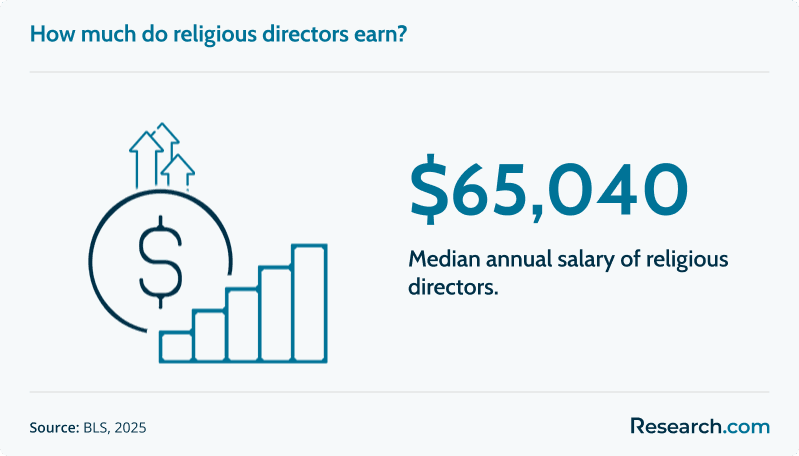
This professionalization is directly reflected in the compensation and diverse hiring sectors for these positions. Bureau of Labor Statistics (BLS) data indicates that Directors of Religious Activities and Education earn a mean annual wage of $65,040, with significant employment found outside local churches in general medical hospitals and individual and family services.
The Soft Skills Gap: Translating Theology to the Corporate World
Corporate executives frequently face a frustrating reality: they can easily train a new hire on proprietary software, but they cannot easily train them to possess integrity, empathy, or complex moral reasoning. When an organization faces an internal crisis or a community relations issue, it is rarely a technical failure that causes the most damage. Instead, it is a lack of the foundational soft skills required to navigate human dynamics and ethical gray areas.
This professional deficit has created a unique opening for graduates who have been trained to think deeply about the human condition. While a traditional business degree focuses on the mechanics of a transaction, a biblically integrated curriculum focuses on the "why" of human behavior and organizational ethics.
Students learn to translate theological principles into tangible marketplace competencies, including:
- Ethical Synthesis: The ability to analyze complex corporate dilemmas through a consistent moral framework rather than just short-term profitability.
- Empathetic Management: A leadership style that prioritizes the dignity of the individual, which has been shown to increase employee retention and morale.
- Restorative Conflict Resolution: Moving beyond punitive measures to solve workplace disputes in a way that preserves professional relationships and organizational health.
Prospective students often find that a theology degree online is surprisingly applicable to human resources, organizational management, and corporate governance.
By studying historical conflicts and ethical frameworks, graduates learn to approach modern workplace challenges with a level of nuance that purely technical programs often miss. This makes them highly resilient in sectors that require high-stakes decision-making and empathetic leadership.
This translation of faith to secular practice is perhaps most visible in the clinical sector. LBC’s accelerated 4+1 BS/MA in Psychology and Clinical Mental Health Counseling serves as a prime example. The program explicitly merges research-based counseling theory with biblical truth to address the rising crisis of anxiety and depression.
Addressing the "Echo Chamber": Academic Rigor and Diverse Perspectives
A common hesitation for prospective students considering a faith-based institution is the fear of entering an "intellectual echo chamber." There is a perceived risk that such a model might rely on narrow viewpoints or a curriculum that ignores secular realities in favor of a single belief system. However, for institutions holding regional accreditation, the reality is quite the opposite. To maintain these credentials, colleges must demonstrate that they prepare students to engage critically with a wide range of diverse perspectives.
True biblical integration is not about avoiding secular thought; it is about providing a framework to analyze it. In a high-quality program, students are required to study opposing viewpoints deeply so they can articulate their own positions with clarity and respect.
This academic rigor is maintained through several key pedagogical requirements:
- Comparative Analysis: Students are often required to study world religions and secular philosophies to understand the broader cultural context in which they will work.
- Critical Thinking Mandates: Assignments focus on "defending a thesis" against counter-arguments, a skill that is essential for any leader in a pluralistic society.
- Peer-Reviewed Standards: Faculty are held to the same scholarly standards as their secular counterparts, ensuring that the information presented is academically sound and current.
For adult learners who are already established in their careers, finding an efficient way to gain this academic depth is a priority. Many look for the shortest online degree in religious studies as a way to gain a rapid, cost-effective entry point into these higher-level ethical discussions.
These streamlined programs allow students to bridge the gap between their current professional experience and a new, values-driven leadership role without spending years away from the workforce.
Mapping the ROI: Career Pathways and Outcomes
The return on investment (ROI) for a faith-based degree becomes most apparent when you look at the specific, high-demand career pathways these programs unlock. Because these degrees emphasize versatile soft skills, graduates are not confined to the walls of a local church. Instead, they are actively mapping out careers that lead to executive roles in non-profits, healthcare administration, and community service organizations.
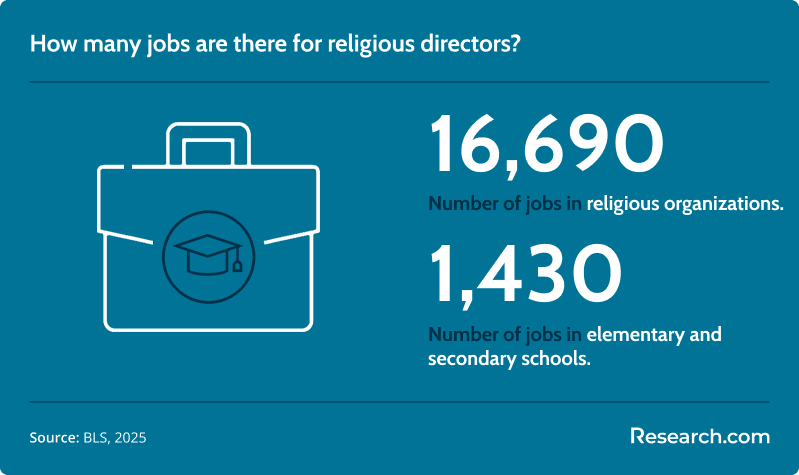
The data confirms that these roles are financially viable and growing. For instance, according to Bureau of Labor Statistics data, Directors of Religious Activities and Education find significant employment in general medical and surgical hospitals and individual and family services. These sectors value the holistic approach to care and administration that a faith-integrated education provides.
Graduates are increasingly pursuing Christian leadership career paths that allow them to apply their ethical training in diverse settings like NGOs and international relief organizations.
To reach the executive levels of these large-scale organizations, advanced credentials are often a non-negotiable requirement. Working professionals who need to maintain their current leadership positions while advancing their education seek accelerated online MDiv programs to meet these credentialing needs.
Ultimately, the true value of the "Experience Different" educational model is that it refuses to separate faith from vocation. Whether double-majoring in Biblical Studies and Criminal Justice or pursuing COSMA-accredited Sport Management, graduates exit with both the academic authority and the moral resilience needed to influence their communities and thrive in their careers.
References:
- Lancaster Bible College. (2024). LBC Introduces Brand Refresh for 2025 + New Tagline: Experience Different. Retrieved March 20, 2026, from LBC.
- Middle States Commission on Higher Education. (2024). Standards for accreditation and requirements of affiliation. Retrieved March 20, 2026, from MSCHE.
- National Association of Colleges and Employers. (2024). What is career readiness?. Competencies. Retrieved March 20, 2026, from NACE.
- National Center for Education Statistics. (2024). Enrollment in elementary, secondary, and degree-granting postsecondary institutions, by level and control of institution, enrollment level, and attendance status and sex of student: Selected years, fall 1990 through fall 2031. U.S. Department of Education. Retrieved March 20, 2026, from NCES.
- U.S. Department of Education. (2024). College Scorecard: Lancaster Bible College. Retrieved March 20, 2026, from U.S. Department of Education.
- Zippia. (2025). Pastor demographics and statistics in the US. Retrieved March 20, 2026, from Zippia.
Frequently Asked Questions (FAQs)
A faith-based education emphasizes holistic personal development by nurturing core soft skills such as empathy, communication, and collaboration. These programs often incorporate service learning and ethical dialogues, which prepare students for leadership roles across varied industries beyond traditional theological careers.
Check for regional accreditation. Accreditors, like the Middle States Commission on Higher Education (MSCHE), ensure that the institution meets the same rigorous academic standards as any public or private secular university. This ensures your degree will be respected by employers and other graduate schools.
Yes. High-quality accredited programs require students to engage with diverse worldviews and secular theories. The goal of these programs is to teach students how to think critically and articulate their own ethical positions in a pluralistic society.
Many institutions offer "fast-track" or accelerated formats specifically designed for adult learners. These may include 8-week course terms, credit for prior learning or ministry experience, and fully digital formats that allow you to balance education with full-time employment.


