
2027 Are Online Architecture Master's Degrees Respected by Employers? Hiring Trends & Career Outcomes

Co-Founder and Chief Data Scientist
Choosing an online architecture master’s degree is not just a question of convenience. The real issue is whether the credential will help you qualify for better roles, strengthen your portfolio, meet licensure-related expectations, and earn the confidence of architecture employers. That decision matters because architecture hiring still depends heavily on evidence: design work, technical skill, studio judgment, software proficiency, collaboration, and the credibility of the school behind the degree.
Employer attitudes have become more flexible, especially as remote collaboration and digital design workflows have become routine. A recent survey found that 62% of employers now consider graduates from accredited online architecture programs equally qualified for entry-level positions. Still, acceptance is not automatic. Hiring managers look closely at accreditation, institutional reputation, portfolio quality, internship or project experience, and whether the program provides rigorous studio-based learning.
This guide explains how employers evaluate online architecture master’s degrees, what salary and career outcomes graduates can reasonably expect, which industries are most receptive, and how to judge whether a program is respected enough to support your goals.
Key Benefits of Knowing Whether Online Architecture Master's Degrees Are Respected by Employers
- Employers increasingly recognize online architecture master's graduates, especially from accredited programs, valuing skills and portfolio quality over delivery mode, reducing earlier biases.
- Studies show online graduates perform comparably in workplace effectiveness, often demonstrating strong self-motivation and project management skills crucial in architecture roles.
- Graduates with online architecture degrees report improved promotion opportunities and salary growth when their programs have strong industry ties and recognized alumni networks.
How Have Employer Perceptions of Online Architecture Master's Degrees Changed Over the Past Decade?
Employer perceptions of online architecture master’s degrees have moved from broad skepticism to conditional acceptance. In the early 2010s, many employers associated online education with uneven quality, especially because some for-profit colleges offered online programs with unclear academic standards. In architecture, that concern was sharper because the profession depends on studio critique, technical drawing, design iteration, material understanding, and applied project work.
The COVID-19 pandemic changed the context. Universities had to deliver design courses, critiques, and collaboration remotely, while firms also adopted hybrid work, digital review sessions, shared modeling platforms, and virtual client meetings. As a result, employers became more familiar with remote learning and remote professional workflows. Champlain College’s 2023 survey reflected this shift, reporting that 84% of employers are now more accepting of online education than they were before the pandemic.
That does not mean every online architecture degree is treated the same. Employers are more likely to respect an online master’s when it comes from an accredited, established institution with a demanding curriculum, qualified faculty, strong studio expectations, and visible graduate outcomes. They are less likely to trust programs that lack professional accreditation, provide little portfolio development, or make unrealistic career promises.
What changed most for employers?
- Delivery format matters less than proof of skill. Employers increasingly ask whether the graduate can produce strong design work, use professional tools, communicate decisions, and contribute to projects.
- Accreditation became the first credibility check. A degree that does not meet recognized standards can create problems for hiring, advancement, or licensure-related pathways.
- Remote collaboration became normal. Online graduates who can manage critiques, deadlines, design files, and team communication in digital environments may align well with modern firm workflows.
- Institutional reputation still carries weight. A respected university name can reduce employer uncertainty, especially when the online program follows the same standards as its campus equivalent.
The same credibility questions appear in other professional fields, including online SLP master’s programs, but architecture students need to be especially careful because portfolio quality, studio rigor, and licensure-related expectations can affect how far the degree will carry them.
What Do Hiring Managers Actually Think About Online Architecture Graduate Credentials?
Hiring managers rarely evaluate an online architecture master’s degree in isolation. They usually read it alongside the school name, accreditation status, portfolio, work history, software skills, references, and evidence of studio or project-based learning. Surveys and employer guidance from organizations such as the National Association of Colleges and Employers (NACE) and the Society for Human Resource Management (SHRM) show a broader shift toward judging program quality and candidate capability rather than relying only on whether a degree was earned online or on campus.
In practice, employer reactions vary by firm type, location, and role. A large urban design firm with a deep campus recruiting pipeline may still favor familiar traditional programs. A smaller firm, public agency, consulting practice, or regional employer may care more about whether the applicant can support projects immediately.
- Large firms may be more brand-conscious. They often receive many applications and may use school reputation, portfolio strength, and prior internship experience as early screening factors.
- Smaller firms may be more skills-focused. They may give online graduates serious consideration when the portfolio shows practical design ability and technical readiness.
- Accreditation reduces risk. Hiring managers are more comfortable when the program is accredited and clearly aligned with professional expectations.
- Geography can influence acceptance. Hiring flexibility often increases outside major metropolitan markets where employers may prioritize adaptable candidates and local talent availability.
- The portfolio can override doubts. Strong drawings, models, design narratives, construction understanding, and software fluency can make delivery format a secondary issue.
As one senior recruiter from a national architecture and design firm explained: “What matters most is whether the candidate can showcase practical skills, handle design software proficiently, and contribute to real projects.” That view captures a key point: an online degree can open the door, but the portfolio and interview performance usually determine how far the candidate advances.
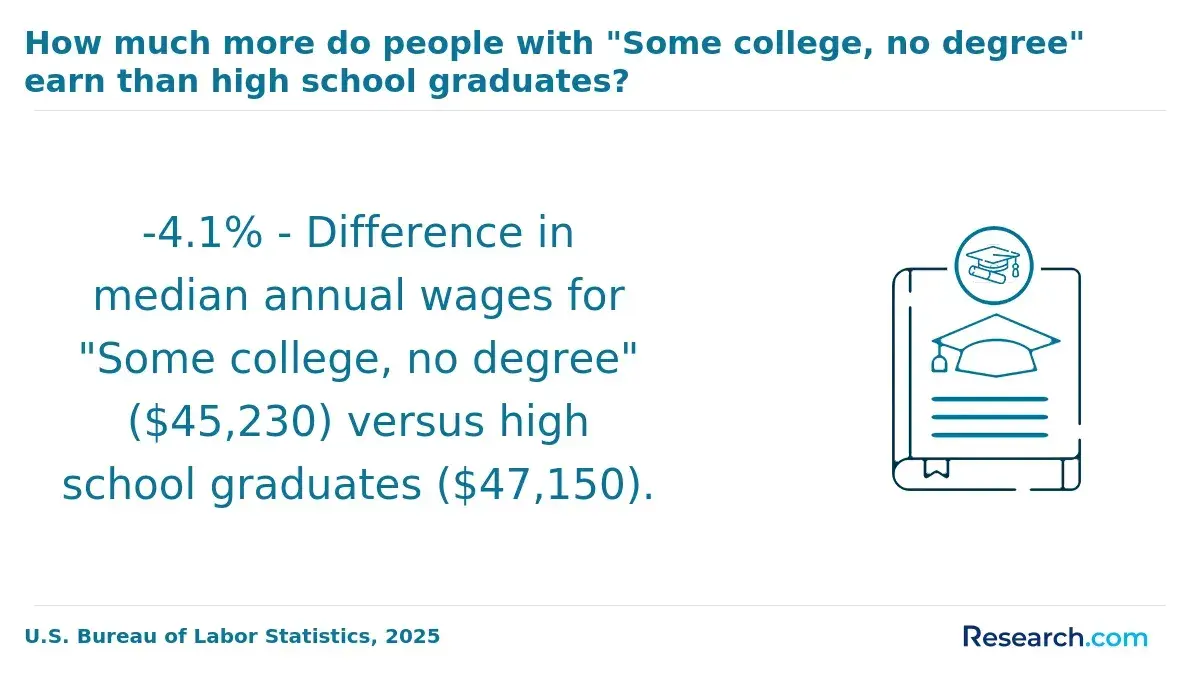
Students who want to strengthen a graduate credential can also add targeted technical or management skills through carefully chosen short certificate programs that pay well, but certificates should support a coherent architecture career plan rather than substitute for a respected degree and portfolio.
Does Accreditation Determine Whether an Online Architecture Master's Degree Is Respected?
Accreditation is one of the strongest signals of whether an online architecture master’s degree will be respected. It does not guarantee a job, a salary increase, or licensure eligibility in every situation, but it helps employers and licensing-related bodies judge whether the program meets recognized academic and professional standards.
Students should understand the difference between institutional and programmatic accreditation. Regional accreditation evaluates the overall institution. Programmatic or professional accreditation evaluates the architecture program itself. In architecture, employers and licensing-related pathways often pay close attention to professional accreditation because it speaks directly to curriculum quality, studio expectations, and preparation for professional practice.
The National Architectural Accrediting Board (NAAB) is the primary body providing this specialized recognition in the U.S. A NAAB-accredited program signals that the curriculum has been reviewed against rigorous professional criteria. For an online architecture master’s, that recognition can be especially important because it helps separate serious programs from weaker credentials that happen to be delivered online.
How to verify accreditation before enrolling
- Check the institution. Use the U.S. Department of Education’s Database of Accredited Postsecondary Institutions and Programs (DAPIP) to confirm institutional accreditation.
- Check the program. Use the Council for Higher Education Accreditation (CHEA) and NAAB resources to verify whether the architecture program has relevant professional recognition.
- Confirm the exact degree name. Accreditation may apply to specific programs, not every architecture-related credential at a university.
- Ask about licensure alignment. If your goal is professional licensure, confirm how the program fits the requirements in the state or jurisdiction where you plan to practice.
- Avoid assumptions. A university may be accredited while a specific architecture program is not professionally accredited.
Recent data indicates graduates from accredited online programs have employment rates within 10% of those from traditional, on-campus programs, demonstrating growing employer acceptance when accreditation standards are met. The important qualifier is “accredited.” An unaccredited program can limit job options, weaken employer trust, and complicate future credentialing decisions.
One professional who pursued an online architecture master’s degree described accreditation as the deciding factor. He was shifting careers and worried that an online format might be viewed as less credible. After checking government databases and contacting alumni, he said the program’s NAAB accreditation gave him confidence: “It felt like a green light when talking to firms.” His experience shows why accreditation should be verified before comparing tuition, format, or course schedules.
How Does Institutional Reputation Affect the Value of an Online Architecture Master's Degree in the Job Market?
Institutional reputation can meaningfully affect how employers read an online architecture master’s degree. A recognizable university name may create a “brand premium,” especially when employers already know the school’s faculty, alumni, design approach, or hiring pipeline. In competitive applicant pools, that familiarity can help a graduate get a closer look.
Leading universities such as the University of Southern California and the University of Illinois Urbana-Champaign are examples of institutions whose broader reputations can strengthen confidence in their online offerings when faculty quality, curriculum standards, and academic rigor match campus expectations. Published rankings and employer hiring pipeline data, including surveys from the National Association of Colleges and Employers (NACE), also show that employer perception often favors graduates from recognized institutions.
Reputation, however, should not be confused with guaranteed outcomes. A well-known school can help, but it will not compensate for a weak portfolio, limited technical skill, poor interview preparation, or a program that offers little career support. Conversely, a mid-tier university with strong accreditation, serious studio work, active industry relationships, and transparent alumni outcomes may provide a better return than a more famous program with limited professional connection.
How to judge reputation in a practical way
- Look beyond the university name. Evaluate the architecture department, not only the parent institution.
- Review faculty experience. Faculty who are active in design, research, practice, or professional organizations can strengthen the learning environment.
- Check alumni pathways. Ask where graduates work, what roles they enter, and whether they advance into licensed, managerial, or specialized positions.
- Assess employer connections. Career fairs, studio partnerships, guest critics, internships, and employer projects can matter as much as prestige.
- Compare cost to likely outcomes. A higher-priced program should offer clear advantages in mentorship, portfolio development, reputation, or career mobility.
Prospective students should also weigh affordability alongside reputation and program quality. Many qualified candidates compare online architecture pathways with related options, including top-ranked engineering schools online, to understand how different technical graduate programs balance cost, rigor, and professional payoff.
What Salary Outcomes Can Online Architecture Master's Graduates Realistically Expect?
Online architecture master’s graduates should expect salary outcomes to depend less on the word “online” and more on role, location, experience, licensure progress, portfolio strength, employer type, and program credibility. A master’s degree can support higher earnings, but it does not automatically move a graduate into a senior role or guarantee a specific salary.
The 2024 “Education Pays” report by the U.S. Bureau of Labor Statistics shows that master’s degree holders earn notably higher median weekly wages and face lower unemployment rates than those with only a bachelor’s degree across various fields. Within architecture, the BLS Occupational Outlook Handbook shows that individuals with a bachelor’s degree earn a median annual salary of roughly $85,000, whereas those holding a master’s degree often reach or surpass $95,000. That difference suggests a financial upside, but individual results vary widely.
Research from NYU SPS and other studies cited in this area point to negligible differences in salary outcomes between graduates of accredited online and traditional on-campus master’s programs. That finding is important: when a program is credible and the graduate can demonstrate strong skills, the delivery format is usually not the main salary driver.
How to think about return on investment
- Compare total cost, not only tuition. Include fees, technology, materials, travel for any residencies, and time away from paid work.
- Estimate the realistic salary lift. A $40,000 investment in an online master’s that boosts annual earnings by around $10,000 could see payback within about four years, excluding additional career growth.
- Factor in time to completion. A slower part-time program may reduce short-term pressure but delay the salary benefit.
- Consider career stage. Early-career students may benefit differently than experienced professionals seeking leadership, specialization, or licensure-related advancement.
- Do not rely on averages alone. Ask programs for role-specific and location-specific graduate outcomes when available.
Online graduate enrollment has surged by over 15% annually, reflecting growing acceptance of remote learning formats that maintain academic standards. For architecture students, that trend is encouraging, but the strongest salary outcomes still come from combining a credible degree with measurable design ability, workplace experience, and professional networking.
One graduate described the path as demanding but worthwhile. She initially felt pressure to prove that her online credential was rigorous, especially in interviews. Over time, her employers focused more on her portfolio, real-world assignments, and ability to contribute to projects than on the delivery format. Her experience reflects a practical lesson: salary growth follows performance and proof, not the credential alone.
Which Architecture Industries and Employers Are Most Receptive to Online Master's Degree Holders?
The most receptive employers are typically those that already value skills-based hiring, digital collaboration, and flexible talent pipelines. According to the National Association of Colleges and Employers (NACE) Job Outlook 2026 survey, nearly 70% of employers now prioritize demonstrated capabilities over the traditional mode of degree delivery. That shift benefits graduates of accredited online architecture programs, particularly when they can show strong project work and technical readiness.
Government, consulting, nonprofit, technology-adjacent, healthcare design, and public-sector employers may be especially open to online master’s graduates because these environments often emphasize practical competencies, documentation, compliance, planning, user needs, and project coordination. Fortune 500 companies and public agencies also show growing flexibility when credentials are accredited and candidates meet job requirements.
- Government and public agencies: Often focus on qualifications, documentation, planning knowledge, sustainability, accessibility, and public project experience.
- Consulting firms: May value research, analysis, technical communication, and the ability to work across disciplines.
- Nonprofit and community design organizations: Often prioritize mission alignment, problem-solving ability, and community-centered design experience.
- Technology and healthcare design fields: May be receptive to graduates who understand digital tools, user experience, systems thinking, and specialized environments.
- Boutique architecture firms: May be open to online graduates, but they usually expect a strong portfolio and evidence that the candidate can contribute quickly.
Some private-sector firms with long-standing recruiting relationships may still prefer graduates from traditional, campus-based master’s programs. This is not always a rejection of online education; it may reflect habit, alumni networks, or the perceived value of in-person studio culture. Online students can offset that disadvantage by building a polished portfolio, seeking internships or project-based experience, requesting strong references, and attending industry events where possible.
The best strategy is to match the program to the employer market you want. If your target is a design-heavy studio, prioritize critique quality and portfolio development. If your target is public planning, sustainability, project management, or technical coordination, evaluate whether the curriculum builds those competencies directly.
How Do Online Architecture Master's Programs Compare to On-Campus Programs in Terms of Curriculum and Academic Rigor?
Strong online architecture master’s programs can match on-campus programs in curriculum and academic rigor, but only when they are intentionally designed for studio-based learning rather than simply moving lectures onto a video platform. Reputable universities often use the same syllabi, faculty, assignments, and assessments across online and campus formats. The difference is usually how students interact, receive critiques, collaborate, and complete hands-on or residency components.
- Curriculum equivalency: Established online Architecture programs may use identical syllabi and faculty as campus-based versions, helping maintain consistent academic expectations.
- Accreditation standards: NAAB and regional accreditation help confirm that a program meets or exceeds minimum academic requirements and supports employer trust.
- Studio culture: Online programs need structured critiques, peer review, design iteration, and faculty feedback to recreate the learning value of studio work.
- Collaborative learning: Synchronous sessions, virtual cohorts, shared design files, and project-based assignments can support meaningful interaction.
- Hands-on training: Hybrid options, local labs, site-based assignments, or on-site residencies may be important for specialized architectural learning.
- Enrollment signal: Enrollment in accredited online Architecture master’s programs has risen over 15% recently, reflecting broader professional acceptance.
Students comparing programs should ask direct questions about critique frequency, faculty access, software requirements, studio expectations, residency obligations, portfolio review, and capstone structure. A serious online architecture design degree should make those expectations clear before enrollment.
The trade-off is straightforward. Online programs can offer flexibility for working professionals and students who cannot relocate. On-campus programs may offer easier access to studios, fabrication spaces, campus recruiting, and spontaneous faculty interaction. Neither format is automatically better. The stronger choice is the one that provides the academic rigor, professional recognition, and learning environment you need to produce competitive work.
What Role Does the Online Learning Format Play in Developing Job-Ready Skills for Architecture Careers?
The online learning format can build job-ready skills when it is structured around real design work, collaboration, critique, and professional tools. Architecture practice increasingly relies on digital communication, shared files, virtual meetings, remote markups, and cross-disciplinary coordination. Online students who learn to manage deadlines, present work clearly, document decisions, and collaborate across distance can develop habits that transfer directly to modern practice.
The National Association of Colleges and Employers (NACE) framework highlights career readiness competencies such as critical thinking, digital literacy, and professionalism. Online architecture programs that intentionally embed these competencies into studio projects, presentations, group work, and client-style assignments can prepare graduates effectively without relying on a traditional campus environment.
Skills online architecture students can develop well
- Digital literacy: Using design software, collaboration platforms, file management systems, and presentation tools efficiently.
- Self-management: Planning long-term studio projects, meeting critique deadlines, and balancing coursework with professional or personal responsibilities.
- Remote collaboration: Working with peers and instructors through asynchronous comments, live reviews, shared models, and virtual presentations.
- Professional communication: Explaining design decisions clearly in writing, visuals, and oral presentations.
- Project documentation: Organizing process work, revisions, and final deliverables in a way that supports portfolio development.
The format also has limitations. Online students may need to work harder to build professional networks, find mentors, access fabrication facilities, and participate in campus recruiting. They should compensate by joining professional organizations, attending local design events, seeking internships, asking faculty for introductions, and scheduling regular portfolio feedback.
For students comparing online education across disciplines, examples such as an online degree in psychology show how affordability, accessibility, accreditation, and institutional reputation can shape outcomes. Architecture students should apply the same scrutiny, with added attention to studio quality and portfolio production.
What Do Graduate Employment Outcomes and Alumni Data Reveal About Online Architecture Master's Degrees?
Graduate employment outcomes and alumni data reveal whether an online architecture master’s degree performs well beyond marketing claims. A program may describe itself as flexible, rigorous, or career-focused, but the stronger evidence is where graduates work, how quickly they find relevant roles, what salaries they report, and whether employers repeatedly hire from the program.
Prospective students should request official placement rates, median salary data, employer partner lists, internship participation, portfolio review processes, and examples of alumni career paths. If a school cannot provide clear outcomes, ask why. Some newer programs may have limited data, but established programs should be able to explain how graduates fare.
The National Center for Education Statistics (NCES) IPEDS database provides graduation rate benchmarks that help applicants assess program completion success. The National Association of Colleges and Employers (NACE) offers graduate outcomes standards that can help students compare employment rates and starting salaries more carefully. These external frameworks are useful because they reduce reliance on vague claims such as “strong career outcomes” or “high employer demand.”
What to ask before trusting employment data
- Is the data verified? Third-party validation, independent audits, or NACE-aligned reporting can make outcomes more reliable.
- Who is included? Find out whether the data includes all graduates or only those who responded to a survey.
- What counts as employed? A general job is not the same as an architecture-related role.
- Are salaries role-specific? Median salary data is more useful when connected to job title, experience level, and location.
- Where do alumni work? Employer lists, LinkedIn patterns, and alumni panels can show whether the program has real market traction.
Self-reported employment data can be selective, especially when programs highlight only the most favorable outcomes. Stronger programs tend to be transparent about both successes and limitations. Students comparing online architecture degrees can also learn from career-focused online fields such as online cybersecurity degree programs, where clear employment metrics are often central to program evaluation.
What Are the Biggest Misconceptions Employers Have About Online Architecture Master's Degrees?
The biggest misconception is that an online architecture master’s degree is automatically less rigorous than an on-campus degree. That assumption is increasingly outdated, especially for accredited programs offered by reputable universities. Research, including an Excelsior College and Zogby Analytics study, found that 83% of executives now consider online degrees as reputable as traditional ones.
Still, misconceptions persist because online program quality varies. Some employer concerns are unfair; others are reasonable questions that applicants should be ready to answer with evidence.
- Misconception: Online degrees are easier. Accredited online architecture programs can require demanding studio work, critique, research, software use, and long project timelines.
- Misconception: Online students lack collaboration skills. Many online students regularly work through virtual critiques, team projects, shared files, and remote presentations.
- Misconception: Online programs do not support licensure-related goals. This depends on accreditation and jurisdiction-specific requirements, so students must verify the program carefully.
- Misconception: Employers reject online credentials outright. Employer acceptance has grown, particularly when the degree is accredited and the candidate’s portfolio is strong.
- Misconception: A degree alone proves readiness. Employers still need to see design judgment, technical ability, communication skills, and practical experience.
The best way for graduates to overcome skepticism is to make the online format almost irrelevant. Lead with the portfolio, explain the rigor of the studio process, name the accreditation clearly, show applied project work, and discuss how the program strengthened your ability to contribute in a professional setting.
What Is the Long-Term Career Outlook for Professionals Who Hold an Online Architecture Master's Degree?
The long-term outlook for professionals with an online architecture master’s degree is strongest when the degree is accredited, the graduate builds substantial experience, and the credential supports a clear career direction. Over time, employers typically care less about whether the degree was earned online and more about what the professional has designed, managed, documented, improved, or led.
Fields related to architecture, like urban planning, landscape architecture, and civil engineering, are projected to grow between 5% and 10% through 2032-2034, indicating stable job prospects for those with a master’s degree. Median salaries in these areas often start above $70,000, with many positions offering earnings exceeding $90,000 annually. According to data from the U.S. Bureau of Labor Statistics (BLS), professionals who obtain an advanced degree typically see their salaries increase by about $24,588 per year, rising from approximately $69,459 before the degree to $94,047 afterward.
Those figures should be read as broad indicators, not promises. Architecture-related earnings depend on location, licensure status, specialization, firm size, project type, and years of experience. A master’s degree may help with advancement into design leadership, technical specialization, sustainability, planning, project management, teaching, research, or architecture-adjacent roles, but professional growth still requires a record of performance.
The legitimacy of online graduate education is also becoming harder to dismiss. The National Center for Education Statistics (NCES) reported that over 2.5 million graduate students were enrolled exclusively online in 2023-24. As online graduate enrollment becomes more common, the delivery format is likely to matter less than accreditation, institutional quality, and demonstrated career outcomes.
For long-term planning, students should ask one practical question: will this program help me build the portfolio, credentials, network, and professional capabilities required for the roles I want next? If the answer is clear and evidence-based, an online architecture master’s can be a credible path.
What Graduates Say About Employer Reception to Their Online Architecture Master's Degree
- : "When I decided to pursue an online architecture master’s degree, I was initially worried about how my employer would perceive it. To my surprise, they were very supportive and impressed by the curriculum’s accreditation and rigor. This program not only boosted my confidence but also opened doors to leadership roles I hadn’t imagined possible. — Lennon"
- : "Reflecting on my experience, the accredited nature of the online architecture master’s degree was crucial in gaining trust from my firm. Though some colleagues were skeptical at first, the quality of my work quickly alleviated any doubts. This degree allowed me to smoothly transition into new project management responsibilities and significantly expand my career opportunities. — Forest"
- : "I approached an online architecture master’s degree with professionalism, knowing the importance of accreditation for industry recognition. My employer valued my commitment to continuous learning and saw the degree as a practical asset rather than a mere credential. Ultimately, this path has empowered me to contribute more strategically within my team and set a clear trajectory for growth. — Leo"
Other Things You Should Know About Architecture Degrees
Prospective students should inquire about the program's accreditation status, faculty qualifications, opportunities for hands-on projects or internships, and alumni employment outcomes. Additionally, it's important to understand how the program supports licensure preparation and whether it offers networking resources within the architectural community. Clarifying these factors can help ensure the online degree will be respected by employers.
An online architecture master's degree does not typically limit career advancement if earned from a reputable and accredited institution. Employers value the skills and knowledge gained rather than the delivery method, especially if graduates demonstrate strong design capabilities and professional experience. However, graduates should actively engage in continuing education, networking, and portfolio development to maximize promotion opportunities.
References
- Debunking 8 Common Myths About Online Degrees - University of the Potomac https://potomac.edu/debunking-common-myths-about-online-degrees/
- Master of Architecture Salary and Career Outlook https://teach.com/online-ed/design-degrees/online-masters-architecture/career-and-salary/
- Is an Online Master’s Degree Right for Me? A Guide for Working Professionals https://www.onlinemastersdegrees.org/student-resources/benefits-online-masters-working-professional/
- Are Online Master’s Degrees Respected? https://www.snhu.edu/about-us/newsroom/education/are-online-masters-degrees-respected
- Hiring ONLINE Master of Architecture graduates? | Forum | Archinect https://archinect.com/forum/thread/79375969/hiring-online-master-of-architecture-graduates
- What Global Employers Really Think About Online Degrees https://edutech.global/global-employer-view-on-online-degrees/
- Arts and Design Alumni Employment and Perspectives on Their Work and⦠https://snaaparts.org/findings/reports/arts-and-design-alumni-employment-and-perspectives-on-their-work-and-careers
- Will AI Define the Future of Architecture? Standardising Design, Automating Tasks, and Optimising Production for Better Construction https://www.skillnetmmcaccelerate.ie/en/industry-showcase/will-ai-define-the-future-of-architecture-standardising-design-automating-tasks
- Benefits of Learning from Online Architecture Courses - Architect Wave https://architectwave.online/benefits-of-learning-from-online-architecture-courses/
- Are Online Degrees Worth It? What Hiring Managers Think https://www.recruiter.com/recruiting/are-online-degrees-worth-it-what-americans-and-hiring-managers-think/


