2027 Are Online Web Development Master's Degrees Respected by Employers? Hiring Trends & Career Outcomes

Co-Founder and Chief Data Scientist
Many professionals considering an online master's in web development wonder if employers truly value such degrees compared to traditional campus programs. The challenge lies in overcoming skepticism about the program's rigor and the credibility of an online credential. Recent studies show that 68% of hiring managers now view online degrees as equally valid when paired with relevant experience, reflecting a shift towards skills-based evaluation. This article examines how accreditation, institutional reputation, and alumni success impact employer perceptions of online web development master's degrees, helping prospective students make informed decisions about their educational investments and career prospects.
Key Benefits of Knowing Whether Online Web Development Master's Degrees Are Respected by Employers
- Employers increasingly respect online web development master's degrees when programs are accredited and from reputable institutions, reducing previous skepticism.
- Graduates of rigorous online programs demonstrate comparable workplace performance and problem-solving skills, positively impacting career advancement opportunities.
- Data shows online degree holders access promotions and salary increases at rates similar to traditional graduates, reflecting industry shifts toward skills-based hiring.
How Have Employer Perceptions of Online Web Development Master's Degrees Changed Over the Past Decade?
Employer attitudes toward online web development master's degrees have shifted considerably since the early 2010s, when skepticism was widespread. Back then, concerns over for-profit colleges and doubts about the rigor and legitimacy of fully online programs fueled employer distrust. Surveys from that era revealed a preference for traditional, campus-based degrees, with online education often dismissed as a less credible option. This reputation posed challenges for graduates seeking to stand out in competitive job markets.
The COVID-19 pandemic created a turning point in these perceptions. As remote work and education became the norm, employers were compelled to reassess online credentials across many fields, including web development. This rapid institutional adoption of digital learning tools highlighted the effectiveness of online programs and prompted a broader reconsideration of their value. As a result, hiring managers grew more open to graduates who earned degrees remotely, reflecting a broader trend in hiring graduates with online web development master's credentials.
Recent data from Champlain College's 2023 survey quantifies this progress, revealing that 84% of employers now favor online education more than they did before the pandemic. This measurable increase in acceptance centers on whether programs hold proper accreditation and whether institutions have strong reputations-factors that assure quality and program rigor. Prospective students should evaluate these criteria carefully as they explore online options.
For those considering different pathways, programs that emphasize demonstrated skills and successful alumni outcomes tend to be viewed favorably in hiring decisions. Those interested in quick paths to high-paying roles may also explore easy degrees that pay well, which can complement web development credentials effectively.
What Do Hiring Managers Actually Think About Online Web Development Graduate Credentials?
Hiring managers' perceptions of online web development master's degrees have evolved significantly over recent years. Surveys from the National Association of Colleges and Employers (NACE) and the Society for Human Resource Management (SHRM) reveal that many recruiters now consider online graduate credentials increasingly credible, particularly when the programs are offered by regionally accredited institutions with solid academic reputations. Nevertheless, hiring manager views on online web development graduate credentials vary depending on industry sectors, company sizes, and geographic locations.
- Sector Variability: Recruitment attitudes vary by industry, with tech companies valuing skills over format and traditional sectors remaining cautious about online credentials.
- Company Size Differences: Larger employers often require accredited programs but are open to online degrees if quality standards are met; smaller firms may be less flexible.
- Regional Acceptance: Tech hubs show greater acceptance of online degrees, while less tech-centric regions prefer conventional education.
- Emphasis on Skills: Practical abilities, coding portfolios, and experience increasingly matter more than whether a degree was earned online or on campus.
- Recruiter Perspectives: HR professionals highlight that graduates' applied competencies and project outcomes often outweigh concerns about the program's delivery method.
Prospective students should also explore various program options, including the easiest EdD programs, to identify the best fit for their professional goals.
Does Accreditation Determine Whether an Online Web Development Master's Degree Is Respected?
When evaluating online web development master's degrees, understanding accreditation is crucial. Regional accreditation assesses the institution's overall educational quality, serving as the baseline assurance for employers and credentialing organizations. Programmatic accreditation, however, targets specific fields and can demonstrate that a program meets specialized industry standards, which is especially valuable in technical disciplines like web development. For instance, ABET accreditation for computing programs signals a higher level of rigor and relevance, often surpassing regional status alone in employer recognition.
Prospective students should confirm accreditation status through trusted federal resources such as the U.S. Department of Education's Database of Accredited Postsecondary Institutions and Programs (DAPIP) and the Council for Higher Education Accreditation (CHEA) directory. These tools provide reliable, current information about both institutional and program-level accreditation.
Programs lacking any accredited recognition, whether online or traditional, are typically dismissed by employers, putting graduates at a significant disadvantage in the job market. Carefully vetting the accreditation of any program before enrollment is essential to avoid investing time and money into credentials that won't be respected.
Recent data highlights that over 70% of employers factor accreditation heavily into their evaluation of advanced degrees, underscoring the importance of recognized accreditation in differentiating qualified candidates amid a growing online education landscape.
A professional who recently enrolled in an online web development master's degree to change careers shared his experience: "I was constantly worried whether my diploma would hold the same weight as those from traditional schools. The first thing I did was verify the program's accreditation through official databases to be sure. Even then, I faced skepticism during interviews until I could demonstrate skills and project outcomes. The clarity on accreditation gave me confidence when negotiating salary, but I had to work hard to prove my program's rigor. It's definitely a process, but having that accreditation seal made a crucial difference in opening doors."
How Does Institutional Reputation Affect the Value of an Online Web Development Master's Degree in the Job Market?
Degrees awarded by reputable institutions carry a notable "brand premium" that often influences employer perception, no matter if the program was completed on campus or online. Prestigious schools like the University of Southern California and Georgia Institute of Technology now offer flagship online web development programs that use the same faculty, curriculum, and academic standards as their traditional degrees.
Insights from the National Association of Colleges and Employers (NACE) reveal that hiring managers commonly favor candidates from well-recognized institutions, showing how institutional reputation shapes recruitment networks and hiring pipelines. This evolving attitude reflects greater acceptance of online credentials when backed by strong school brands, which significantly impact how candidates are viewed in the job market focused on institutional reputation in online web development master's degrees job market.
Yet, institutional prestige is not the only determining factor. Accreditation quality, industry alliances, and career support services play important roles in a program's overall value. Some mid-tier programs with rigorous accreditation and robust employer partnerships can outperform elite schools that lack strong connections.
With employers increasingly emphasizing relevant skills and work experience, graduates from programs prioritizing practical job readiness often enjoy competitive advantages in salary negotiations and career advancement. Prospective students can also research related offerings, such as CACREP-accredited online counseling programs, to understand accreditation impacts across disciplines.
What Salary Outcomes Can Online Web Development Master's Graduates Realistically Expect?
The 2024 BLS "Education Pays" report highlights that master's degree holders earn notably higher median weekly wages and face lower unemployment rates than those with only bachelor's degrees. This wage advantage extends to web development professionals, where BLS data shows salaries for master's degree graduates in computer and information technology roles exceed bachelor's holders by roughly 15-20%. Such gains reflect enhanced skills and specialized knowledge necessary for advanced web development positions.
Studies conducted by NYU SPS and other academic institutions consistently demonstrate no significant salary difference between graduates of online and traditional on-campus programs, assuming equivalent program quality and accreditation. Employer hiring decisions tend to prioritize institutional reputation and candidate competencies over whether a degree was earned online or in person.
Prospective students should carefully assess return on investment by factoring in program expenses, duration, and the expected salary increase. For instance, investing $20,000 to $40,000 over two to three years in an online master's program could translate into an annual salary boost between $10,000 and $15,000. This often results in a favorable ROI within a few years, alongside improved job security due to lower unemployment among master's degree holders.
When asked about salary outcomes, a professional who advanced her career after completing an online master's in web development shared how despite initial doubts about online education credibility, her accredited program equipped her with in-demand skills that translated into substantial job offers. She recalled balancing coursework with full-time work was challenging but rewarding, emphasizing that consistent skill application and networking during the program helped her negotiate a salary increase well beyond her expectations.
Which Web Development Industries and Employers Are Most Receptive to Online Master's Degree Holders?
The technology sector is notably the most accepting of online master's degrees, especially in fields related to web development. Leading tech firms, including many Fortune 500 companies, have shifted toward prioritizing candidates' demonstrated capabilities over where or how their degrees were earned. This trend reflects a broader move to skills-based hiring, with 70% of employers now valuing proficiency in areas like coding, system design, and user experience above traditional credential formats, according to the National Association of Colleges and Employers' Job Outlook 2026 survey.
Healthcare organizations also show increasing openness to online credentials, particularly as the industry grows more dependent on IT and digital solutions. Companies and hospitals emphasize technical skills and problem-solving abilities that online programs often deliver, though government agencies and nonprofits remain somewhat cautious. These sectors tend to accept online degrees mainly when the qualifications come from reputable, accredited institutions.
Public sector employers and large corporations frequently maintain formal education standards but are revising hiring policies to better recognize online education, especially from established universities. Meanwhile, small and medium-sized businesses often prioritize practical skills and portfolios more heavily than degree origin, creating favorable conditions for online graduates entering the workforce.
How Do Online Web Development Master's Programs Compare to On-Campus Programs in Terms of Curriculum and Academic Rigor?
Many online web development master's programs offered by established universities maintain curriculum equivalency with their on-campus counterparts.
- Curriculum Equivalency: Online programs often use the same course materials, instructors, and assessments as on-campus ones, ensuring academic rigor and consistent learning outcomes.
- Accreditation Standards: Regional and programmatic accreditation mandates quality benchmarks across all formats, assuring employers of the degree's credibility.
- Collaborative Learning: Virtual cohorts, live sessions, and team projects promote peer interaction and problem-solving comparable to traditional classrooms.
- Practical Experience: Online programs incorporate virtual labs and local partnerships to meet discipline-specific hands-on requirements.
- Enrollment Growth: A 15% increase in online graduate enrollments signals growing employer acceptance of accredited online degrees.
What Role Does the Online Learning Format Play in Developing Job-Ready Skills for Web Development Careers?
The online learning format significantly cultivates job-ready skills for web development careers by emphasizing self-directed study, digital collaboration, and asynchronous communication. According to the National Association of Colleges and Employers (NACE) career readiness competency framework, these elements build essential competencies such as project management, digital literacy, and time management.
Through intentional curriculum design, many online web development programs integrate real-world projects and teamwork via digital platforms, ensuring students develop practical skills despite the lack of a traditional campus environment. This approach aligns well with the evolving effectiveness of remote web development training for employers seeking adaptive and proficient candidates.
Employer surveys indicate growing recognition that graduates of online programs often possess practical skills comparable to, or even surpassing, their on-campus peers. Many online alumni report better preparedness in managing remote workflows and leveraging various communication technologies, skills increasingly critical in modern hybrid workspaces. Nevertheless, challenges remain: online students must be more proactive in networking, seeking mentorship, and participating in recruiting events to build professional connections similar to those formed on campus.
Prospective students assessing the value of an online web development degree might also explore flexible pathways such as an online psychology degree cheap, exemplifying how affordability and accessibility extend across disciplines and support lifelong learning.
What Do Graduate Employment Outcomes and Alumni Data Reveal About Online Web Development Master's Degrees?
Graduate employment outcomes and alumni data offer essential insights into the real-world value of online web development master's degrees. Prospective students should request official placement rates, median salary figures, and employer partner lists directly from programs to assess graduate employment outcomes for online web development master's degrees with accuracy. Such program-level data provide tangible evidence of a degree's impact beyond broad statistics often highlighted in marketing.
Using official resources like the National Center for Education Statistics (NCES) Integrated Postsecondary Education Data System (IPEDS) graduation rate data can help establish a baseline for comparing program quality. The National Association of Colleges and Employers (NACE) publishes graduate outcomes benchmarks that represent sector averages for employment and earnings following master's degree completion. Comparing a program's published outcomes to these standards allows for evaluation of whether it performs above, at, or below average. This approach also aligns with analyzing alumni career success rates in web development graduate programs.
It's important to recognize the limitations of self-reported employment data, as such figures may not be independently verified. Programs that engage third-party accounting firms to audit their outcomes or participate in validated NACE surveys offer more trustworthy signals, reducing risk of overstated placement rates or salary claims. Verified employment data give prospective students greater confidence in evaluating program quality.
Employer respect for online web development master's degrees continues to grow, reflecting stronger emphasis on demonstrated skills and practical experience rather than instruction mode. This shift is evident in alumni career success rates, including career advancement and salary progression. Prospective students aiming to weigh program value might also explore options like a fast track construction management degree as a comparison for accelerated learning paths in tech-adjacent fields.
What Are the Biggest Misconceptions Employers Have About Online Web Development Master's Degrees?
A 2022 Excelsior College and Zogby Analytics survey revealed that 83% of executives now consider online degrees as credible as traditional campus programs, marking a notable shift in employer mindset. This evolution is largely due to remote work becoming more widespread and top-tier universities expanding their online offerings, which together have diminished long-held doubts about online education.
- Academic Quality: Online programs typically maintain the same standards and use similar instruction methods as campus-based degrees, ensuring equal rigor.
- Accreditation: Many programs hold valid regional or national accreditation, affirming their legitimacy and industry recognition.
- Program Difficulty: Quality online Web Development degrees require significant effort, dispelling ideas they are shortcuts to graduation.
- Commitment: Balancing studies with personal and professional duties often highlights strong dedication and time management skills.
- Remote Work Influence: The rise of remote work has shifted employer focus toward skills and outcomes rather than educational delivery mode.
What Is the Long-Term Career Outlook for Professionals Who Hold an Online Web Development Master's Degree?
The job outlook for professionals holding an online web development master's degree is strong, with adjacent occupations like software developers, computer and information research scientists, and network architects projected to grow 15% to 22% through 2032-2034. These roles command median wages between $110,000 and $131,000 annually, reflecting employers' increasing valuation of advanced expertise.
Data from the BLS Monthly Labor Review highlights a significant wage increase after earning a master's degree related to tech fields, showing an average annual salary rise of roughly $24,588-from about $69,459 prior to degree completion to $94,047 afterward.
Importantly, the online delivery format of a master's degree becomes less relevant as individuals establish their professional reputation through demonstrated skills and consistent achievements. Hiring managers and promotion panels tend to focus more on actual performance than on whether a degree was earned online or on campus.
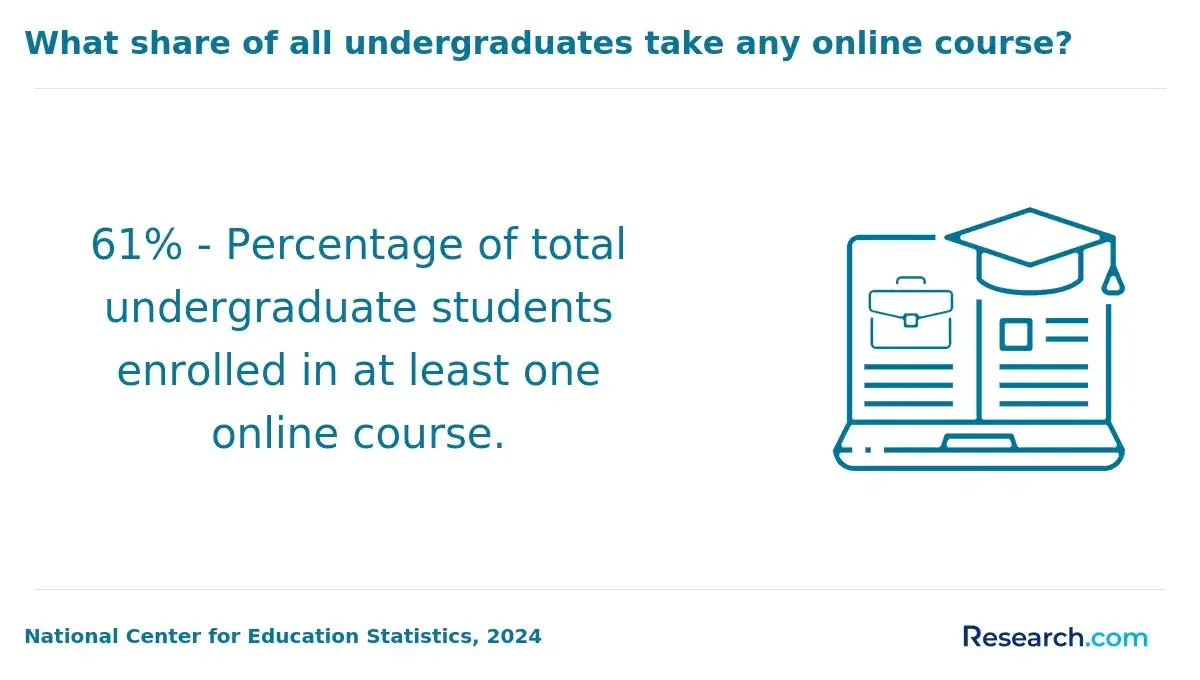
Supporting this shift, the National Center for Education Statistics reports that over 2.5 million graduate students enrolled exclusively online in 2023-24, indicating growing employer acceptance and normalization of online graduate credentials.
What Graduates Say About Employer Reception to Their Online Web Development Master's Degree
- Jason: "My employer was initially uncertain about the value of an online web development master's degree, but after seeing the skills and knowledge I brought to the team, their perspective shifted completely. The accreditation of the program gave me the confidence to apply what I learned in real-world projects, which directly impacted my contributions. Pursuing this degree online allowed me to balance work and study while advancing my career."
- Camilo: "Choosing an accredited online web development master's program was a key decision in my career change. My current employer respected the rigor and relevance of the curriculum, which made them more open to hiring me despite my non-traditional background. This degree not only built my technical expertise but also affirmed my commitment to professional growth in the web development field."
- Alexander: "I was pleasantly surprised by how positively my employer received my online web development master's degree. Having a recognized degree from an accredited institution eased any doubts about the online format. This professional pathway has significantly boosted my self-assurance in tackling complex projects and accelerated my advancement within the company."
Other Things You Should Know About Web Development Degrees
In 2027, graduates should highlight the technical skills gained, emphasize project-based experience, and showcase any industry-relevant certifications. Networking and tailoring the resume to align with job descriptions can further enhance their employment prospects.
Skills-based hiring focuses more on demonstrated abilities than solely on formal education credentials. This trend has increased scrutiny on online web development master's programs to ensure they teach current, practical skills aligned with industry needs. Graduates from rigorous online programs that emphasize hands-on projects and real-world experience tend to be better received by employers adapting to this hiring model.
In 2027, online web development master's degrees are increasingly respected by employers, especially if they come from accredited institutions. Employers prioritize both the technical skills and the real-world problem-solving abilities that graduates can bring to their organizations.
References
- Are Web Development Jobs in Demand? | Education https://vocal.media/education/are-web-development-jobs-in-demand
- Why Web Development Is One of the Best Careers in 2025 - Skills Matrix Academy https://skillsmatrixacademy.com/why-web-development-is-one-of-the-best-careers-in-2025/
- Online Degrees Highest Employment, Career Opportunities, Salary Potential https://www.pwmedharthi.com/blogs/guide/online-degrees-highest-employment
- How to Check if a Graduate Program is Accredited (and Why This Matters) | ProFellow https://www.profellow.com/tips/how-to-check-if-a-graduate-program-is-accredited-and-why-this-matters/
- Job Based Web & App Development Training. Enrol Now ! https://www.v1academy.com/how-learning-web-programming-can-transform-your-career
- Can You Really Get a Good Job with an Online Degree? https://www.nu.edu/blog/good-jobs-with-an-online-degree/
- Cyber Security for Beginners Job Ready Program https://apexlearning.org.uk/course/web-developer-job-ready-certification-program-with-money-back-guarantee/
- 2025 Career Outcomes Report: MCIT Online Graduates Continue to Lead in Tech and Beyond https://online.seas.upenn.edu/career-insights/2025-career-outcomes-report-mcit-online-graduates-continue-to-lead-in-tech-and-beyond/
- How Job-Oriented Web Development Training Prepares Students for the Real World https://digilinkersacademy.com/blogs/how-job-oriented-web-development-training-prepares-students-for-the-real-world
- Top 10 High-Demand Jobs After an Online Master’s Degree in 2026 https://www.westfordonline.com/blogs/top-10-high-demand-jobs-after-an-online-masters-degree-in-2026/